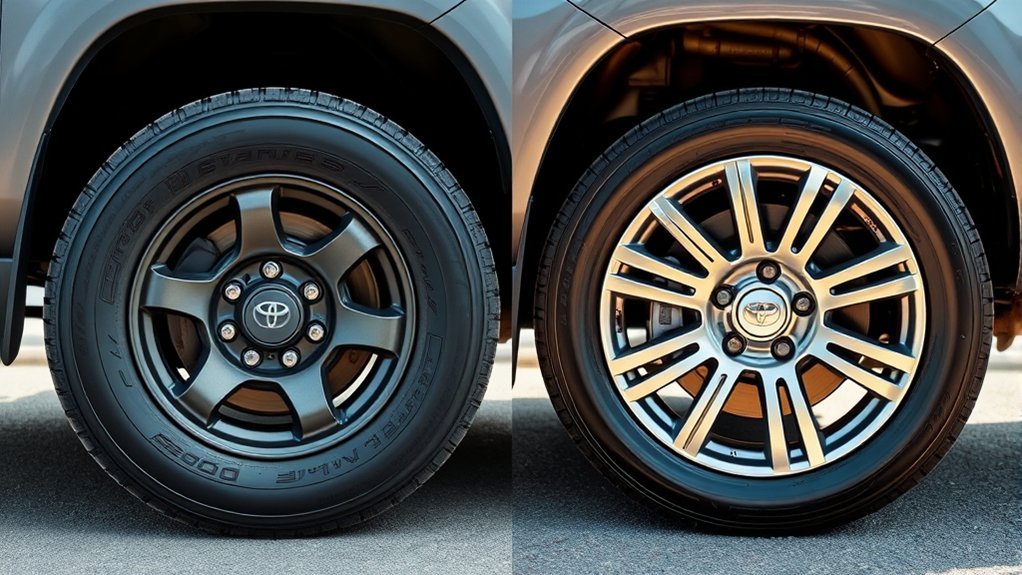
Choosing between steel and alloy wheels for your Toyota Hilux depends on how you use the truck, not just how the wheels look. Steel wheels usually make more sense for worksites, remote trails, winter sets, and low-cost replacements. Alloy wheels usually suit daily driving, sharper styling, and owners who want a lighter wheel package with a cleaner finish.
The right choice still starts with fitment. Before you buy, confirm the wheel diameter, width, bolt pattern, center bore, offset, brake clearance, wheel-nut seat, TPMS or valve compatibility, and load rating for your exact Hilux model, market, trim, tire size, and driving conditions.
Quick Answer
Choose steel wheels for a Toyota Hilux used on rough job sites, rocky tracks, remote trips, winter roads, or budget replacement sets. Choose alloy wheels for daily driving, cleaner styling, lower weight, and better heat dissipation potential. In either case, correct fitment and load rating matter more than material.
Key Takeaways
- Choose steel wheels if durability, repairability, and lower replacement cost matter more than appearance.
- Choose alloy wheels if you want a cleaner look, lower wheel weight, and better road manners for daily driving.
- Do not buy Hilux wheels by diameter alone. Check PCD, center bore, offset, width, brake clearance, nut seat, TPMS compatibility, and load rating.
- For off-road use, tire sidewall height and tire construction often matter as much as wheel material.
- After fitting any wheel, use the correct torque procedure and recheck for vibration, rubbing, loose nuts, and pressure loss.
Steel vs Alloy Wheels for Toyota Hilux: Quick Comparison
| Factor | Steel Wheels | Alloy Wheels |
| Best for | Worksites, remote tracks, winter sets, spare wheels, budget replacements | Daily driving, styling, road comfort, lower wheel weight, refined appearance |
| Durability | Often preferred for harsh use because it is simple, tough, and usually cheaper to replace | Strong when properly rated, but severe impacts can crack the wheel or damage the finish |
| Weight | Often heavier, although exact weight depends on size and construction | Often lighter, but oversized alloys can erase the advantage |
| Brake heat | Simple and durable, but steel generally gives up heat more slowly than aluminum | Aluminum alloy can help heat dissipation, depending on wheel design and airflow |
| Maintenance | Needs paint or coating care to limit rust, especially around the bead seat | Needs finish care to prevent corrosion under damaged clear coat |
| Remote touring | Common sizes may be easier to replace in rural areas | Premium off-road alloys can work well, but uncommon designs may be harder to source quickly |
| Appearance | Simple and practical | More styles, finishes, and spoke designs |
What Are Steel Wheels for Your Toyota Hilux?
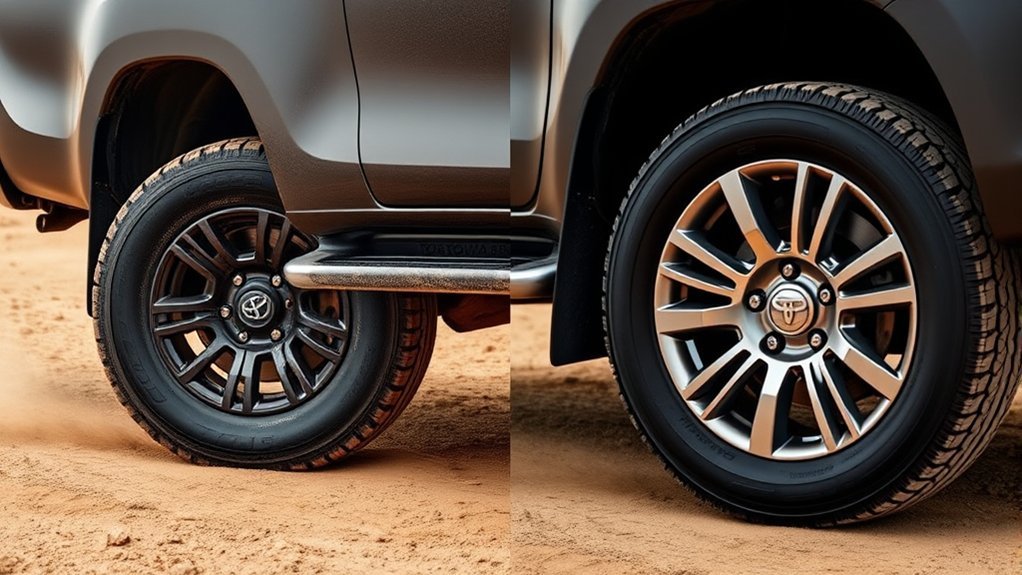
Steel wheels are made from pressed steel sections that are formed, joined, and finished with paint or coating. On a Toyota Hilux, they appeal to drivers who want a practical wheel for heavy use, rough roads, commercial work, and off-road trips where cosmetic damage matters less.
The main advantage is simple toughness. Steel wheels are often preferred for harsh Hilux use because they can tolerate abuse, cost less to replace, and may bend rather than crack in some impacts. If a steel wheel bends on a remote track, a specialist or experienced off-road repairer may be able to make an emergency repair good enough to get you moving slowly. You should still replace or professionally inspect any wheel that has taken a hard impact.
The downside is weight and appearance. Steel wheels are often heavier than comparable alloy wheels, which can affect steering feel, suspension response, and fuel use. They also offer fewer design choices, so they may not suit a Hilux owner who wants a premium street look.
Warning: Never choose a wheel only because it “fits over the studs.” The wheel must match your Hilux’s bolt pattern, center bore, offset, rim width, brake clearance, nut seat, TPMS or valve setup, and load rating. A poor fit can cause rubbing, vibration, stud damage, brake clearance issues, air loss, or unsafe handling.
Top Benefits of Alloy Wheels: Performance and Aesthetics
Alloy wheels are usually made from aluminum alloy, though wheel strength and weight depend on the exact design, size, casting or forging method, and load rating. For many Hilux owners, the biggest benefit is the mix of appearance and everyday drivability.
A properly chosen alloy wheel can reduce unsprung weight compared with a heavier steel wheel. That can help the suspension react more cleanly over bumps and can make steering feel sharper. The difference is not automatic, so compare the actual wheel weight and tire size before assuming an alloy setup is lighter.
Aluminum alloy can also help heat dissipation. Alcoa Wheels notes that aluminum gives up heat faster than steel, which can help move heat away from tire and brake areas in demanding applications. On a Hilux, the real-world benefit still depends on wheel design, airflow, driving speed, towing load, braking load, and tire choice.
The visual difference is just as important for many owners. Alloy wheels come in more spoke patterns, colors, machined finishes, and sizes. If your Hilux spends most of its time on the road, a quality alloy wheel can make the truck look newer and more refined without changing the rest of the vehicle.
Alloy wheels are not automatically the best option, though. Large, heavy alloy wheels with low-profile tires can make the ride harsher and increase the risk of rim damage on potholes. For a Hilux that regularly carries loads or travels rough tracks, strength, load rating, and tire sidewall height matter more than appearance.
Cost of Steel vs. Alloy Wheels for Your Hilux
Steel wheels usually cost less to buy and replace than alloy wheels, especially in basic black or silver finishes. That makes them a sensible option if you need a second set for winter tires, worksite tires, or off-road tires.
Alloy wheels usually cost more because of the material, design, finish, and manufacturing process. You also need to consider repair cost. Cosmetic alloy damage, cracked spokes, curb rash, or clear-coat failure may require specialist repair. With steel wheels, the finish is simpler, but rust prevention matters more.
[Products Worth Considering]

The 22800 wheel stud installer makes replacing wheel studs quick and secure, saving time and effort during tire service. It uses a ratchet or impact wrench to pull new studs firmly into place, helping when existing studs are too long. Compatible with most automotive wheels and light-duty truck wheel studs, it’s designed for easy, tool-assisted installation.

This metal-free wheel and tire cleaning brush uses dense, fluffy synthetic wool to safely clean rims, spokes, fenders, and engine areas without worrying about damaging surfaces. Its flexible, comfortable design helps you reach detailed areas while maintaining durability, and the extra absorbent fibers work well with wheel spray cleaners for faster cleanup. Reusable and washable performance helps prevent grime and build-up for cleaner vehicles and easier maintenance at home.

This professional wheel and rim cleaning brush set lifts brake dust, grime, and dirt with soft, scratch-free microfiber and synthetic wool fibers. The rim brush bends up to 360 degrees for easy access to hard-to-reach areas around spokes, lips, and faces. Ideal for thorough cleaning of car, truck, motorcycle, bicycle, RV, and more wheel and tire surfaces.
Initial Purchase Price
If budget is your top priority, steel wheels usually win. They are common, simple, and easier to replace as a set. This matters if your Hilux works in construction, farming, mining, forestry, or any place where wheels take regular abuse.
Alloy wheels cost more upfront, but you may feel the difference in looks, resale appeal, and road feel. For a daily-driven Hilux, that extra cost can make sense if you pick a wheel that keeps the correct load rating and does not force an overly stiff tire setup.
Long-Term Replacement Costs
Long-term cost depends on how and where you drive. Steel wheels can be cheaper to replace after trail damage, but they need regular cleaning and coating care if you drive through salt, mud, or wet work sites. Rust around the bead seat can eventually cause slow air leaks.
Alloy wheels resist red rust, but damaged clear coat, curb rash, and salt exposure can still cause corrosion. If an alloy wheel cracks or loses its seal, replacement is often safer than repair. For remote touring, that can become a bigger concern than the original price.
Pro Tip: If you drive off-road often, price the wheel and tire together. A smaller wheel with a taller all-terrain tire may ride better, protect the rim better, and cost less to replace than a larger wheel with a low-profile tire.
Durability: How Do Steel and Alloy Wheels Hold Up?
Durability depends on wheel quality, load rating, tire pressure, tire sidewall height, speed, vehicle load, and the type of impact. Steel wheels are often more forgiving in rough work because they are simple and practical. Alloy wheels can be very strong, but a hard strike can crack the casting, bend the inner barrel, or damage the finish.
Steel Wheel Durability
Steel wheels suit harsh Hilux use because they can take abuse without looking perfect. Rocks, gravel, and worksite debris feel less stressful when you are not trying to protect a polished or machined finish. For many owners, that simple toughness is the main reason to choose steel.
The trade-off is corrosion. Steel needs a sound painted or powder-coated finish to resist rust. If you scrape the paint on rocks or let mud sit behind the spokes, rust can spread. Clean them after beach driving, winter salt, or clay-heavy mud, then touch up exposed metal before it worsens.
Alloy Wheel Longevity
Alloy wheels can last many years on a Hilux when the fitment is correct, the load rating is suitable, and the finish stays protected. They are a strong choice for city driving, highway use, light gravel, and owners who want a cleaner look.
However, alloy damage is not always obvious. A sharp pothole or trail impact can bend the inner barrel, crack a spoke, or damage the bead area. Watch for vibration, slow pressure loss, steering shake, or visible cracks after a hard hit. Those signs need professional inspection.
Performance: How Do Wheel Materials Affect Your Hilux?
Wheel material affects performance mainly through weight, stiffness, heat behavior, and tire choice. A lighter alloy wheel can reduce unsprung mass, which may improve steering response and suspension control. That helps most on paved roads, rough bitumen, and faster gravel driving.
Steel wheels bring a different performance benefit. Their extra weight is not ideal for acceleration, but their practicality can be valuable when the trail gets rocky or rutted. A steel wheel also pairs well with a taller tire sidewall, which can flex over rocks and help protect the rim.
Do not assume that a larger wheel improves performance. Upsizing can add weight and reduce sidewall height. Car and Driver testing found that a heavy 19-inch wheel-and-tire package increased impact harshness in its test vehicle, while smaller setups gave a more controlled and supple ride. A Hilux is a different vehicle, but the same trade-off still matters: a bigger wheel can look tougher while making the ride harsher and the rim easier to damage.
The tire does the gripping, but the wheel decides how that tire fits, flexes, clears the brakes, carries load, and survives impact.
Off-Road Capability: Which Wheel Type Excels?
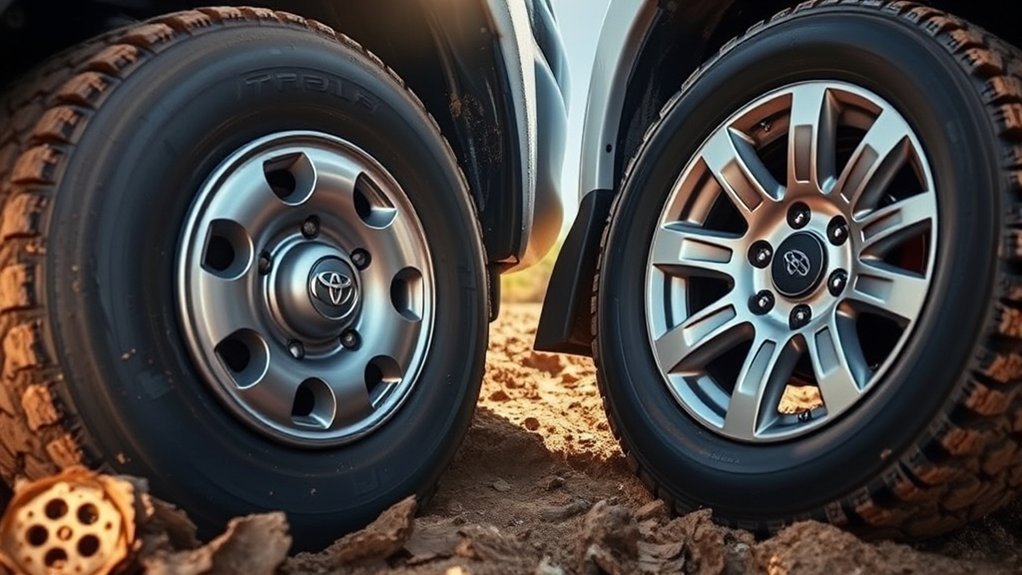
For serious off-road Hilux use, steel wheels often make the most sense. They are practical, tough, and less painful to damage. They also work well with smaller rim diameters and taller all-terrain or mud-terrain tires, which can improve sidewall flex and rim protection.
Alloy wheels can still work off-road if they are designed for 4×4 use and have the right load rating. Many premium off-road alloys are strong and attractive. The risk is choosing a street-style alloy that looks good but does not suit rocks, corrugations, heavy loads, or reduced tire pressures.
For remote touring, think about repairability and availability. A common steel wheel size may be easier to replace in rural areas. A unique alloy design may be harder to source quickly if one wheel cracks or bends during a trip.
Best Wheel Choice by Hilux Use Case
| Hilux Use Case | Better Starting Point | Why |
| Construction, farming, forestry, mining | Steel | Lower replacement cost and less concern about cosmetic damage |
| Daily commuting and family use | Alloy | Better styling choices and possible weight savings when properly sized |
| Remote touring | Steel or common off-road alloy | Availability, repairability, and load rating matter more than appearance |
| Towing and heavy payload | Either, if load-rated | Wheel load rating, tire load index, and pressure matter more than material |
| Winter or salt-road set | Steel or simple painted alloy | Choose a finish you can clean, touch up, and replace affordably |
| Show-and-street build | Alloy | More finishes, spoke designs, and sizes for a cleaner appearance |
[Products Worth Considering]

This professional wheel and rim brush kit makes it easy to lift brake dust, grime, and dirt from wheels and tires without scratching finishes. The brushes feature soft, metal-free wool heads and a flexible 360-degree rim brush design for reaching hard-to-clean areas. Includes multiple brush types plus accessories for thorough car, motorcycle, and general vehicle detailing.

These universal tire valve stem caps help protect your valve core from dust, debris, moisture, and corrosion, supporting more stable tire pressure. The aluminum alloy design resists long-term wear, while the sealing construction helps help prevent air leakage. They twist on easily for quick installation and help safeguard driving safety across cars, SUVs, trucks, and motorcycles.

This 3-piece wheel and tire brush set makes it easy to clean light, medium, and heavy dirt from wheels, rims, tires, and exterior surfaces. It includes both soft and stiff bristle options for gentle scrubbing and tough grime removal, helping lift brake dust and road buildup. The long-handle design supports comfortable cleaning across cars, trucks, SUVs, RVs, motorcycles, and more, with simple care instructions to restore brush shape.
Key Factors for Choosing Wheels for Your Hilux
Before you choose steel or alloy wheels, confirm the wheel fits your exact Hilux generation, trim, brake package, and tire plan. The same “Hilux wheel” label does not guarantee safe fitment across every model year or market. Toyota’s own Hilux product material notes that local specification may vary, and one 2025 Irish-market Hilux guide lists 17-inch silver steel wheels on a DLX Single Cab model while other trims may differ.
- Bolt pattern: The wheel must match the Hilux hub and studs.
- Center bore: The wheel must center correctly on the hub or use the correct hardware approved by the wheel maker.
- Offset: Too much positive or negative offset can cause rubbing, bearing stress, steering changes, or fender contact.
- Width and diameter: These must suit the tire size, brake clearance, suspension movement, and body clearance.
- Load rating: The wheel must safely handle the vehicle, passengers, cargo, accessories, towing loads, and off-road impacts.
- Wheel-nut seat: Tapered, flat, ball, and other nut seats are not interchangeable unless the wheel maker specifies them.
- TPMS or valve compatibility: If your Hilux has a tire-pressure monitoring or warning system, confirm that the wheel accepts the correct sensor or valve hardware.
- Tire size: Use the owner’s manual, tire placard, or a qualified tire professional before changing tire diameter.
- Legal limits: Check your local rules for tire diameter, wheel offset, track width, fender coverage, and speedometer accuracy.
The NHTSA advises checking the owner’s manual or Tire and Loading Information Label for the correct tire size and pressure. That guidance matters even when you are changing only the wheels, because wheel diameter and width affect tire choices.
Load Rating Matters More Than Wheel Material
A Hilux often carries tools, passengers, canopies, drawers, camping gear, tow-ball load, recovery gear, and aftermarket accessories. That extra weight makes wheel and tire load capacity critical. Toyota Europe states that the all-new Hilux retains payload capability in excess of 1,000 kg and braked towing capacity of 3,500 kg in that market, which shows why load-rated wheels and tires matter for this type of truck.
Do not assume a wheel is safe because it bolts on or because it has the right diameter. Each wheel needs a suitable load rating for the vehicle and use. The tires also need the correct load index and pressure for the load you carry. For towing or heavy work, ask the wheel seller or tire shop to confirm the rating in writing before installation.
Note: Payload, towing capacity, tire size, and tire-pressure recommendations vary by Hilux market, model year, body style, drivetrain, and trim. Always use the owner’s manual and vehicle label for your exact truck.
Hub-Centric vs. Lug-Centric Fitment
Center bore matters because it affects how the wheel sits on the hub. A hub-centric wheel closely matches the hub center. Some aftermarket wheels use a larger center bore with approved hub-centric rings. A lug-centric setup centers through the wheel nuts, but it still needs the correct nut seat and installation procedure.
If the wheel sits off-center, you may feel highway vibration even if the tire balance looks correct. Do not stack random rings, machine a wheel without expert approval, or mix wheel nuts from another wheel set. Use the hardware specified by the wheel maker and confirm that the wheel clears the front brakes before mounting all four.
Which Wheel Type Fits Your Driving Style?
Pick steel wheels if your Hilux spends a lot of time on job sites, forest roads, farms, mines, rocky tracks, or winter roads. You will give up some style, but you gain a practical wheel that can take abuse and cost less to replace.
Pick alloy wheels if your Hilux is mostly a daily driver, family vehicle, tow vehicle on paved roads, or weekend adventure truck. You get more style choices and may get a sharper road feel, as long as you avoid oversized wheels that make the ride too stiff.
For towing or carrying loads, do not focus only on wheel material. Check the wheel load rating, tire load index, inflation pressure, and manufacturer guidance. A stylish wheel with the wrong rating is the wrong wheel, even if it bolts on.
Wheel Installation and Torque Checks
Correct wheel installation matters as much as choosing the wheel. Dirt, rust, wrong nuts, damaged studs, or uneven tightening can reduce clamping force. The Tire Industry Association describes the RIST procedure as Remove, Inspect, Snug, and Torque, which helps technicians create proper clamping force.
- Clean the mounting faces: Remove loose rust, dirt, and debris from the hub and wheel face.
- Inspect studs and nuts: Replace damaged studs, stretched threads, or incorrect nuts before driving.
- Use the correct nut seat: Match the wheel maker’s required nut type.
- Snug evenly: Tighten in the correct star or crisscross pattern before final torque.
- Use a torque wrench: Follow the Toyota manual, wheel maker, or qualified installer’s torque specification.
- Recheck after driving: Follow the installer’s recommended re-torque interval, especially after new wheels or tire service.
Warning: Do not rely on an impact gun alone for final tightening. Final wheel-nut tightening should use the correct torque specification and a calibrated torque wrench.
Steel and Alloy Wheel Maintenance Tips
Both wheel types need care. Steel wheels need protection against rust. Alloy wheels need protection against finish damage, brake dust, and corrosion under the clear coat.
- After mud or beach driving: Rinse the wheels, inner barrels, and valve areas.
- After winter salt: Wash wheels more often to protect coatings and finishes.
- After a hard impact: Check for bends, cracks, vibration, and air loss.
- After fitting new wheels: Recheck torque as recommended by the installer or wheel maker.
- Before long trips: Inspect tire pressure, tread, valve stems, wheel nuts, and spare-wheel condition.
- When pressure drops slowly: Ask a tire shop to inspect the bead seat, valve, TPMS sensor, tire punctures, and wheel cracks.
Note: The tire sidewall maximum pressure is not the same as your Hilux’s recommended cold tire pressure. NHTSA says the correct pressure is the vehicle manufacturer’s cold inflation pressure, usually found on the vehicle label or in the owner’s manual.
Final Buying Advice for Hilux Owners
Steel wheels are the practical choice for hard use. Alloy wheels are the refined choice for style and road performance. Neither option is automatically safer or better unless it fits your Hilux correctly and supports the tire and load you plan to run.
If you are unsure, start with your current wheel and tire size. Then decide whether your goal is durability, appearance, tire sidewall height, towing confidence, easier rural replacement, or lower replacement cost. A tire shop or 4×4 specialist can confirm offset, brake clearance, load rating, TPMS compatibility, and legal fitment before you buy.
[Products Worth Considering]

These universal tire valve stem caps help protect valve cores from dust, debris, and moisture while helping maintain stable tire pressure. The corrosion-resistant metal construction and sealed design provide reliable protection in road grime, mud, and winter conditions. Twist-on installation makes them quick to fit on cars, SUVs, trucks, and motorcycles.
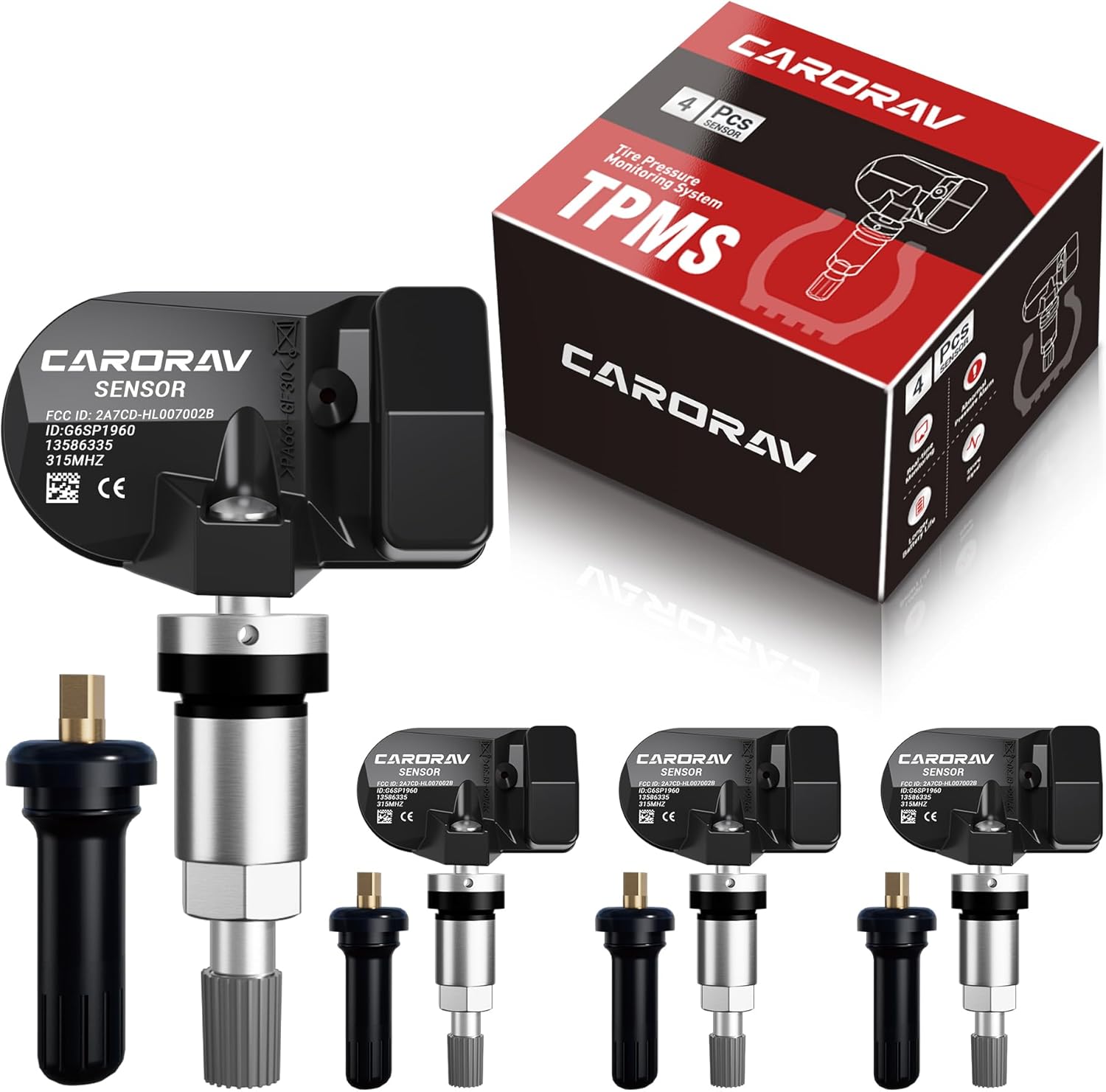
Replace worn or missing TPMS sensors with CARORAV pre-programmed GM-compatible sensors for a smoother installation experience. These 315MHz replacement sensors help monitor tire pressure in real time with long battery life, and they are designed to withstand harsh temperatures. Manual or OBDII relearn may be required to reset the system for proper recognition.

These aluminum alloy tire valve stem caps with an O-ring seal help protect valve stems from corrosion while adding a clean, stylish look to your vehicle. The universal fit works across cars, trucks, motorcycles, bicycles, and more, making them an easy upgrade for everyday driving and off-road use. Installation is quick, and the included four-pack keeps all your tires dressed and protected.
Frequently Asked Questions
How long do steel rims last?
Steel rims can last many years if they stay straight, hold air, and remain protected from rust. Their life depends on coating quality, road salt, mud exposure, impacts, and maintenance. Replace or professionally inspect a steel wheel if it is heavily rusted, cracked, badly bent, or no longer seals the tire properly.
Are steel wheels better for potholes?
Steel wheels are often a practical choice for pothole-prone roads because they may bend rather than crack in some impacts and are usually cheaper to replace. They are not damage-proof. A hard pothole can still bend the rim, damage the tire, cause vibration, or create a slow leak.
Are alloy wheels bad for off-road driving?
Alloy wheels are not bad for off-road driving when they are built and rated for 4×4 use. The problem comes from using street-style alloys, oversized wheels, or low-profile tires on harsh tracks. For remote trails, choose strong load-rated alloys or practical steel wheels with enough tire sidewall.
Do alloy wheels improve fuel economy on a Hilux?
They can help slightly if the alloy wheel and tire package is lighter than the steel setup it replaces. The benefit can disappear if you choose larger, wider, or heavier wheels. Tire tread pattern, tire pressure, driving speed, load, and alignment often have a bigger effect on fuel use.
Can I fit bigger wheels on my Toyota Hilux?
You may be able to fit bigger wheels, but you must keep the overall tire diameter, load rating, offset, brake clearance, legal requirements, and speedometer accuracy in mind. Bigger wheels often reduce tire sidewall height, which can make the ride harsher and increase rim damage risk off-road.
What should I check before buying Hilux wheels?
Check bolt pattern, center bore, offset, width, diameter, brake clearance, wheel-nut seat, load rating, TPMS or valve compatibility, and tire compatibility. Also confirm whether the wheels suit your Hilux model year and whether your local rules allow the size and offset change.
Are steel or alloy wheels better for towing with a Hilux?
Either can work for towing if the wheel is properly load-rated and fitted with the correct tire load index and pressure. Do not choose by material alone. For towing, confirm wheel load rating, tire rating, axle load, tow-ball load, and the vehicle manufacturer’s towing guidance.
Do I need hub-centric rings for aftermarket Hilux wheels?
You may need hub-centric rings if the aftermarket wheel has a larger center bore than your Hilux hub and the wheel maker approves that setup. Use only the correct rings and wheel nuts. A poor center fit can cause vibration, even when the tires are balanced.
Should I re-torque Hilux wheels after installation?
Yes, follow the installer’s or wheel maker’s re-torque recommendation after fitting new wheels or removing wheels for service. Use the correct torque specification and a calibrated torque wrench. Also recheck if you notice vibration, clicking, or steering shake.
Conclusion
Steel wheels are the safer bet for a Toyota Hilux that works hard, travels rough tracks, or needs a low-cost and easy-to-replace wheel set. Alloy wheels are the better fit when you care more about styling, lower weight, road feel, and a cleaner finish.
The right answer is not just steel versus alloy. It is the wheel that fits your Hilux correctly, carries the load safely, clears the brakes, suits your tire size, works with your valves or TPMS, and matches the way you drive. Choose the material after you confirm the fitment.
Sources
- NHTSA TireWise — tire size, tire pressure, tire maintenance, tread, balancing, and owner’s manual guidance.
- Tire Industry Association: Wheel Torque and RIST Procedure — wheel installation, torque, and clamping-force guidance.
- Toyota Hilux Product Guide — Hilux trim examples, TPWS listing, steel wheel example, and local-specification note.
- Toyota Europe: The All-New Toyota Hilux — current Hilux payload and braked towing context in the European market.
- Alcoa Wheels: Aluminum Wheels vs. Steel — aluminum heat-dissipation context compared with steel.
- Car and Driver: Effects of Upsized Wheels and Tires Tested — wheel-size trade-offs for ride, acceleration, and harshness.