
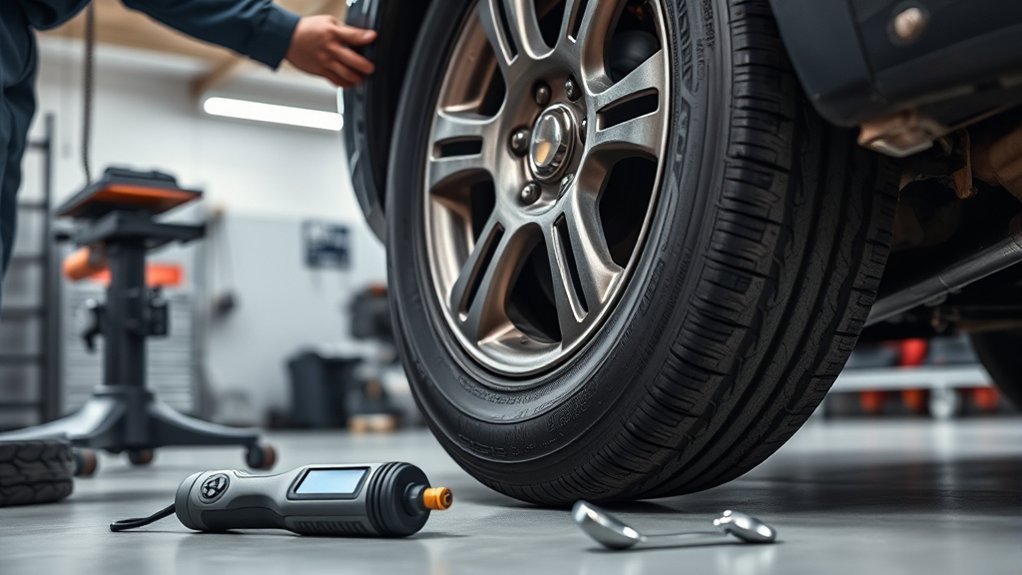
Yes, a bad tire can make your car shake. The shake may feel like a steering wheel vibration, a seat buzz, a floorboard rumble, or a low-speed wobble. Tires are one of the first things to check because uneven tread wear, low pressure, a separated belt, a bulge, a flat spot, or a tire-and-wheel imbalance can all make the vehicle feel unstable.
Quick Answer
A bad tire can make your car shake, especially at highway speeds. Check tire pressure, tread depth, sidewalls, lug nuts, and visible tread damage first. If you see exposed cords, a sidewall bulge, tread separation, or a severe low-speed wobble, stop driving and have the tire inspected or replaced.
Key Takeaways
- A bad tire can cause shaking through the steering wheel, seat, floor, or whole vehicle.
- Common tire-related causes include uneven wear, low pressure, flat spots, out-of-round tires, broken belts, bulges, and tread separation.
- A shake that is strongest around highway speed often points to tire balance, wheel runout, or tire uniformity problems.
- A shake while braking is more likely to involve brake rotors, brake pads, suspension, or steering parts.
- Do not keep driving on a tire with exposed cords, a sidewall bulge, severe cracking, visible separation, or a sudden violent wobble.
At a Glance
| Time Required | 5–10 minutes for a basic driveway check; longer if a shop needs to balance, align, or road-force test the tire and wheel assembly. |
| Difficulty | Easy for pressure, tread, and visual checks; professional inspection recommended for balance, alignment, internal tire damage, wheel runout, brakes, and suspension. |
| Tools Needed | Tire pressure gauge, tread depth gauge or penny, flashlight, gloves, and the tire pressure label on the driver’s doorjamb. |
| Cost | Basic checks are free. Shop costs vary for balancing, alignment, road-force testing, wheel repair, brake work, or tire replacement. |
Warning: Stop driving as soon as it is safe if the tire has exposed cords, a sidewall bulge, visible tread separation, a sudden violent wobble, a loose wheel feel, smoke, burning rubber smell, loss of steering control, or a brake warning light. Have the vehicle towed or inspected by a qualified technician.
Can a Bad Tire Make Your Car Shake?
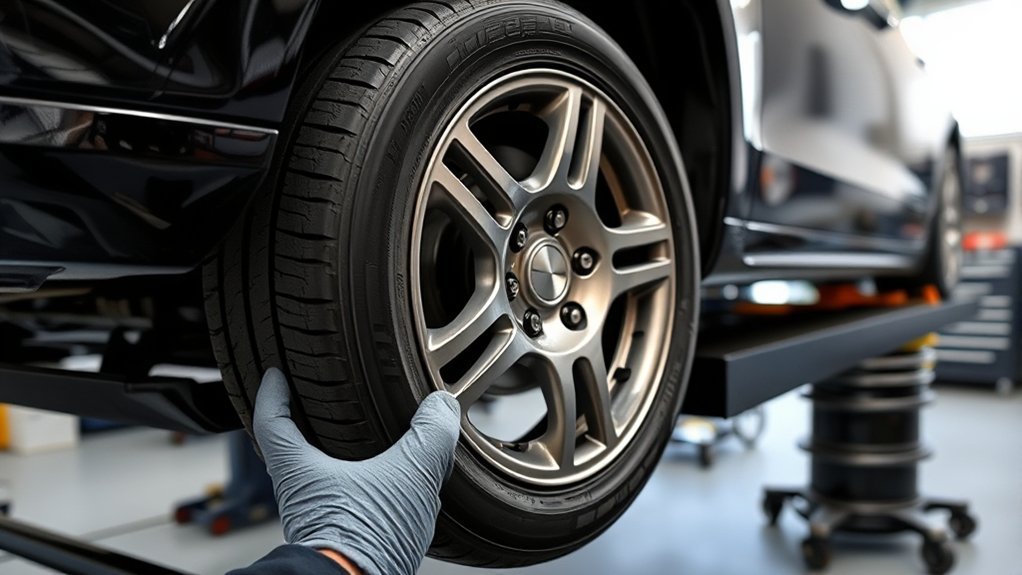
Yes. A bad tire can make your car shake because the tire is the only part of the vehicle touching the road. When the tire is out of round, damaged, unevenly worn, underinflated, overinflated, or out of balance with the wheel, it can no longer roll smoothly. That uneven rolling force travels through the suspension and into the steering wheel, seat, or floor.
The shake is often most noticeable at highway speeds, commonly around 50–70 mph, because a small tire or wheel imbalance can feel much stronger as speed increases. NHTSA notes that tire balancing helps wheels rotate properly and prevents a vehicle from shaking or vibrating. If the vibration keeps getting worse, do not assume it is “just annoying.” Tire problems can turn into loss of control, tread separation, or a blowout.
NHTSA reported 511 deaths in tire-related crashes in 2024, which is why tire vibration should be treated as a safety clue, not just a comfort problem.
What Tire Problems Cause Shaking?
Several tire problems can cause shaking, and each one feels a little different. The most common causes are uneven wear, pressure problems, balance issues, internal damage, and physical deformities in the tire.
- Uneven tread wear: Cupping, feathering, scalloping, flat spots, or bald spots can make the tire bounce instead of rolling evenly.
- Low or uneven tire pressure: A soft tire flexes more, builds heat, wears unevenly, and can make the vehicle feel loose or wobbly.
- Out-of-balance tire and wheel assembly: This usually creates a vibration at a specific speed range and often gets worse on the highway.
- Out-of-round tire: The tire does not roll in a true circle, so the vehicle may hop or wobble.
- Broken belt or tread separation: The tire may thump, wobble, or feel unstable even at lower speeds.
- Bulges, bubbles, cracks, or exposed cords: These are signs of structural damage and can make the tire unsafe.
- Flat spots: A tire can develop a flat area from hard braking, long parking periods, or skidding.
Loose lug nuts, bent wheels, worn wheel bearings, poor alignment, bad shocks or struts, and brake rotor problems can feel similar, so the goal is not just to blame the tire. The goal is to identify the pattern and inspect the whole tire-and-wheel area safely.
How to Check Tires Safely Before You Drive Farther
Start with checks you can do without lifting the vehicle. Park on a flat surface, set the parking brake, and let the tires cool before checking pressure.
- Check tire pressure cold. Use the pressure listed on the driver’s doorjamb label or owner’s manual, not the maximum pressure printed on the tire sidewall. NHTSA recommends checking all tires, including the spare, at least once a month when cold.
- Inspect each sidewall. Look for bulges, bubbles, deep cracks, cuts, punctures, or scuffed areas from curb hits.
- Inspect the tread face. Look for cupping, feathering, bald patches, nails, stones, missing tread blocks, or exposed cords.
- Measure tread depth. Use a tread depth gauge when possible. Tires are not safe once tread reaches 2/32 inch, and NHTSA also describes the penny test as a quick check.
- Look for a tire that sits differently. One low, bulged, or oddly shaped tire compared with the others is a clue.
- Check the lug area visually. If any lug nut appears missing, backed off, or damaged, do not drive until it is corrected with the proper torque specification.
- Note when the shake happens. Speed-related, braking-related, turning-related, and bump-related shakes point to different causes.
Pro Tip: If the vibration started right after a tire rotation, new tire installation, pothole hit, curb strike, or pressure change, tell the shop. The timing can quickly narrow the diagnosis.
How Can You Tell If It’s a Tire or Wheel Balance Issue?
A wheel balance issue usually shows up as a speed-related vibration. You may not feel much at neighborhood speeds, but the shake becomes clear at highway speed. A tire defect, bent wheel, or tread separation can also shake with speed, but it may feel more like a thump, hop, or wobble.
| What you feel | Likely area to inspect |
| Steering wheel shakes mostly at highway speed | Front tire balance, front tire wear, bent front wheel, or front suspension |
| Seat or rear floor vibrates at highway speed | Rear tire balance, rear tire wear, or rear wheel runout |
| Vehicle pulls to one side and tires wear unevenly | Alignment, tire pressure, worn suspension, or mismatched tires |
| Thumping or wobble at low speed | Severe tire damage, shifted belt, tread separation, or bent wheel |
| Shake appears mainly while braking | Brake rotors, pads, calipers, suspension, or steering components |
If standard balancing does not fix the shake, ask about a road-force balance test. Tire Rack explains that road-force equipment can measure tire-and-wheel uniformity, radial runout, lateral runout, and force variation. That can reveal a tire or wheel that balances on the machine but still shakes on the road.
What Are the Signs of a Damaged Tire?
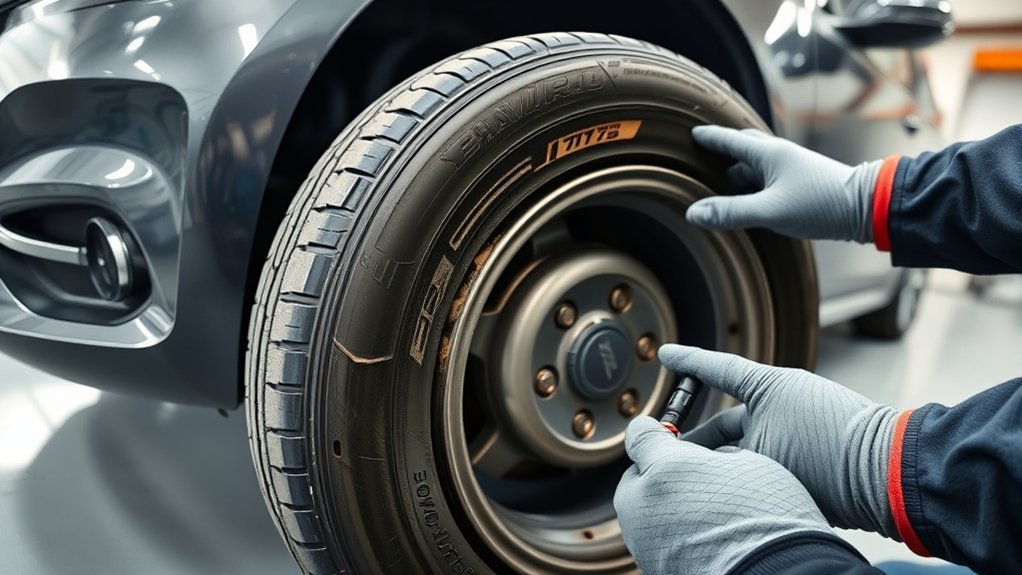
You can often spot a damaged tire before it fails. Look closely at the tread and sidewall, then pay attention to sound, vibration, and handling changes while driving.
Visible Tire Damage
Visible damage is the biggest red flag. Replace or professionally inspect the tire right away if you see:
- Sidewall bulges, bubbles, or blisters.
- Cracks deep enough to open when the tire flexes.
- Cuts, gashes, punctures, or sidewall damage.
- Exposed fabric cords or steel cords.
- Missing chunks of tread.
- Tread lifting, splitting, or separating from the tire body.
- A tire that looks egg-shaped, wavy, or out of round.
Michelin says cuts, cracks, bulges, or blisters on the sidewall may indicate structural damage, and visible sidewall damage should be inspected immediately by a trained tire professional.
Vibration And Noise
Vibration and noise are often the first driving clues. A bad tire may cause a rhythmic thump, a steady buzz, a steering wheel shimmy, a seat vibration, or a growing roar from uneven tread. If the sound changes with road speed rather than engine rpm, the source is more likely to be tire, wheel, bearing, brake, or driveline related than an engine problem.
Do not ignore a vibration that suddenly appears after hitting a pothole or curb. Impact damage can bend a wheel, break internal tire cords, knock off a wheel weight, or start a sidewall bulge that may not be obvious at first glance.
How Does Tread Wear Cause Vibration?
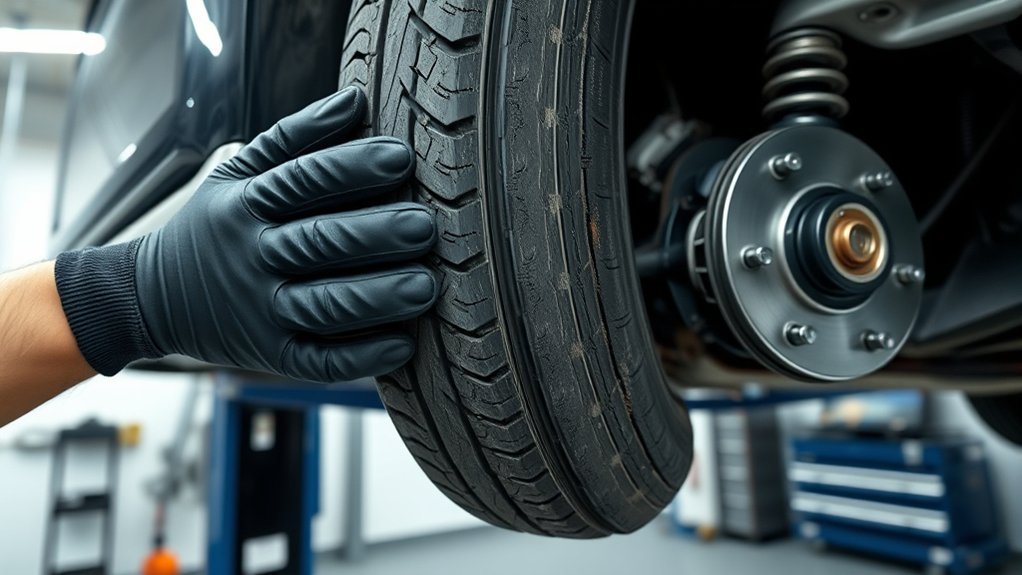
Tread wear causes vibration when the tire no longer contacts the road evenly. Cupping, scalloping, feathering, flat spots, and bald patches interrupt smooth rolling. Instead of rotating evenly, the tire may hop, slap, or scrub against the pavement.
Uneven tread wear often comes from one or more of these problems:
- Improper tire pressure: Underinflation and overinflation both change how the tread contacts the road.
- Skipped tire rotations: Tires wear at different rates depending on axle position and vehicle layout.
- Misalignment: Toe, camber, or caster problems can scrub the tread unevenly.
- Worn shocks or struts: Weak dampers can let the tire bounce, creating cupped wear.
- Unbalanced wheels: Imbalance can contribute to vibration and uneven wear.
NHTSA recommends checking your owner’s manual for the correct rotation interval. If the manufacturer recommends rotation, a common interval is every 5,000 to 8,000 miles or sooner if uneven wear appears.
Can Tire Pressure Make Your Car Wobble?
Yes. Tire pressure can make your car wobble, wander, or shake because it changes the shape and stiffness of the tire. A low tire flexes more than it should, builds heat, and may let the tread squirm. An overinflated tire can ride harshly and reduce the size of the contact patch. Uneven pressure from side to side can also make the car pull or feel unsettled.
Check tire pressure when the tires are cold, meaning the vehicle has been parked long enough for the tires to cool. Use the pressure on the Tire and Loading Information Label on the driver’s doorjamb or in the owner’s manual. Do not use the maximum PSI printed on the sidewall as your normal inflation target.
Note: A Tire Pressure Monitoring System is helpful, but it is not a replacement for a gauge. NHTSA notes that TPMS warnings usually activate only when a tire is significantly underinflated, so monthly cold-pressure checks still matter.
Could Bent Wheels, Loose Lugs, or Alignment Be the Problem?
Yes. The tire may be fine, but the wheel or mounting surface may be the cause. Bent wheels, loose lug nuts, incorrect lug torque, hub problems, and poor alignment can all create vibration or wobble.
- Bent wheel: Often follows a pothole or curb impact. It may cause vibration, air loss, or visible wheel runout.
- Loose lug nuts: Can create a wobble and are a serious safety risk. Stop driving if the wheel feels loose or knocks.
- Poor alignment: More often causes pulling, crooked steering, and uneven wear, but that uneven wear can lead to vibration.
- Worn suspension or steering parts: Tie rods, ball joints, wheel bearings, shocks, struts, and control arm bushings can let vibration travel through the vehicle.
If you rotated the tires and the vibration moved to a different part of the vehicle, the tire or wheel you moved is a strong suspect. If the vibration stayed in the same place, look harder at the suspension, hub, bearing, brake, or driveline in that area.
[Products Worth Considering]

These M14x1.5 closed-end chrome lug nuts are a one-piece replacement designed for secure fitment on compatible GM, Ford, and select Chrysler/Dodge models. Featuring a 60-degree conical seat and anti-rust chrome plating, they help resist corrosion and maintain a bright look for everyday driving. Built for long-term durability, they include OEM-style part references and are backed by 12 months of support.

Monitor tire tread wear with a smart, color-coded depth gauge that shows clear condition ranges at a glance. The bar is range marked for fast, easy readings, helping you maintain safer traction and performance. Each gauge is portable with a pocket clip, and the set includes 20 units for daily use and sharing.

Measure tire tread depth quickly and accurately with this LUMITECO dial gauge that reads in 1/32" increments up to 14/32". The color-coded green/yellow/red zones make it easy to judge tire wear and know when replacement is needed. A rugged, compact design with a protective pouch helps keep the gauge ready for use on cars, trucks, motorcycles, and more.
What Should You Check During a Tire Inspection?
A good tire inspection is more than a quick glance. Check all four tires, and remember the spare if your vehicle has one.
- Pressure: Compare cold pressure to the doorjamb label.
- Tread depth: Replace tires at 2/32 inch. Consider replacement earlier if wet traction is poor or the tire is unevenly worn.
- Wear pattern: Look for cupping, feathering, one-edge wear, center wear, shoulder wear, and flat spots.
- Sidewall: Check for cracks, bulges, blisters, cuts, and curb damage.
- Tread face: Look for nails, screws, stones, missing chunks, exposed cords, and separation.
- Valve stem: Check for cracking, leaks, or damage around the valve.
- DOT date code: Find the last four digits of the DOT code. For example, 3520 means the tire was made in the 35th week of 2020.
- Matching tires: Check that tire size, type, and wear are compatible across the axle and with your vehicle manufacturer’s guidance.
Keep notes after rotations and alignments. If one tire starts wearing differently from the others, that pattern is a diagnostic clue.
[Products Worth Considering]

Replace or upgrade your zero-turn lawn mower tires with a universal fit flat-free tire and wheel assembly in a convenient 2-pack. Smooth tread front-caster style helps turning with reduced turf damage, while flat-free design eliminates the maintenance and downtime of air-filled flats. The included adapter kit supports 5/8-inch axles and hub lengths from 3.4 to 5 inches for compatibility across most ZTR mowers.

The SAFELIFE dial tire tread depth gauge measures tread depth in 1/32 inch increments with clear, easy-to-read 2-inch dial face. Color zones using a traffic light system help you quickly judge whether tread is low, marginal, or ample for safer driving. Built with a durable zinc cast body and a metal detect probe for precise, comfortable use across cars, motorcycles, trucks, and buses.

Upgrade your wheels with MIKKUPPA M12x1.5 mag seat lug nuts built for secure, corrosion-resistant performance. These closed-end chrome lug nuts are a direct replacement for select Toyota models, including Camry, Corolla, RAV4, Sienna, Avalon, Highlander, Matrix, Venza, and Prius. Triple-chromium plating and cold-forged, heat-treated steel help deliver strength for daily driving and replacement needs.
When Should You Replace Bad Tires?
Replace a bad tire immediately if it is structurally damaged or worn beyond safe limits. Do not wait for the vibration to get worse if the tire is already showing failure signs.
Replace the tire or have it inspected by a trained tire professional if you find:
- Tread depth at 2/32 inch.
- Exposed cords, fabric, or steel.
- Sidewall bulges, bubbles, or blisters.
- Visible tread separation.
- Deep sidewall cracking or cuts.
- A tire that has been driven while flat or severely underinflated.
- Persistent vibration after balancing and alignment checks.
- Age-related concern, especially once tires are several years old.
Tire age matters even when tread looks acceptable. Michelin recommends a thorough professional inspection after five years of service and replacement at ten years from the date of manufacture as a precaution, including spare tires. If your owner’s manual gives stricter tire-age guidance, follow the vehicle manufacturer’s recommendation.
If only one tire is damaged, ask the technician whether replacing one tire, two tires, or the full set is safest for your vehicle. All-wheel-drive and four-wheel-drive vehicles can be sensitive to tread depth differences, so follow the owner’s manual before mixing a new tire with worn tires.
[Products Worth Considering]

This universal wheel alignment tool helps you accurately restore tire tilt angles after tire or suspension repairs using an adjustable camber gauge. It features a powerful magnetic base that firmly attaches to brake rotors for stationary, slip-free readings, improving consistency during measurement. Built from durable PC plastic, it resists wear and corrosion and is compact enough for car, truck, RV, and motorcycle alignment tasks.

The Tymate TM12 RV TPMS delivers real-time tire pressure and temperature monitoring with a stable 433Hz display for safer long-distance driving. It supports simultaneous monitoring across vehicle and trailer zones, includes six alarm modes for pressure, temperature, leakage, battery, and signal loss, and features easy DIY installation with auto calibration. Power is supplied via USB-C charging or solar recharging, with a wide 0–144 PSI range and up to 50 ft signal coverage for RVs and towable trailers.

The Trivd Frol 1/2" air impact wrench delivers high performance torque up to 1500 ft-lbs with a twin hammer impact mechanism for strong, balanced blows. It features an ergonomic grip, compact lightweight design, and quick-stop control with 3 forward speeds up to 8000 RPM plus a reverse speed. Built for demanding automotive repair and tire shop work, the rear exhaust helps keep debris away from the surface.
Why Does Your Car Shake at Different Speeds?
The speed and driving condition matter. A tire shake at low speed is different from a vibration that appears only while braking or only at highway speed.
Low-Speed Wobble
A wobble at low speed can be more urgent than a mild highway buzz. It may point to a separated tire, broken belt, severely out-of-round tire, bent wheel, or loose wheel hardware. If the vehicle feels like it is hopping, lurching, or wobbling from side to side, stop driving and inspect it before going farther.
Highway Speed Vibrations
Highway-speed vibration often points to tire balance, wheel runout, tire uniformity, uneven tread wear, or a bent wheel. A standard balance may fix it, but a road-force test may be needed if the shake remains after balancing. Also check whether the vibration is felt mainly in the steering wheel, seat, or floor, because that can help identify whether the source is closer to the front or rear.
Brake And Suspension Issues
If the car shakes mainly when you press the brake pedal, inspect the brake system. Firestone notes that a shaky steering wheel when braking can indicate worn or warped brake rotors. Worn suspension parts can also make a tire problem feel worse because the wheel is not being controlled firmly against the road.
Watch for these clues:
- Brake pedal pulsation or steering shake only while braking.
- Clunking, looseness, or wandering over bumps.
- Uneven tire wear returning soon after rotation.
- Vehicle pulling to one side on a straight road.
- Humming or growling that changes when turning, which may point toward a wheel bearing.
What If the Car Shakes After New Tires?
If the car started shaking right after new tires were installed, focus on the installation first. New tires should be balanced when installed, and the wheels should be mounted cleanly against the hub. A shake after new tires can come from lost wheel weights, a poor balance, bead seating issues, wheel runout, tire uniformity problems, incorrect pressure, or lug nuts that were not torqued correctly.
Return to the installer and explain exactly when the vibration starts, where you feel it, and whether it changes during braking, acceleration, or turning. Ask the shop to recheck pressure, balance, lug torque, wheel runout, and tire uniformity. If the vehicle hit a pothole before the new tires were installed, mention that too, because a bent wheel may have been hidden by the old tire problem.
Frequently Asked Questions
Can one bad tire make your car shake?
Yes. One bad tire can make the whole car shake, especially if it is on the front axle, out of balance, unevenly worn, separated, or damaged. A bad front tire often shows up in the steering wheel, while a bad rear tire may be felt more in the seat or floor.
How can I tell if tires are causing vibration?
Check for low pressure, uneven wear, bulges, cracks, flat spots, exposed cords, and missing tread. If the vibration changes after rotating the tires, the tire or wheel that moved is likely involved. If the shake appears mainly at highway speed, ask for a balance check or road-force test.
Can bad tires cause wheel wobble?
Yes. A bad tire can cause wheel wobble if the tread is separating, the belt has shifted, the tire is out of round, or the sidewall is damaged. Bent wheels and loose lug nuts can cause a similar wobble, so inspect the full tire-and-wheel assembly.
Why is my car suddenly shaky?
A sudden shake can come from a tire losing pressure, a wheel weight falling off, impact damage from a pothole, a bent wheel, a loose wheel, tire separation, brake problems, or suspension wear. If the shake is severe or the vehicle feels hard to control, stop driving and get it inspected.
Is it safe to drive with a shaking car?
A mild vibration should still be checked soon, but a severe wobble, exposed cords, a bulging tire, visible tread separation, loose wheel symptoms, brake warning light, smoke, or loss of control means you should stop driving as soon as it is safe and have the vehicle towed or inspected.
Can low tire pressure make a car shake?
Yes. Low tire pressure can make the tire flex too much, build heat, wear unevenly, and feel unstable. Check pressure cold with a gauge and inflate to the pressure listed on the driver’s doorjamb label or owner’s manual.
Can rotating tires fix a vibration?
Sometimes. Rotation can help if uneven wear is mild, and it can help diagnose whether the vibration follows a tire. However, rotation will not fix a separated tire, sidewall bulge, bent wheel, loose lug nuts, bad wheel bearing, or brake rotor problem.
What is the difference between balance and alignment vibration?
Balance problems usually cause a speed-related vibration, often at highway speed. Alignment problems more often cause pulling, crooked steering, and uneven tire wear. Alignment-related tire wear can eventually create vibration, so both issues can overlap.
Conclusion
A bad tire can absolutely make your car shake, but the exact cause may be tire damage, tire pressure, wheel balance, wheel runout, alignment, brakes, suspension, or loose wheel hardware. Start with the safe checks: pressure, tread depth, sidewalls, visible damage, and when the shake happens. If you see bulges, exposed cords, tread separation, severe cracking, or a low-speed wobble, do not keep driving on that tire. Get it inspected, balanced, road-force tested, repaired if appropriate, or replaced before it becomes a bigger safety risk.
Sources
- NHTSA TireWise: Tire Safety Ratings and Awareness — tire pressure, tread depth, balancing, alignment, rotation, and tire-related crash safety context.
- Michelin: When to Replace Tires — tire age, visible sidewall damage, vibration, handling changes, and replacement guidance.
- Tire Rack: Road Force Measurement and Smooth-Rolling Tire/Wheel Packages — road-force balancing, wheel runout, tire uniformity, and vibration diagnosis.
- Goodyear: Tire Cupping — uneven tread wear, cupping symptoms, and vibration from abnormal tread contact.
- Firestone Complete Auto Care: Brake Problems — shaking steering wheel while braking and brake rotor inspection clues.

