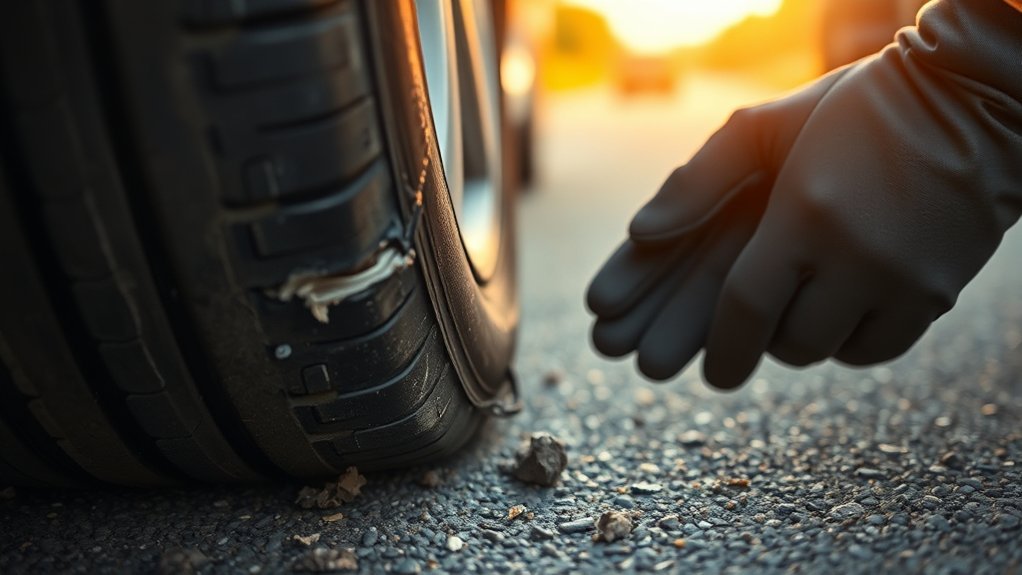
A tire can separate when the bond between its tread, belts, and casing starts to fail. That failure may come from heat, low inflation pressure, overloading, impact damage, poor repairs, aging rubber, or a manufacturing defect. Once separation starts, the tire can thump, vibrate, bulge, lose air, or fail suddenly, so you should treat every warning sign as urgent.
Quick Answer
Tire separation happens when internal tire layers stop holding together. Common causes include underinflation, heat, overloading, road impacts, bad repairs, old rubber, and manufacturing defects. If you notice thumping, vibration, bulging, exposed cords, or a wavy tread surface, slow down carefully, pull over safely, and replace the tire.
Key Takeaways
- Tire separation means the tread, belt, or casing layers are no longer bonded correctly.
- Low tire pressure increases flexing and heat, which can weaken the tire structure.
- Heat, excessive speed, overloading, road impacts, poor repairs, old tires, and manufacturing defects can all raise the risk.
- Warning signs include vibration, rhythmic thumping, wobbling, bulges, cracks, uneven wear, and visible tread lifting.
- A separated tire is not safe to drive on. Replace it and have the wheel, suspension, and remaining tires inspected.
What Is Tire Separation?
Tire separation happens when one part of the tire begins pulling away from another part. In many passenger and light-truck tires, this often means the tread or belt package starts separating from the casing underneath.
You may hear people call it tread separation, belt separation, detreading, or a separated tire. The details can differ, but the safety concern is the same: the tire has lost structural integrity and may fail without much warning.
Warning: Do not keep driving on a tire that shows separation, a bulge, exposed cords, heavy vibration, or a lifted tread edge. Slow down smoothly, avoid sudden steering or braking, and pull off the road when it is safe.
What Causes Tire Separation?
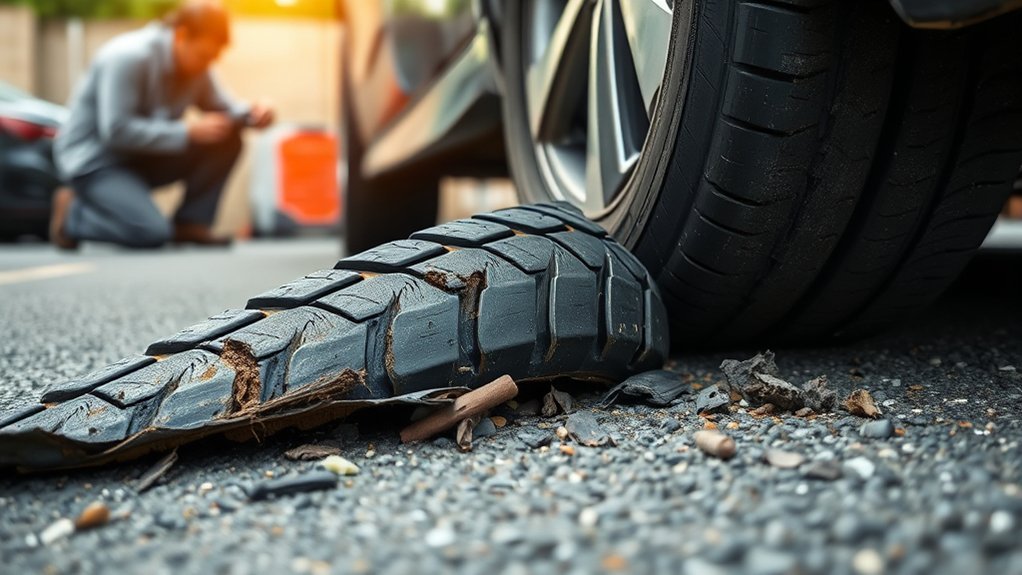
Tire separation occurs when stress overwhelms the tire’s internal bond. The most common risk factors include low inflation pressure, heat, overloading, high-speed driving, impact damage, old rubber, improper repairs, and defects from the tire manufacturing process.
NHTSA tire safety guidance notes that poor tire maintenance, including not having enough air and failing to rotate tires, can lead to a flat tire, blowout, or the tread coming off the tire. That is why pressure checks, tread checks, rotation, and damage inspections matter so much.
Separation can also start after a hard pothole hit, curb strike, or road-debris impact. Even if the tire does not fail at once, the impact may damage belts or cords inside the casing. Later, heat and flexing can make the weak area grow.
How Tire Defects Cause Tread Separation
Some tire separations begin with a defect inside the tire. Poor bonding, contaminated materials, inadequate curing, or a nonconforming rubber compound can weaken adhesion between layers before the tire ever reaches the road.
A real-world example appears in a 2025 NHTSA Part 573 safety recall report. In that report, certain original-equipment tires could experience partial or full tread detachment because they were produced with a nonconforming tread base rubber compound.
| Defect source | How it raises separation risk |
|---|---|
| Poor curing | Can leave weak bonding between tire layers. |
| Contamination | Dust, moisture, or foreign material can interfere with adhesion. |
| Nonconforming compound | The rubber may not bond or perform as designed. |
| Weak quality control | Hidden flaws may reach service before anyone sees visible damage. |
You cannot see every internal defect from the outside. Still, you can reduce risk by buying the correct tire size and load rating, checking the DOT date code, registering new tires when possible, and checking tire recalls.
What Are the Warning Signs of Tire Separation?
A separating tire often gives clues before it fails completely. The signs may feel small at first, but they can worsen quickly at highway speed.
- Rhythmic thumping: You may hear a repeated thump that changes with speed.
- Vibration or wobble: The steering wheel, seat, or vehicle body may shake.
- Bulges or raised areas: A bump on the tread or sidewall can point to internal damage.
- Wavy tread: The tread may look uneven, lifted, cupped, or distorted.
- Localized wear: One section may wear faster than the rest of the tire.
- Air loss: The tire may struggle to hold pressure.
- Pulling or unstable handling: The vehicle may drift, shimmy, or feel loose.
Note: A tire can have internal damage before you see obvious outside damage. If the vehicle suddenly vibrates, thumps, or pulls, have the tire inspected by a qualified technician.
What Risks Come With Tire Separation?
Tire separation can cause a sudden loss of stability. If the tread peels away, the tire may damage the fender, brake lines, wheel well, bumper, or suspension. The vehicle may also pull hard to one side.
The risk increases at high speed because the tire is spinning faster and creating more heat. Heat matters because NHTSA explains that sustained high temperature can make a tire deteriorate, which can lead to blowouts and tread separation.
NHTSA reported 511 traffic fatalities in tire-related crashes in 2024. Tire problems deserve the same attention as brakes, steering, and lights.
What Should You Do If a Tire Starts Separating While Driving?
If you hear thumping, feel strong vibration, or suspect the tread is separating, focus first on keeping control. Do not slam on the brakes. Do not jerk the steering wheel. Stay calm and make smooth inputs.
- Hold the steering wheel firmly with both hands.
- Keep the vehicle pointed straight and avoid sudden lane changes.
- Ease off the accelerator gradually.
- Let the vehicle slow while you look for a safe shoulder, exit, or parking area.
- Use your turn signal or hazard lights when safe.
- Pull over only when you have enough room away from traffic.
- Do not continue driving on the separated tire.
NHTSA gives similar advice for blowouts: keep the vehicle balanced, avoid overreaction, gradually release the accelerator, correct steering as needed, and pull off the road once the vehicle is stable.
[Products Worth Considering]

Milton S-921 pencil tire pressure gauge helps you maintain optimal tire pressure for passenger cars with accurate readings in PSI and kPa. It features a built-in deflator valve for convenient pressure adjustments, plus a single chuck head and nylon indicator bar for easy use on the go. Built from durable plated brass and designed for reliable performance, it’s a practical road trip and cold-weather maintenance tool.

The SAFELIFE dial tire tread depth gauge measures tread depth in 1/32 inch increments with clear, easy-to-read 2-inch dial face. Color zones using a traffic light system help you quickly judge whether tread is low, marginal, or ample for safer driving. Built with a durable zinc cast body and a metal detect probe for precise, comfortable use across cars, motorcycles, trucks, and buses.

Steelman white tire marking crayons provide high-contrast, semi-permanent marks for repairing and inspecting tires and equipment. They write on wet or dry, smooth or coarse surfaces including rubber, metal, glass, and wood, making them ideal for puncture location and damage outlining. The lead- and zinc-free crayons resist weather and fading yet wipe away when you no longer need the marks.
Can Low Tire Pressure Cause Tire Separation?
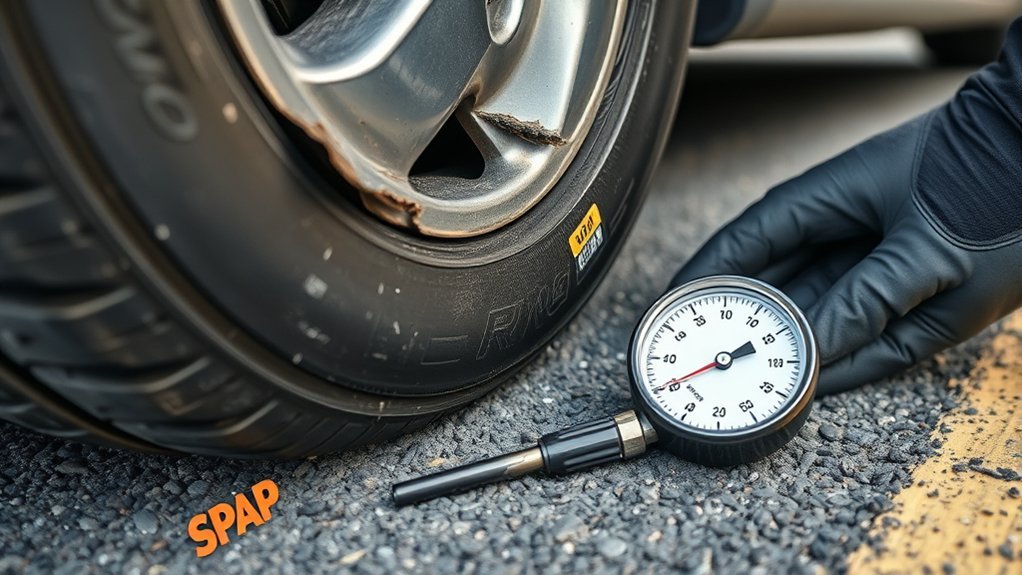
Yes. Low tire pressure can contribute to tire separation because an underinflated tire flexes more than it should. Extra flexing creates heat, and heat can weaken rubber, belts, and the bond between internal layers.
Do not use the maximum pressure printed on the tire sidewall as your daily target. Use the vehicle manufacturer’s recommended cold tire pressure on the driver-side door placard or in the owner’s manual. NHTSA recommends checking all tires, including the spare, at least once a month when the tires are cold.
A tire is “cold” when the vehicle has not been driven for at least three hours. If you check pressure right after driving, heat can raise the reading and make the tire look more inflated than it really is when cold.
Pro Tip: Keep a tire-pressure gauge in your glove box and check pressure monthly. TPMS can warn you when pressure is significantly low, but it does not replace regular pressure checks.
Does a Bad Flat Tire Repair Cause Separation?
Yes, a bad flat-tire repair can raise the risk of separation if it leaves internal damage, moisture, or an unsealed puncture path inside the casing. A quick plug may stop air loss for a while, but it may not prove the tire is structurally safe.
A proper repair starts with removing the tire from the wheel so the inside can be inspected. If the puncture is outside the repairable tread area, if the sidewall is damaged, if cords are exposed, or if the tire was driven flat, replacement is usually the safer choice.
Repair Damage Risks
Repair damage risks rise when a patch or plug hides a deeper problem. Internal belt damage can keep growing under heat, load, and speed. You may not notice the problem until the vehicle starts vibrating or the tread begins to lift.
Watch repaired tires closely. Bulges, new vibration, pressure loss, cracking, or odd wear after a repair should send you back to a tire professional. Do not assume a repaired tire is safe just because it holds air for a few days.
Safe Repair Practices
Safe repair starts with a full inspection. A qualified technician should check the puncture location, size, angle, inner liner, belts, sidewall, and tread condition. The technician should also confirm that the tire has not been overloaded, run flat, or damaged by heat.
If separation has already started, the tire should not be repaired and returned to service. Replace it. A tire with a separating tread or belt has lost the structure that keeps the vehicle stable.
How Does Rough Driving Damage Tires?
Rough driving adds heat, stress, and impact damage. Hard braking, sharp cornering, fast acceleration, potholes, curbs, and heavy loads can all strain the tread, sidewall, belts, and casing.
Excessive Braking Stress
Excessive braking creates heat and friction. Over time, that can accelerate tread wear and stress the bond between tire layers. The risk gets worse if the tire is already underinflated, overloaded, old, or damaged.
- Hard stops can create uneven wear patches.
- Repeated heat cycles can fatigue rubber and belts.
- Flat spots can cause vibration that hides early separation signs.
- Heavy braking on hot pavement adds even more tire temperature.
Smooth braking helps the tire stay cooler and wear more evenly.
Aggressive Maneuvers Wear
Sharp turns and rapid acceleration add side load and twisting force. That force can increase shoulder wear, sidewall stress, and belt fatigue. If the tire is already weak, aggressive driving can make separation appear sooner.
Road impacts matter too. After a hard pothole or curb strike, inspect the tire for bulges, cuts, tread distortion, and air loss. Also check the wheel for bends or cracks.
Why Do Old Tires Separate More Easily?
Old tires separate more easily because rubber and bonding materials change with time, heat, oxygen, sunlight, storage conditions, and use. A tire can age even when it has plenty of tread left.
NHTSA explains that tire aging happens when rubber and other tire components change over time due to service, storage, and environmental conditions. It also notes that some vehicle and tire manufacturers recommend replacing tires at six to 10 years old, regardless of treadwear.
Check the DOT Tire Identification Number on the sidewall. The last four digits show the week and year of manufacture. For example, a code ending in 2522 means the tire was made in the 25th week of 2022.
- Fine sidewall cracks can signal dry rot.
- Bulges can signal internal cord or belt damage.
- Vibration can point to tread distortion or belt movement.
- Old spare tires can age even if they were rarely used.
How Can You Prevent Tire Separation?
You cannot prevent every tire defect or road hazard, but you can reduce the everyday risks that lead to separation. Make tire checks part of your normal maintenance routine.
- Check cold tire pressure monthly. Use the vehicle placard or owner’s manual, not the sidewall maximum.
- Inspect tread and sidewalls. Look for bulges, cracks, cuts, nails, exposed cords, uneven wear, and wavy tread.
- Replace worn tires. NHTSA says tires are not safe when tread is worn down to 2/32 of an inch.
- Rotate tires as recommended. NHTSA says to follow the owner’s manual and, if recommended, rotate every 5,000 to 8,000 miles or sooner if uneven wear appears.
- Do not overload the vehicle. Check the tire load rating and the vehicle loading label.
- Slow down after impacts. Inspect tires after pothole hits, curb strikes, or road-debris impacts.
- Use proper repairs only. Avoid returning a tire to service if it has internal damage, sidewall damage, or signs of separation.
- Check tire age. Use the DOT date code and follow your vehicle or tire manufacturer’s age guidance.
- Check recalls. Use the NHTSA recall lookup for vehicles, tires, and equipment.
[Products Worth Considering]

Monitor tire tread wear with a smart, color-coded depth gauge that shows clear condition ranges at a glance. The bar is range marked for fast, easy readings, helping you maintain safer traction and performance. Each gauge is portable with a pocket clip, and the set includes 20 units for daily use and sharing.

Keep your tires properly inflated with this analog VONDIOR tire pressure gauge, designed for fast, easy readings without batteries. The swiveling, two-axis hose and large glow dial help you measure at any tire angle with instant visibility. Built with a protective rubber shield, it supports durable, low-maintenance use for cars and trucks.

Accurately measure tire tread depth with a calibrated gauge marked from 0 to 1 inch in 1/32 inch increments. The color-coded bar helps you quickly identify tread condition ranges, supporting safe driving for trucks, motorcycles, automobiles, and passenger vehicles.
How to Check a Tire for Separation at Home
You can do a simple visual and feel check at home, but do not crawl under a vehicle on an unsafe shoulder or rely on a home check after strong vibration. When in doubt, have a professional remove and inspect the tire.
| Pressure | Check all tires cold with a reliable gauge. |
| Tread surface | Look for waves, bumps, lifted edges, flat spots, or uneven bands. |
| Sidewalls | Check for cracks, cuts, bubbles, bulges, or exposed cords. |
| Tread depth | Replace tires at 2/32 inch tread depth or sooner if damage appears. |
| Age | Read the DOT date code and follow the tire or vehicle maker’s age limit. |
[Products Worth Considering]
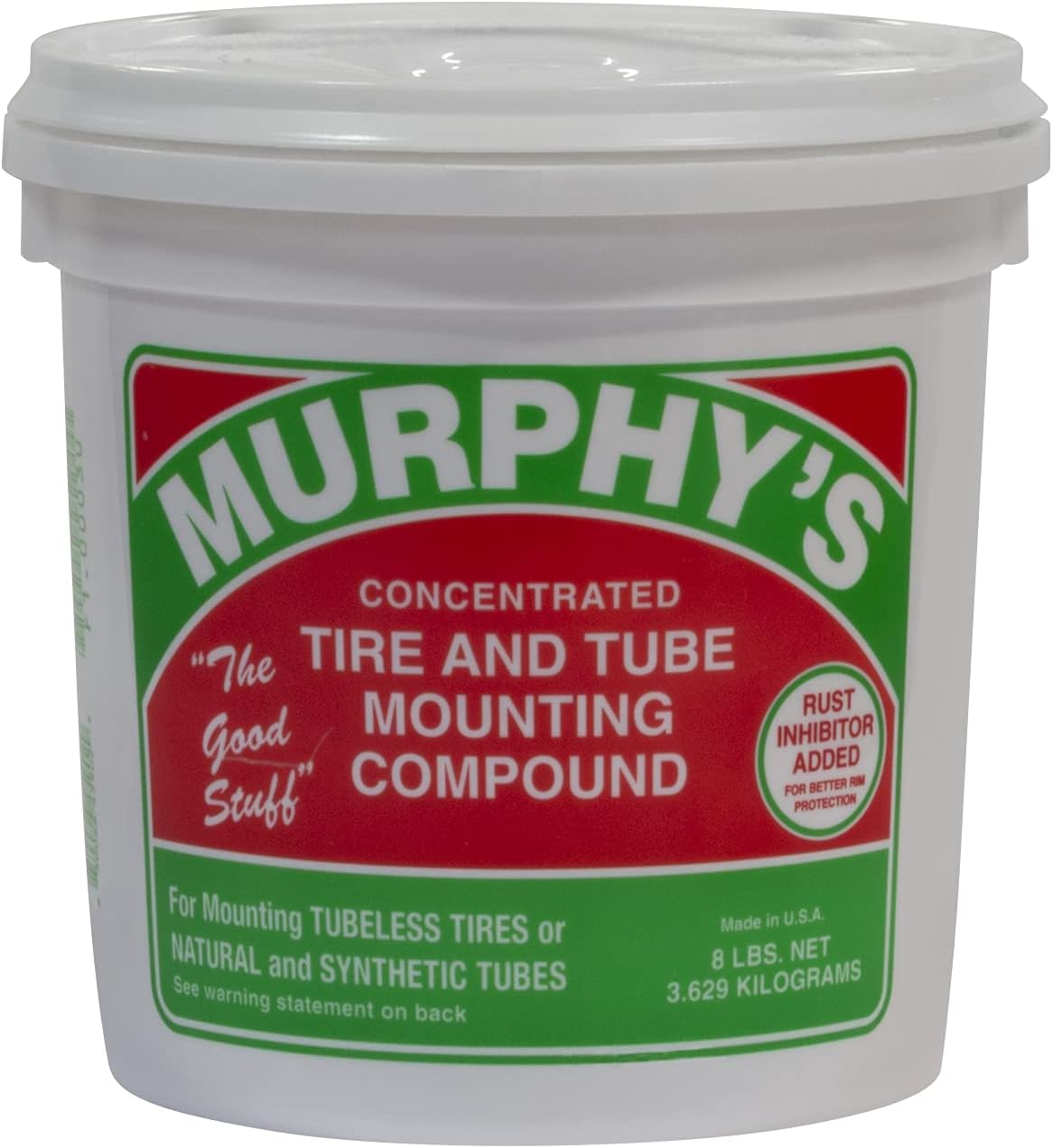
A concentrated tire and tube mounting compound designed to help simplify mounting rubber tires and tubes on passenger, semi truck, construction, and OTR applications. Its ultra-thick formula packs beads effectively and includes rust inhibitors to help protect against corrosion during use.

Measure tire tread depth quickly and accurately with this LUMITECO dial gauge that reads in 1/32" increments up to 14/32". The color-coded green/yellow/red zones make it easy to judge tire wear and know when replacement is needed. A rugged, compact design with a protective pouch helps keep the gauge ready for use on cars, trucks, motorcycles, and more.

The TYAMATE TM8 solar-powered wireless TPMS delivers real-time tire pressure and temperature monitoring with six alarm modes for safer driving. A vibrant color LCD display shows readings clearly while windshield mounting keeps it hands-free and easy to read. With a wide 0–87 PSI range, strong 433.92 MHz signal transmission, and quick sensor pairing, it’s ideal for RV, sedan, SUV, MPV, and truck use.
Frequently Asked Questions
Can I drive with a separated tire?
No. A separated tire can fail suddenly, damage the vehicle, and make steering unstable. Slow down smoothly, pull over when safe, and replace the tire. Do not try to finish a trip on a tire that is thumping, bulging, wobbling, or showing lifted tread.
What are the symptoms of a separated tire?
Common symptoms include vibration, rhythmic thumping, wobbling, pulling, uneven wear, bulges, cracks, tread distortion, exposed cords, or sudden air loss. Any of these signs deserves prompt inspection because internal damage can grow quickly at speed.
Can a tire with a slit be repaired?
Sometimes, but only if the damage is in the repairable tread area and a technician confirms there is no internal damage. A slit in the sidewall, shoulder, belt area, or casing usually means replacement. If the tire shows separation, do not repair it.
How much does it cost to fix a separated tire?
A separated tire is usually not something you fix. You typically replace the tire and may also pay for mounting, balancing, valve service, disposal, and possibly alignment if the vehicle vibrated, pulled, or hit a pothole. The final cost depends on tire size, vehicle type, tire quality, labor rates, and any extra damage.
Will TPMS warn me before tire separation?
Not always. TPMS warns when pressure is significantly low or when the system detects a pressure problem. It may not warn you about belt damage, tread lifting, old rubber, bulges, or a manufacturing defect. Keep doing monthly pressure and visual checks.
Can a tire recall cause tread separation?
A recall may involve a defect that raises the risk of tread separation or another tire failure. Check NHTSA recalls by vehicle, tire, or equipment. If your tire is included, follow the manufacturer’s remedy instructions and do not ignore interim safety guidance.
Conclusion
Tire separation is a serious structural failure, not a cosmetic tire problem. Low pressure, heat, overloading, hard impacts, poor repairs, old rubber, and manufacturing defects can all weaken the bond between tire layers.
Your best protection is routine maintenance. Check cold pressure monthly, inspect tread and sidewalls, rotate tires as recommended, watch tire age, check recalls, and replace any tire that vibrates, bulges, loses air, or shows tread lifting. If separation starts while driving, stay smooth, pull over safely, and do not continue on that tire.
Sources
- NHTSA TireWise: Tire Safety Ratings and Awareness — backs tire pressure, tread depth, rotation, tire aging, TPMS, blowout response, and tire-related crash safety data.
- NHTSA Recalls — backs tire and equipment recall checks, recall remedies, and owner safety guidance.
- NHTSA Part 573 Safety Recall Report 25V704 — backs the example of tread detachment linked to a nonconforming tire compound.