
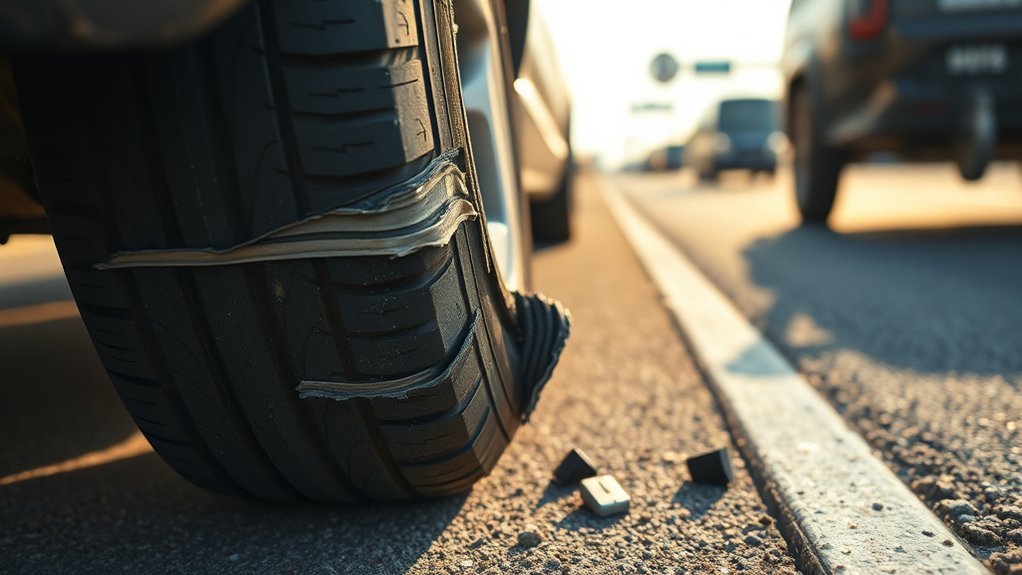
Tire delamination happens when bonded layers inside a tire begin separating, often between the tread and belts or within the casing. It can stay partly hidden until you notice a bulge, distorted tread, vibration, thumping, or a sudden change in handling. Because separation can progress to tread loss or rapid air loss, a suspected tire should be treated as a safety problem.
Quick Answer
If you suspect tire delamination, slow down and stop in a safe place. Do not keep driving on a tire with a bulge, visible tread separation, exposed cords, or severe vibration. Structural separation is not a normal puncture repair; the tire should be removed from service and inspected or replaced by a qualified tire professional.
Key Takeaways
- Tire delamination is a structural separation between tire layers and may develop before the tire loses air.
- Underinflation, heat, overloading, impacts, running with low pressure, aging, and some product defects can contribute to separation.
- Raised tread, bulges, localized distortion, rhythmic thumping, vibration, or exposed cords are important warning signs.
- A vibration alone does not prove delamination because wheel balance, alignment, suspension, and other tire problems can cause similar symptoms.
- A tire with confirmed tread or belt separation should be removed from service rather than treated as an ordinary puncture repair.
What Is Tire Delamination?
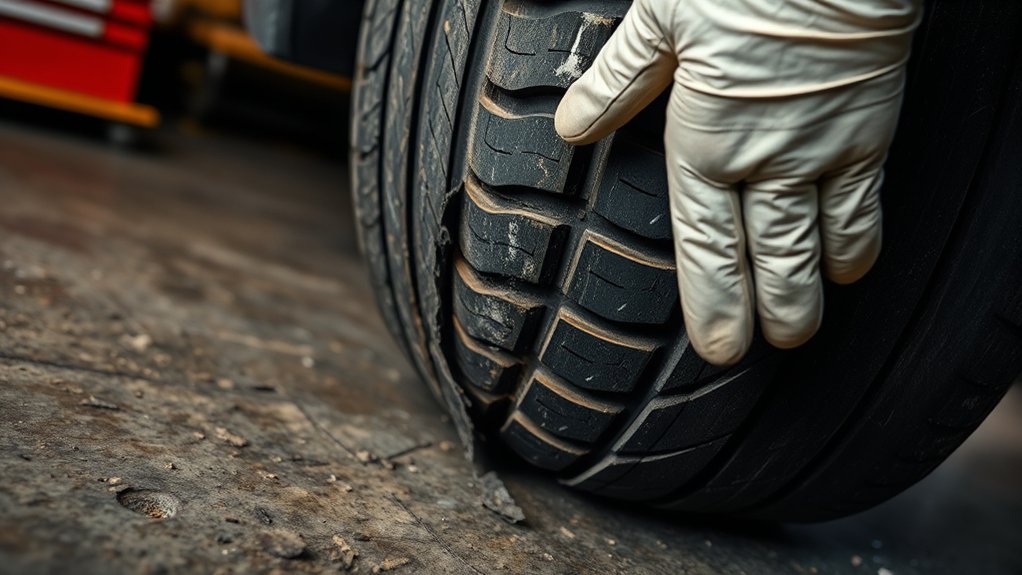
Tire delamination is the separation of bonded layers within a tire. The failure may occur between the tread and steel belts, between belt layers, or within other structural parts of the casing.
This is different from ordinary tread wear. A worn tread loses rubber gradually, while delamination means parts that should remain bonded together are beginning to separate.
A tire can also remain inflated while separation develops. The inner liner may still contain air even though the tread or belt package is no longer behaving as one uniform structure.
A tire can have serious internal separation even when it still holds normal air pressure.
As the separated area grows, the tread may distort and the tire may no longer roll evenly. That can create vibration, noise, changing steering feel, and eventually partial or complete tread loss.
What Causes Tire Delamination?
Tire delamination can result from several forms of stress rather than one single cause. Heat, low inflation pressure, excess load, impact damage, prolonged running while underinflated, aging, and product defects can all weaken the tire or increase stress between its bonded layers.
The exact cause often requires the tire to be removed from the wheel and inspected. Looking at the outside alone may not show whether the failure began from use, impact damage, maintenance history, or a manufacturing-related problem.
Heat And Overloading
Heat and excessive flexing are major threats to tire structure. An underinflated tire bends more with every revolution, while an overloaded tire must carry more weight than intended.
The U.S. Tire Manufacturers Association’s tire-care guidance explains that underinflation creates excessive heat and stress that can cause irregular wear and internal damage.
Sustained high-speed driving can add more heat. Combining speed with low pressure, heavy loading, or hot road conditions increases the amount of energy the casing must absorb.
Use the vehicle manufacturer’s recommended cold tire pressure from the door-jamb placard or owner’s manual. Do not substitute the maximum pressure molded on the tire sidewall for the vehicle’s recommended operating pressure.
You should also respect the vehicle and tire load limits. Overloading increases sidewall and casing flex, which raises heat and structural stress.
Manufacturing Defects
Some delamination starts with a design or manufacturing problem that reduces the durability of the bond between tire components. Possible issues can involve bonding, curing, material placement, or a design that places excessive stress in a particular area.
This is not something you can reliably diagnose from appearance alone. A tire with separation should be inspected and its identification information checked before assuming that maintenance, road damage, or manufacturing was responsible.
Manufacturing-related belt separation is a documented failure mode. For example, NHTSA Recall 24T-009 described affected tires whose design allowed increased shoulder flexing and heat buildup that could lead to belt-edge separation.
That recall also identified localized shoulder wear, excessive vibration, and noise as possible warnings. It shows why a pattern of separation should be checked against recall information rather than blamed automatically on driving habits.
Impact And Run-Flat Damage
A hard pothole strike, curb impact, puncture, or continued driving with substantial pressure loss can damage internal cords or belts even when the outside does not look severely damaged. The failure may become obvious only later.
Michelin’s tire damage and maintenance FAQs list improper inflation, excessive load, speed, heat, prior impact damage, tread cuts, punctures, and running a tire with major air loss among conditions associated with tread-to-belt separation.
After a severe pothole or curb impact, inspect the tire and wheel for pressure loss, cuts, bulges, distortion, or new vibration. Hidden damage may require the tire to be removed from the rim for a proper internal inspection.
What Are the Warning Signs?
The most concerning signs of tire delamination are visible tread separation, bulges, localized distortion, exposed structural material, new vibration, or rhythmic thumping. Some separations are hidden, so no single visual symptom can rule the problem in or out.
Pay attention to changes that appear suddenly or become stronger with road speed. A tire that was previously smooth and quiet but develops a repeating vibration or thump deserves prompt inspection.
Visible Tread Separation
Visible separation may appear as tread that no longer sits flat and evenly around the tire. You may see a raised area, wavy tread surface, gap, lifted edge, localized wear, or a section that looks as though it is pulling away from the casing.
Other warning signs can include:
- scuffed or lifted tread edges
- a hump or high spot that repeats around the circumference
- an unusually worn patch surrounded by healthier tread
- rubber missing deeply enough to expose cords or belt material
- a rhythmic thump that follows wheel speed
If tread or belt separation is visible, stop using the tire. Continued rotation, flexing, and heat can allow the separated area to grow.
Bulges Or Blisters
A bulge or bubble can indicate that internal cords have been damaged and can no longer hold the tire’s shape normally. It is a structural warning, not something to treat as cosmetic damage.
Bulges often follow a hard impact such as striking a pothole or curb. Air can migrate into an area where structural reinforcement has been damaged, pushing the rubber outward.
Do not confuse a true outward bulge with the shallow inward indentations sometimes visible on radial-tire sidewalls. Those indentations can result from normal construction, while an outward bubble requires inspection and normally calls for tire replacement.
If you find an outward bulge, do not attempt to flatten it, puncture it, or continue normal driving. Damage to internal cords cannot be restored with a conventional puncture repair.
Unusual Vibrations Or Noise
Delamination can make a tire lose its uniform round shape, creating a repeating vibration, thump, or humming sound. You may feel it through the steering wheel, seat, or floor as the damaged area rotates under the vehicle.
However, vibration is not proof of delamination. Wheel imbalance, bent wheels, alignment problems, uneven tread wear, suspension faults, or other tire damage can create similar symptoms.
Warning patterns that deserve prompt inspection include:
- new vibration that becomes stronger as speed rises
- a repeating thump on otherwise smooth pavement
- visible tread waviness or a localized high spot
- vibration accompanied by a bulge or lifted tread
- persistent vibration that remains after ordinary wheel-balance issues have been addressed
Note: A visual check cannot rule out every form of internal tire separation. If you suspect structural damage, have a qualified tire professional inspect the tire and remove it from the wheel when an internal examination is needed.
Can You Drive on a Delaminating Tire?
No. If you know or strongly suspect that a tire is delaminating, you should stop driving as soon as you can safely leave the roadway. Separation can worsen without much warning and may progress to partial tread loss, rapid air loss, or loss of vehicle control.
Warning: Do not continue highway travel on a tire with visible tread separation, exposed cords, a large bulge, severe distortion, or violent vibration. Use an appropriate spare if it can be installed safely, or arrange roadside assistance or towing.
If separation causes a sudden tire failure while the vehicle is moving, avoid abrupt steering or braking. NHTSA’s TireWise safety guidance advises holding the steering wheel firmly, gradually releasing the accelerator, stabilizing the vehicle, and then slowing and pulling off the road when it is safe.
Once stopped, stay away from moving traffic and do not put yourself in danger to inspect the tire. If the roadside location is unsafe, call for assistance rather than attempting a tire change beside fast-moving traffic.
[Products Worth Considering]

This ecocstm ratchet wrench is designed to make emergency and routine tire changes faster with a 360° rotating head and quick forward/reverse switching. The extended handle provides extra leverage to reduce effort and hand fatigue, while the adapter helps fit many scissor jacks on cars, SUVs, trucks, and vans. Built for reliable performance with durable construction, it’s a practical travel essential for on-the-road preparedness.

This TPMS relearn tool helps you quickly activate, match, and reset GM tire pressure sensors to keep the vehicle monitoring system working properly. It clears tire pressure alarms and dashboard warning lights after sensor replacement or tire rotation, and supports learning for common 315/433 MHz TPMS sensors. Designed for simple one-button operation, it can help you avoid unnecessary trips to repair shops.

Steelman white tire marking crayons provide high-contrast, semi-permanent marks for repairing and inspecting tires and equipment. They write on wet or dry, smooth or coarse surfaces including rubber, metal, glass, and wood, making them ideal for puncture location and damage outlining. The lead- and zinc-free crayons resist weather and fading yet wipe away when you no longer need the marks.
How Tire Delamination Affects Driving
Tire delamination can make the tire’s contact with the road uneven and unpredictable. As the tread or belt package changes shape, steering response, braking consistency, ride smoothness, and traction can deteriorate.
A separated area may create a high spot each time that part of the tire contacts the pavement. The result can be vibration or a repeating vertical force through the suspension.
As separation becomes more severe, you may notice:
- rhythmic thumping that follows vehicle speed
- a wandering or less precise steering feel
- a sudden pull caused by severe tire deformation or pressure loss
- reduced confidence during braking or lane changes
- visible tread movement, lifting, or missing rubber
The greatest concern is progression. A tire that is still inflated and partly intact can deteriorate further as speed, flexing, load, and heat continue acting on the damaged structure.
What Should You Do Next?
If you suspect tire delamination, your immediate goal is to stop adding speed, heat, and load to the damaged tire. Move to a safe location, keep the vehicle out of normal service, and arrange proper inspection or replacement.
- Reduce speed smoothly. Avoid sudden steering, heavy braking, or other abrupt inputs if the tire is still rolling.
- Leave the roadway when safe. Choose a stable location away from moving traffic whenever possible.
- Switch on the hazard lights. Set the parking brake after the vehicle is securely stopped.
- Inspect only from a safe position. Look for lifted tread, bulges, missing rubber, exposed cords, distortion, or obvious pressure loss.
- Do not continue on a visibly separated tire. Install a suitable spare only when the location and vehicle setup make that safe; otherwise call roadside assistance or arrange a tow.
- Have the tire professionally inspected. Ask the technician to check the tire, wheel, and any nearby components that may have been affected by the failure.
If you see exposed cords, bulging tread, missing rubber, or obvious tread separation, remove the tire from service rather than continuing to drive on it.
Keep the failed tire until you know whether the manufacturer, retailer, insurer, or investigating technician needs to examine it. Photograph the damage and record the tire’s DOT Tire Identification Number when you can do so safely.
You can also use the NHTSA recall and safety-issue lookup to search tires and other vehicle equipment. A known recall may include specific identification, inspection, replacement, or reimbursement instructions.
[Products Worth Considering]

Vigorder rubber cement glue delivers superior adhesion and cures quickly within about 30 seconds for seamless rubber bonding. Once cured, it helps provide a strong, durable, waterproof seal that holds up to vehicle weight, pressure, and heat. Suitable for cars, motorcycles, trucks, bicycles, and off-road tires, it’s designed for emergency patch and maintenance repairs.

This professional wheel and rim cleaning brush set lifts brake dust, grime, and dirt with soft, scratch-free microfiber and synthetic wool fibers. The rim brush bends up to 360 degrees for easy access to hard-to-reach areas around spokes, lips, and faces. Ideal for thorough cleaning of car, truck, motorcycle, bicycle, RV, and more wheel and tire surfaces.

This 3-piece wheel brush set makes it easy to clean wheels and tires with soft, scratch-free brushes designed for lifting brake dust and grime. The flexible rim brush bends up to 360 degrees to reach hard-to-access areas for a thorough clean, while the comfortable grip helps control during detailing. A dedicated detailing brush supports gentle cleaning for sensitive surfaces, including interior use.
How Can You Prevent Tire Delamination?
You cannot prevent every manufacturing defect or road impact, but you can reduce many common stresses that contribute to tire separation. The most useful habits are correct inflation, proper loading, routine inspection, and quick attention after impacts or pressure loss.
- Check pressure when the tires are cold. Use the pressure specified on the vehicle placard or in the owner’s manual.
- Check pressure regularly. Do not rely only on the TPMS warning light to manage normal tire maintenance.
- Stay within load limits. Heavy cargo and towing can increase tire load, flex, and heat.
- Inspect after hard impacts. A pothole or curb strike can create hidden internal damage even when the tire still holds air.
- Do not keep driving on a tire that has lost substantial pressure. Excessive flex can cause internal damage that may not be visible from outside.
- Rotate and maintain alignment as specified for your vehicle. Irregular wear can reveal pressure, alignment, suspension, or tire problems that deserve attention.
- Investigate new vibration or noise. Do not assume that every vibration is merely a balancing issue.
[Products Worth Considering]
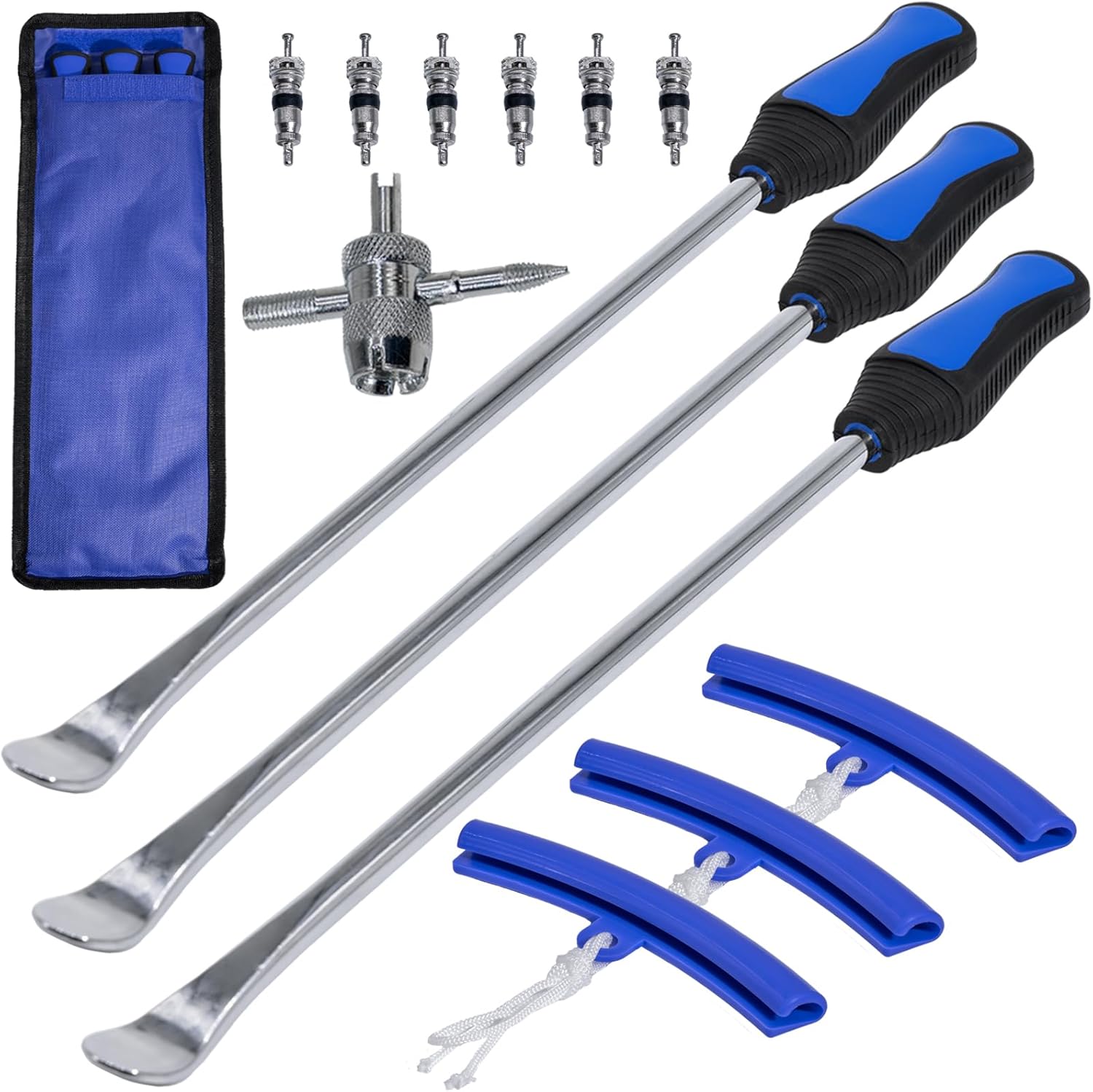
This tire spoon set helps you remove and install motorcycle, dirt bike, lawn tractor, and bicycle tires with extra leverage from a 14.5-inch spoon length. The kit includes tire removal tools, rim protectors, and a valve tool to simplify repairs and help protect rims during changing. Designed for quick, on-the-go service, it’s convenient for garage work, trails, and track-side fixes.

Measure tire tread depth quickly and accurately with this LUMITECO dial gauge that reads in 1/32" increments up to 14/32". The color-coded green/yellow/red zones make it easy to judge tire wear and know when replacement is needed. A rugged, compact design with a protective pouch helps keep the gauge ready for use on cars, trucks, motorcycles, and more.

A concentrated tire and tube mounting compound designed to help simplify mounting rubber tires and tubes on passenger, semi truck, construction, and OTR applications. Its ultra-thick formula packs beads effectively and includes rust inhibitors to help protect against corrosion during use.
Pay Attention to Tire Age
Aging can also affect tire materials even when plenty of tread remains. Heat, environmental exposure, storage, maintenance, and use all influence how quickly a tire ages.
There is no single age at which every tire fails. Michelin’s tire replacement guidance recommends professional annual inspections after five years of service and replacement by ten years from the manufacture date, regardless of remaining tread.
Other tire and vehicle manufacturers can set different service-life recommendations, so follow the instructions that apply to your tires and vehicle.
The final four digits of the DOT Tire Identification Number identify the production week and year. Knowing the tire’s age is especially useful for low-mileage vehicles, spare tires, trailers, collector vehicles, and tires that have spent long periods in storage.
Frequently Asked Questions
Can Tire Delamination Be Repaired, and What Does It Cost?
Tire delamination itself is not a repairable puncture. USTMA repair guidance limits repairs to qualifying tread punctures after internal inspection; structural separation calls for removal from service. Replacement cost varies by tire size, specification, mounting, balancing, and vehicle requirements.
Can Tire Delamination Be Covered by Insurance?
Sometimes. Progressive’s tire-damage guidance notes that comprehensive or collision coverage may apply when tire damage results from a covered event, while normal wear and many routine tire problems are typically excluded. Your actual coverage depends on the policy, deductible, cause of loss, and applicable state terms.
Does Tire Age Increase Delamination Risk?
Yes, aging can make a tire more vulnerable to structural failure because rubber and other components change over time. Age is only one factor, however. Heat exposure, inflation history, storage, impacts, loading, maintenance, and tire design also affect service life.
Are Certain Tire Brands More Prone to Delamination?
You should not judge delamination risk from a brand name alone. Check the specific tire line, DOT identification, maintenance and impact history, current recalls, and any manufacturer inspection findings because defects and service conditions can be specific to a production run or individual tire.
Can Run-Flat Tires Delaminate Too?
Yes. Run-flat construction provides extra support after pressure loss, but it does not make the tread, belts, or casing immune to impact damage, heat, or structural separation. Follow the tire manufacturer’s specific inspection, driving, repair, and replacement limits after a pressure-loss event.
Can Wheel Balancing Fix Vibration Caused by Delamination?
No. Balancing can correct an ordinary wheel-and-tire imbalance, but it cannot restore separated internal tire layers. If vibration is accompanied by tread distortion, a bulge, rhythmic thumping, or another structural warning sign, the tire still needs a proper inspection even if balancing changes the vibration.
Conclusion
Tire delamination is a structural tire failure that deserves prompt action, even if the tire is still holding air. If you see separation, a bulge, exposed cords, severe distortion, or other strong warning signs, remove the tire from service and have it professionally inspected or replaced rather than continuing to drive on it.
Correct cold inflation pressure, proper loading, routine inspections, attention after hard impacts, and age-aware maintenance can reduce preventable damage and help you find problems before they become more serious.
Sources
- U.S. Tire Manufacturers Association — Tire Care Essentials: Supports inflation, heat, stress, inspection, and tire-maintenance guidance.
- NHTSA Recall 24T-009: Documents a design-related belt-edge separation condition, heat buildup, vibration, noise, and localized tread wear.
- Michelin Tire FAQs: Supports tread-separation causes, impact damage, bulges, internal inspection, and warranty considerations.
- NHTSA TireWise: Supports tire maintenance, aging information, physical-damage warnings, and safe response to a sudden tire failure.
- NHTSA Recalls: Supports checking tires and other vehicle equipment for safety recalls and investigations.
- Michelin — When to Replace Tires: Supports professional inspection after five years and the manufacturer’s ten-year replacement recommendation.
- USTMA Tire Repair Basics: Supports puncture-repair limits and the requirement for internal inspection when evaluating repairability.
- Progressive — Tire Damage Coverage: Supports the general distinction between covered accidental events and routine tire wear or maintenance issues.
