
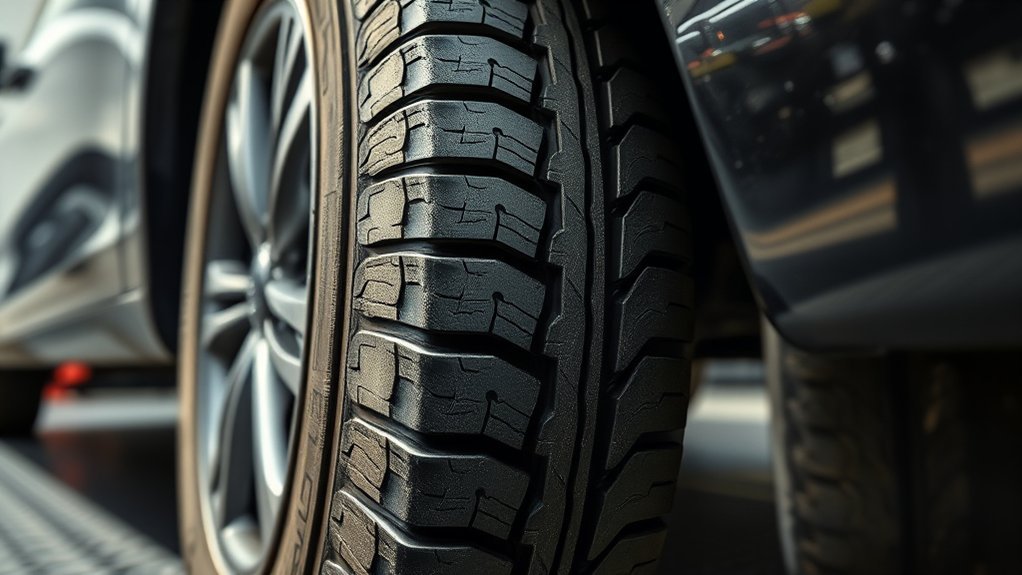
If you’re wondering what happens if you don’t rotate tires, the effects usually build slowly rather than appearing after one missed service. Each wheel position handles different steering, braking, drive, and load forces, so leaving tires in the same positions can create increasingly different wear rates. Catching that difference early matters because lost tread cannot be restored.
Quick Answer
If you don’t rotate your tires, normal differences in front, rear, driven, and steering loads can turn into uneven tread depth. That can shorten tire life, increase road noise, and make grip and handling less consistent, especially in rain. Rotation helps prevent the difference; it cannot restore tread that is already worn away.
Key Takeaways
- Use your vehicle manufacturer’s rotation schedule first; if none is specified, major U.S. tire-safety guidance commonly uses a 5,000–8,000-mile interval.
- Cupping, feathering, one-edge wear, pulling, or vibration can signal pressure, alignment, balance, or suspension problems that rotation alone cannot fix.
- AWD and EV tires still need rotation, but there is no single interval that applies to every AWD or electric vehicle.
- Directional, staggered, and mixed-size setups can restrict which rotation patterns are possible.
What Happens If You Don’t Rotate Tires
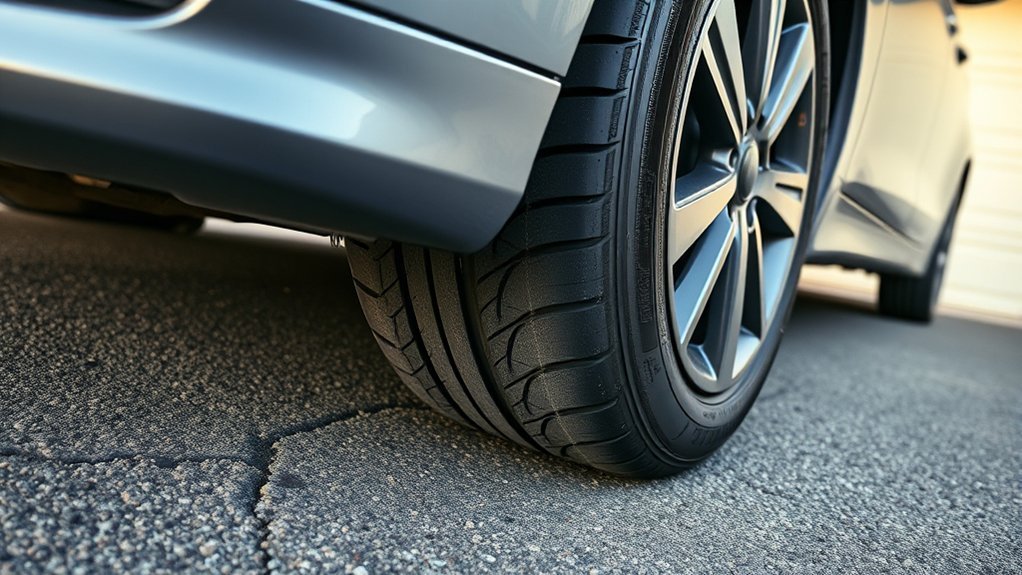
If you keep each tire in the same position for too long, normal differences in workload become differences in tread depth. On many vehicles, the front tires work harder because they steer and carry substantial braking forces; on front-wheel-drive vehicles, they also transmit drive torque.
The result can be one axle wearing out before the other. According to the Michelin tire rotation guidance, regular rotation helps spread those different loads across the tire set and supports more even tread wear, consistent handling, and longer tire life.
Skipping a single rotation does not automatically make a tire unsafe. The concern is repeated neglect that allows a large wear difference or irregular pattern to develop unnoticed.
Rotation is preventive maintenance: it helps distribute normal wear, but it cannot replace rubber that has already worn away.
That distinction matters. If one tire is already badly cupped, worn on one edge, damaged, or near its replacement limit, simply moving it to another corner does not solve the cause.
How Uneven Tire Wear Develops
Uneven wear develops because the four tire positions do not experience identical forces. Steering, braking, acceleration, cornering, load distribution, inflation pressure, wheel alignment, balance, and suspension condition all influence how quickly different areas of tread disappear.
Front tires often develop a different wear rate from rear tires because they steer the vehicle and take substantial load transfer during braking. Driven wheels can also experience additional tread scrub during acceleration.
Rotation changes each tire’s job before those position-specific differences become too large. However, rotation should not be used to hide a mechanical problem.
One-edge wear commonly points toward alignment trouble. Cupping or scalloping can be associated with imbalance or suspension issues, while wear concentrated at the center or both shoulders can indicate an inflation problem. Michelin’s tire wear guidance notes that the underlying cause can be corrected, but an established wear pattern itself cannot be reversed.
Driving style can speed the process. Hard acceleration, repeated heavy braking, fast cornering, rough roads, frequent heavy loads, and curb or pothole impacts can all contribute to faster or more irregular tread loss.
How Skipping Tire Rotation Affects Handling
Skipping rotation can make handling less consistent once tread depths become noticeably different. The axle or tire with less usable tread may respond differently during braking, cornering, lane changes, or wet-road driving.
You may notice less precise steering, additional road noise, or a change in how the vehicle settles during a turn. Large front-to-rear tread differences can be especially noticeable in rain because the more worn tires have less tread available to channel water.
Do not assume every pull or vibration means the tires simply need rotation. Pulling can also come from unequal pressure, alignment, road crown, brakes, or suspension problems. Highway-speed vibration commonly deserves a balance and tire inspection.
If a handling change appears suddenly, inspect the tires rather than waiting for the next scheduled rotation. Look for pressure loss, tread damage, bulges, abnormal wear, or a large tread-depth difference.
[Products Worth Considering]

This tire inflator with pressure gauge delivers long-lasting performance with a durable rubber-protected gauge and sturdy build. The longer hose and 360 swivel air chuck help you seal the valve securely and keep your hands free while measuring, inflating, or deflating. It’s battery-free for reliable use and provides ±2 PSI accuracy in the mid-range for most typical tires, with universal compatibility for 1/4 NPT compressor outputs.

Measure tire tread depth quickly and accurately with this LUMITECO dial gauge that reads in 1/32" increments up to 14/32". The color-coded green/yellow/red zones make it easy to judge tire wear and know when replacement is needed. A rugged, compact design with a protective pouch helps keep the gauge ready for use on cars, trucks, motorcycles, and more.

Monitor tire tread wear with a smart, color-coded depth gauge that shows clear condition ranges at a glance. The bar is range marked for fast, easy readings, helping you maintain safer traction and performance. Each gauge is portable with a pocket clip, and the set includes 20 units for daily use and sharing.
Safety Risks of Uneven Tire Wear
Uneven tire wear becomes a safety problem when it leaves one tire or axle with substantially less usable tread or reveals another fault. Lower tread depth reduces the tire’s ability to maintain grip in poor conditions, while severe irregular wear can also produce vibration and unstable responses.
| Risk | Effect |
|---|---|
| Wet traction | A more worn tire has less tread available to move water from the contact patch |
| Braking | Grip may become less consistent when tread condition differs sharply across the vehicle |
| Cornering | The more worn axle may reach its grip limit sooner |
The NHTSA TireWise guidance recommends checking tire pressure and tread regularly and replacing tires when tread is worn to 2/32 inch. NHTSA also treats rotation, balance, and alignment as part of proper tire maintenance.
Warning: If a tire has exposed cords, a bulge, serious physical damage, or tread at the replacement limit, rotating it is not a repair. Have the tire inspected or replaced before relying on it for normal driving.
Inspect all four tires instead of judging the set by the easiest tire to see. Compare inner, center, and outer tread areas because severe wear can hide on the inside shoulder.
[Products Worth Considering]

Steelman white tire marking crayons provide high-contrast, semi-permanent marks for repairing and inspecting tires and equipment. They write on wet or dry, smooth or coarse surfaces including rubber, metal, glass, and wood, making them ideal for puncture location and damage outlining. The lead- and zinc-free crayons resist weather and fading yet wipe away when you no longer need the marks.

Accurately measure tire tread depth with a calibrated gauge marked from 0 to 1 inch in 1/32 inch increments. The color-coded bar helps you quickly identify tread condition ranges, supporting safe driving for trucks, motorcycles, automobiles, and passenger vehicles.

The Ziopetru adjustable magnetic wheel alignment tool helps you check and restore camber and caster positioning after removing and reinstalling undercarriage components. With a clear leveling/bubble measurement system and an easy zeroing adjustment knob, it supports precise horizontal angle checking. The strong magnetic base mounts to metal surfaces for convenient use at home on cars, motorcycles, trucks, vans, and SUVs.
Why Tire Lifespan Drops Faster
Tire life drops when one or two positions consume tread much faster than the rest of the set. You may then have to replace tires while substantial tread remains on the less-worn positions.
Rotation helps distribute normal position-related wear. It does not eliminate wear caused by incorrect pressure, bad alignment, imbalance, worn suspension parts, or an unsuitable tire setup.
Uneven Tread Wear
Uneven tread depth is the main reason regular rotation can extend the useful life of a tire set. If the same tires remain on the high-wear positions, those tires may reach their replacement point much sooner than the others.
Measure tread at several places across each tire rather than taking one reading. Compare the inner shoulder, center, and outer shoulder, then compare front and rear measurements.
If the difference is mainly between wheel positions and there is no mechanical fault, rotation can help distribute future wear. If the tread itself is feathered, cupped, or heavily worn on one edge, find and correct the cause as well.
Hot Spot Damage
Localized tire stress is more closely associated with problems such as incorrect inflation, misalignment, imbalance, or worn suspension than with a missed rotation by itself. Rotation may expose these patterns during inspection, but the underlying fault still needs correction.
| Cause | Effect | What to do |
|---|---|---|
| Low pressure | Excess flexing and shoulder wear | Set cold pressure to the vehicle specification |
| Misalignment | Rapid or one-sided tread wear | Check and correct wheel alignment |
| Imbalance | Vibration and possible cupping | Check wheel balance |
| Worn suspension | Poor tire control and irregular wear | Inspect and repair worn components |
Once rubber has worn away unevenly, changing tire positions cannot rebuild it. Correct the cause early so the remaining tread has a better chance to wear normally.
Shortened Tire Life
Skipped rotations shorten useful tire life when the high-wear positions reach their limit before the rest of the set. That can leave you buying tires sooner even though other tires still show more tread.
- Front tires can wear faster from steering and braking forces.
- Driven tires can experience more tread scrub during acceleration.
- Heavy loads and aggressive driving can increase wear rates.
- Alignment, inflation, balance, and suspension faults can make the difference much worse.
- Regular measurement helps you catch a growing tread-depth mismatch early.
The goal is not to make every tire wear identically at every moment. It is to keep the set within the vehicle manufacturer’s acceptable condition while preventing one position from using up its tread unnecessarily early.
Fuel Economy Problems From Skipped Rotations
A missed tire rotation does not automatically cause a noticeable fuel-economy drop. Rotation supports even tire maintenance, but incorrect pressure, poor alignment, tire design, driving conditions, and other mechanical factors have more direct effects on rolling resistance and fuel use.
If fuel economy falls while the tires are wearing unevenly, check cold inflation pressure first and look for alignment or mechanical problems. Do not assume that rotating the tires alone will restore lost mileage.
Keeping the tires evenly maintained still matters. A regular rotation visit gives you another opportunity to inspect pressure, tread condition, alignment symptoms, and damage before they become larger problems.
Signs Your Tires Need Rotation
The clearest sign that tire service is overdue is a growing tread-depth difference between positions. However, vibration, pulling, cupping, or shoulder wear may mean you need diagnosis in addition to rotation.
Check the entire set instead of waiting for the vehicle to feel different. Irregular wear can become permanent before it produces an obvious driving symptom.
Uneven Tread Wear
Compare tread depth across all four tires. A consistent front-to-rear difference can indicate that normal position-related wear has been allowed to build, while unusual wear across a single tire often points toward another problem.
- Front and rear tread depths differ noticeably
- One shoulder is wearing faster than the rest
- Tread blocks feel feathered when you run a hand across them
- The tread has scalloped or cupped high and low areas
- One tire is losing usable tread much faster than the others
Rotation may help control future position-related wear, but do not use it as the only response to abnormal wear. Check pressure, alignment, balance, and suspension where the pattern calls for it.
Steering Wheel Vibration
Steering-wheel vibration is a reason to inspect the tires and wheels, not proof that rotation is overdue. Imbalance, irregular tread, wheel damage, or other mechanical problems can all create vibration.
If the vibration is most noticeable at road speed, have the tire and wheel assemblies checked. Rotating an imbalanced or badly cupped tire to another position may change where you feel the vibration without correcting its cause.
Do not ignore a vibration that begins suddenly or becomes severe. Inspect for tire damage, pressure loss, loose wheel hardware, or other faults before continuing normal driving.
Pulling To One Side
A steady pull on a straight, level road deserves inspection because rotation alone may not correct it. Unequal pressure, alignment errors, tire wear, brakes, and suspension condition can all influence directional pull.
Check for these signs:
- Drift left or right on a level road
- Uneven inner or outer shoulder wear
- An off-center steering wheel
- Increasing correction at highway speed
- New tire scrub or abnormal road noise
Start by confirming tire pressures against the vehicle placard. If pressure is correct and the pull remains, inspect the tread and have alignment or related mechanical causes checked.
How Often to Rotate Tires by Vehicle
There is no single rotation interval based only on drivetrain. Your owner’s manual or maintenance schedule should control because manufacturers can specify different intervals, tire setups, and restrictions for otherwise similar vehicles.
If the manufacturer gives no interval, the U.S. Tire Manufacturers Association recommends rotation every 5,000 to 8,000 miles. Rotate sooner when the manufacturer requires it or when irregular wear appears.
| Vehicle type | Rotation guidance |
|---|---|
| Front-wheel drive | Follow the owner’s manual; if no interval is given, 5,000–8,000 miles is a common fallback |
| Rear-wheel drive | Follow the owner’s manual; if no interval is given, 5,000–8,000 miles is a common fallback |
| AWD or 4WD | Follow the manufacturer’s interval and tread-matching requirements; there is no universal 3,000–5,000-mile rule |
| Electric vehicle | Use the vehicle-specific schedule; some EV makers also specify a maximum tread-depth difference |
| Directional or staggered setup | The interval may be normal, but the available rotation pattern can be restricted |
For one vehicle-specific example, Tesla’s Model Y tire-care guidance recommends rotation every 6,250 miles (10,000 km) or when tread-depth difference reaches 2/32 inch (1.5 mm), whichever comes first. That is a Tesla specification, not a universal EV interval.
If you tow, carry heavy loads, drive aggressively, or regularly use rough roads, inspect the tread more often. The inspection may show that service is needed before the normal mileage point.
Common Tire Rotation Patterns
The correct rotation pattern depends on drivetrain, tire direction, tire size, and whether all four wheel positions use compatible tires. Do not choose a pattern from drivetrain alone without checking the vehicle and tire requirements.
- Front-wheel-drive vehicles with equal-size, non-directional tires often use a forward-cross pattern: fronts move straight back and rears cross to the front.
- Rear-wheel-drive vehicles with equal-size, non-directional tires commonly use a rearward-cross pattern: rears move straight forward and fronts cross to the rear.
- Some AWD and 4WD vehicles use an X-pattern or another manufacturer-specified pattern.
- Directional tires normally move front to rear on the same side unless they are dismounted and remounted correctly.
- Staggered setups with different front and rear sizes cannot be rotated front to rear; some can rotate side to side if the tire design permits it.
- A full-size matching spare can be included only when the vehicle and tire manufacturer allow it.
These restrictions are explained in the manufacturer guidance on tire rotation patterns. Preserve any directional arrow on the sidewall and any front-versus-rear size requirement.
Do not rotate winter tires into an all-season set. Seasonal tires should be rotated within their matching set, and Michelin advises against mixing winter and all-season tire types across the vehicle because different grip characteristics can make handling less predictable.
What to Do After Skipping Tire Rotations
If you have missed several rotations, inspect the tires before automatically moving them to new positions. The right next step depends on tread depth, wear pattern, tire condition, pressure, and whether a mechanical problem caused the uneven wear.
A routine position-to-position difference may still benefit from rotation. Severe cupping, one-edge wear, exposed cords, damage, or an unsafe tread depth needs diagnosis or replacement instead.
[Products Worth Considering]

Keep your tires properly inflated with this analog VONDIOR tire pressure gauge, designed for fast, easy readings without batteries. The swiveling, two-axis hose and large glow dial help you measure at any tire angle with instant visibility. Built with a protective rubber shield, it supports durable, low-maintenance use for cars and trucks.

This professional wheel and rim brush kit makes it easy to lift brake dust, grime, and dirt from wheels and tires without scratching finishes. The brushes feature soft, metal-free wool heads and a flexible 360-degree rim brush design for reaching hard-to-clean areas. Includes multiple brush types plus accessories for thorough car, motorcycle, and general vehicle detailing.

This manual duck head tire changer kit makes tire installation and removal simpler by letting you embed the duck head into the tire with applied pressure. The integrated design and durable steel construction help reduce friction and improve efficiency and safety during use. Suitable for 16–21 inch wheels, it’s convenient for cars, trucks, SUVs, and ATV tires, with 24-hour after-sales support.
Inspect Uneven Wear
Measure the inner, center, and outer tread areas on all four tires. This tells you whether the problem is mainly a front-to-rear tread difference or a more serious irregular pattern across an individual tire.
- Measure tread depth at several points around each tire
- Compare both front tires with both rear tires
- Check inner and outer shoulders, not just the center groove
- Look for feathering, cupping, bald areas, bulges, cuts, or exposed cords
- Confirm cold pressure against the vehicle’s tire-information placard
Record the measurements if the differences are significant. They make it easier to see whether the wear is progressing and help a technician identify which tires or wheel positions need attention.
Schedule Missed Rotation
If the tires remain serviceable and the wear pattern allows rotation, restore the manufacturer’s normal schedule rather than waiting for another full interval. Ask for the tread depths and abnormal wear to be checked before the tires are moved.
| Checkpoint | What to do | Why it matters |
|---|---|---|
| Tread depth | Measure all four tires across the tread | Shows whether rotation is still appropriate |
| Pressure | Set cold pressure to the vehicle specification | Prevents pressure-related wear from continuing |
| Alignment and balance | Inspect when wear, pulling, or vibration suggests a problem | Addresses causes that rotation cannot fix |
| Damage | Replace or professionally inspect unsafe tires | Moving a damaged tire does not make it safe |
If replacement is necessary, follow the vehicle and tire manufacturer’s rules for matching tire size, type, and tread depth. This is particularly important on AWD and 4WD vehicles, where large differences in tire circumference may conflict with drivetrain requirements.
Frequently Asked Questions
Can Tire Pressure Affect How Quickly Tires Wear Unevenly?
Yes. Incorrect tire pressure can concentrate wear in certain parts of the tread and shorten tire life. Check pressure when the tires are cold and use the vehicle manufacturer’s pressure on the door-jamb placard or in the owner’s manual, not the maximum pressure molded on the tire sidewall.
Do Electric Vehicles Need Tire Rotations More Often?
Not necessarily. EV weight and instant torque can affect tire wear, but the correct rotation interval is vehicle-specific rather than universal. Follow the EV manufacturer’s maintenance schedule and inspect tread differences between rotations, especially if you accelerate hard or notice rapid wear.
Can Winter Tires Be Rotated With All-Season Tires?
No. Do not rotate winter tires into positions occupied by all-season tires as if they were one matching set. Rotate winter tires within the winter set and all-season tires within the all-season set, while following the correct directional, size, and vehicle requirements.
Does Alignment Matter if I Already Rotate My Tires?
Yes. Rotation distributes normal position-related wear, but it cannot correct a wheel-alignment problem. If you see rapid one-edge wear, persistent pulling, or feathering, have the alignment and related steering or suspension components checked instead of relying on rotation alone.
Can I Rotate Tires Myself at Home Safely?
Yes, if you have the correct equipment and follow the vehicle manufacturer’s lifting, rotation, and wheel-installation procedures. Work on level ground, support the vehicle at approved lifting points, follow the correct rotation pattern, and tighten the wheel fasteners to the manufacturer’s specified torque.
How Long Can You Go Without Rotating Tires?
There is no universal safe extra mileage once a rotation is overdue. Check your vehicle’s specified interval and inspect tread depth and wear across all four tires. If you are already past the schedule, service the tires based on their current condition rather than waiting for vibration or handling problems.
Conclusion
If you don’t rotate your tires, normal differences between wheel positions can grow into uneven tread depth, earlier replacement, extra noise, and less consistent handling. Follow your vehicle’s specified schedule, measure tread across all four tires, and remember that rotation prevents wear differences; it does not repair alignment problems, cupping, damage, or tread that is already gone.
Sources
- National Highway Traffic Safety Administration — TireWise: Tire pressure, tread replacement threshold, rotation, balance, alignment, and tire-safety guidance.
- U.S. Tire Manufacturers Association — Tire Care Essentials: Rotation interval guidance when a vehicle manufacturer does not specify an interval.
- Michelin — Tire Rotation Guide: Benefits of rotation and common rotation patterns for different tire and drivetrain configurations.
- Michelin — Tire Wear Problems: Common abnormal wear patterns, likely causes, and why established uneven wear cannot be reversed.
- Michelin — Mixing Tires: Guidance on matching tire types, winter tires, and AWD or 4WD considerations.
- Tesla Model Y Owner’s Manual — Tire Care and Maintenance: Tesla-specific 6,250-mile or 2/32-inch tread-difference rotation guidance.
