
10 Ply Vs 12 Ply Tires: What’s the Difference?
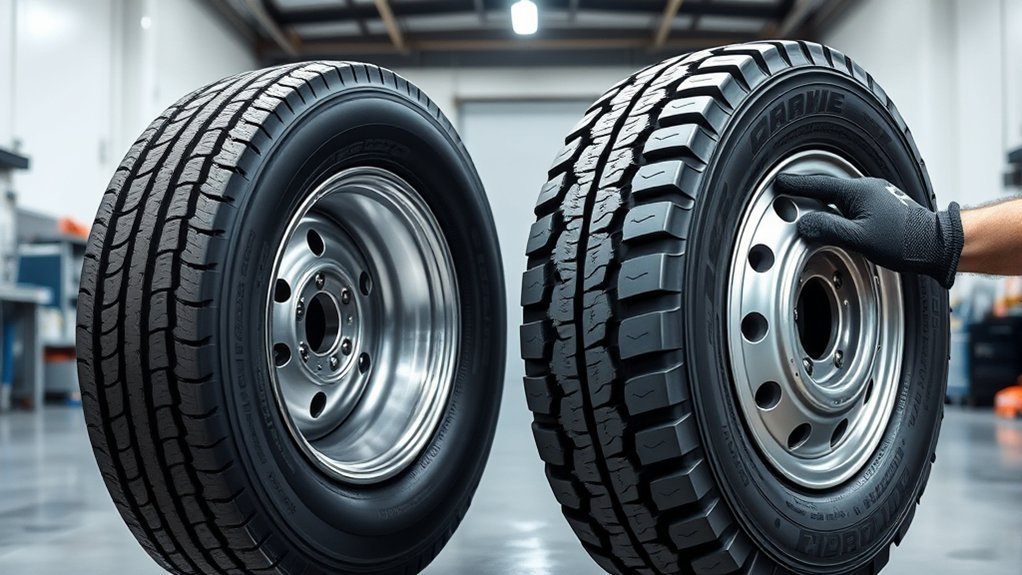
10-ply and 12-ply tires are really load-range ratings, not literal fabric layers. You’ll usually get more load capacity, stiffer sidewalls, and better puncture resistance with 12-ply tires, but they ride firmer and can feel noisier. Ten-ply tires flex more, so they often give you a smoother ride and work well for lighter-duty or mixed-use driving. Your best choice depends on load, terrain, and pressure, and there’s more to compare below.
Key Takeaways
- 12-ply tires generally support heavier loads than 10-ply tires because of their stiffer, more reinforced casings.
- 10-ply tires usually ride smoother and quieter, while 12-ply tires feel firmer and transmit more road impact.
- 12-ply tires offer better puncture resistance and sidewall durability for harsh job sites and debris-prone conditions.
- 10-ply tires suit lighter-duty trucks, mixed use, and trailering where comfort and flexibility matter more.
- Choose based on load, terrain, and maintenance, since proper inflation and care matter as much as ply rating.
What Do Ply Ratings Mean?
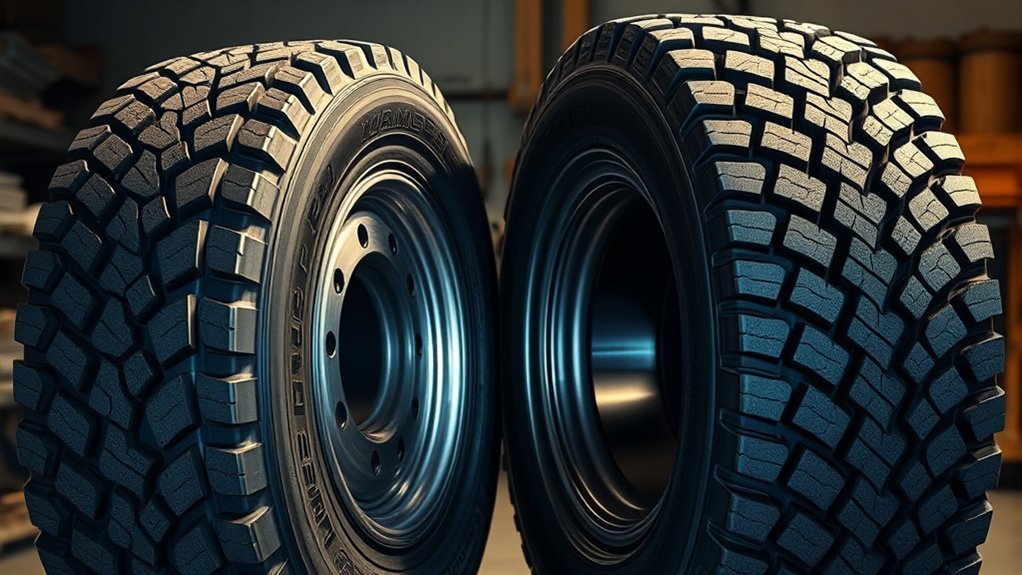
Ply ratings tell you how much load a tire can carry and how much internal reinforcement it has, not the exact number of fabric layers inside it. You use this rating as a practical indicator of strength, especially when you compare tire construction types.
In modern tires, the number often reflects a load range rather than a literal ply count, because manufacturers use stronger materials and different carcass designs. That’s why ply rating significance matters when you match a tire to your vehicle’s weight, towing demands, or jobsite use.
A higher rating usually means the tire can tolerate greater stress, but you still need to check load index, inflation requirements, and the intended application. If you ignore the rating, you risk under-specifying the tire and reducing durability.
When you read the sidewall, treat the ply rating as one part of the overall performance package, not the only measure of capability.
10 Ply Vs 12 Ply Tires Compared
When you compare 10-ply and 12-ply tires, you’ll see that the 12-ply option usually supports a higher load capacity and stiffer sidewall.
You’ll also notice a ride-comfort tradeoff, since the 10-ply tire typically flexes more and absorbs road impacts better.
In practice, you should weigh durability and tread life against the extra weight and firmness that come with the heavier 12-ply design.
Load Capacity Differences
A tire’s ply rating has a direct effect on how much weight it can safely carry, and 12-ply tires generally support heavier loads than lower-ply options.
You get a higher weight capacity because the casing uses stronger internal reinforcement, which helps the tire handle more vertical force without excessive deflection. That improved load distribution lets you carry heavier trailers, trucks, or work gear with less risk of overload.
When you compare 10-ply and 12-ply models, check the load index and inflation table, not just the ply label, because actual capacity depends on size and pressure.
If you regularly haul near maximum payload, the 12-ply option gives you more margin and better durability under sustained stress.
Ride Comfort Tradeoffs
If you want a smoother daily ride, 10-ply tires usually feel more compliant than 12-ply tires because their lighter casing flexes more over bumps and road joints.
You’ll notice less harshness through the seat and steering wheel, especially on patched pavement or broken asphalt.
A 12-ply tire transmits more impact energy, so it can feel firmer and more controlled, but not as forgiving.
Your suspension setup matters here: softer springs and dampers may make a 12-ply tire seem even stiffer, while a well-tuned truck or SUV can mask some of that firmness.
Match the tire to your driving conditions, because highway commuting, mixed roads, and light off-road use all change how much comfort you’ll give up for that extra structural stiffness.
Durability And Tread Life
Durability depends less on the number stamped on the sidewall and more on how the tire’s construction handles load, heat, and abuse over time.
With 12-ply tires, you usually get stiffer carcasses and thicker sidewalls, so you can resist punctures, squirm, and shoulder wear better under heavy loads. That doesn’t guarantee longer tread life, though, because inflation pressure, alignment, rotation, and road conditions drive tread wear just as much.
If you overload a 10-ply tire, you’ll accelerate heat buildup and reduce durability. If you run either tire correctly, a 10-ply can outlast a 12-ply in lighter duty.
Your best durability factors are proper load range, maintenance, and matching the tire to your actual use.
How Much Can 10 Ply Vs 12 Ply Tires Carry?
When you compare 10-ply and 12-ply tires, the key difference is load range: a 12-ply tire typically carries more weight because it uses a higher load rating and stiffer casing than a 10-ply tire. You’ll see the effect in load distribution and tire performance, especially when you tow or haul near capacity.
| Tire Type | Typical Load Capacity | Best Use |
|---|---|---|
| 10-ply | Medium to high | Light trucks, moderate towing |
| 12-ply | Higher | Heavier trailers, commercial loads |
| Match rating | Vehicle-specific | Verify axle and wheel limits |
Always check the tire’s exact load index, inflation pressure, and your vehicle’s gross axle weight rating. Don’t assume all 12-ply tires carry the same load, since size and construction change the numbers. If you run near the limit, the 12-ply option gives you more margin and steadier handling under load.
Which Tire Handles Punctures Better?
Puncture resistance often improves as ply rating goes up, because a 12-ply tire usually has a stiffer casing, thicker sidewalls, and more material to resist cuts, bruises, and road debris than a 10-ply tire.
If you drive on gravel, job sites, or rough roads, you’ll usually get better puncture resistance from the 12-ply option. Its extra reinforcement helps it shrug off sharp objects and reduces the chance that a small cut turns into a sidewall failure.
A 10-ply tire can still handle normal street use well, but it typically gives up some protection to gain a lighter build. You should choose the tire that matches your exposure to hazards, not just the load rating.
If punctures are a frequent risk, the 12-ply tire often delivers better tire longevity and fewer repairs, making it the more durable choice for demanding conditions.
How Do 10 Ply And 12 Ply Tires Ride?
When you compare 10-ply and 12-ply tires, you’ll usually notice that the 10-ply setup rides a bit smoother because its sidewalls flex more under light loads.
The 12-ply tire supports heavier loads better, but that extra stiffness can increase road noise and transmit more vibration into the cabin.
Your actual ride quality depends on load, inflation pressure, and how much sidewall deflection your vehicle allows.
Ride Comfort Differences
If ride comfort matters, 10 ply tires usually feel softer and more compliant than 12 ply tires because their sidewalls flex more under load. You’ll notice more tire softness over sharp edges, which can reduce harshness through the cabin.
That extra compliance also lowers suspension impact, so your shocks and springs don’t have to absorb every small road irregularity as abruptly.
Twelve ply tires typically ride firmer because their stiffer construction transmits more vibration and road texture to the vehicle. On smooth pavement, the difference may be modest, but rough surfaces make it obvious.
If you prioritize a cushioned ride for daily driving, 10 ply tires generally give you the better balance of comfort and control.
Load Impact On Ride
As you add cargo, tow weight, or tongue weight, 10 ply tires tend to compress more and can feel less controlled, while 12 ply tires hold their shape better and keep the truck or SUV more stable under load.
You’ll notice this most when you carry uneven payloads, because sidewall stiffness affects load distribution across the contact patch. A 12 ply tire resists squirm, so the chassis stays flatter and steering inputs feel more direct.
A 10 ply tire can still work well, but it may need higher inflation to support the same weight and preserve ride stability.
If you regularly tow or haul near capacity, the stiffer casing gives you a more predictable ride under pressure and helps maintain proper alignment under dynamic load.
Road Noise And Vibration
Road noise and vibration usually feel different between 10 ply and 12 ply tires because the stiffer 12 ply casing transmits more surface texture and impact feedback into the cabin.
You’ll often notice higher tire noise on coarse pavement and firmer vibration levels over potholes or expansion joints. A 10 ply tire usually filters small irregularities better, so your ride feels calmer in daily driving.
By contrast, a 12 ply tire can feel more controlled under heavy loads, but it won’t isolate you as well.
- Smoother ride: less harshness
- Heavier-duty feel: more feedback
- Tradeoff: durability vs comfort
If you want quiet commuting, 10 ply usually wins. If you need load stability, 12 ply makes sense, even if the cabin feels busier.
Best Uses for 10 Ply Tires
Ten ply tires work best when you need extra load capacity, stronger sidewall support, and better resistance to punctures or flex under heavy use.
Ten ply tires are ideal when you need extra load capacity, stronger sidewall support, and better puncture resistance.
You should choose them for trailering applications where tongue weight, cargo mass, and braking loads push standard tires harder than usual. They also suit off road adventures because the reinforced carcass helps you control deflection on rocks, gravel, and washboard surfaces.
If you tow equipment, haul building materials, or run a pickup with occasional heavy payloads, 10 ply tires give you a practical balance of strength and ride quality.
You’ll also benefit from their durability on mixed-use trucks that split time between pavement and rough terrain.
Keep inflation at the manufacturer’s recommended pressure, because underinflation reduces load capacity and increases heat.
For moderate-duty work, these tires deliver reliable support without the stiffness that can make everyday driving feel harsh.
Best Uses for 12 Ply Tires
Twelve ply tires make the most sense when you’re dealing with heavier loads, harsher jobsite conditions, or towing demands that push lighter-duty tires past their limits.
You’ll get stiffer sidewalls, better puncture resistance, and more stable handling when your vehicle works hard every day. For heavy-duty applications, they’re a strong fit on work trucks, trailers, and equipment that sees repeated abuse.
Their rigid construction also supports better off-road performance on gravel, mud, and rocky terrain, where sharp impacts can damage softer tires. Use them when reliability matters more than ride softness.
- You’ll reduce downtime from tire damage.
- You’ll keep control under load on uneven surfaces.
- You’ll handle towing with more confidence on long hauls.
If your routine includes construction sites, ranch work, or remote access roads, 12 ply tires give you the durability you need.
They’re built for punishment, not comfort, and that’s exactly the point.
How To Choose The Right Ply Rating
Choosing the right ply rating comes down to matching the tire’s construction to your vehicle’s load, terrain, and duty cycle. You should start your tire selection by checking axle weights, towing demands, and how often you run at full capacity.
If you carry heavy cargo, tow equipment, or work on rough surfaces, a higher ply rating usually gives you greater load reserve and better resistance to cuts and bruises. If you drive mostly unloaded or want a softer ride, a lower ply rating can be the better fit.
Evaluate key performance factors such as stability, tread wear, and steering response under real use, not just specs on paper. Also consider whether your vehicle’s suspension and wheel setup can use the tire without creating unnecessary stiffness.
The best choice balances strength, handling, and efficiency for your exact application.
Tire Pressure and Maintenance Tips
Proper tire pressure is critical for ply tires because underinflation increases heat buildup, sidewall flex, and irregular wear, while overinflation can reduce traction and make the ride harsher.
You should check tire inflation when the tires are cold, then compare it with the manufacturer’s load rating and vehicle placard. Use a calibrated gauge, not guesswork, and inspect valve stems for leaks.
On your maintenance schedule, rotate tires regularly, torque lug nuts to spec, and watch for cuts, bulges, or uneven tread.
- If you ignore pressure, you risk blowouts and costly downtime.
- If you stay consistent, you protect handling, braking, and tire life.
- If you track changes after towing or hauling, you catch problems early.
Recheck inflation after temperature swings, long trips, or heavy loads. Small corrections matter, and disciplined care keeps 10 ply and 12 ply tires performing safely and predictably under demanding conditions.
Frequently Asked Questions
Are 12 Ply Tires Always More Expensive Than 10 Ply Tires?
No, you won’t always pay more for 12-ply tires; cost factors like brand, size, and construction matter. You’ll sometimes get better tire performance, but pricing can overlap or reverse between load ratings.
Can I Mix 10 Ply and 12 Ply Tires on One Vehicle?
Yes, you can mix them only if your vehicle’s tire compatibility and load capacity requirements stay equal across axles. You should match size, speed rating, and tread wear, and avoid mixing on the same axle.
Do 12 Ply Tires Reduce Fuel Economy More Than 10 Ply Tires?
Yes—usually a bit. You’ll lose some fuel economy because 12 ply tires often add tire weight and rolling resistance, though load capacity increases. Keep inflation correct and compare actual sizes, tread, and vehicle use.
Are 10 Ply Tires Better for Winter Driving Conditions?
Not necessarily; you should prioritize tire performance and winter traction over ply count. A 10-ply tire can feel like a stubborn mule on ice if tread compound and pattern aren’t optimized for cold, snowy roads.
How Long Do 10 Ply Versus 12 Ply Tires Typically Last?
You’ll usually get 30,000–60,000 miles from 10-ply tires and 25,000–55,000 from 12-ply tires, depending on tread wear, load capacity, alignment, inflation, and driving conditions. You’ll extend life with proper maintenance.
Conclusion
When you choose between 10-ply and 12-ply tires, remember the key tradeoff: load capacity versus ride comfort. A 12-ply tire typically carries about 20% to 25% more load than a 10-ply tire, which matters if you haul heavy gear or tow often. If you want a tougher sidewall and better puncture resistance, go higher. If you prefer a smoother daily ride, 10-ply’s often enough. Match the tire to your actual workload, not just the rating.

Related Articles
10 Ply Vs 14 Ply Tires: Load Range Compared
A 10 ply vs 14 ply tire comparison reveals surprising load range differences, but the best choice depends on more than just ply count.
Read More
4 Ply Vs 6 Ply Tires: Which Do You Actually Need?
Better understand 4 ply vs 6 ply tires before you buy—one choice could change your ride, safety, and load capacity.
Read More
6 Ply Vs 8 Ply Tires: Which Do You Need?
Torn between 6 ply and 8 ply tires? Discover which one fits your driving needs before you buy.
Read More