10 Ply Vs 14 Ply Tires: Load Range Compared
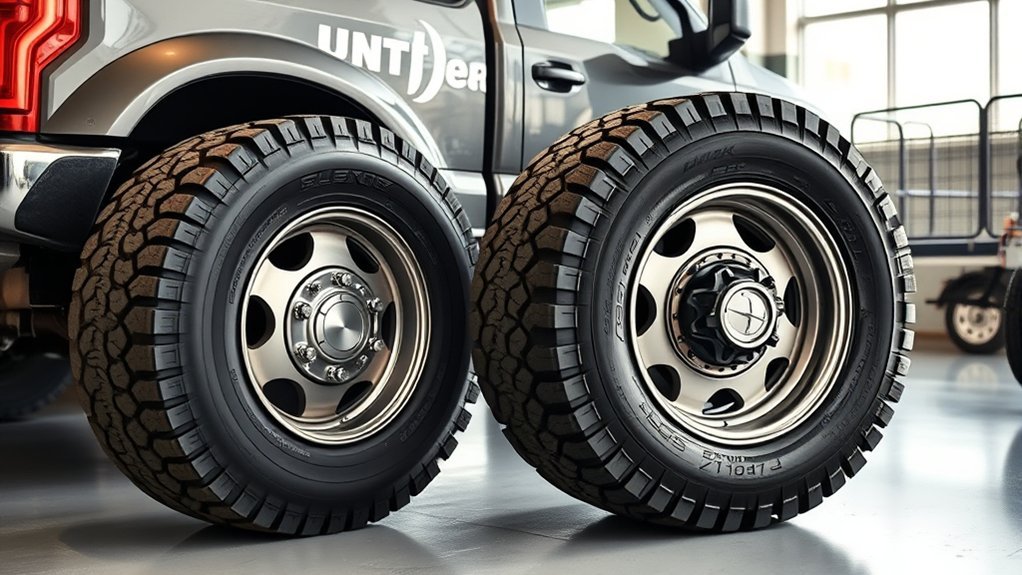
A 14-ply tire usually carries a higher load range than a 10-ply tire, so you can safely support more weight, especially at higher inflation pressures. The stiffer 14-ply carcass resists deflection, heat, and punctures better, which helps with towing and heavy payloads. A 10-ply tire typically rides smoother and suits lighter-duty use. Your exact capacity still depends on load index, construction, and pressure, and the differences matter even more under real-world stress.
Key Takeaways
- “Ply” rating indicates tire strength, not literal fabric layers, and 14-ply is stiffer than 10-ply.
- 14-ply tires usually have a higher load range and can safely carry more weight at proper inflation.
- 10-ply tires typically provide a smoother ride, while 14-ply tires feel firmer and more stable under heavy loads.
- Higher ply tires improve puncture resistance and durability, especially for towing, hauling, and rough terrain.
- Choose based on actual payload, axle weight, and use case; 14-ply is better for heavy-duty needs.
[Products Worth Considering]
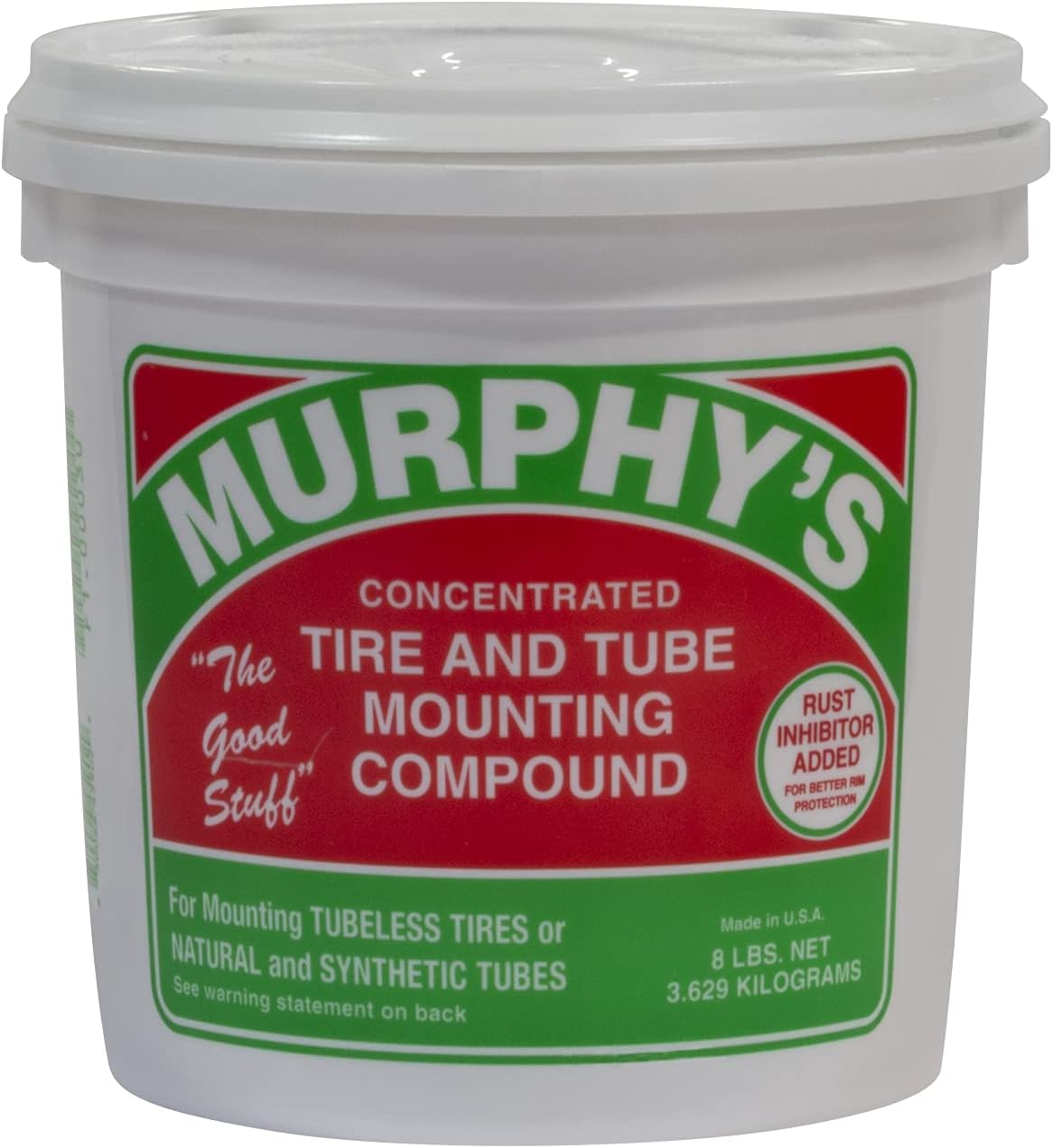
A concentrated tire and tube mounting compound designed to help simplify mounting rubber tires and tubes on passenger, semi truck, construction, and OTR applications. Its ultra-thick formula packs beads effectively and includes rust inhibitors to help protect against corrosion during use.

LiQuiTube Premium Heavy Duty Tire Sealant provides permanent flat tire protection to help maintain proper air pressure while sealing punctures and leaks. It seals bead, rim, and porosity weathering leaks and helps prevent flats in heavy ply industrial tires. Designed for versatile use on trailers and off-road equipment, it can be installed in tubeless tires and also inside tubes.

Secure your vehicle during transport with this 4-pack of heavy-duty tire tie down straps designed for trailers and hauling. The ratchet system with flat hooks and D-rings helps you tension the straps quickly, while the wheel-friendly design protects tires. With high break strength and corrosion-resistant hardware, these straps provide reliable, confidence-inspiring tie-down security for cars, trucks, and UTVs.
What Do 10-Ply and 14-Ply Tires Mean?
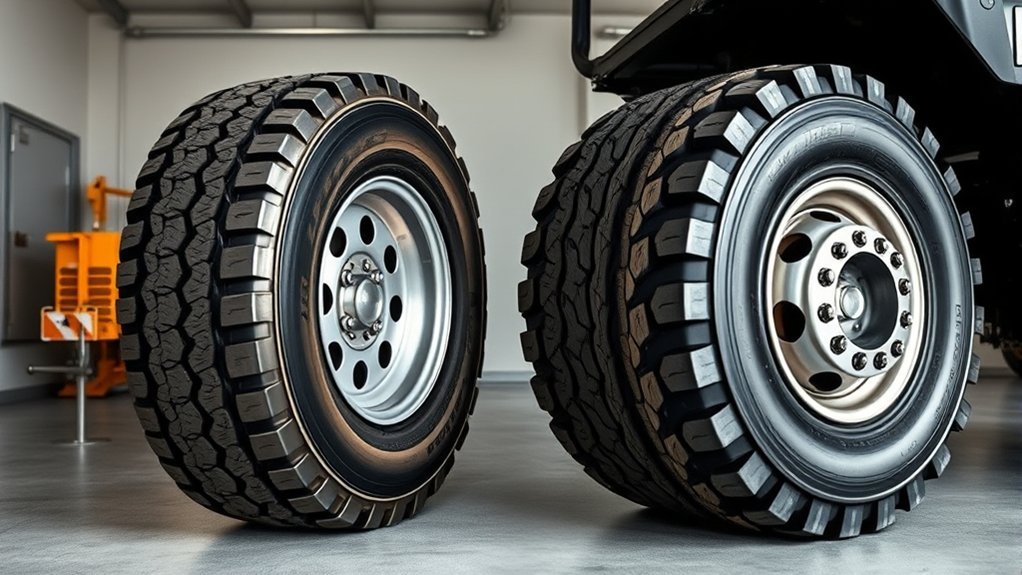
A tire’s ply rating tells you its load-carrying capacity and durability, not necessarily the literal number of fabric layers inside it. When you see 10-ply or 14-ply, you’re reading a strength classification tied to tire construction and the casing’s resistance to deformation.
Modern tires often use fewer physical layers than the rating suggests, because stronger ply materials like steel, polyester, or aramid can deliver equivalent performance. You should treat the number as an index of structural robustness, not a count of plies.
In practice, a 14-ply designation signals a stiffer carcass and higher load tolerance than a 10-ply designation. That extra stiffness can improve stability under heavy loads, but it also affects ride compliance and heat behavior.
How Do Load Ranges Compare?
You’ll find that load range ratings translate directly into how much weight a tire can safely carry at a given inflation pressure.
Higher ply strength usually means a higher load range, but the actual capacity still depends on the tire’s specific load index and construction.
To compare tires accurately, you need to match the load range to your vehicle’s required weight capacity limits, not just the ply count.
Load Range Ratings
Load range ratings indicate how much load a ply tire can safely carry at a specified inflation pressure, so comparing them starts with understanding that higher load ranges generally mean stronger carcass construction and higher capacity.
You should read tire specifications to match the rating with your axle limits, vehicle weight, and intended service. A 10 ply tire usually falls in a lower load range than a 14 ply tire, so it supports less weight at the same pressure.
You’ll notice that load distribution also affects performance: if you carry uneven cargo, the higher rating gives you more margin before the tire approaches its limit.
Always compare rated load per tire, dual setups, and inflation requirements together, since those values determine real-world carrying ability and safety margins.
Ply Strength Differences
Ply strength differences show up in how a tire’s carcass resists deflection, heat, and puncture under load, not just in the number printed on the sidewall.
In tire construction, 10-ply and 14-ply ratings reflect structural stiffness, but actual ply material and cord layout matter more than the label. You’ll usually see a 14-ply design use stronger reinforcement, which can sharpen response and reduce squirm on rough pavement.
- Less sidewall flex
- Better heat dissipation
- More puncture resistance
- Firmer ride feel
When you compare load ranges, you’re comparing how much structural margin the tire builds into its casing.
That margin changes how the tire behaves, especially during cornering, braking, and sustained highway travel.
Weight Capacity Limits
When you compare load ranges, the key number is the maximum weight each tire can safely carry at a specified inflation pressure. A 10-ply tire usually supports less load than a 14-ply tire because its carcass and belt package are rated for a lower capacity.
You should read the sidewall load index, then match it to your axle weight and payload. If you increase tire pressure within the manufacturer’s limits, you raise carrying capacity slightly, but you can’t exceed the rated maximum.
Your driving habits matter too: frequent towing, sharp cornering, and constant high-speed use increase heat and stress, so you need more reserve capacity. Choose the higher load range when your operating weight regularly approaches the tire’s limit.
How Much Weight Can Each Tire Carry?
How much weight a tire can carry depends on its load index, ply rating, tire size, inflation pressure, and intended service use. You should read the sidewall because tire construction directly sets carrying capacity.
A 10-ply tire usually supports less than a 14-ply tire of the same size, but the exact limit comes from the load range table, not the name alone. When you inflate within spec, you maximize rated capacity; when you underinflate, you reduce it sharply.
- You risk heat buildup.
- You lose reserve strength.
- You feel every overload sooner.
- You protect your vehicle less.
For example, a 10-ply light truck tire may carry about 2,600 to 3,000 pounds, while a 14-ply tire can exceed 3,500 pounds, depending on dimensions and pressure.
Check the manufacturer’s chart before you load anything.
Which Is Better for Towing Heavy Loads?
For heavy towing, a higher load range tire is usually the better choice because it offers greater carrying capacity, stiffer sidewall support, and better resistance to sway under tongue weight.
When you’re selecting between 10-ply and 14-ply tires, the 14-ply option typically gives you more margin before you approach the tire’s rated limit. That extra reserve helps maintain stability when your trailer shifts during braking, cornering, or crosswind exposure. It also improves weight distribution across the axle, which reduces heat buildup and carcass deflection.
14-ply tires offer extra reserve capacity, improving stability, reducing heat, and helping control heavy trailer loads.
If your towing capacity is near the truck’s maximum, the stronger tire can provide a more controlled feel, especially with fifth-wheel or gooseneck loads.
A 10-ply tire can still work for moderate towing, but you’ll want to verify load ratings carefully. For consistently heavy trailers, choose the tire that best matches your actual axle loads, not just the nominal vehicle rating.
How Comfortable Are 10-Ply and 14-Ply Tires?
Comfort changes noticeably between these two load ranges because a 14-ply tire usually has a stiffer carcass and sidewall, so it transmits more road texture, vibration, and impact harshness into the cabin than a 10-ply tire.
If you prioritize tire comfort, the 10-ply option usually feels calmer on broken pavement and expansion joints. You’ll notice better ride quality because the casing flexes more under load, which helps absorb small imperfections instead of amplifying them.
- You feel less fatigue on long drives.
- You hear fewer sharp impacts from rough roads.
- You get a more compliant steering response.
- You sacrifice some softness when load demands rise.
A 14-ply tire can still ride acceptably, but you’ll experience a firmer, more direct connection to the road.
That tradeoff matters if your vehicle spends most of its time unloaded.
[Products Worth Considering]

Keep your tires properly inflated with this analog VONDIOR tire pressure gauge, designed for fast, easy readings without batteries. The swiveling, two-axis hose and large glow dial help you measure at any tire angle with instant visibility. Built with a protective rubber shield, it supports durable, low-maintenance use for cars and trucks.

TP-M13W combination repair unit kit includes wrapped stems with matching patches for fast, reliable tire repairs. It’s suitable for both radial and bias ply tires and is designed for chemical or heat vulcanization. Gray vulcanizing gum with blue backing helps create a strong bond, with the stem portion wrapped for added effectiveness.
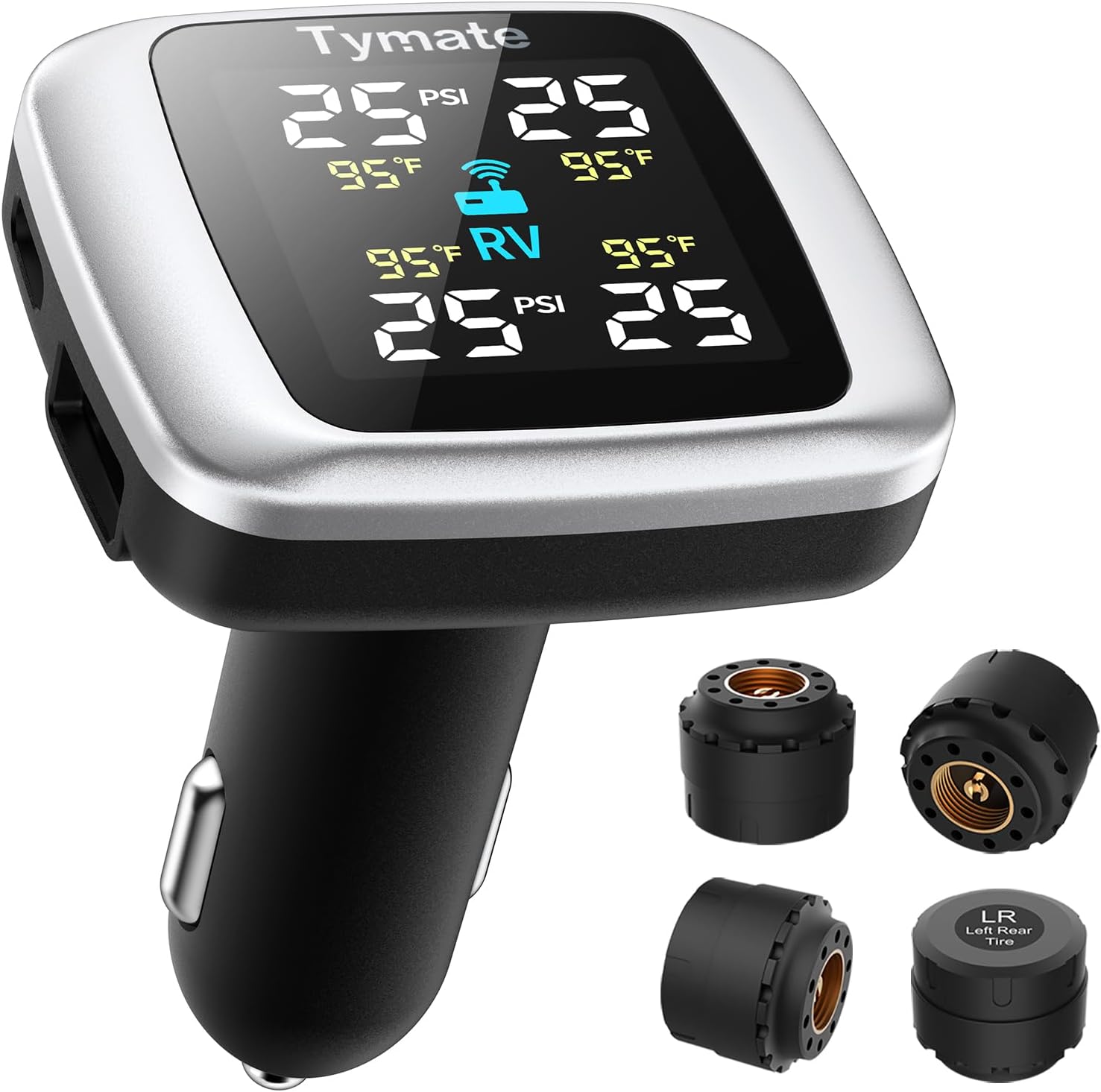
Tymate TM7 is a wireless tire pressure monitoring system that delivers real-time pressure and temperature readings for safer driving. It includes four external sensors, a bright color LCD display with adjustable backlight, and six alarm modes for high/low pressure, fast leakage, high temperature, and sensor signal or battery issues. The system covers a wide 0–144 PSI range and plugs into your vehicle’s cigarette lighter socket for quick DIY setup.
Which Lasts Longer and Resists Punctures Better?
Longevity and puncture resistance usually favor the 14-ply tire because its thicker casing, heavier construction, and stiffer sidewalls better tolerate abrasion, cuts, and repeated heavy loading. You’ll usually see higher tire durability in harsh service because the extra plies reduce flex and slow casing fatigue.
| Tire type | Typical result |
|---|---|
| 10-ply | Adequate durability, more flex |
| 14-ply | Higher puncture resistance, longer life |
That said, 10-ply tires can last longer on smoother surfaces when you avoid overloads and impacts, since lower mass can reduce heat buildup. The key variable is operating stress: sharp debris, potholes, and sustained load cycles accelerate damage in either tire. You should expect the 14-ply tire to resist puncture better, but no tire is immune to sidewall cuts or tread separation. If you want maximum tire durability under severe duty, the 14-ply option generally wins on both wear and puncture resistance.
How Do You Choose the Right Tire?
You should choose a tire based on your vehicle’s actual use, since daily commuting, towing, and off-road driving place different demands on the casing.
Match the ply rating to your expected load, because under-specifying it can increase flex, heat buildup, and failure risk.
Then factor in terrain, as rough surfaces, mud, and sharp debris require more puncture resistance than smooth pavement.
Vehicle Use Needs
How do you choose the right ply tire for your vehicle? Start by matching tire applications to your operating profile. If you drive a light-duty pickup, daily commuter, or service van, you’ll need different vehicle recommendations than for towing, hauling, or fleet work.
Evaluate payload, duty cycle, and expected mileage, then select a ply rating that fits your chassis and suspension limits.
- You reduce wear when the spec matches use.
- You improve steering response with correct sizing.
- You avoid under-spec failures that disrupt work.
- You protect comfort when demands stay moderate.
Choose 10 ply when efficiency matters; choose 14 ply when your vehicle’s configuration requires extra structural reserve.
Your selection should reflect actual use, not guesswork.
Load And Terrain
Once you’ve matched ply rating to vehicle use, narrow the choice by load demands and terrain conditions. You should assess gross axle load, then verify how weight distribution shifts under towing, cargo, or bed loads.
A 14-ply tire handles higher inflation and resists deformation better when you run heavy equipment or constant highway loads. A 10-ply tire often rides more compliantly and can work well if your payload stays moderate.
For Mud terrain, prioritize sidewall strength and tread self-cleaning; for gravel roads, focus on puncture resistance and stable footprint retention. Adjust tire pressure to suit load and surface, because underinflation increases heat while overinflation reduces contact patch and traction.
Match the tire’s load range to your worst-case operating condition, not your average drive.
When Are 14-Ply Tires Worth It?
14-ply tires are worth it when the load, heat, and abuse exceed what lighter-rated tires can safely handle. You should choose them for heavy duty applications where payload stability, sidewall support, and puncture resistance matter more than ride comfort.
In towing, hauling, and commercial use, they reduce deflection under sustained stress and improve tire temperature control. They also suit off road performance when sharp rock impact, low-pressure operation, and repeated flexing would quickly weaken a softer tire.
- You gain higher reserve capacity under extreme weight.
- You reduce sidewall failures on rough surfaces.
- You improve durability during long, hot duty cycles.
- You accept a firmer ride and higher cost.
If your use stays light or mixed, 14-ply tires can be overkill. But when failure would mean downtime, damage, or safety risk, their extra structure pays off.
You’re buying margin, not comfort, and that margin can be decisive.
Frequently Asked Questions
Do 14-Ply Tires Affect Fuel Economy?
Yes, 14-ply tires can reduce your fuel economy because they’re heavier and often have higher rolling resistance. You’ll minimize losses by maintaining correct tire pressure and choosing an efficient tread design for your load and route.
Can I Mix 10-Ply and 14-Ply Tires?
No, you shouldn’t mix them unless your vehicle maker allows it; tire compatibility and load distribution can suffer. You’d think sturdier tires solve everything, but mismatched ply ratings can upset handling, wear, and braking balance.
Are 14-Ply Tires Noisier on Highways?
Yes, you’ll often hear more highway noise from 14-ply tires if their tread design is aggressive or stiff. They can transmit more road vibration, though pressure, alignment, and compound also affect the sound level.
Do I Need Different Wheels for 14-Ply Tires?
Not usually, but check your wheel specifications first. If your existing rims match the tire compatibility requirements for diameter, width, load rating, and bead seat, you’re fine; if not, you’ll need different wheels.
Are 14-Ply Tires Harder to Install?
Yes, you’ll usually find 14-ply tires harder to install because their lower tire flexibility demands more force and stronger installation tools. You’ll need careful bead seating, higher pressure control, and precise handling throughout the process.
Conclusion
When you compare 10-ply and 14-ply tires, you’re really choosing between everyday flexibility and heavy-duty strength. If your truck only occasionally hauls a trailer, 10-ply tires may serve you well. But when your load feels more like a freight train than a weekend project, 14-ply tires earn their keep. You’ll trade some ride comfort for added capacity, durability, and puncture resistance. Choose the tire that matches your payload, not your pride.
[Products Worth Considering]

The 22800 wheel stud installer makes replacing wheel studs quick and secure, saving time and effort during tire service. It uses a ratchet or impact wrench to pull new studs firmly into place, helping when existing studs are too long. Compatible with most automotive wheels and light-duty truck wheel studs, it’s designed for easy, tool-assisted installation.

The Big Rig Defense Tire Thumper is a truck tire pressure checker that lets you quickly check multiple tires by giving them a firm whack. Listen for a reassuring thump and feel the stick bounce when a tire is fully inflated, helping you get back on the road safely. It features a comfortable, glove-friendly handle and a secure wrist strap for confident use on busy routes.

Malco tire mounting and demounting lubricant is a ready-to-use tire lube formulated to reduce friction during tire installation for passenger cars, light trucks, farm tires, and heavy-duty equipment. It provides rust-inhibiting protection to help reduce corrosion on rims and wheels, and helps support proper tire bead seating during inflation to reduce air leakage. The silicone-free, soap-free formula is whitewall safe to help prevent discoloration on whitewall tires and sensitive sidewall markings.

Related Articles

4 Ply Vs 6 Ply Tires: Which Do You Actually Need?
Better understand 4 ply vs 6 ply tires before you buy—one choice could change your ride, safety, and load capacity.
Read More
6 Ply Vs 8 Ply Tires: Which Do You Need?
Torn between 6 ply and 8 ply tires? Discover which one fits your driving needs before you buy.
Read More
265 Vs 285 Tires: Key Differences Explained
Why choose 265 vs 285 tires when the tradeoffs could change your ride, grip, and fitment more than you expect?
Read More