
6 Ply Vs 8 Ply Tires: Which Do You Need?
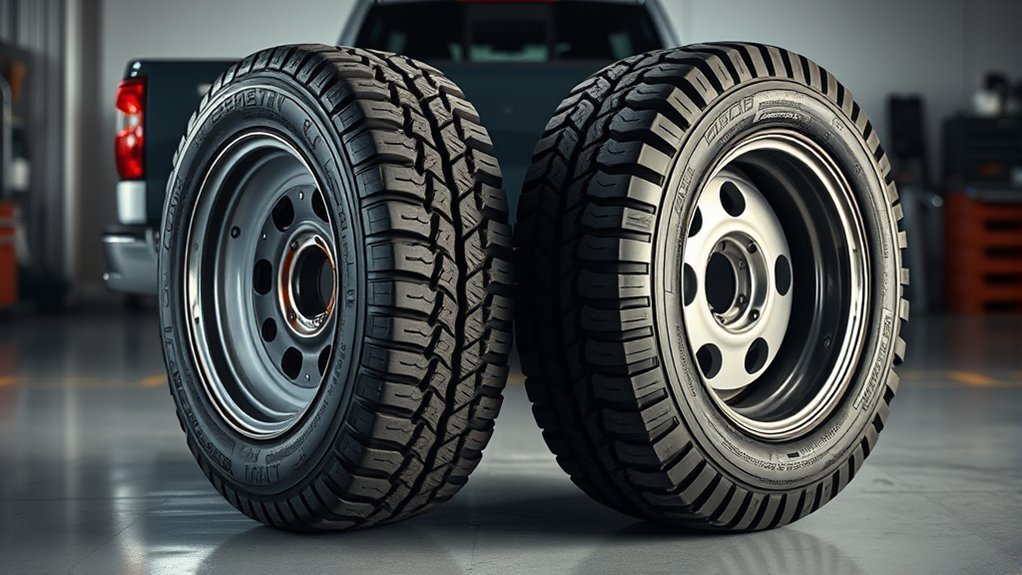
You need 8-ply tires if you haul heavy loads, tow often, drive off-road, or want extra puncture resistance and sidewall stability. Choose 6-ply tires if you mainly commute, carry lighter loads, and want a smoother, more flexible ride. Ply rating reflects load strength, not actual fabric layers, so check the tire’s load index, pressure limits, and vehicle specs before buying. The right choice depends on how hard you use the tire, and more details can help you decide.
Key Takeaways
- 6 ply tires suit light-duty driving, offering a softer ride and lower cost for everyday use.
- 8 ply tires provide greater load capacity, making them better for towing, hauling, and heavy-duty work.
- 8 ply tires resist punctures and sidewall damage better because of their stiffer construction.
- 6 ply tires flex more and absorb road vibration better, improving comfort on regular roads.
- Choose based on vehicle load, terrain, and driving demands rather than ply rating alone.
[Products Worth Considering]
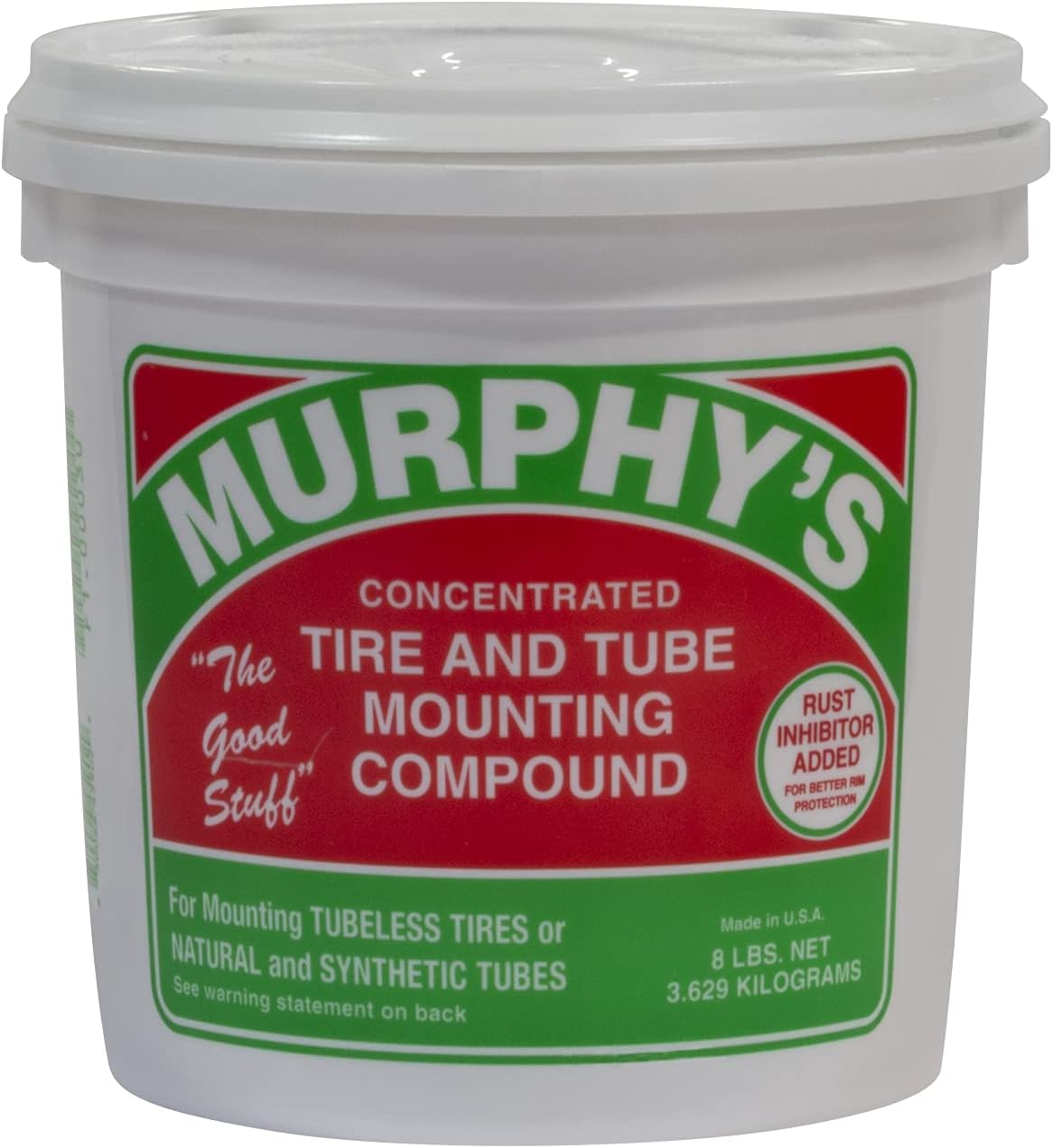
A concentrated tire and tube mounting compound designed to help simplify mounting rubber tires and tubes on passenger, semi truck, construction, and OTR applications. Its ultra-thick formula packs beads effectively and includes rust inhibitors to help protect against corrosion during use.
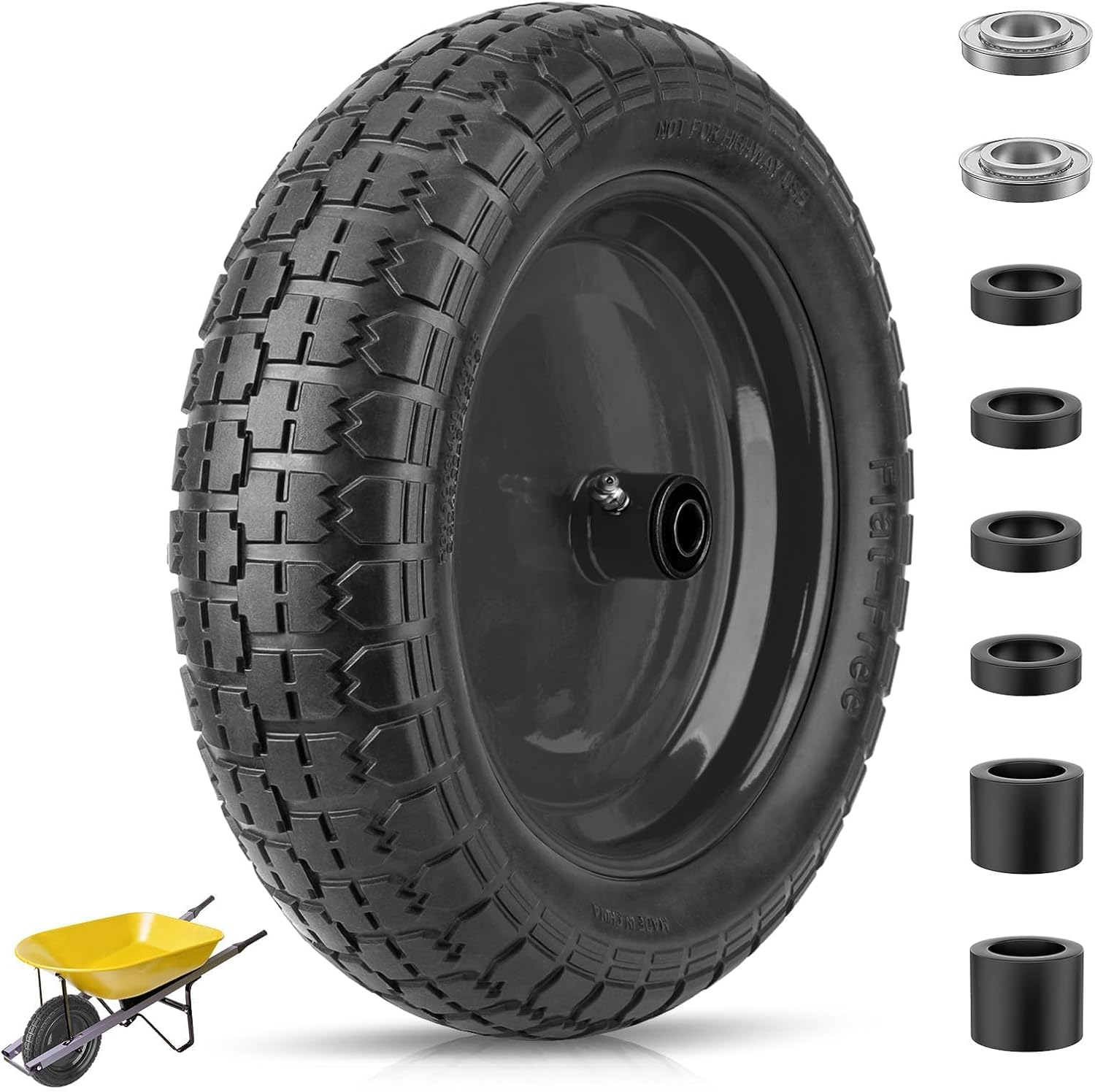
This flat-free TICONN wheelbarrow tire features durable polyurethane foam construction that never needs inflation, helping prevent punctures and reducing maintenance on rough outdoor terrain. With a 300 lb max load capacity and stable steel rim design, it supports safer transport for yard work and hauling tasks. An adapter kit with ball bearings and nylon spacers is included for easier fit and customization across common wheelbarrow and cart axle setups.

The 22800 wheel stud installer makes replacing wheel studs quick and secure, saving time and effort during tire service. It uses a ratchet or impact wrench to pull new studs firmly into place, helping when existing studs are too long. Compatible with most automotive wheels and light-duty truck wheel studs, it’s designed for easy, tool-assisted installation.
What Do 6 Ply and 8 Ply Tires Mean?
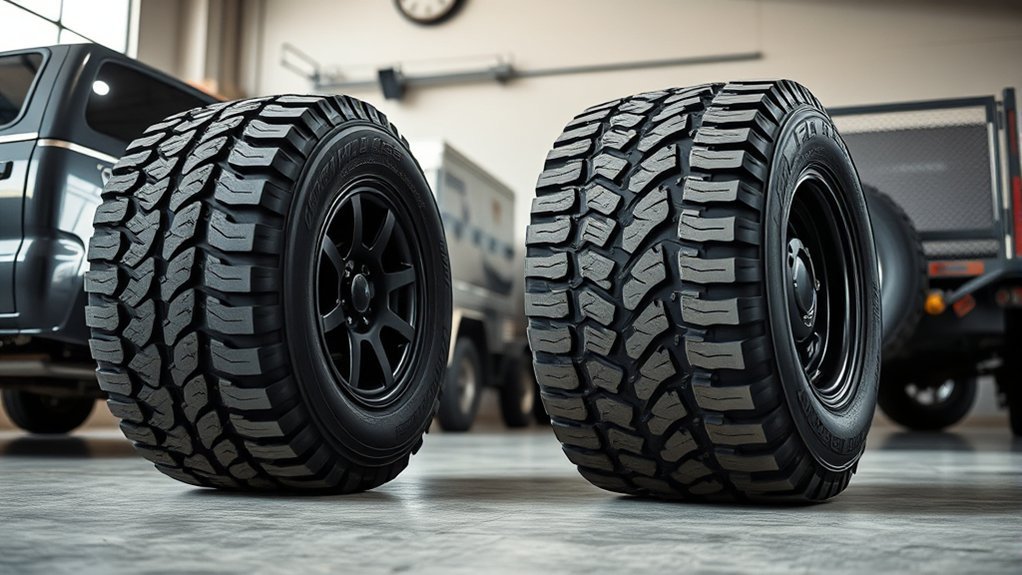
6 ply and 8 ply tires refer to the tire’s load-carrying strength, not the actual number of fabric layers inside the tire. You use these designations to compare load ratings and decide whether a tire matches your vehicle’s demands.
In modern tire construction, manufacturers assign ply ratings to indicate how much weight the tire can support and how much air pressure it can safely handle. You’ll often see these ratings on light truck, trailer, and off-road tires, where durability matters.
A higher ply rating usually signals a stiffer carcass and greater load capacity, but the exact value depends on the tire’s design, materials, and testing standards.
Check the sidewall and specifications before you buy, because the ply label alone doesn’t tell the whole story. You should match the tire’s load ratings to your vehicle’s axle limits and intended use for safe, reliable performance.
How 6 Ply and 8 Ply Tires Differ in Strength
An 8 ply tire generally offers a higher strength margin than a 6 ply tire, so it can handle greater load, higher inflation pressure, and more demanding service without flexing as much. You’ll notice the difference in carcass stiffness, which affects sidewall deflection, puncture resistance, and tire durability. A 6 ply tire still performs well for lighter-duty use, but its structure is usually more compliant, so it deforms sooner under stress.
| Tire rating | Strength profile |
|---|---|
| 6 ply | More flexible, adequate for moderate service |
| 8 ply | Stiffer, better resistance to deformation |
| 6 ply | Lower structural reserve |
| 8 ply | Higher structural reserve |
That extra reserve boosts load capacity in real use, especially when terrain, speed, or repeated impacts increase stress. If you need a tire that stays controlled under harsher conditions, the 8 ply option gives you more margin before the casing starts to work hard.
Which Tire Handles More Weight and Pressure?
When you compare 6 ply and 8 ply tires for weight and pressure, the 8 ply tire usually comes out ahead.
You’ll get a higher load capacity because its casing uses stronger reinforcement and can support more vehicle weight without reaching its limit as quickly. That matters when you tow, haul cargo, or run equipment that places steady stress on the tire.
An 8 ply tire also offers greater pressure tolerance, so you can inflate it to suit heavier loads within the manufacturer’s range.
A 6 ply tire can still perform well, but it reaches its rated capacity sooner and gives you less margin for demanding use.
If you need maximum carrying ability and stable inflation under load, choose the 8 ply option.
Always check the tire’s load index and inflation chart, since actual performance depends on size, speed rating, and application.
How 6 Ply and 8 Ply Tires Affect Ride Comfort
Because an 8 ply tire has a stiffer casing, it usually transmits more road harshness than a 6 ply tire. So you’ll often notice a firmer ride, especially on rough pavement or unpaved surfaces. That extra stiffness reduces sidewall flex, so your vehicle responds more directly to bumps and expansion joints.
A 6 ply tire typically absorbs more vibration, which can improve ride quality in everyday driving and make long trips feel less fatiguing. By contrast, an 8 ply tire can feel more controlled under load, but it often lowers comfort levels when you’re driving without heavy cargo.
Tire pressure also matters: overinflation amplifies harshness in either construction, while proper inflation helps preserve compliance. If you prioritize a smoother feel, you’ll generally prefer the more flexible casing. If you want a tighter, less compliant response, the stiffer option delivers that.
Still, tread design, suspension tuning, and vehicle weight all influence the final ride.
When to Choose 6 Ply Tires
You should choose 6 ply tires when your driving needs favor comfort, lighter-duty use, and better compliance over maximum stiffness. You’ll get a casing that flexes more readily, which helps on paved roads and light off-road surfaces. Match the tire’s load ratings to your axle and cargo demands, then confirm the tread patterns suit your terrain and wet-weather traction needs.
| Use case | Why 6 ply fits | Check |
|---|---|---|
| Daily commuting | Better ride compliance | Load ratings |
| Light hauling | Adequate support | Payload margin |
| Mixed-road driving | Balanced traction and comfort | Tread patterns |
| Occasional trail use | Improved surface conformity | Sidewall damage risk |
If you prioritize steering feel, reduced harshness, and predictable road manners, 6 ply tires are the practical choice. You’ll still need to verify inflation pressure, speed rating, and vehicle manufacturer specifications before mounting them.
[Products Worth Considering]

Secure your vehicle during transport with this 4-pack of heavy-duty tire tie down straps designed for trailers and hauling. The ratchet system with flat hooks and D-rings helps you tension the straps quickly, while the wheel-friendly design protects tires. With high break strength and corrosion-resistant hardware, these straps provide reliable, confidence-inspiring tie-down security for cars, trucks, and UTVs.

LiQuiTube Premium Heavy Duty Tire Sealant provides permanent flat tire protection to help maintain proper air pressure while sealing punctures and leaks. It seals bead, rim, and porosity weathering leaks and helps prevent flats in heavy ply industrial tires. Designed for versatile use on trailers and off-road equipment, it can be installed in tubeless tires and also inside tubes.

Keep your tires properly inflated with this analog VONDIOR tire pressure gauge, designed for fast, easy readings without batteries. The swiveling, two-axis hose and large glow dial help you measure at any tire angle with instant visibility. Built with a protective rubber shield, it supports durable, low-maintenance use for cars and trucks.
When 8 Ply Tires Make More Sense
8 ply tires make more sense if you need a stiffer casing for heavier loads, more stable handling, or better resistance to punctures and sidewall flex.
You should choose them when your vehicle routinely carries cargo near its rating, because their higher load capacity helps the tire maintain its shape under stress.
That stiffness also improves tread durability by reducing squirm and heat buildup, especially during long highway runs or repeated stop-and-go use.
If you tow, haul, or run at higher pressures, 8 ply construction can keep steering response more consistent and reduce the chance of casing fatigue.
You’ll usually notice less deflection in corners and better support on rough pavement.
In practice, pick 8 ply tires when you want a stronger safety margin, not just a softer ride.
They’re a practical upgrade whenever durability and stability matter more than comfort.
Are 6 Ply or 8 Ply Tires Better for Trucks, Trailers, and Off-Road Use?
For trucks, trailers, and off-road use, the better choice depends on how much load, impact, and tire deflection you expect in daily use.
If you run lighter loads, a 6 ply tire can give you enough ride compliance and less stiffness, which may improve traction on uneven surfaces.
For heavier towing, cargo hauling, or repeated shock loading, an 8 ply tire usually delivers higher tire durability and better resistance to sidewall damage.
On rough trails, the stiffer casing of an 8 ply tire can help control squirm and heat buildup, supporting stronger off road performance under pressure.
For trailers, that extra carcass strength also helps keep the tire stable at sustained highway speeds and when weight shifts during braking or cornering.
You’re not just choosing strength; you’re balancing casing support, puncture resistance, and the amount of flex your application can tolerate without losing control or wearing the tread unevenly.
How to Choose Between 6 Ply and 8 Ply Tires
Choosing between 6 ply and 8 ply tires starts with matching the tire’s load rating and carcass stiffness to how you actually use the vehicle. You should verify axle loads, towing weight, and inflation limits before you buy.
Match tire load rating and carcass stiffness to your vehicle’s real-world use, axle loads, and inflation limits.
A 6 ply tire usually gives you a softer ride and better compliance on light-duty pavement use, while an 8 ply tire resists deformation better under heavy loads and rough terrain.
- Check the manufacturer’s load ratings against your heaviest expected cargo.
- Compare tread patterns for traction, braking, and self-cleaning needs.
- Pick 8 ply if you run higher pressures, tow often, or hit sharp debris.
- Choose 6 ply if you prioritize ride comfort, fuel efficiency, and lighter loads.
If your vehicle stays near its rated capacity, 6 ply often works. If you regularly overload, run sustained highway heat, or need added puncture resistance, 8 ply is the safer technical choice.
Frequently Asked Questions
How Do Ply Ratings Affect Tire Puncture Resistance?
Higher ply ratings usually improve puncture resistance because your tire construction uses stronger, thicker carcass layers, but they don’t make tires invincible. You’ll still need proper inflation and care, since load capacity also affects durability.
Are 6 Ply Tires Better for Fuel Economy?
Yes, you’ll often get better fuel economy with 6-ply tires because they usually reduce tire weight and rolling resistance. However, lower load capacity can limit performance, so you should match tire choice to your actual demands.
Do 8 Ply Tires Increase Road Noise?
Yes, 8 ply tires can increase road noise; you’ll often hear more if the tread design is aggressive. However, load capacity and inflation matter more. You can verify this by comparing identical models on the same surface.
Can I Mix 6 Ply and 8 Ply Tires on One Vehicle?
You can, but you shouldn’t unless tire compatibility and load capacity match your vehicle’s axle requirements. Keep identical size, tread, and inflation pressures on each axle; mismatched construction can alter handling, wear, and stability.
How Long Do 6 Ply Versus 8 Ply Tires Typically Last?
They typically last similarly, but you’ll often get better durability from 8-ply tires under load. Your tire longevity factors include inflation, alignment, rotation, and driving style; watch tread wear patterns to estimate remaining service life accurately.
Conclusion
Choosing between 6 ply and 8 ply tires is ironic: the tougher tire is not always the smarter one. If you want a smoother ride and lighter loads, 6 ply may fit your needs better. If you haul heavier cargo or face rough terrain, 8 ply gives you more reserve strength and pressure capacity. You don’t need the strongest tire on the rack—you need the one that matches your load, road, and driving demands.
[Products Worth Considering]

Orange Seal regular formula tubeless sealant quickly seals punctures and forms a durable bond inside your tire to help reduce flats. Made with natural latex, it adheres effectively to rubber and seals from the inside out, including the critical bead-to-rim interface for a reliable ride. It seals punctures up to 1/4 inch, slices up to 3/4 inch, and performs in temperatures as low as 11°F across MTB, road, cyclocross, gravel, and e-bike applications.

Check tire pressure with the Milton S-925 pencil gauge built for trucks, RVs, and bicycles. It features a single-head chuck with a built-in deflator valve, and it displays readings in both PSI and kPa for convenient use. The gauge is designed for accurate, repeatable pressure checks within its working range.

The Topeak SmartGauge D2 delivers precise digital tire pressure readings for bikes, motorcycles, and sports equipment up to 250 psi (17 bar). Its rotating SmartHead works with both Presta and Schrader valves, so you can check pressure quickly without adapters. The LCD display makes it easy to read results in psi, bar, or kg/cm² with an included CR2032 battery for immediate use.

Related Articles
265 Vs 285 Tires: Key Differences Explained
Why choose 265 vs 285 tires when the tradeoffs could change your ride, grip, and fitment more than you expect?
Read More
How to Choose Tires for 20×10 Wheels
Just how wide should your tires be for 20x10 wheels, and which size best balances fitment, grip, and clearance?
Read More
Q vs T Speed Rating: Which Do You Need?
How do Q vs T speed ratings affect safety and performance, and which one is right for your vehicle?
Read More