
Q vs T Speed Rating: Which Do You Need?
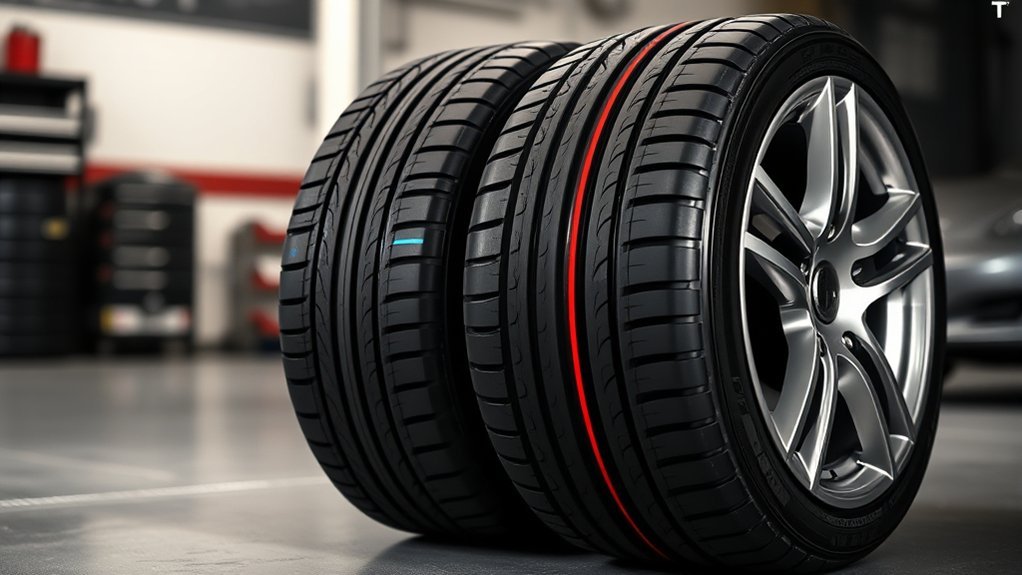
Q- and T-rated tires have different tested speed capabilities, but the correct choice is not based simply on how fast you normally drive. A Q-rated tire is rated to 99 mph (160 km/h), while a T-rated tire is rated to 118 mph (190 km/h). For normal replacement, start with the tire size, load index, and speed rating specified by your vehicle manufacturer.
Quick Answer
Q-rated tires have a tested speed capability of 99 mph (160 km/h), while T-rated tires are rated to 118 mph (190 km/h). For replacement tires, the safest default is to match the vehicle maker’s specified size, load index, and speed rating. A lower rating can change handling and limits, with limited winter-tire exceptions.
Key Takeaways
- Q = 99 mph (160 km/h); T = 118 mph (190 km/h) under standardized test conditions.
- For normal replacement, use the speed rating, tire size, and load capacity recommended by the vehicle manufacturer.
- Driving below 99 mph does not automatically make a Q-rated tire an appropriate replacement for a vehicle specified for T-rated tires.
- Speed rating alone does not tell you which tire has better wet grip, braking, comfort, noise, steering response, or tread life.
- A lower speed-rated winter tire may be acceptable in some applications if the vehicle and tire manufacturers allow it and the lower speed limit is observed.
What Do Q and T Speed Ratings Mean?
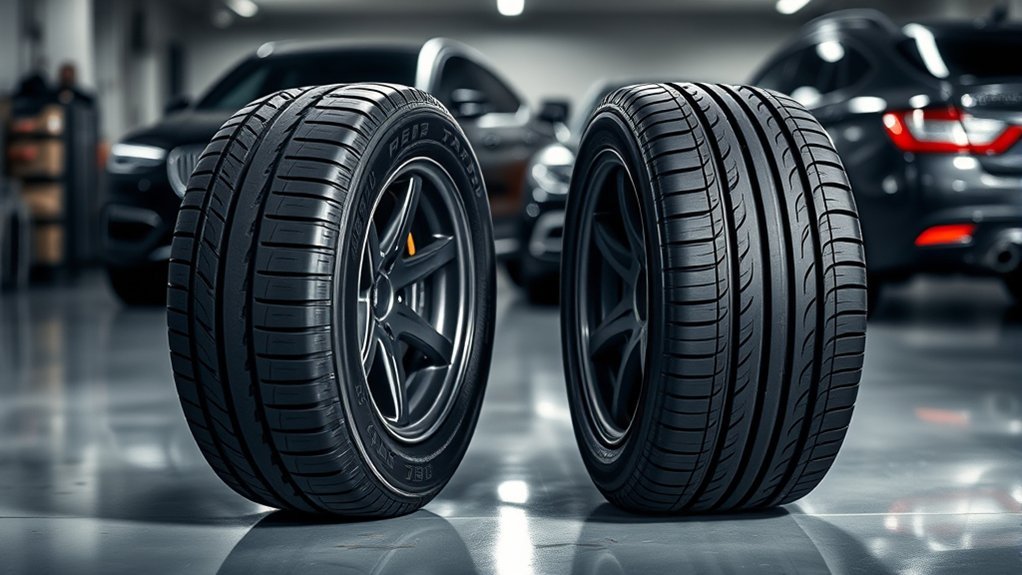
Q and T are tire speed-rating symbols. They identify a tire’s tested speed capability when the tire is properly inflated, properly loaded, undamaged, and operated under specified conditions.
According to Bridgestone’s tire safety guidance, a Q rating corresponds to 99 mph (160 km/h), while a T rating corresponds to 118 mph (190 km/h).
| Speed Rating | Maximum Rated Speed | Maximum Rated Speed |
| Q | 99 mph | 160 km/h |
| T | 118 mph | 190 km/h |
The speed symbol normally appears in the tire’s service description. For example, in 215/60R16 95T, the number 95 is the load index and the final T is the speed rating.
The rating does not independently measure wet traction, dry braking, hydroplaning resistance, tread life, ride comfort, or road noise. Those characteristics depend on the tire’s tread compound, tread pattern, casing construction, size, pressure, temperature, and other design factors.
A tire speed rating is a standardized performance classification, not permission to drive at that speed and not a standalone measure of grip or braking.
[Products Worth Considering]

The SAFELIFE dial tire tread depth gauge measures tread depth in 1/32 inch increments with clear, easy-to-read 2-inch dial face. Color zones using a traffic light system help you quickly judge whether tread is low, marginal, or ample for safer driving. Built with a durable zinc cast body and a metal detect probe for precise, comfortable use across cars, motorcycles, trucks, and buses.

Measure tire tread depth quickly and accurately with this LUMITECO dial gauge that reads in 1/32" increments up to 14/32". The color-coded green/yellow/red zones make it easy to judge tire wear and know when replacement is needed. A rugged, compact design with a protective pouch helps keep the gauge ready for use on cars, trucks, motorcycles, and more.

Monitor tire tread wear with a smart, color-coded depth gauge that shows clear condition ranges at a glance. The bar is range marked for fast, easy readings, helping you maintain safer traction and performance. Each gauge is portable with a pocket clip, and the set includes 20 units for daily use and sharing.
Q vs T Speed Rating: What’s the Difference?
The main numerical difference is straightforward: a T-rated tire has a 19 mph (30 km/h) higher tested speed capability than a Q-rated tire.
That does not mean every T-rated tire is automatically superior to every Q-rated tire. A Q-rated winter tire, for example, may provide much better snow and ice traction than a T-rated all-season tire because the two products are designed for different jobs.
Similarly, two tires with the same T rating can have very different braking distances, steering response, noise levels, tread warranties, and wet-weather performance.
The speed rating therefore needs to be considered with:
- the vehicle manufacturer’s required or recommended specification;
- tire size;
- load index or load range;
- cold inflation pressure;
- season and tire category;
- vehicle type and intended use; and
- the specific tire model’s tested performance.
Note: A higher speed rating does not increase your vehicle’s legal speed limit, payload rating, axle rating, or towing capacity.
How Q and T Tires Affect Handling and Wear
A speed rating can be associated with differences in tire construction, but you cannot reliably predict ride comfort, steering feel, or tread life from the Q or T letter alone.
Higher speed-rated versions of some tire families may use construction or compounds designed to maintain stability and control at greater speeds. Michelin notes that changing speed ratings can affect ride comfort, wear, and cornering characteristics. However, those differences must be evaluated for the actual tire model rather than assumed from the rating by itself.
A Q-rated winter or all-terrain tire may have flexible tread blocks or a deep tread pattern for snow or loose-surface traction. A T-rated touring tire may be optimized for quiet highway use. Either design could feel firmer or softer depending on the product.
Tread life also cannot be predicted from the rating alone. Tire wear is strongly affected by:
- inflation pressure;
- wheel alignment;
- rotation practices;
- vehicle weight;
- driving style;
- road temperature;
- tread compound; and
- tire category.
For those reasons, compare treadwear warranties, independent tire tests, and manufacturer specifications when you want to judge comfort, grip, responsiveness, or longevity.
Which Speed Rating Fits Your Driving Habits?
Your vehicle specification comes first; your driving habits come second. If the manufacturer specifies a T-rated tire, routinely driving at only 60 or 70 mph does not by itself make a Q-rated replacement equivalent.
The U.S. Tire Manufacturers Association recommends that replacement tires use the size, load index, and speed-rating designation recommended by the vehicle or tire manufacturer.
Once you know which specifications are permitted, your driving conditions can help you choose among compatible tires. Consider:
- Highway driving: prioritize a tire approved for the vehicle with suitable heat and speed capability.
- Winter driving: prioritize cold-weather traction and check whether the manufacturer permits a lower winter speed rating.
- Off-road use: some all-terrain and off-road tires use lower speed ratings because their construction is optimized for different conditions.
- Comfort-focused driving: compare specific touring-tire reviews and specifications rather than choosing by speed symbol alone.
- Performance driving: use tires that meet the vehicle maker’s required speed capability and are designed for the intended performance category.
When Q Tires Make More Sense Than T Tires
Q-rated tires can make sense when the vehicle manufacturer, tire manufacturer, or approved fitment information allows them and the tire is suited to the intended use.
They are often found in winter, all-terrain, or other applications where snow traction, off-road durability, tread depth, or cold-weather performance may be more important than maintaining a T tire’s 118-mph speed capability.
That does not make Q a general upgrade over T. If your vehicle specifies T-rated tires for normal service, matching that specification remains the safer default.
Lower-Speed Winter or Off-Road Applications
A Q-rated tire can be appropriate when a vehicle is intentionally using an approved lower-speed tire for winter or specialized off-road service.
The USTMA winter-tire guidance explains that a lower speed-rated winter tire can generally be used when an equivalent OE rating is unavailable, provided the vehicle’s speed is restricted to the replacement tire’s capability and the owner’s manual restrictions are followed.
Michelin gives similar guidance: a lower-rated winter tire may be used in appropriate applications, but the vehicle’s maximum operating speed is then limited by the lower-rated tire.
Warning: Never choose a Q-rated tire simply because you personally do not drive faster than 99 mph. If your vehicle specifies T or another higher rating, confirm any downgrade with the owner’s manual, vehicle manufacturer, tire manufacturer, or a qualified tire professional.
What the Q Rating Does—and Does Not—Tell You
A Q rating tells you that the tire belongs to the 99-mph speed category under standardized test conditions. It does not prove that the tire has:
- softer or firmer sidewalls;
- better dry grip;
- better wet braking;
- more precise steering;
- lower road noise; or
- longer tread life.
Those qualities need to be evaluated using the specifications and performance data for the individual tire.
Vehicle Match Considerations
Before selecting either rating, confirm that the tire is compatible with the vehicle. Check:
- the tire size approved by the vehicle manufacturer;
- the required load index or load range;
- the required or recommended speed rating;
- the correct wheel size;
- the manufacturer’s cold inflation pressure; and
- any special requirements for AWD, 4WD, winter tires, or staggered fitments.
A tire can have the correct diameter but still be unsuitable because its load capacity or speed rating is too low.
Can You Replace T Tires With Q Tires?
For normal replacement, you should generally not downgrade from T-rated tires to Q-rated tires when the vehicle manufacturer specifies T.
Michelin recommends replacement tires with a speed rating equal to or greater than the original-equipment specification when the vehicle’s original speed capability is to be maintained. USTMA likewise recommends matching the manufacturer’s specified speed-rating designation.
A lower-rated tire reduces the vehicle’s tire-related speed capability to the rating of the lowest-rated tire fitted. Handling characteristics may also change.
There are limited exceptions. A lower speed-rated winter tire may sometimes be acceptable if the vehicle or tire manufacturer permits that application and the driver observes the reduced speed limitation.
Pro Tip: When buying replacements, give the tire shop your complete service description—not just the tire dimensions. For example, “215/60R16 95T” communicates both the load index and speed rating.
[Products Worth Considering]

Accurately measure tire tread depth with a calibrated gauge marked from 0 to 1 inch in 1/32 inch increments. The color-coded bar helps you quickly identify tread condition ranges, supporting safe driving for trucks, motorcycles, automobiles, and passenger vehicles.
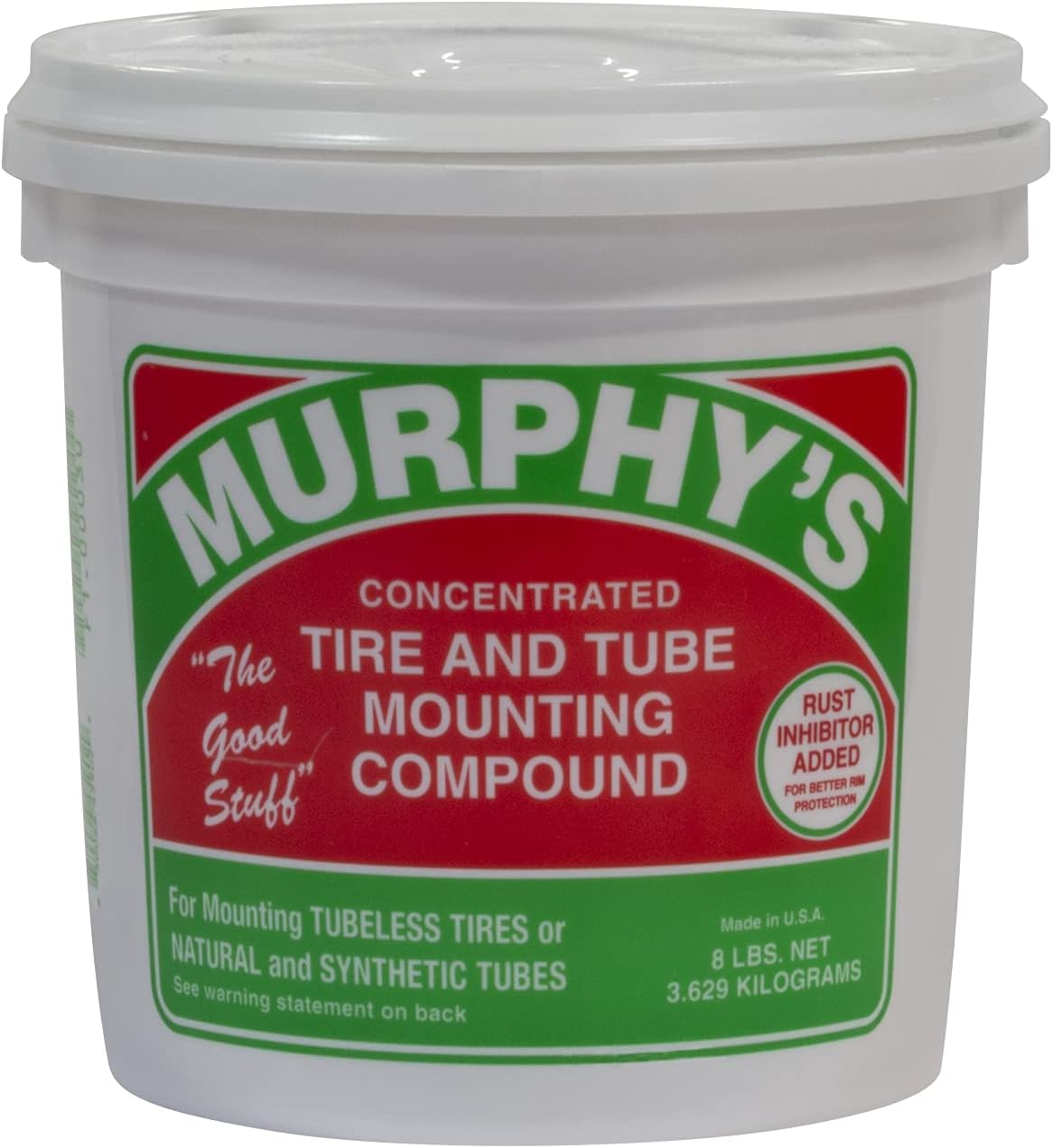
A concentrated tire and tube mounting compound designed to help simplify mounting rubber tires and tubes on passenger, semi truck, construction, and OTR applications. Its ultra-thick formula packs beads effectively and includes rust inhibitors to help protect against corrosion during use.

Malco tire mounting and demounting lubricant is a ready-to-use tire lube formulated to reduce friction during tire installation for passenger cars, light trucks, farm tires, and heavy-duty equipment. It provides rust-inhibiting protection to help reduce corrosion on rims and wheels, and helps support proper tire bead seating during inflation to reduce air leakage. The silicone-free, soap-free formula is whitewall safe to help prevent discoloration on whitewall tires and sensitive sidewall markings.
Can You Mix Q- and T-Rated Tires?
Mixing Q- and T-rated tires is generally best avoided unless the vehicle or tire manufacturer specifically approves the combination.
Different speed ratings can be associated with different handling characteristics, and the vehicle’s speed capability is limited by the lowest-rated tire installed.
For consistent handling, USTMA recommends replacement tires with the same size, load index, and speed-rating designation specified by the vehicle manufacturer. AWD and 4WD vehicles can have additional circumference and tread-depth requirements, so their owner’s manuals deserve particular attention.
Real-World Factors That Affect Tire Speed Capability
The letter on the sidewall comes from standardized testing. It does not guarantee that a used tire can safely sustain that speed in every real-world situation.
Bridgestone notes that actual tire capability can be affected by factors including:
- incorrect inflation pressure;
- excessive load;
- tire wear;
- damage or repairs;
- vehicle alignment or condition;
- road and weather conditions; and
- how long the tire is operated at elevated speed.
A damaged, underinflated, overloaded, or improperly repaired tire may have substantially less capability than its original rating suggests.
Regardless of the tire’s rating, always obey posted speed limits and reduce speed for traffic, weather, visibility, and road conditions.
How to Check Your Vehicle’s Recommended Rating
Use several sources when confirming the correct tire specification. The owner’s manual is usually the best starting point, followed by the vehicle’s tire-information label and the service description on the existing or original-equipment tire.
Check the Owner’s Manual
Look in the tire, specifications, maintenance, or winter-driving section of the owner’s manual. Manufacturers may list approved tire sizes, load requirements, speed-rating restrictions, and special instructions for winter tires.
If the manual lists a minimum speed rating, use that rating or a manufacturer-approved alternative. A higher speed rating is commonly acceptable when tire size, load capacity, construction, and other fitment requirements are also correct, but vehicle-specific instructions take priority.
Read the Tire Sidewall
The tire’s service description normally appears next to the size. For example:
215/60R16 95T
- 215 — nominal section width in millimeters;
- 60 — aspect ratio;
- R — radial construction;
- 16 — wheel diameter in inches;
- 95 — load index; and
- T — speed rating.
Michelin’s load and speed rating guide explains that the load index and speed symbol together form part of the tire’s service description.
Check all four tires rather than assuming they match. If the markings are dirty, clean the sidewall and use adequate lighting.
Use the Vehicle Placard
The Tire and Loading Information label is usually located on the driver’s door edge or door pillar. It is an authoritative source for the vehicle manufacturer’s specified tire size and cold tire inflation pressure.
NHTSA’s TireWise guidance recommends using the driver’s-side tire label or owner’s manual for the correct tire size and inflation pressure.
The load index and speed-rating symbol may also appear as part of the tire-size information, but they are not displayed on every U.S. placard. NHTSA’s FMVSS 110 documentation states that the tire-size designation can include the load index and speed-rating symbol.
If the placard does not show a speed rating, check the owner’s manual, the vehicle manufacturer’s tire specification, or an authorized dealer rather than guessing from the currently installed tires.
Frequently Asked Questions
What does the speed rating letter on a tire actually indicate?
It identifies the tire’s tested maximum speed category under specified conditions. Q corresponds to 99 mph (160 km/h), while T corresponds to 118 mph (190 km/h). It is not a recommendation to drive at that speed, and actual capability can be reduced by load, inflation, wear, damage, and road conditions.
Are Q-rated tires cheaper than T-rated tires?
Not necessarily. Price depends on tire size, brand, construction, tire category, tread warranty, availability, and other features. A premium Q-rated winter or all-terrain tire can cost more than a T-rated touring tire, so the speed rating alone is not a reliable price indicator.
Do speed ratings affect tire noise levels?
Not directly enough to choose a tire by the rating alone. Road noise is strongly influenced by tread pattern, tread compound, casing design, vehicle insulation, pavement type, and tire wear. Compare noise ratings or model-specific testing instead of assuming Q or T will be quieter.
Can winter tires have Q or T speed ratings too?
Yes. Winter tires are available with Q, T, and other speed ratings. A lower speed-rated winter tire may be acceptable in some applications when the vehicle or tire manufacturer permits it, but the vehicle must then be operated within the lower tire’s speed capability and any instructions in the owner’s manual.
How often should tire speed ratings be checked?
Verify the speed rating whenever you buy or replace a tire and whenever you discover that the tires on the vehicle do not match. The rating letter itself does not change with normal wear, but tire condition should be inspected regularly because damage, improper inflation, overloading, or certain repairs can reduce a tire’s usable speed capability.
Is a T-rated tire always better than a Q-rated tire?
No. T has the higher speed capability, but that does not make every T tire better in every category. A Q-rated winter tire may outperform a T-rated all-season tire on snow, while individual tires can differ greatly in braking, comfort, noise, wet grip, and tread life.
Does a T rating mean I can safely drive 118 mph?
No. The 118-mph figure is a standardized tire speed category, not a recommended road speed. Real-world tire capability depends on inflation, load, tire condition, temperature, road conditions, and other factors. Always obey speed limits and adjust speed to traffic, weather, and road conditions.
Conclusion
The practical difference between Q and T is clear: Q is rated to 99 mph, while T is rated to 118 mph. The important decision, however, is not simply whether you personally drive below either limit. Match the vehicle manufacturer’s tire size, load capacity, and speed-rating requirements first. Use a lower Q rating in place of T only when the application is specifically permitted, such as certain winter-tire fitments with an appropriate reduced speed limit.
For ride comfort, noise, grip, braking, handling, and tread life, compare the actual tire models rather than assuming the Q or T letter determines those characteristics.
Sources
- National Highway Traffic Safety Administration — TireWise — vehicle tire labels, tire size, inflation pressure, and tire-safety guidance.
- U.S. Tire Manufacturers Association — Replacing Tires — replacement tire size, load index, and speed-rating guidance.
- U.S. Tire Manufacturers Association — Winter/Snow Tire Application Bulletin — lower speed-rated winter-tire guidance and restrictions.
- Michelin — Tire Load Rating and Speed Rating — service descriptions, load index, and speed-rating definitions.
- Bridgestone — Tire Maintenance and Safety Manual — Q and T speed categories, real-world limitations, and replacement guidance.
[Products Worth Considering]

The Ziopetru adjustable magnetic wheel alignment tool helps you check and restore camber and caster positioning after removing and reinstalling undercarriage components. With a clear leveling/bubble measurement system and an easy zeroing adjustment knob, it supports precise horizontal angle checking. The strong magnetic base mounts to metal surfaces for convenient use at home on cars, motorcycles, trucks, vans, and SUVs.

Measure tyre tread depth precisely with a digital gauge that reads in both MM and inches, helping you monitor safe driving conditions. The large LCD screen is easy to operate, and the compact tool fits for cars, trucks, and motorcycles. It provides high accuracy with a 0-25.4mm range and includes a 1-year warranty for added peace of mind.

This 100-piece set of snap-in tubeless tire valve stems is designed for standard 0.453 in (11.5 mm) rim holes and helps maintain reliable, steady tire pressure. Made with ozone-resistant rubber and brass cores, the valves are built for durability and long-term use. Easy to install by hand, they support safe driving and are suitable for cars, light trucks, trailers, and more.

Related Articles
6 Ply Vs 8 Ply Tires: Which Do You Need?
Torn between 6 ply and 8 ply tires? Discover which one fits your driving needs before you buy.
Read More
265 Vs 285 Tires: Key Differences Explained
Why choose 265 vs 285 tires when the tradeoffs could change your ride, grip, and fitment more than you expect?
Read More
How to Choose Tires for 20×10 Wheels
Just how wide should your tires be for 20x10 wheels, and which size best balances fitment, grip, and clearance?
Read More