
Why Do Tires Lose Pressure? 9 Real Causes
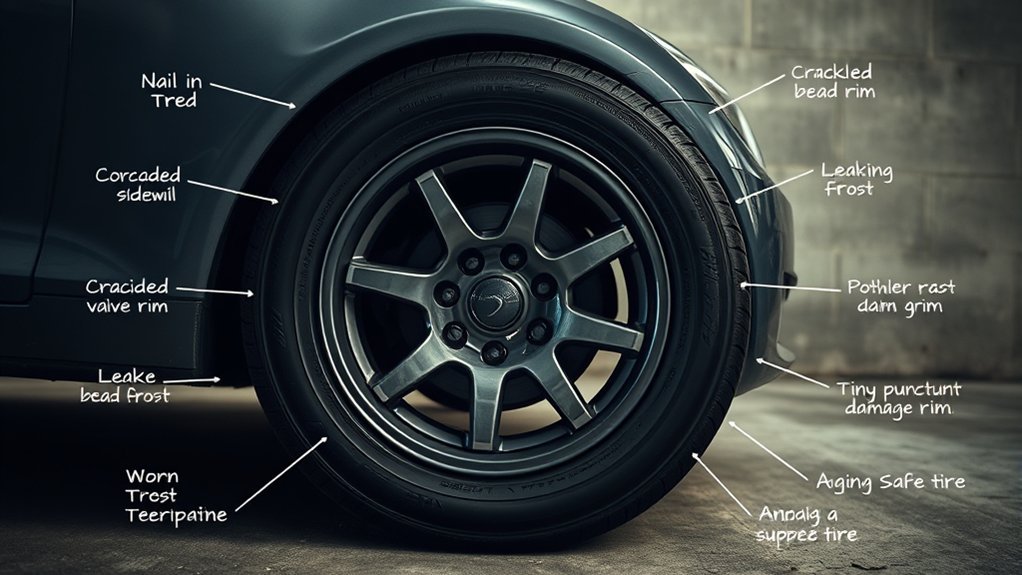
Tires lose pressure for two broad reasons: normal air loss and an actual leak. Even an undamaged tire can gradually lose air through its materials, while colder temperatures temporarily lower the measured pressure. Faster or repeated loss can come from a puncture, leaking valve, damaged bead seal, bent or corroded wheel, sidewall damage, or age-related deterioration. The pattern of pressure loss helps tell you when normal maintenance has turned into a problem that needs repair.
Quick Answer
Tires naturally lose a small amount of air over time, and cold weather can lower pressure even when there is no leak. If one tire repeatedly loses pressure faster than the others, inspect it for a puncture, valve leak, bead-seal problem, wheel damage, or tire deterioration rather than continually topping it off.
Key Takeaways
- A sound tire can gradually lose air through normal permeation; about 1 psi per month is a commonly used rule of thumb.
- Cold temperatures lower measured tire pressure by roughly 1 psi for each 10°F, or about 5–6°C, drop.
- Check pressure when tires are cold and use the vehicle placard or owner’s manual—not the maximum pressure molded on the tire sidewall.
- If one tire loses air much faster than the others, check the tread, valve, bead area, wheel, and sidewall for a localized leak.
- Sidewall and shoulder injuries are generally outside the normal repair area; repairable tread punctures also have strict size and inspection limits.
- TPMS is an important warning system, but it does not replace regular checks with an accurate tire-pressure gauge.
At a Glance
| Time Required | About 10–20 minutes for basic pressure and leak checks |
| Difficulty | Easy for inspection; tire removal and repair require a qualified tire technician |
| Tools Needed | Accurate tire-pressure gauge, flashlight, and soapy-water spray for basic leak detection |
| Cost | Often $0–$20 for basic diagnosis if you already have an inflator; professional repair or replacement varies by damage |
Why Do Tires Lose Pressure Naturally?
Tires naturally lose pressure because the tire and its sealing components are not perfectly impermeable. Small amounts of gas gradually migrate through the tire structure over time, even when there is no nail, cracked wheel, or obvious valve failure.
Michelin notes that tires have been known to lose up to about 1 psi per month, which is why regular pressure checks are necessary even when a tire appears completely normal. Michelin’s tire-pressure guidance recommends checking all tires, including the spare, at least monthly and before long trips.
A healthy tire may gradually lose about 1 psi per month, while colder weather can lower the measured pressure even further without creating a physical leak.
Use an accurate gauge and compare the reading with the vehicle manufacturer’s recommended cold inflation pressure. That specification is normally on the driver-side door placard or in the owner’s manual. The pressure molded into the tire sidewall is not the vehicle’s recommended everyday inflation setting.
NHTSA tire-safety guidance recommends checking tires when they are cold, generally after the vehicle has been parked for at least three hours. A cold reading makes it easier to distinguish normal pressure loss from the temporary pressure increase caused by driving.
If all four tires lose a similar small amount over several weeks, normal permeation or a temperature change may explain it. If one tire consistently loses pressure much faster than the others, look for a localized leak.
[Products Worth Considering]
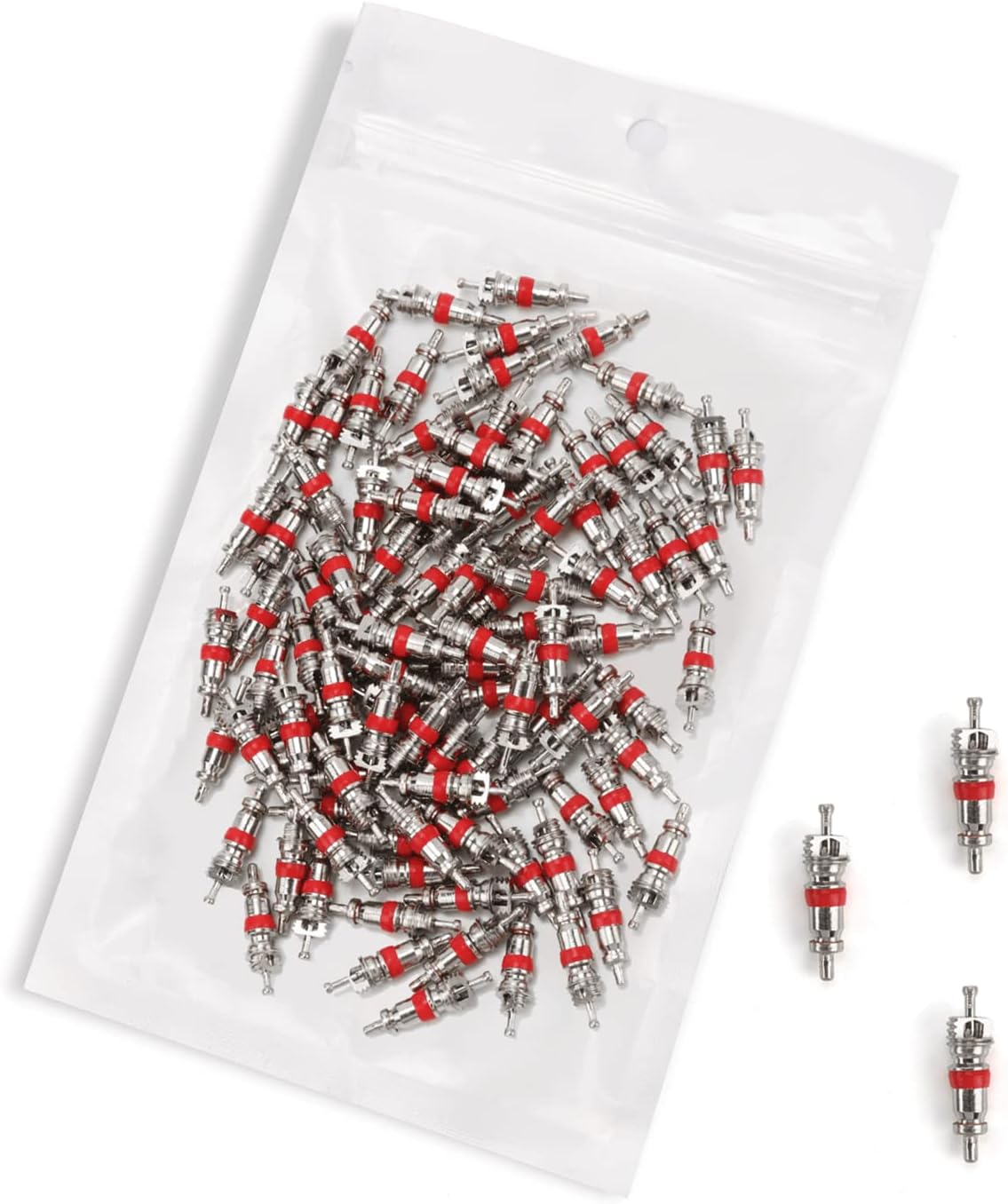
Replace worn Schrader valve cores with durable, nickel-plated replacements designed to resist rust and corrosion for a longer service life. Each core is 100% leakage tested and rated for up to 300 PSI, helping maintain a safe, reliable tire pressure system. Universal fit makes them suitable for cars, RVs, ATVs, motorcycles, bicycles, and many refrigeration/air conditioning applications.

Malco tire mounting and demounting lubricant is a ready-to-use tire lube formulated to reduce friction during tire installation for passenger cars, light trucks, farm tires, and heavy-duty equipment. It provides rust-inhibiting protection to help reduce corrosion on rims and wheels, and helps support proper tire bead seating during inflation to reduce air leakage. The silicone-free, soap-free formula is whitewall safe to help prevent discoloration on whitewall tires and sensitive sidewall markings.

This Dr.Roc tire valve stem puller tools set helps install or remove snap-in tubeless valve stems safely and efficiently. It includes ozone-resistant EPDM snap-in valve stems, a valve stem installer, and a valve core remover for quick core removal or installation during tire service. Designed for reliable tubeless tire repair on motorcycles, ATVs, lawn equipment, cars, and trucks.
How Do Temperature Changes Make Tires Lose Pressure?
Temperature changes affect the pressure of the gas inside a tire even when no air escapes. When outside temperature drops, tire pressure falls. When the tire warms from warmer weather or driving, the measured pressure rises.
Temperature Drops Reduce Pressure
A useful rule of thumb is that tire pressure changes by about 1 psi for every 10°F, or roughly 5–6°C, change in temperature. Bridgestone’s tire-safety guidance gives a similar relationship and also notes that tires gradually lose pressure under normal conditions.
This means a tire correctly set to 35 psi during mild weather can read several psi lower after a major cold snap without developing a new puncture.
Always adjust the tire to the vehicle manufacturer’s specified cold pressure. If several tires fall by similar amounts when the weather turns colder, temperature is a likely contributor. If only one tire continues falling, investigate that tire for a leak.
Heat Expands Air Inside
Tire pressure rises after driving because the tire and the gas inside it warm up. Flexing of the tire, road contact, braking, speed, load, and ambient temperature can all contribute to this normal increase.
Do not bleed a hot tire down to the vehicle’s cold-pressure specification simply because the gauge reads higher after a drive. Doing so can leave the tire underinflated once it cools.
Pro Tip: Record your tire pressures first thing in the morning for several days. Comparing cold readings under similar conditions makes a real leak much easier to distinguish from normal temperature-related changes.
Can a Valve Stem Cause Air Loss?
Yes. The valve assembly can cause a slow leak if the valve stem cracks, the valve core does not seal correctly, or the stem’s seal against the wheel becomes damaged.
Rubber valve stems can harden or crack with age and environmental exposure. On vehicles with valve-mounted TPMS sensors, the sealing components around the sensor stem can also deteriorate or corrode.
For a simple check, place soapy water around the valve opening and stem base. Continuous bubbles indicate escaping air. Do not bend or force a TPMS valve stem while testing it.
The valve cap is useful for keeping dirt and moisture out, but the valve core and stem assembly are the main pressure-sealing components. A missing cap alone should not normally cause rapid pressure loss if the valve is sealing properly.
If bubbles repeatedly form around the stem or core, have the defective valve component serviced instead of repeatedly adding air.
Why Do Tire Bead Leaks Happen?
A bead leak occurs where the tire meets the wheel. Air can escape when corrosion, dirt, bead damage, wheel deformation, or improper mounting prevents the tire bead from sealing evenly against the rim.
Common Bead Leak Causes
The bead area depends on smooth, even contact between the tire and wheel. Common causes of leakage include:
- Corrosion or pitting on the wheel’s bead seat
- Dirt or debris trapped between the tire and wheel
- A bent or damaged rim flange
- Damage to the tire bead
- Improper tire mounting or seating
A tire service professional may need to demount the tire to inspect and clean the mating surfaces properly. Tire mounting and bead repair should not be treated as casual DIY work because improper mounting or inflation can be dangerous.
Signs Of Bead Leaks
A bead leak often causes gradual, recurring pressure loss. You may inflate the tire correctly only to find it low again days later.
Spraying soapy water around the entire tire-to-wheel interface can reveal the leak. Repeated bubbling at one location indicates escaping air.
Corrosion can be especially deceptive because the tire may look normal from the outside while the sealing surface beneath the bead is rough or pitted.
How Do Punctures Cause Slow Air Loss?
A nail, screw, or other sharp object can create a small passage through the tread that allows compressed air to escape slowly. An embedded object may partially seal its own hole, so the tire can lose pressure for days before becoming noticeably low.
- A small nail hole may produce only a slow bubble during testing.
- A screw can leave an irregular puncture channel and may leak differently as the tire flexes.
- A puncture may be difficult to see if the object has fallen out.
Repairability depends on the size and location of the injury—not simply on whether the tire still holds some air. According to the U.S. Tire Manufacturers Association, industry-standard passenger and light-truck puncture repairs are limited to the tread area, and the puncture injury should not exceed 1/4 inch (6 mm) in diameter.
The tire should be removed from the wheel so the inside can be inspected for hidden damage. USTMA also specifies that the puncture channel should be filled and the inner liner patched; a simple plug inserted from outside is not considered an acceptable standalone industry repair.
Damage extending into the shoulder or sidewall is outside the normal repair area and generally means the tire should be removed from service.
Can Wheel Damage Cause Low Tire Pressure?
Yes. A bent, cracked, heavily corroded, or otherwise damaged wheel can create a direct air-leak path or prevent the tire bead from sealing correctly.
| Condition | Effect on pressure | Typical clue |
|---|---|---|
| Bent rim or flange | Can prevent an even bead seal | Recurring leak near one part of the rim |
| Rim corrosion or pitting | Creates an uneven sealing surface | Fine bubbles along the bead area |
| Cracked wheel | Can provide a direct path for air loss | Localized bubbling or rapid repeat loss |
| Bead-seat damage | Distorts the tire-to-wheel seal | Leak returns soon after inflation |
| Wheel misalignment | Does not directly create an air-leak path | Uneven wear, pulling, or steering-wheel offset; an impact may have caused separate wheel damage |
If pressure loss began after a pothole or curb impact, inspect both the tire and wheel. Alignment may also need checking after a hard impact, but alignment itself is not the mechanism that lets air escape.
A visibly cracked or badly bent wheel should be inspected by a qualified technician rather than simply reinflated and driven.
[Products Worth Considering]

Steelman white tire marking crayons provide high-contrast, semi-permanent marks for repairing and inspecting tires and equipment. They write on wet or dry, smooth or coarse surfaces including rubber, metal, glass, and wood, making them ideal for puncture location and damage outlining. The lead- and zinc-free crayons resist weather and fading yet wipe away when you no longer need the marks.

The SAFELIFE dial tire tread depth gauge measures tread depth in 1/32 inch increments with clear, easy-to-read 2-inch dial face. Color zones using a traffic light system help you quickly judge whether tread is low, marginal, or ample for safer driving. Built with a durable zinc cast body and a metal detect probe for precise, comfortable use across cars, motorcycles, trucks, and buses.

Autel MX TPMS sensors combine 315MHz and 433MHz in a single easy-to-install press-in design for faster tire service. They support wireless programming with strong signal performance, and the sensors are clone-able for streamlined replacement. Built for reliability and tested to SAE standards, each sensor includes a series number for quality control.
Can Sidewall Damage Make a Tire Leak?
Yes. A cut, puncture, crack, impact injury, or other sidewall damage can reach the tire’s inner liner or structural cords and allow air to escape.
The sidewall repeatedly flexes as the tire rolls. Because of that movement and its structural role, sidewall and shoulder injuries are not treated like ordinary repairable tread punctures.
- A deep cut or puncture can create immediate or gradual air loss.
- Exposed fabric or steel cords indicate serious structural damage.
- A bulge or bubble can indicate internal cord damage even when air is not visibly escaping.
Warning: Do not continue normal driving on a tire with a bulge, exposed cords, severe sidewall cut, rapid pressure loss, or obviously damaged wheel. Use an appropriate spare or roadside assistance and have the tire professionally inspected. Sidewall and shoulder punctures are outside the normal industry repair area.
How Do Aging Tires Start Losing Air?
Tire rubber and other components change with age, heat, oxygen exposure, sunlight, storage conditions, repeated flexing, and use. Over time, aging can contribute to cracking, loss of flexibility, bead deterioration, and other conditions that may interfere with reliable pressure retention.
That does not mean every older tire will suddenly begin leaking at a predictable rate. A recurring pressure problem still needs diagnosis because an older tire can also have a nail, valve leak, damaged wheel, or corroded bead seat.
NHTSA notes that tires become more prone to failure as they age and that some vehicle and tire manufacturers recommend replacement at ages ranging from about six to ten years, regardless of tread depth. There is no single replacement age that overrides the vehicle and tire manufacturer’s instructions.
You can identify the tire’s manufacturing date through the DOT Tire Identification Number on the sidewall. The final four digits identify the week and year of manufacture.
Age should therefore be considered together with tread depth, cracking, physical damage, inflation retention, storage history, and the manufacturer’s recommendations.
How To Find The Source Of A Repeating Leak?
If a tire repeatedly loses pressure, stop guessing based on when the pressure drop happens. Use the same cold-pressure conditions and check each possible sealing point systematically.
- Record a cold baseline. Check all tires after the vehicle has been parked for about three hours and record each reading.
- Compare the tires. Similar changes across all four tires may point to temperature. One tire dropping noticeably faster suggests a localized leak.
- Inspect the tread. Look for nails, screws, cuts, or objects lodged between tread blocks. Do not pull an embedded object out before arranging repair because it may be partially restricting the leak.
- Inspect both sidewalls. Look for cuts, cracking, bulges, exposed cords, or impact damage.
- Test the valve. Apply soapy water around the valve core and stem base and watch for continuing bubbles.
- Test the bead area. Spray around the tire-to-wheel interface on both sides that you can safely access. Repeated bubbles indicate escaping air.
- Inspect the wheel. Look for bends, cracks, heavy corrosion, or evidence of a recent impact.
- Have persistent leaks professionally tested. A tire shop can demount the tire, inspect the inner liner and bead, and use immersion or other leak-detection methods when the source cannot be found externally.
Note: Temperature can change the number shown on your gauge without any air escaping. Compare cold readings taken under similar conditions before concluding that a small one-time pressure change is a leak.
Frequently Asked Questions
How Often Should Tire Pressure Be Checked?
Check all tires, including the spare when accessible, at least once a month and before long trips. Check them when cold and use the pressure specified on the vehicle placard or in the owner’s manual. Extra checks are useful during major seasonal temperature changes.
Does Nitrogen Prevent Tire Pressure Loss?
No. Nitrogen inflation may reduce gas migration through the tire somewhat, but it does not eliminate pressure loss, temperature-related pressure changes, punctures, valve leaks, or bead leaks. Tires filled with nitrogen still need regular pressure checks and should be maintained at the vehicle manufacturer’s specified cold pressure.
Can Overinflation Make Tires Lose Pressure Faster?
Not normally. Overinflation is not a common explanation for a healthy tire repeatedly losing air. However, driving with incorrect pressure can affect handling, wear, ride quality, and tire performance. Correct the pressure to the vehicle placard specification and investigate any continuing pressure loss separately.
Are Tire Pressure Sensors Reliable?
TPMS is useful for warning you about significant underinflation, but it should not replace monthly checks with a gauge. Under U.S. FMVSS 138, the low-pressure warning is designed around a significant pressure reduction rather than tiny maintenance-level changes, so a tire can be below its ideal pressure before the warning appears.
Should Spare Tires Be Checked Too?
Yes. Spare tires also lose pressure and age, even when they are rarely used. Check the spare according to the vehicle manufacturer’s instructions and confirm that it is inflated to the pressure specified for that spare, which may differ from the four road tires.
Why Does One Tire Keep Losing Air When I Cannot Find a Nail?
The leak may be at the valve core, valve stem, bead seal, wheel, or a very small tread puncture that is difficult to see. Check those areas with soapy water and have the tire professionally inspected if pressure continues dropping.
Why Does My Low-Tire-Pressure Light Come On When the Weather Turns Cold?
Cold air lowers tire pressure. A tire that was only slightly above the TPMS warning threshold during warmer weather may fall enough during a cold spell to trigger the light. Check all tires cold and inflate them to the vehicle placard specification rather than assuming the warning is false.
Sources
- National Highway Traffic Safety Administration — TireWise — cold-pressure checks, vehicle placard pressure, TPMS, tire aging, damage inspection, and monthly maintenance.
- U.S. Tire Manufacturers Association — Tire Repair Basics — repairable puncture location, 1/4-inch (6 mm) limit, internal inspection, and proper patch-and-stem repair.
- Michelin — Tire Pressure Guidance — monthly pressure checks, cold measurements, and normal gradual pressure loss.
- Bridgestone Tire Maintenance and Safety Manual — normal pressure loss, temperature-related pressure changes, valves, punctures, and bead/wheel sealing issues.
- 49 CFR § 571.138 — Tire Pressure Monitoring Systems — U.S. TPMS warning-system requirements.
Conclusion
A small amount of tire-pressure loss can be normal, and weather can change the gauge reading without creating a leak. What is not normal is one tire repeatedly dropping much faster than the others. Check pressure cold, compare all four tires, inspect the tread, valve, bead, wheel, and sidewall, and use soapy water to locate small leaks. If the tire has structural damage or the leak remains unexplained, have it professionally inspected instead of repeatedly adding air.
[Products Worth Considering]
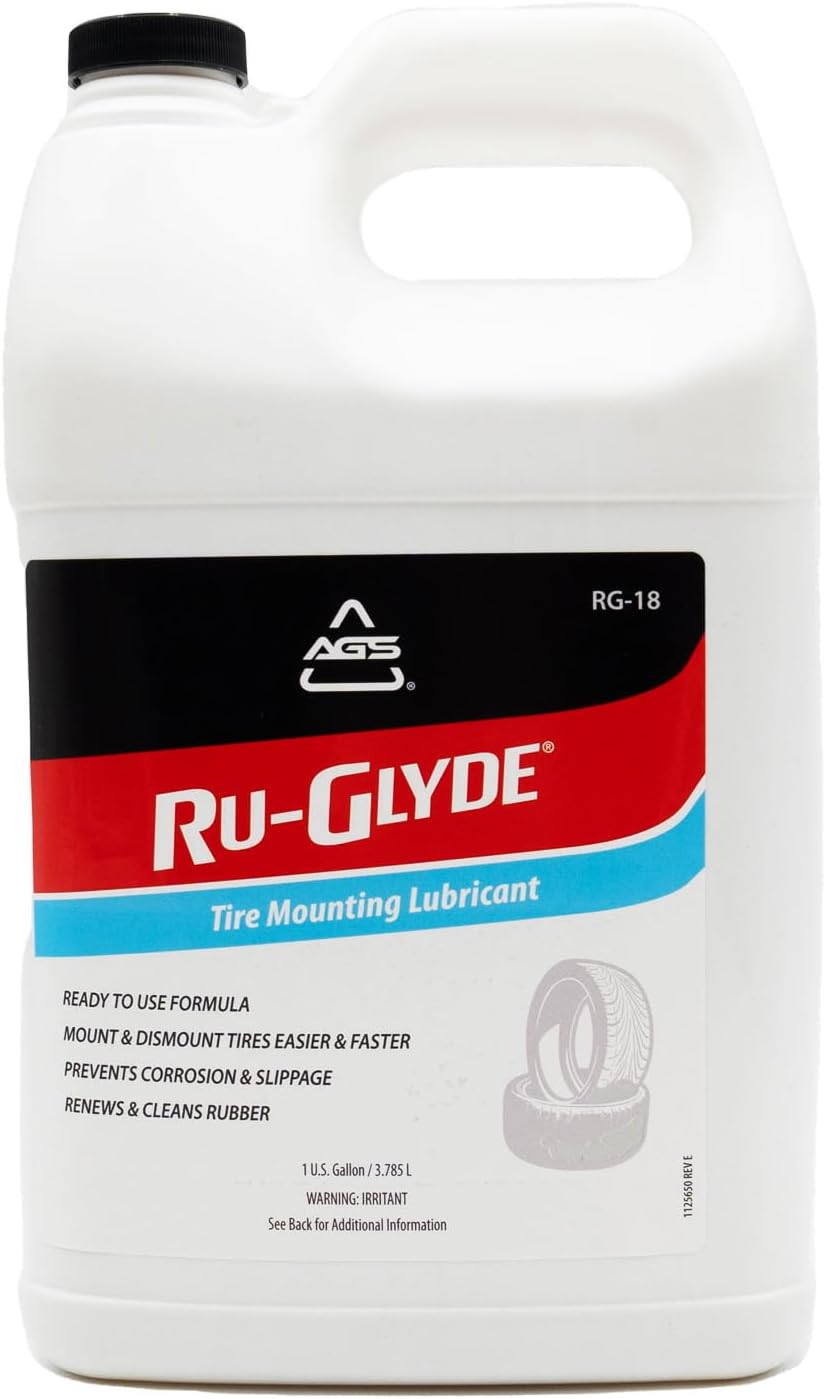
Ru-Glyde tire mounting lubricant from AGS seats tire beads smoothly on the first try with a thick, stay-put formula. It is ready to use with no mixing or dilution, helps prevent rim rust, and dries completely without causing bead slip residue. The water-based formula also conditions aged rubber, making it useful for sidewalls, gaskets, and door seals while remaining safe for tire, wheel, and technicians.
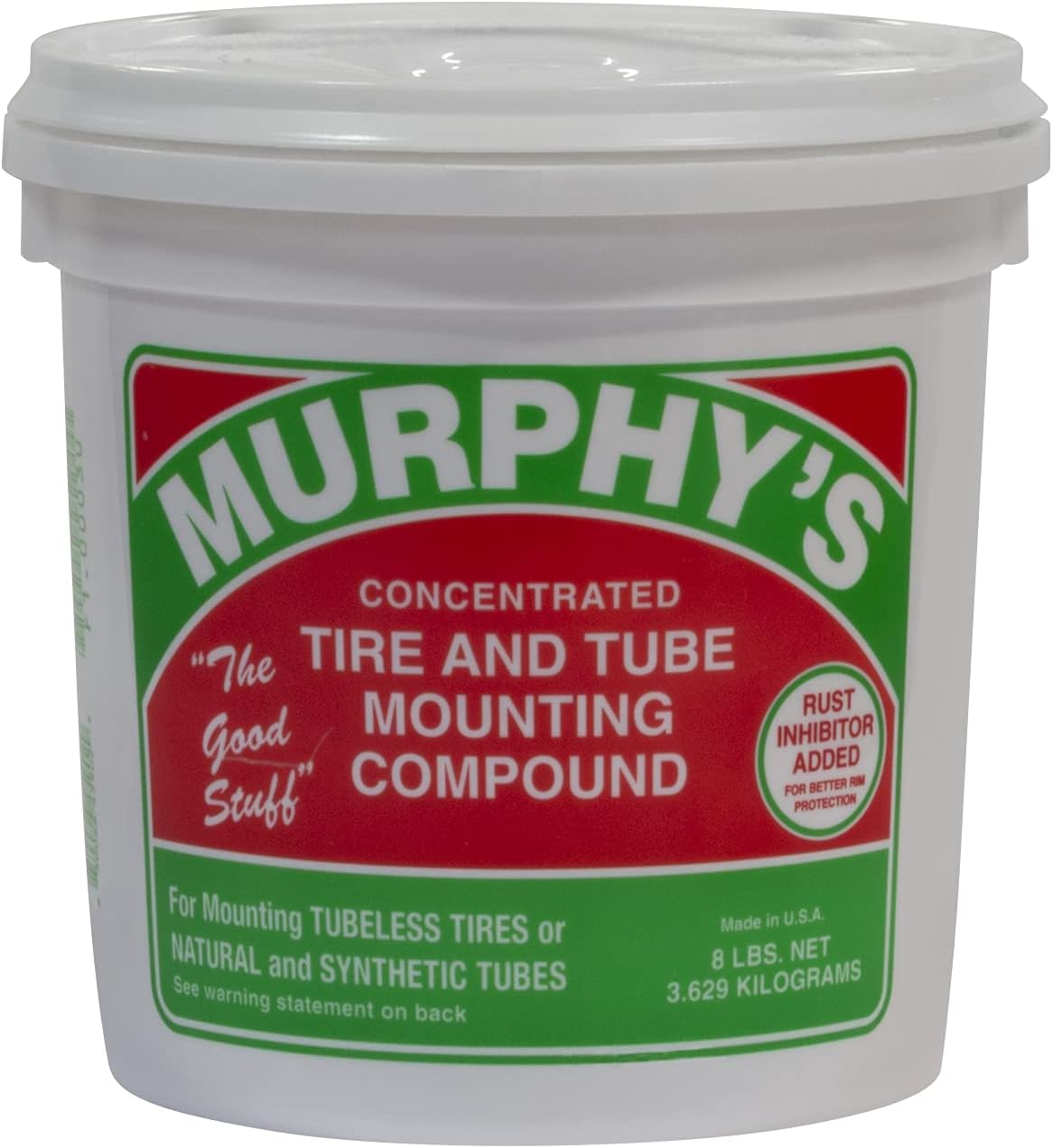
A concentrated tire and tube mounting compound designed to help simplify mounting rubber tires and tubes on passenger, semi truck, construction, and OTR applications. Its ultra-thick formula packs beads effectively and includes rust inhibitors to help protect against corrosion during use.

TireJect Off-Road Tire Sealant Kit provides 5-in-1 sealing to help fix tread punctures up to 3/8", sidewall punctures up to 3/8", bead leaks, slow leaks, and minor dry rot on low-speed tires. It permanently seals with liquid rubber, recycled tire particles, and Aramid fibers, making it ideal for flats caused by thorns, nails, and screws. The included dispensing cap attaches to the valve stem for a no-mess installation, along with a metal valve core remover tool and valve stem cap. This kit is for off-road use only.

Related Articles
What Are Tire Valve Stems and How Do They Work?
Mysterious tire valve stems quietly seal air in and dirt out, but what happens when they fail might surprise you.
Read More
Why Do I Keep Getting Nails in My Tires?
I keep getting nails in my tires because hidden road hazards are everywhere—discover the overlooked spots and habits that could be costing you.
Read More
What Causes Brake Fluid to Leak? Common Sources
Jammed seals, cracked hoses, and failing cylinders can leak brake fluid—discover the hidden culprit before your brakes give out.
Read More