
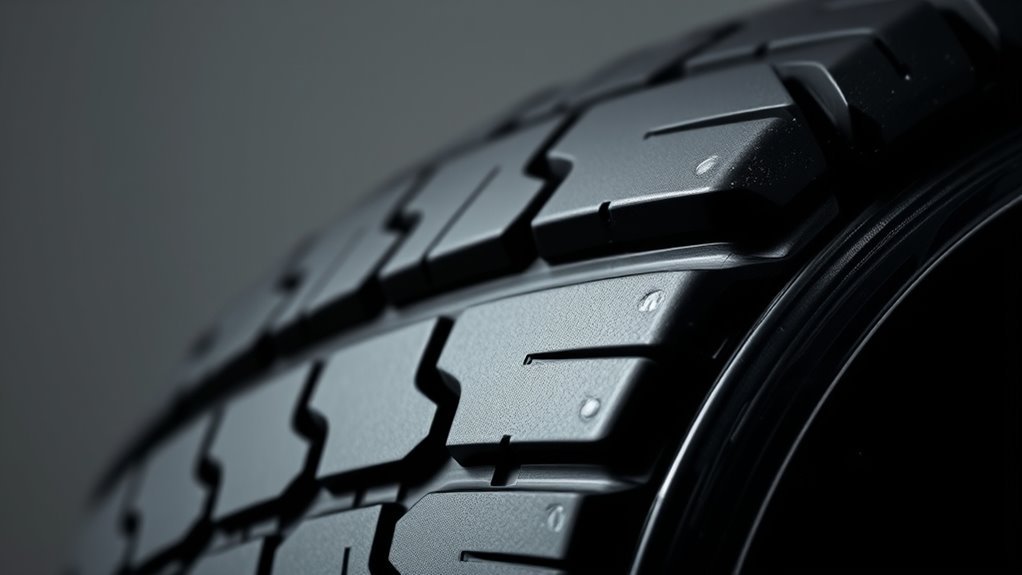
What part of a tire holds air? In a modern tubeless tire, the inner liner is the main air-retaining layer. This low-permeability rubber layer is bonded to the inside of the tire and acts like the inner tube in a tube-type tire. The bead seals against the wheel rim, and the valve stem closes the inflation opening, so all three areas must seal correctly for the tire to maintain pressure.
Last updated: August 18, 2026
Quick Answer
The inner liner is the tire part designed to retain air in a tubeless tire. It is made from low-permeability rubber, commonly butyl-based compounds, and performs the sealing job that a separate inner tube performs in a tube-type tire. The bead-to-rim interface and valve must also seal correctly, but the inner liner is the tire’s main built-in air barrier.
Key Takeaways
- The inner liner is the airtight layer inside most modern tubeless tires.
- Butyl-based inner-liner compounds are used because their low gas permeability helps slow pressure loss.
- The bead and rim help seal the tire, but they do not replace the inner liner.
- Slow pressure loss can also come from a puncture, damaged bead, cracked wheel, loose valve core, or aging rubber.
- Check tire pressure at least monthly and before long trips, even if your vehicle has TPMS.
Which Tire Part Holds Air?
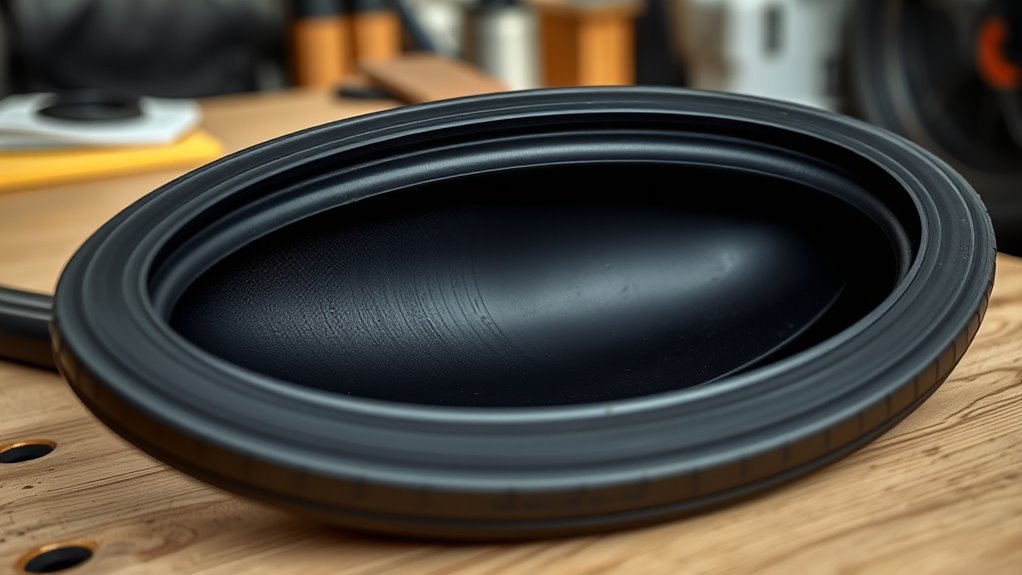
The inner liner is the layer of a tubeless tire that actually retains air. Continental describes it as an airtight butyl-rubber layer that seals the air-filled chamber and acts like an inner tube in modern tubeless car tires. Continental Tires
That does not mean the liner works alone. A tubeless tire holds pressure as a system:
- Inner liner: creates the low-permeability air barrier inside the tire.
- Bead: clamps against the rim and helps close the edge of the air chamber.
- Wheel rim: provides the hard sealing surface for the bead.
- Valve stem and valve core: let air in and must stay sealed after inflation.
If any of those parts is damaged, air can escape. But when someone asks which tire part keeps air in, the best answer is the inner liner.
What an Inner Liner Is and How It Seals Air
The inner liner is the smooth, black layer on the inside of a tubeless tire. It is bonded to the tire casing during manufacturing, so it is not a separate removable tube. Its job is to slow the movement of air molecules through the tire body.
Inner liners use low-permeability rubber compounds, commonly based on butyl or halobutyl rubber. ExxonMobil identifies polymer permeability, liner thickness, and liner coverage as major factors in tire air retention. In plain English, the liner is engineered to slow the rate at which pressurized gas moves through the tire. ExxonMobil Product Solutions
- Material barrier: butyl and halobutyl rubber help slow air and moisture diffusion.
- Continuous surface: the liner must cover the inside of the tire without cracks, cuts, or gaps.
- Bonding: the liner must stay bonded to the tire casing so air cannot travel through tiny separation channels.
- Manufacturing quality: uniform thickness and low porosity help the liner retain pressure longer.
Note: Even a healthy tire can lose pressure gradually through normal permeation, and temperature changes can move the gauge reading without a puncture. A single tire that drops faster than the others is more suspicious for a leak at the tread, bead, valve, wheel, or inner liner.
Tubeless vs. Tube-Type Tires: Where the Air Is Held
Tube-type tires rely on a separate inner tube to hold air. The tire provides structure and grip, while the tube provides the sealed air chamber.
Modern passenger-vehicle tires are generally tubeless. In this design, there is no separate inner tube. The inner liner seals the tire body, while the bead-to-rim interface and valve close the rest of the pressurized chamber. Continental describes the inner liner as the airtight layer that acts like an inner tube in modern tubeless car tires. Continental Tires
If you are comparing the two designs, see tire tube parts and how tube-type tires hold air.
| Tire Type | What Holds the Air? | Common Use |
|---|---|---|
| Tube-type tire | Separate inner tube | Some bicycles, motorcycles, classic vehicles, and specialty uses |
| Tubeless tire | Inner liner, bead/rim seal, and valve stem | Most modern passenger vehicles |
[Products Worth Considering]
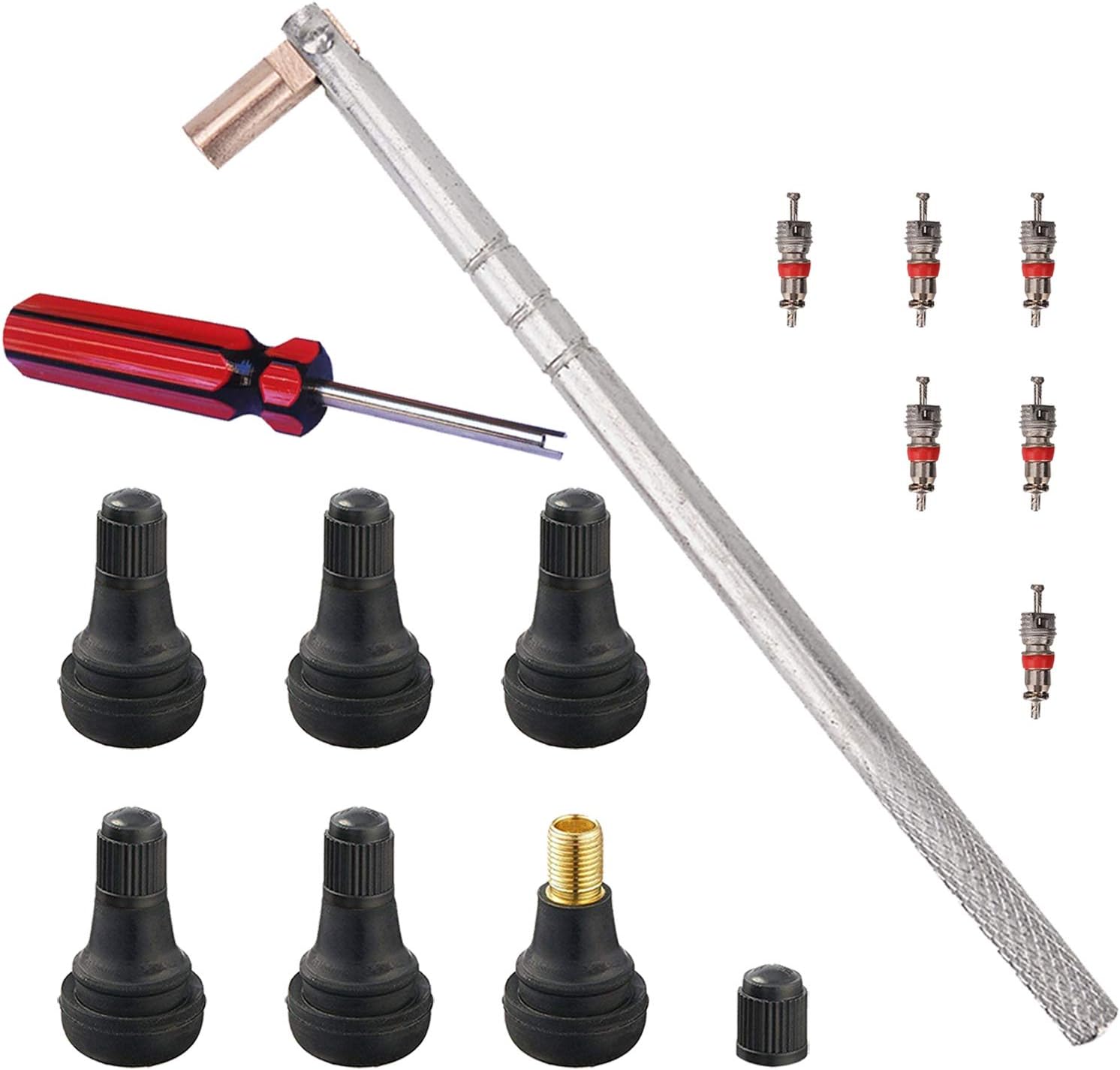
This FEBRYTOLD tire valve stem tool set makes it easy to remove and install standard 0.453 inch snap-in valve stems for tubeless tires. It includes valve stem cores and a single-head valve core remover/installer tool to help you complete repairs quickly. Designed to help avoid scratching wheels and damaging valve stems during service.

Upgrade your Toyota tire setup with these corrosion-resistant, leak-proof valve stem caps designed to help protect the valve core from water, snow, and road grime. The caps feature a snug rubber seal and durable copper alloy construction to resist rust and oxidation while maintaining stable tire pressure. Ideal for replacing worn original caps and keeping your wheels looking clean and stylish.
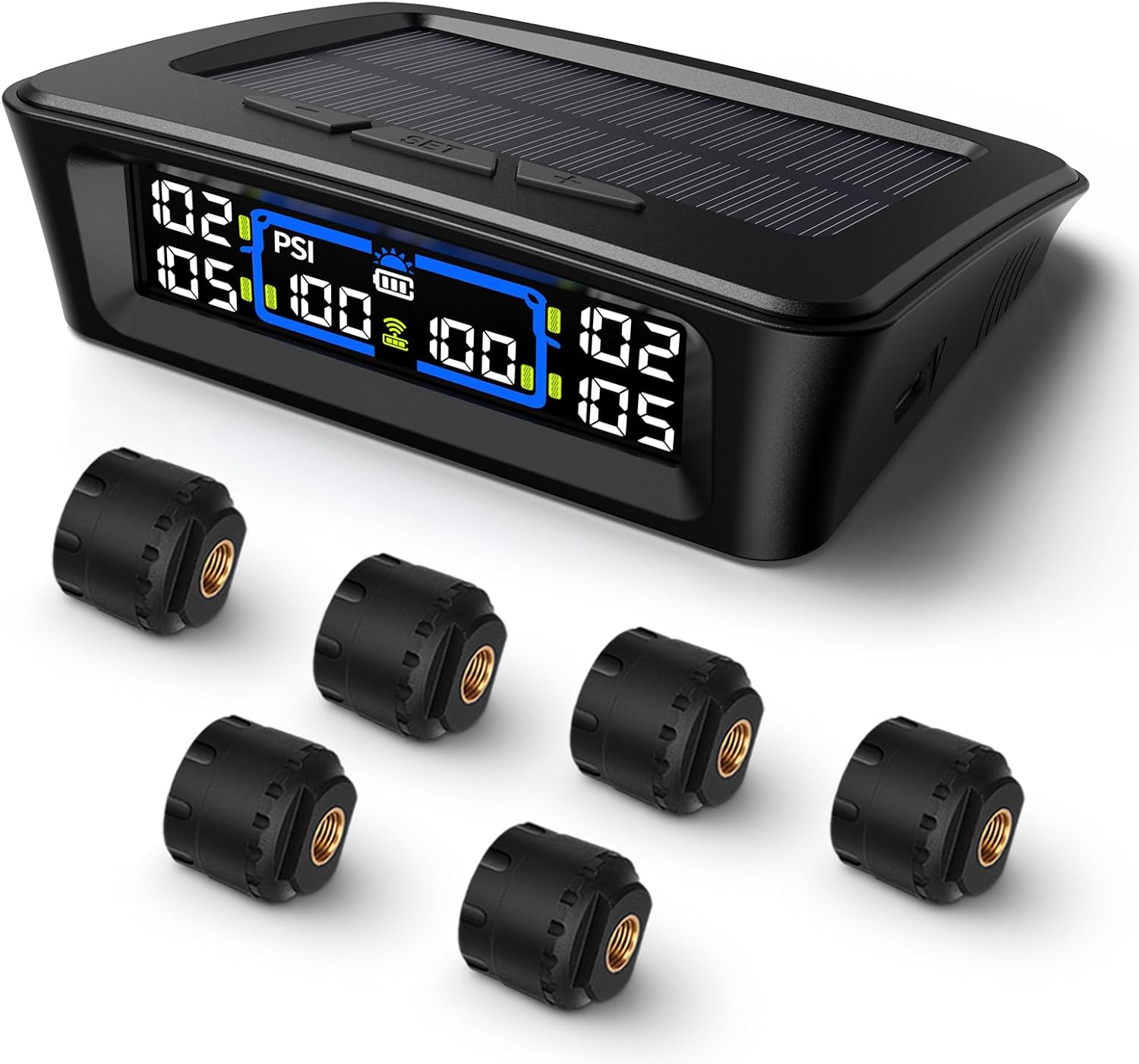
The Tymate TM12 RV TPMS delivers real-time tire pressure and temperature monitoring with a stable 433Hz display for safer long-distance driving. It supports simultaneous monitoring across vehicle and trailer zones, includes six alarm modes for pressure, temperature, leakage, battery, and signal loss, and features easy DIY installation with auto calibration. Power is supplied via USB-C charging or solar recharging, with a wide 0–144 PSI range and up to 50 ft signal coverage for RVs and towable trailers.
Butyl vs. Halobutyl Inner Liners: Which Retains Air Best?
Butyl rubber is valued in air-barrier applications because of its low permeability. Halobutyl rubber, including bromobutyl and chlorobutyl grades, is widely used in tire inner liners for the same reason. ExxonMobil notes that air retention depends on more than polymer choice: liner permeability, thickness, and where the liner ends near the bead all affect pressure retention. ExxonMobil Butyl Rubber
For a driver, the useful distinction is not “butyl versus halobutyl” on a sales label. Tire makers rarely publish inner-liner formulations as a consumer comparison spec. A quality tire still needs a continuous, properly made liner, a sound bead-to-rim seal, and a leak-free valve.
[Products Worth Considering]

Replace worn tires quickly with this universal 4.80/4.00-8 tire and inner tube set designed for wheelbarrows and outdoor utility carts. The ribbed tread helps reduce turf damage while the natural rubber construction supports longer service life. Compatible with 15.5-inch outer diameter, 4-inch width, and 8-inch rim diameter wheels, it uses a straight TR-13 valve stem for easy installation. For best results, inflate with a manual pump and do not exceed 25 PSI.

This heavy-duty bicycle rim liner provides complete tube protection by shielding the inner tube from rim spoke holes and sharp metal burrs that can cause flats. Made from premium, wear-resistant PVC, it lays flat with optimized 18 mm width and 0.50 mm thickness for edge-to-edge coverage. Installation is quick with flexible stretch placement and a secure, non-slip fit.

This 61-piece tire repair screw kit helps you fix punctures quickly by aligning the screw plugs and twisting clockwise, finishing the repair in seconds. The self-sealing plugs create a reliable seal for many roadside situations without needing a jack, wrench, or glue. It includes two plug sizes and a screwdriver in a portable case, making it a convenient option for cars, motorcycles, trucks, bikes, ATVs, and tractors.
How Liner Thickness and Production Affect Air Permeability
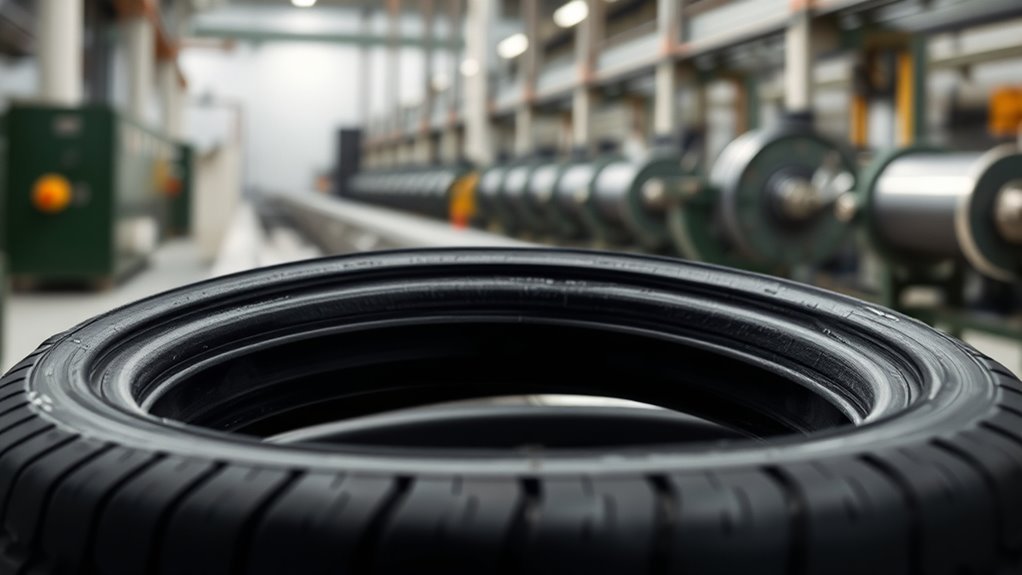
Liner thickness matters, but it is only one part of air retention. ExxonMobil identifies three major variables: inner-liner permeability, liner thickness, and liner endpoint/coverage. For a given compound and design, thin spots can worsen air retention, which is why uniform gauge control matters as much as nominal thickness. ExxonMobil Product Solutions
Liner Thickness Tradeoffs
A tire liner has to balance several goals:
- Air retention: the liner must slow pressure loss over time.
- Weight: excess rubber adds mass, which can affect efficiency.
- Flexibility: the liner must flex with the tire without cracking or separating.
- Durability: the liner must survive heat, load, road impacts, and repairs.
A liner that is too thin or uneven can create weak spots. A liner that is too heavy can add unnecessary weight. The best design is a uniform, well-bonded liner made from a strong air-barrier compound.
Production Method Impact
Production quality affects how well the liner performs. The important consumer-facing issues are consistent thickness, continuous coverage, sound bonding, and freedom from damage. ExxonMobil specifically notes that thin spots reduce air retention, while Continental and Bridgestone describe the inner liner as the air-sealing layer built into a tubeless tire.
From a troubleshooting standpoint, you normally cannot diagnose a production defect from the outside. If a tire repeatedly loses pressure and no tread, valve, bead, or wheel leak is found, the tire should be removed so a trained technician can inspect the inner liner and internal structure.
Porosity and Permeability
Permeability is the rate at which gas passes through a material. It is different from an actual leak path such as a puncture, crack, damaged bead, or leaking valve. A healthy liner is designed to keep normal permeation low; physical damage can create a much faster pressure loss.
If the liner shows cuts, abrasion, cracking, or separation during an internal inspection, the technician must decide whether the tire remains serviceable under the tire maker’s repair policy. Do not assume that an internal defect can be patched simply because the tire can still be inflated.
Why Sidewalls, Beads, and Wear Bars Don’t Hold Air
The sidewall, bead, and wear bars are important tire parts, but they do not do the same job as the inner liner.
Sidewall Structural Role
The sidewall connects the tread area to the bead area. It flexes as the tire rolls, helps carry load, and protects the tire casing from road and curb damage. It is built for strength and flexibility, not as the primary airtight membrane.
A sidewall cut, crack, or bulge is serious because it can mean the tire’s structure is damaged. If the sidewall is leaking or bulging, the tire should be inspected right away and often must be replaced.
Bead Rim Connection
The bead is the reinforced edge of the tire that seats against the wheel rim. It helps keep the tire mounted and seals the outer edge of the air chamber.
The bead does help prevent air from escaping at the rim, but it does not replace the inner liner. A rusty rim, bent wheel, damaged bead, mounting error, or dirt on the bead seat can all cause slow leaks even if the liner is healthy.
Valve Stem and Valve Core
The valve stem is another common leak point. A loose or damaged valve core, cracked rubber stem, or damaged TPMS valve can leak air. A missing valve cap does not normally create the primary seal, but replacing the cap helps keep dirt and moisture away from the valve core.
Pro Tip: If one tire keeps losing air, check the valve stem and bead area before assuming the inner liner has failed. Many slow leaks come from the wheel, valve, or puncture site rather than the liner itself.
Wear Bar Indicators
Wear bars are raised rubber indicators built into the tread grooves. They show when the tread has worn down to a low level. In the United States, tire safety guidance commonly uses 2/32 inch as the minimum tread-depth point for replacement. USTMA
Wear bars do not seal air. They only help you judge tread wear.
Does Cold-Feed vs. Hot-Feed Extrusion Matter to Drivers?
Hot-feed and cold-feed describe how rubber is conditioned before or as it enters extrusion equipment. Hot-feed processes use pre-warmed rubber, while cold-feed equipment accepts cooler compound and performs more of the working inside the extruder. These are manufacturing-process terms, not consumer tire performance grades. Harltex
| Question | Hot-Feed | Cold-Feed |
|---|---|---|
| How rubber enters the process | Pre-warmed and softened | Cooler compound is worked in the extruder |
| Does the label alone predict air retention? | No | No |
| What matters more to the finished liner? | Permeability, thickness, coverage, and defect control | Permeability, thickness, coverage, and defect control |
For shoppers and drivers, there is no useful rule that “cold-feed is always better” or “hot-feed is always worse.” Judge the finished tire by manufacturer quality, correct fitment, pressure retention, condition, and service history rather than by an extrusion label that may not even be published.
Signs of Inner-Liner Damage or Another Air Leak
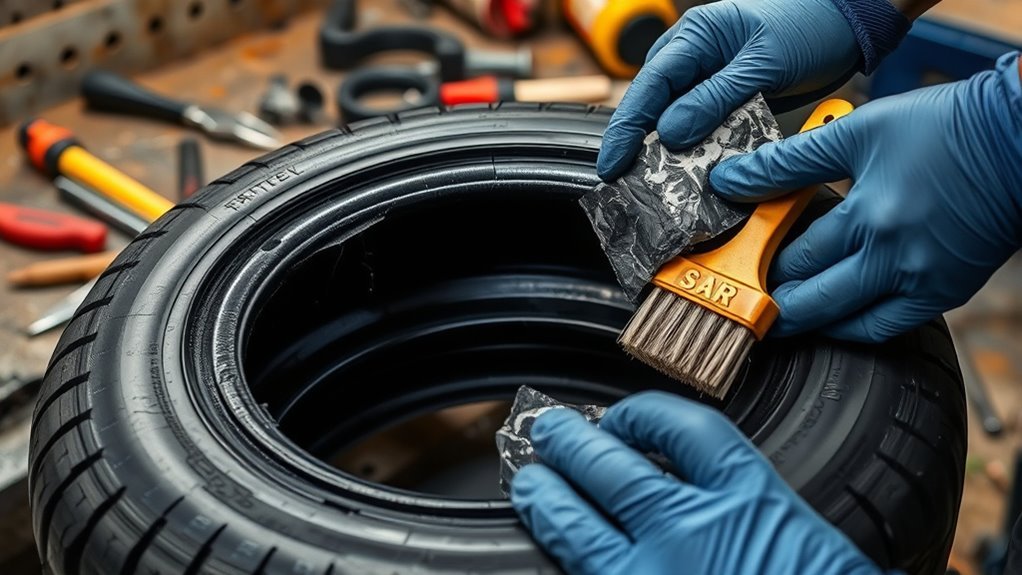
Pressure loss by itself does not prove the inner liner has failed. The same symptom can come from a puncture, valve leak, bead-seat leak, cracked or corroded wheel, or temperature change. Inner-liner damage is usually confirmed only after the tire is removed from the wheel and inspected.
Use these clues to decide what to check next:
- One tire repeatedly loses pressure: suspect a local leak rather than normal temperature change.
- Bubbles appear at the tread, valve, bead, or wheel: the leak source is at that location, not simply “the liner.”
- No external leak is found: a shop may need to dismount the tire and inspect the inner liner, bead area, and internal structure.
- Visible interior cuts, abrasion, cracking, or separation: these are direct signs of internal damage that require a professional serviceability decision.
- Bulges or distorted tread/sidewall areas: treat these as structural tire damage, not as a liner-only symptom, and stop normal driving until the tire is inspected.
Warning: Do not keep driving on a tire that is rapidly losing air, has a bulge, has sidewall damage, or has been driven while flat. Pull over safely, install the spare if appropriate, and have the tire inspected by a trained technician.
How to Check Where a Tire Is Losing Air
At a Glance
| Time Required | Varies; a basic exterior check is quick, while internal inspection requires tire removal |
| Difficulty | Easy for basic checks; professional inspection needed for internal liner damage |
| Tools Needed | Tire pressure gauge, air source, soapy water, flashlight |
| Cost | Varies by leak source, repairability, tire type, and shop |
Use this basic process to narrow down the leak source:
- Check pressure when the tire is cold. USTMA recommends checking tires at least once a month and when they are cold, meaning the vehicle has been parked for at least three hours. USTMA
- Compare the reading to the vehicle placard. Use the pressure listed on the driver-door placard or owner’s manual, not the maximum pressure printed on the tire sidewall.
- Inspect the tread. Look for nails, screws, glass, or cuts.
- Spray soapy water on the valve stem. Bubbles can show a valve leak.
- Spray the bead area. Bubbles around the rim edge can point to a bead-seat or wheel leak.
- Check the wheel. Cracks, corrosion, or bends can cause air loss.
- Have the tire dismounted if needed. A technician must remove the tire to inspect inner liner damage properly.
For a deeper diagnosis by symptom, see why tire pressure keeps going down.
Do not rely only on TPMS. Federal tire-pressure monitoring systems are designed to warn drivers about significant underinflation, but that warning can come after the tire is already far below the recommended pressure. 49 CFR 571.138
Can an Inner Liner Be Repaired?
Sometimes, but the repair is a puncture repair through the inner liner, not a generic repair of any liner defect. USTMA says a proper passenger/light-truck tire repair requires the tire to be removed for inspection, a rubber stem or plug to fill the injury path, and a patch to seal the inner liner. A plug alone is not an acceptable repair. USTMA Tire Repair Basics
USTMA says puncture repairs should be considered only when the damage is in the tread area and the puncture is no larger than 1/4 inch (6 mm). The tire must be removed from the wheel so the inside, including the inner liner, can be inspected. USTMA Tire Repair Basics
A tire usually should not be repaired if it has:
- sidewall damage,
- shoulder damage,
- a large puncture,
- overlapping repairs,
- visible inner liner separation,
- damage from being driven flat, or
- a bulge or exposed cords.
An emergency inflator or sealant may stop or slow some puncture leaks, but it does not prove the tire is safe to return to normal service. Follow the vehicle and sealant instructions, then have the tire inspected so the actual injury and repairability can be evaluated.
If the problem started with a nail or screw, see when a nail puncture can be repaired.
Choosing and Maintaining Tires for Best Air Retention
For the best air retention, focus on tire quality and simple maintenance habits. A well-made tire with a good inner liner still needs proper inflation and inspection.
When choosing tires, look for:
- Reputable brands and correct fitment: use the right tire size, load rating, and speed rating for your vehicle.
- Good manufacturing quality: better consistency helps liner durability and sealing.
- Undamaged bead areas: bead damage can cause slow leaks even with a good liner.
- Fresh, properly stored tires: age, heat, ozone, and poor storage can contribute to rubber degradation.
To maintain air retention:
- Check pressure monthly. Also check before long trips, carrying heavy loads, or towing.
- Use a reliable gauge. Gas-station gauges can be inaccurate or damaged.
- Check tires cold. Heat from driving raises pressure and can hide an underinflation problem.
- Do not ignore slow leaks. A tire that loses pressure repeatedly needs inspection.
- Replace missing valve caps. Caps help keep dirt and moisture out of the valve core.
- Inspect tread and sidewalls. Look for cuts, cracking, bulges, and uneven wear.
NHTSA recommends regular tire maintenance, including checking inflation pressure and inspecting for tread wear, cuts, cracks, bulges, and other damage. NHTSA TireWise
[Products Worth Considering]

This Dr.Roc tire valve stem puller tools set helps install or remove snap-in tubeless valve stems safely and efficiently. It includes ozone-resistant EPDM snap-in valve stems, a valve stem installer, and a valve core remover for quick core removal or installation during tire service. Designed for reliable tubeless tire repair on motorcycles, ATVs, lawn equipment, cars, and trucks.

Orange Seal regular formula tubeless sealant quickly seals punctures and forms a durable bond inside your tire to help reduce flats. Made with natural latex, it adheres effectively to rubber and seals from the inside out, including the critical bead-to-rim interface for a reliable ride. It seals punctures up to 1/4 inch, slices up to 3/4 inch, and performs in temperatures as low as 11°F across MTB, road, cyclocross, gravel, and e-bike applications.

Upgrade your tires with YUIQIEUY aluminum valve stem caps that provide an airtight, hermetically sealed fit to help keep moisture and debris out. The durable anodized finish helps protect against wear and corrosion, while the screw-in thread makes installation quick and secure. Designed for cars, SUVs, trucks, motorcycles, and bicycles, these caps help maintain valve performance and a clean, stylish look.
Common Myths About What Holds Air in a Tire
Myth: The Tread Holds the Air
The tread provides grip and wear life. It is not the main airtight barrier. A puncture through the tread can leak because it passes through the tread, belts, casing, and inner liner into the air chamber.
Myth: The Sidewall Is the Air Chamber
The sidewall contains pressure because it is part of the tire structure, but it is not the primary air-sealing layer. The inner liner does that job on the inside.
Myth: TPMS Means You Don’t Need to Check Pressure
TPMS is helpful, but it is not a replacement for monthly pressure checks. A tire can be underinflated before the warning light appears.
Myth: Nitrogen Fixes Tire Leaks
Nitrogen inflation does not repair punctures, bead leaks, valve leaks, or inner-liner damage. Continental notes that nitrogen may hold pressure somewhat longer than ordinary air, but it provides no meaningful advantage for mechanical leaks. Regular pressure checks are still required. Continental Tires
Frequently Asked Questions
What part of a tire keeps the air in?
The inner liner keeps the air in a tubeless tire. It is an airtight layer, usually made from butyl or halobutyl rubber, bonded to the inside of the tire. The bead, rim, and valve stem also help complete the sealed air chamber.
What is the purpose of the tire’s inner liner?
The inner liner’s purpose is to slow air loss and maintain tire pressure. In a tubeless tire, it acts like the inner tube used in older tube-type designs.
Does the bead hold air in a tire?
The bead helps seal the tire against the rim, so it is part of the air-sealing system. However, the bead is not the main airtight layer. The inner liner is the part of the tire designed to retain air.
Can a damaged inner liner be fixed?
A puncture that passes through the inner liner may be repairable if it is limited to the repairable tread area and is no larger than 1/4 inch (6 mm). The tire must be removed from the wheel and inspected internally. Liner separation, sidewall or shoulder damage, a bulge, or damage from being driven flat can make the tire non-repairable.
Why does my tire keep losing air if there is no nail?
A tire can lose air from the valve stem, valve core, bead seat, cracked wheel, corrosion on the rim, aging rubber, or inner liner damage. A leak test with soapy water can help locate the problem, but internal liner damage requires professional inspection.
Conclusion
The inner liner is the main air-retaining layer inside a modern tubeless tire. Low-permeability butyl-based rubber slows gas loss through the tire body, while the bead-to-rim interface and valve complete the sealed chamber.
For reliable air retention, keep tires inflated to the vehicle’s recommended pressure, check them monthly, inspect for punctures and sidewall damage, and repair leaks properly. If a tire repeatedly loses pressure or shows a bulge, crack, liner separation, or sidewall damage, have it inspected before driving farther.
Sources
- Continental Tires: Tire Components — supports the explanation of the inner liner as the airtight layer that seals the chamber in modern tubeless car tires.
- Bridgestone: Tire Terminology — defines the inner liner as low-permeability rubber laminated inside a tubeless tire to make it hold air.
- U.S. Tire Manufacturers Association: Tire Care Essentials — supports monthly cold tire-pressure checks, tread-depth guidance, and TPMS cautions.
- U.S. Tire Manufacturers Association: Tire Repair Basics — supports the 1/4-inch (6 mm) tread-area limit, tire removal for inspection, and plug-plus-patch repair procedure.
- NHTSA TireWise: Tires — supports tire-pressure, TPMS, aging, and visual-inspection safety guidance.
- ExxonMobil Product Solutions: Tires — supports the role of inner-liner permeability, thickness, and liner endpoint in tire air retention.
- 49 CFR 571.138: Tire Pressure Monitoring Systems — supports the federal TPMS requirement to warn of significant underinflation.
- Harltex: Hot-Feed vs. Cold-Feed Rubber Extrusion — supports the basic manufacturing-process definitions used in the extrusion section.


1 thought on “Tire Inner Liner Material: What Keeps Air Inside”