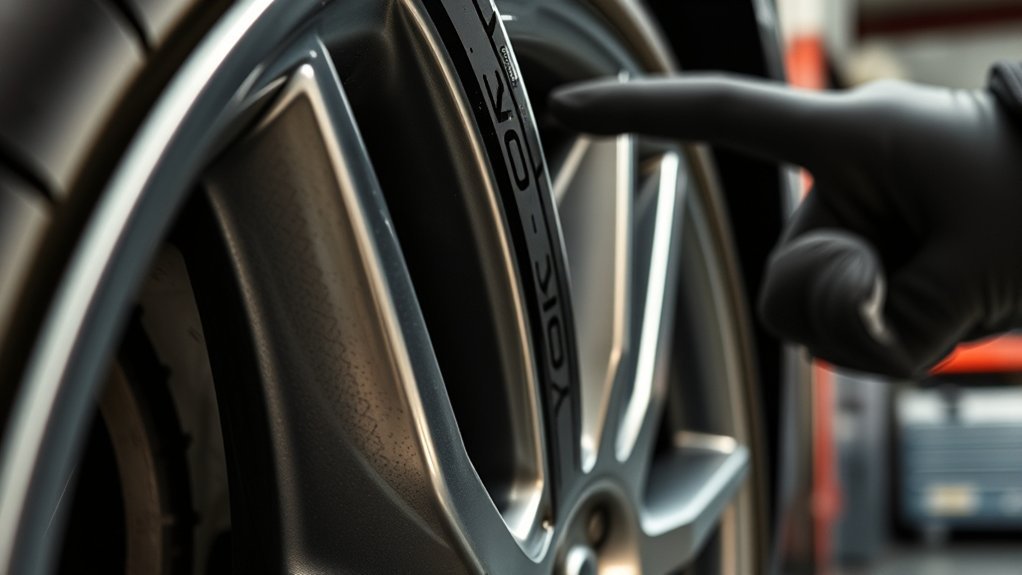
ZR on a tire means the tire is designed for high-speed capability above 149 mph (240 km/h), but ZR is only part of the story. To choose the right tire, you also need to read the final speed symbol, such as W or Y, and the load index number that appears beside it.
Quick Answer
ZR on a tire means the tire has a high-speed design rated above 149 mph (240 km/h). Modern ZR tires usually include a final speed symbol after the load index, such as W for 168 mph or Y for 186 mph, which tells you the tire’s specific maximum speed rating.
Key Takeaways
- ZR means the tire is built for speeds above 149 mph, but the final W, Y, or (Y) symbol gives the exact speed capability.
- The load index is just as important as the speed rating because it tells you how much weight each tire can safely carry when properly inflated.
- In a size like 225/45R17, the R means radial construction. It is not the same thing as an R speed rating.
- Replacement tires should meet or exceed the size, load index, and speed rating listed in your owner’s manual or driver-side door placard.
- A speed rating is not permission to drive at that speed. Road conditions, tire condition, load, inflation, and legal limits still matter.
At a Glance
| Time Required | 2–3 minutes to read a tire sidewall code |
| Difficulty | Easy once you know where the load index and speed symbol sit |
| Tools Needed | Your tire sidewall, owner’s manual, and driver-side door placard |
| Cost | Free to check; tire cost depends on size, brand, speed rating, and load rating |
What Does ZR Mean on a Tire?
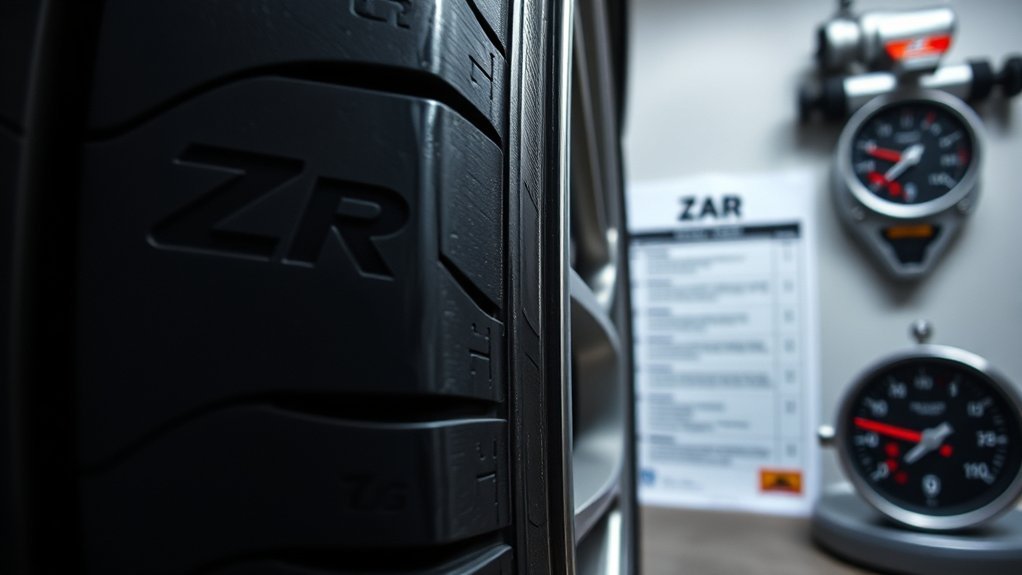
ZR on a tire means the tire is designed for high-speed performance above 149 mph (240 km/h). You will usually see it inside the tire size, such as 225/40ZR18 or 275/35ZR19. The Z tells you the tire is in the high-speed category, and the R still indicates radial construction.
The important detail is that modern tires do not rely on ZR alone to show the exact top speed. Instead, the final speed symbol after the load index does that job. For example, in 225/40ZR18 92Y, the ZR shows high-speed capability, 92 is the load index, and Y is the speed rating.
According to Tire Rack’s speed rating guide, a Z in the tire size means the tire is capable of more than 149 mph, while a W service-description symbol means 168 mph and a Y symbol means 186 mph. Goodyear also notes that W and Y are subcategories of the Z speed rating, and that ZR may appear in the size designation for tires above 149 mph.
Warning: A tire speed rating is not permission to drive at that speed. Always obey posted speed limits, follow your vehicle manufacturer’s tire requirements, and consider road conditions, tire age, load, temperature, and inflation pressure.
How ZR Tire Ratings Work
ZR works as a broad high-speed marking, not a complete tire specification by itself. The full answer comes from three parts of the sidewall code:
- Tire size: For example, 225/40ZR18 tells you the width, aspect ratio, high-speed ZR marking, and wheel diameter.
- Load index: For example, 92 tells you how much weight one tire can carry when properly inflated.
- Speed symbol: For example, W or Y tells you the tire’s exact speed capability under specified conditions.
This matters because two tires can both show ZR but have different service descriptions. A 225/40ZR18 92W tire and a 225/40ZR18 92Y tire are both ZR tires, but the Y-rated tire has the higher speed symbol.
ZR tells you the tire belongs to the high-speed category. The final W, Y, or (Y) rating tells you the specific speed capability.
How to Read ZR, W, Y, and (Y) Markings
The simplest way to read a ZR tire is to look at the full service description, not just the ZR letters. Here are common high-speed markings you may see:
| Marking | Meaning | Typical maximum speed |
| V | High-performance speed symbol | 149 mph / 240 km/h |
| ZR | High-speed size designation | Above 149 mph / 240 km/h |
| W | Specific speed symbol often paired with ZR | 168 mph / 270 km/h |
| Y | Specific speed symbol often paired with ZR | 186 mph / 300 km/h |
| (Y) | Y rating shown in parentheses | Above 186 mph / 300 km/h, depending on tire approval |
ZR Marking Basics
ZR usually appears before the wheel diameter in the tire size. In 245/40ZR18, the “ZR18” part tells you the tire is radial and belongs to the high-speed Z category for an 18-inch wheel. It does not tell you the load capacity, and it may not tell you the exact maximum speed by itself.
W and Y Symbols
The W or Y symbol normally appears after the load index. In 245/40ZR18 97Y, the 97 is the load index and the Y is the speed symbol. This final letter is the part you compare against your vehicle’s recommended speed rating.
Reading Tire Size Codes
Here is a simple example:
| Code part | Example | What it means |
| Width | 225 | Tire width in millimeters |
| Aspect ratio | 45 | Sidewall height as a percentage of width |
| ZR | ZR | Radial tire with high-speed Z capability above 149 mph |
| Wheel diameter | 17 | Fits a 17-inch wheel |
| Load index | 94 | Maximum load capacity code for one tire |
| Speed symbol | Y | Maximum speed rating of 186 mph under specified conditions |
Where the Load Index Fits In
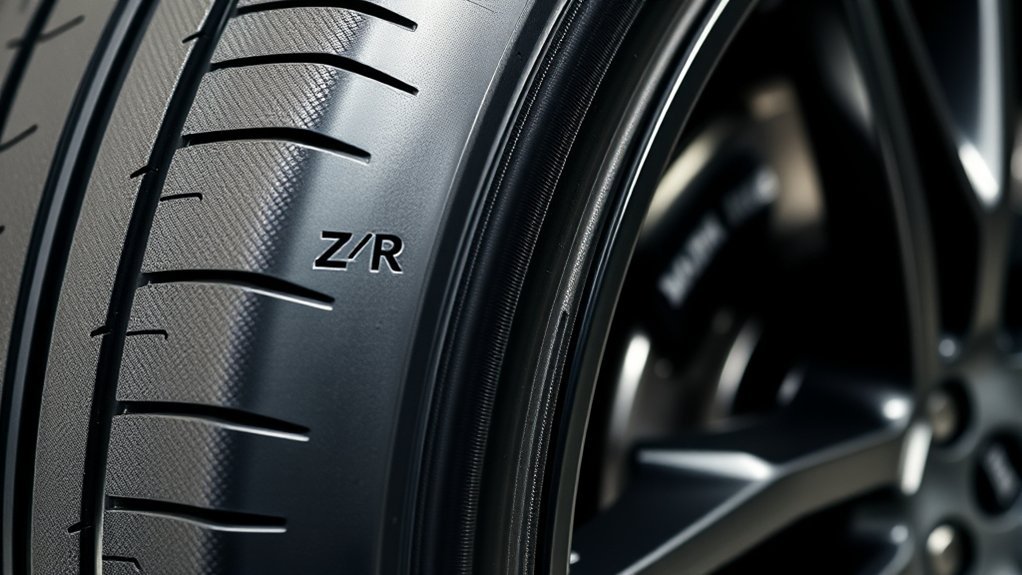
The load index is the number that appears near the speed symbol, such as 91V, 94Y, or 99Y. It tells you how much weight one tire can support when properly inflated. For example, in 205/55R17 91V, 91 is the load index and V is the speed rating.
Michelin explains that load and speed ratings together form the tire’s service description, and that a replacement tire’s load rating should meet or exceed the vehicle manufacturer’s requirement. That requirement is usually listed on the driver-side door placard and in the owner’s manual.
Note: Do not confuse the tire’s maximum sidewall pressure with your normal recommended tire pressure. Use the cold inflation pressure listed on the vehicle placard or owner’s manual.
ZR vs R Tires: What Is the Real Difference?
The phrase “ZR vs R tires” can be confusing because the letter R can mean two different things depending on where it appears.
In a tire size like 225/45R17, the R means radial construction. It does not mean the tire has an R speed rating. Most modern passenger tires are radial tires, including many ZR tires. In fact, the R in ZR also refers to radial construction.
An R speed rating is different. It appears as the final speed symbol after the load index, such as 102R. That R speed symbol is a separate rating and should not be confused with the R in the middle of the size code.
[Products Worth Considering]
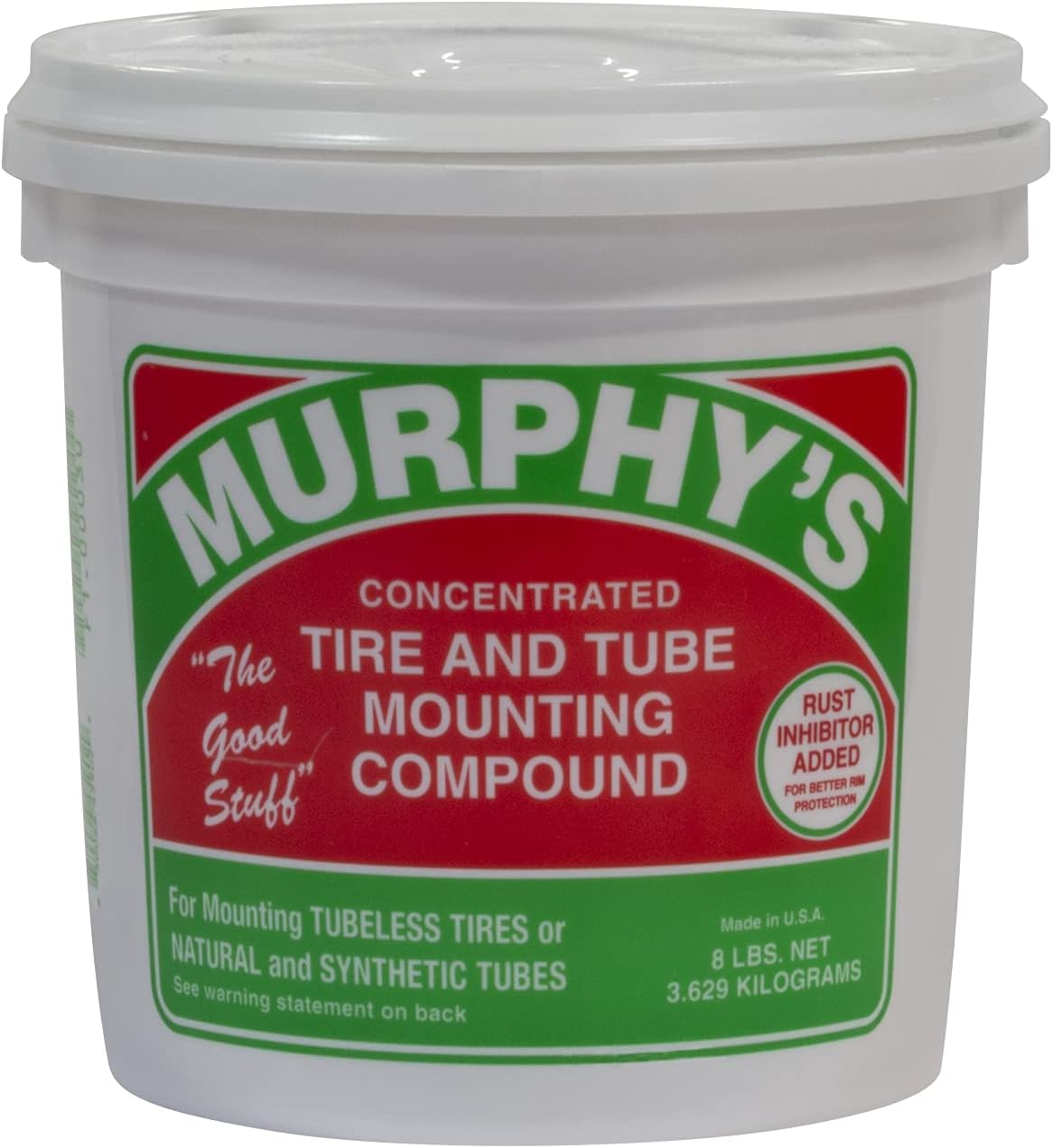
A concentrated tire and tube mounting compound designed to help simplify mounting rubber tires and tubes on passenger, semi truck, construction, and OTR applications. Its ultra-thick formula packs beads effectively and includes rust inhibitors to help protect against corrosion during use.

Milton S-921 pencil tire pressure gauge helps you maintain optimal tire pressure for passenger cars with accurate readings in PSI and kPa. It features a built-in deflator valve for convenient pressure adjustments, plus a single chuck head and nylon indicator bar for easy use on the go. Built from durable plated brass and designed for reliable performance, it’s a practical road trip and cold-weather maintenance tool.

Steelman white tire marking crayons provide high-contrast, semi-permanent marks for repairing and inspecting tires and equipment. They write on wet or dry, smooth or coarse surfaces including rubber, metal, glass, and wood, making them ideal for puncture location and damage outlining. The lead- and zinc-free crayons resist weather and fading yet wipe away when you no longer need the marks.
R in the Tire Size Code
When R appears before the wheel diameter, it means radial construction. For example, 205/55R17 91V is a radial tire for a 17-inch wheel with a 91 load index and V speed rating. Continental’s tire marking guide explains that the construction letter in this position identifies the tire casing type, with R meaning radial.
ZR in the Tire Size Code
When ZR appears before the wheel diameter, it means the tire is radial and designed for high-speed capability above 149 mph. A tire marked 245/40ZR18 97Y is not simply “better” than every R17 tire; it is a different size and speed category that must match the vehicle’s requirements.
Comfort, Noise, and Tread Life
Many ZR tires are ultra-high-performance tires, so they may use grip-focused compounds and stiffer construction than touring tires. That can improve steering response and cornering feel, but it can also mean more road noise, a firmer ride, and shorter tread life compared with some touring or grand-touring tires.
That said, do not judge tread life by ZR alone. Check the exact tire model, treadwear warranty, UTQG rating, seasonal category, load index, and speed rating. Alignment, rotation, inflation, vehicle weight, and driving style can change tire life dramatically.
When You Actually Need ZR Tires
You need ZR tires when your vehicle manufacturer specifies them or when the correct replacement tire for your vehicle uses a ZR size and an appropriate W, Y, or (Y) speed symbol. This is common on sports cars, performance sedans, some luxury vehicles, and vehicles equipped with high-performance wheel-and-tire packages.
You do not need ZR tires just because they sound stronger or more exciting. If your vehicle calls for an H-, V-, or T-rated touring tire, a ZR tire may cost more, ride firmer, wear faster, or perform poorly in cold weather depending on the model. The right tire is the one that matches your vehicle, climate, load, and driving needs.
Pro Tip: Before buying, compare the new tire’s size, load index, speed rating, XL or SL marking, and seasonal category against the driver-side door placard and owner’s manual.
[Products Worth Considering]

The Topeak SmartGauge D2 delivers precise digital tire pressure readings for bikes, motorcycles, and sports equipment up to 250 psi (17 bar). Its rotating SmartHead works with both Presta and Schrader valves, so you can check pressure quickly without adapters. The LCD display makes it easy to read results in psi, bar, or kg/cm² with an included CR2032 battery for immediate use.

The Continental Grand Prix 5000 is an allround road bike tire engineered for faster rolling, improved ride comfort, and enhanced puncture protection. It features a Vectran Breaker cut-protection layer, Lazer Grip micro-profile tread for confident cornering control, and Active Comfort Technology to damp vibration for smoother rides. BlackChili compound optimizes grip and speed for everyday performance and long-lasting confidence.

Adam’s Pro Tire Hex Grip applicators are molded foam sponges designed for precise, even tire dressing application. The ergonomic grip helps you spread product without overapplying, reducing sling that can splash onto paint and helping keep your hands clean during wheel and trim detailing. They’re durable, washable, and reusable for repeated detailing sessions.
Can You Mix ZR and Non-ZR Tires?
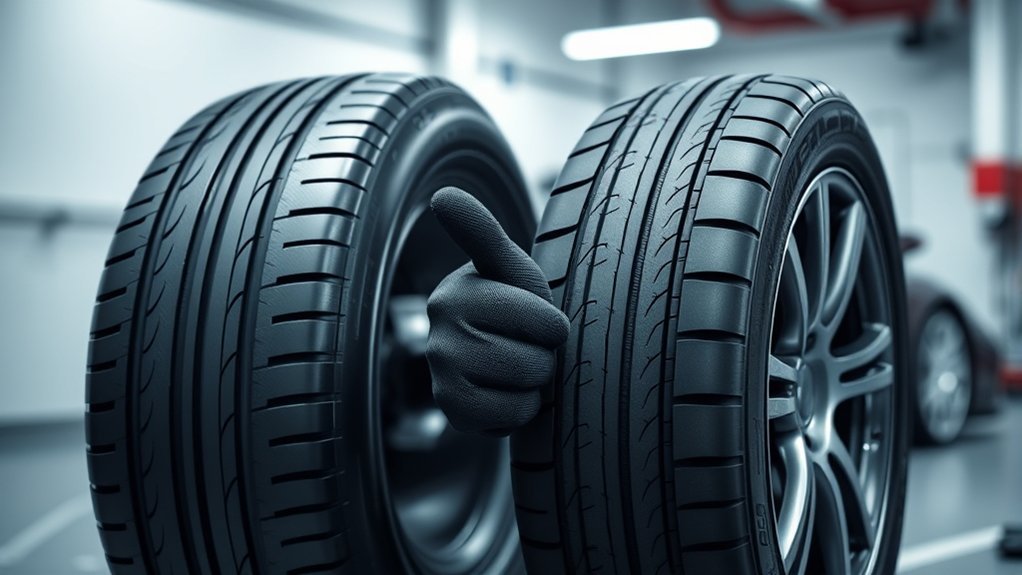
It is usually best to avoid mixing ZR and non-ZR tires unless your vehicle manufacturer or a qualified tire professional confirms the setup is acceptable. Different speed ratings, tread patterns, compounds, tread depths, and construction designs can affect steering, braking, traction, and stability.
The safest approach is to install four matching tires with the correct size, load index, and speed rating. If you must replace only two tires, use the same size and rating required by the vehicle, and follow the tire manufacturer’s placement guidance.
Mastercraft Tires warns that if replacement tires have lower speed capability than the vehicle manufacturer specifies, vehicle speed must be restricted to the replacement tire’s capability and handling may be affected. Michelin also recommends verifying and following the vehicle placard and owner’s manual when replacing tires.
How to Read Tire Size Codes
A tire size code gives you the tire’s main dimensions and service limits. Read it from left to right. In 225/45ZR17 94Y:
- 225 is the section width in millimeters.
- 45 is the aspect ratio, meaning the sidewall height is 45% of the tire width.
- ZR means radial construction with high-speed Z capability above 149 mph.
- 17 is the wheel diameter in inches.
- 94 is the load index.
- Y is the speed rating.
In a non-ZR example like 205/55R17 91V, the R means radial construction, 17 is the wheel diameter, 91 is the load index, and V is the speed rating. This is why the position of each letter matters.
How to Choose the Right Tire for Your Vehicle
Choosing the right tire is not about picking the highest speed rating you can find. It is about matching the full specification to your vehicle and how you drive.
- Check the door placard and owner’s manual. Look for the required tire size, load index, speed rating, and inflation pressure.
- Match or exceed the required load index. Never choose a tire with a lower load capacity than your vehicle requires.
- Match or exceed the required speed rating. A higher rating may be acceptable, but it can change cost, ride comfort, and performance feel.
- Choose the right season. A summer ZR tire may not be safe or effective in snow, ice, or cold temperatures. Consider all-season or winter tires where appropriate.
- Do not overload the vehicle. Load index does not increase your vehicle’s legal or mechanical load capacity.
- Maintain cold tire pressure. Check pressure when the tires are cold, using the vehicle manufacturer’s recommended PSI.
NHTSA’s TireWise guidance says the proper tire pressure is the vehicle manufacturer’s recommended cold inflation pressure, measured before the tire has been driven on for at least three hours. Proper pressure helps the tire carry load, control heat, and perform as designed.
[Products Worth Considering]

This 62-inch extra-long car wash brush kit makes it easy to clean hard-to-reach areas on cars, trucks, SUVs, and RV roofs with lightweight, sturdy poles. It includes soft, non-scratch microfiber and bristles with protective bumpers to help prevent scratches while cleaning effectively. A rubber squeegee helps remove water stains quickly, plus a wheel/tire brush and absorbent towels for complete exterior detailing.

Black Magic Tire Wet delivers a deep wet-look shine that makes tires appear dark, rich, and freshly detailed. Its long-lasting formula helps resist rain, dust, and road grime for weeks of glossy protection, not days. Apply by spraying onto clean, dry tires—no buffing or wiping required—with a low-sling design to reduce splatter on paint and wheels.

This Rhino USA tire pressure gauge with inflator combines an analog dial, locking chuck, and bleed valve in one no-battery tool for inflating, checking, and bleeding in a single connection. It fits standard 1/4" NPT air compressor fittings and is built for reliable shop, roadside, and fleet use on cars, trucks, motorcycles, SUVs, RVs, and trailers. A lifetime replacement helps keep your tire maintenance routine covered.
Frequently Asked Questions
Is a ZR tire better than an R tire?
Not automatically. In most tire sizes, R means radial construction, not a speed rating. A ZR tire is a radial tire with high-speed Z capability above 149 mph. It is better only if your vehicle needs that size and speed capability. For normal commuting, a correctly rated touring tire may ride quieter, last longer, and cost less.
Can you mix R and ZR tires?
You should not mix tires just because one has ZR and another has R in the size code. The real issue is whether the tires match the vehicle’s required size, load index, speed rating, tread type, and construction. For best handling and safety, use four matching tires or ask a qualified tire professional before mixing.
What is the difference between R17 and ZR17 tires?
R17 means the tire is radial and fits a 17-inch wheel. ZR17 means the tire is radial, fits a 17-inch wheel, and belongs to the high-speed Z category above 149 mph. You still need the load index and final speed symbol, such as W or Y, to know the complete tire rating.
How long do ZR-rated tires last?
There is no single lifespan for all ZR tires. Many ultra-high-performance ZR tires use softer compounds for grip, so they may wear faster than touring tires. Actual life depends on the specific tire model, treadwear rating, alignment, rotation, inflation, climate, vehicle weight, and driving style.
Does ZR mean the tire is safe at any speed above 149 mph?
No. ZR means the tire is designed for high-speed capability, but safe operation still depends on the exact speed symbol, tire condition, load, pressure, temperature, road surface, and legal speed limits. The final W, Y, or (Y) rating gives the more specific speed capability.
Can I replace ZR tires with non-ZR tires?
Only if the replacement tires still meet your vehicle manufacturer’s required size, load index, and speed rating. If your vehicle requires a W- or Y-rated ZR tire, replacing it with a lower-rated tire can reduce speed capability and may affect handling. Check the door placard, owner’s manual, and a qualified tire professional before changing ratings.
Conclusion
ZR on a tire means high-speed capability above 149 mph, but you should never read ZR by itself. The complete tire code matters: size, load index, final speed symbol, construction, seasonal category, and manufacturer requirements all work together. If you match the full specification to your vehicle’s placard and owner’s manual, you can choose the right tire without guessing.
Sources
- Tire Rack — How Do I Check a Tire’s Speed Rating? — backs up ZR, W, Y, and (Y) speed-rating explanations.
- Goodyear — Load Index Speed Rating — backs up load index, speed rating, and ZR/W/Y relationship.
- Michelin USA — Tire Load Rating & Speed Rating Explained — backs up service description, load index, speed rating, and replacement guidance.
- Continental Tires — Tire Markings — backs up sidewall decoding and R as radial construction.
- NHTSA TireWise — Tire Safety Ratings and Awareness — backs up cold inflation pressure and tire safety guidance.
- Mastercraft Tires — Proper Speed Rating — backs up warnings about lower speed-rated replacement tires and safe operation limits.