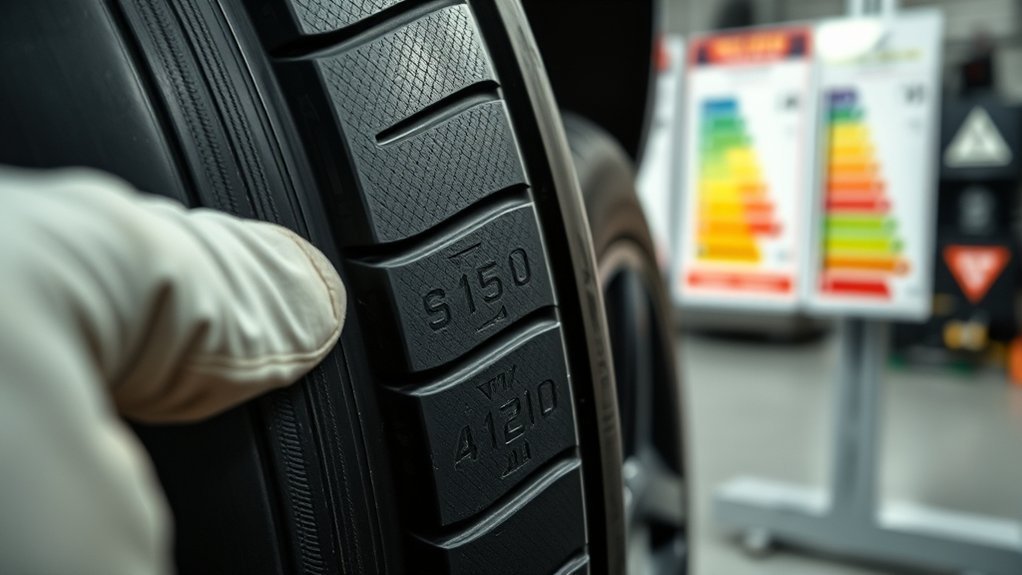
A tire marked 91W is showing its service description: 91 is the load index, and W is the speed rating. In plain terms, a 91W tire has a maximum load rating of 1,356 pounds (615 kg) per tire and a W speed rating of 168 mph (270 km/h) under specified conditions. The right replacement still depends on your vehicle’s approved tire size, load rating, speed rating, tire type, and recommended cold tire pressure.
Last updated: August 18, 2026. Ratings and replacement guidance were cross-checked against NHTSA, Michelin, Bridgestone, and Continental.
Quick Answer
A 91W tire has a 91 load index, meaning it is rated for up to 1,356 lb (615 kg) per tire under its specified load and inflation conditions, and a W speed rating, meaning it is rated up to 168 mph (270 km/h) under specified test conditions. For normal replacement, match or exceed your vehicle’s required load and speed ratings and use an approved tire size.
Key Takeaways
- 91 is the tire’s load index: 1,356 lb (615 kg) per tire when used within its specified load and inflation conditions.
- W is the speed rating: 168 mph (270 km/h) under controlled rating conditions, not a recommendation to drive that fast.
- For normal replacement, match or exceed your vehicle manufacturer’s required load index and speed rating unless the manufacturer provides another approved specification.
- A lower load index, such as 87W, reduces carrying capacity even though the W speed rating stays the same.
- Check the tire sidewall, driver-side Tire and Loading Information Label, and owner’s manual before buying replacement tires.
At a Glance
| Code | 91W service description |
| 91 Means | Load index 91: 1,356 lb / 615 kg per tire |
| W Means | Speed rating W: 168 mph / 270 km/h under specified conditions |
| Replacement Check | Use an approved tire size and meet the vehicle maker’s load, speed, load-designation, and cold-pressure requirements. |
What Does 91W Mean on a Tire?
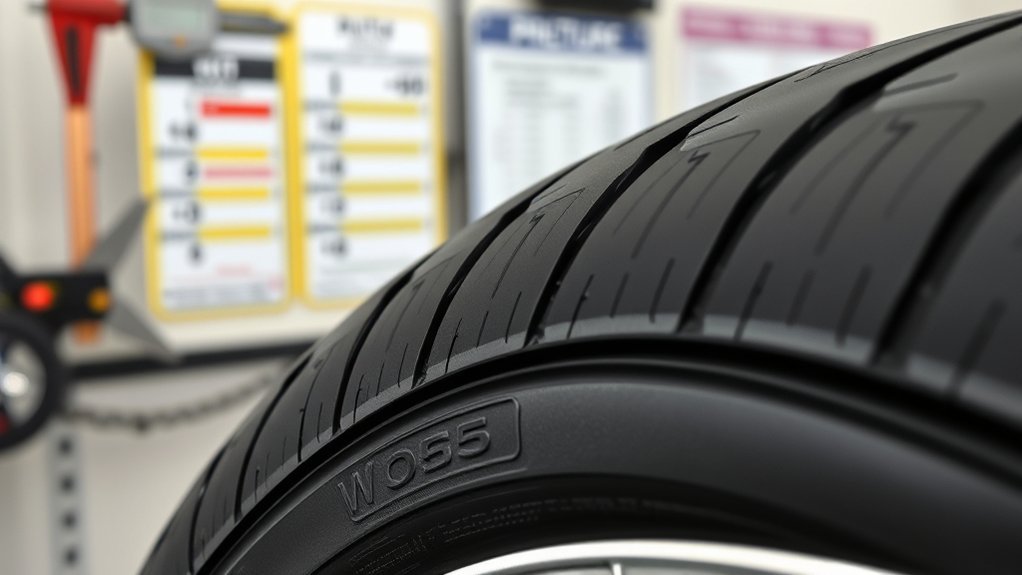
The marking 91W combines two tire ratings. The number 91 is the load index, which corresponds to 1,356 pounds (615 kg) per tire. The letter W is the speed rating, which corresponds to 168 mph (270 km/h).
You’ll usually see 91W at the end of a tire size, such as 225/45R17 91W. The size tells you the tire’s physical fit. The 91W service description tells you the tire’s rated load capacity and speed category. Both matter when replacing tires because the replacement must meet the vehicle manufacturer’s size and operating requirements.
Note: A W rating is not permission to drive at 168 mph. It is a tire capability rating under specified conditions. Real-world safety still depends on legal speed limits, tire condition, inflation pressure, vehicle load, road conditions, and the vehicle manufacturer’s recommendations.
How the 91 Load Index Works
The load index is a numerical code for how much weight one tire can carry under its specified load and inflation conditions. A 91 load index corresponds to 1,356 lb (615 kg). On a four-tire vehicle, that sounds like 5,424 lb of total tire capacity, but you should not treat that number as your safe payload limit. Vehicle weight distribution, axle ratings, tire pressure, passengers, cargo, and the manufacturer’s limits all matter.
| Load Index | Capacity Per Tire | What It Means |
|---|---|---|
| 87 | 1,201 lb / 545 kg | Lower capacity than 91; do not use it when the vehicle requires a 91 load index or higher. |
| 91 | 1,356 lb / 615 kg | The load index discussed in a 91W service description. |
| 95 | 1,521 lb / 690 kg | Higher load capacity; it may be suitable when the tire size and other vehicle requirements also match. |
To use the rating correctly, check three things:
- Match or exceed the original equipment load index listed for your vehicle.
- Inflate the tire to the vehicle manufacturer’s recommended cold tire pressure, not the maximum pressure printed on the tire sidewall.
- Do not exceed the vehicle’s gross vehicle weight rating, axle ratings, or tire load capacity.
What the W Speed Rating Means
The W speed rating means the tire is rated up to 168 mph (270 km/h) under specified test conditions. You’ll often see W-rated tires on performance-oriented passenger-car fitments, but the rating itself only identifies the tire’s speed category.
W Speed Limit
A W-rated tire is designed for a maximum rated speed of 168 mph under its specified conditions. That does not mean every W-rated tire will perform the same in braking, wet grip, ride comfort, tread life, or winter traction. The speed rating only identifies the tire’s speed category; it does not replace tire reviews, traction ratings, tread design, or the vehicle manufacturer’s specifications.
A 91W tire is a load-and-speed match, not a full performance review. It tells you capacity and speed category, but not tread life, wet braking, snow traction, noise, or comfort.
High-Performance Use
Because W-rated tires are built for a higher speed category, they may be specified on vehicles with performance-oriented tire requirements. Still, the tire must be the correct size and construction for the wheel and vehicle. A tire can have the right W speed rating and still be wrong if the size, load index, load designation, seasonal category, or pressure requirement does not match your vehicle.
Manufacturer Recommendations
If your vehicle’s placard or owner’s manual specifies a W speed rating, choose W or higher for normal replacement unless the manufacturer provides another approved specification. A higher speed rating, such as Y, may be acceptable if all other specifications match. Michelin notes that some winter-capable tire applications may use a lower speed rating; when that exception is approved, follow the vehicle manufacturer’s guidance and never operate above the replacement tire’s rated speed.
Warning: Never downgrade below your vehicle’s required load index. Do not use a lower speed rating unless the vehicle manufacturer or an approved winter-tire application permits it. A lower rating can reduce the operating margin the vehicle was designed around.
How to Read Tire Size Codes
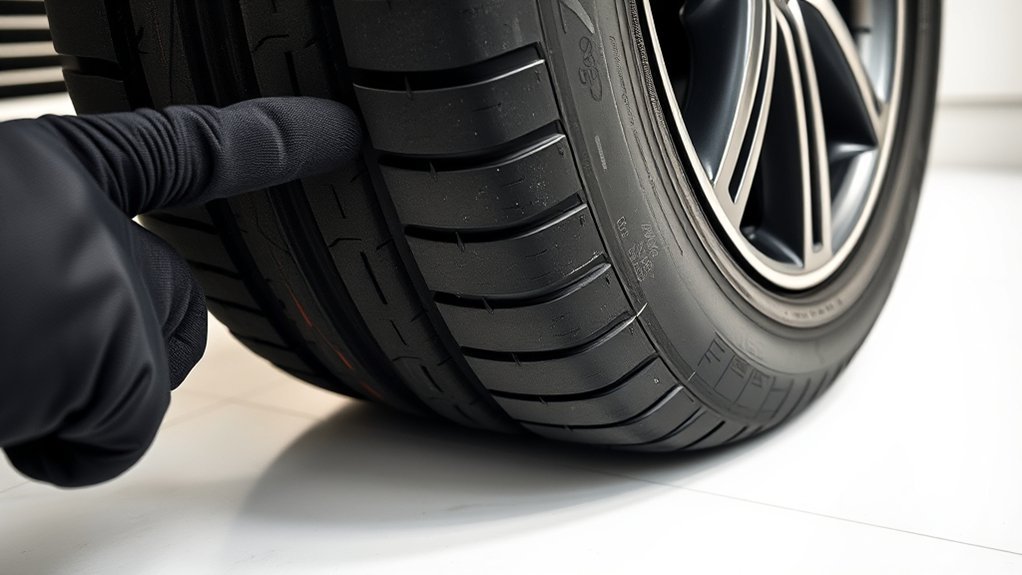
To read a tire size code, start with the numbers and letters molded into the sidewall. In 225/45R17 91W, each part has a specific meaning.
| Code | Meaning | Example Explanation |
|---|---|---|
| 225 | Section width | The tire is about 225 mm wide. |
| 45 | Aspect ratio | The sidewall height is 45% of the tire’s width. |
| R | Construction | R means radial construction. |
| 17 | Wheel diameter | The tire fits a 17-inch wheel. |
| 91 | Load index | The tire has a maximum load rating of 1,356 lb / 615 kg per tire under its specified conditions. |
| W | Speed rating | The tire is rated up to 168 mph / 270 km/h under specified conditions. |
The final number-letter pair is often called the service description. It is small, but it is one of the most important parts of the tire code when you are comparing replacement tires.
How to Tell If 91W Fits Your Vehicle
The fastest way to confirm whether 91W fits your vehicle is to compare it with the original equipment tire information. The correct answer is not based on the tire code alone; it depends on your vehicle’s approved tire size, load index, speed rating, tire specification, and pressure.
Four-part 91W fitment rule: Treat 91W as a suitable candidate only when (1) the tire size is approved for your vehicle, (2) load index 91 meets or exceeds the required load index, (3) the W speed rating meets the normal replacement requirement or the manufacturer approves a specific exception, and (4) the tire’s load designation and other required construction or seasonal specifications match the vehicle’s requirements.
[Products Worth Considering]

This AstroAI 2-pack pencil tire pressure gauge delivers accurate tire readings across common vehicle types, with a precision nozzle that seals on valve stems for reliable results. It measures PSI, kPa, and BAR within a 10–75 PSI range, includes an integrated deflator valve, and features an ABS indicator bar for easier pressure checks. A compact, pocket-friendly design and battery-free operation make it ideal for road trips and everyday maintenance.

The SAFELIFE dial tire tread depth gauge measures tread depth in 1/32 inch increments with clear, easy-to-read 2-inch dial face. Color zones using a traffic light system help you quickly judge whether tread is low, marginal, or ample for safer driving. Built with a durable zinc cast body and a metal detect probe for precise, comfortable use across cars, motorcycles, trucks, and buses.

Vigorder rubber cement glue delivers superior adhesion and cures quickly within about 30 seconds for seamless rubber bonding. Once cured, it helps provide a strong, durable, waterproof seal that holds up to vehicle weight, pressure, and heat. Suitable for cars, motorcycles, trucks, bicycles, and off-road tires, it’s designed for emergency patch and maintenance repairs.
Check Vehicle Placard
Look for the Tire and Loading Information Label on the driver’s side door edge, door post, or B-pillar. You can also check the owner’s manual. The National Highway Traffic Safety Administration recommends using the owner’s manual or Tire and Loading Information Label to find the correct tire size for your car or truck.
- Find the recommended tire size, such as 225/45R17.
- Find the required load index and speed rating or other manufacturer-approved tire specification.
- Confirm the replacement tire uses an approved size and meets the required load and speed specification.
- Use the vehicle manufacturer’s recommended cold tire pressure.
Match OE Specifications
OE specifications are the tire specifications chosen or approved by the vehicle manufacturer. Matching them helps preserve the vehicle’s intended load capacity, fitment, handling characteristics, and tire-pressure guidance.
If your approved specification calls for 91W, a 91W tire can satisfy the load-and-speed part of the requirement when the tire size and other required designations also match. If the vehicle requires a higher load index, such as 94 or 95, do not use 91W. If the vehicle permits a lower speed rating, a W-rated tire may exceed that speed requirement, but the correct size, load index, construction, and other specifications still matter.
Pro Tip: When comparing two tires that both say 91W, also check the tire category, season type, treadwear expectations, wet traction, road-noise reviews, warranty, and whether the vehicle requires Standard Load or Extra Load construction.
Can You Use a Higher or Lower Rating Than 91W?
You can often use a higher load index or speed rating when the tire size and other specifications remain compatible, but you should be careful with lower ratings. For normal replacement, the safest general rule is to meet or exceed the vehicle manufacturer’s required load index and speed rating. Follow the owner’s manual whenever the manufacturer provides an approved alternative, including any winter-tire exception.
| Change | Usually Acceptable? | Why |
|---|---|---|
| 91W to 95W | Often yes, if size and other requirements match | 95 has a higher load capacity while W keeps the same speed rating. |
| 91W to 91Y | Often yes, if size and other requirements match | The load index stays the same, and Y is a higher speed rating than W. |
| 91W to 87W | Usually no | 87 has lower load capacity even though the W speed rating is unchanged. |
| 91W to 91V | Only when specifically approved | The load index is the same, but V is a lower speed rating than W. Some approved winter-tire applications may permit a lower speed rating, subject to manufacturer guidance and the lower tire’s speed limit. |
Also watch for XL or Extra Load markings. XL is separate from the 91W service description: 91 is the load index, W is the speed rating, and XL identifies an Extra Load construction. An XL tire is designed to support its specified loads using a different load-and-inflation capability than a comparable Standard Load tire. If your vehicle requires XL tires, use an approved replacement that satisfies that requirement rather than choosing by the 91W code alone.
[Products Worth Considering]

This manual duck head tire changer kit makes tire installation and removal simpler by letting you embed the duck head into the tire with applied pressure. The integrated design and durable steel construction help reduce friction and improve efficiency and safety during use. Suitable for 16–21 inch wheels, it’s convenient for cars, trucks, SUVs, and ATV tires, with 24-hour after-sales support.

Replace worn pool cleaner tires with this all-purpose C10 tire set made to fit compatible Polaris automatic pool cleaners. The tires are designed for maximum traction while helping protect your pool finish, and they match Polaris OEM size and material. Each pack includes three new tires in sealed bags.
This flat-free TICONN wheelbarrow tire features durable polyurethane foam construction that never needs inflation, helping prevent punctures and reducing maintenance on rough outdoor terrain. With a 300 lb max load capacity and stable steel rim design, it supports safer transport for yard work and hauling tasks. An adapter kit with ball bearings and nylon spacers is included for easier fit and customization across common wheelbarrow and cart axle setups.
91W vs 87W: What Changes?
The difference between 91W and 87W is the load index. Both tires have the same W speed rating, but they do not carry the same maximum load.
| Rating | Load Capacity | Speed Rating | Main Difference |
|---|---|---|---|
| 87W | 1,201 lb / 545 kg | 168 mph / 270 km/h | Lower load capacity. |
| 91W | 1,356 lb / 615 kg | 168 mph / 270 km/h | 155 lb more capacity per tire than 87W. |
If your vehicle requires 91W, stepping down to 87W reduces the rated capacity by 155 lb per tire. That matters when the tire is supporting vehicle weight, passengers, and cargo. The W speed rating does not change, but the available load capacity does.
Related tire ratings: If your sidewall uses a different service description, see what 91H means on a tire for the same 91 load index with a different speed rating, or what 97W means on a tire for a higher load index with the same W speed rating.
[Products Worth Considering]

The Big Rig Defense Tire Thumper is a truck tire pressure checker that lets you quickly check multiple tires by giving them a firm whack. Listen for a reassuring thump and feel the stick bounce when a tire is fully inflated, helping you get back on the road safely. It features a comfortable, glove-friendly handle and a secure wrist strap for confident use on busy routes.
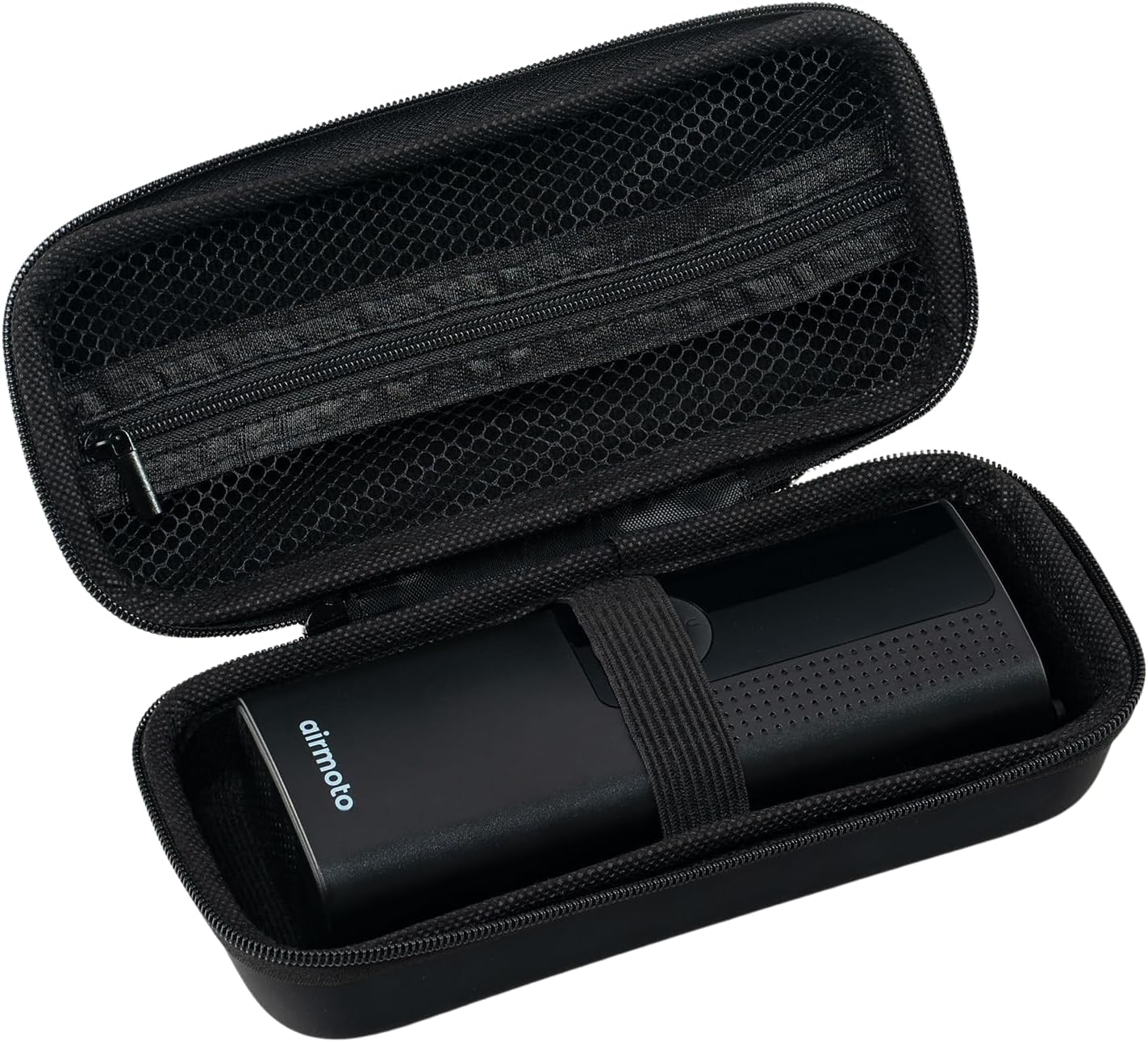
Protect and organize your Airmoto tire inflator with a purpose-designed carrying case made for a precise fit. The durable polyurethane shell and soft interior help guard against cuts, tears, and road wear, while a mesh pocket stores connectors and accessories. This travel box measures 7.5*3.5*2.8 inches and can work with most handheld portable air compressor models; this listing includes the case only.
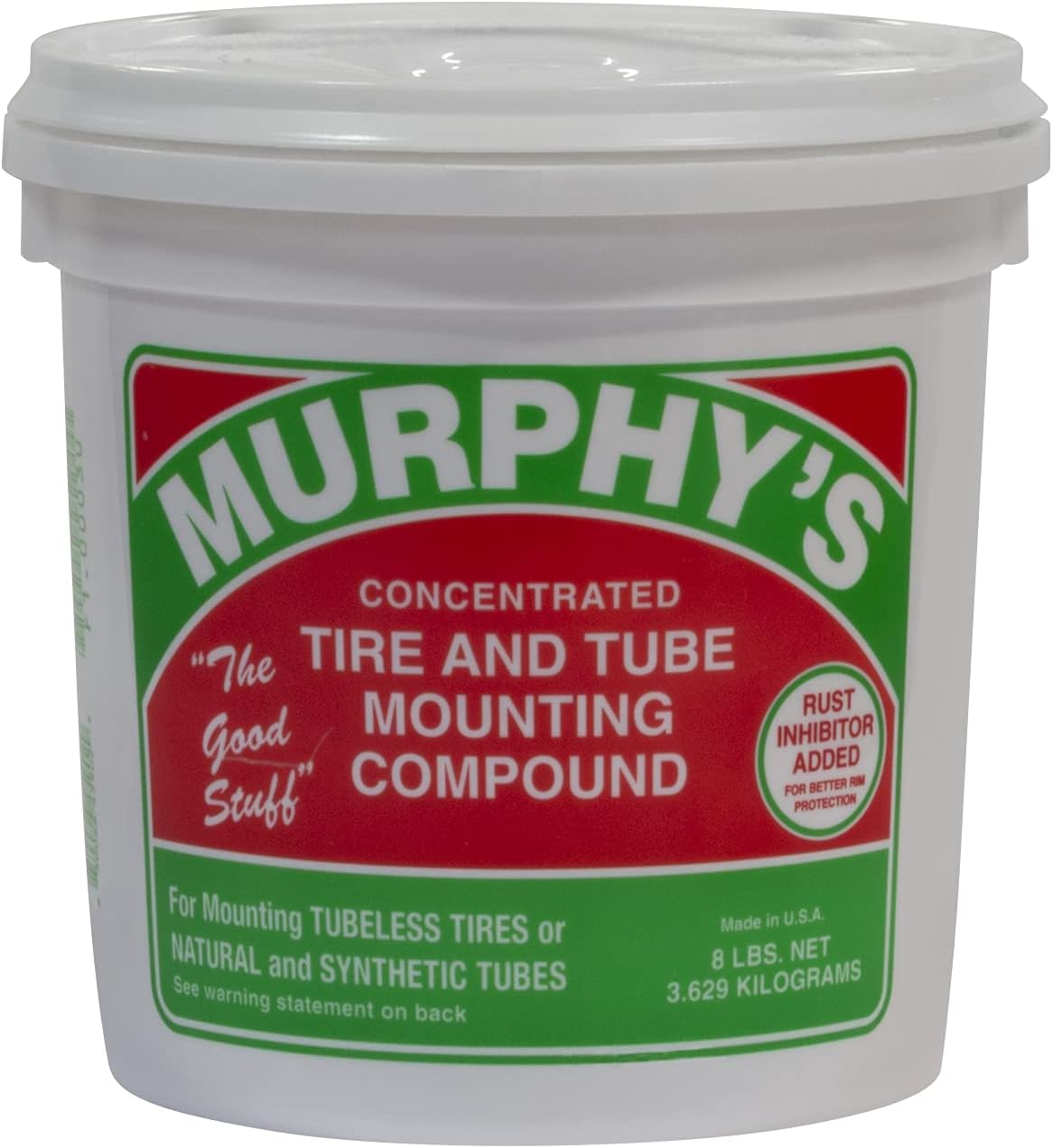
A concentrated tire and tube mounting compound designed to help simplify mounting rubber tires and tubes on passenger, semi truck, construction, and OTR applications. Its ultra-thick formula packs beads effectively and includes rust inhibitors to help protect against corrosion during use.
Where to Find Your Tire Rating
You can find the tire rating on the sidewall, usually right after the size code. Look for a number-letter combination such as 91W, 95V, or 94Y. On many passenger tires, it appears after the wheel diameter, like this: 225/45R17 91W.
If the sidewall is dirty or hard to read, clean it gently and check both sides of the tire. Some information may be easier to see on the outer sidewall, while other markings may face inward. Then compare what you find with the driver-side Tire and Loading Information Label and owner’s manual.
Why You Should Match OE Specs

Matching original equipment specs keeps the tire aligned with the vehicle’s intended load capacity, fitment, handling characteristics, and operating limits. The load index prevents you from choosing a tire with insufficient rated load capacity. The speed rating identifies the tire’s speed capability under specified conditions. The tire size keeps the tire compatible with the approved wheel and vehicle fitment.
Choosing a lower rating can create problems. A lower load index provides less rated weight capacity. A lower speed rating reduces the tire’s rated speed capability. A different size can affect fitment and vehicle behavior. When in doubt, match the approved specification or ask a qualified tire professional or vehicle manufacturer to confirm an alternative.
Common Mistakes to Avoid
- Reading only the W: Two tires can both be W-rated but have different load indexes.
- Ignoring pressure: Tire load capability depends on proper inflation and use within the tire and vehicle specifications.
- Assuming a higher rating automatically makes a tire better: Load index and speed rating do not tell you tread life, wet grip, comfort, noise, or winter performance.
- Mixing ratings casually: Follow the vehicle manufacturer’s front/rear specifications and avoid unapproved mismatches.
- Using sidewall maximum pressure as the normal target: Use the vehicle manufacturer’s recommended cold tire pressure unless an approved specification says otherwise.
Frequently Asked Questions
What’s the difference between 91Y and 91W tires?
91Y and 91W have the same load index, so both correspond to 1,356 lb (615 kg) per tire. The difference is speed rating: W is rated up to 168 mph (270 km/h), while Y is rated up to 186 mph (300 km/h). If your vehicle calls for 91W, 91Y may satisfy the load-and-speed requirement when the size and other required tire specifications also match.
What does 225/45 R17 91W mean?
225/45 R17 91W means the tire is 225 mm wide, has a sidewall height equal to 45% of its width, uses radial construction, fits a 17-inch wheel, has a load index corresponding to 1,356 lb (615 kg) per tire, and has a W speed rating of 168 mph (270 km/h).
What does the W mean on a tire?
The W on a tire is the speed rating. It means the tire is rated up to 168 mph (270 km/h) under specified conditions. It does not tell you the tire’s load capacity; that comes from the number before it, such as 91.
What’s the difference between 91W and 95W tires?
91W and 95W have the same W speed rating but different load capacities. A 91 load index corresponds to 1,356 lb (615 kg) per tire, while a 95 load index corresponds to 1,521 lb (690 kg). That gives 95W an extra 165 lb of rated capacity per tire.
Can I use 95W instead of 91W?
Often, yes, if the tire size, construction, seasonal category, load designation, and vehicle requirements match. A 95W tire has a higher load index than 91W and the same W speed rating. Still, confirm fitment with your owner’s manual, placard, tire dealer, or vehicle manufacturer.
Can I use 87W instead of 91W?
Usually no. An 87W tire has the same W speed rating but a lower load capacity: 1,201 lb (545 kg) instead of 1,356 lb (615 kg) per tire. If your vehicle requires a 91 load index, an 87W tire does not meet that load requirement.
Should all four tires have the same 91W rating?
Follow the vehicle manufacturer’s front and rear tire specifications. Many vehicles use the same load and speed requirements at all four positions, while some use staggered sizes or different approved front and rear specifications. Do not create a mixed setup based on guesswork.
Conclusion
When you see 91W on a tire, read it as two important ratings: 91 is the load index corresponding to 1,356 lb (615 kg) per tire, and W means the tire is rated up to 168 mph (270 km/h) under specified conditions. For replacement tires, confirm the approved tire size, required load index, speed rating, load designation, tire type, and cold tire pressure in your vehicle information. If the tire does not satisfy the required specification or an explicitly approved alternative, choose a different tire.
Sources
- NHTSA TireWise: Tire Safety Ratings and Awareness: supports checking the owner’s manual or Tire and Loading Information Label for tire size and vehicle tire guidance.
- Michelin: Tire Load Rating & Speed Rating Explained: supports load-index and speed-rating definitions, replacement guidance, W and Y speed ratings, Extra Load guidance, and the winter-tire speed-rating exception.
- Bridgestone: How to Read Tire Size: supports tire-size decoding, load-index placement, speed-rating values, and replacement speed-rating guidance.
- Continental: Tire Size Guide: supports matching replacement tire size, load index, and speed rating to vehicle specifications.