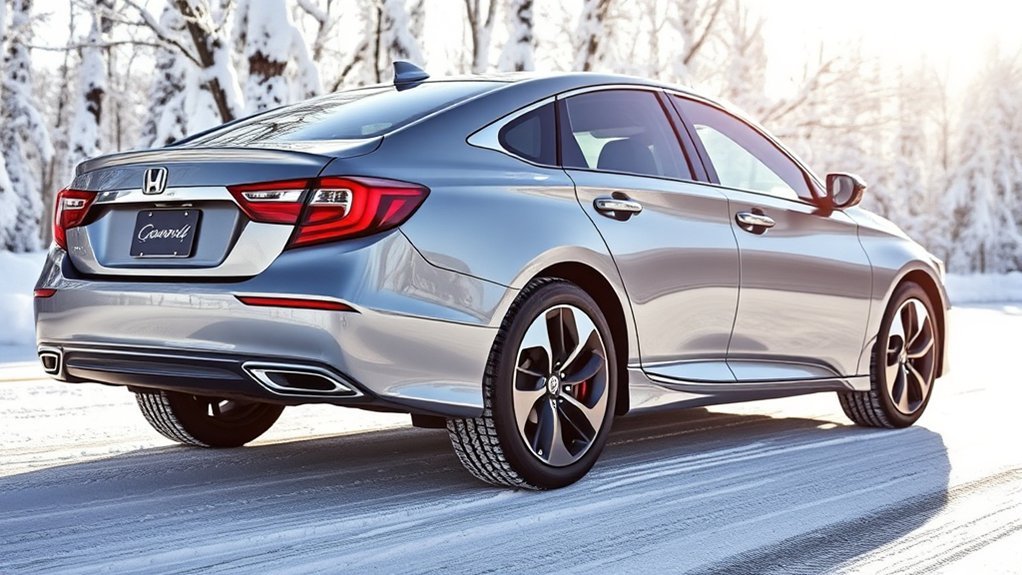
If you drive a Honda Accord in freezing rain, packed snow, slush, or icy morning commutes, the right winter tires can make the car feel much more controlled. The key is not simply buying any “snow tire.” You need the correct Accord size and load rating, four matching tires, enough tread depth, and a tire marked for real winter use.
Quick Answer
For a Honda Accord, choose four matching winter tires in the same size and load range as the original tires, preferably with the Three-Peak Mountain Snowflake symbol. Install them when temperatures stay near or below 45°F, keep them properly inflated, and use tire chains only if your owner’s manual and local law allow them.
Key Takeaways
- Use four matching winter tires, not just two, so braking and steering stay balanced.
- Confirm your exact tire size on the driver-side door placard or in the owner’s manual before buying.
- Look for the Three-Peak Mountain Snowflake symbol for severe-snow performance; M+S alone is not the same standard.
- Check cold tire pressure often because tire pressure changes by about 1 PSI for every 10°F temperature change.
- For tire chains, follow the Honda manual for your model year and stop driving if chains contact the vehicle.
At a Glance
| Time Required | 15–30 minutes to confirm size and compare tires; about 45–90 minutes for professional mounting and balancing. |
| Difficulty | Easy if buying by vehicle fitment; moderate if choosing separate winter wheels or tire chains. |
| Tools Needed | Tire placard, owner’s manual, tire-pressure gauge, tread-depth gauge, and a trusted tire shop for mounting/balancing. |
| Cost | Varies by tire size, brand, installer, TPMS sensors, and whether you buy a separate winter wheel set. |
Why Winter Tires Matter for Your Honda Accord
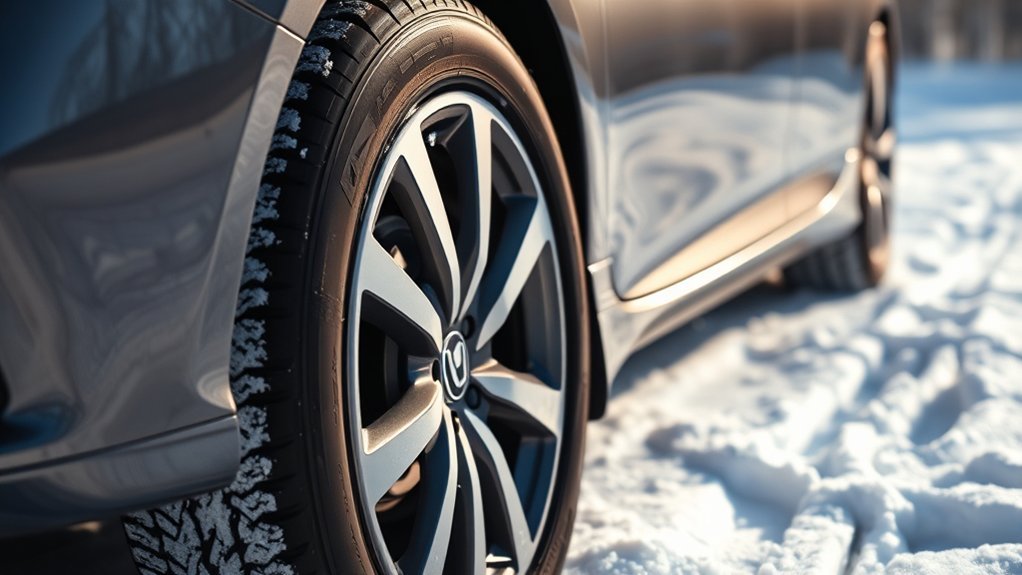
Winter tires matter because cold-weather grip is different from warm-weather grip. A winter tire uses a compound that stays more flexible in low temperatures, plus tread blocks, grooves, and sipes designed to bite into snow and move slush away from the contact patch.
The Honda Accord is front-wheel drive in most trims, which helps with predictable winter traction, but it does not remove the need for the right tire. Acceleration, steering, and braking all depend on the small contact patch where the tire meets the road. When that contact patch is cold, icy, or packed with snow, a proper winter tire gives you more control than a typical all-season tire.
Honda’s owner guidance for the Accord is also clear: when using winter tires, select the same size and load range as the original tires and mount them on all four wheels. That four-tire setup matters because mixing tire types can make the front and rear of the car respond differently during braking or cornering.
Note: Winter tires help with traction, but they do not make ice “safe.” Always increase following distance, brake earlier, and reduce speed when roads are frozen or slushy.
Before You Buy: Confirm the Right Tire Size and Load Rating
The safest way to buy winter tires for a Honda Accord is to start with your exact car, not a generic tire list. Accord tire sizes vary by model year, trim, wheel package, and market. Many Accords use 17-, 18-, or 19-inch wheels, but you should never guess from a chart alone.
Where to Find Your Accord Tire Size
Check these places before ordering:
- Driver-side door placard: This sticker shows the factory tire size and recommended cold tire pressure.
- Owner’s manual: Use the manual for your exact model year, especially if you plan to use chains or alternate wheel sizes.
- Current tire sidewall: The size looks like 225/50R17, 235/40R19, or a similar format.
- Trusted tire retailer fitment tool: Use your year, trim, and wheel size, then confirm against the door placard.
Should You Use Smaller Winter Wheels?
Some Accord owners use a dedicated winter wheel set with a smaller wheel diameter and taller tire sidewall, as long as the package matches the correct overall diameter, load rating, brake clearance, and TPMS needs. This can make seasonal swaps easier and may reduce the cost of replacement tires. Do not downsize unless a tire professional confirms the wheel clears the brakes and is approved for your vehicle.
TPMS and Winter Wheels
If you buy a second set of winter wheels, ask whether you need extra tire-pressure monitoring sensors. Some setups can be programmed or relearned; others may trigger a dashboard warning if sensors are missing or incompatible.
Essential Features to Consider When Choosing Winter Tires
Good winter tires are not all identical. Some focus on ice braking, some on deep snow, some on quiet highway driving, and some on long tread life. Use the features below to match the tire to your actual winter driving.
[Products Worth Considering]

Milton S-921 pencil tire pressure gauge helps you maintain optimal tire pressure for passenger cars with accurate readings in PSI and kPa. It features a built-in deflator valve for convenient pressure adjustments, plus a single chuck head and nylon indicator bar for easy use on the go. Built from durable plated brass and designed for reliable performance, it’s a practical road trip and cold-weather maintenance tool.

Keep your tires properly inflated with this analog VONDIOR tire pressure gauge, designed for fast, easy readings without batteries. The swiveling, two-axis hose and large glow dial help you measure at any tire angle with instant visibility. Built with a protective rubber shield, it supports durable, low-maintenance use for cars and trucks.

Measure tire tread depth quickly and accurately with this LUMITECO dial gauge that reads in 1/32" increments up to 14/32". The color-coded green/yellow/red zones make it easy to judge tire wear and know when replacement is needed. A rugged, compact design with a protective pouch helps keep the gauge ready for use on cars, trucks, motorcycles, and more.
Three-Peak Mountain Snowflake vs. M+S
The Three-Peak Mountain Snowflake symbol, often shortened to 3PMSF, means the tire meets a severe-snow performance standard. M+S, M/S, or mud-and-snow marking is broader and does not automatically mean the tire is a dedicated winter tire. For frequent snow, icy hills, rural roads, or mountain travel, prioritize 3PMSF-rated winter tires.
Rubber Compound Flexibility
Winter tire compounds are designed to stay pliable in cold weather. That flexibility helps the tire conform to rough, frozen pavement and maintain grip. It is one reason winter tires usually feel more secure than all-season tires once temperatures stay near freezing.
| Feature | Why It Matters on a Honda Accord |
|---|---|
| Flexible winter compound | Improves grip on cold pavement, ice, and packed snow. |
| Deep grooves | Helps move snow, slush, and water away from the tread. |
| Sipes | Creates extra biting edges for snow and ice traction. |
| 3PMSF marking | Shows the tire is rated for severe snow service. |
| Correct load index | Keeps the tire matched to the Accord’s weight and safety requirements. |
Tread Design Variations
Directional tread patterns often use V-shaped grooves to move slush and water away from the center of the tire. Asymmetric tread patterns may balance wet-road stability with snow traction. Studdable winter tires can add extra ice traction where studs are legal, but they are louder and can be restricted by local law.
Noise, Comfort, and Dry-Road Tradeoffs
A Honda Accord is a quiet daily driver, so road noise matters. Aggressive winter tires may hum more on dry pavement. If most of your winter is cold rain and occasional light snow, a quieter premium studless winter tire or a 3PMSF all-weather tire may be a better fit than an aggressive studdable tire.
Top Winter Tire Recommendations for the Honda Accord
The best winter tire for your Accord depends on your climate, commute, and wheel size. Before buying, confirm that the tire is available in your exact size and meets your required load and speed rating.
| Tire | Best For | Why It Fits the Accord |
|---|---|---|
| Michelin X-Ice Snow+ | Premium long-life winter driving | A strong choice for drivers who want quiet winter performance, a 45,000-mile treadwear warranty, 3PMSF, M+S, and ice-grip marking. |
| Bridgestone Blizzak WS90 | Ice, snow, and harsh winter commutes | Known for snow and ice confidence, with a winter-focused compound, dense block edges, and Multicell technology. |
| Continental VikingContact 7 | Balanced snow, wet-road, and highway comfort | A premium studless winter tire with 3PMSF marking, flexible cold-weather tread, and confident steering response. |
| General AltiMAX Arctic 12 | Budget-friendly severe winter traction | A studdable 3PMSF winter tire for drivers who face frequent snow and ice. Check stud laws before adding studs. |
| Firestone Winterforce 2 | Value-focused winter driving | A practical winter option for sedans, with good cold-weather traction and no traditional mileage warranty. |
Pro Tip: If your Accord has 19-inch wheels, ask a tire shop whether a smaller winter wheel package is approved. Smaller winter tires can sometimes be less expensive and more comfortable, but brake clearance and fitment must be verified.
[Products Worth Considering]

Autel MX TPMS sensors combine 315MHz and 433MHz in a single easy-to-install press-in design for faster tire service. They support wireless programming with strong signal performance, and the sensors are clone-able for streamlined replacement. Built for reliability and tested to SAE standards, each sensor includes a series number for quality control.

Monitor tire tread wear with a smart, color-coded depth gauge that shows clear condition ranges at a glance. The bar is range marked for fast, easy readings, helping you maintain safer traction and performance. Each gauge is portable with a pocket clip, and the set includes 20 units for daily use and sharing.

This tire inflator with pressure gauge delivers long-lasting performance with a durable rubber-protected gauge and sturdy build. The longer hose and 360 swivel air chuck help you seal the valve securely and keep your hands free while measuring, inflating, or deflating. It’s battery-free for reliable use and provides ±2 PSI accuracy in the mid-range for most typical tires, with universal compatibility for 1/4 NPT compressor outputs.
Choosing Between Winter Tires and All-Weather Tires
Dedicated winter tires are best if you regularly drive on snow, ice, steep hills, rural roads, or mountain passes. All-weather tires are a middle ground: they are usually 3PMSF-rated and can handle colder weather better than standard all-season tires, but they are still a compromise compared with true winter tires in severe conditions.
Choose dedicated winter tires if you face frequent snow, icy mornings, lake-effect storms, or winter road restrictions. Consider all-weather tires if your winters are mostly cold rain, brief snow, and plowed city streets.
When Should You Put Winter Tires on Your Accord?
Install winter tires when daily temperatures consistently stay around 45°F (7°C) or lower, especially if snow or freezing rain is possible. Do not wait until the first storm if tire shops in your area get booked quickly.
Seasonal Timing
In many cold regions, drivers install winter tires in late fall and remove them in spring when temperatures consistently rise above the winter-tire range. The old “Halloween to Easter” rule can work in colder climates, but local weather is more important than a calendar date.
Why Not Run Winter Tires Year-Round?
Winter tires are made for cold conditions. On warm, dry pavement, their softer compounds can wear faster, feel less precise, and reduce fuel efficiency. Swap back to all-season, all-weather, or summer tires when winter conditions are over.
Tire Maintenance Tips for Optimal Winter Performance
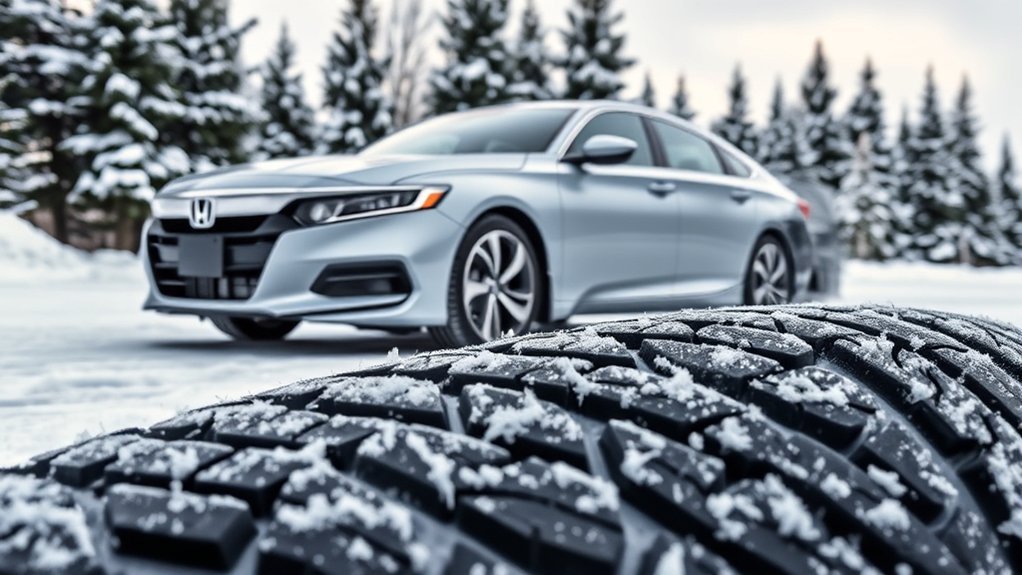
Winter tire performance depends on maintenance. Even the best tire can underperform if it is underinflated, unevenly worn, or too old.
- Check cold pressure monthly: Use the pressure listed on the Accord’s door placard, not the maximum PSI on the tire sidewall.
- Watch temperature swings: Tire pressure changes by about 1 PSI for every 10°F change in air temperature.
- Use a tread-depth gauge: Winter traction drops before the legal minimum. For snow use, start planning replacement when tread depth gets near 6/32 inch.
- Rotate regularly: Follow your owner’s manual. If no interval is listed, many tire-safety guides recommend rotation about every 5,000 to 8,000 miles.
- Inspect for damage: Look for sidewall cuts, bubbles, exposed cords, cracking, or uneven wear.
- Store tires correctly: Keep off-season tires clean, dry, cool, and away from direct sunlight, motors, and chemicals.
Your tire pressure should be checked when the tires are cold, because heat from driving can temporarily raise the reading and hide an underinflation problem.
How to Install Tire Chains on Your Accord Safely
Tire chains can help in severe winter conditions, but they can also damage your Accord if they are the wrong type, wrong size, or installed incorrectly. Always check your owner’s manual for your exact model year before buying or using chains.
Warning: Do not guess on tire chains. Honda warns that wrong or poorly installed chains can damage brake lines, suspension, body, or wheels and may cause a crash. Stop driving immediately if chains hit any part of the vehicle.
For the 2024 Accord, Honda says to install tire chains on the front tires only and lists SCC Radial Chain SC1036 as the recommended cable-type chain. Other model years or wheel sizes may differ, so verify before use.
Basic Chain Installation Steps
- Park on level ground away from traffic and set the parking brake.
- Untangle the chains or cables and check for broken links, twisted sections, or worn connectors.
- Install only the chain type and size approved for your Accord and tire size.
- Fit the chains tightly on the front tires if your manual instructs front-only use.
- Drive slowly for a short distance, stop safely, and recheck tightness.
- Remove chains when road conditions no longer require them.
Legal Requirements for Winter Tires in Your Area
Winter tire and chain laws are local. Requirements can change by state, province, highway, elevation, storm condition, and vehicle type. Before winter travel, check your state DOT, provincial transportation site, or local road authority.
Colorado is a useful example. During traction-law restrictions, Colorado may require qualifying tires, chains, or approved alternative traction devices on affected highways. During severe storms, the passenger vehicle chain law can require every vehicle to use chains or an approved alternative traction device. Fines can apply for noncompliance.
Also check studded-tire rules. Studs may be legal during certain months in one state and restricted or banned in another. If you choose a studdable tire such as the General AltiMAX Arctic 12 or Firestone Winterforce 2, confirm the law before installing studs.
Comparing Winter Tires and All-Season Tires: What’s Best?
All-season tires are built for a wide range of conditions. They are convenient for mild weather, but they are not optimized for repeated snow, freezing rain, and icy roads. Winter tires use colder-weather compounds and tread designs that can improve starting, stopping, and cornering in winter conditions.
For a Honda Accord, the best choice depends on your winter:
- Mostly dry and mild: A quality all-season tire may be enough.
- Cold rain and occasional snow: Consider a 3PMSF all-weather tire.
- Regular snow, ice, or mountain roads: Use dedicated winter tires.
- Severe ice where legal: Consider studdable winter tires or approved traction devices.
Do not mix winter tires with all-season tires on the same Accord. Four matching tires help keep traction balanced, especially during emergency braking.
[Products Worth Considering]

The SAFELIFE dial tire tread depth gauge measures tread depth in 1/32 inch increments with clear, easy-to-read 2-inch dial face. Color zones using a traffic light system help you quickly judge whether tread is low, marginal, or ample for safer driving. Built with a durable zinc cast body and a metal detect probe for precise, comfortable use across cars, motorcycles, trucks, and buses.

Vigorder rubber cement glue delivers superior adhesion and cures quickly within about 30 seconds for seamless rubber bonding. Once cured, it helps provide a strong, durable, waterproof seal that holds up to vehicle weight, pressure, and heat. Suitable for cars, motorcycles, trucks, bicycles, and off-road tires, it’s designed for emergency patch and maintenance repairs.

The 22800 wheel stud installer makes replacing wheel studs quick and secure, saving time and effort during tire service. It uses a ratchet or impact wrench to pull new studs firmly into place, helping when existing studs are too long. Compatible with most automotive wheels and light-duty truck wheel studs, it’s designed for easy, tool-assisted installation.
Common Honda Accord Winter Tire Mistakes
- Buying by wheel diameter only: A 17-inch tire is not automatically correct. Width, aspect ratio, load index, and speed rating matter too.
- Installing only two winter tires: This can make the car unstable because the front and rear tires have different grip levels.
- Ignoring tire pressure: Cold weather can lower PSI enough to affect traction, wear, and fuel economy.
- Waiting until tires are nearly bald: Legal tread depth is not the same as good winter traction.
- Using chains on the wrong tires: Follow your Honda manual and local law.
- Keeping winter tires on in warm weather: This can wear them quickly and reduce dry-road handling.
Frequently Asked Questions
Can I mix winter tires with all-season tires on my Accord?
No. Use four matching winter tires. Mixing winter tires with all-season tires can create uneven grip between the front and rear of the car, which may reduce stability during braking, turning, or emergency maneuvers.
How long do winter tires typically last?
Many winter tires last several winter seasons, but the exact life depends on mileage, road surface, alignment, pressure, rotation, driving style, and storage. Replace them sooner if tread is low, the rubber is cracked, or winter grip has clearly declined.
Are winter tires noisy on dry roads?
Some winter tires are noisier than all-season tires because of deeper grooves and extra biting edges. Premium studless winter tires are usually quieter than aggressive studdable designs, but any winter tire may sound different on dry pavement.
Do I need winter tires for a mild winter climate?
Not always. If your winter is mostly above freezing with only light, occasional snow, a quality all-weather tire with the 3PMSF symbol may be enough. If temperatures stay below 45°F or roads often get icy, dedicated winter tires are the safer choice.
Can I store winter tires in my garage?
Yes. Store them in a cool, dry, clean place away from sunlight, ozone, petroleum products, and heat. If the tires are mounted on wheels, they can be stacked or hung. If they are unmounted, store them upright and rotate their position occasionally.
Do winter tires help if my Accord has front-wheel drive?
Yes. Front-wheel drive can help with acceleration, but it does not replace tire grip. Winter tires can improve braking, steering, and cornering in cold, snowy, or icy conditions.
What is the best tire pressure for Honda Accord winter tires?
Use the cold tire pressure listed on your driver-side door placard or in your owner’s manual. Do not inflate based on the maximum PSI printed on the tire sidewall.
Conclusion
Winter tires can make a Honda Accord safer and more predictable in cold, snowy, and icy conditions, but only when they are correctly chosen and maintained. Start with the correct size and load rating, buy four matching tires, look for 3PMSF winter capability, monitor cold tire pressure, and follow Honda’s chain guidance for your exact model year. With the right setup, your Accord will be much better prepared for winter roads.
Sources
- Honda 2024 Accord Owner’s Manual: Winter Tires — tire size/load range, four-wheel installation, and chain guidance.
- NHTSA TireWise — tire safety, ratings, and maintenance background.
- U.S. Tire Manufacturers Association: Tire Care Essentials — tire pressure, tread, rotation, and alignment care basics.
- Bridgestone Tire Inflation Guidance — cold tire pressure and temperature-change guidance.
- Colorado Department of Transportation: Passenger Vehicle Traction and Chain Laws — example of current traction-law requirements and penalties.
- Michelin X-Ice Snow+ — current Michelin winter tire details, markings, and warranty information.