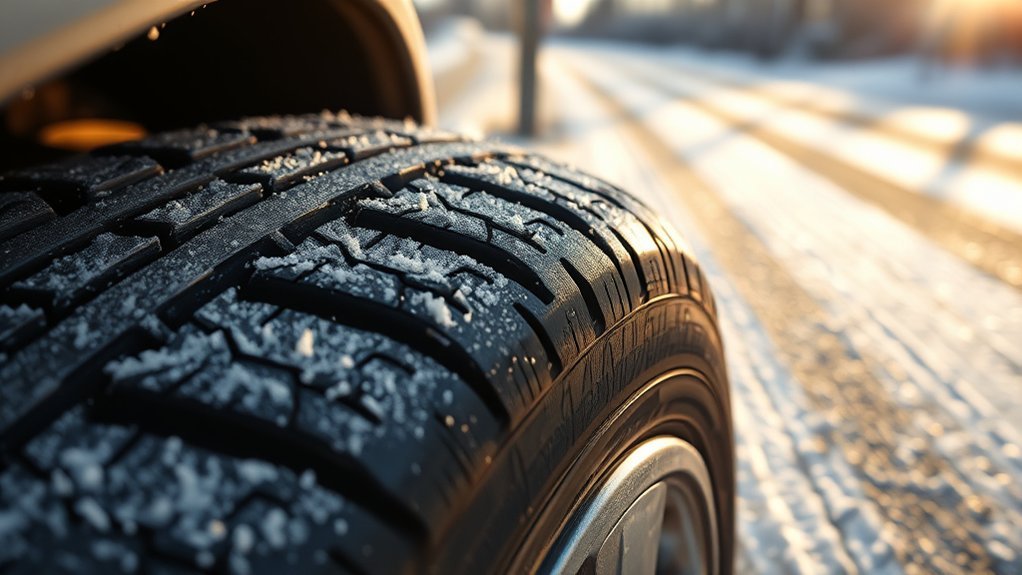
Cold weather can change how your Honda Accord feels on the road long before snow starts falling. Lower temperatures can reduce tire pressure, stiffen tire rubber, and make worn tread less effective on cold, wet, snowy, or icy pavement. The safest approach is simple: check the Accord’s cold tire pressure, inspect tread and sidewalls often, and switch to proper winter tires when your climate calls for them.
Quick Answer
Cold weather affects Honda Accord tires by lowering air pressure, hardening non-winter rubber compounds, and reducing grip on cold or icy roads. Check tire pressure when the tires are cold, use the PSI on the driver’s doorjamb label, inspect tread and sidewalls monthly, and consider winter tires when temperatures stay near or below 45°F / 7°C.
Key Takeaways
- Tire pressure drops as temperatures fall, so check your Accord’s tires cold and inflate them to the doorjamb placard pressure.
- All-season tires can lose flexibility in cold weather; dedicated winter tires stay more pliable and grip better in snow, slush, and ice.
- A TPMS light on a cold morning often means pressure dipped below the warning threshold, but you should still verify pressure with a gauge.
- Install winter tires as a full set of four, not just on the front or rear axle.
- Look for tread wear, cracks, bulges, punctures, and low tread depth before winter driving becomes routine.
At a Glance
| Time Required | 5–10 minutes for a pressure and visual tire check |
| Difficulty | Easy for basic checks; professional help is best for cracks, bulges, punctures, vibration, or winter tire installation |
| Tools Needed | Accurate tire pressure gauge, air compressor, tread depth gauge or penny, flashlight, and your Accord’s driver-door tire placard |
| Cost | Usually $0–$20 for basic checking tools; winter tire, wheel, mounting, and balancing costs vary by size and shop |
Why Cold Weather Is Bad for Tires
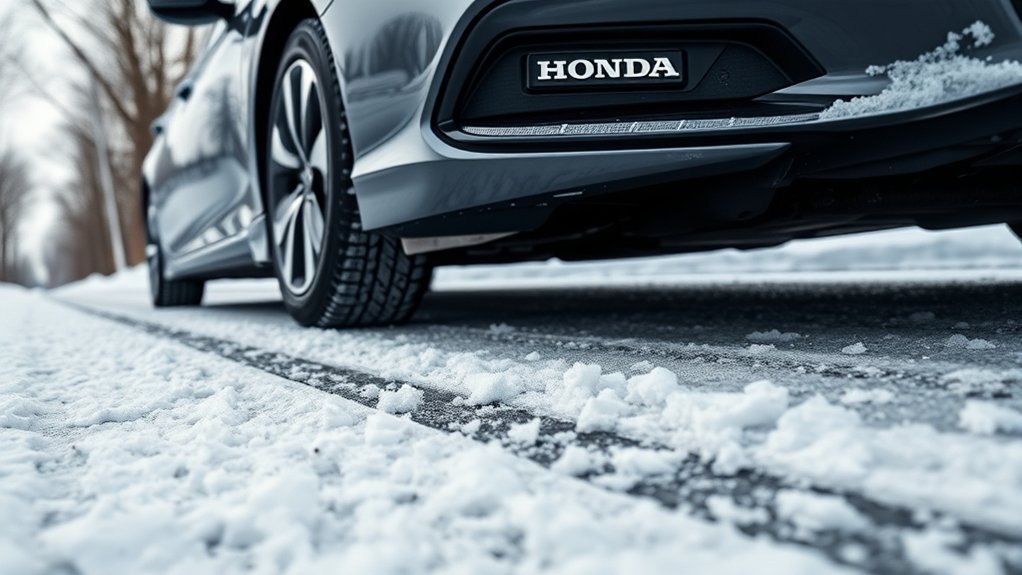
Cold weather affects your Honda Accord’s tires in two main ways: it lowers tire pressure and changes how the rubber behaves. As the air inside the tire cools, pressure drops. At the same time, tire rubber can become less flexible, especially if the tire is an all-season or summer tire rather than a dedicated winter tire.
This matters because your tires are the only part of the Accord touching the road. When pressure is low or the rubber is too stiff for the conditions, the tire may not maintain the same contact patch, steering response, braking grip, or wet-road control. On slick roads, those small changes can make the car feel vague, slow to stop, or easier to slide.
According to the National Highway Traffic Safety Administration, there were 511 motor vehicle traffic fatalities in tire-related crashes in 2024.
Cold weather also exposes tire problems that may be less obvious in mild weather. Small leaks can become more noticeable. Old rubber may crack. Worn tread can struggle to move water, slush, and snow out of the contact patch. That is why winter tire care should begin before the first storm, not after the Accord already feels unstable.
How Cold Temperatures Affect Tire Rubber
Tire rubber is designed for a temperature range. When the weather gets cold, many non-winter tires become firmer. A firmer tire cannot conform to rough pavement, snow, and ice as well as a softer winter compound can. Less flexibility usually means less grip, especially during braking and cornering.
This is one reason the common winter tire guideline uses 45°F / 7°C as a trigger point. Michelin recommends installing winter tires when daily temperatures consistently fall below 45°F because winter compounds are built to stay flexible in cold weather.
| Temperature Range | What Happens | Best Tire Approach |
|---|---|---|
| Above 45°F / 7°C | Most all-season tires work as intended in dry and wet conditions. | All-season or touring tires are usually fine if snow and ice are not regular concerns. |
| Near or below 45°F / 7°C | All-season rubber may feel firmer and less grippy, especially in wet or icy conditions. | Consider winter tires if you drive in frequent cold, snow, slush, or ice. |
| Freezing and below | Grip loss becomes more serious, and low pressure can make handling worse. | Use 3PMSF-rated winter tires where winter roads are common. |
Note: Winter tires are not meant to be used all year. Once warm weather returns, switch back to appropriate all-season or summer tires to avoid faster wear and less precise warm-road handling.
What Happens to Traction in Icy Conditions?
Ice reduces traction for every tire, even a good winter tire. The difference is that winter tires are designed to give your Accord a better chance of gripping cold, slick surfaces. They use softer compounds, deeper grooves, and many small cuts in the tread called sipes. These help the tire bite into snow and evacuate slush and water.
All-season tires can handle mild conditions, but they are not the same as winter tires. A typical all-season tire may be acceptable in light cold weather, but it can struggle on packed snow or ice. An all-weather tire with the Three-Peak Mountain Snowflake symbol can be a better year-round compromise, but even that is not always equal to a dedicated winter tire in severe winter driving.
Look for 3PMSF, Not Just M+S
The Three-Peak Mountain Snowflake symbol, often called 3PMSF, means the tire met a minimum snow-traction test. This symbol is more meaningful than a simple M+S marking, which is often based on tread design rather than a full winter-performance standard. Still, 3PMSF is not a magic guarantee: Tire Rack notes that the test focuses on acceleration traction in medium-packed snow, not braking, cornering, or ice grip.
Why Four Winter Tires Matter
If you buy winter tires for your Honda Accord, install them as a full set of four. Putting winter tires only on the front can make the rear of the car easier to lose in a turn. Putting them only on the rear can reduce steering and braking control. A matched set keeps traction more balanced.
Warning: Do not mix winter tires with non-winter tires on the same vehicle for regular winter driving. A split setup can create unpredictable handling, especially during emergency braking or cornering.
Why Tire Pressure Is Crucial in Winter Months
Cold weather lowers tire inflation pressure. The NHTSA winter driving guide says that as outside temperature drops, tire inflation pressure also drops. That is why a Honda Accord that was properly inflated in mild fall weather may be underinflated after a cold snap.
Low tire pressure can hurt handling, braking, tread life, and fuel economy. It can also cause extra heat buildup inside the tire as it flexes more than intended. In winter, the handling problem is especially important because roads may already be wet, icy, or covered in slush.
For your Accord, do not guess the correct PSI. Use the Tire and Loading Information label on the driver’s doorjamb or the owner’s manual for your exact year, trim, and tire size. Honda owner information explains that the driver’s doorjamb label contains the proper cold tire pressure for the vehicle’s tires.
Warning: Do not inflate your Accord’s tires to the maximum pressure printed on the tire sidewall. That number is the tire’s maximum allowed pressure, not Honda’s recommended operating pressure for your vehicle.
How to Check Accord Tire Pressure in Cold Weather
- Park the car for at least three hours so the tires are cold.
- Find the recommended cold PSI on the driver’s doorjamb label.
- Remove the valve cap and press a tire pressure gauge firmly onto the valve stem.
- Add air until each tire matches the placard pressure.
- Recheck the pressure after adding air.
- Repeat the check on all four tires and the spare, if your Accord has one.
- Reinstall the valve caps tightly.
Pro Tip: Check pressure in the morning before driving. Tire pressure rises after driving because the tires heat up, which can hide an underinflation problem.
Why the TPMS Light Comes On in Cold Weather
A low tire pressure or TPMS warning light on a cold morning does not always mean you have a puncture. It often means the temperature dropped enough for one or more tires to fall below the warning threshold. Honda’s Accord TPMS information notes that low ambient temperature and altitude change can affect tire pressure and trigger the low tire pressure/TPMS indicator.
Still, do not ignore the light. Pull over safely when you can, check all tire pressures with a gauge, and inflate them to the driver-door placard value. If the light stays on, flashes, returns quickly, or one tire keeps losing air, have the tire inspected for a leak, valve issue, wheel damage, or TPMS problem.
Signs of Tire Wear in Cold Weather
Winter makes weak tires feel worse. Before cold weather sets in, inspect your Accord’s tires carefully. You are looking for tread problems, rubber damage, and pressure issues that could reduce traction.
- Low tread depth: NHTSA says tread should be at least 2/32 inch or greater, but winter traction can drop before tires reach the legal minimum.
- Uneven wear: Heavy wear on one edge can point to alignment, suspension, or inflation problems.
- Cracks in the sidewall or tread: Cold can make aging rubber look worse and increase failure risk.
- Bulges or bubbles: These can signal internal tire damage and need immediate professional inspection.
- Punctures or slow leaks: A tire that keeps losing air should be repaired or replaced by a tire professional.
- Vibration or pulling: Shaking, drifting, or new road noise can point to tire, balance, or alignment trouble.
Also check tire age. Some tire and vehicle manufacturers recommend replacing tires after a certain number of years even if tread remains. Look for the DOT Tire Identification Number on the sidewall; the last four digits show the week and year the tire was made.
Selecting the Best Winter Tires for Your Accord
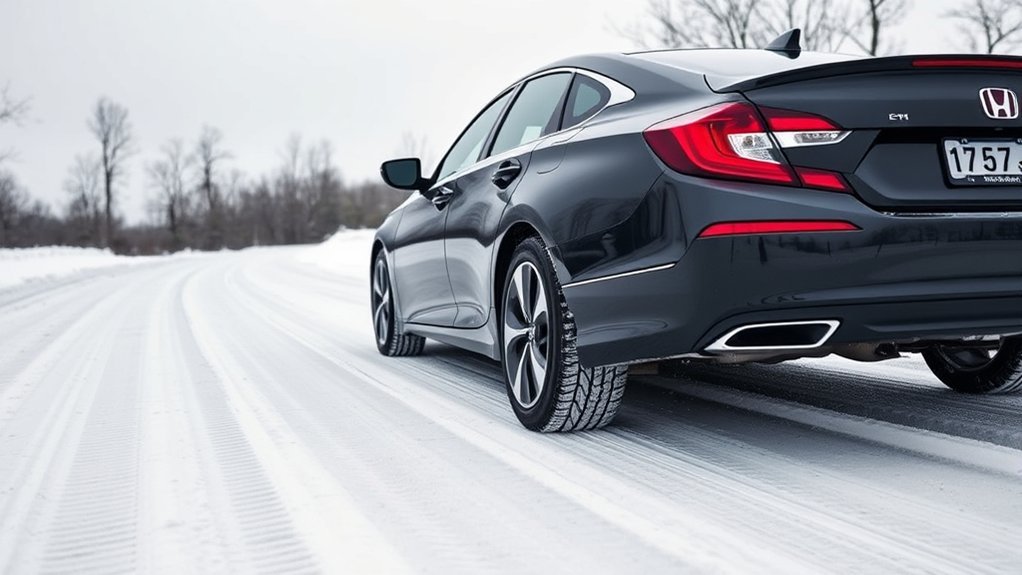
The best winter tire for your Honda Accord depends on your model year, wheel size, local weather, driving habits, and budget. Start with the tire size on your current tire sidewall and compare it with the approved sizes in your owner’s manual or on the doorjamb label. Then confirm the load index, speed rating, and winter marking before buying.
Well-known dedicated winter tire examples for sedans include the Michelin X-Ice Snow and Bridgestone Blizzak WS90. These are examples, not a guarantee that every size fits every Accord. Always verify fitment for your exact year, trim, wheel diameter, and tire size before ordering.
[Products Worth Considering]

Milton S-921 pencil tire pressure gauge helps you maintain optimal tire pressure for passenger cars with accurate readings in PSI and kPa. It features a built-in deflator valve for convenient pressure adjustments, plus a single chuck head and nylon indicator bar for easy use on the go. Built from durable plated brass and designed for reliable performance, it’s a practical road trip and cold-weather maintenance tool.

Monitor tire tread wear with a smart, color-coded depth gauge that shows clear condition ranges at a glance. The bar is range marked for fast, easy readings, helping you maintain safer traction and performance. Each gauge is portable with a pocket clip, and the set includes 20 units for daily use and sharing.

Keep your tires properly inflated with this analog VONDIOR tire pressure gauge, designed for fast, easy readings without batteries. The swiveling, two-axis hose and large glow dial help you measure at any tire angle with instant visibility. Built with a protective rubber shield, it supports durable, low-maintenance use for cars and trucks.
Should You Use Narrower Winter Tires?
A slightly narrower winter tire can sometimes help in deeper snow because it can cut through snow more easily. However, this only works when the alternate size is approved for your vehicle and maintains the correct overall diameter, load rating, speed rating, and wheel clearance. Do not choose a random narrower tire just because it looks better for snow.
If you are unsure, ask a tire professional to confirm an approved winter package for your Accord. This is especially important on newer Accords with larger wheels, low-profile tires, hybrid trims, or trim-specific brake clearance.
All-Season vs. All-Weather vs. Winter Tires for Your Honda Accord
All-season, all-weather, and winter tires are often confused, but they are not the same. Choosing the wrong type can leave your Accord underprepared for winter roads.
| Tire Type | Best For | Winter Limitation |
|---|---|---|
| All-season | Mild climates, dry roads, rain, and occasional light cold | Can lose grip in cold, snow, slush, and ice |
| All-weather | Drivers who want one tire year-round and face occasional winter conditions | Better than many all-seasons in light snow, but not always equal to dedicated winter tires |
| Dedicated winter | Regular freezing temperatures, snow, slush, packed snow, and icy roads | Should be removed when warm weather returns to reduce wear |
If your area rarely sees freezing temperatures or snow, a quality all-season or all-weather tire may be enough. If your Accord regularly sees icy mornings, snowy commutes, mountain roads, or plowed-but-slushy streets, dedicated winter tires are the safer choice.
[Products Worth Considering]

Measure tire tread depth quickly and accurately with this LUMITECO dial gauge that reads in 1/32" increments up to 14/32". The color-coded green/yellow/red zones make it easy to judge tire wear and know when replacement is needed. A rugged, compact design with a protective pouch helps keep the gauge ready for use on cars, trucks, motorcycles, and more.

Steelman white tire marking crayons provide high-contrast, semi-permanent marks for repairing and inspecting tires and equipment. They write on wet or dry, smooth or coarse surfaces including rubber, metal, glass, and wood, making them ideal for puncture location and damage outlining. The lead- and zinc-free crayons resist weather and fading yet wipe away when you no longer need the marks.

The SAFELIFE dial tire tread depth gauge measures tread depth in 1/32 inch increments with clear, easy-to-read 2-inch dial face. Color zones using a traffic light system help you quickly judge whether tread is low, marginal, or ample for safer driving. Built with a durable zinc cast body and a metal detect probe for precise, comfortable use across cars, motorcycles, trucks, and buses.
Maintaining Your Tires During Cold Months
Cold-weather tire maintenance is not complicated, but it needs to be consistent. Small changes in pressure, tread, or rubber condition can have a bigger effect when roads are slick.
- Check tire pressure monthly: Also check before long trips and after major temperature swings.
- Inspect tread and sidewalls: Look for cuts, cracks, bulges, punctures, exposed cords, and uneven wear.
- Rotate on schedule: Follow Honda’s maintenance guidance or your tire shop’s recommendation to help even out wear.
- Keep the alignment healthy: If the car pulls, the steering wheel is off-center, or tires wear unevenly, get the alignment checked.
- Clean road salt: Rinse wheels and tires during winter to reduce corrosion and buildup around valve stems and wheel surfaces.
- Store off-season tires properly: Keep tires in a cool, dry, dark place away from sunlight, heat, oil, and electric motors.
Note: If you use a separate winter wheel-and-tire set, label each tire’s previous position before storage. This makes seasonal rotation easier next time.
[Products Worth Considering]

Accurately measure tire tread depth with a calibrated gauge marked from 0 to 1 inch in 1/32 inch increments. The color-coded bar helps you quickly identify tread condition ranges, supporting safe driving for trucks, motorcycles, automobiles, and passenger vehicles.

This tire inflator with pressure gauge delivers long-lasting performance with a durable rubber-protected gauge and sturdy build. The longer hose and 360 swivel air chuck help you seal the valve securely and keep your hands free while measuring, inflating, or deflating. It’s battery-free for reliable use and provides ±2 PSI accuracy in the mid-range for most typical tires, with universal compatibility for 1/4 NPT compressor outputs.

The Milton S-693 straight foot dual head air chuck is designed for accurate tire pressure checks and quick, secure valve-core engagement with lock-on threads on both ends. With a 1/4" FNPT connection and a maximum 150 PSI rating, it’s built for use on inner duals and common vehicle tires, including trucks and RVs.
Proactive Steps for Safe Winter Driving
Good tires help, but winter driving still requires slower, smoother inputs. Even with winter tires, an Accord needs more room to stop on cold, slick roads.
- Slow down before turns: Brake while the car is straight, then turn gently.
- Increase following distance: Leave more space than you would in dry weather.
- Avoid sudden inputs: Hard braking, sharp steering, and quick throttle can break traction.
- Clear snow from the whole car: Snow left on the roof, lights, or windows can reduce visibility or fly off while driving.
- Carry winter essentials: Keep an ice scraper, small shovel, flashlight, gloves, blanket, phone charger, and basic emergency supplies in the car.
- Postpone nonessential trips: If roads are icy or visibility is poor, waiting is often safer than relying on tires alone.
NHTSA’s winter driving guidance also recommends checking local weather and traffic before heading out and delaying nonessential travel when road conditions are poor.
Frequently Asked Questions
Do I need to add air to my tires when it’s cold?
Yes, you may need to add air when temperatures drop. Check the tires when they are cold and inflate them to the PSI shown on your Honda Accord’s driver-door placard. Do not use the maximum PSI printed on the tire sidewall as your target.
What is the 45°F / 7°C rule for winter tires?
The 45°F / 7°C rule is a common guideline for when winter tires begin to make sense. When daily temperatures stay near or below 45°F / 7°C, winter tires can provide better cold-weather flexibility and grip than standard all-season tires.
How does cold weather affect Honda Accord tire performance?
Cold weather can lower tire pressure, stiffen non-winter rubber, reduce traction, and make worn tread less effective. The result can be weaker braking, less predictable steering, and more sliding risk on wet, snowy, or icy roads.
Are all-season tires enough for a Honda Accord in winter?
All-season tires may be enough in mild climates with little snow or ice. If you regularly drive in freezing temperatures, snow, slush, or icy conditions, dedicated winter tires are usually the safer choice.
Should winter tires go on all four wheels?
Yes. Install winter tires as a set of four. Using only two winter tires can create uneven grip between the front and rear of the car, which may cause unstable handling during braking, steering, or cornering.
Why does my Accord’s TPMS light come on during cold weather?
Cold air can lower tire pressure enough to trigger the low tire pressure or TPMS warning. Check all tires with a gauge and inflate them to the doorjamb placard pressure. If the light stays on or keeps returning, have the tires inspected.
Conclusion
Cold weather can reduce your Honda Accord’s tire pressure, stiffen tire rubber, and make worn tread more dangerous on slick roads. The best winter plan is to check cold tire pressure often, follow the driver-door placard, inspect tread and sidewalls, and use proper winter tires when your weather demands them. A few minutes of tire care before a cold snap can make your Accord feel steadier, stop better, and handle winter roads with more confidence.
Sources
- NHTSA Winter Weather Driving Tips — tire pressure, cold-tire checks, tread inspection, and winter driving preparation
- NHTSA TireWise — tire safety, tire-related crash fatalities, TPMS, tread, aging, and tire maintenance
- Honda Accord Owner Information: Checking Tires — Accord tire pressure label and tire inspection guidance
- Michelin Winter Tire Timing & PSI Tips — 45°F winter tire timing and cold-weather tire pressure guidance
- Tire Rack: Three-Peak Mountain Snowflake Symbol — 3PMSF meaning, limits, and winter tire marking context
- Tire Rack: Should I Use Four Winter Tires? — why a full set of four winter tires helps maintain balanced handling