
Steering Wheel Shakes After New Honda Accord Tires: Why

If your Honda Accord’s steering wheel shakes after new tires, start with the work that changed most recently: the tire and wheel installation. The most common causes are a wheel that was not balanced correctly, a tire that is not seated or centered well, uneven lug nut torque, incorrect tire pressure, or a defective tire. If the shake is strong, gets worse with speed, or appeared immediately after installation, slow down and have the tires inspected before more highway driving.
Quick Answer
A Honda Accord steering wheel usually shakes after new tires because one front wheel assembly is out of balance, not centered on the hub, mounted with debris behind it, inflated incorrectly, or affected by a tire or wheel defect. Recheck pressure, lug torque, balance, wheel fitment, and visible tire damage first.
Key Takeaways
- A shake that starts right after new tires usually points to balance, mounting, pressure, wheel centering, or a defective tire.
- Steering wheel vibration is often felt from the front tire and wheel assemblies, while rear issues may show up more through the seat or floor.
- For many late-model Accords, Honda lists 80 lbf-ft (108 N·m) as the wheel nut torque, but you should verify the spec for your exact model year.
- Alignment helps if the car pulls, the steering wheel sits off-center, or tire wear is uneven, but balancing and alignment are different services.
- If you see a tire bulge, cracking, exposed cords, severe vibration, or loose-wheel symptoms, stop driving and get professional help.
At a Glance
| Time Required | 10–20 minutes for basic checks; 30–90 minutes at a tire shop for balancing, road-force testing, or alignment inspection |
| Difficulty | Easy for pressure and visual checks; professional service needed for balancing, runout checks, and alignment |
| Tools Needed | Tire pressure gauge, flashlight, tread-depth gauge, calibrated torque wrench, and a tire shop balancer if vibration remains |
| Cost | Basic checks are usually free at home; shop costs vary by balancing, road-force balancing, alignment, or tire warranty work |
Common Causes of Steering Wheel Shake After New Tires

When your Accord felt smooth before the tire change, the new shake usually comes from the new tire and wheel setup, not from a random failure. Start with the simplest causes before replacing parts.
- Tire imbalance: The tire and wheel assembly does not spin evenly at speed, so the steering wheel shakes.
- Incorrect tire pressure: Overinflation, underinflation, or mismatched pressures can make vibration and handling feel worse.
- Wheel not centered on the hub: This is more common with aftermarket wheels, especially if hub-centric rings are missing or the wrong size.
- Dirty mounting surface: Rust, paint buildup, or debris between the wheel and hub can stop the wheel from sitting flat.
- Uneven or incorrect lug nut torque: Lug nuts must be tightened evenly in the correct pattern and to the correct spec.
- Defective tire or bent wheel: A new tire can still have excessive runout, a shifted belt, bead seating issues, or shipping damage.
- Existing suspension or brake issue: Worn tie rods, ball joints, control arm bushings, wheel bearings, or brake rotor problems can become more noticeable after new tires.
Warning: Do not keep driving at highway speed if the shake is severe, the car feels unstable, or you see a tire bulge, crack, exposed cord, missing lug nut, or loose wheel. The NHTSA tire safety guidance recommends professional inspection when you notice tire performance problems such as pressure loss, noise, or vibration.
[Products Worth Considering]

EVOULTES heavy duty tire inflator with an integrated gauge delivers accurate pressure readings from 10–120 PSI, helping you inflate, deflate, and check tires in one tool. The 16.5-inch extended dual-head air chuck with swivel base reaches hard-to-access dual wheel valves on trucks and RVs. A brass trigger core and side-mounted air release valve make operation smooth, with standard 1/4" NPT threading and quick-connect compatibility for easy setup.

This portable cordless tire inflator delivers up to 160 PSI with fast 17 L/min airflow to help you quickly top up tires and get back on the road. It features dual power mode, running on a 21V rechargeable battery or a 12V DC adapter for convenient roadside use. An automatic shut-off with digital pressure gauge helps prevent overinflation, and a built-in LED light improves visibility in low-light conditions.

The JACO FlowPro Tire Inflator measures, inflates, and airs down tires up to 100 PSI with battery-free operation and ±2% accuracy after calibration. It features a glowing pressure dial for night visibility, a heavy-duty steel build with a hybrid hose, and a precision push-to-inflate thumb trigger. The patented Lightning Air Chuck locks on for a secure seal, and the kit includes quick-connect hardware for easy inline use with your air compressor.
How Tire Imbalance Leads to Vibration Issues
Tire imbalance happens when weight is not distributed evenly around the tire and wheel assembly. Once the wheel spins fast enough, that uneven weight can make the assembly wobble. You may feel it as a steering wheel shake, seat vibration, or floor vibration.
A shake that appears around highway speed is one of the clearest signs of an imbalance. Michelin explains that wheel balancing helps the tire and wheel assembly spin evenly at speed, while alignment controls where the tire points and how it contacts the road.
| Symptom | Likely Area to Check | Next Step |
|---|---|---|
| Steering wheel shakes mostly at 45–70 mph | Front tire balance, tire runout, bent wheel | Rebalance the front assemblies and inspect tire/wheel runout. |
| Vibration is felt more in the seat or floor | Rear tire balance or rear wheel issue | Balance all four tires, not only the front pair. |
| Shake appears mainly while braking | Brake rotor runout, hub surface, uneven torque | Inspect brakes, hub mating surfaces, and lug torque. |
| Car pulls or steering wheel is off-center | Alignment, tire pull, suspension wear | Schedule an alignment check and tire inspection. |
How to Ensure Proper Wheel Installation and Fitment
Proper wheel installation matters because even a perfectly balanced tire can shake if the wheel does not sit flat and centered on the hub. Use this checklist before assuming the Accord has a bigger steering or suspension problem.
Proper Lug Nut Torque
Use a calibrated torque wrench, not only an impact gun. Honda’s current 2025 Accord manual lists wheel nut torque at 80 lbf-ft (108 N·m, 11 kgf·m) and warns not to over-tighten the nuts with your foot or a pipe. Check your exact Accord year and wheel setup because specifications can vary by model, market, and aftermarket wheel hardware.
| Step | Action | Why It Matters |
|---|---|---|
| 1 | Clean the hub and wheel mounting face. | Rust or debris can keep the wheel from sitting flat. |
| 2 | Hand-start each lug nut before tightening. | This helps prevent cross-threading and uneven seating. |
| 3 | Tighten in a star or crisscross pattern. | Even tightening helps the wheel seat squarely on the hub. |
| 4 | Finish with a torque wrench to the correct spec. | Correct torque helps prevent loose wheels and hardware damage. |
| 5 | Recheck after the installer’s recommended break-in distance. | Some shops recommend a follow-up torque check after wheel service. |
Hub-Centric Ring Use
Hub-centric rings are mainly an issue when you install aftermarket wheels. Many aftermarket wheels have a center bore larger than the vehicle hub, so the ring fills the gap and helps center the wheel on the hub. If the rings are missing, cracked, dirty, or the wrong size, the wheel may not center correctly even if the lug nuts are tight.
OEM Accord wheels usually do not need separate hub-centric rings because they are designed for the Honda hub. Aftermarket wheels should match the hub bore, bolt pattern, offset, load rating, and lug seat style.
Tire Balancing Techniques
A standard dynamic balance is the first service to request when the steering wheel shakes after new tires. Ask the shop to balance all four assemblies and check whether any wheel needs an unusual amount of weight.
If standard balancing does not solve the shake, ask for road-force balancing. Hunter Engineering says its Road Force system uses a diagnostic load roller to help solve vibration issues, and it can identify when rotating the tire on the rim may lower the road-force value. This does not mean every Accord needs road-force balancing, but it can help when a normal balance looks good and the car still shakes.
Pro Tip: If the shake is strongest in the steering wheel, ask the shop to move the front tires to the rear after balancing and test-drive again. If the vibration changes location or intensity, the problem likely follows a tire or wheel assembly.
What to Do If Balancing Fails?
If balancing fails, do not keep paying for repeat balances without deeper checks. The shop should inspect the tire, wheel, hub, brakes, and suspension to find the real source of the shake.
Inspect Wheel Components
Start with the parts touched during installation. A small seating problem can feel like a balance problem once you reach highway speed.
- Check that every lug nut is present, clean, and torqued correctly.
- Remove the wheel and inspect the hub face for rust, scale, burrs, or debris.
- Check for a bent rim on the inner and outer lips.
- Confirm aftermarket wheels have the correct hub-centric rings and lug seat style.
- Inspect brake rotors if the shake appears mainly while braking.
- Check tie rods, ball joints, control arm bushings, struts, and wheel bearings if the vibration remains.
Check Tire Defects
A new tire can still be the problem. Look for sidewall bulges, tread separation, bead seating problems, flat spots, excessive radial runout, or a tire that needs unusually high balancing weight.
| Inspection Step | What to Look For | Best Action |
|---|---|---|
| Visual inspection | Cuts, cracks, bulges, exposed cords, uneven tread, bead damage | Do not drive on a visibly damaged tire. |
| Spin check | Wobble, hop, or tread movement while the tire spins | Ask the shop to measure wheel and tire runout. |
| Road-force test | High road-force variation or tire stiffness issue | Match-mount the tire or request warranty evaluation. |
| Position swap | Vibration changes after moving tires front to rear | Focus on the assembly that moved with the symptom. |
| Documentation | Balance readings, runout results, photos, invoice notes | Share with the installer or tire manufacturer for warranty review. |
How to Test and Diagnose Steering Wheel Vibration
Use a controlled test drive only if the car feels safe and the vibration is mild. Choose a smooth road, avoid heavy traffic, and note exactly when the shake appears.
- Check cold tire pressure first. Use the tire and loading label on the driver’s door jamb, not the maximum pressure printed on the tire sidewall.
- Look for visible tire damage. Check all four tires for bulges, cracks, cuts, missing weights, or uneven bead seating.
- Note the speed range. A vibration that appears only at certain speeds often points toward balance or runout.
- Separate braking from cruising. If the shake appears only when you brake, inspect the brake rotors, hub face, and lug torque.
- Watch the steering wheel position. If the car pulls or the steering wheel sits crooked while driving straight, schedule an alignment check.
- Ask for a balance printout or road-force result. This helps you avoid guessing if the first balance did not fix the problem.
- Calibrate TPMS after pressure or tire changes. Honda’s 2025 Accord manual says TPMS calibration should be started after adjusting tire pressure, rotating tires, or replacing one or more tires, after setting cold tire pressure in all four tires.
Note: TPMS calibration does not fix a vibration. It only helps the Accord monitor pressure correctly after tire service. Balance, fitment, runout, and alignment still need separate checks.
[Products Worth Considering]
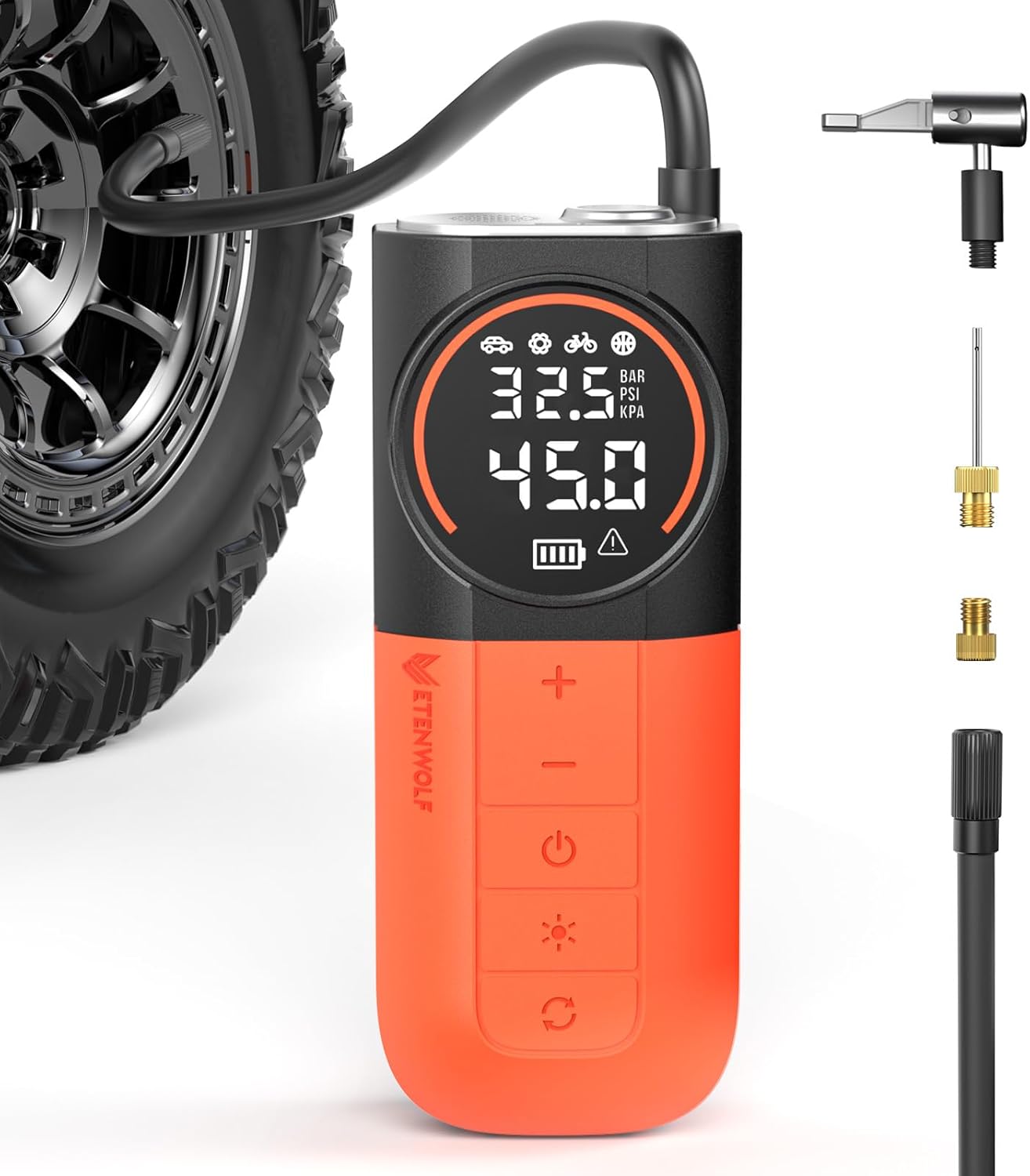
The ETENWOLF S1 cordless tire inflator delivers ultra-fast inflation with up to 160 PSI and a 20 L/min airflow for quicker tire top-offs. Its 5200mAh battery and cooling system support inflating many tires and sports balls on a single charge, while the digital pressure gauge and multi-unit display help you reach the right pressure accurately. With preset modes, pressure memory, an auto-stop feature, and an LED flashlight, it’s built for easy roadside and everyday use.

This portable cordless tire inflator delivers fast, efficient inflation for cars, motorcycles, bikes, and sports balls with a digital pressure gauge. Use the one-click PSI preset with auto shut-off for accurate, hands-free topping to your target pressure up to 150 PSI. It’s compact and rechargeable with a built-in emergency LED light plus valve adapters and accessories for quick, ready-to-go use.
Effective Solutions for Persistent Steering Wheel Shake
Persistent steering wheel shake after new tires usually needs a step-by-step fix, not random part replacement. Work through the likely causes in order.
- Return to the tire installer first. Tell them the shake began after the new tires were installed and ask them to verify balance, mounting, pressure, and lug torque.
- Rebalance all four tires. Even if the steering wheel shakes, a rear imbalance can still contribute to cabin vibration.
- Request road-force balancing if standard balancing fails. This can reveal tire stiffness, runout, or match-mounting issues that a normal balance may miss.
- Inspect the wheels and hubs. A bent wheel, dirty hub surface, wrong hub-centric ring, or incorrect lug hardware can cause repeat vibration.
- Check alignment only when symptoms support it. Alignment is most useful if the Accord pulls, the steering wheel is off-center, tire wear is uneven, or the car recently hit a pothole or curb.
- Inspect suspension and brakes if the tire setup checks out. Worn tie rods, ball joints, control arm bushings, struts, wheel bearings, or brake rotor runout can all create shake.
- Pursue tire warranty help if a tire is defective. Keep your invoice, balance records, photos, and shop notes.
A fresh tire installation should not make your Accord shake. If the vibration started right after the tire change, treat it as an installation, balance, fitment, or tire-quality issue until proven otherwise.
Frequently Asked Questions
Can old suspension components cause steering wheel shakes?
Yes. Worn tie rods, ball joints, control arm bushings, struts, or wheel bearings can cause looseness and vibration. New tires may make an existing suspension problem easier to feel because the tire grip, tread design, or ride feel has changed.
How does tire pressure affect steering stability?
Incorrect tire pressure can make steering feel unstable, harsh, or vague. Check pressure when the tires are cold and use the driver-door tire and loading label for your Accord. Do not use the tire sidewall maximum as your normal driving pressure.
What role do wheel bearings play in vibrations?
Wheel bearings support the wheel and allow it to rotate smoothly. A worn bearing may create humming, growling, looseness, or vibration that changes with speed or turning load. Have a technician inspect it if the shake remains after tire and wheel checks.
Can uneven tire wear contribute to steering issues?
Yes. Uneven, cupped, feathered, or scalloped tread can create noise, vibration, and poor tracking. If your old tires had uneven wear before replacement, have the alignment and suspension checked so the new tires do not wear the same way.
Is a professional alignment necessary after new tire installation?
Not always. New tires should be balanced, but alignment is a separate service. Get an alignment check if your Accord pulls, the steering wheel is off-center, the old tires wore unevenly, suspension parts were replaced, or you recently hit a curb or pothole.
Can a brand-new tire be defective?
Yes. A new tire can have excessive runout, a bead seating issue, internal belt problem, flat spot, or shipping damage. If repeated balancing does not fix the shake, ask the shop to measure runout or road force and document the results for warranty review.
Conclusion
If your Honda Accord’s steering wheel shakes after new tires, do not ignore it or assume it will go away. Start with tire pressure, visible damage, lug torque, wheel seating, and balance. If a normal balance does not fix the problem, ask for a runout check or road-force balancing before moving on to alignment, brakes, wheel bearings, or suspension parts.
The key is to follow the symptom. Highway-speed shake usually points toward balance or runout. Brake-only shake points toward brakes or hub seating. Pulling, an off-center wheel, or uneven wear points toward alignment. A careful diagnosis helps you protect the new tires and get your Accord back to a smooth, stable ride.
Sources
- Honda 2025 Accord Owner’s Manual: If a Tire Goes Flat — backs up the late-model Accord wheel nut torque example and over-tightening warning.
- Honda 2025 Accord Owner’s Manual: TPMS Calibration — backs up calibrating TPMS after pressure adjustment, tire rotation, or tire replacement.
- NHTSA TireWise — backs up tire damage, pressure, vibration, and professional inspection safety guidance.
- Michelin: Wheel Alignment and Balancing — backs up the difference between balancing and alignment.
- Hunter Engineering Road Force Wheel Balancer — backs up road-force balancing as a diagnostic option for vibration issues.

Related Articles
How Tall Is a 305 70 R17 Tire? Exact Height, Width & Dimensions
Curious how tall a 305 70 R17 tire really is—and whether it fits your truck?
Read More
Can-Am Defender Tire Size Guide: Stock Specs & Upgrade Options
Just how big can you go on a Can-Am Defender before mods become necessary?
Read More
How Tall Is a 275 65 20 Tire? Exact Height, Width & Dimensions
Check the exact height, width, and hidden fitment effects of a 275/65R20 tire before you buy or upgrade.
Read More