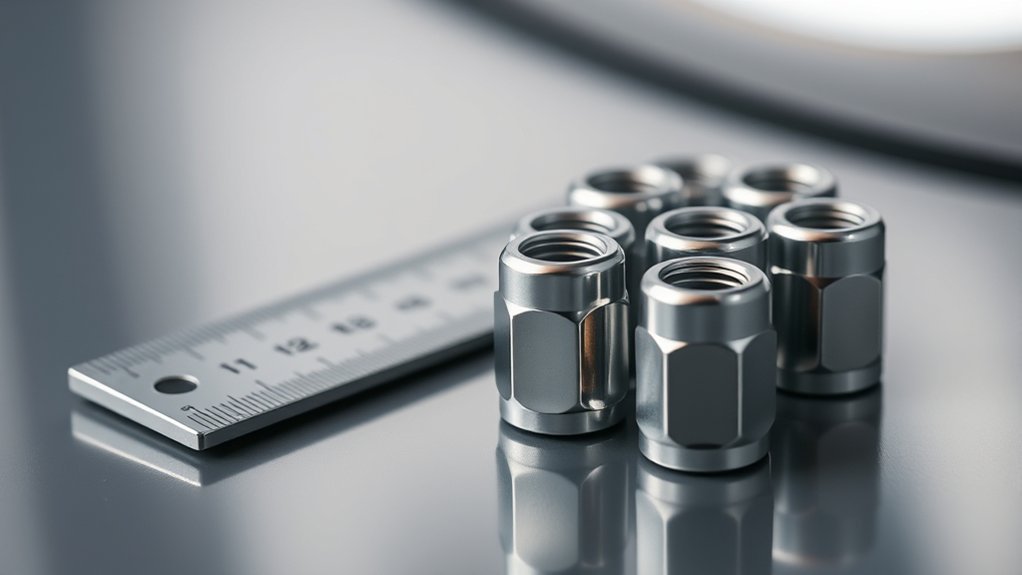
Honda Accord lug nuts are small parts, but they do a safety-critical job: they clamp the wheel firmly to the hub. For most Accord owners, the key numbers to know are the lug nut thread size, the socket size, and the correct final torque. The safest approach is simple: verify your exact year and wheel setup, hand-start every lug nut, and finish with a calibrated torque wrench.
Quick Answer
Most Honda Accord applications use M12 x 1.5 lug nuts with a 19 mm socket. For standard Accord wheels, Honda lists wheel nut torque at 80 lbf-ft (108 N·m). Always confirm your exact model year, wheel type, and lug nut seat style before installing replacement or aftermarket lug nuts.
Key Takeaways
- The common Honda Accord lug nut thread size is M12 x 1.5, and the common hex/socket size is 19 mm.
- Use 80 lbf-ft (108 N·m) as the standard Honda Accord wheel nut torque unless your owner’s manual or wheel manufacturer specifies otherwise.
- Start lug nuts by hand, tighten in a crisscross pattern, and use a torque wrench for the final pass.
- Do not use an impact gun for final tightening, and do not lubricate lug nut threads or seats unless a service manual specifically instructs you to.
- OEM-style Honda wheels and aftermarket wheels may require different lug nut seat shapes, so always match the lug nut to the wheel.
At a Glance
| Time Required | 10–20 minutes for a torque check; longer if removing a wheel |
| Difficulty | Beginner, if the vehicle is safely parked and you are only checking torque |
| Tools Needed | 19 mm socket, breaker bar or lug wrench, calibrated torque wrench, wheel chocks, jack and jack stands if lifting the vehicle |
| Cost | Usually $0 if you already own the tools; replacement lug nuts commonly cost more depending on style, finish, and quantity |
Honda Accord Lug Nut Specifications Explained

For many Honda Accord model years, the common lug nut specification is M12 x 1.5. That means the threaded stud diameter is 12 mm and the thread pitch is 1.5 mm. A common replacement-style Honda/Acura lug nut listing from Dorman also shows M12-1.50, a 19 mm hex, and a radius seat for specified Honda/Acura applications.
The torque value is just as important as the size. In Honda’s current Accord owner’s manual tire-rotation section, the wheel nut torque for standard-equipped tires is listed as 80 lbf-ft (108 N·m, 11 kgf·m). Honda’s flat-tire instructions for the Accord repeat the same torque value and show the nuts being tightened in an ordered pattern.
| Specification | Common Honda Accord Value | Why It Matters |
|---|---|---|
| Thread size | M12 x 1.5 | The nut must match the wheel stud thread. The wrong pitch can cross-thread or damage the stud. |
| Socket / hex size | 19 mm | A snug 6-point socket reduces the chance of rounding the lug nut. |
| Wheel nut torque | 80 lbf-ft (108 N·m) | Correct torque helps maintain proper clamping force without stretching studs or damaging wheels. |
| Seat type | Often radius/ball seat for OE-style Honda wheels; aftermarket wheels vary | The seat must match the wheel’s lug pocket. A mismatched seat can loosen or damage the wheel. |
Note: Treat these as common Accord reference specs, not a substitute for your owner’s manual, wheel manufacturer instructions, or VIN-specific parts lookup. Aftermarket wheels, wheel locks, tuner lugs, and damaged/replaced studs can change what you need.
What Size Socket Do You Need for Lug Nut Removal?
For most Honda Accord lug nuts, use a 19 mm socket. A 6-point socket is the best choice because it grips the flats of the lug nut more securely than a 12-point socket. If the lug nuts are recessed, use a deep 19 mm socket. If the nuts are tight, loosen them with a breaker bar while the tire is still on the ground.
| Tool | Recommended Size | Best Use |
|---|---|---|
| 6-point socket | 19 mm | Best all-around fit for removing and installing Accord lug nuts. |
| Deep 6-point socket | 19 mm | Helpful for longer lug nuts, wheel locks, or deeper wheel pockets. |
| Breaker bar | Use with 19 mm socket | Loosens tight nuts with steady hand force before the vehicle is lifted. |
| Torque wrench | Use with 19 mm socket | Required for the final tightening pass to 80 lbf-ft. |
Avoid adjustable wrenches and loose-fitting sockets. They can round the lug nut corners, especially if the nut is rusty or over-tightened. Also remember that 13/16 inch and 21 mm are close, but not the same: 13/16 inch equals about 20.64 mm. A 21 mm socket may feel close on some aftermarket nuts, but a 19 mm socket is the common fit for Accord OE-style lug nuts.
Pro Tip: Keep one thin-wall 19 mm socket in your trunk tool kit. Some aftermarket wheels have narrow lug pockets where a thick impact socket may not fit cleanly.
[Products Worth Considering]

Upgrade your wheels with MIKKUPPA closed-end lug nuts designed for reliable fit and corrosion resistance. The one-piece, cold-forged and heat-treated steel construction helps resist rust and stripping, while the integrated finish delivers a durable black appearance. Built to OEM standards with a conical 60-degree seat, these nuts provide a secure solution for compatible Ford, Honda, Jeep, and Chevrolet models.

This 1/2-inch drive breaker bar delivers powerful leverage for loosening and tightening stubborn lug nuts and automotive fasteners. The 180-degree flex head helps you reach tight spaces at the angle you need, making tire and brake jobs easier. A spring-loaded ball detent design holds 1/2-inch sockets securely while the chrome-moly head provides durable strength for everyday use.

These M14x1.5 closed-end chrome lug nuts are a one-piece replacement designed for secure fitment on compatible GM, Ford, and select Chrysler/Dodge models. Featuring a 60-degree conical seat and anti-rust chrome plating, they help resist corrosion and maintain a bright look for everyday driving. Built for long-term durability, they include OEM-style part references and are backed by 12 months of support.
What Torque Should You Use for Your Honda Lug Nuts?
For standard Honda Accord wheels, use 80 lbf-ft (108 N·m) as the wheel nut torque value unless your model-specific manual or wheel manufacturer gives a different spec. Do not guess by “feel.” Lug nuts can feel tight long before they are correctly torqued, and they can also be over-tightened easily with an impact gun or long pipe.
Tire Rack’s wheel torque guidance explains that proper torque depends on the correct tools, procedures, and tightening pattern. It also notes that torque specifications are for clean, dry threads and that lubricating lug nut threads or seats can change the friction and lead to inaccurate torque readings.
Warning: Do not tighten Accord lug nuts with your foot, a pipe, or an impact gun for the final pass. Honda’s flat-tire instructions warn not to add extra torque with your foot or a pipe. Use a torque wrench and stop at the specified torque.
How to Tighten Honda Accord Lug Nuts Safely
Use this process after changing a tire, rotating tires, installing wheels, or removing a wheel for brake work.
- Park safely. Use a flat, firm surface. Shift to Park or gear, set the parking brake, and chock a wheel that stays on the ground.
- Inspect the parts. Check for cracked lug nuts, damaged studs, rust buildup, dirt, or debris on the hub and wheel mounting face.
- Start each lug nut by hand. Thread each nut several turns before using any tool. If a nut does not spin on smoothly by hand, stop and inspect for cross-threading.
- Snug in a crisscross pattern. Bring the wheel evenly against the hub. Do not fully tighten one nut before the others are seated.
- Lower the vehicle enough to prevent wheel spin. Keep enough weight on the tire to hold it steady while you torque the nuts.
- Torque to 80 lbf-ft. Use a calibrated torque wrench and tighten in a crisscross/star pattern. Go around the pattern two to three times until every nut clicks at the set value.
- Recheck after driving. After wheel installation, recheck torque after about 50–100 miles, especially with new wheels, freshly cleaned hubs, or recently serviced brakes.
Note: Never get under a vehicle supported only by a jack. If the vehicle must be lifted for more than a tire change, support it with properly rated jack stands at approved lift points.
[Products Worth Considering]

Upgrade your wheels with MIKKUPPA M12x1.5 mag seat lug nuts built for secure, corrosion-resistant performance. These closed-end chrome lug nuts are a direct replacement for select Toyota models, including Camry, Corolla, RAV4, Sienna, Avalon, Highlander, Matrix, Venza, and Prius. Triple-chromium plating and cold-forged, heat-treated steel help deliver strength for daily driving and replacement needs.

The Trivd Frol 1/2" air impact wrench delivers high performance torque up to 1500 ft-lbs with a twin hammer impact mechanism for strong, balanced blows. It features an ergonomic grip, compact lightweight design, and quick-stop control with 3 forward speeds up to 8000 RPM plus a reverse speed. Built for demanding automotive repair and tire shop work, the rear exhaust helps keep debris away from the surface.

The 22800 wheel stud installer makes replacing wheel studs quick and secure, saving time and effort during tire service. It uses a ratchet or impact wrench to pull new studs firmly into place, helping when existing studs are too long. Compatible with most automotive wheels and light-duty truck wheel studs, it’s designed for easy, tool-assisted installation.
Common Lug Nut Problems for Your Honda Accord

Most lug nut problems come from incorrect tools, corrosion, cross-threading, mismatched parts, or improper torque. Catching these issues early can prevent damaged studs, stuck wheels, vibration, or unsafe wheel clamping.
- Rounded lug nuts: Usually caused by the wrong socket size, a worn socket, or using a 12-point socket on a tight nut. Replace rounded nuts instead of forcing them.
- Cross-threading: Happens when a lug nut is started crooked or forced on with power tools. Always hand-start the nut first.
- Corrosion: Rust on the stud, nut, hub face, or wheel mounting surface can affect fit and torque accuracy. Clean the mating surfaces before reinstalling the wheel.
- Over-tightening: Can stretch wheel studs, distort parts, and make roadside removal difficult. Use a torque wrench instead of guessing.
- Under-tightening: Can allow the wheel to move against the hub, causing vibration, noise, stud damage, or wheel separation.
- Wrong seat type: A conical lug nut on a radius-seat wheel, or the reverse, may not clamp the wheel correctly.
Tire pressure is a separate issue from lug nut torque, but it belongs in the same safety check. NHTSA recommends checking tire pressure with an accurate gauge and notes that TPMS is not a substitute for regular tire maintenance. Honda also recommends checking tire pressure monthly and inspecting tread for wear and foreign objects.
Choosing and Installing Aftermarket Lug Nuts for Your Honda Accord
When buying aftermarket lug nuts for a Honda Accord, do not shop by color or style first. Start with fitment. The lug nut must match the wheel stud thread, the wheel’s lug seat, the required hex or key size, and the wheel pocket depth.
[Products Worth Considering]

This spare tire tool kit is designed for the 2004 to 2018 Ford F-150 to help you loosen and tighten wheel lug nuts and manage the spare tire and provided jack functions from underneath the vehicle. It includes the lug nut wrench and extension pieces plus a convenient storage carrying case for organized transport. The jack itself is not included.

This car D-wheel lock nut key provides an anti-theft solution for D-shaped wheel lock bolts, helping keep your wheels secure. It features a flower-shaped internal pattern that resists micro-adjustment theft while allowing removal and mounting of compatible locking nuts. Made for reliable performance under high torque, it’s easy to use with standard socket wrench turning for quick tire maintenance and emergency repairs.

The Dr.Roc spare tire tool kit helps you release, lower, or raise your spare tire with reliable extension tools and a lug nut wrench. It is made from rustproof automotive-grade steel and includes an organized carry case for convenient storage. Designed for compatibility with select GM models from the late 1990s through 2019, it uses upgraded extension components to install and remove spare tires with less hassle.
Match the Thread Size
For most Accord applications, choose M12 x 1.5 lug nuts. Do not force M12 x 1.25, M12 x 1.75, or M14 lug nuts onto Accord studs. A thread-pitch mismatch can destroy the stud quickly.
Match the Seat Type
The seat is the contact area where the lug nut presses against the wheel. Many OE-style Honda applications use a radius or ball-style seat, while many aftermarket wheels use a 60-degree conical seat. Some wheels use flat seats or special tuner lugs. The correct seat type depends on the wheel, not just the car.
| Seat Type | What It Looks Like | What to Check |
|---|---|---|
| Radius / ball seat | Rounded contact surface | Common on many OE-style Honda wheel applications. Verify against your wheel and parts catalog. |
| Conical seat | Tapered cone, often 60 degrees | Common on many aftermarket wheels. Use only if the wheel is designed for it. |
| Flat seat | Flat washer-style contact surface | Used on some wheel designs. Follow the wheel manufacturer’s hardware instructions. |
Avoid Final Tightening With an Impact Gun
An impact gun can be useful for removal or carefully running lug nuts down at low force, but it should not be used for final tightening. Final torque should be set with a torque wrench. Impact tools can over-tighten, under-tighten, or damage wheel hardware and finishes.
Do Not Ignore Thread Engagement
A lug nut should thread on smoothly and engage enough stud threads to clamp the wheel safely. If an aftermarket wheel has thicker mounting pads, unusually deep lug pockets, spacers, or extended hardware, confirm the required lug nut length and stud engagement with the wheel or hardware manufacturer.
Frequently Asked Questions
What size are the lug nuts on a Honda Accord?
Most Honda Accord applications use M12 x 1.5 lug nuts. This means a 12 mm thread diameter with a 1.5 mm thread pitch. Always confirm fitment by model year, wheel type, and VIN-specific parts lookup before buying replacements.
What socket size do I need for Honda Accord lug nuts?
A 19 mm socket is the common size for Honda Accord OE-style lug nuts. Use a 6-point socket for better grip. If your car has aftermarket lug nuts or wheel locks, check the hardware because the required socket or key may be different.
What is the torque spec for Honda Accord lug nuts?
For standard Honda Accord wheels, Honda lists the wheel nut torque as 80 lbf-ft (108 N·m). Use a calibrated torque wrench and tighten in a crisscross pattern. Verify the exact specification in your owner’s manual if your wheels or hardware are not original.
Is 13/16 inch the same as 21 mm?
No. A 13/16-inch socket is about 20.64 mm, so it is close to 21 mm but not identical. For most Honda Accord OE-style lug nuts, use the correct 19 mm socket instead of forcing a near-fit socket.
What is the pitch of a Honda Accord lug stud?
The common Honda Accord lug stud pitch is 1.5 mm, written as part of the M12 x 1.5 specification. The pitch must match the lug nut exactly. If the nut does not spin on by hand, stop and inspect the threads.
Should I re-torque Honda Accord lug nuts after driving?
Yes, it is smart to recheck lug nut torque after about 50–100 miles whenever wheels have been removed, replaced, or newly installed. Recheck when the wheels are cool and use the same crisscross pattern.
Conclusion
For most Honda Accord wheel service, remember the core specs: M12 x 1.5 lug nuts, a 19 mm socket, and 80 lbf-ft (108 N·m) of final torque for standard wheels. The safe method matters as much as the numbers: use clean, dry hardware, hand-start the nuts, tighten in a crisscross pattern, and finish with a torque wrench. If you are using aftermarket wheels, confirm the seat type and hardware requirements before driving.
Sources
- Honda 2025 Accord Owner’s Manual — Tire Rotation — wheel nut torque of 80 lbf-ft / 108 N·m.
- Honda 2024 Accord Owner’s Manual — If a Tire Goes Flat — crisscross tightening, flat-tire steps, and over-tightening warning.
- Dorman 611-075 Wheel Lug Nut Product Data — M12-1.50 thread, 19 mm hex, radius seat, and Honda/Acura OE cross references for specified applications.
- Tire Rack — How Do I Properly Torque My Wheel Lug Nuts or Bolts? — torque-wrench use, dry threads, tightening pattern, and re-torque guidance.
- NHTSA TireWise — tire pressure, TPMS, and regular tire-maintenance guidance.