
Aftermarket Wheel Fitment Guide for the Honda Accord
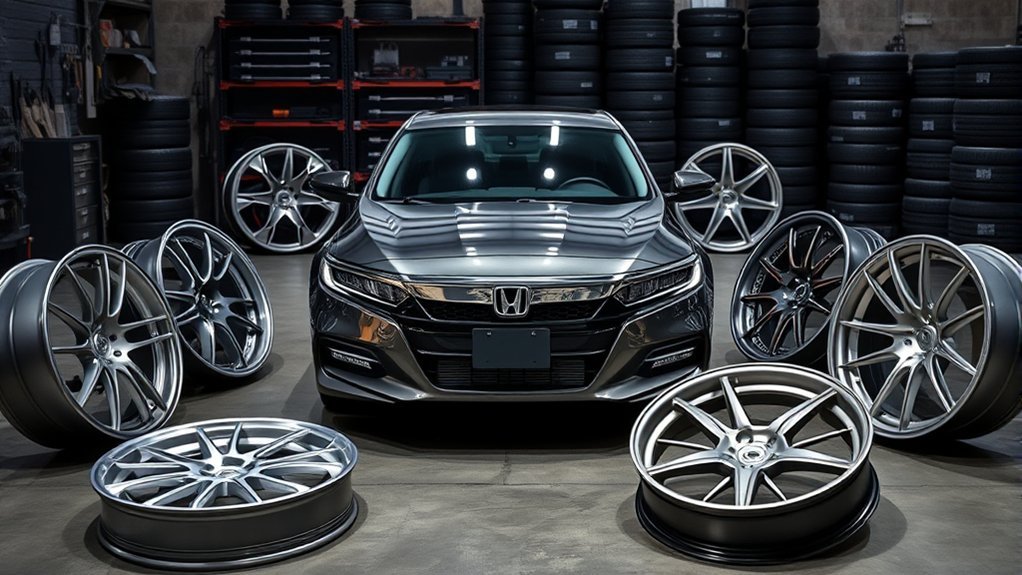
Upgrading your Honda Accord with aftermarket wheels can sharpen the car’s stance, improve tire choice, and give it a cleaner look—but only if the wheel, tire, offset, load rating, lug seat, and suspension clearance all work together. Use this guide to narrow down safe Honda Accord wheel fitment before you buy, then confirm the final setup for your exact year, trim, brakes, and ride height.
Quick Answer
Most modern Honda Accord wheel upgrades start with a 5×114.3 bolt pattern, a commonly listed 64.1mm center bore, and OEM-style 17- to 19-inch sizing. For daily driving, 19×8.5 with a moderate offset and a tire close to factory diameter is usually safer than extreme low-offset or oversized setups.
Key Takeaways
- Start with factory specs, then move outward slowly: wheel width, offset, tire width, and ride height all affect rubbing.
- For the 2026 Accord, Honda lists 17×7.5J or 19×8.5J wheels depending on trim, with 225/50R17 or 235/40R19 tires.
- Never choose wheels by bolt pattern alone. Confirm center bore, lug-seat type, brake clearance, load rating, and TPMS compatibility.
- Lowered Accords need extra clearance checks because camber, fender gap, and suspension travel change after lowering springs or coilovers.
At a Glance
| Time Required | 30–60 minutes to research; more if measuring a lowered car |
| Difficulty | Moderate; easy for OEM-plus setups, harder for lowered or aggressive fitment |
| Tools Needed | Owner’s manual, tire placard, fitment calculator, tape measure, torque wrench, and a trusted wheel/tire shop for final confirmation |
| Cost | Varies widely; budget for wheels, tires, mounting, balancing, TPMS service, alignment, and possible clearance work |
Understanding Aftermarket Wheel Fitment for Your Honda Accord
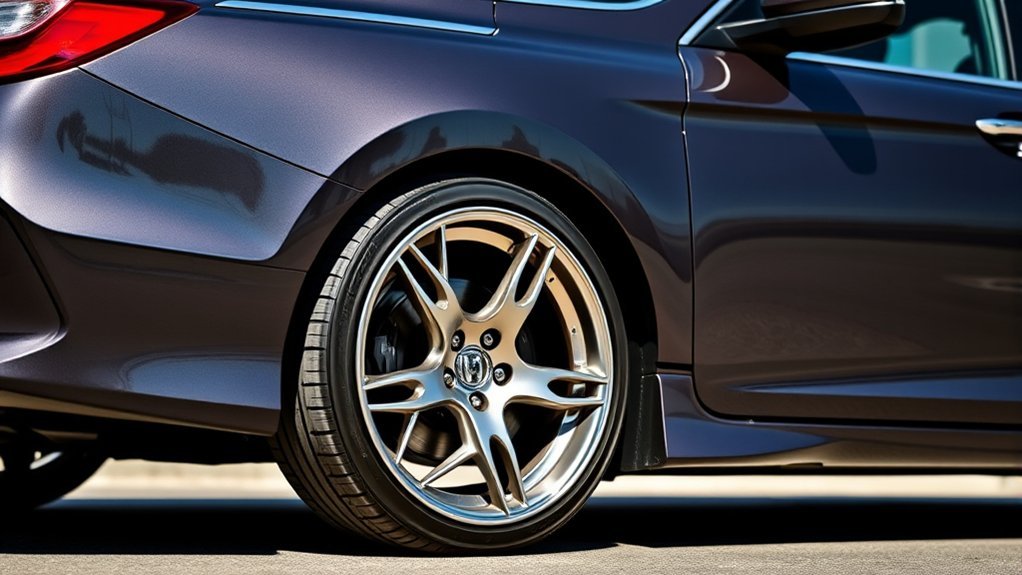
Wheel fitment is the relationship between the wheel, tire, hub, brakes, fender, and suspension. A wheel can bolt on and still be a poor fit if the tire rubs, the hub is not centered, the lug nuts have the wrong seat, the load rating is too low, or the new tire diameter throws off the speedometer.
For current U.S.-market Accord context, Honda’s 2026 Accord specifications list factory wheel sizes of 17×7.5J and 19×8.5J depending on trim, with 225/50R17 or 235/40R19 all-season tires. That does not mean those are the only possible sizes, but they are the safest starting point before moving to wider or lower-offset aftermarket wheels.
Warning: Do not buy wheels only because they “fit Accord” in a listing. Confirm the exact year, trim, brake package, wheel width, offset, center bore, lug-seat type, load rating, and tire size before installation.
[Products Worth Considering]

This professional wheel and rim brush kit makes it easy to lift brake dust, grime, and dirt from wheels and tires without scratching finishes. The brushes feature soft, metal-free wool heads and a flexible 360-degree rim brush design for reaching hard-to-clean areas. Includes multiple brush types plus accessories for thorough car, motorcycle, and general vehicle detailing.

These M14x1.5 closed-end chrome lug nuts are a one-piece replacement designed for secure fitment on compatible GM, Ford, and select Chrysler/Dodge models. Featuring a 60-degree conical seat and anti-rust chrome plating, they help resist corrosion and maintain a bright look for everyday driving. Built for long-term durability, they include OEM-style part references and are backed by 12 months of support.

Upgrade your wheels with MIKKUPPA closed-end lug nuts designed for reliable fit and corrosion resistance. The one-piece, cold-forged and heat-treated steel construction helps resist rust and stripping, while the integrated finish delivers a durable black appearance. Built to OEM standards with a conical 60-degree seat, these nuts provide a secure solution for compatible Ford, Honda, Jeep, and Chevrolet models.
Understanding Bolt Patterns and Offsets: Key Specifications for Fitment
The two specs shoppers usually check first are bolt pattern and offset, but they are only part of the picture. Many modern Honda Accord fitments are commonly listed with a 5×114.3mm bolt pattern and 64.1mm center bore. Still, always verify those numbers for your exact model year, trim, and market before buying because public trim specs do not always list every mounting dimension.
Offset is the distance between the wheel’s mounting surface and its centerline. Higher positive offsets pull the wheel inward. Lower positive offsets push the wheel outward. A lower offset can create a flush look, but it can also increase fender rubbing, steering scrub, bearing stress, and splash-guard contact.
| Fitment Spec | What to Check | Why It Matters |
|---|---|---|
| Bolt pattern | Commonly 5×114.3mm on modern Accord fitments | Wrong PCD will not mount safely. |
| Center bore | Commonly listed as 64.1mm; use proper hub rings if the aftermarket bore is larger | Poor centering can cause vibration. |
| Offset | Compare inner clearance and fender position before buying | Wrong offset can rub suspension or fenders. |
| Tire size | Keep diameter close to factory and match load/speed rating guidance | Affects ride, speedometer, ABS, traction control, and clearance. |
| Lug seat | Match the lug nuts to the wheel’s required seat style | Wrong lug seats can loosen or damage wheels. |
| Load rating | Wheel and tire load capacity should meet or exceed vehicle requirements | Underrated parts are a safety risk. |
For tire safety, NHTSA recommends using the owner’s manual or Tire and Loading Information label for the correct tire size and pressure. The U.S. Tire Manufacturers Association also advises replacement tires to match the recommended size, load index, and speed rating designation.
Choosing the Right Wheel Size: Recommendations for Each Generation
The best Accord wheel size depends on the generation, trim, brakes, suspension height, and tire choice. Treat the ranges below as a planning guide, not a final approval. A stock-height daily driver can usually handle a more conservative setup than a lowered car with aggressive camber or wide tires.
Recommended Sizes by Generation
| Accord Generation | Factory-Style Starting Point | Common Aftermarket Direction | Fitment Notes |
|---|---|---|---|
| 11th Gen (2023–2026) | 17×7.5J with 225/50R17 or 19×8.5J with 235/40R19 on current trims | 19×8.5 is the easiest upgrade path; 19×9.5 needs more care | Lower offsets look flush but raise rubbing risk, especially when lowered. |
| 10th Gen (2018–2022) | Factory 17-inch and 19-inch packages were common depending on trim | 19×8.5 or 19×9.5 setups are popular; 20-inch setups are more style-focused | Wider tires and lower offsets can require alignment, fender work, or added camber. |
| 9th Gen (2013–2017) | 16-, 17-, and 18-inch factory-style sizing depending on trim | 18-inch wheels are a balanced daily choice; 19-inch setups need stricter tire selection | Avoid going too wide without checking rear fender and inner strut clearance. |
Considerations for Offset Selection
For a daily-driven Accord, the safest offset is usually close to factory positioning. Moving slightly outward can improve stance, but the farther you push the wheel outward, the more carefully you need to check fender clearance. Moving too far inward can create suspension or brake clearance problems.
- OEM-plus: keeps the wheel close to factory position and is best for comfort, tire life, and low hassle.
- Flush daily: pushes the wheel outward moderately for a cleaner stance while still aiming to avoid rubbing.
- Aggressive/show fitment: uses wider wheels, lower offsets, or stretched tires and may need camber, fender rolling, or trimming.
Pro Tip: Compare the new setup against your current wheel using an offset calculator before buying. Check both inner clearance and outer “poke,” not just diameter.
Impact of Suspension Setup
Lowering springs and coilovers change the fitment equation. When the body sits lower, the tire has less room to move upward during bumps, turns, and driveway angles. A setup that clears at stock height may rub after a drop.
- Lowering the Accord may require more negative camber or a narrower tire.
- Wider wheels can contact the fender liner, bumper tab, strut, or rear quarter lip.
- After suspension work, an alignment is not optional if you care about tire life and straight-line tracking.
Top Aftermarket Wheel Brands for Honda Accord Fitment
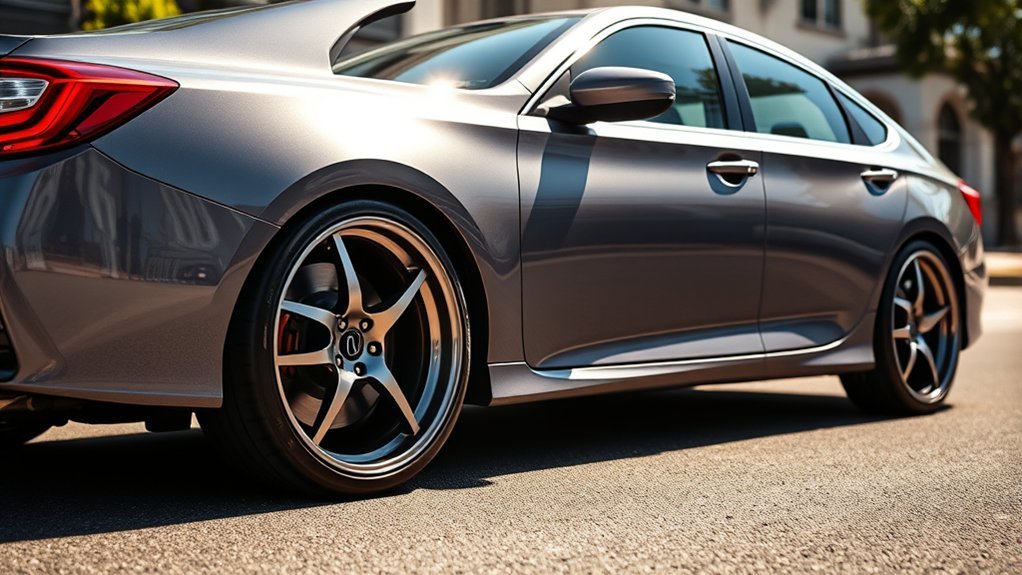
Brand choice matters, but specs matter more. A respected brand in the wrong size is still the wrong wheel. When comparing wheels from brands such as Enkei, Konig, Rotiform, Work, Rays, Gram Lights, XXR, or Vors, look for the exact width, offset, center bore, lug-seat requirement, load rating, brake template, and finish warranty—not just the design.
For normal highway use, it is also worth choosing wheels from sellers that publish safety and performance information. SAE J2530 covers performance, sampling, certifying, test, and marking requirements for aftermarket passenger-car and light-truck wheels.
Popular Wheel Brands
- OEM-plus style: Honda OEM takeoffs, Enkei, Konig, and similar options can work well when the size stays near factory specs.
- Street/show style: Rotiform, Work, Rays, Gram Lights, and Advan-style fitments can deliver a bolder look, but sizing must be checked carefully.
- Budget-conscious choices: XXR, Vors, and similar brands may offer attractive designs, but always verify load rating, warranty, lug seat, and seller support.
Performance Wheel Options
Here are practical setup categories for Accord owners. These are planning ranges, not guaranteed bolt-on approvals.
| Goal | Example Wheel Size | Example Tire Direction | Notes |
|---|---|---|---|
| OEM-plus daily | 17×7.5 or 19×8.5 near factory offset | 225/50R17 or 235/40R19-style sizing | Best for comfort, fuel economy, and low rubbing risk. |
| Flush daily | 19×8.5 with a moderate positive offset | 235/40R19 or carefully selected 245-width tire | Usually the best balance of appearance and practicality. |
| Wider performance look | 19×9.5 with test-fit offset | 245/40R19 or 255/35R19 depending on clearance | May need alignment changes, especially if lowered. |
| 20-inch style build | 20×8.5 or 20×9 | Low-profile tire close to factory diameter | Sharper look, but harsher ride and higher wheel-damage risk. |
How Suspension Mods Affect Aftermarket Wheel Fitment
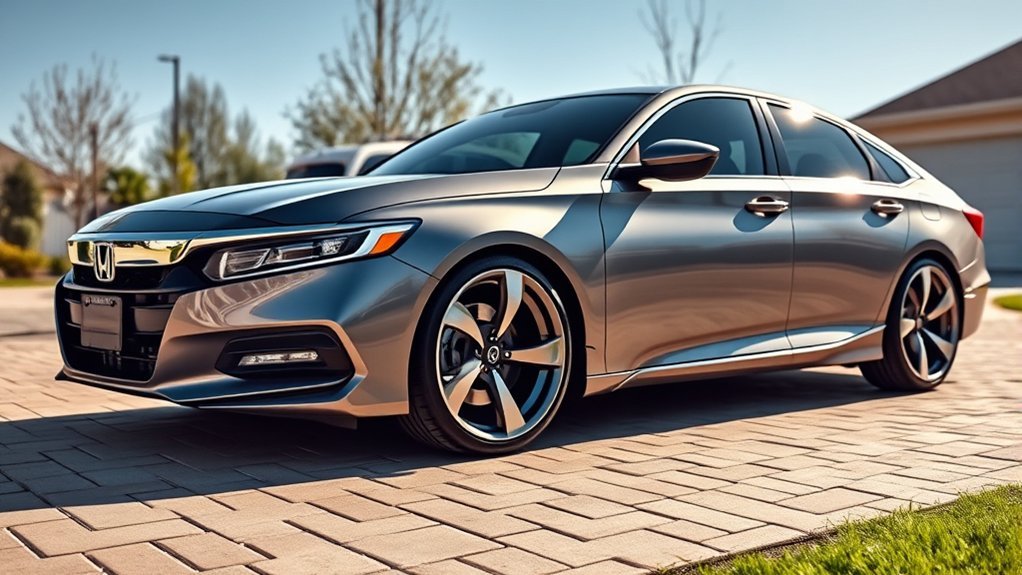
Suspension changes are one of the biggest reasons Accord fitment advice can conflict online. A stock-height Accord, an Accord on mild lowering springs, and an Accord on coilovers can need different tire widths and offsets even if they are the same generation.
Lowering usually reduces vertical clearance and can increase the chance of rubbing at the fender liner or rear quarter lip. Coilovers can also change inner clearance because the spring perch may sit closer to the wheel and tire than the factory strut assembly.
Note: If your Accord is lowered, measure clearance with the wheels straight and turned, then check again with suspension compressed. Static parking-lot clearance does not guarantee bump or cornering clearance.
How to Avoid Common Fitment Issues: Rubbing and Clearance Solutions
Rubbing usually comes from one of four things: the wheel is too wide, the offset pushes the tire too far outward or inward, the tire is too tall or too wide, or the suspension sits too low. Fix the cause instead of masking the symptom.
Rubbing Prevention Techniques
- Keep tire diameter close to factory. Large diameter changes can affect speedometer accuracy and electronic systems.
- Avoid oversized tire width. A wider tire can rub even when the wheel size looks reasonable.
- Check inner clearance. Look near the strut, spring perch, brake hose, and fender liner.
- Check outer clearance. Look near the fender lip, bumper tab, and rear quarter panel.
- Use the correct lug nuts. Many aftermarket wheels require conical-seat lugs, while some OEM Honda wheels use a different seat style.
Clearance Adjustment Methods
| Adjustment Method | What It Helps | Caution |
|---|---|---|
| Narrower tire | Reduces fender and liner contact | Do not go below proper load rating or approved rim width. |
| Higher offset wheel | Pulls the wheel inward | Too much inward movement can hit suspension or brakes. |
| Alignment / camber adjustment | Can improve outer fender clearance | Too much camber can shorten tire life. |
| Fender rolling | Adds outer clearance on aggressive setups | Can crack paint if done incorrectly. |
| Wheel spacer | Moves wheel outward for inner clearance | Requires correct hub-centric design, thread engagement, and torque. |
Staggered vs. Square Setups: Which Is Right for You?
A square setup uses the same wheel and tire size at all four corners. For most front-wheel-drive Honda Accord owners, square is the better daily choice because it keeps handling predictable and allows normal tire rotation.
A staggered setup uses wider rear wheels or tires than the front. It can look aggressive, but it is usually more about stance than performance on a front-wheel-drive Accord. It also limits tire rotation and can create uneven tire wear if alignment is not dialed in.
- Choose square if you want easy maintenance, balanced handling, and longer tire life.
- Choose staggered only if you understand the tradeoffs and care more about appearance than tire rotation convenience.
- Avoid extreme stagger if you drive long distances, carry passengers often, or want predictable wet-weather handling.
[Products Worth Considering]

The Trivd Frol 1/2" air impact wrench delivers high performance torque up to 1500 ft-lbs with a twin hammer impact mechanism for strong, balanced blows. It features an ergonomic grip, compact lightweight design, and quick-stop control with 3 forward speeds up to 8000 RPM plus a reverse speed. Built for demanding automotive repair and tire shop work, the rear exhaust helps keep debris away from the surface.

Keep your tires properly inflated with this analog VONDIOR tire pressure gauge, designed for fast, easy readings without batteries. The swiveling, two-axis hose and large glow dial help you measure at any tire angle with instant visibility. Built with a protective rubber shield, it supports durable, low-maintenance use for cars and trucks.
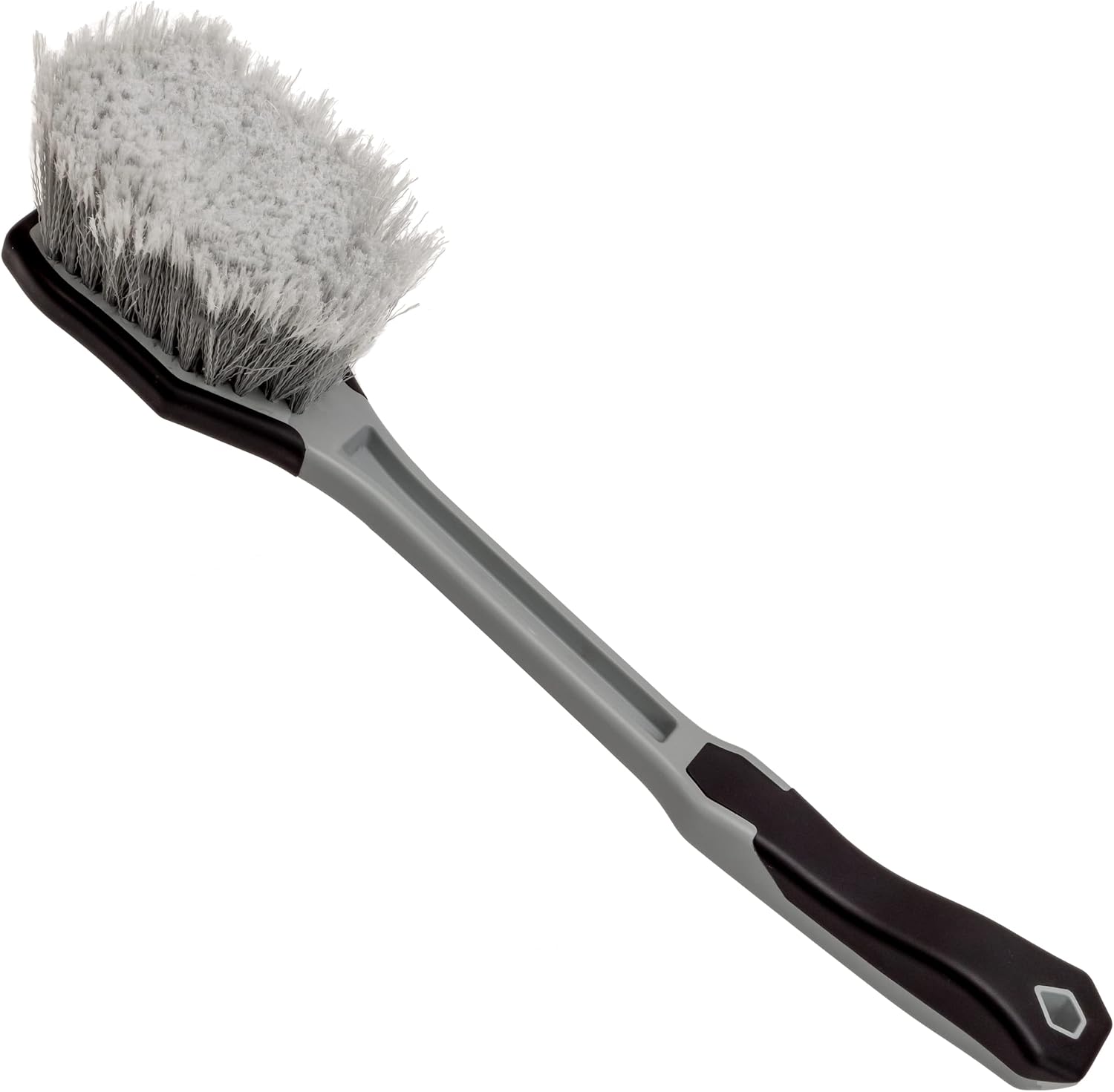
Clean grills, fenders, fender flares, bumpers, and wheel wells with a long-handled brush built for detailed car washing. The soft, triple-flagged bristles and dense scrub coverage help lift dirt gently while making coverage fast and easy. Use it with your favorite car wash soap for tires and exterior surfaces, and it also works for bike, motorcycle, boat, or RV cleaning.
Real-World Fitment Examples From the Honda Accord Community
Community fitment examples are useful, but copy them carefully. Two Accords can share the same wheel specs and still fit differently because of tire brand, alignment, ride height, worn suspension parts, and trim differences.
| Example Setup | Best For | Risk Level | Before You Copy It |
|---|---|---|---|
| 19×8.5 with 235/40R19-style tire | OEM-plus or daily street fitment | Low to moderate | Confirm offset and brake clearance. |
| 19×9.5 with 245- or 255-width tire | Wider stance and stronger visual presence | Moderate to high | Measure fenders, strut clearance, and alignment needs. |
| 20-inch wheel with low-profile tire | Show-style build | High | Check ride quality, pothole risk, tire cost, and rubbing. |
| Staggered 19-inch setup | Aggressive appearance | Moderate to high | Understand tire rotation limits and rear clearance. |
Maintaining Your Aftermarket Wheels and Tires
Aftermarket wheels need the same maintenance discipline as factory wheels, plus a few extra checks. Use the tire pressure listed on the vehicle placard or owner’s manual—not the maximum pressure printed on the tire sidewall.
- Torque correctly: Honda owner information for the Accord lists wheel nut torque at 80 lbf-ft / 108 N-m for standard-equipped tires.
- Use a torque wrench: do not rely on impact-gun feel.
- Calibrate TPMS after rotation: Honda notes TPMS calibration should be performed when tires are rotated on applicable models.
- Watch tire wear: inner-edge wear usually points to alignment or camber issues.
- Inspect after potholes: low-profile tires and larger wheels are more vulnerable to bends and sidewall bubbles.
- Keep load rating equal or higher: never install tires with a lower load index than the vehicle requires.
Your Top Questions About Honda Accord Wheel Fitment Answered
The safest Honda Accord wheel upgrade is usually an OEM-plus square setup close to the factory diameter. For current 11th-generation models, that often means staying near the factory 17- or 19-inch wheel/tire package before moving into wider or more aggressive fitment.
If you want a flush look, a 19×8.5 wheel with a moderate offset is usually easier to live with than a 19×9.5 or 20-inch setup. If you want a show build, expect more measuring, alignment work, and possible fender clearance changes.
Frequently Asked Questions
What is the best fitment for a 10th-generation Accord?
For a daily-driven 10th-generation Accord, start with a square 19-inch setup close to factory tire diameter. Many owners consider 19×8.5 the easier street choice, while 19×9.5 is more aggressive and needs closer offset, tire, alignment, and rubbing checks.
What Hondas have a 5×114.3 bolt pattern?
Many modern Honda and Acura models use a 5×114.3 bolt pattern, including many Accord, Civic, CR-V, Odyssey, and Acura fitments. However, bolt pattern alone is not enough. Always verify center bore, offset, lug seat, brake clearance, and load rating for your exact vehicle.
Can I put 20-inch wheels on a Honda Accord?
Yes, some Accord owners run 20-inch wheels, but they are less forgiving than 17- or 19-inch setups. You need a low-profile tire close to factory diameter, enough brake and suspension clearance, proper load rating, and a careful alignment check. Ride comfort and pothole resistance usually decrease.
Do I need hub-centric rings for aftermarket Accord wheels?
If the wheel’s center bore is larger than the Accord hub, hub-centric rings can help center the wheel and reduce vibration. Use the correct ring size and material, and make sure the wheel still seats flat against the hub.
Do aftermarket wheels require different lug nuts?
Often, yes. Many aftermarket wheels use conical-seat lug nuts, while some OEM Honda wheels use a different seat style. Use the lug hardware required by the wheel manufacturer, and torque the nuts evenly with a calibrated torque wrench.
Should I get an alignment after installing wheels?
If you only install wheels and tires that match the factory diameter and width closely, an alignment may not be mandatory. If you lower the car, change tire width significantly, add camber, or notice pulling or uneven wear, get an alignment.
Conclusion
The right Honda Accord aftermarket wheel setup is not just the one that looks best in photos. It is the one that matches your bolt pattern, center bore, tire diameter, load rating, offset, lug hardware, brake clearance, and suspension height. For most drivers, a square OEM-plus or mild flush setup is the smartest choice. Go wider, lower, or larger only after measuring carefully and confirming the setup with a trusted wheel-and-tire professional.
Sources
- Honda 2026 Accord Sedan Features & Specs — current factory wheel and tire size reference.
- Honda Newsroom 2018 Accord Specifications & Features — 10th-generation factory wheel and tire context.
- Honda Newsroom 2017 Accord Sedan Specifications — 9th-generation factory wheel and tire context.
- Honda Accord Owner’s Manual: Tire Rotation — TPMS calibration note and 80 lbf-ft wheel nut torque reference.
- NHTSA TireWise and USTMA Replacing Tires — tire size, pressure, load index, and speed rating safety guidance.
- SAE J2530 Aftermarket Wheels Standard — aftermarket wheel performance and marking requirements.
[Products Worth Considering]

Upgrade your wheels with MIKKUPPA M12x1.5 mag seat lug nuts built for secure, corrosion-resistant performance. These closed-end chrome lug nuts are a direct replacement for select Toyota models, including Camry, Corolla, RAV4, Sienna, Avalon, Highlander, Matrix, Venza, and Prius. Triple-chromium plating and cold-forged, heat-treated steel help deliver strength for daily driving and replacement needs.

The Ziopetru adjustable magnetic wheel alignment tool helps you check and restore camber and caster positioning after removing and reinstalling undercarriage components. With a clear leveling/bubble measurement system and an easy zeroing adjustment knob, it supports precise horizontal angle checking. The strong magnetic base mounts to metal surfaces for convenient use at home on cars, motorcycles, trucks, vans, and SUVs.

This manual duck head tire changer kit makes tire installation and removal simpler by letting you embed the duck head into the tire with applied pressure. The integrated design and durable steel construction help reduce friction and improve efficiency and safety during use. Suitable for 16–21 inch wheels, it’s convenient for cars, trucks, SUVs, and ATV tires, with 24-hour after-sales support.

Related Articles

Best Honda Accord Spare Tire Kits
You want a spare tire kit that fits your Honda Accord and actually works when you need it. This guide cuts through specs and…
Read More
Best Goodyear Tires for Honda Accord
If you drive a Honda Accord you want tires that balance grip, comfort and longevity so your daily commute and weekend trips feel secure.…
Read More
Best Goodyear Tires for Honda Accord
If you drive a Honda Accord you want tires that balance grip, comfort and longevity so your daily commute and weekend trips feel secure.…
Read More