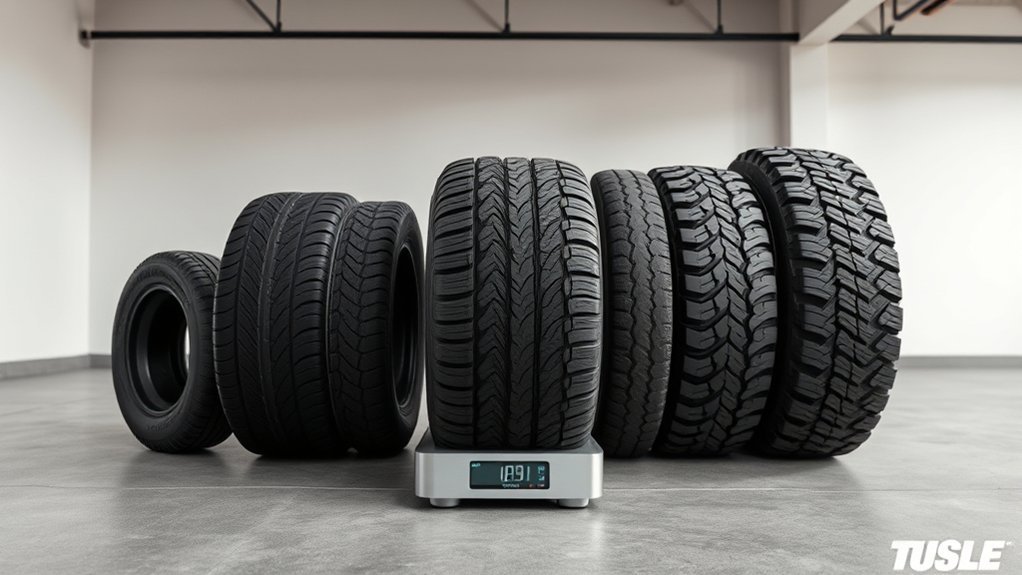
An SUV tire can weigh anywhere from about 25 pounds for a smaller crossover tire to 100+ pounds for an oversized off-road tire, but most everyday SUV tires fall roughly between 35 and 70 pounds. The exact number depends on tire size, load range, tread depth, sidewall construction, and whether the tire is a passenger-style SUV tire or a heavier LT tire.
Quick Answer
A typical SUV tire weighs about 35 to 70 pounds. Smaller crossover tires may be closer to 25 to 35 pounds, while larger all-terrain, LT-rated, and oversized off-road tires can weigh 55 to 100+ pounds each. Always check the exact tire model’s spec sheet for the real weight.
Key Takeaways
- Most everyday SUV tires weigh about 35 to 70 pounds, but smaller crossover tires can be lighter.
- A 275/60R20 tire can vary widely because highway, all-terrain, SL, XL, and LT versions are built differently.
- Load range, tread depth, sidewall reinforcement, and tire type often matter more than rim diameter alone.
- Heavier tires can affect acceleration, braking feel, steering response, ride quality, and fuel economy, but rolling resistance and inflation pressure also matter.
- The tire sidewall shows size and load information, but the tire’s actual weight usually comes from a product spec sheet or a scale.
At a Glance
| Time Required | 5–10 minutes to look up specs; 10–15 minutes to weigh a loose tire |
| Difficulty | Easy |
| Tools Needed | Tire model name, tire size, product spec sheet, and a tire scale or bathroom scale for a rough check |
| Cost | Free if using published specs; usually free to low-cost if weighing at home or a tire shop |
How Much Does an SUV Tire Weigh?
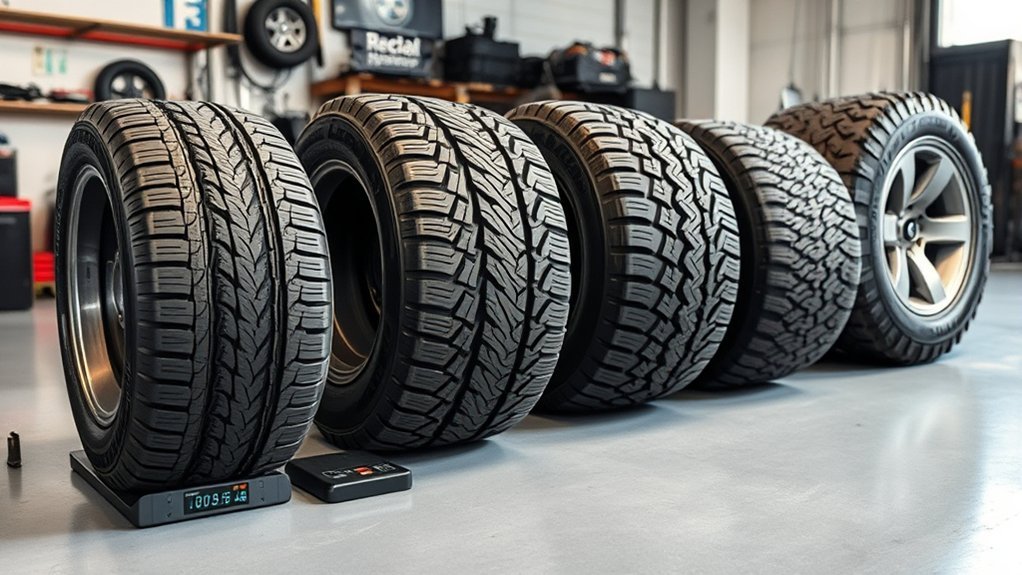
An SUV tire usually weighs more than a small passenger-car tire because SUVs often use wider sizes, taller sidewalls, deeper tread, and stronger load-carrying construction. A compact crossover tire may be around 25 to 35 pounds, while a full-size SUV tire is commonly closer to 40 to 60 pounds. All-terrain and LT-rated tires often move into the 50 to 75 pound range.
Oversized off-road tires are a different category. A 35-inch or 40-inch tire can weigh far more than a standard SUV tire because it uses more rubber, stronger casing materials, and deeper tread blocks. Some large off-road tires can approach or pass 100 pounds each, depending on the exact model.
Note: Tire weight is not printed in the tire size code. A tire marked 275/60R20 tells you the width, aspect ratio, and wheel diameter, but not the tire’s actual weight.
SUV Tire Weight by Size and Type
Use the ranges below as practical estimates. The exact weight can still change by brand, load range, tread design, and whether the tire is a passenger-style SUV tire or a light-truck tire.
| SUV tire category | Common examples | Typical tire-only weight |
|---|---|---|
| Small crossover / compact SUV | 215/60R16, 225/65R17, 235/55R18 | About 25–40 lb |
| Midsize SUV / three-row SUV | 235/65R18, 245/60R18, 255/60R19 | About 30–50 lb |
| Full-size SUV / half-ton SUV | 265/70R17, 275/55R20, 275/60R20 | About 40–60 lb |
| All-terrain or LT-rated SUV tire | LT265/70R17, LT275/60R20, LT285/70R17 | About 50–75 lb |
| Oversized off-road tire | 33-inch, 35-inch, 37-inch, 40-inch tires | About 60–100+ lb |
[Products Worth Considering]
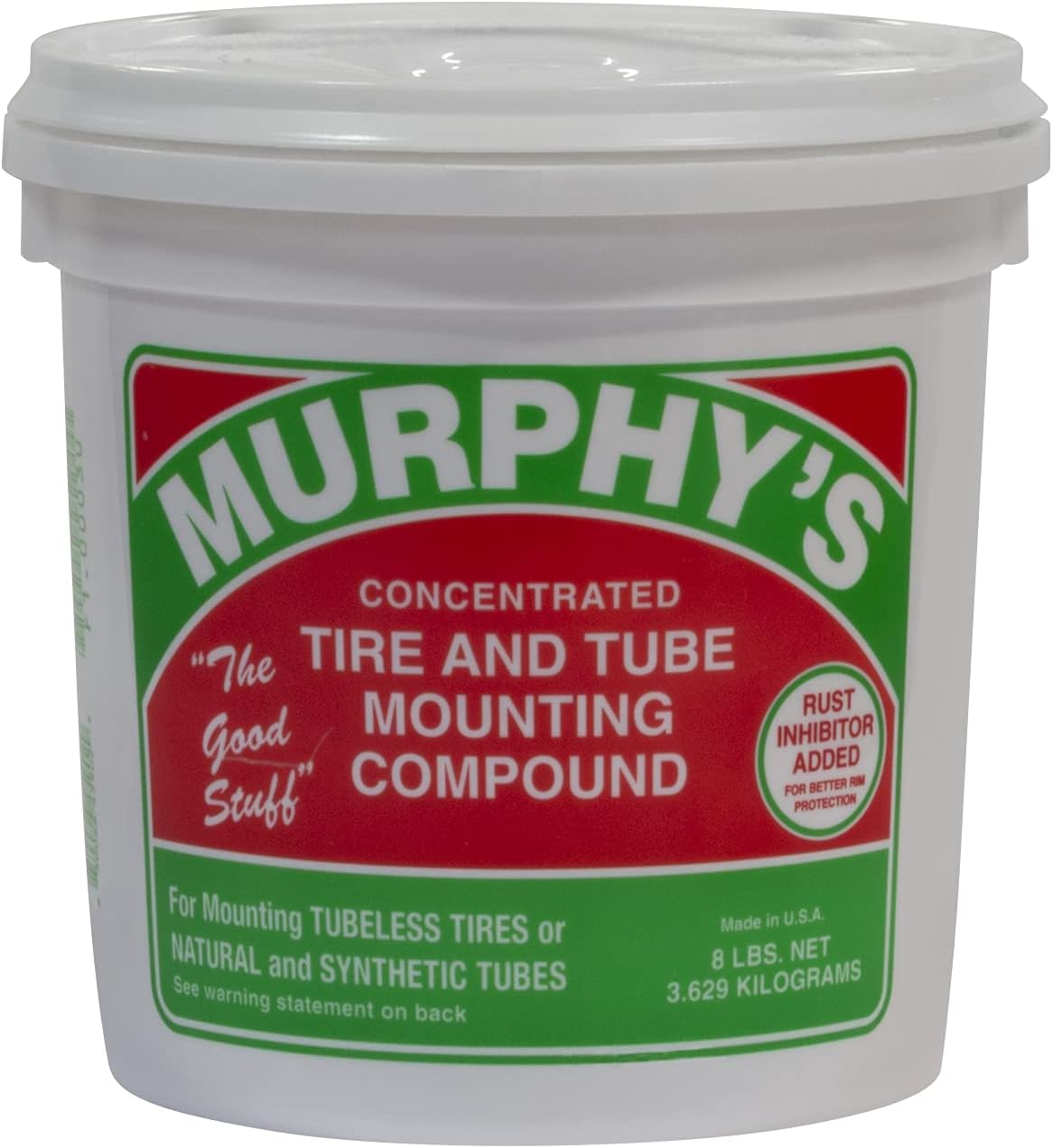
A concentrated tire and tube mounting compound designed to help simplify mounting rubber tires and tubes on passenger, semi truck, construction, and OTR applications. Its ultra-thick formula packs beads effectively and includes rust inhibitors to help protect against corrosion during use.

Keep your tires properly inflated with this analog VONDIOR tire pressure gauge, designed for fast, easy readings without batteries. The swiveling, two-axis hose and large glow dial help you measure at any tire angle with instant visibility. Built with a protective rubber shield, it supports durable, low-maintenance use for cars and trucks.

Cristal Products Untouchable Tire Shine Spray delivers a deep, wet-look gloss that enhances your vehicle’s tires. It’s quick-drying and spreads smoothly for consistent, streak-free coverage, while forming a protective coating against UV rays, road grime, and weather. Suitable for all tire types, it helps restore dull, faded tires to a showroom-quality finish.
Why a 275/60R20 Tire Can Weigh Different Amounts
A 275/60R20 is a common SUV and light-truck size, but the size alone does not give one fixed weight. A highway all-season version may be much lighter than an LT-rated all-terrain version in the same size. Load range, tread pattern, sidewall construction, and casing strength all change the final number.
That is why two tires with the same size code can feel very different on the road. One may be built for quiet highway use, while another may be built for towing, hauling, gravel, mud, or severe winter traction.
What Affects SUV Tire Weight?
SUV tire weight depends on several design factors. The biggest ones are size, load capacity, tread design, and construction.
- Overall size: Taller and wider tires use more rubber and reinforcement, so they usually weigh more.
- P-metric vs. LT-metric construction: LT tires are built for heavier loads and tougher service, so they usually weigh more than passenger-style SUV tires.
- Load range and load index: A higher load rating often requires stronger materials, which can add weight.
- Tread depth: Deeper tread uses more rubber. Aggressive all-terrain and mud-terrain patterns are usually heavier than highway-touring tread.
- Sidewall reinforcement: Extra sidewall strength helps off-road durability but adds mass.
- Season and performance design: Winter, all-terrain, highway, touring, and performance SUV tires use different compounds and construction.
Warning: Do not choose a lighter tire by dropping below the tire size, load index, load range, or speed rating recommended by the vehicle manufacturer. Check the driver-door tire placard and owner’s manual, or ask a qualified tire professional.
[Products Worth Considering]

This 3-ton scissor car jack tire changing kit helps you lift cars and SUVs with a wide range to reach low sedans or higher vehicles. The set includes a ratchet wrench, multi-size lug wrench, gloves, a tire pressure gauge, and a storage bag for quick emergency repairs. Built for stable, secure lifting and universal compatibility, it’s ready for flat tires and roadside wheel changes.

These universal aluminum tire valve stem caps help protect valve cores from corrosion caused by dirt, water, and snow while helping prevent air leaks to maintain steady tire pressure. They’re easy to install with a simple screw-on fit and are suitable for cars, SUVs, trucks, bicycles, motorcycles, and other vehicles. The stylish black caps add a clean, standout look to your wheels while supporting reliable long-term performance.

Add style while helping protect your tire valve stems with handmade crystal rhinestone caps and a durable plastic insert. These caps resist corrosion and help keep out rain, snow, and muddy water, extending tire life. Textured non-slip design makes them easy to grip for quick install and removal when checking tire pressure.
How Tire Weight Changes SUV Performance
Tire weight matters because tires are rotating, unsprung weight. Heavier tires require more effort to start, stop, and control. On an SUV, that can affect steering response, acceleration feel, braking feel, suspension movement, and ride comfort.
Still, tire weight is only one part of performance. Rolling resistance, tread compound, tire pressure, alignment, and driving conditions also affect fuel economy. The U.S. Department of Energy notes that reducing rolling resistance can improve fuel costs for typical vehicles, but that is not the same as saying every extra pound of tire weight has a fixed MPG penalty.
A lighter tire can help reduce rotating mass, but the best tire is still the one that matches your SUV’s load rating, driving conditions, and safety requirements.
If you tow, haul, drive on rough roads, or go off-road often, a heavier all-terrain or LT tire may be worth the tradeoff. If you mostly commute on pavement, a lighter touring or highway tire may improve comfort and efficiency.
How to Check SUV Tire Weight
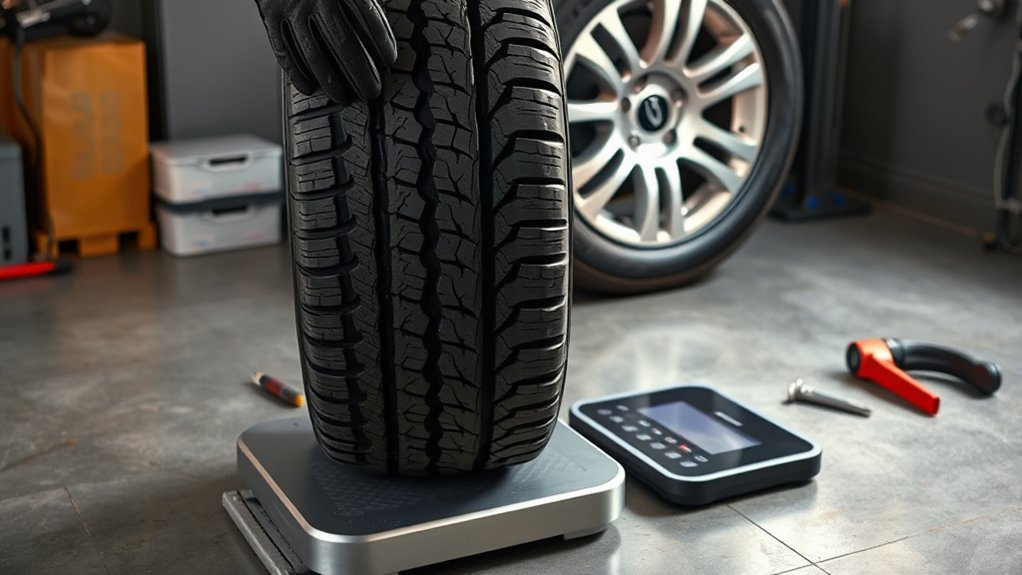
To check SUV tire weight accurately, start with the exact tire size and model. Then confirm whether you are weighing the tire alone or the full tire-and-wheel assembly.
- Read the tire size: Look for the size on the sidewall, such as 275/60R20 or LT275/60R20.
- Check the vehicle placard: Use the driver-door tire placard or owner’s manual to confirm the correct size, load rating, and cold inflation pressure.
- Find the product spec sheet: Search the tire manufacturer’s website or a trusted tire spec page for the exact model and size.
- Check the load range: SL, XL, C, D, E, and F versions can weigh different amounts even when the size looks similar.
- Weigh the tire if needed: Use a tire scale or a bathroom scale for a rough check. Weigh a loose tire for tire-only weight.
- Separate wheel weight from tire weight: If the tire is mounted, you are weighing the tire, wheel, valve stem, and any balancing weights together.
Note: Shipping weight is not always the same as tire weight. Packaging, labels, and carrier rounding can add or change the listed number.
How to Choose Lighter SUV Tires
If you want a lighter SUV tire, start with safety and fitment first. Never reduce load capacity just to save a few pounds. The best approach is to choose the lightest tire that still meets your vehicle’s required size, load rating, speed rating, and driving needs.
- Stay with the recommended size: Use the vehicle placard or an approved alternate size.
- Avoid unnecessary LT tires: If your SUV does not tow, haul, or drive off-road, a passenger-style SUV tire may be lighter and more comfortable.
- Choose tread for your real driving: Highway and touring tires usually weigh less than aggressive all-terrain or mud-terrain tires.
- Compare exact model specs: Two tires in the same size can differ by several pounds.
- Consider wheel weight too: A heavy wheel can cancel out the benefit of a lighter tire.
- Keep inflation correct: Proper pressure helps handling, tire life, and fuel economy.
Pro Tip: If you are comparing two tires with the same size and rating, choose based on the full package: tire weight, wet braking, treadwear warranty, road noise, snow rating, and your normal driving conditions.
[Products Worth Considering]

Vigorder rubber cement glue delivers superior adhesion and cures quickly within about 30 seconds for seamless rubber bonding. Once cured, it helps provide a strong, durable, waterproof seal that holds up to vehicle weight, pressure, and heat. Suitable for cars, motorcycles, trucks, bicycles, and off-road tires, it’s designed for emergency patch and maintenance repairs.

This digital tire pressure gauge with built-in inflator helps you accurately check and adjust tire pressure for safer driving and better fuel efficiency. It supports multiple units (PSI, KPA, BAR, KG/CM²) and reads within 1% for reliable results. The 3-in-1 design inflates, deflates, and measures, with a quick-connect air chuck and compatible hose setup for cars, trucks, SUVs, RVs, and motorcycles.
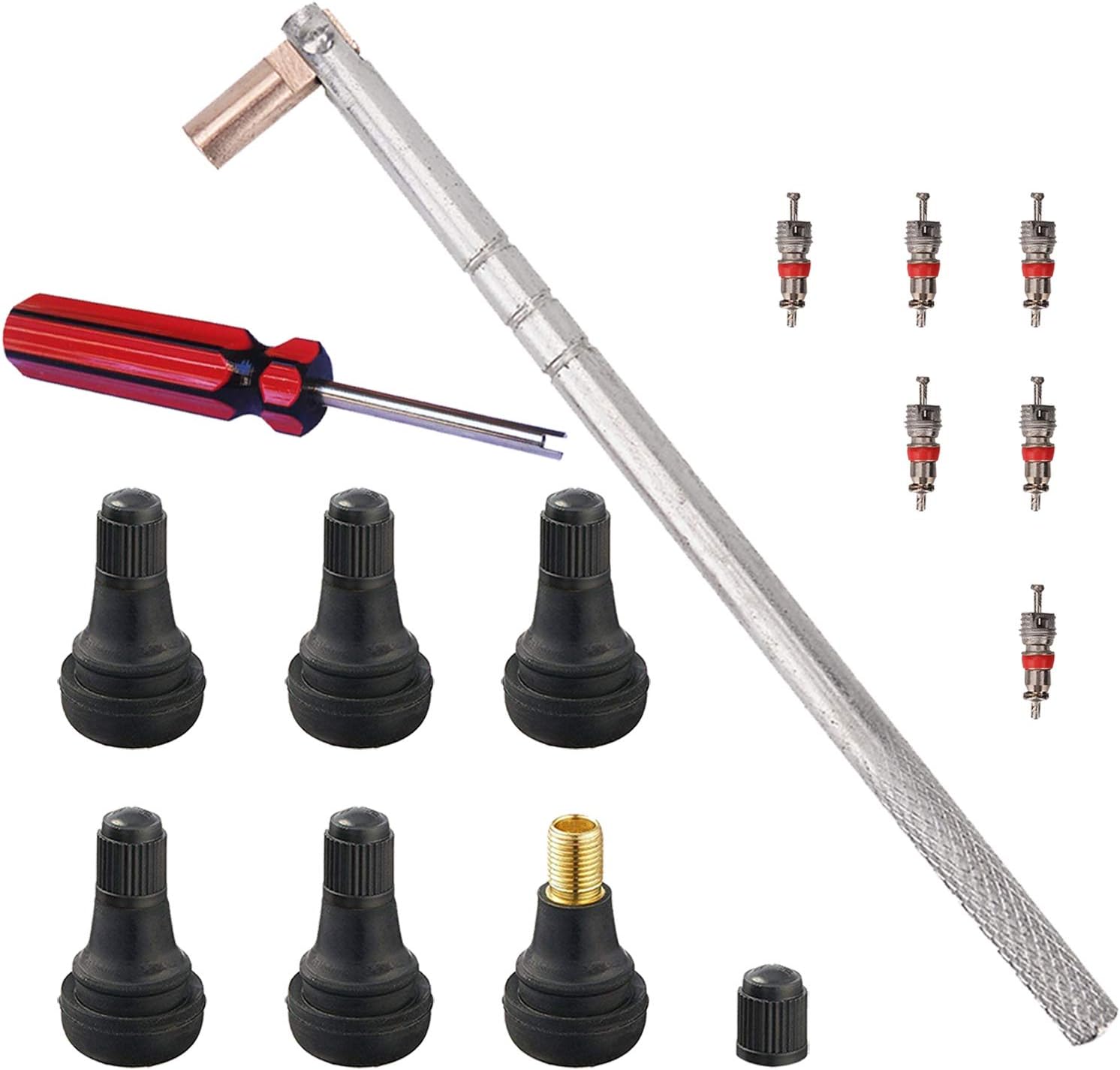
This FEBRYTOLD tire valve stem tool set makes it easy to remove and install standard 0.453 inch snap-in valve stems for tubeless tires. It includes valve stem cores and a single-head valve core remover/installer tool to help you complete repairs quickly. Designed to help avoid scratching wheels and damaging valve stems during service.
Frequently Asked Questions
How much does one SUV tire weigh?
One SUV tire usually weighs about 35 to 70 pounds. Smaller crossover tires can be closer to 25 to 35 pounds, while LT-rated all-terrain or oversized off-road tires can weigh 55 to 100+ pounds each.
How many car tires equal a ton?
A U.S. ton is 2,000 pounds. If each tire weighs 40 pounds, about 50 tires equal a ton. If each tire weighs 50 pounds, about 40 tires equal a ton. Heavy SUV or truck tires weighing 80 to 100 pounds each may need only 20 to 25 tires to reach a ton.
How much does a 20-inch SUV tire weigh?
A 20-inch SUV tire often weighs about 40 to 65 pounds, but the size and construction matter more than the wheel diameter alone. A highway 275/60R20 may be lighter than an LT-rated all-terrain tire in the same diameter.
How heavy is a 40-inch tire?
A 40-inch tire is usually much heavier than a standard SUV tire. Many 40-inch off-road tires fall around 80 to 120+ pounds, depending on width, tread pattern, load range, and sidewall construction.
Does tire weight include the rim?
No. Tire weight usually means the rubber tire only. A mounted tire-and-wheel assembly includes the tire, wheel, valve stem, and balancing weights. The full assembly can be much heavier than the tire by itself.
Where is tire weight printed?
Tire weight is usually not printed on the sidewall. The sidewall shows the tire size, load index, speed rating, DOT code, and max load/pressure information. To find the tire’s actual weight, check the product spec sheet or weigh the tire.
Conclusion
SUV tire weight varies because SUVs range from compact crossovers to full-size, tow-ready, off-road vehicles. A practical average is about 35 to 70 pounds per tire, but smaller crossover tires can be lighter and oversized off-road tires can be much heavier. For the most accurate number, compare the exact tire model, size, load range, and spec sheet before buying.
The right tire is not always the lightest one. Choose a tire that matches your SUV’s required load capacity, speed rating, terrain, climate, and driving style. When you balance safe fitment with reasonable weight, you get better control, comfort, and long-term performance.
Sources
- NHTSA TireWise — tire size, vehicle placard, and cold tire pressure safety guidance.
- Cooper Tire Load Index Guide — load index and sidewall load-rating explanation.
- U.S. Department of Energy: Fuel-Efficient Tires — rolling resistance and fuel-efficiency context.
- FuelEconomy.gov Gas Mileage Tips — tire pressure and rolling-resistance references.
- Goodyear 275/60R20 Tire Size Page — example of how one tire size can include different load ranges and tire types.
- BFGoodrich All-Terrain T/A KO3 — example of modern all-terrain SUV and light-truck tire construction.