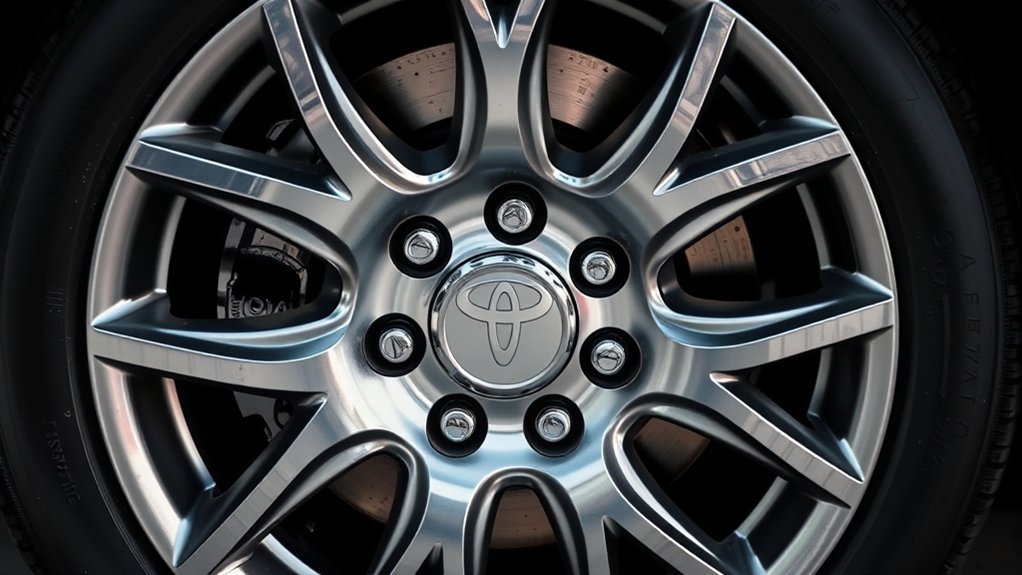
The Toyota Camry wheel bolt pattern depends on the generation, market, and sometimes the exact model-year crossover. Many modern Camrys use a 5×114.3 mm pattern, but early V10/V20 Camrys and some year/market overlaps used 5×100 mm. Before buying wheels, confirm the bolt pattern, center bore, lug nut thread, offset, wheel width, tire size, and load rating for your exact Camry.
Quick Answer
Most later Toyota Camry models use a 5×114.3 mm bolt pattern, a 60.1 mm center bore, and M12x1.5 lug nuts. However, many early Camrys used 5×100 mm with a 54.1 mm center bore, so do not assume every Camry wheel is interchangeable.
Key Takeaways
- Modern Camrys are commonly 5×114.3 mm, but early V10/V20 models commonly used 5×100 mm.
- A matching bolt pattern is only the first check; center bore, offset, wheel width, load rating, tire diameter, and lug-seat style also matter.
- If your aftermarket wheel has a larger center bore than the Camry hub, use quality hub-centric rings sized to the wheel and hub.
- Always verify your exact year, trim, market, and original wheel package before ordering wheels or lug nuts.
At a Glance
| Time Required | 10–20 minutes to confirm specs before ordering wheels |
| Difficulty | Easy for spec lookup; moderate if measuring wheels manually |
| Tools Needed | Owner’s manual, tire/loading placard, tape measure or caliper, wheel spec stamp, torque wrench |
| Cost | Usually free to verify; hub-centric rings, new lug nuts, or professional test fitting may add cost |
Understanding the Toyota Camry’s Bolt Pattern Evolution

The Toyota Camry did not use one single wheel bolt pattern for every generation. The safe rule is simple: early Camrys often need a 5×100 mm wheel, while later Camrys commonly need a 5×114.3 mm wheel. The crossover can vary by generation, market, and trim, so a wheel that fits one Camry may not fit another Camry even if the model years look close.
The bolt pattern, also called PCD or pitch circle diameter, tells you how many lug holes the wheel has and the diameter of the circle those holes form. A 5×114.3 pattern means the wheel has five lug holes on a 114.3 mm circle. A 5×100 pattern means five lug holes on a 100 mm circle. These two patterns are not interchangeable.
Warning: Never install a wheel with the wrong PCD. A 5×100 wheel does not safely fit a 5×114.3 hub, and a 5×114.3 wheel does not safely fit a 5×100 hub. Forced fitment, unsafe adapters, or incorrect lug seating can cause vibration, stud damage, or wheel separation.
Center bore matters too. Many early 5×100 Camry applications use a 54.1 mm center bore, while many later 5×114.3 Camry applications use a 60.1 mm center bore. If an aftermarket wheel’s center bore is larger than the Camry hub, hub-centric rings can help center the wheel. If the wheel’s center bore is smaller than the hub, the wheel will not mount correctly without machining, which is usually not worth the risk for a daily driver.
Key Specifications by Generation and Year Range
The table below gives a practical fitment overview. It is not a substitute for checking your exact vehicle, because Toyota sold different Camry generations in different markets at overlapping times.
| Camry generation / range | Common bolt pattern | Common center bore | Notes |
|---|---|---|---|
| V10, early Camry examples, 1983–1986 | 5×100 mm on many listings | 54.1 mm on many 5×100 listings | Do not assume these wheels fit later 5×114.3 Camrys. |
| V20, 1986–1991 | 5×100 mm or 5×114.3 mm, depending on market/trim | 54.1 mm on many 5×100 examples; 60.1 mm on many 5×114.3 examples | This is where market overlap matters most. Verify before buying. |
| XV10 and newer, early 1990s onward | 5×114.3 mm on many later listings | Often 60.1 mm | This became the common modern Camry pattern. |
| XV70, 2018–2024 in many markets | 5×114.3 mm | 60.1 mm | Common thread size is M12x1.5; offsets vary by wheel package. |
| XV80, 2025–2026 current Camry | Commonly 5×114.3 mm | Verify by trim and market | Use the current Toyota manual portal and your tire placard before ordering. |
Note: A model-year range is a guide, not a guarantee. The safest check is your exact year, trim, market, original wheel package, and hub measurement.
Generation-Specific Specs Overview
For most wheel shoppers, the important split is early 5×100 versus later 5×114.3. The earliest Camrys are the easiest to misidentify because they look like simple five-lug cars, but the circle diameter is different. A five-lug wheel can still be completely wrong if the PCD is not the same.
- Early V10/V20 examples: commonly 5×100 mm, often paired with a 54.1 mm center bore.
- Some V20 market examples: can show 5×114.3 mm and 60.1 mm center bore, especially in non-US market listings.
- Later XV-series Camrys: commonly 5×114.3 mm and often 60.1 mm center bore.
- Common lug thread: many Camrys use M12x1.5 lug nuts, but always verify lug-seat style and shank length before using aftermarket wheels.
Compatibility Across Generations
Wheel compatibility across Camry generations is possible, but only when all fitment points match. A matching 5×114.3 bolt pattern does not automatically mean a wheel fits. The center bore must clear the hub, the offset must keep the tire away from the strut and fender, the wheel must clear the brake caliper, and the tire diameter must stay close enough to avoid speedometer, ABS, or stability-control problems.
Pro Tip: When comparing wheels, write the specs in this order: bolt pattern, center bore, width, diameter, offset, lug-seat type, and load rating. If any one of those is wrong, keep shopping.
Changes Over The Years
The Camry’s wheel fitment evolved as the car grew from a smaller early sedan into a larger midsize sedan with bigger brakes, wider tires, and larger factory wheel options. Early models often used smaller 13- to 15-inch wheels. Newer models commonly use 16-, 17-, 18-, or 19-inch packages depending on trim.
That growth is why modern Camry wheel upgrades must balance appearance with clearance and ride quality. A larger wheel can sharpen steering response and change the look of the car, but it often uses a shorter tire sidewall. That can make the ride firmer and can increase the risk of wheel damage on potholes.
Key Differences Between Generations and Their Impact on Wheel Upgrades
The most important difference is the early-to-late bolt-pattern split. A 5×100 Camry and a 5×114.3 Camry need different wheels. After that, the biggest differences are center bore, offset, brake clearance, and tire size.
For newer Camrys, common factory tire sizes include options such as 205/65R16, 215/55R17, 235/45R18, and 235/40R19 depending on year and trim. These sizes are close in overall diameter from the factory, which helps preserve speedometer accuracy and electronic stability-system behavior. If you upgrade wheels, choose a tire size that keeps the overall diameter close to the original tire listed on your tire placard.
A good Camry wheel upgrade is not the largest wheel that bolts on. It is the wheel and tire package that matches the hub, clears the brakes, keeps the tire inside the fender, carries the vehicle load, and preserves safe handling.
[Products Worth Considering]

The SEESII cordless impact wrench delivers high tightening and loosening power for fast wheel bolt and industrial bolt work. Its brushless motor and variable-speed 3 forward/2 reverse modes help you control precision installs and stubborn nut removal. A dual-battery system with rapid charging and an included storage case make it ready for home, car, and jobsite use.

Upgrade your wheels with MIKKUPPA M12x1.5 mag seat lug nuts built for secure, corrosion-resistant performance. These closed-end chrome lug nuts are a direct replacement for select Toyota models, including Camry, Corolla, RAV4, Sienna, Avalon, Highlander, Matrix, Venza, and Prius. Triple-chromium plating and cold-forged, heat-treated steel help deliver strength for daily driving and replacement needs.

These M14x1.5 closed-end chrome lug nuts are a one-piece replacement designed for secure fitment on compatible GM, Ford, and select Chrysler/Dodge models. Featuring a 60-degree conical seat and anti-rust chrome plating, they help resist corrosion and maintain a bright look for everyday driving. Built for long-term durability, they include OEM-style part references and are backed by 12 months of support.
Identifying Your Camry’s Wheel Specifications
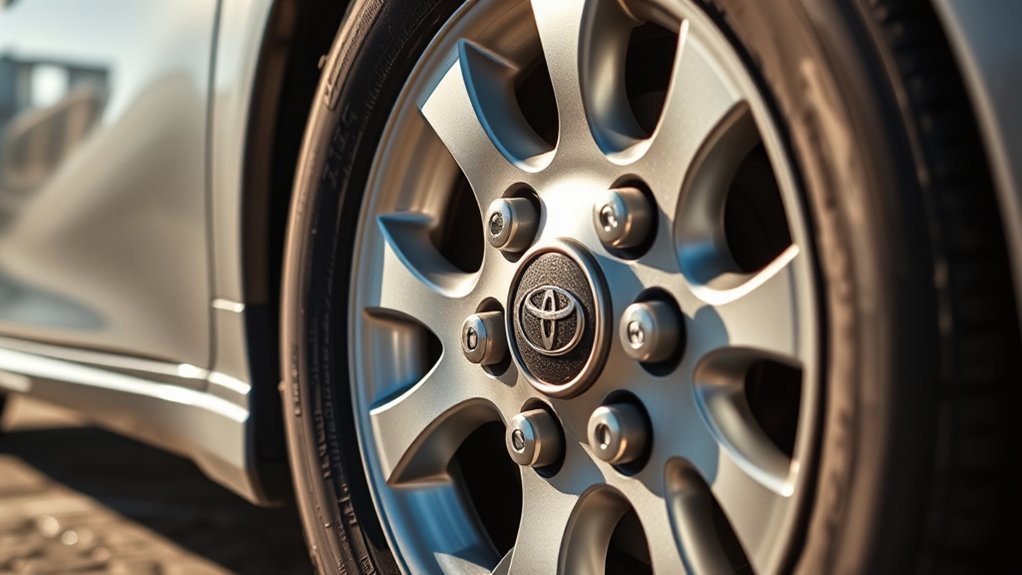
To identify your Camry’s wheel specifications, start with the factory information, then verify the physical wheel and hub. This matters most if your car is used, imported, modified, or from a crossover model year.
Confirming Bolt Pattern
- Check your year, trim, and market. A US-market Camry, Japanese-market Camry, and imported Camry may not share the same wheel data.
- Read the tire and loading information label. It is usually on the driver-side door edge or door jamb and lists the OE tire size and recommended cold tire pressure.
- Check the owner’s manual or Toyota manual portal. Toyota’s official manual page is the best place to confirm model-year guidance: Toyota Camry manuals and warranties.
- Look for markings on the wheel. Many wheels have size and offset markings cast or stamped on the back side, such as 17×7.5J ET45.
- Measure if needed. Use a caliper or fitment gauge for the center bore and confirm the PCD before ordering wheels.
Wheel Size Compatibility
Wheel size compatibility is about more than diameter. A wheel with the correct bolt pattern can still rub or vibrate if the width, offset, hub bore, or tire size is wrong.
- Diameter: The wheel diameter must match the tire’s rim diameter, such as 17 inches for a 215/55R17 tire.
- Width: The wheel width must suit the tire width and clear suspension parts.
- Offset: Too much positive offset can push the wheel inward toward the strut; too little can push it outward toward the fender.
- Center bore: The wheel bore must be equal to or larger than the hub bore. Use hub-centric rings if the aftermarket bore is larger.
- Load rating: The wheel and tire must be rated to carry the vehicle safely.
- Lug-seat style: Factory lug nuts may not match aftermarket wheels. Check whether the wheel needs conical, ball, flat, or shank-style hardware.
Warning: Do not reuse lug nuts just because the thread size matches. The lug-seat shape must match the wheel. The wrong seat can loosen, damage the wheel, or fail to clamp the wheel correctly.
Compatible Models With the Same Bolt Pattern as the Camry
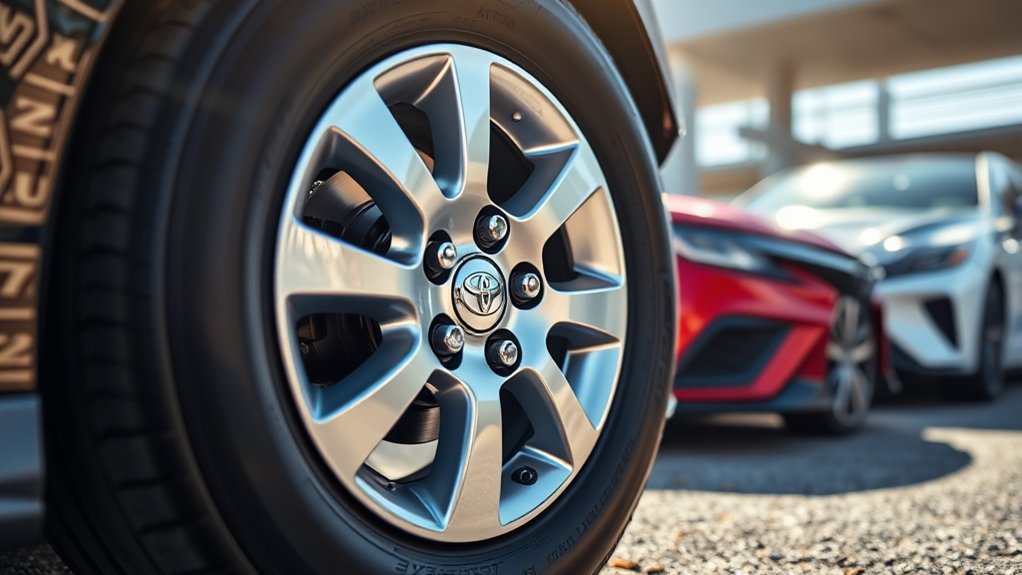
Many Toyota and Lexus models have used 5×114.3 mm wheels, including some RAV4, Highlander, Avalon, Lexus ES, and Lexus RX applications. That can expand your wheel options, but shared PCD does not guarantee a safe fit.
Before using wheels from another Toyota or Lexus model, compare:
- PCD: 5×114.3 must match 5×114.3, and 5×100 must match 5×100.
- Center bore: The wheel bore must fit over the Camry hub.
- Offset and width: The wheel must sit correctly inside the wheel well.
- Brake clearance: Larger brakes can hit some wheel barrels or spokes.
- Load rating: SUV wheels may fit physically, but the tire and wheel package must still suit the Camry’s handling and diameter needs.
- TPMS compatibility: Newer Camrys use tire-pressure monitoring sensors that must be compatible and programmed correctly.
Tips for Upgrading Your Wheels
Upgrading wheels can improve the look of your Camry, but the best setup keeps the car easy to drive every day. Start with the original tire size and wheel specs, then choose an upgrade that stays close to the factory overall tire diameter.
- Stay close to factory tire diameter. This helps protect speedometer accuracy and electronic-system behavior.
- Choose the right offset. For many later Camrys, factory offsets often sit around the ET40–ET50 range depending on package. Match your original setup closely unless you have confirmed clearance.
- Do not oversize blindly. A 19-inch wheel can look sharp, but it usually needs a shorter tire sidewall than a 16- or 17-inch setup.
- Use the correct hub-centric rings. If the wheel bore is larger than the Camry hub, rings can reduce vibration by centering the wheel.
- Confirm lug hardware. Thread pitch, seat style, nut depth, and stud engagement all matter.
- Test fit before mounting tires when possible. This helps catch brake-caliper or suspension clearance problems early.
Note: NHTSA recommends using the tire/loading label or owner’s manual to find the correct tire size and inflation pressure. You can review NHTSA tire guidance here: NHTSA TireWise tire safety information.
[Products Worth Considering]

Upgrade your wheels with MIKKUPPA closed-end lug nuts designed for reliable fit and corrosion resistance. The one-piece, cold-forged and heat-treated steel construction helps resist rust and stripping, while the integrated finish delivers a durable black appearance. Built to OEM standards with a conical 60-degree seat, these nuts provide a secure solution for compatible Ford, Honda, Jeep, and Chevrolet models.

This 1/2-inch drive breaker bar delivers powerful leverage for loosening and tightening stubborn lug nuts and automotive fasteners. The 180-degree flex head helps you reach tight spaces at the angle you need, making tire and brake jobs easier. A spring-loaded ball detent design holds 1/2-inch sockets securely while the chrome-moly head provides durable strength for everyday use.

This professional wheel and rim brush kit makes it easy to lift brake dust, grime, and dirt from wheels and tires without scratching finishes. The brushes feature soft, metal-free wool heads and a flexible 360-degree rim brush design for reaching hard-to-clean areas. Includes multiple brush types plus accessories for thorough car, motorcycle, and general vehicle detailing.
Ensuring Proper Fit for Aftermarket Wheels
When selecting aftermarket wheels for your Toyota Camry, check every fitment point before you buy:
- Bolt pattern: Match 5×100 to 5×100 or 5×114.3 to 5×114.3.
- Center bore: Match the hub or use the correct hub-centric ring if the aftermarket bore is larger.
- Thread size: Many Camrys use M12x1.5 lug nuts, but verify before ordering.
- Offset: Keep the wheel centered enough to avoid rubbing the strut, fender liner, or fender lip.
- Wheel width: Make sure the tire is approved for the wheel width.
- Load rating: Use wheels and tires rated for the Camry’s load.
- TPMS: Confirm sensor compatibility, especially on newer models.
[Products Worth Considering]

The 22800 wheel stud installer makes replacing wheel studs quick and secure, saving time and effort during tire service. It uses a ratchet or impact wrench to pull new studs firmly into place, helping when existing studs are too long. Compatible with most automotive wheels and light-duty truck wheel studs, it’s designed for easy, tool-assisted installation.

The Trivd Frol 1/2" air impact wrench delivers high performance torque up to 1500 ft-lbs with a twin hammer impact mechanism for strong, balanced blows. It features an ergonomic grip, compact lightweight design, and quick-stop control with 3 forward speeds up to 8000 RPM plus a reverse speed. Built for demanding automotive repair and tire shop work, the rear exhaust helps keep debris away from the surface.

This manual duck head tire changer kit makes tire installation and removal simpler by letting you embed the duck head into the tire with applied pressure. The integrated design and durable steel construction help reduce friction and improve efficiency and safety during use. Suitable for 16–21 inch wheels, it’s convenient for cars, trucks, SUVs, and ATV tires, with 24-hour after-sales support.
Safe Lug Nut Installation
Wheel installation is safety-critical. After choosing wheels that fit, install them correctly.
- Clean the hub face and wheel mounting surface.
- Hand-start every lug nut to avoid cross-threading.
- Tighten in a star pattern so the wheel seats evenly.
- Use a torque wrench set to the manufacturer’s specification for your exact model year and wheel hardware.
- Recheck torque after driving if your wheel or tire professional recommends it, especially after new wheels are installed.
Warning: Impact guns can overtighten lug nuts and damage studs. Use a calibrated torque wrench for final tightening, and follow the torque value in your owner’s manual or service information.
How Wheel Size Affects Your Driving Experience
Wheel size changes how a Camry feels. A smaller wheel with a taller tire sidewall usually rides softer and absorbs rough pavement better. A larger wheel with a shorter sidewall can feel more responsive, but it may ride firmer and be more vulnerable to pothole damage.
Here is the practical trade-off:
- 16- or 17-inch setups: usually better ride comfort, more sidewall protection, and often lower tire cost.
- 18-inch setups: a balanced upgrade for appearance and handling on many later Camrys.
- 19-inch setups: sportier look and sharper steering feel, but less sidewall and often a firmer ride.
If you increase wheel diameter, choose a tire with a lower sidewall ratio so the overall tire diameter stays close to stock. For example, many factory-style packages use taller sidewalls on smaller wheels and shorter sidewalls on larger wheels to maintain a similar rolling diameter.
Frequently Asked Questions About Camry Wheel Specs
These are the wheel-fitment questions that cause the most confusion for Camry owners. The safest answer is always to verify your exact vehicle, because generation, market, and trim can change the specs.
Frequently Asked Questions
Do all Toyota Camrys have the same bolt pattern?
No. Many later Camrys use 5×114.3 mm, but many early V10/V20 Camrys used 5×100 mm. Some year and market overlaps make this confusing, so verify your exact year, trim, market, and hub specs before buying wheels.
What year Camry has the 5×100 bolt pattern?
Many early Camry examples from the V10 and V20 era used 5×100 mm, especially 1980s and early 1990s listings. However, some markets and overlapping generations show different data, so treat the year as a starting point, not a guarantee.
Will 5×100 wheels fit a 5×114.3 Camry?
No. A 5×100 wheel is not safely interchangeable with a 5×114.3 hub. The lug holes are on different bolt circles, and forcing the fit can damage hardware or create an unsafe wheel installation.
What is the center bore on a Toyota Camry?
It depends on generation and bolt pattern. Many early 5×100 Camry applications use a 54.1 mm center bore, while many later 5×114.3 Camry applications use a 60.1 mm center bore. If the aftermarket wheel bore is larger, use the correct hub-centric ring.
What lug nut size does a Toyota Camry use?
Many Toyota Camry models use M12x1.5 lug nuts, but the thread size alone is not enough. You also need the correct seat style, nut depth, and torque specification for your wheel and model year.
Can I use wheels from a Toyota RAV4, Highlander, Avalon, or Lexus?
Sometimes, but only if the full fitment matches. A shared 5×114.3 bolt pattern is not enough. Compare center bore, offset, width, brake clearance, load rating, tire diameter, lug-seat style, and TPMS compatibility before installing them.
Conclusion
The Toyota Camry bolt pattern is simple only if you know the generation. Many later Camrys use 5×114.3 mm, but many early Camrys used 5×100 mm, and some market/year overlaps require extra care. Before upgrading wheels, confirm your exact bolt pattern, center bore, lug hardware, offset, wheel width, tire size, and load rating. A correct fit protects ride quality, handling, braking, and wheel safety.
Sources
- TireWheelGuide — 1983 Toyota Camry wheel sizes — supports early 5×100 and 54.1 mm center-bore examples.
- TireWheelGuide — 1987 Toyota Camry wheel sizes — supports V20 market/trim variation, including 5×100 and 5×114.3 examples.
- TireWheelGuide — 1992 Toyota Camry wheel sizes — supports later 5×114.3 Camry fitment examples.
- Avto Reference — 2023 Toyota Camry wheel and tire specs — supports modern 5×114.3, 60.1 mm center bore, M12x1.5 thread, and factory wheel/tire examples.
- NHTSA TireWise tire safety information — supports checking tire size, pressure, and safety information from the tire/loading label and owner’s manual.
- Toyota Owners — Camry manuals and warranties — official Toyota source for model-year manuals and documentation.