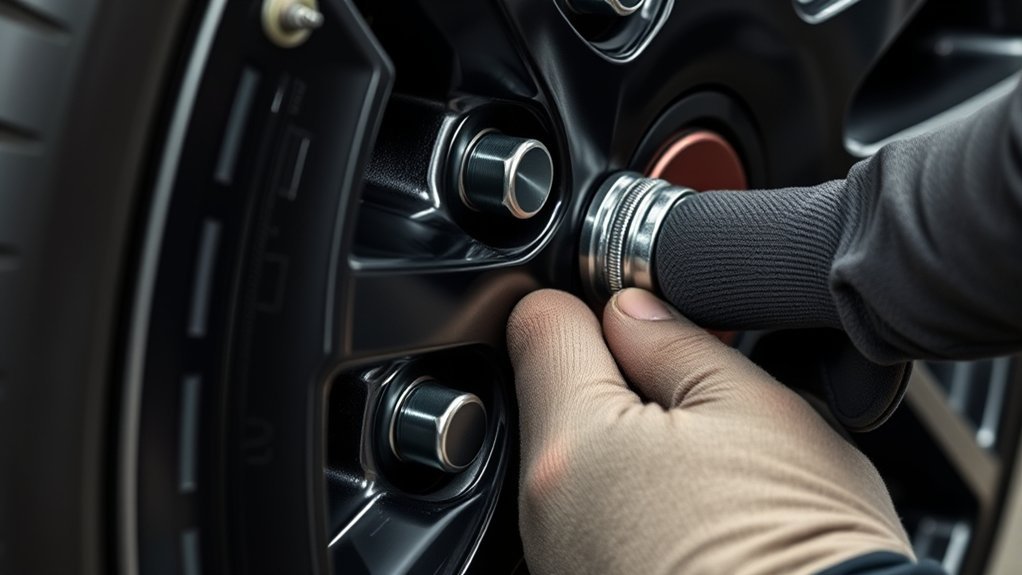
Spline lug nuts are slim wheel fasteners that use external grooves, or splines, instead of a conventional hex-shaped head. A matching spline key fits over those grooves so you can tighten or remove the nut. You mainly need spline lug nuts when an aftermarket wheel has narrow or recessed lug holes that leave too little room for a standard lug nut and socket. Correct thread size, seat type, stud engagement, tool clearance, and torque matter far more than appearance.
Quick Answer
You need spline lug nuts when your wheel requires a narrow fastener and matching key to reach recessed or small-diameter lug holes. They are common on aftermarket wheels, but they are not automatically better or more secure than standard lug nuts. Use them only when the thread, seat, length, wheel clearance, and torque requirements match your application.
Key Takeaways
Key Takeaways
- Spline lug nuts use an external spline pattern and require a correctly fitting spline key or installation tool.
- Their main advantage is their narrow profile, which helps them fit small or deeply recessed lug holes on many aftermarket wheels.
- A spline drive does not make a lug nut a true wheel lock. Standard spline keys can often be replaced or purchased separately, so theft deterrence is limited.
- Thread diameter and pitch, seat geometry, nut length, stud engagement, and tool clearance must all match the wheel and vehicle.
- Hand-start every fastener and use the vehicle or wheel manufacturer’s specified torque with a torque wrench for final tightening.
- Re-torque recommendations vary by manufacturer, so follow the instructions supplied with your wheels and fasteners rather than assuming one mileage interval applies to every setup.
What Are Spline Lug Nuts
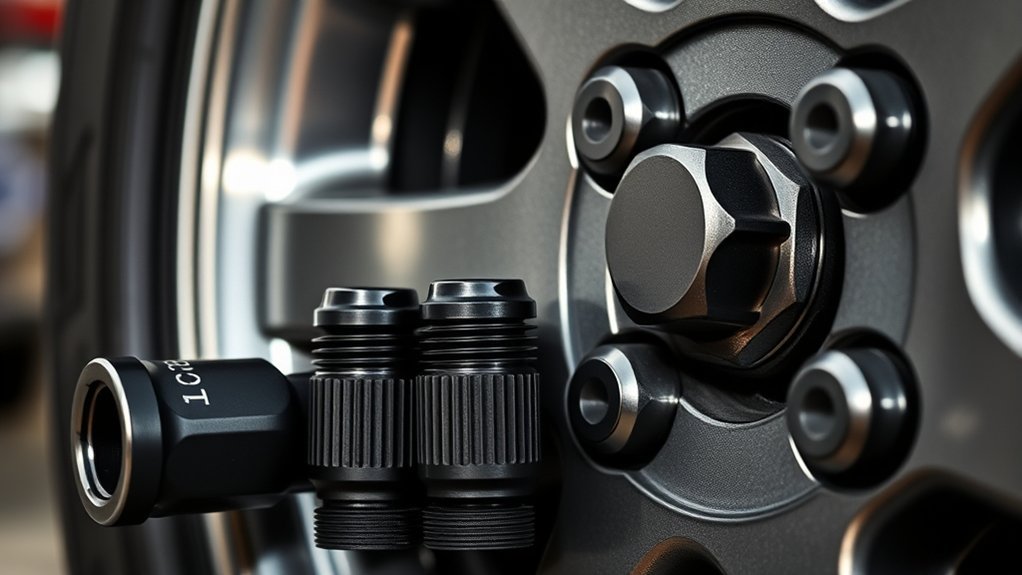
Spline lug nuts are wheel fasteners with a narrow body and an external spline pattern instead of the broad six-sided head found on a conventional hex lug nut. A matching key or adapter slides over the splines and lets a ratchet, breaker bar, or torque wrench turn the fastener.
The narrow design is especially useful when a wheel has a small-diameter or deeply recessed lug opening. McGard, for example, describes its SplineDrive products as hardware intended to fit small-diameter recesses in tuner-style wheels. McGard’s SplineDrive information also shows why the drive tool is an important part of the system.
The spline pattern changes how the tool grips the nut; it does not change the job of the lug nut itself. Once correctly seated and tightened, the fastener helps create the clamping force that holds the wheel against the hub.
You should never choose a spline lug nut based only on appearance. Thread pitch, thread diameter, seat type, overall length, available stud engagement, and wheel clearance all have to fit the application.
Note: “Spline lug nut,” “tuner lug nut,” and “wheel lock” are sometimes used loosely in product listings, but they are not always the same thing. Check the actual drive style, seat type, dimensions, and security design before buying.
How Spline Lug Nuts Work
When you install a spline lug nut, its matching key engages the external grooves. Your hand tool or torque wrench turns the key, and the key transfers rotational force into the lug nut.
As the nut advances along the wheel stud, its seating surface contacts the wheel’s lug seat. Continued tightening generates the preload needed to clamp the wheel against the hub.
The important point is that the spline pattern is only the drive interface. The internal thread and the seating surface still have to match the vehicle and wheel correctly.
The spline key turns the fastener, but correct threads, seating geometry, engagement, and torque are what make the wheel installation secure.
The matching key should slide fully onto the splines without rocking, binding, or sitting only on the tips of the grooves. Poor key engagement can damage the nut or key and make later removal difficult.
Benefits of Spline Lug Nuts
The biggest practical advantage of spline lug nuts is clearance. Their relatively small outside diameter can let both the fastener and its thin matching tool fit into wheel recesses where a conventional hex nut and socket are too bulky.
That can also reduce the chance of a large socket contacting the surrounding wheel finish during normal installation and removal. The compact hardware may provide a cleaner appearance on custom wheels as well.
Because an ordinary hex socket cannot directly engage the splines, the design provides a modest barrier to casual removal. However, you should not treat a standard spline lug nut as a dedicated anti-theft device.
Discount Tire distinguishes ordinary spline lug nuts from true wheel locks and notes that replacement spline adapters are obtainable. If theft deterrence is your main goal, use purpose-built locking hardware that is compatible with the wheel rather than relying solely on standard spline nuts.
Spline Lug Nuts vs Standard Lug Nuts and Wheel Locks
| Type | Main Purpose | Tool | Theft Deterrence |
| Standard hex lug nut | Normal wheel fastening where adequate socket clearance exists | Correct-size standard socket | Little by itself |
| Spline lug nut | Compact access in narrow or recessed lug holes | Matching spline key | Usually modest |
| Dedicated wheel lock | Add resistance to unauthorized wheel removal | Matching lock key | Higher when a purpose-built locking design is used correctly |
A vehicle can sometimes use spline lug nuts together with a separate wheel-lock system. The important question is whether each fastener has the correct thread, seat, dimensions, and application—not whether the spline key and wheel-lock key happen to match.
[Products Worth Considering]

These M14x1.5 closed-end chrome lug nuts are a one-piece replacement designed for secure fitment on compatible GM, Ford, and select Chrysler/Dodge models. Featuring a 60-degree conical seat and anti-rust chrome plating, they help resist corrosion and maintain a bright look for everyday driving. Built for long-term durability, they include OEM-style part references and are backed by 12 months of support.

Upgrade your wheels with MIKKUPPA closed-end lug nuts designed for reliable fit and corrosion resistance. The one-piece, cold-forged and heat-treated steel construction helps resist rust and stripping, while the integrated finish delivers a durable black appearance. Built to OEM standards with a conical 60-degree seat, these nuts provide a secure solution for compatible Ford, Honda, Jeep, and Chevrolet models.

Upgrade your wheels with MIKKUPPA M12x1.5 mag seat lug nuts built for secure, corrosion-resistant performance. These closed-end chrome lug nuts are a direct replacement for select Toyota models, including Camry, Corolla, RAV4, Sienna, Avalon, Highlander, Matrix, Venza, and Prius. Triple-chromium plating and cold-forged, heat-treated steel help deliver strength for daily driving and replacement needs.
Where Spline Lug Nuts Fit Best
Spline lug nuts fit best where wheel geometry leaves limited room around the fastener. They are especially common on aftermarket wheels with small lug openings or deeply recessed seats.
Spline lug nuts are most useful when the wheel’s lug recess does not provide enough room for a conventional lug nut and socket.
Typical applications can include:
- Deep-dish wheels with narrow lug recesses
- Some performance or racing-style aftermarket wheels with compact lug pockets
- Custom wheels that restrict standard socket access
- Some high-offset or highly styled wheels with limited clearance around the lug opening
- Applications where a smaller visible fastener better suits the wheel design
Never assume that an aftermarket wheel automatically needs spline lugs. Some aftermarket wheels accept conventional hex lug nuts perfectly well.
You also need to check product-specific restrictions. For example, McGard specifies that its SplineDrive lug nuts are intended for aluminum/alloy wheels rather than steel wheels. That is a restriction of that product line, not a rule you should blindly apply to every spline lug nut on the market.
Do You Need Spline Lug Nuts
You need spline lug nuts when your wheel requires a narrow fastener or thin spline tool to reach and correctly seat the lug hardware. They can also be useful when you prefer their appearance or want a small amount of deterrence against casual removal.
You probably do not need them if your existing approved lug nuts fit the wheel correctly, provide adequate tool clearance, have the proper seat and thread, and can be torqued without contacting the wheel.
Do not change lug hardware simply because spline lugs look more specialized. Wheel fitment and clamping requirements come first.
Spline Lug Basics
Spline lug nuts solve a specific packaging problem: their smaller drive profile allows access where a conventional hex-shaped fastener and socket may be too wide.
- The exterior has multiple grooves instead of broad hex flats.
- A matching spline key is required to turn the nut.
- Thread diameter and pitch must match the wheel stud exactly.
- The nut’s seating surface must match the wheel’s seat.
- The nut must be long or deep enough for correct engagement without bottoming out.
- The key needs enough clearance to enter the wheel recess without scraping or binding.
The spline profile changes tool access, not the basic mechanical requirements of wheel fastening.
When They’re Needed
The clearest sign that you need spline lug nuts is insufficient socket clearance. If the wheel’s lug pocket is too narrow for the approved standard lug nut and its socket, a compatible small-diameter spline lug may solve the problem.
You may also need them when the wheel manufacturer specifically calls for spline-drive or tuner-style hardware.
Before buying, verify the wheel maker’s recommended seat geometry, fastener dimensions, stud thread, and torque specification. If that information conflicts with a generic online fitment chart, follow the vehicle and wheel manufacturer’s application data.
Benefits And Risks
The benefits are straightforward: more clearance in narrow lug holes, a compact appearance, and a drive system that standard hex sockets cannot directly grip.
The risks mainly come from using the wrong hardware or tool. A mismatched thread can cross-thread the stud. The wrong seat can prevent proper wheel contact. A closed-end nut can bottom against a long stud before the seat fully clamps the wheel. A poorly fitting key can round the splines.
- Verify thread diameter and pitch.
- Match the wheel’s seat geometry.
- Check stud protrusion and nut depth.
- Make sure the spline key fits completely.
- Use the specified torque rather than guessing.
- Inspect the hardware for corrosion, deformation, or damaged threads.
Warning: A lug nut that has the wrong thread, wrong seat, inadequate engagement, or insufficient clearance can fail to clamp the wheel correctly. Do not drive until you have confirmed that every fastener is the correct application and has been tightened to the required specification.
How to Install Spline Lug Nuts
Installing spline lug nuts is similar to installing other wheel fasteners, but the matching key adds another fitment check. Before starting, confirm the fastener application using the vehicle, wheel, and lug-nut manufacturer’s specifications.
At a Glance
| Time Required | Varies by wheel count, vehicle, and whether the wheels must be removed; do not rush the fitment and torque checks. |
| Difficulty | Moderate; basic wheel-service knowledge and correct vehicle lifting procedures are required if a wheel is removed. |
| Tools Needed | Correct spline key, suitable hand socket/ratchet or breaker bar, calibrated torque wrench, and proper jack/stands if wheel removal is required. |
| Cost | Varies by thread size, material, finish, brand, key, and number of fasteners required. |
[Products Worth Considering]

This car D-wheel lock nut key provides an anti-theft solution for D-shaped wheel lock bolts, helping keep your wheels secure. It features a flower-shaped internal pattern that resists micro-adjustment theft while allowing removal and mounting of compatible locking nuts. Made for reliable performance under high torque, it’s easy to use with standard socket wrench turning for quick tire maintenance and emergency repairs.

The Trivd Frol 1/2" air impact wrench delivers high performance torque up to 1500 ft-lbs with a twin hammer impact mechanism for strong, balanced blows. It features an ergonomic grip, compact lightweight design, and quick-stop control with 3 forward speeds up to 8000 RPM plus a reverse speed. Built for demanding automotive repair and tire shop work, the rear exhaust helps keep debris away from the surface.

This 1/2-inch drive breaker bar delivers powerful leverage for loosening and tightening stubborn lug nuts and automotive fasteners. The 180-degree flex head helps you reach tight spaces at the angle you need, making tire and brake jobs easier. A spring-loaded ball detent design holds 1/2-inch sockets securely while the chrome-moly head provides durable strength for everyday use.
1. Confirm the Application
Check the thread size, seating surface, nut dimensions, wheel clearance, and specified torque before installing anything. McGard’s installation guidance specifically tells installers to verify thread size and seating-surface type before installation.
McGard also specifies minimum thread engagement equal to the diameter of the wheel stud for its lug-nut applications. Follow the requirements supplied with your own wheel and fastener if they differ.
2. Support the Vehicle Safely
If you are removing a wheel, park on a stable, level surface, secure the vehicle against movement, use the correct factory lifting points, and support the vehicle according to its owner’s manual. Never place yourself beneath a vehicle supported only by a jack.
If you are simply replacing installed lug nuts without removing the wheel, follow the fastener manufacturer’s procedure. Some manufacturers instruct users to replace one fastener at a time so the remaining hardware continues to hold the wheel in position.
3. Clean and Inspect the Hardware
Remove dirt, heavy corrosion, damaged coatings, or debris that could interfere with seating. Inspect studs for damaged threads, stretching, or other defects.
Do not automatically apply oil, grease, or anti-seize to wheel-stud threads. Torque specifications depend on friction conditions, and lubricant can change the relationship between torque and clamp load. Follow the vehicle and fastener manufacturer’s instructions for your exact application.
4. Hand-Start Every Lug Nut
Thread the spline lug nut onto the stud by hand first. It should rotate smoothly through several turns without binding.
If it immediately becomes tight, gritty, or crooked, stop. Do not use a wrench to force it onto the stud because that can cross-thread and damage both parts.
5. Snug in the Correct Sequence
Insert the spline key fully over the nut and keep it square to the fastener. Snug the nuts gradually in the appropriate crisscross or star-style sequence for your wheel pattern.
6. Use a Torque Wrench for Final Tightening
Set a calibrated torque wrench to the specification provided for the vehicle and wheel application. Tighten the fasteners progressively in the recommended sequence until each reaches the specified value.
Do not rely on an impact wrench to establish final lug-nut torque. McGard warns that impact tools can produce uneven or excessive tightening, while Tire Rack’s wheel-installation guidance likewise directs installers to use an accurate torque wrench for final tightening.
7. Follow the Required Re-Torque Procedure
Check the instructions supplied with the wheels and fasteners for any required re-torque interval after initial driving. Published recommendations differ: McGard specifies 25 miles for its installation procedure, Discount Tire commonly recommends a check after 25–50 miles, and Tire Rack recommends 50–100 miles after installing a tire-and-wheel package.
That variation is why you should follow the instructions for your actual hardware rather than assuming one mileage number applies to every vehicle.
Pro Tip: Buy or identify a replacement spline key before you need one. Record the lug-nut brand, part number, key specification, and purchase information, and keep the working key where you can reach it during a roadside wheel change.
What Tools You Need
Correct spline-lug installation depends on using tools that fit both the fastener and the wheel recess.
- Matching spline key: The tool must fit the spline count and profile correctly.
- Ratchet or breaker bar: Useful for controlled loosening and preliminary tightening.
- Correct socket: Fits the outer hex of the spline key or other specified drive surface.
- Torque wrench: Required for accurate final tightening.
- Jack and approved support equipment: Needed if a wheel must be removed.
- Gloves and eye protection: Useful during wheel-service work.
An impact wrench may be useful for some removal work when used appropriately, but it should not be your final torque-setting tool. Finish with a torque wrench.
Keep the spline key clean and inspect its drive surfaces for cracking, spreading, or rounded edges. A worn key can slip even when the lug nut itself is still usable.
How to Remove Spline Lug Nuts
Removal is usually straightforward when you have the correct key. Fit the spline key fully over the lug nut, attach the appropriate hand tool, and apply steady loosening force while keeping the key square to the nut.
If you are removing a wheel, break the fasteners loose according to the vehicle’s service procedure before fully lifting the wheel, then support the vehicle correctly before removing the hardware completely.
Do not continue applying heavy force if the key repeatedly slips. A partially engaged key can round the spline edges and turn a simple removal into an extraction job.
Common Spline Lug Nut Problems
Most spline lug nut problems come from incorrect fitment, poor key engagement, excessive torque, damaged threads, corrosion, or using the wrong tool.
Spline Key Slips or Won’t Fit
First confirm that the key actually matches the lug nut. Two spline keys that look similar may differ in spline count, outside diameter, groove depth, or overall profile.
Clean debris from both parts and make sure the key seats fully. Stop if the tool rocks noticeably or only contacts the tips of the splines.
Lug Nut Binds While Threading
A lug nut should start smoothly by hand. Immediate resistance can indicate the wrong thread pitch, damaged threads, contamination, or cross-threading.
Do not overcome binding with a power tool. Remove the fastener and inspect the stud and nut before continuing.
Closed-End Lug Nut Bottoms on the Stud
A closed-end lug nut must have enough internal depth for the exposed wheel stud. If the stud reaches the closed end before the nut’s seat fully contacts the wheel, the nut can feel tight without properly clamping the wheel.
Check stud protrusion, nut depth, and visible seat contact before driving.
Splines or Key Are Rounded
Rounded splines usually indicate slipping, misalignment, excessive force, or worn tooling. Replace damaged hardware rather than trusting a marginal connection.
If a nut cannot be removed normally, a professional tire or repair shop may have extraction equipment that can remove damaged hardware while reducing the risk of wheel or stud damage.
The Spline Key Is Lost
Look for the fastener brand, part number, packaging, invoice, or identifying measurements before ordering a replacement. Do not assume that every six-spline or seven-spline key is interchangeable.
A tire shop may have compatible service tools, but you should not depend on that during a roadside emergency. Keeping the correct key with the vehicle is the safer approach.
How to Choose the Right Spline Lug Nuts
You need to match several dimensions before selecting spline lug nuts. A product that fits the wheel recess but has the wrong internal thread or seat is still the wrong lug nut.
[Products Worth Considering]

The 22800 wheel stud installer makes replacing wheel studs quick and secure, saving time and effort during tire service. It uses a ratchet or impact wrench to pull new studs firmly into place, helping when existing studs are too long. Compatible with most automotive wheels and light-duty truck wheel studs, it’s designed for easy, tool-assisted installation.

The SEESII cordless impact wrench delivers high tightening and loosening power for fast wheel bolt and industrial bolt work. Its brushless motor and variable-speed 3 forward/2 reverse modes help you control precision installs and stubborn nut removal. A dual-battery system with rapid charging and an included storage case make it ready for home, car, and jobsite use.
This universal magnetic jack pad is designed to protect pinch welds when lifting vehicles, helping prevent seam damage or warping. Crafted from solid aluminum with a nylon pad insert, it provides reinforced structural support and a secure fit for most single-vehicle pinch welds. Slotted for strong magnet holding, it supports safe jacking for cars, SUVs, trucks, and more.
Vehicle Fitment Needs
Start with your vehicle and wheel manufacturer’s specifications. Confirm the wheel-stud thread, wheel seat geometry, lug-hole diameter, recess depth, and available tool clearance.
- Measure or verify wheel-stud size and pitch.
- Identify the wheel’s required seat type.
- Confirm the nut does not interfere with the wheel recess.
- Make sure the spline key can enter the recess fully.
- Check exposed stud length against the nut’s usable internal depth.
- Confirm any product-specific wheel-material restriction.
- Check whether the spare wheel requires different hardware.
If your road wheels and spare wheel use different seat designs or materials, one set of lug nuts may not be correct for both. McGard specifically advises users to verify spare-wheel compatibility and retain suitable original hardware when necessary.
Thread Pitch Match
The nut’s internal threads must exactly match the wheel stud’s diameter and pitch. Examples of real spline-lug sizes include M12x1.25, M12x1.5, M14x1.5, and 1/2-20, but those are only examples—not interchangeable options.
A metric specification such as M12x1.5 describes a 12 mm nominal thread diameter with a 1.5 mm thread pitch. An SAE size such as 1/2-20 uses a 1/2-inch nominal diameter and 20 threads per inch.
Never choose a thread based on how closely it appears to fit. Check the service information or wheel-stud specification.
Seat Type Match
The seating surface is the part of the lug nut that contacts the wheel. Common wheel-fastener seat designs include conical, radius/ball, and flat or shank-style arrangements.
The nut and wheel must use compatible seat geometry. A wrong seat may contact only a small portion of the wheel or fail to center and clamp as intended.
America’s Tire’s lug-nut guide illustrates several common seat types and emphasizes that the lug-nut seat must match the wheel seat.
Open-End vs Closed-End Spline Lug Nuts
Closed-end spline lug nuts cover the end of the wheel stud and can give the wheel a finished appearance while protecting exposed threads from direct contamination. However, they need enough internal depth so the stud does not bottom out.
Open-end spline lug nuts allow the stud to extend through the nut, which can be useful with longer studs. Their exposed design also leaves the stud end more open to moisture and debris.
Choose the style that provides the required thread engagement and clearance for your actual stud length.
Spline Key Fit
Do not buy a replacement key using spline count alone. Keys can differ in diameter, groove geometry, and manufacturer profile even when they appear similar.
If possible, use the lug-nut manufacturer’s specified key part number. Test the key by hand before applying high torque.
Are Spline Lug Nuts Good for Theft Protection?
Ordinary spline lug nuts can discourage someone who has only a normal socket set because those tools cannot directly grip the splined body. That is useful, but it is not the same as a unique wheel-lock pattern.
Discount Tire’s wheel-lock guide explains that spline lug nuts and wheel locks are different products and describes the theft deterrence from standard spline lugs as limited.
If wheel theft is a serious concern, look for a compatible purpose-built locking system rather than assuming the word “spline” means “lock.”
Frequently Asked Questions
Are Spline Lug Nuts Compatible With Factory Wheel Locks?
They can sometimes be used on the same wheel, but compatibility depends on thread size, seat type, dimensions, and the wheel application. The factory wheel-lock key normally operates only the factory lock, while the spline lug nuts use their own matching spline key. Do not assume one key should operate both systems.
Can Spline Lug Nuts Damage Aftermarket Wheels?
Yes. Damage can occur if the seat type is wrong, the nut or key rubs the wheel recess, the threads are mismatched, or the fastener is over-tightened. A correctly fitted spline lug nut and fully seated key should provide enough clearance for installation without forcing the tool against the wheel.
Do Spline Lug Nuts Require Special Torque Specifications?
Not simply because they use splines. Use the torque specification required for the vehicle, wheel, and approved fastener application. The spline key changes how the tool engages the nut; it does not justify guessing a different torque value. Use a calibrated torque wrench for final tightening.
How Often Should Spline Lug Nuts Be Inspected?
Inspect the nuts, studs, seating surfaces, and spline key whenever a wheel is removed or serviced. Also follow the wheel or fastener manufacturer’s re-torque instructions after installation. Published recommendations vary—for example, McGard specifies 25 miles for its procedure, while other wheel-service guidance may call for a later check.
Are Spline Lug Nuts Available in Different Finishes?
Yes. Available finishes depend on the manufacturer and product line and can include chrome, black, PVD-coated, zinc-coated, and other decorative or corrosion-resistant finishes. Fitment and material quality should come before color or appearance.
Are Spline Lug Nut Keys Universal?
No. Keys can differ in spline count, diameter, groove depth, and manufacturer profile. Some generic replacement tools fit multiple products, but you should identify the correct key for your lug nuts instead of assuming that any key with the same number of splines will fit.
Are Spline Lug Nuts the Same as Wheel Locks?
No. A standard spline lug nut mainly provides a narrow drive profile for tight wheel recesses. Although the special key can create some casual theft deterrence, purpose-built wheel locks use a locking design intended specifically to resist unauthorized removal.
Conclusion
Spline lug nuts make sense when your wheels have small or recessed lug holes that leave too little clearance for conventional lug hardware and sockets. Their slim profile and matching key can make aftermarket-wheel service easier, but the spline design does not replace correct fitment or turn every lug nut into a true wheel lock.
Before installing them, verify the thread diameter and pitch, wheel seat, nut depth, stud engagement, key clearance, and required torque. Hand-start each fastener, use a torque wrench for final tightening, and follow the wheel or fastener manufacturer’s re-torque instructions. If your existing approved lug nuts already fit and torque correctly, there may be no practical reason to switch.
Sources
- McGard — Installation/Removal — thread and seat verification, hand-starting, torque-wrench use, tightening sequence, thread engagement, and re-torque guidance.
- McGard — SplineDrive Lug Nuts — spline-drive design and small-diameter tuner-wheel applications.
- Discount Tire — Wheel Locks — distinction between standard spline lug nuts and purpose-built wheel locks.
- Discount Tire — Lug Nut Replacement — tightening sequence, manufacturer torque specifications, and post-installation torque checks.
- Tire Rack — Tire & Wheel Package Installation — torque-wrench use, wheel installation, lubrication cautions, and re-torque guidance.
- America’s Tire — Lug Nuts — lug-nut seat types, thread-size terminology, and small-diameter spline-drive hardware.