
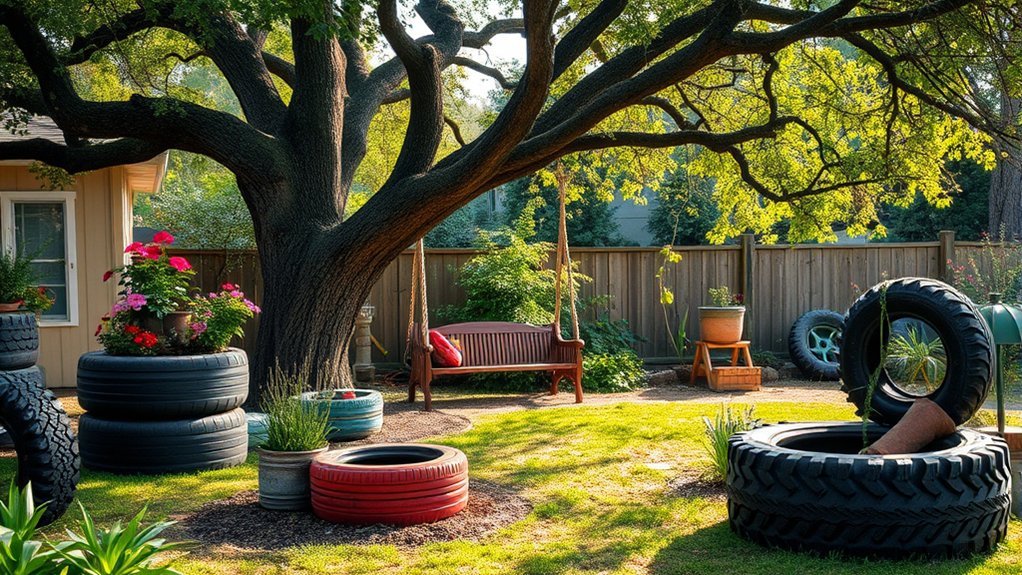
Old tires can become useful garden features, outdoor furniture, storage, decorations, workout tools, and carefully designed play projects instead of sitting unused. The best option depends on the tire’s condition and how much cutting, fastening, or structural work the project requires. Before you reuse one, clean it, inspect it for exposed steel, prevent standing water, and consider recycling it if a DIY project is not a good fit.
Quick Answer
You can reuse old tires as flower planters, garden borders, compost-bin walls, outdoor seating, bike racks, decorations, fitness equipment, swings, and obstacle-course features. For the safest result, inspect the tire for exposed wire, add drainage outdoors, avoid casual cutting of steel-belted tires, and recycle tires that are not suitable for a project.
Key Takeaways
Key Takeaways
- Use intact tires for simple projects such as flower planters, garden borders, furniture bases, bike storage, and seasonal decorations.
- Check every tire for exposed steel belts, sharp damage, contamination, and places where rainwater can collect.
- For food gardening, purpose-built containers or conventional raised beds are the lower-uncertainty choice because research continues on tire-derived chemicals and plant exposure.
- Treat swings, obstacle courses, rockers, and playground surfacing as safety projects, not just crafts. Proper anchoring, impact surfacing, drainage, inspection, and supervision matter.
- If you do not have a suitable reuse project, take the tire to a retailer, tire recycler, or approved local collection program rather than abandoning or burning it.
At a Glance
| Time Required | About 30 minutes for simple cleaning and decorating; several hours or more for furniture, garden structures, or play projects. |
| Difficulty | Easy for planters and decor; moderate to advanced for structural furniture and play equipment. |
| Tools Needed | Brush, mild soap, hose, gloves, drill for drainage or fastening, and project-specific hardware. Cutting tools should only be used when you understand the tire’s reinforcement and can control exposed wire. |
| Cost | Usually low if the tire is free; soil, paint, lumber, cushions, fasteners, anchors, and playground-rated materials can increase the total. |
Warning: Automotive tires may contain steel belts that can become sharp when damaged or cut. Children’s play equipment, suspended swings, heavy lifting projects, and elevated structures also create fall, crush, and anchoring hazards. Use conservative designs, inspect hardware regularly, provide appropriate surfacing and supervision, and get qualified help when structural capacity is uncertain.
Inspect, Clean, and Prepare Old Tires First
Before you turn an old tire into anything, decide whether it is actually suitable for reuse. A tire with protruding wire, severe sidewall damage, unknown chemical contamination, burned rubber, or unstable deterioration is a poor candidate for a hands-on project.
- Inspect the tread, sidewalls, bead, and inner surface. Look and feel carefully for exposed steel cords, sharp edges, embedded glass, nails, and damaged rubber.
- Wash it outdoors. Use water, mild soap, and a stiff brush to remove road dirt. Rinse and let the tire dry completely before painting, filling, or fastening it.
- Prevent trapped water. Outdoor tires can hold rainwater. The U.S. Consumer Product Safety Commission specifically recommends preventing water and debris accumulation when used tires are incorporated into playground projects and notes that underside drainage holes can help.
- Keep cutting to a minimum. Steel-belted automotive tires can expose sharp wire when cut. Whole-tire projects are usually easier and safer.
- Check the mounting method. A tire used as a planter has very different structural demands from a hanging tire, seat, bike rack, or play feature.
Pro Tip: Drill or position drainage before painting or decorating an outdoor tire. It is much easier to control where water exits before the project is filled with soil, cushions, or hardware.
Recycle Old Tires When Reuse Does Not Make Sense
You do not have to turn every worn tire into a DIY project. Recycling is often the simpler choice, especially if the tire is damaged, you have several tires to manage, or you do not have a long-term use for the finished project.
The U.S. Environmental Protection Agency’s recycling guidance says used tires may be accepted by tire retailers, tire-recycling facilities, and community collection events. Exact rules, fees, and limits vary by state and locality, so check with your local solid-waste authority or tire retailer.
Do not abandon tires on vacant land, roadsides, or around your property indefinitely. Tire piles can provide pest habitat and create serious fire problems. In March 2026, the EPA reported that approximately 48 million abandoned scrap tires still remained in at least 23 states and Tribal lands.
EPA reported in March 2026 that approximately 48 million abandoned scrap tires remained in at least 23 states and Tribal lands.
[Products Worth Considering]

Activ Life LED bike wheel lights help you stand out and stay visible from all angles for safer night rides and commutes. Designed for easy, tool-free installation on standard wheels, they add bright, durable illumination that enhances both safety and style.

A fun climbing and balance swing for outdoor play, featuring a circular disc kids can stand or sit on, plus platforms to help them climb. The thick braided rope is easy to grip and supports skill-building through repeated swings and careful balance. It’s designed for quick installation and includes an adjustable rope length and a tree strap for a perfect fit.
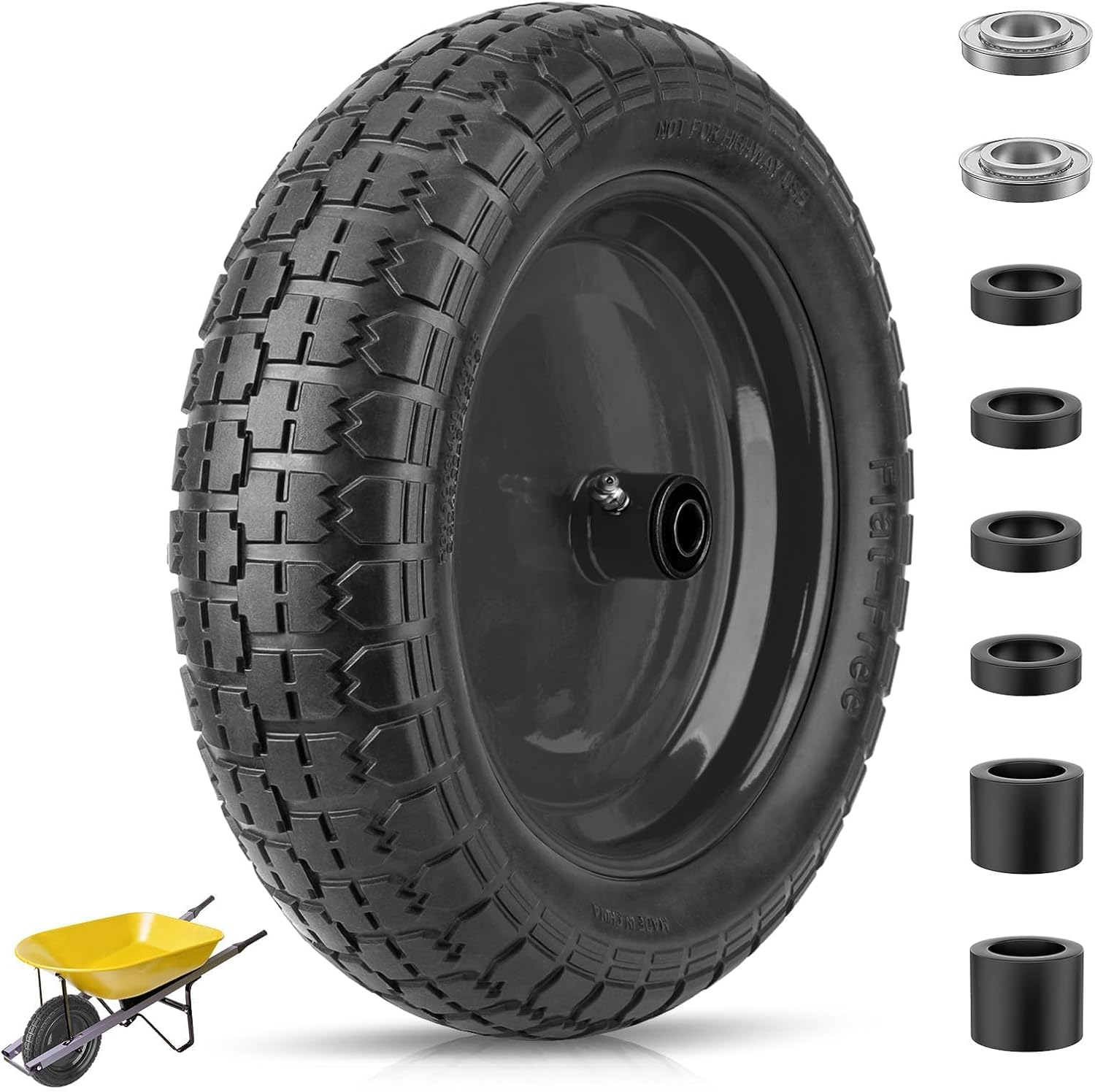
This flat-free TICONN wheelbarrow tire features durable polyurethane foam construction that never needs inflation, helping prevent punctures and reducing maintenance on rough outdoor terrain. With a 300 lb max load capacity and stable steel rim design, it supports safer transport for yard work and hauling tasks. An adapter kit with ball bearings and nylon spacers is included for easier fit and customization across common wheelbarrow and cart axle setups.
Turn Old Tires Into Planters
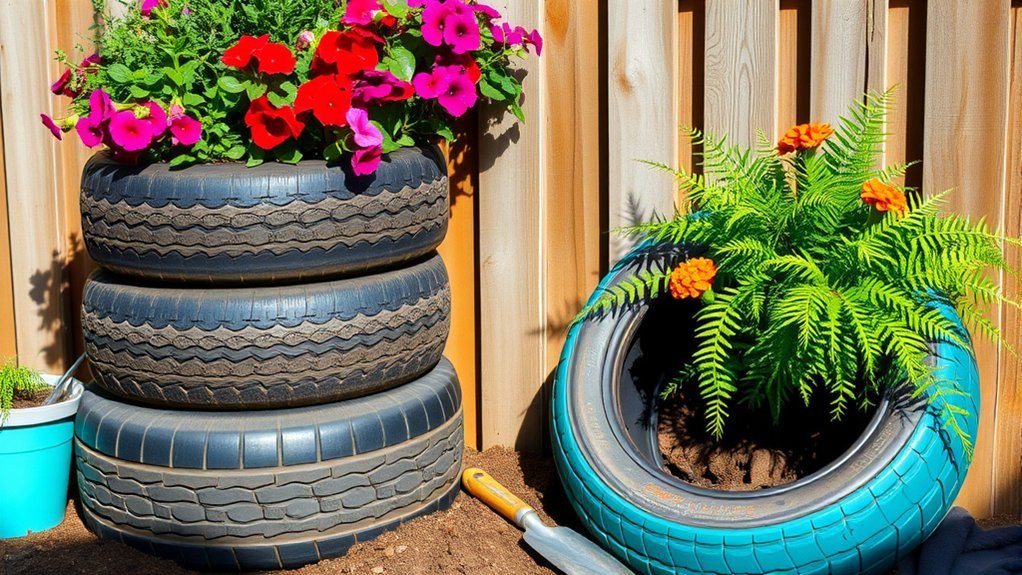
If you want a simple way to give old tires new life, turn them into planters. Whole tires work well as low flower containers, while securely mounted tires can create a vertical display on a sturdy wall or fence.
Do not assume the tire itself provides drainage. Add suitable drainage openings or position the tire so rainwater cannot remain trapped. Then use an appropriate potting mix and choose plants that match the light and moisture conditions in that location.
For ornamental flowers, tire planters are a straightforward reuse project. Food crops require more caution. Research on tire particles and tire leachate continues to find interactions with plants and soil, including a 2026 study involving mung bean and tomato plants. That research does not prove that every whole-tire planter creates the same exposure, but it does mean the safest claim is not that tire containers are automatically suitable for food production.
Note: If you want to minimize uncertainty when growing vegetables, herbs, or other edible crops, use a purpose-built food-growing container or a conventional raised bed instead. Tire planters are better suited to ornamental plants.
You can paint the exterior to match your garden, but treat paint as decoration rather than a chemical barrier. Use an exterior coating suitable for rubber, follow the coating manufacturer’s directions, and let it cure before planting.
Build a Tire Garden Bed
Tires can create contained planting areas when you want a compact flower bed or decorative raised feature. Larger truck or tractor tires hold more growing medium, while passenger tires fit smaller spaces.
Start with stable, intact tires on firm ground. Make sure water has a way to drain and do not stack them higher than you can safely stabilize. Fill the planting area with suitable soil or potting mix rather than assuming the tire itself will improve drainage or root health.
Choosing Tire Size
Choose a tire based on the finished project’s footprint and the depth of growing medium you need. A large tractor tire can create a wide ornamental bed, while smaller tires can make separate flower pockets.
If you stack tires, align them evenly and secure the stack where movement is possible. Do not use a tall, loose stack simply to avoid bending; the higher the stack, the more important stability becomes.
Check each tire for exposed metal, cracks, sharp damage, and contamination. These checks help prevent cuts and structural problems, but visual condition should not be treated as proof that a tire is chemically inert.
You can paint the exterior for appearance. Keep drainage paths open and inspect the finish periodically because outdoor coatings can peel or wear.
Filling And Planting
Once the tire or stack is stable, add growing medium in stages and settle it gently rather than packing it excessively. Leave enough space at the top for watering and mulch.
For flowers and ornamental grasses, choose species suited to the available rooting depth. Water thoroughly after planting, then add mulch if the plant benefits from it.
If you want a deeper food garden, a conventional wood, metal, masonry, or food-rated raised bed provides a clearer material choice than stacking automotive tires around edible crops.
Make a Compost Bin From Tires
You can stack old tires to create the walls of a small compost bin, but the tires themselves do not make compost break down faster. Successful composting still depends on the material mix, moisture, oxygen, particle size, and regular maintenance.
According to the EPA’s home-composting guidance, backyard compost needs carbon-rich “browns,” nitrogen-rich “greens,” moisture, and air. EPA recommends roughly two to three times the volume of browns as greens, covering food scraps with dry browns, keeping the pile about as damp as a wrung-out sponge, and turning it periodically for air.
Stacking Tires
Place the first tire on level, well-drained ground. Stack additional tires evenly so they cannot roll or shift. A modest stack is easier to access and manage than a tall column.
Add bulky browns near the bottom to help create air space. Then add greens and browns in a balanced mix. The open center gives you room for the composting material, but airflow still depends on the contents and how often you turn them.
Do not assume the stack is rodent-proof. EPA recommends a well-managed pile and, where rodents are a concern, a bin with secure construction, a lid or floor where appropriate, and openings small enough to block access.
Heat Retention
Active compost naturally generates heat as microorganisms break down organic matter. EPA notes that a well-maintained backyard pile can become hot, but temperature depends on pile size, ingredients, moisture, and oxygen—not simply on whether rubber surrounds the pile.
Watch the compost itself rather than the outside of the bin. If decomposition slows, check moisture, add the right balance of greens or browns, and turn the material to restore airflow.
Compost Access
A stack of separate tires can make access convenient because you can remove an upper tire as the level drops or when you need more room for turning. Keep the stack low enough to work safely.
Bury or cover food scraps with dry carbon-rich material to reduce odors and animal attraction. Avoid adding meat, fish, dairy products, fats, oils, pet waste, or other materials that EPA advises against for typical backyard piles.
When the compost is dark, crumbly, no longer heating after mixing, and fully cured, remove it for use in ornamental beds or other suitable garden areas.
Create Tire Chairs for Outdoors
Tire chairs can give an outdoor space a distinctive recycled look, but the seat needs more than two loose tires and a cushion. Start with clean tires on a flat surface, connect them with suitable fasteners or a rigid frame, and make sure the base cannot slide or separate.
Add a strong seat platform sized to bridge the opening before adding foam or an outdoor cushion. If the chair will support adults, the seat platform, connections, and base need to support the expected load without flexing or tipping.
You can paint the exterior or wrap selected surfaces with weather-resistant material. Remember that fabric, cushions, adhesives, paint, wood, and metal fasteners may weather faster than the tire itself, so bring soft furnishings inside when needed and inspect the structure regularly.
Build the structure first, test its stability, and add the cushion last.
This project works best as low outdoor seating rather than elevated furniture. Keep fasteners covered so they do not snag clothing or scratch skin.
Craft a Tire Ottoman or Stool
A tire can make a low ottoman or stool when you add a rigid top and stable base. One tire is often enough for a low footrest; two securely connected tires create more height.
Clean the rubber, choose a top that fully supports the seating area, round or cover sharp wood edges, and make sure screws or bolts cannot protrude into areas people will touch.
Easy Tire Stool Build
- Clean and dry one or two intact tires.
- Place them on a flat surface and secure stacked tires together.
- Attach a strong plywood or other rigid seat platform using a connection method suited to the design.
- Add foam and upholstery, or use a removable outdoor cushion.
- Test the stool carefully for rocking, sliding, and fastener movement before regular use.
If you paint the rubber, use a coating intended for outdoor use and compatible with the surface. Let it cure fully before attaching fabric or putting the stool into service.
Stylish Outdoor Ottoman Ideas
For a cleaner finish, wrap the outside with weather-resistant rope, use a removable cushion, or coordinate the paint with your patio furniture. A plywood top can also be finished as a small side table instead of a seat.
Keep the design low and wide. A low center of gravity makes an ottoman easier to stabilize than a narrow, tall stack of tires.
Add a Tire Swing to Your Yard
A clean old tire can become a swing, but the support system is the critical part of the project. Do not assume that a branch is strong simply because it looks thick. If you cannot verify the condition and load capacity of a tree attachment point, use a purpose-built swing frame or get qualified help.
The CPSC’s current playground guidance says reused automotive and truck tires should be checked regularly for exposed steel belts or wires and should not be allowed to collect water and debris. Drainage holes on the underside can reduce water accumulation.
Warning: A tire swing combines suspended load, moving hardware, fall risk, and possible entanglement hazards. Use hardware intended for swings, protect the fall area with appropriate impact-attenuating surfacing, provide clearance from obstacles, supervise children, and inspect the support, connectors, rope or chain, tire, and drainage regularly.
A horizontal tire creates a different motion pattern from a vertical tire, so the suspension method must match the intended design. Keep the swing away from fences, walls, trees, hard landscaping, and traffic areas.
Set Up a Tire Obstacle Course
Old tires can become an active backyard challenge when you use them as low stepping targets, crawl-through features, or footwork stations. The safest layouts keep the tires close to ground level and eliminate movement underfoot.
Try these tire arrangement strategies:
- Lay tires flat for low footwork or stepping drills.
- Secure upright tires before using them as crawl-through features.
- Use larger tires only when they can be anchored so they cannot roll, topple, or trap a user.
Paint can make the route easier to follow, but inspect the course before every session. Look for exposed wire, standing water, insect nests, loose anchors, sharp fasteners, slippery surfaces, and unstable soil.
For children’s play, keep age, ability, supervision, fall zones, and protective surfacing in mind. Do not create high bridges or elevated balance structures simply by stacking loose tires.
[Products Worth Considering]

These permanent paint marker pens deliver vibrant, bright color for eye-catching DIY art on many surfaces. The 2-3mm medium tip provides effortless precision for detailed lines and fine lettering. With consistent flow, waterproof durability, and quick-drying performance, your projects stay clean, bold, and ready fast.

This tire valve adapter kit lets you connect a 3/4-inch garden hose to tire valves to fill tires with air or liquid. It includes two adapters for standard bore and large bore valves plus a convenient bleeder valve to release trapped air. Designed for tractor tire tubes and compatible air/water valves and extensions, it’s a practical repair tool for getting back on the road or field quickly.

Steelman white tire marking crayons provide high-contrast, semi-permanent marks for repairing and inspecting tires and equipment. They write on wet or dry, smooth or coarse surfaces including rubber, metal, glass, and wood, making them ideal for puncture location and damage outlining. The lead- and zinc-free crayons resist weather and fading yet wipe away when you no longer need the marks.
Use Old Tires for Playground Surfacing
Recycled-tire materials are used in some manufactured playground surfaces, but that is different from shredding old tires at home and spreading the pieces beneath play equipment.
The CPSC playground-surfacing page identifies ASTM F1292 for impact attenuation within playground use zones and ASTM F3012 for loose-fill rubber used as playground safety surfacing. A playground product should be designed, tested, labeled, installed, and maintained for that purpose.
If you want recycled-rubber surfacing, use a commercial playground-rated product and follow its installation depth, critical-fall-height, drainage, containment, and maintenance instructions. Do not assume landscaping rubber or homemade tire shreds provide equivalent protection.
There is also an important distinction between impact performance and chemical-exposure questions. The EPA’s federal tire-crumb research found that chemicals can be present and exposure can occur, while also explaining that the federal work does not constitute a complete risk assessment for every use scenario.
For that reason, describe recycled-rubber surfacing in terms of verified product performance rather than calling all tire-derived surfacing inherently “safe” or maintenance-free.
Make a Tire Teeter-Totter
A common DIY tire-rocker concept uses part of a tire as a curved base with a board attached across it. This is more demanding than a planter or stool because cutting can expose reinforcement and the finished toy has pinch, fall, and tipping hazards.
If you attempt a low tire rocker, do not use a cut tire with exposed steel wire. Cover and smooth every edge, use hardware that cannot loosen or protrude, and make sure the board cannot rotate independently of the base.
- Keep the rocker low to the ground rather than creating an elevated seesaw.
- Use a smooth, splinter-free board with rounded edges and secure handholds where appropriate.
- Place it over suitable impact-attenuating surfacing, not concrete or asphalt.
- Check the tire, board, fasteners, and contact points before use.
For a children’s playground, a purpose-built rocker or seesaw that follows current playground standards is a better choice than improvising structural play equipment from incomplete online dimensions.
Try Tire Fitness Equipment
Old tires can support outdoor workouts through low stepping drills, dragging exercises, carries, or flips when the tire size matches your strength and training experience.
Do not assume a passenger tire has a standard weight. Tire mass varies by size, construction, reinforcement, and wear. Weigh the actual tire before you treat it as resistance.
Larger truck or tractor tires can be extremely heavy. Use proper lifting technique, clear the workout area, wear suitable footwear, and avoid flipping a tire where it could roll toward another person, vehicle, wall, slope, or fragile object.
Instead of filling a tire with concrete to create an unpredictable homemade weight, choose a heavier intact tire or purpose-built strength equipment. This gives you a known, inspectable training object without adding brittle fill or improvised handles.
Decorate Old Tires for Halloween
Old tires can become spooky yard displays with paint, removable decorations, fabric, lights, and lightweight accessories. Halloween projects are a good use for tires because you can create large shapes without asking the tire to support people.
Clean the surface first, use outdoor-compatible paint, and anchor decorations so wind cannot roll or topple them.
Tire Spider Decorations
Turn a whole tire into a spider body by painting it black and adding lightweight eyes. Instead of cutting steel-belted automotive tread into narrow leg strips, use PVC pipe, foam tubing, flexible conduit, or another lightweight material that does not expose steel reinforcement.
- Paint the whole tire and let it cure.
- Attach lightweight legs without creating sharp protruding fasteners.
- Add weather-resistant eyes or reflective details.
- Anchor the finished spider with stakes or another suitable restraint so it cannot roll in wind.
Glow-in-the-dark accents or low-voltage outdoor lighting can improve nighttime visibility without requiring you to cut the tire itself.
Spooky Yard Displays
Stacked tires can form Halloween towers, monster faces, pumpkin-like shapes, or a backdrop for faux tombstones. Keep stacks low and stable, especially in areas where children may walk past them.
You can also drape weather-resistant fabric over an anchored tire base to create a ghost shape. Make sure fabric cannot blow into roads, walkways, flames, heaters, or electrical equipment.
Build a Tire Bike Rack
Old tires can help organize bicycles when they are arranged as low wheel slots, but the rack must be anchored so the tires do not roll or separate as a bicycle is inserted.
- Choose intact tires with no exposed steel.
- Clean and dry them.
- Arrange the openings so each bicycle wheel fits without squeezing spokes or brake components.
- Connect the tires to one another or to a rigid base.
- Anchor the finished rack and test it with one bicycle before loading several.
For expensive bicycles, make sure the tire does not rub rotors, spokes, painted forks, or delicate wheel surfaces. The rack is for organization; use a separate locking point if security matters.
Create Garden Borders With Tires
Old tires can become durable garden borders that define planting areas or create a strong visual edge. Whole tires placed partly into the soil are usually easier to stabilize than tall stacks.
Arrange them in a straight or curved line, keep walking paths wide enough to avoid trips, and prevent hollows from holding stagnant rainwater.
For a useful tire border, focus on stability, drainage, and clear walking space before decoration.
Paint is optional. A natural black finish creates a rugged look, while exterior paint can help the border match a colorful garden. Inspect exposed surfaces periodically for wire, cracking, loose soil, and trapped water.
Do not use loose tires as a retaining wall for a significant slope unless the structure has been properly designed. Holding back substantial soil creates loads far beyond those of a decorative garden edge.
Make Hanging Flower Displays
A whole tire can become a hanging flower display when it is securely attached to a wall, fence, or purpose-built support. Because a soil-filled tire becomes much heavier after watering, design the mounting for the fully saturated weight rather than the dry tire alone.
- Choose a structurally sound mounting surface.
- Inspect the tire and add drainage openings at the lowest points.
- Use corrosion-resistant hardware suitable for the wall or fence material.
- Fill with lightweight potting mix and ornamental plants.
- Water slowly and confirm that drainage moves away from the wall.
This type of vertical garden saves ground space and can work on a patio or small yard, but it should not be mounted above seating, doorways, or other areas where a falling planter could injure someone.
Repurpose Tractor Tires for Big Projects
Oversized tractor tires can become large ornamental beds, low seating bases, workout equipment, landscape features, or parts of professionally designed recreation spaces. Their size also creates challenges: tractor tires are heavy, difficult to move, and capable of causing serious crush injuries if they tip or roll.
For a large planter, place the tire in its final position before filling it. Make sure the site drains well and cannot allow the tire to roll.
For fitness use, know the actual tire weight and train on level ground with enough clearance around you.
A tractor tire can also appear in a professionally designed play installation, but turning one into a DIY slide or elevated climbing feature requires more than adding a cushioned landing. Fall height, anchoring, entrapment, exposed wire, impact surfacing, use zones, and inspection all need to be addressed.
For simple backyard reuse, large planters, low landscape features, and stationary seating bases are more forgiving than improvised elevated play equipment.
[Products Worth Considering]

Secure bicycle wheels with these adjustable bike rack straps designed to keep tires from spinning during transportation and storage. The nylon straps provide dependable grip with slip resistance, while the durable hook and buckle help maintain a snug fit. Each set includes four 24-inch straps and offers flexible use for other gear like ropes, hoses, mats, and more.

The TANX hitch bike rack securely fits any 2-inch receiver and carries up to two bikes, including heavy-duty e-bikes and fat tires up to 5 inches wide. Its foldable, smart tilting design lets you access your trunk or tailgate without removing the bikes. An anti-wobble hitch tightener and locking hitch pin help keep the ride stable, while padded, adjustable cradles and straps protect bike finishes during transport.

This hitch-mounted bike rack securely carries two bikes with soft padded hooks that help prevent swaying and frame scratches. It folds up when not in use and tilts down for easy trunk access without removing the bikes. Designed for a 2-inch receiver, it provides a wobble-free fit and supports bikes up to a total capacity of 200 lb, including fat tires up to 5 inches.
What Not to Do With Old Tires
- Do not burn them. Tire fires are difficult to control and create serious air, soil, and water pollution concerns.
- Do not abandon or illegally dump them. Use a tire retailer, approved recycler, or local collection program.
- Do not let outdoor tires hold stagnant water. Drain or cover them and inspect them after rain.
- Do not casually cut through steel-belted automotive tires. Exposed steel cords can be sharp and difficult to control.
- Do not use a visibly damaged tire for children’s play equipment.
- Do not treat DIY rubber mulch as certified playground surfacing. Use a playground-rated product with appropriate testing and installation instructions.
- Do not assume every reuse is automatically the most sustainable option. Responsible tire recycling may be preferable when a project has no durable purpose.
Frequently Asked Questions
What are creative uses for old tires?
You can reuse old tires as ornamental planters, garden borders, low furniture bases, ottomans, bike racks, seasonal decorations, compost-bin walls, fitness equipment, swings, and low obstacle-course features. Match the project to the tire’s condition and avoid designs that expose steel or depend on unverified structural supports.
What can old tires be recycled into?
Commercial tire processors can turn end-of-life tires into materials used in applications such as ground rubber products, some playground surfacing systems, rubber-modified materials, and other engineered products. The exact end market depends on the recycler and local program.
What can you do with old tires to make money?
A tire that is still legitimately reusable may have resale value after appropriate professional assessment, while finished items such as decorative planters or furniture may be sold where local rules allow. Do not assume a tire recycler will pay you; some facilities or retailers charge disposal or handling fees.
What can you do with old tires at home?
Simple home projects include flower planters, garden edging, a low ottoman, bike storage, Halloween decorations, and carefully designed workout stations. Clean the tire first, inspect it for exposed wire, provide drainage outdoors, and recycle it if you do not have a durable use.
Are old tires safe for vegetable planters?
There is continuing research on chemicals released from tire-derived materials and their interactions with plants and soil. A whole tire planter is not identical to the experimental exposures in those studies, but if you want to minimize uncertainty for edible crops, use a purpose-built food-growing container or conventional raised bed and reserve tire planters for ornamentals.
Where should you take old tires if you do not reuse them?
Start with the tire retailer that installs your replacements, an approved tire-recycling facility, or a local waste or collection program. Acceptance rules and fees vary by location. Do not abandon or burn unwanted tires.
Conclusion
Old tires can have a useful second life, but the best project is one that matches the tire’s condition and can be built safely. Flower planters, garden borders, low furniture, bike racks, decorations, and carefully planned fitness projects are practical options. For swings, playground equipment, and surfacing, use stricter safety standards rather than treating the tire as an ordinary craft material.
Whatever you build, inspect the tire for exposed steel, prevent standing water, secure anything that can move or tip, and maintain the finished project. If you do not have a durable use for the tire, send it through an approved recycling or collection program instead of storing, dumping, or burning it.
Sources
- U.S. Environmental Protection Agency — How Do I Recycle Common Recyclables? — tire retailer, recycling-facility, collection-event, abandonment, pest, and fire guidance.
- U.S. Environmental Protection Agency — March 2026 Scrap Tire Update — current abandoned-tire estimate and tire-pile concerns.
- U.S. Consumer Product Safety Commission — Public Playground Safety Handbook — used-tire inspection, exposed steel, drainage, playground hazards, and maintenance.
- U.S. Consumer Product Safety Commission — Playground Surfacing — ASTM playground surfacing and impact-attenuation standards.
- U.S. Environmental Protection Agency — Federal Research on Recycled Tire Crumb — current tire-crumb characterization, exposure findings, and research limitations.
- U.S. Environmental Protection Agency — Composting at Home — browns, greens, moisture, aeration, temperature, turning, and pest-management guidance.

