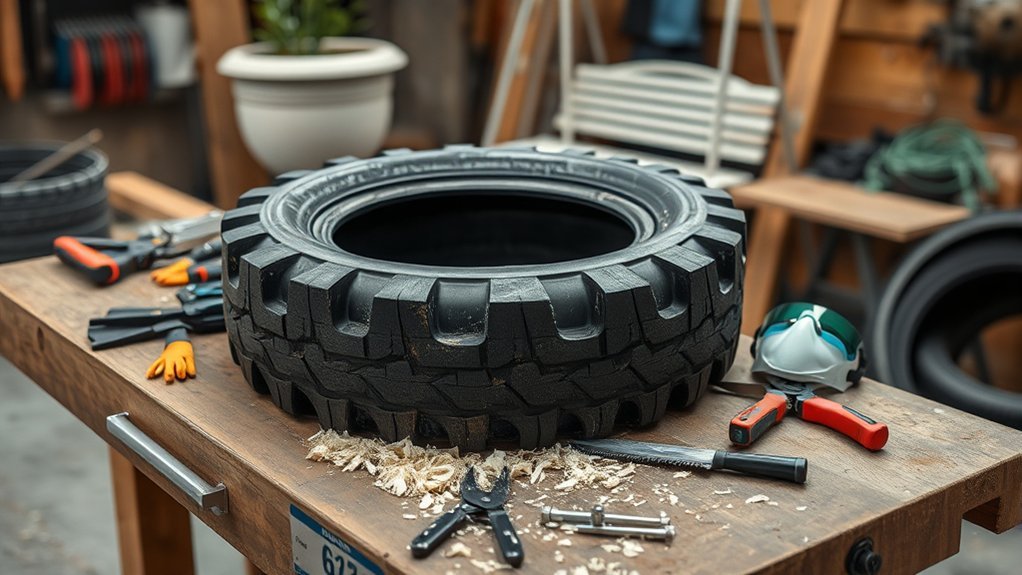
Cutting up a tire is possible, but it is not a casual knife job. Passenger and light-truck tires contain thick rubber, fabric cords, steel belts under the tread, and steel wire in the bead. The safest approach is to cut only a fully deflated tire that is off the rim, choose the right tool for each part, and work slowly in a stable, well-ventilated area.
Quick Answer
To cut up a tire, deflate it fully, remove it from the rim, clamp or block it so it cannot roll, then cut the sidewall with a sharp utility knife. Use a reciprocating saw with a metal-cutting blade for steel-belted tread and the bead. Wear eye, hand, hearing, and respiratory protection when needed.
Key Takeaways
- Cut only a fully deflated tire that is off the rim. Do not cut an inflated, mounted, or pressurized tire.
- Use a utility knife for sidewall starter cuts, then a reciprocating saw with a metal-cutting blade for steel belts and bead wire.
- Cut away from your body, keep your free hand out of the blade path, and stabilize the tire before every cut.
- Use water or soapy water to reduce heat on saw cuts. Avoid flammable lubricants near sparks, grinders, or hot blades.
- Check local tire recycling rules before cutting for disposal because some programs accept only whole tires.
At a Glance
| Time Required | 20 to 60 minutes per passenger tire, depending on tools and cut size |
| Difficulty | Moderate to hard; steel belts and bead wire are the toughest parts |
| Tools Needed | Utility knife, spare blades, reciprocating saw, metal-cutting blade, clamps or blocks, marker, wooden wedge, water or soapy water |
| Cost | $10 to $40 for blades and basic supplies if you already own the saw |
Warning: Do not cut a tire that is inflated, mounted on a rim, under load, or attached to equipment. Do not cut large commercial, tractor, or heavy-equipment tires unless you have the right tools and training. If you are unsure, use a tire shop, recycler, or municipal disposal program instead.
Choose the Best Tools for Cutting Tires
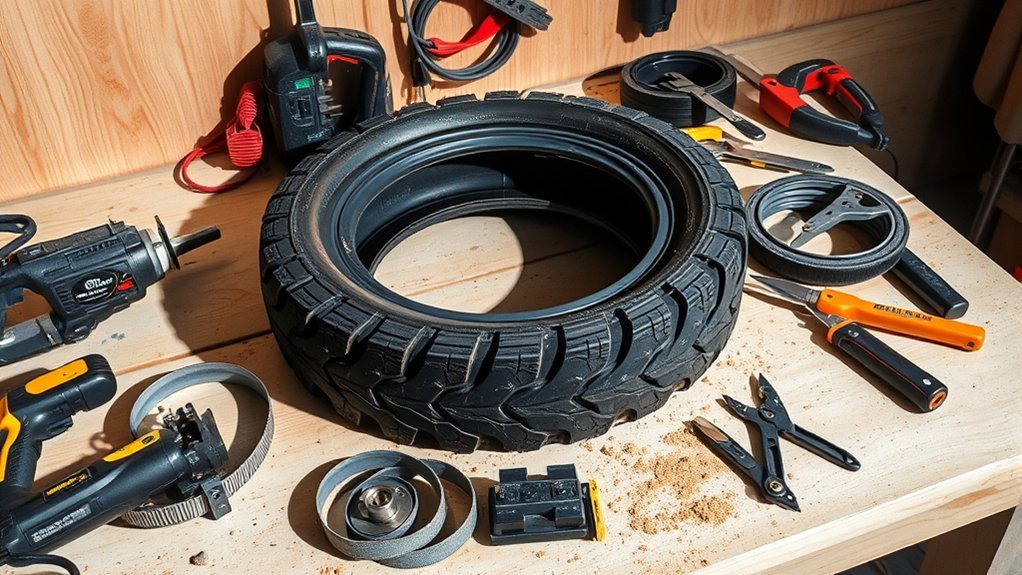
The best tool depends on which part of the tire you are cutting. A sharp utility knife works well for the sidewall because that area is usually thinner than the tread. It is not the right tool for the steel-belted tread or bead wire.
For tougher cuts, a reciprocating saw is usually the most controlled power-tool choice. Use a bi-metal or carbide-tooth metal-cutting blade, keep the saw shoe pressed against the rubber, and let the blade work without forcing it. A jigsaw can work on thinner sections, but it is slower and easier to bind.
A circular saw can cut tire sections when fitted with the right metal-rated blade, but it is harder to control on a curved tire. An angle grinder can help with bead wire, but it creates sparks, heat, dust, and a higher kickback risk. Use it only with the guard installed, both hands on the tool, and no flammable liquids nearby.
- Best for sidewalls: sharp utility knife or hook blade.
- Best for tread and steel belts: reciprocating saw with a metal-cutting blade.
- Best for bead wire: reciprocating saw or angle grinder with the correct wheel and guard.
- Helpful extras: marker, wooden wedge, clamps, wheel chocks, soapy water, pliers, and a file for sharp wire ends.
Pro Tip: Keep several spare blades nearby. Dull blades heat the rubber, make ragged cuts, and increase the chance of binding or kickback.
[Products Worth Considering]

Monitor tire tread wear with a smart, color-coded depth gauge that shows clear condition ranges at a glance. The bar is range marked for fast, easy readings, helping you maintain safer traction and performance. Each gauge is portable with a pocket clip, and the set includes 20 units for daily use and sharing.

Get back on the road fast with this compact tire plug repair kit for tubeless tires. It includes self-vulcanizing rubber plugs, T-handle rasp and insert tools, and a storage box that fits in your glove compartment for easy access. Also included are a 4-way valve steam tool set with valve cores and caps for added roadside convenience.

This AUTOWN flat tire repair kit is designed for quick, reliable puncture repairs using a plug kit and spiral probe tool to simplify installation. Built for durability and safe handling, it offers strong adhesion and flexibility to help maintain tire air tightness. With a portable storage case and a multi-vehicle approach, it’s suitable for cars, motorcycles, ATVs, tractors, lawn mowers, RVs, jeeps, and trucks.
Prepare the Tire Before Cutting
Set up the job before you make the first cut. A tire can flex, roll, grab a blade, or expose sharp wire, so preparation matters as much as tool choice.
- Confirm the tire is fully deflated. If the valve stem is still present, remove the valve core and wait until all air is out.
- Make sure the tire is off the rim. Do not cut a mounted tire.
- Clean the tire. Rinse dirt, stones, and road debris from the tread so the blade does not hit hidden grit or metal.
- Inspect the tire. Look for nails, glass, exposed steel, chemical residue, or other hazards.
- Mark the cut line. A paint marker or chalk line helps you avoid wandering cuts.
- Stabilize the tire. Use clamps, blocks, or a workbench setup so the tire cannot roll or spring toward you.
- Clear the area. Keep children, pets, loose clothing, and flammable materials away from the work zone.
Wear safety glasses at minimum. For power cutting, add a face shield, cut-resistant gloves, hearing protection, long sleeves, and a dust mask or properly fitted respirator if the work creates rubber dust or fumes. OSHA explains that personal protective equipment helps reduce exposure to hazards, but it should not replace safe setup and tool control.
How to Cut a Tire Sidewall Safely?
The sidewall is usually the easiest place to start because it has less steel than the tread area. Place the tire flat or upright in a blocked position, then mark a line about one inch from the tread shoulder.
- Start with a fresh utility blade.
- Puncture the sidewall carefully on the marked line.
- Cut away from your body using short, controlled strokes.
- Keep your free hand beside the tire, not in front of the blade.
- Use a wooden wedge or dowel to hold the cut open if the rubber pinches the blade.
- Replace the blade as soon as it drags or tears instead of slicing.
Do not lean your body over the blade path. If the knife starts to bind, stop and widen the opening with the wedge. Forcing the blade is what usually causes slips.
Note: If the sidewall has exposed cords or the tire is unusually stiff, switch to a saw rather than forcing a knife through the rubber.
Cutting Steel-Belted Tires
The tread area is harder because steel belts sit beneath the rubber. A utility knife can score the surface, but it will not cut the steel cleanly. Use a reciprocating saw with a metal-cutting blade and keep the saw stable.
- Score the tread with a utility knife to mark your path.
- Spray or wipe the cut line with water or soapy water to reduce heat and friction.
- Place the saw shoe firmly against the tire before pulling the trigger.
- Start at low to medium speed until the blade has a groove.
- Keep steady pressure, but do not force the blade through the steel belts.
- Stop if the rubber smokes, the blade bends, or the tire grabs the blade.
Avoid flammable lubricants when you are using a grinder, cutting wheel, or any tool that may throw sparks. If the rubber heats up, pause and let the blade cool before continuing.
[Products Worth Considering]
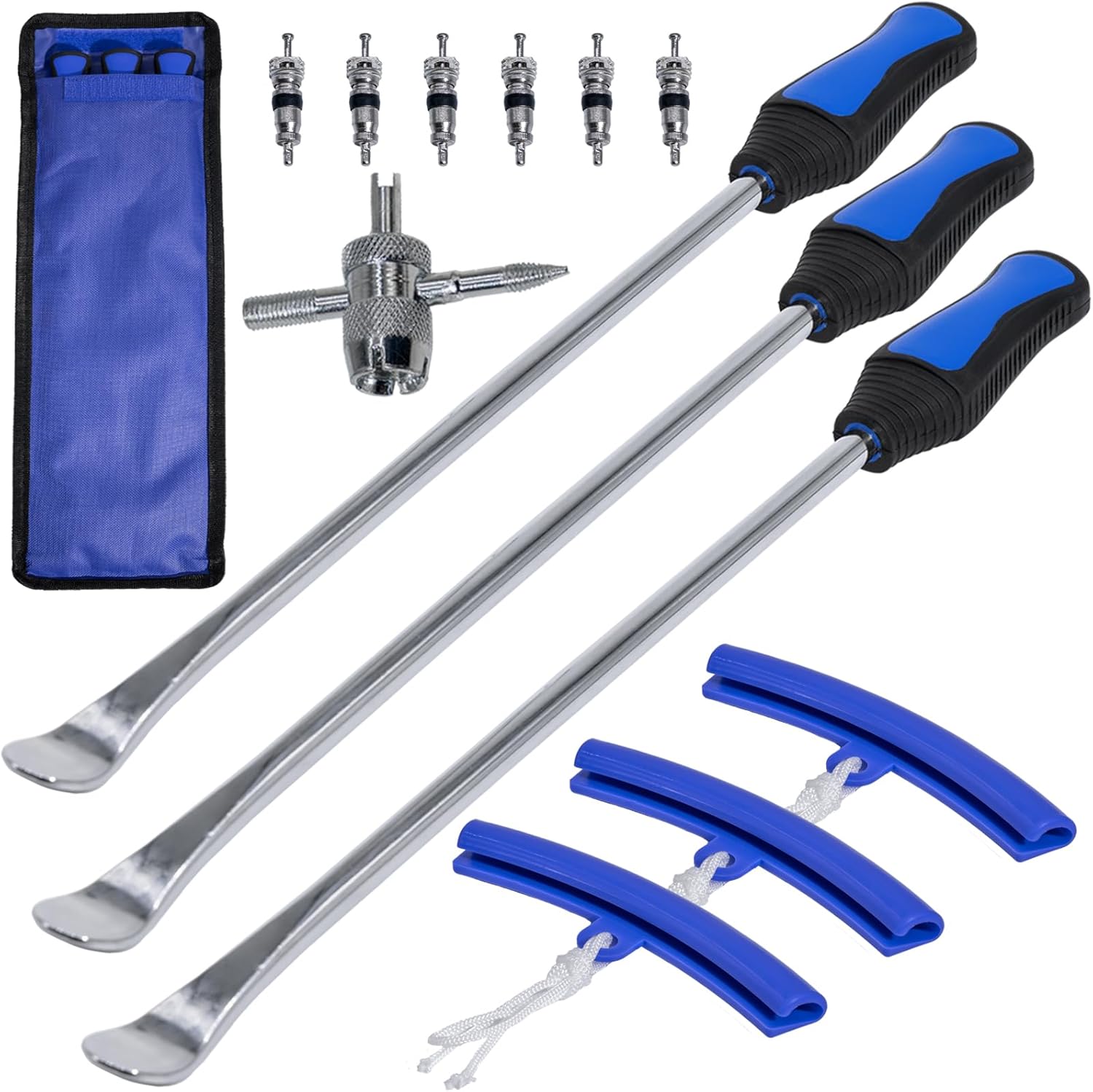
This tire spoon set helps you remove and install motorcycle, dirt bike, lawn tractor, and bicycle tires with extra leverage from a 14.5-inch spoon length. The kit includes tire removal tools, rim protectors, and a valve tool to simplify repairs and help protect rims during changing. Designed for quick, on-the-go service, it’s convenient for garage work, trails, and track-side fixes.

This tire repair kit provides fast emergency puncture repair without removing the tire from the rim, helping you get back on the road quickly. Its screw plug system is designed for punctures in both tread and sidewall and includes a complete patch plug tool set with essential accessories. A portable storage bag makes it easy to carry for cars, trucks, SUVs, motorcycles, and heavy-duty applications.

Measure tire tread depth quickly and accurately with this LUMITECO dial gauge that reads in 1/32" increments up to 14/32". The color-coded green/yellow/red zones make it easy to judge tire wear and know when replacement is needed. A rugged, compact design with a protective pouch helps keep the gauge ready for use on cars, trucks, motorcycles, and more.
How to Cut a Tire Bead
The bead is the thick inner edge that seals against the rim. It contains steel wire, so it is often the hardest part of the tire to cut. If you only need sidewall sheets or tread sections, you may be able to avoid cutting the bead at all.
When the bead must be cut, clamp the tire so the bead is supported and cannot twist. Score the rubber first, then use a reciprocating saw with a metal-cutting blade. Keep your face out of the line of the cut because wire ends can spring outward as the bead separates.
If you use an angle grinder, keep the guard installed, use the correct metal cut-off wheel, hold the tool with both hands, and work away from flammable liquids, dry leaves, sawdust, and fuel containers. After the bead is cut, bend sharp wire ends inward or cover them before handling the tire pieces.
Break Tires Into Disposal-Sized Pieces
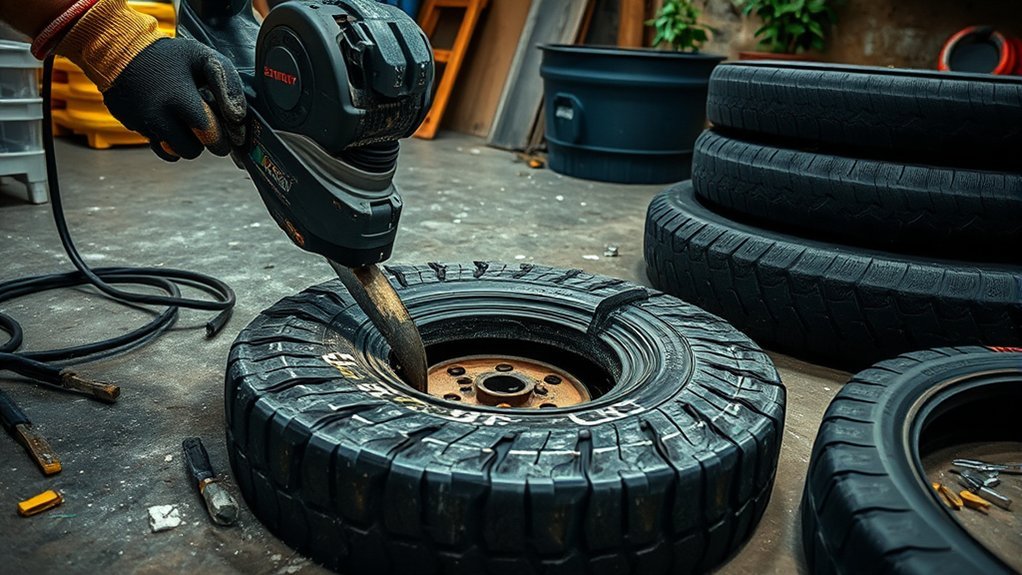
Before cutting a tire only for disposal, check your local rules. Some recycling events, tire shops, and transfer stations prefer whole tires or will not accept shredded pieces. Cutting first can make disposal harder if your local program wants the tire intact.
If cut pieces are allowed, start by removing one or both sidewalls. That leaves a flexible tread band that is easier to divide into smaller sections. Use the reciprocating saw across the tread band, rotating the tire as needed so the blade stays square to the cut.
- For small handling pieces: cut the tread band into 12- to 18-inch sections.
- For flat rubber strips: remove both sidewalls, then cut across the tread and unroll the band.
- For disposal bags: let sharp wire cool, then wrap or cover exposed steel so it does not tear bags or cut hands.
Collect all rubber crumbs, wire fragments, and blade pieces after the job. Waste tires are regulated in many places because stockpiles can create fire, health, and environmental problems. CalRecycle’s tire management program, for example, notes that waste tire stockpiles can threaten public health, safety, and the environment.
[Products Worth Considering]

Malco tire mounting and demounting lubricant is a ready-to-use tire lube formulated to reduce friction during tire installation for passenger cars, light trucks, farm tires, and heavy-duty equipment. It provides rust-inhibiting protection to help reduce corrosion on rims and wheels, and helps support proper tire bead seating during inflation to reduce air leakage. The silicone-free, soap-free formula is whitewall safe to help prevent discoloration on whitewall tires and sensitive sidewall markings.

Replace worn wheelbarrow, mower, or hand truck inner tubes with the TICONN 4.80/4.00-8 tube designed for 8-inch rims. Built from 100% natural rubber, it helps improve durability, impact absorption, and air retention while supporting self-sealing leak protection. The TR-13 straight valve stem makes it a straightforward fit for common yard equipment wheels.

This 13-inch flat-free wheelbarrow tire uses solid polyurethane foam construction with steel rims, so it will not puncture, rot, or go flat. The anti-skid tread improves stability and maneuverability across garden, lawn, and mixed terrain. It includes pre-installed 5/8-inch bearings plus extra 3/4-inch bearings and a versatile adapter kit to fit compatible wheel sizes and cart hubs.
Creative Ways to Reuse Cut Tires
Cut tire sections can be useful if the edges are smooth and the final project is safe. The best reuse depends on how cleanly you cut the tire and whether any steel wire remains exposed.
- Garden planters: Whole or half tires can hold ornamental plants. If you are concerned about soil contact, use a liner and reserve tires for non-edible plants.
- Landscape edging: Long strips can border paths or beds when the wire edges are removed or covered.
- Garage mats: Flat tread sections can add traction in work areas, but they should lie flat so they do not trip anyone.
- Wall or slope projects: Stacked tires can help with rough landscaping, but drainage and local rules matter.
- Play items: Tire swings and climbing pieces must have smooth edges, strong hardware, and a safe support structure. Do not build public playground equipment without following applicable safety standards.
Reuse is not always the best choice. If a tire is oily, contaminated, wire-filled, or crumbling, recycle or dispose of it through an approved program instead of turning it into a household project.
Troubleshooting Common Cutting Problems
If the cut feels harder than expected, stop and fix the cause before pushing harder. Most tire-cutting problems come from blade choice, heat, or poor support.
- The knife keeps sticking: Use a wooden wedge to hold the rubber open, replace the blade, and shorten your strokes.
- The saw blade binds: Keep the saw shoe tight to the tire, slow down, and support both sides of the cut.
- The rubber smokes: Stop cutting, cool the blade, add water or soapy water, and reduce speed.
- Steel wires snag gloves: Trim or bend the wire ends, then cover sharp edges before moving the pieces.
- The tire moves: Add clamps, blocks, or a helper who can stabilize from a safe position away from the blade path.
When Not to Cut a Tire Yourself
Do not cut a tire yourself if the tire is still mounted, inflated, unusually large, heavily reinforced, contaminated, or required to stay whole for local recycling. Also avoid cutting indoors or in a closed garage when power tools will create dust, fumes, or sparks.
For many people, the safer option is to take the tire to a tire retailer, recycler, municipal transfer station, or scheduled tire collection event. NHTSA’s TireWise guidance is focused on road safety, but it also explains why damaged, aged, or worn tires should be removed from service rather than reused on a vehicle.
Frequently Asked Questions
What can I use to cut up a tire?
Use a sharp utility knife for sidewall starter cuts and a reciprocating saw with a metal-cutting blade for steel-belted tread or bead wire. Keep spare blades nearby, wear safety glasses and gloves, and stabilize the tire before cutting.
Can I cut a tire with only a utility knife?
You can cut many tire sidewalls with a utility knife, but you should not expect a knife to cut cleanly through steel-belted tread or bead wire. For those areas, use a metal-cutting saw blade or take the tire to a professional recycler.
What is the 3 tire rule?
The “3 tire rule” is not a recognized tire safety standard. Some DIY workers use it as a personal workspace rule: keep only a few tires in the work area so the space stays clear, organized, and easier to control. Treat it as a clutter-control habit, not an official rule.
What is the 7 7 rule for tires?
The “7 7 rule” is not a universal tire standard. NHTSA says tires should be replaced for low tread, damage, irregular wear, and performance problems, and notes that some vehicle and tire manufacturers recommend replacement at six to 10 years regardless of treadwear. Check the DOT date code and follow the tire or vehicle maker’s guidance.
How do I cut a tire bead?
Clamp or block the tire so the bead cannot twist, score the rubber over the bead, then cut with a reciprocating saw and a metal-cutting blade. Keep your face and hands out of the cut line because steel bead wire can spring or snag as it separates.
Should I cut tires before recycling them?
Not always. Many tire shops, transfer stations, and collection events have specific rules, and some accept only whole tires. Call your local recycler or municipal waste office before cutting a tire for disposal.
Conclusion
Cutting up a tire is mostly about control. Start with a fully deflated tire that is off the rim, stabilize it, cut the sidewall first, and use a metal-cutting saw blade when you reach steel belts or bead wire. Work slowly, keep the blade moving away from your body, and stop when the rubber smokes, the tool binds, or exposed wire becomes unsafe. If disposal is the goal, check local rules first because recycling the tire whole may be safer and easier.
Sources
- OSHA: Hand and Power Tools — supports tool hazard and safe-use guidance.
- OSHA: Eye and Face Protection Standard — supports eye and face protection guidance for flying particles.
- OSHA: Personal Protective Equipment — supports PPE selection and use guidance.
- NIOSH: Hierarchy of Controls — supports using safer work practices and controls before relying only on PPE.
- NHTSA TireWise — supports tire tread, age, damage, and replacement guidance.
- CalRecycle: Tire Management — supports tire recycling, stockpile, and disposal context.