
If you get a flat tire at night, keep a firm grip on the steering wheel, ease off the accelerator, and avoid sudden braking or sharp steering. Turn on your hazard lights and move as far away from moving traffic as you safely can. Once stopped, decide whether the location is safe enough for a tire change. If it is not, call for help rather than putting yourself beside traffic.
Quick Answer
If you get a flat tire at night, slow down gently, switch on your hazard lights, and pull completely away from traffic onto firm, level ground if possible. Change the tire only when you have enough light and safe working space. Otherwise, call roadside assistance and wait in the safest available location.
Key Takeaways
- Ease off the accelerator and make gentle steering and braking inputs instead of stopping suddenly.
- Turn on your hazard lights and look for a well-lit parking lot, side street, exit, or wide, level shoulder.
- Do not change a tire where you would have to stand close to moving traffic, on unstable ground, or in severe weather.
- Use reflective gear, warning triangles, or cones only when you can place them without exposing yourself to traffic.
- Call roadside assistance when conditions are unsafe, tools are missing, or you are not confident using the jack.
- Call 911 or the appropriate emergency service when the disabled vehicle or another hazard creates an immediate danger.
At a Glance
| Time Required | A safe stop takes only a few minutes; a tire change commonly takes about 15–30 minutes for someone familiar with the procedure, but darkness and conditions can make it longer. |
| Difficulty | Moderate if you know your vehicle’s jacking procedure; do not attempt it when the roadside environment is unsafe. |
| Tools Needed | Vehicle-approved spare or repair kit, jack, lug wrench, owner’s manual, flashlight, wheel chock, and preferably a reflective vest and warning devices. |
| Cost | No immediate service charge if you safely install your own usable spare; roadside assistance, towing, and tire replacement costs vary by provider, coverage, vehicle, and location. |
First Steps After a Flat Tire

If a tire suddenly loses air while you are moving, your first job is controlling the vehicle—not inspecting the tire. AAA recommends easing off the accelerator, using gentle steering and braking inputs, switching on the hazard lights, and getting out of traffic as safely as possible.
- Hold the steering wheel firmly. A badly deflated tire or blowout may make the vehicle pull or feel unstable.
- Ease off the accelerator. Let the vehicle lose speed gradually instead of slamming on the brakes.
- Turn on your hazard lights. Make the disabled or slowing vehicle easier for approaching drivers to identify.
- Look for a safer stopping place. A parking lot, side street, highway exit, emergency pull-off, or wide shoulder is generally preferable to a narrow roadside.
- Move as far away from travel lanes as safely possible. Aim for firm, level ground where the vehicle will be stable if it needs to be jacked up.
- Set the parking brake once stopped. Put an automatic transmission in Park. Follow your owner’s manual for your specific vehicle.
Warning: Do not stop on a narrow shoulder, blind curve, bridge, soft slope, or other location and assume you must change the tire there. If you can safely reach a substantially safer stopping point, prioritize getting away from moving traffic.
Pull Over Safely at Night
Nighttime makes a flat tire more difficult because both you and the vehicle can be harder for approaching drivers to see. Your safest available stopping location matters more than convenience.
Scan for a Safe Shoulder
Look ahead for a wide, firm, level area where your vehicle can sit completely outside the travel lane. A well-lit parking lot or side street is often safer than a dark highway shoulder.
Avoid stopping just beyond a hillcrest, on a sharp curve, next to a merging lane, or anywhere approaching drivers may have little time to see you. If you must use a shoulder, move as far from traffic as conditions safely allow.
Once stopped, assess the area before opening a door. Consider traffic speed, the distance between your vehicle and the lane, lighting, weather, ground stability, barriers, and whether the flat tire is on the traffic-facing side.
Use Hazards Immediately
Switch on your hazard lights as soon as you recognize the problem. Keep them operating while you slow down, pull over, and remain stopped so approaching motorists can recognize that your vehicle is disabled.
If you have a reflective vest, put it on before leaving the vehicle. Reflective triangles, cones, or approved warning devices can also improve conspicuity, but never walk along a dangerous shoulder simply to place them.
Pro Tip: Keep a flashlight or headlamp, reflective vest, phone charging cable or power bank, and your vehicle’s tire-changing equipment together so you do not have to search through a dark cargo area beside traffic.
Why Hazard Lights Matter
Hazard flashers provide a recognizable warning that your vehicle is stopped, moving unusually slowly, or disabled. NHTSA has described the hazard warning flasher system as a vehicle safety system intended to signal the presence of a stopped vehicle.
Boost Nighttime Visibility
At night, flashing hazard lamps make your vehicle more conspicuous against dark surroundings. This gives approaching motorists an earlier visual cue that something is unusual ahead.
There is no reliable basis for claiming that hazard lights reduce roadside collisions by a specific percentage, so treat them as one layer of protection rather than a guarantee. Your stopping location and distance from moving traffic remain critical.
Signal a Disabled Vehicle
Hazard lights communicate that your vehicle is not operating normally. Keep them on while you are stopped unless emergency personnel direct you otherwise or your vehicle’s condition makes doing so unsafe.
Roadside rules vary by jurisdiction. Follow local traffic laws and instructions from police, highway patrol, transportation agencies, or other responders.
Alert Passing Drivers
Flashing lights can help approaching drivers identify your position sooner and give them more opportunity to slow down or move away from the roadside.
As of September 2026, NHTSA says all 50 states have Move Over laws, and 19 states plus Washington, DC extend them to all vehicles displaying flashing or hazard lights.
That does not mean every state’s rules are identical. The safest approach is to make your disabled vehicle visible while staying as far from traffic as reasonably possible.
Can You Change a Flat Tire Safely?
Yes, you can change a flat tire at night only when the location and conditions make roadside work reasonably safe. Before touching the jack, make sure the vehicle is fully out of traffic, the ground is firm and level, you have adequate lighting, and you can work without your body extending into a travel lane.
| Check | Why It Matters | What to Do |
|---|---|---|
| Traffic clearance | Passing traffic is the biggest roadside danger. | Do not attempt the change if you cannot remain clear of moving vehicles. |
| Ground | A jack can shift or sink on unstable ground. | Use firm, level ground and the manufacturer-specified jack point. |
| Lighting | You need to see the wheel, lug nuts, jack, and surrounding traffic. | Use a flashlight or headlamp and keep the vehicle visible. |
| Tools and spare | The job cannot be completed safely without the correct equipment. | Check your spare, jack, lug wrench, wheel-lock key if applicable, and owner’s manual. |
| Weather and personal ability | Rain, snow, ice, injury, or limited mobility can make jacking unsafe. | Call roadside assistance instead. |
[Products Worth Considering]

This AUTOWN flat tire repair kit is designed for quick, reliable puncture repairs using a plug kit and spiral probe tool to simplify installation. Built for durability and safe handling, it offers strong adhesion and flexibility to help maintain tire air tightness. With a portable storage case and a multi-vehicle approach, it’s suitable for cars, motorcycles, ATVs, tractors, lawn mowers, RVs, jeeps, and trucks.

This ecocstm ratchet wrench is designed to make emergency and routine tire changes faster with a 360° rotating head and quick forward/reverse switching. The extended handle provides extra leverage to reduce effort and hand fatigue, while the adapter helps fit many scissor jacks on cars, SUVs, trucks, and vans. Built for reliable performance with durable construction, it’s a practical travel essential for on-the-road preparedness.

The Gurduenon scissor car jack tire changing kit is designed for quick flat-tire replacement with a lifting capacity of 2.5 tons and a scissor-lift range sized for many vehicles. The complete emergency set includes a ratchet wrench, lug wrench, gloves, a pencil tire pressure gauge, and a storage bag for convenient trunk or garage use. Universal compatibility makes it suitable for cars, SUVs, and other vehicles roadside assistance needs.
How to Change the Tire When Conditions Are Safe
The exact jacking points, spare type, and wheel-tightening requirements vary by vehicle, so use your owner’s manual together with these general steps. Michelin’s current tire-changing guidance follows the same basic sequence.
- Secure the vehicle. Put it in Park, apply the parking brake, turn off the engine, and keep the hazard lights on.
- Get everyone to the safest available waiting position. Do not allow passengers to stand next to moving traffic.
- Chock a wheel. If you have wheel wedges, use them as directed to reduce the chance of the vehicle rolling.
- Find the spare, jack, and lug wrench. Confirm that the spare is suitable for use. Some vehicles use an inflator kit or run-flat tires instead.
- Check the owner’s manual for the jack point. Never guess where the jack should contact the vehicle.
- Loosen the lug nuts slightly before raising the vehicle. Do not remove them yet.
- Position the jack correctly and raise the vehicle. Lift only enough for the flat tire to clear the ground. Never place any part of your body underneath a vehicle supported only by the emergency jack.
- Remove the lug nuts and flat tire. Keep the lug nuts somewhere they cannot roll away.
- Install the spare. Fit it squarely against the hub and hand-tighten the lug nuts.
- Lower the vehicle carefully. Tighten the lug nuts in the sequence specified by the manufacturer, commonly an alternating or star pattern.
- Check the spare. Confirm its inflation pressure as soon as practical and follow the speed and distance restrictions shown on the spare or in your owner’s manual.
Warning: Never crawl underneath a vehicle held up only by the emergency tire jack, and never improvise a jacking point. If the vehicle shifts, the jack sinks, or anything feels unstable, stop and call for professional help.
When to Call for Flat Tire Help
Even if you know how to change a tire, there are situations where you should leave the repair to roadside professionals.
- You are on a busy highway, narrow shoulder, bridge, tunnel, or blind curve.
- You cannot get the vehicle fully away from moving traffic.
- The flat tire is on the traffic-facing side and there is not enough working room.
- It is raining heavily, snowing, icy, or extremely windy.
- The ground is soft, sloped, uneven, or otherwise unsuitable for a jack.
- You do not have a usable spare, jack, lug wrench, or required wheel-lock key.
- The tire or wheel has severe damage.
- You are unsure where the manufacturer’s jack point is.
- An injury, disability, health limitation, or fatigue makes the job unsafe.
When requesting roadside assistance, share your location as precisely as possible. A GPS pin, highway name, direction of travel, mile marker, nearest exit, landmark, vehicle description, and license plate can help responders find you.
If your vehicle is stopped in a travel lane, you have been involved in a crash, you see fire or smoke, someone is injured, you feel threatened, or another immediate danger exists, contact 911 or the appropriate local emergency service. For an ordinary flat tire in a secure location, your roadside-assistance provider is generally the more appropriate first call.
What If Your Car Has No Spare Tire?
Many vehicles do not use a conventional spare. Your vehicle may instead have a tire mobility kit, sealant-and-compressor system, or run-flat tires.
Do not assume a generic repair method will work. Check your owner’s manual and the instructions supplied with your vehicle’s equipment. Tire sealant is not suitable for every type or location of damage, and a badly damaged sidewall, separated tire, or damaged wheel generally requires professional assistance rather than a temporary inflation attempt.
If your vehicle uses run-flat tires, follow the manufacturer’s instructions for permitted speed and travel distance after pressure loss. Those limits depend on the tire and vehicle.
Note: Before a long trip, check whether your vehicle actually carries a spare. Finding out at night on the roadside that your car has only an inflator kit can turn a manageable flat into a towing situation.
[Products Worth Considering]

This spare tire tool kit is designed for the 2004 to 2018 Ford F-150 to help you loosen and tighten wheel lug nuts and manage the spare tire and provided jack functions from underneath the vehicle. It includes the lug nut wrench and extension pieces plus a convenient storage carrying case for organized transport. The jack itself is not included.
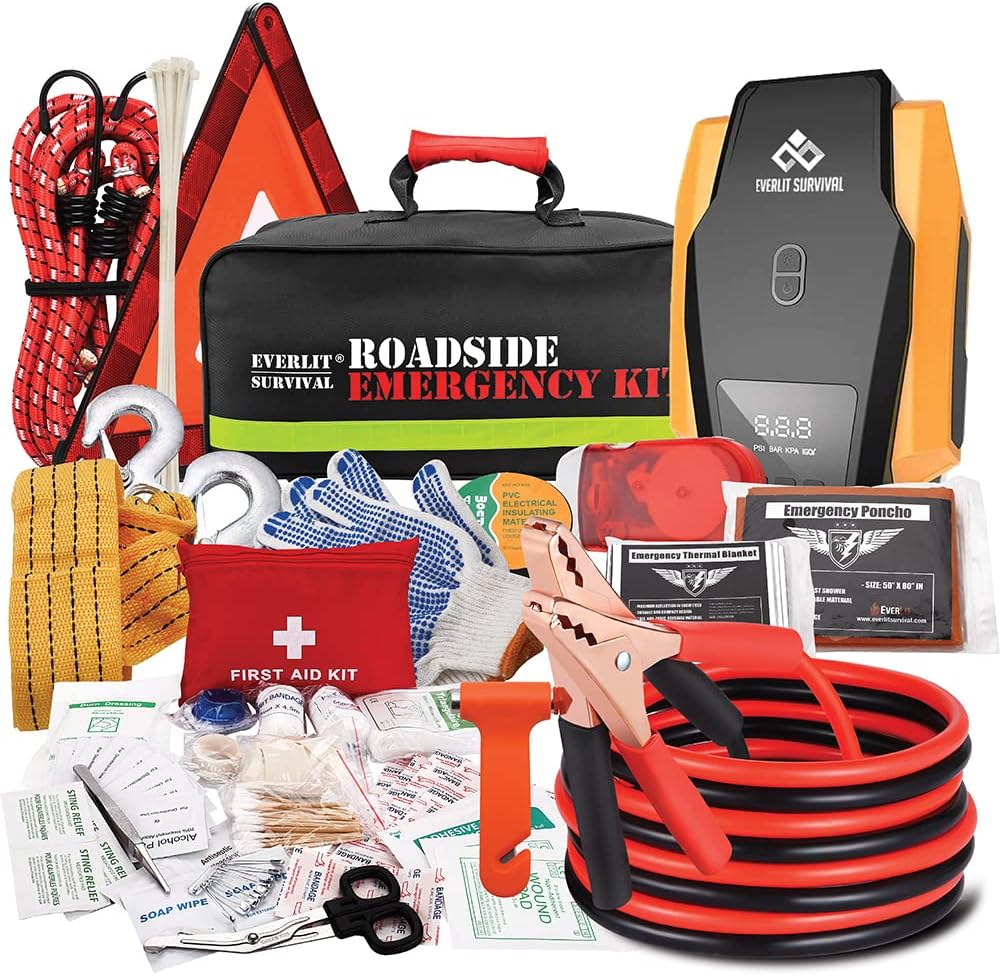
The Everlit Road Guardian emergency kit is designed for roadside breakdowns, combining essential safety gear and roadside tools in one compact bag. It includes a digital 12V auto tire inflator with preset and auto shutoff, plus 12-foot 8-gauge jumper cables to get you moving again. You also get a full 108-piece first aid kit, reflective warning tools, safety gloves, and emergency convenience items for safer travel.

CKAuto Universal Tire Repair Kit provides a complete emergency solution for fixing flat tire punctures using plug-style repairs without removing the tire from the rim. The kit includes insertion/probe tools, repair plugs, lubricant, valve accessories, and a convenient carry bag for quick roadside use. Designed for tubeless tires across cars, SUVs, trucks, motorcycles, RVs, and more, it’s easy enough for anyone to perform a proper repair.
After Installing the Spare Tire
A temporary spare is intended to get you to a place where the damaged tire can be properly inspected or replaced. It is not automatically equivalent to your normal wheel and tire.
- Check the spare’s inflation pressure as soon as possible.
- Follow the speed and distance limits printed on the spare and listed in your owner’s manual.
- Drive smoothly and allow extra space for braking and cornering.
- Have the damaged tire professionally inspected as soon as practical.
- Have the wheel fasteners checked or retorqued if your vehicle manufacturer specifies it.
Avoid assuming that every temporary spare has identical restrictions. Use the limits provided for your specific vehicle and tire.
Nighttime Flat Tire Emergency Kit
A few inexpensive items can make a nighttime breakdown much easier to manage. Keep them where you can reach them without unloading your entire vehicle beside the road.
- Flashlight or headlamp with working batteries
- Reflective safety vest
- Reflective triangles or approved warning devices
- Phone charging cable and charged power bank
- Work gloves
- Vehicle owner’s manual
- Jack and lug wrench supplied or approved for the vehicle
- Wheel chocks
- Usable spare tire or the vehicle’s approved tire-repair kit
Check the kit periodically. A flashlight with dead batteries, an expired sealant cartridge, or an underinflated spare will not help much when you need it.
[Products Worth Considering]

This tire repair kit provides fast emergency puncture repair without removing the tire from the rim, helping you get back on the road quickly. Its screw plug system is designed for punctures in both tread and sidewall and includes a complete patch plug tool set with essential accessories. A portable storage bag makes it easy to carry for cars, trucks, SUVs, motorcycles, and heavy-duty applications.
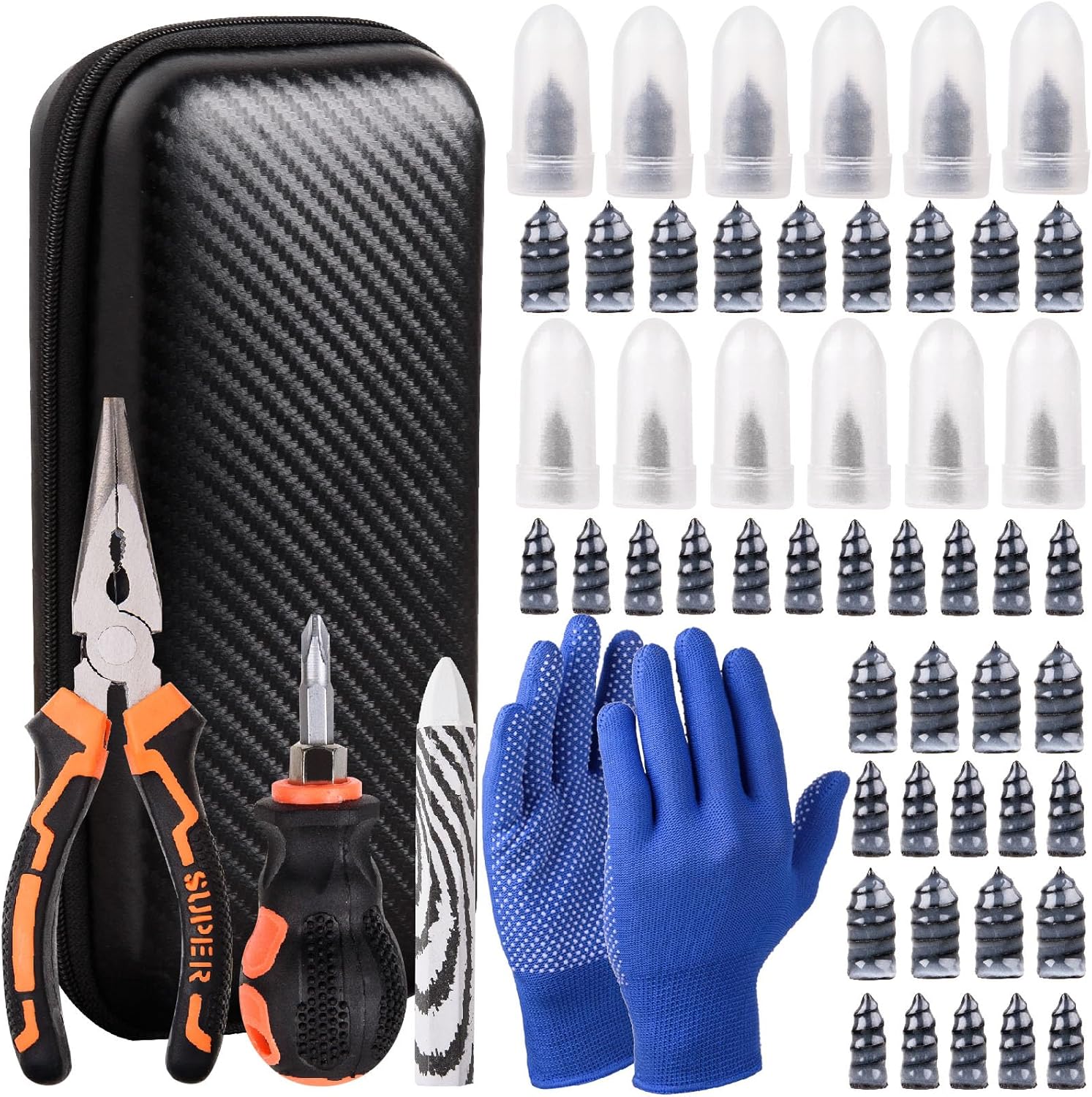
This tire sidewall puncture repair kit fixes flats fast without removing the tire, helping you get back on the road in minutes. It includes self-tapping repair nails, essential tools, gloves, and a portable storage bag for convenient roadside use. Designed for tubeless tires, it helps create a tight, leak-resistant seal for cars, motorcycles, trucks, SUVs, and ATVs.

The Dr.Roc spare tire tool kit helps you release, lower, or raise your spare tire with reliable extension tools and a lug nut wrench. It is made from rustproof automotive-grade steel and includes an organized carry case for convenient storage. Designed for compatibility with select GM models from the late 1990s through 2019, it uses upgraded extension components to install and remove spare tires with less hassle.
How to Stay Safe While Waiting in Your Car
If your vehicle is well away from the travel lane and remaining inside is the safest available option, keep your seatbelt fastened, doors locked, and hazard lights on while you wait. MassDOT roadside guidance likewise recommends remaining in the vehicle when it is safe to do so.
However, there is no single rule for every roadside situation. If you can safely exit from the side away from traffic and reach a substantially safer protected area, such as behind a guardrail, that may reduce your exposure to a vehicle that could strike the disabled car. Follow instructions from police, highway patrol, transportation officials, or the roadside technician when they arrive.
Do not stand directly in front of or behind the disabled vehicle, and do not linger next to the traffic-facing side. Stay alert to passing vehicles and people approaching your car.
If you feel threatened, keep the doors locked and windows up, contact law enforcement, and move to a well-lit, populated location only if the vehicle can be moved safely.
Frequently Asked Questions
Can I Leave My Car With a Flat Tire Overnight?
You can leave a disabled car only if it is legally parked or otherwise secured in a genuinely safe location. A highway shoulder is not a good long-term parking place. If the vehicle cannot be repaired promptly, arrange roadside assistance or towing and check local parking and towing rules.
Will the Cops Help With a Flat Tire?
Police or highway patrol may help secure a dangerous roadside scene or arrange assistance, but you should not assume an officer will change the tire. Use roadside assistance for a routine flat. Call 911 when the vehicle’s location, a crash, an injury, fire, personal threat, or another condition creates an immediate emergency.
Can I Drive 7 Minutes With a Flat Tire?
You should normally avoid driving on a completely flat tire. It can destroy the tire and damage the wheel or other vehicle components. If your current stopping position creates an immediate safety risk, moving only the minimum distance needed to reach a safer location may be the lesser danger, but the tire and wheel may be damaged in the process.
What Should I Do When I Wake Up With a Flat Tire?
Do not drive normally on it. Inspect the tire for obvious damage, check the pressure if you can do so safely, and use your spare or manufacturer-approved repair kit if appropriate. Otherwise, call roadside or mobile tire assistance. A tire that repeatedly loses air should be professionally inspected before normal driving.
Should I Change a Flat Tire on a Highway Shoulder at Night?
Only if the vehicle is completely clear of traffic, the shoulder gives you ample working space, the ground is firm and level, visibility is good, and you can perform the entire job without entering or leaning into a travel lane. When those conditions are not met, call roadside assistance.
Can I Use Tire Sealant Instead of a Spare?
Use sealant only when it is part of your vehicle’s approved repair system and the damage meets the kit’s instructions. Sealant cannot safely address every puncture, especially major sidewall damage, a shredded tire, or some wheel damage. Follow the vehicle and repair-kit instructions exactly.
Conclusion
A flat tire at night is mainly a roadside-safety problem before it is a tire problem. Keep control of the vehicle, switch on the hazards, and get as far from moving traffic as safely possible. Change the tire yourself only when you have firm level ground, enough light, the right equipment, and plenty of separation from traffic.
If any part of the situation feels unsafe, call for help instead. The tire can be repaired or replaced later; your priority is reducing your exposure to passing vehicles and getting everyone away from immediate danger.
Sources
- National Highway Traffic Safety Administration — Move Over: It’s the Law — current Move Over-law information and roadside flashing-light guidance.
- Massachusetts Department of Transportation — In Case of a Roadside Emergency — roadside positioning, hazard lights, exiting safely, and waiting for assistance.
- AAA — How to Change a Tire in 11 Easy Steps — safe pull-over procedure and tire-changing fundamentals.
- AAA Club Alliance — How to Stay Safe in a Roadside Emergency — waiting, visibility, emergency-kit, and roadside-exposure guidance.
- Michelin — How to Change a Car Tire — manufacturer-backed tire-changing, jacking, lug-nut, and spare-tire guidance.