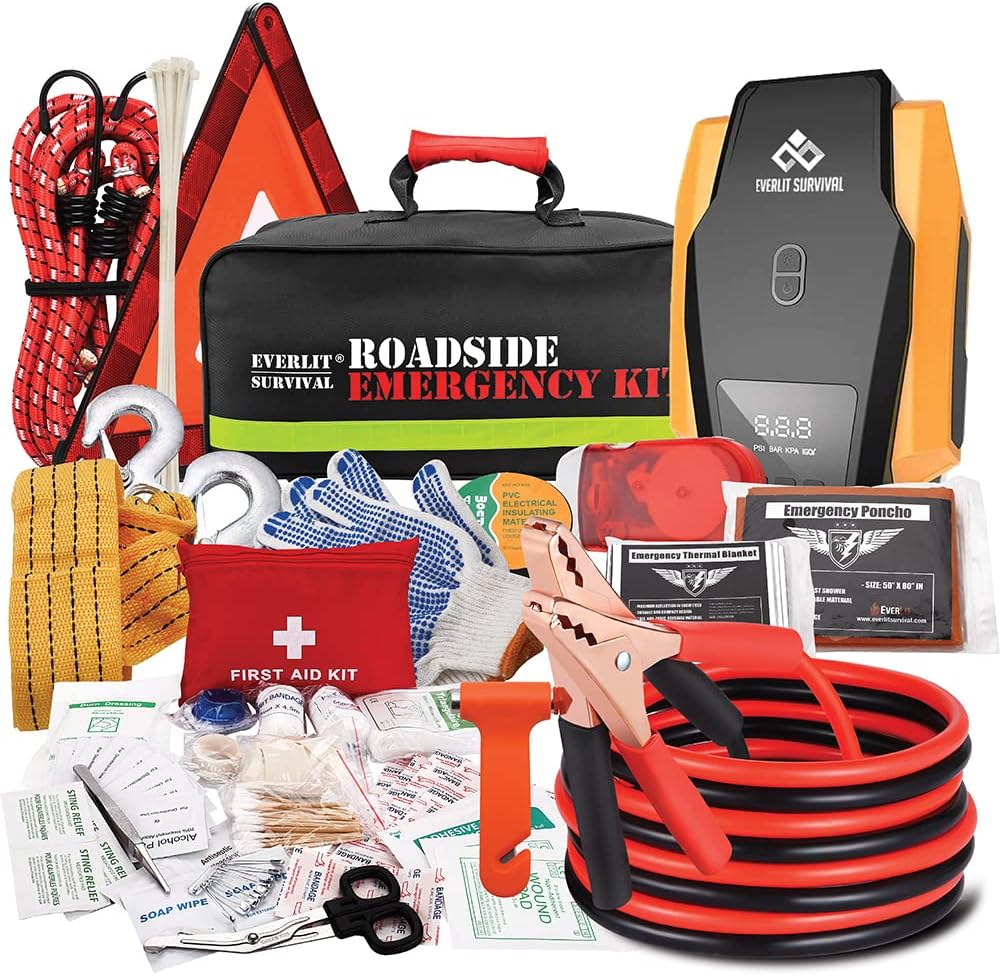
A tire blowout in your Toyota RAV4 can feel sudden and violent, but the safest response is controlled and simple: hold the wheel firmly, avoid panic braking, slow down gradually, and get completely out of traffic before inspecting anything. Once you are stopped, treat the situation as a roadside safety issue first and a tire problem second.
Quick Answer
If your RAV4 has a tire blowout, grip the steering wheel with both hands, keep the vehicle as straight as possible, avoid slamming the brakes, and let the vehicle slow gradually. Signal, move to a safe shoulder or parking area, turn on hazard lights, and call for help if changing the tire is not completely safe.
Key Takeaways
- Do not slam the brakes or jerk the steering wheel after a blowout.
- Use your hazard lights and stop only in a safe, flat area away from traffic.
- Do not drive on a flat tire; even a short distance can damage the tire and wheel.
- Only change the tire yourself if you are safely out of traffic and have the correct RAV4 tools or repair kit.
- Document the tire, road conditions, location, and any damage before filing an insurance claim.
At a Glance
| Time Required | 5–10 minutes to get safe; 20–45 minutes for roadside help or a safe tire change |
| Difficulty | Moderate; do it yourself only if the location is safe and you understand your RAV4’s jack, spare tire, or repair kit |
| Tools Needed | Phone, hazard lights, owner’s manual, tire gauge, wheel chocks if available, and either the RAV4 spare tire/jack/lug wrench or the emergency puncture repair kit equipped in your vehicle |
| Cost | Often free with roadside assistance; tire replacement, wheel repair, towing, or alignment can add cost depending on damage and coverage |
Stay Calm and Regain Control of Your RAV4
When a tire blowout happens, your first job is to keep your RAV4 stable. Hold the steering wheel firmly with both hands and keep the vehicle pointed as straight as possible. A blown front tire may pull the vehicle toward one side, while a rear-tire blowout can make the rear of the vehicle feel loose.
Avoid the instinct to stomp on the brake pedal. Tire manufacturers and driver-safety organizations advise drivers to stay calm, keep both hands on the wheel, avoid sudden braking, and slow in a controlled way after a blowout. Michelin’s blowout guidance, for example, says to keep the car as straight as possible, avoid slamming the brakes, and bring the vehicle to a safe stop after regaining control: Michelin tire blowout guidance.
Warning: Do not slam the brakes, make a sharp turn, or try to cross several lanes at once. Sudden inputs can make a blowout harder to control, especially at highway speed.
Once the vehicle feels stable, gradually ease off the accelerator. Let your RAV4 slow naturally, then use light braking only when you have control and enough room. Focus your eyes on where you want the vehicle to go, not on the damaged tire or the shoulder.
Turn On Hazard Lights and Alert Other Drivers
As soon as you can do so without losing control, activate your hazard lights. Hazard lights tell other drivers that your RAV4 is in distress and may be slowing or moving toward the shoulder.
Use your turn signal before moving lanes or pulling over. If you have warning triangles or reflective flares, use them only after you are stopped and only if you can place them without walking into traffic. Driver handbooks recommend emergency flashers, flares, or other warning devices when a disabled vehicle cannot get fully away from traffic, and they also warn that the person changing a tire must not be in the path of oncoming vehicles: California DMV emergency guidance.
Safely Pull Over to the Side of the Road
Do not stop in a travel lane unless your RAV4 cannot move at all. Aim for a wide shoulder, rest area, parking lot, exit ramp, or another flat area where you can stay well away from moving traffic.
Identify a Safe Stopping Area
Look for a place that gives you space on the passenger side of the vehicle, good visibility, and a firm, level surface. A safe stopping area should meet as many of these conditions as possible:
- Wide shoulder or parking area away from active traffic
- Flat, hard surface for the jack if you plan to change the tire
- Good lighting or visibility to other drivers
- No blind curve, hill crest, bridge, narrow shoulder, or guardrail blocking escape space
- Room for roadside assistance or a tow truck to reach you safely
Once stopped, shift into Park, set the parking brake, keep your hazard lights on, and turn off the engine or hybrid system when it is safe. Toyota’s RAV4 flat-tire procedures also emphasize stopping in a safe place on a hard, flat surface, setting the parking brake, shifting to Park, and turning on emergency flashers before changing a flat: Toyota RAV4 Hybrid flat-tire guidance.
Use Turn Signals
Activate your turn signal before moving toward the shoulder or changing lanes. Signal early enough to let other drivers understand your path. If you need to cross lanes, move one lane at a time only when it is safe.
| Action | Why It Matters |
|---|---|
| Use turn signals | Alerts drivers before you move toward the shoulder |
| Signal early | Gives nearby drivers time to slow or move over |
| Keep hazards on after stopping | Makes your disabled RAV4 easier to see |
Activate Hazard Lights
Once you are stopped, keep the hazard lights flashing until the tire is changed, the vehicle is towed, or roadside assistance tells you it is safe to turn them off. Stay inside the vehicle with your seat belt on if traffic is close and exiting would put you in danger. If you must exit, leave from the side away from traffic whenever possible.
Inspect Your Tire for Damage
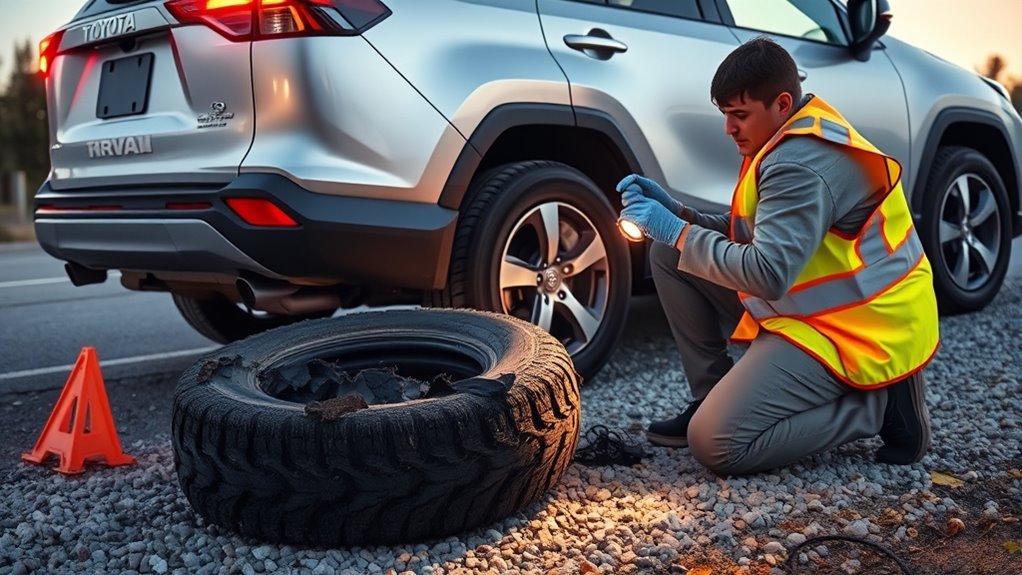
After a tire blowout, inspect the tire only when you are fully stopped in a safe area. Never crouch beside the vehicle in a narrow shoulder with traffic passing close by.
Warning: Do not keep driving on a flat tire. Toyota warns that driving even a short distance with a flat tire can damage the tire and wheel beyond repair and could result in an accident: Toyota flat-tire warning.
Visual Damage Assessment
Look for obvious damage before deciding whether the tire can be temporarily replaced or repaired. Check for:
- Punctures, cuts, tears, or shredded tread
- Sidewall damage, bubbles, or separation
- Damage to the wheel rim
- Smoke, burning smell, leaking fluid, or hanging parts
- Loose underbody panels or suspension damage near the blown tire
- Debris that may have caused the blowout
If the tire is shredded, the wheel is bent, or the vehicle sits unevenly, call roadside assistance or a tow service instead of attempting to drive.
Pressure and Tread Check
Once the immediate emergency is handled, check the other tires too. A blowout can be caused or worsened by low air pressure, worn tread, overloading, old tire age, impact damage, or neglected maintenance.
The National Highway Traffic Safety Administration recommends checking tire pressure at least once a month when tires are cold and checking tread regularly. NHTSA also notes that tread is too worn when the top of Lincoln’s head is visible during the penny test.
NHTSA reported 511 deaths in tire-related crashes in 2024 and warns that poor tire maintenance can lead to a flat tire, blowout, or tread separation.
Should You Change the Tire Yourself?
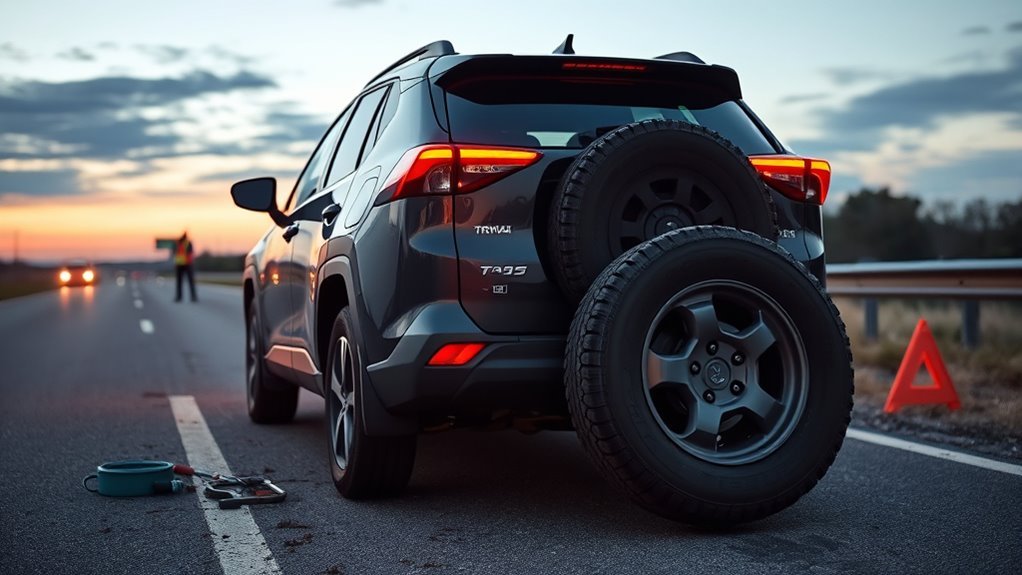
You should change the tire yourself only if the area is safe, level, well away from traffic, and you have the correct equipment. Your personal comfort matters too. If you are unsure, shaken up, injured, missing tools, or on a busy highway, call for help.
Before attempting a tire change, confirm that:
- Your RAV4 is on a hard, flat surface.
- The parking brake is set and the vehicle is in Park.
- Your hazard lights are on.
- You can work on the side away from traffic.
- You have the owner’s manual, jack, lug wrench, and spare tire or the correct repair kit.
- The spare tire or repair kit is usable and properly inflated or functional.
Pro Tip: Before long trips, open the cargo area and confirm what your specific RAV4 has: a spare tire, jack, lug wrench, wheel lock key if applicable, or an emergency puncture repair kit. Finding out during a blowout is too late.
RAV4 Spare Tire vs. Emergency Puncture Repair Kit
Not every RAV4 setup should be handled the same way. Some Toyota RAV4 and RAV4 Hybrid configurations include a spare tire, while some RAV4 configurations without a spare use an emergency tire puncture repair kit. Toyota’s owner information for a 2025 RAV4 without a spare explains that the vehicle uses an emergency tire puncture repair kit for certain tread punctures: Toyota RAV4 puncture repair kit guidance.
A puncture repair kit is not the same as a spare tire. It may help with a small puncture in the tread area, but it is not meant for a shredded tire, large sidewall tear, damaged wheel, or blowout where the tire has come apart. In those cases, call for towing or roadside assistance.
Note: If your RAV4 uses a compact spare, treat it as temporary. Follow the speed, distance, pressure, and usage limits printed on the spare tire and in your owner’s manual.
[Products Worth Considering]

Yieokei Tesla jack pads are molded rubber lifting pucks designed for 2016-2026 Model 3/Y/S/X, including Juniper, to fit securely in the jack hole. They cushion the underframe and help position the jack precisely at the factory jack points to reduce risk of battery, paint, or chassis damage. The set also includes a tire repair tool kit for emergency roadside fixes and comes with a portable storage case to keep everything organized.

Accurately measure tire tread depth with a calibrated gauge marked from 0 to 1 inch in 1/32 inch increments. The color-coded bar helps you quickly identify tread condition ranges, supporting safe driving for trucks, motorcycles, automobiles, and passenger vehicles.

This spare tire tool kit is designed for the 2004 to 2018 Ford F-150 to help you loosen and tighten wheel lug nuts and manage the spare tire and provided jack functions from underneath the vehicle. It includes the lug nut wrench and extension pieces plus a convenient storage carrying case for organized transport. The jack itself is not included.
When to Call for Help Instead of Changing the Tire Yourself
Call roadside assistance, a tow service, or emergency services when changing the tire would put you or other drivers at risk. A safe tire change is never worth stepping into traffic.
| Situation | Best Action |
|---|---|
| Busy highway or narrow shoulder | Call roadside assistance or a tow truck |
| Rain, snow, darkness, poor visibility, or soft ground | Wait for professional help in a safer location |
| Sidewall blowout, shredded tire, bent wheel, or fluid leak | Do not drive; request a tow |
| You feel injured, dizzy, shaken, or unsafe | Stay safe and call for help |
If your RAV4 is blocking traffic, if there was a crash, or if anyone may be injured, call emergency services. If the vehicle is safely off the road but cannot be driven, call roadside assistance or your insurance provider’s roadside number.
[Products Worth Considering]

The Dr.Roc spare tire tool kit helps you release, lower, or raise your spare tire with reliable extension tools and a lug nut wrench. It is made from rustproof automotive-grade steel and includes an organized carry case for convenient storage. Designed for compatibility with select GM models from the late 1990s through 2019, it uses upgraded extension components to install and remove spare tires with less hassle.

This 15-inch tire spoons kit makes tire removal and installation easier with added leverage, reducing time and effort for everyday repairs. It includes tire spoons, rim protectors, a valve tool, and valve cores/caps, helping protect rims and streamline deflation and re-sealing. Built with durable hardened steel and a non-slip ergonomic grip for confident use on motorcycles, dirt bikes, ATVs, and lawn equipment.

Measure tire tread depth quickly and accurately with this LUMITECO dial gauge that reads in 1/32" increments up to 14/32". The color-coded green/yellow/red zones make it easy to judge tire wear and know when replacement is needed. A rugged, compact design with a protective pouch helps keep the gauge ready for use on cars, trucks, motorcycles, and more.
How to Change a RAV4 Tire Safely
Only follow these steps if the location is safe and your RAV4 has the correct spare tire and tools. Always use the exact jack points and instructions in your owner’s manual.
- Park safely: Stop on a hard, flat surface away from traffic.
- Secure the vehicle: Shift to Park, set the parking brake, turn on hazards, and turn off the engine or hybrid system.
- Check your tools: Confirm you have the jack, lug wrench, spare tire, wheel lock key if needed, and owner’s manual.
- Loosen lug nuts slightly: Break them loose before lifting the vehicle, but do not remove them yet.
- Lift only at the correct jack point: Use the RAV4 jack exactly as shown in the manual. Never place any part of your body under the vehicle.
- Install the spare: Remove the damaged wheel, mount the spare, and hand-tighten the lug nuts.
- Lower and tighten: Lower the vehicle fully, then tighten the lug nuts in a star pattern.
- Drive cautiously: Go directly to a tire shop or mechanic. A spare or repair kit is a temporary solution, not a permanent repair.
Warning: Never crawl under a vehicle supported only by a jack. If the vehicle shifts, the jack can fail and cause serious injury.
[Products Worth Considering]

This ecocstm ratchet wrench is designed to make emergency and routine tire changes faster with a 360° rotating head and quick forward/reverse switching. The extended handle provides extra leverage to reduce effort and hand fatigue, while the adapter helps fit many scissor jacks on cars, SUVs, trucks, and vans. Built for reliable performance with durable construction, it’s a practical travel essential for on-the-road preparedness.

This compact capsule-style tire repair kit helps you quickly fix punctures and plug flats with minimal effort. The rugged stainless steel shell protects the contents for reliable roadside use, while the simple plug assembly makes repairs fast and tool-free. Suitable for motorcycles, cars, ATVs, UTVs, and even mountain bikes.
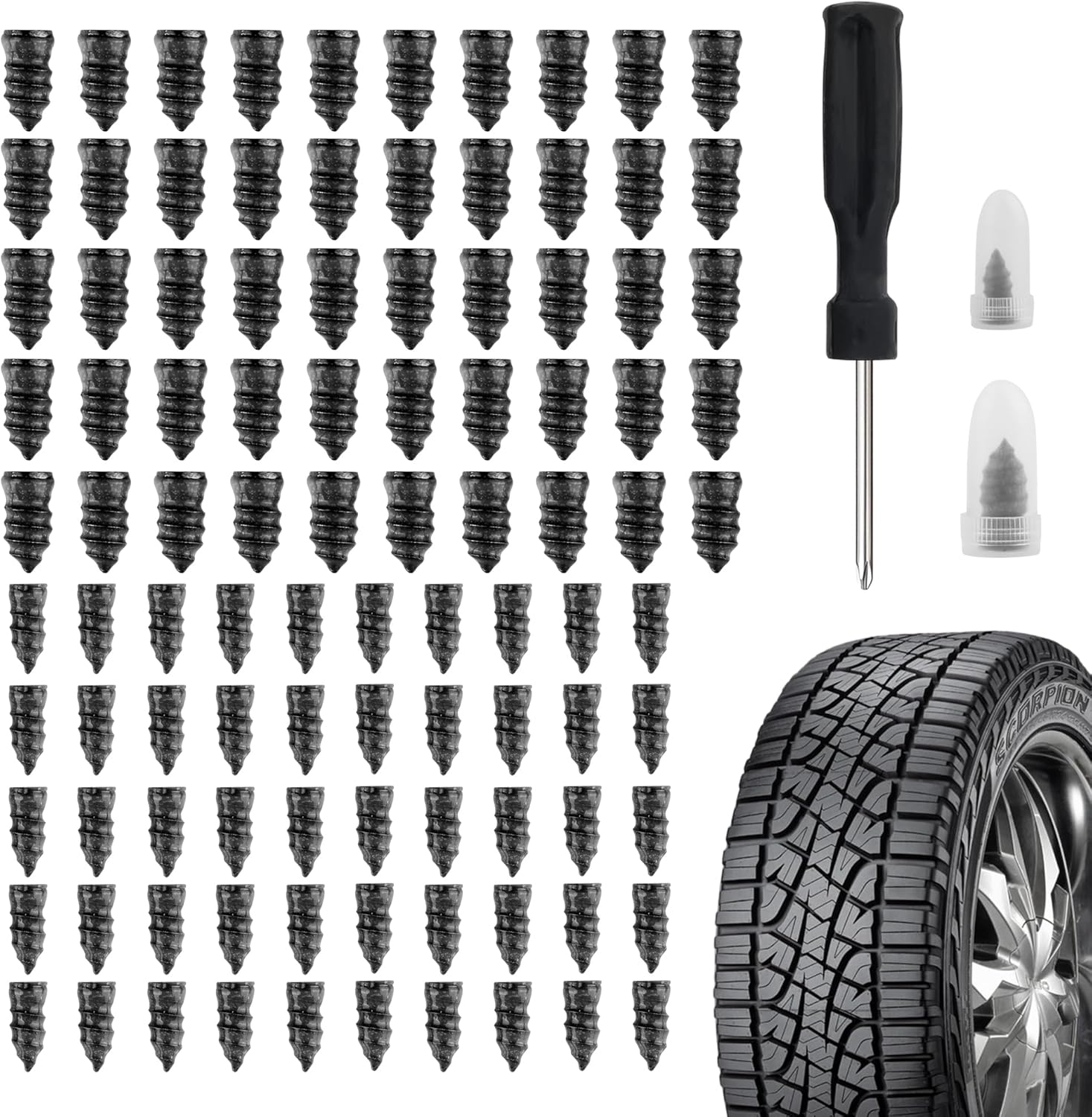
Salior’s tire plug kit provides a fast, reliable self-service fix for punctured or leaking tires without the need for flaring tools. Choose the correct plug size, then screw the nail into the puncture using the included screwdriver for an enhanced seal. The set is durable and convenient for on-the-go maintenance across multiple vehicle types.
How to Document a Tire Blowout for Insurance
Documenting a tire blowout can help your insurance claim, especially if the blowout caused wheel damage, body damage, a crash, towing, or medical costs. The National Association of Insurance Commissioners recommends collecting scene details such as time, date, exact location, weather, road conditions, witness information, and photos or a diagram when filing an auto claim: NAIC auto claim guidance.
When it is safe, collect:
- Photos of the damaged tire from multiple angles
- Photos of the wheel, fender, bumper, underside, and any road debris
- Your RAV4’s position after stopping
- Time, date, exact location, road surface, weather, and traffic conditions
- Witness names and contact information, if available
- Police report or incident number, if a crash occurred
- Towing, tire replacement, wheel repair, and inspection receipts
- Medical notes if anyone felt pain, dizziness, or injury symptoms afterward
Do not admit fault or argue about liability at the scene. Give accurate facts to police, your insurer, and roadside assistance.
Prioritize Your Safety and Health After a Blowout
After a tire blowout in your RAV4, your first priority is the safety of everyone in and around the vehicle. Keep your hazard lights on, stay away from traffic, and avoid standing between your RAV4 and moving vehicles.
If you feel pain, dizziness, numbness, chest discomfort, headache, or confusion after the incident, seek medical care. Adrenaline can make injuries feel less serious at first, especially if the blowout caused a hard swerve, curb impact, or crash.
If children, older adults, pets, or passengers with mobility limitations are in the vehicle, do not rush them out into an unsafe shoulder. It may be safer to remain belted inside the vehicle until help arrives, depending on traffic, fire risk, and the vehicle’s location.
Follow Up With a Professional Mechanic for Inspection
Even if your RAV4 seems fine after the spare is installed, schedule a professional inspection. A blowout can damage more than the tire.
Ask the mechanic to check:
- Wheel rim damage or cracks
- Suspension and steering components
- Wheel alignment
- Brake lines, ABS wiring, and nearby sensors
- TPMS sensor condition
- Undercarriage, fender liner, and body panels
- Remaining tire tread depth, pressure, age, and uneven wear
Keep the inspection report and receipts. They can help with warranty questions, insurance claims, and future tire decisions.
How to Prevent Another Tire Blowout
You cannot prevent every road hazard, but routine tire care lowers your risk. NHTSA says poor tire maintenance, including underinflation and failure to rotate tires, can lead to flats, blowouts, or tread separation.
Make these checks part of your RAV4 routine:
- Check tire pressure monthly: Use the pressure listed on the driver-side door label or in your owner’s manual, not the maximum number on the tire sidewall.
- Check tires when cold: NHTSA recommends checking pressure when the vehicle has not been driven for at least three hours.
- Inspect tread depth: Use treadwear indicators or the penny test. Replace tires when tread is worn.
- Look for sidewall damage: Cracks, bulges, cuts, or exposed cords need professional inspection.
- Rotate and align: Follow Toyota’s maintenance schedule and fix pulling, vibration, or uneven wear quickly.
- Avoid overloading: Do not exceed the load limit on the Tire and Loading Information Label.
- Respect TPMS limits: The tire pressure warning system helps, but it is not a substitute for monthly pressure checks.
Frequently Asked Questions
What are the 5 steps in handling a blowout?
Grip the steering wheel firmly, avoid slamming the brakes, let the RAV4 slow gradually, signal and move to a safe area, then turn on hazard lights and decide whether to call for help or change the tire safely.
What two steps help keep control after a tire blowout?
Hold the steering wheel firmly with both hands and avoid sudden braking or sharp steering. Keep the RAV4 pointed straight, then slow gradually once the vehicle is stable.
Can I drive my RAV4 after a tire blowout?
Do not drive on the blown tire. If a safe spare tire is installed or a repair kit is used correctly for a small tread puncture, drive only as directed by your owner’s manual and go straight to a tire shop or mechanic.
Should I change a RAV4 tire on the highway shoulder?
Only if the shoulder is wide, flat, stable, well-lit, and far from traffic. If traffic is close, visibility is poor, or the vehicle is not on a hard flat surface, call roadside assistance instead.
What should I photograph after a tire blowout?
Photograph the damaged tire, wheel, vehicle position, road debris, road surface, weather conditions, body damage, and any related receipts or tow paperwork. These details can support an insurance claim.
Conclusion
After a tire blowout in your RAV4, stay calm, hold the wheel firmly, avoid panic braking, and move to a safe area before doing anything else. Once stopped, use hazard lights, inspect the tire only if it is safe, and call for help if traffic, weather, injury, or vehicle damage makes a tire change risky. Document the incident, get the vehicle inspected, and prevent future blowouts with regular tire pressure, tread, rotation, and alignment checks.
Sources
- National Highway Traffic Safety Administration — TireWise — tire maintenance, pressure checks, tread checks, TPMS limits, and tire-related crash data
- Toyota Owners — 2025 RAV4 Hybrid flat-tire guidance — safe stopping, parking brake, Park, emergency flashers, and spare tire procedure
- Toyota Owners — 2025 RAV4 emergency puncture repair kit guidance — RAV4 configurations without a spare tire
- Michelin — Tire blowout safety guidance — steering control, avoiding hard braking, and stopping safely
- California DMV — Handling emergencies — emergency flashers, warning devices, and flat-tire roadside safety
- National Association of Insurance Commissioners — Auto claim guidance — documenting time, location, witnesses, road conditions, and photos