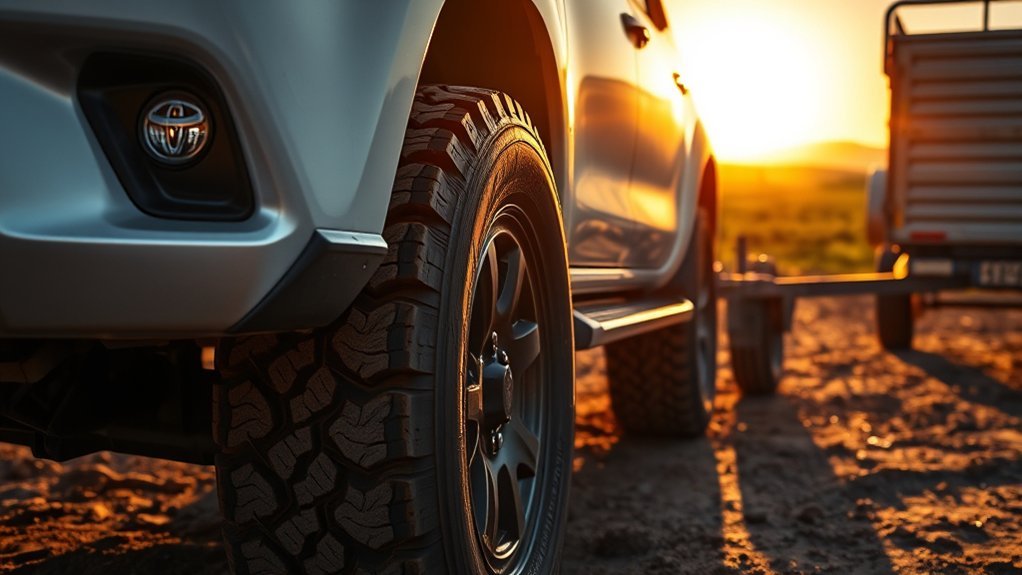
If you tow with a Toyota Hilux, tire choice matters just as much as engine power or towbar rating. The safest setup is not simply “the toughest tire you can buy.” It is the tire that matches your Hilux tire placard, load index, wheel rating, towing weight, trailer tire placard, and local brake rules.
Quick Answer
For regular Toyota Hilux towing, choose Hilux tires that meet or exceed the vehicle placard’s size, load index, and speed rating. LT-rated tires can add sidewall strength for heavy loads, but Load Range E is only right when it matches your wheels and load needs. For the trailer itself, use properly rated ST trailer tires.
Key Takeaways
- Start with the Hilux tire placard, owner’s manual, and compliance plate before changing tire size or load range.
- LT tires are often a strong choice for a tow vehicle, but trailer tires should usually be ST tires designed for trailer axles.
- Never exceed GVM, GCM, axle ratings, towbar rating, wheel pressure rating, tire load rating, or trailer ATM/GTM.
- Check cold tire pressure, tread, sidewalls, valve stems, and tire age before every towing trip.
- For Australian towing, trailers over 750kg GTM need service brakes, and trailers over 2,000kg GTM need brakes on all wheels plus emergency breakaway braking.
At a Glance
| Time Required | 10–20 minutes for a pre-trip tire check; longer if weighing the loaded vehicle and trailer |
| Difficulty | Easy for checks; moderate for choosing replacement tires |
| Tools Needed | Accurate tire pressure gauge, tread depth gauge, flashlight, tire placard, owner’s manual, and access to a public weighbridge if loaded |
| Cost | Mostly free for checks; tire replacement varies by size, brand, load rating, and terrain type |
Why Tires Matter When Towing With a Toyota Hilux

Towing adds weight to the rear axle, increases heat in the tires, and changes how the Hilux steers, brakes, and reacts to bumps or crosswinds. Toyota’s towing guidance warns that towing affects handling, performance, braking, durability, and fuel consumption, so the tire setup has to be treated as part of the whole towing system.
The best tire is one that can safely carry the load at the correct cold inflation pressure. Start with the tire and loading information label, the owner’s manual, and the vehicle compliance plate. The tire size, load index, speed rating, and pressure recommendations are not decoration; they are the baseline for safe towing.
Warning: Do not exceed the Hilux’s Gross Vehicle Mass (GVM), Gross Combination Mass (GCM), axle ratings, towbar rating, tire load rating, or wheel pressure rating. The lowest-rated part of the setup becomes the limit.
Hilux Tires vs Trailer Tires: Know the Difference
There are two separate tire decisions when towing: the tires on the Hilux and the tires on the trailer. They do different jobs.
- Hilux tires carry the vehicle, passengers, cargo, accessories, fuel, and tow ball download. For frequent towing, many owners choose LT tires or higher-load all-terrain/highway tires because they are built for heavier vehicle loads than standard passenger-car tires.
- Trailer tires carry the trailer’s load. ST means Special Trailer, and ST tires are designed for trailer use, not for steering or driving axles on cars or light trucks.
Do not assume a tire is suitable just because it “looks heavy duty.” Read the sidewall and compare it with the vehicle or trailer placard. The size, load index, speed rating, and maximum load all matter.
Note: If you change tire size, load range, or wheel size, confirm clearance, speedometer effect, wheel load rating, wheel pressure rating, and legal compliance before towing.
How to Choose the Right Hilux Tires for Towing
Use this process before buying new tires for a Toyota Hilux that tows:
- Check the tire placard and owner’s manual. Confirm the original tire size, recommended cold pressures, load index, and speed rating.
- Confirm the real towing load. Add passengers, canopy, drawers, bull bar, tools, camping gear, fuel, water, and tow ball download. These all count toward vehicle load.
- Check axle loads. A trailer can push significant weight onto the rear axle. The rear axle rating can be exceeded even when the total vehicle weight looks acceptable.
- Match or exceed the required load index. The tire load index tells you the maximum weight each tire can carry when properly inflated.
- Choose a construction that suits your use. LT-rated tires can be a smart upgrade for regular towing, rough roads, or heavy accessories, but they may ride firmer than passenger-oriented tires.
- Do not choose Load Range E blindly. Load Range E can be useful for heavy loads, but it must suit your wheel, tire size, vehicle setup, and required pressure.
- Use the correct pressure. Inflate tires cold according to the vehicle manufacturer’s towing/load guidance or a tire professional’s load-inflation advice. Do not use sidewall maximum pressure as your default target.
Pro Tip: If your Hilux is fully loaded and towing near its limit, visit a weighbridge with the trailer attached. Weigh the vehicle, trailer, and axle groups so you know the real numbers instead of guessing.
[Products Worth Considering]
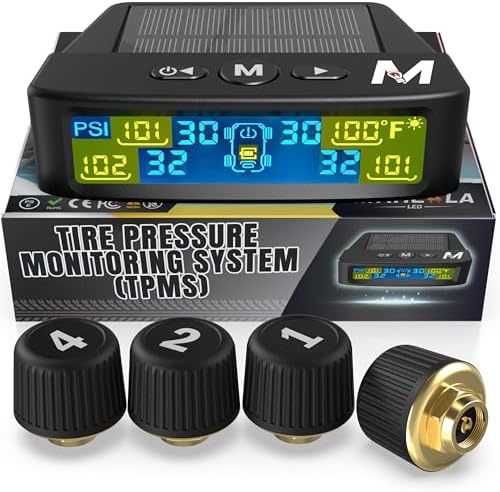
Marcala’s TPMS set of four sensors helps you monitor tire pressure and temperature in real time while driving, with updates every second. The bright color LCD uses auto-dimming for easy viewing, powered by dual solar and USB charging, and offers six alarm modes. Built for trailers, RVs, campers, trucks, and towing setups, the sensors support monitoring 1-4 wheels up to 98 PSI with IP67 waterproof protection.

The SAFELIFE dial tire tread depth gauge measures tread depth in 1/32 inch increments with clear, easy-to-read 2-inch dial face. Color zones using a traffic light system help you quickly judge whether tread is low, marginal, or ample for safer driving. Built with a durable zinc cast body and a metal detect probe for precise, comfortable use across cars, motorcycles, trucks, and buses.

Monitor tire tread wear with a smart, color-coded depth gauge that shows clear condition ranges at a glance. The bar is range marked for fast, easy readings, helping you maintain safer traction and performance. Each gauge is portable with a pocket clip, and the set includes 20 units for daily use and sharing.
Essential Specifications for Toyota Hilux Towing Tires
When comparing tires, focus on the specifications that affect load and stability:
- Tire size: Must be compatible with the Hilux, wheel, suspension clearance, and local road rules.
- Load index or load rating: Must meet or exceed what the vehicle needs when loaded.
- Speed rating: Must be suitable for legal road speeds and the vehicle requirement.
- Construction: LT tires are often preferred for towing and heavy-duty use, while passenger tires may not provide the same load margin.
- Cold inflation pressure: Must match the load and manufacturer guidance.
- Tread pattern: Highway tires are quieter and efficient; all-terrain tires add off-road strength but can add noise and rolling resistance.
- Age and condition: Cracks, bulges, puncture repairs, irregular wear, or old rubber can make a tire unsafe even when tread looks acceptable.
Poor tire maintenance, underinflation, and overloading are major contributors to tire failure. Treat tire pressure and load checks as part of every towing trip, not an occasional service item.
[Products Worth Considering]

Secure your vehicle during transport with this 4-pack of heavy-duty tire tie down straps designed for trailers and hauling. The ratchet system with flat hooks and D-rings helps you tension the straps quickly, while the wheel-friendly design protects tires. With high break strength and corrosion-resistant hardware, these straps provide reliable, confidence-inspiring tie-down security for cars, trucks, and UTVs.

Accurately measure tire tread depth with a calibrated gauge marked from 0 to 1 inch in 1/32 inch increments. The color-coded bar helps you quickly identify tread condition ranges, supporting safe driving for trucks, motorcycles, automobiles, and passenger vehicles.

Measure tire tread depth quickly and accurately with this LUMITECO dial gauge that reads in 1/32" increments up to 14/32". The color-coded green/yellow/red zones make it easy to judge tire wear and know when replacement is needed. A rugged, compact design with a protective pouch helps keep the gauge ready for use on cars, trucks, motorcycles, and more.
How to Choose the Right Trailer Tires
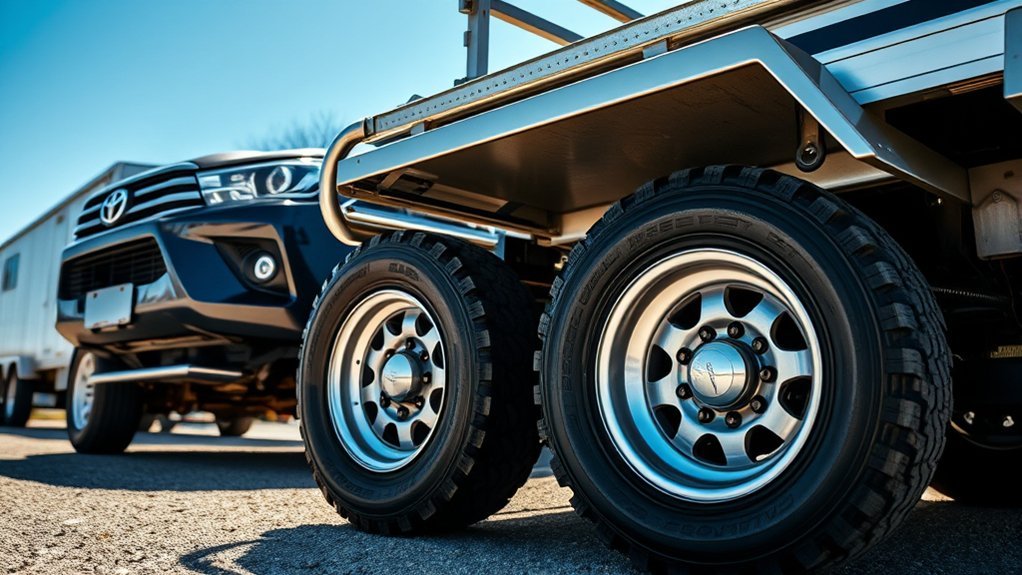
Trailer tires are not chosen the same way as Hilux tires. A trailer tire must carry the trailer’s rated load and survive long periods of sitting, heat, and straight-line highway use.
Look for the trailer’s tire placard or compliance plate. It should identify the recommended tire size, load rating, speed rating, and cold inflation pressure. For most road trailers, ST tires are the correct category because they are built for trailer service.
Before buying trailer tires, check:
- ATM and GTM: Aggregate Trailer Mass is the maximum loaded trailer weight; Gross Trailer Mass is the load supported by the trailer wheels when coupled.
- Load capacity per tire: The combined tire capacity must safely cover the loaded trailer axle load.
- Speed rating: The tire must be rated for the speeds you will actually drive.
- Wheel rating: The wheel must be rated for the load and pressure required by the tire.
- Age: Trailer tires often age out before they wear out because trailers may sit unused for long periods.
Warning: Never mix random tire sizes or load ratings on a multi-axle trailer. Uneven tire diameter or pressure can overload one tire and increase heat buildup.
[Products Worth Considering]

This tire inflator with pressure gauge delivers long-lasting performance with a durable rubber-protected gauge and sturdy build. The longer hose and 360 swivel air chuck help you seal the valve securely and keep your hands free while measuring, inflating, or deflating. It’s battery-free for reliable use and provides ±2 PSI accuracy in the mid-range for most typical tires, with universal compatibility for 1/4 NPT compressor outputs.
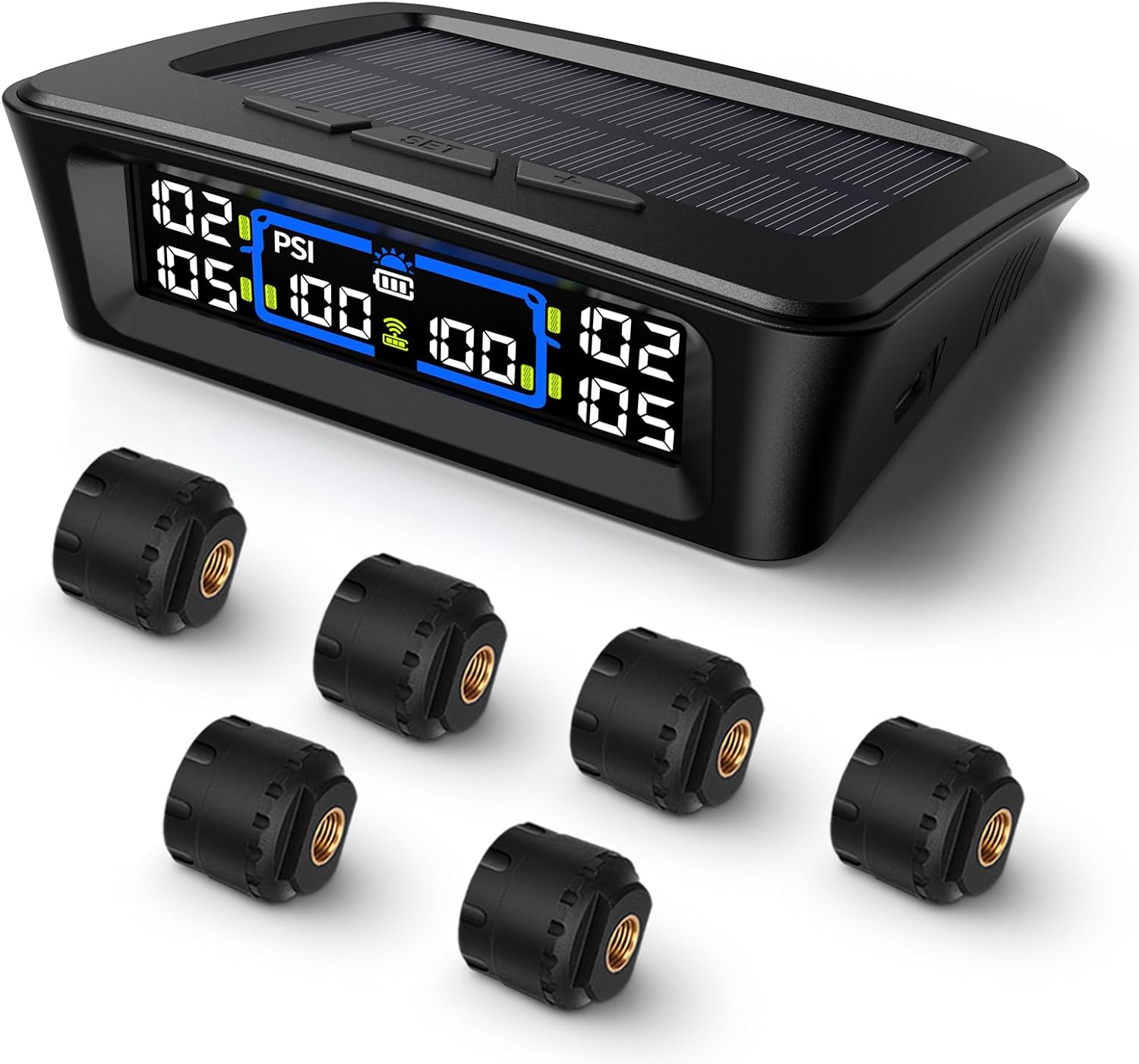
The Tymate TM12 RV TPMS delivers real-time tire pressure and temperature monitoring with a stable 433Hz display for safer long-distance driving. It supports simultaneous monitoring across vehicle and trailer zones, includes six alarm modes for pressure, temperature, leakage, battery, and signal loss, and features easy DIY installation with auto calibration. Power is supplied via USB-C charging or solar recharging, with a wide 0–144 PSI range and up to 50 ft signal coverage for RVs and towable trailers.
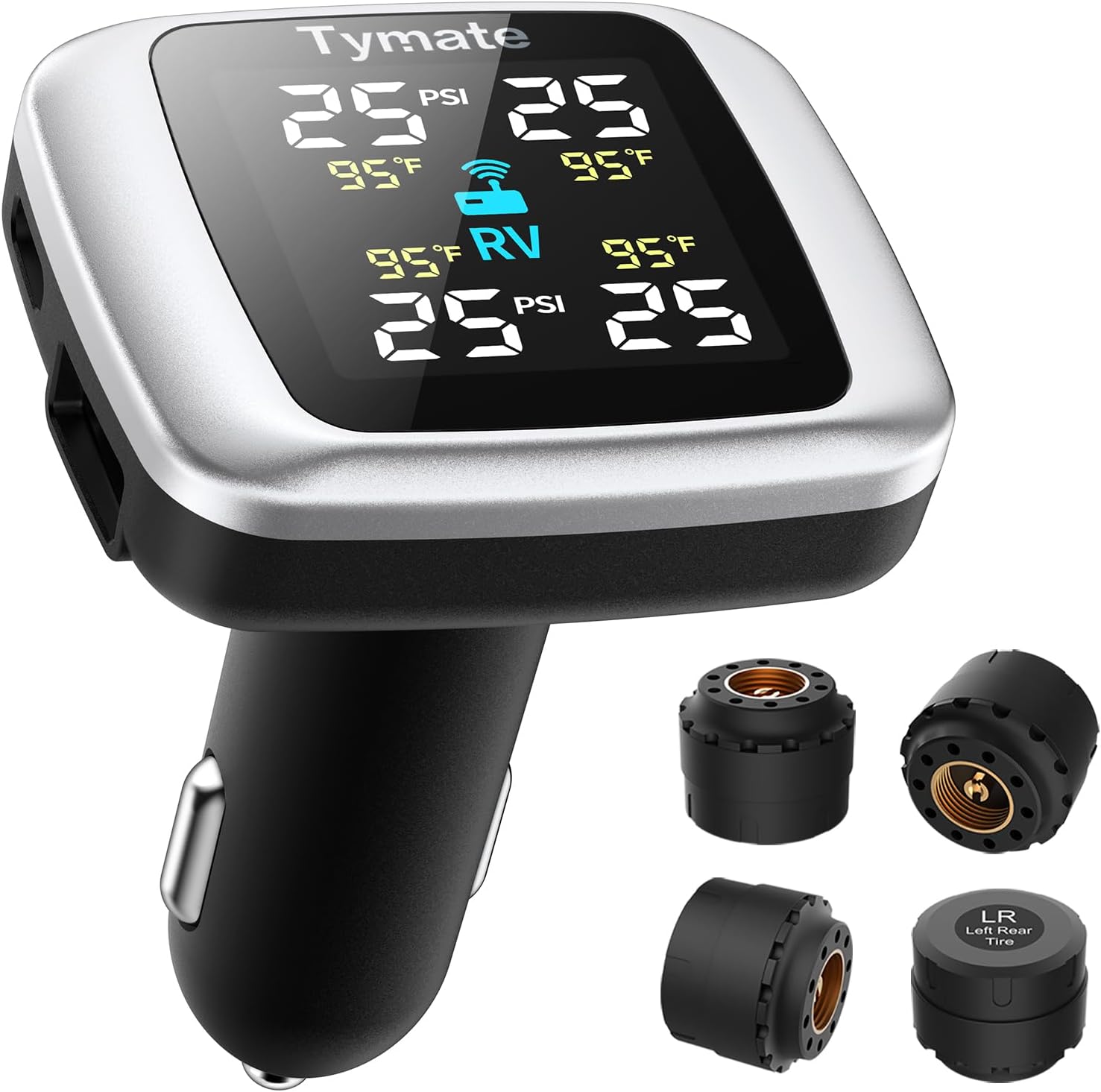
Tymate TM7 is a wireless tire pressure monitoring system that delivers real-time pressure and temperature readings for safer driving. It includes four external sensors, a bright color LCD display with adjustable backlight, and six alarm modes for high/low pressure, fast leakage, high temperature, and sensor signal or battery issues. The system covers a wide 0–144 PSI range and plugs into your vehicle’s cigarette lighter socket for quick DIY setup.
Towing Capacity, GVM, GCM, and Brakes
Towing capacity is not just the advertised maximum braked towing figure. You must also check the loaded vehicle weight, trailer weight, axle loads, ball load, and combined weight.
For example, an Australian-market 2017 Toyota Hilux SR5 4×4 Double Cab Pickup is commonly listed with a GVM of 3000kg and GCM of 5850kg. That means the loaded Hilux and loaded trailer together must stay within the GCM, and the Hilux itself must stay within GVM. Your exact vehicle may differ, so check your own compliance plate and owner’s manual.
In Australia, trailer braking requirements are based on Gross Trailer Mass (GTM). Trailers up to 750kg GTM do not require brakes. Trailers over 750kg GTM need an efficient service braking system. Over-run brakes may be used up to 2,000kg GTM. Above 2,000kg GTM, brakes must operate on all wheels, and the trailer needs an emergency breakaway braking system that applies if the trailer disconnects.
Note: Towing laws vary by country and state. Always check the rules where the vehicle and trailer are registered and where you will be driving.
How to Maintain Tires for Safe Towing
Good towing tires still fail if they are underinflated, overloaded, damaged, or too old. Use this maintenance routine before each trip:
- Check pressure cold. Measure pressure before driving, when the tires have been parked long enough to cool.
- Check all tires. Include the Hilux, trailer, and spare tires.
- Inspect tread depth. Replace tires that are worn to the legal limit or the treadwear indicators.
- Look for sidewall damage. Cracks, cuts, bulges, exposed cords, or impact bubbles mean the tire needs professional inspection or replacement.
- Read the date code. Tire age is shown in the Tire Identification Number. The last four digits normally show the week and year of manufacture.
- Watch for uneven wear. Feathering, cupping, or one-sided wear can indicate alignment, suspension, bearing, pressure, or loading problems.
- Rotate when appropriate. Follow the Hilux owner’s manual. If rotation is recommended, many tire-safety guides suggest about every 5,000–8,000 miles, or sooner if uneven wear appears.
- Protect parked trailer tires. UV light, heat, and long storage can accelerate aging. Tire covers and correct storage pressure can help.
Do not rely on tread depth alone. A tire can have plenty of tread and still be unsafe because of age, internal damage, or sidewall cracking.
Common Mistakes to Avoid When Towing With Your Hilux
Choosing Tires by Ply Rating Alone
Modern “ply rating” or “10-ply rated” language does not mean the tire literally has ten plies. It is a strength/load category. Use the actual load index, load range, size, and pressure requirement instead of relying only on the marketing phrase.
Using Passenger Tires Where Load-Rated Tires Are Needed
Passenger tires can ride comfortably, but they may not offer the load margin or sidewall control you want for heavy towing. If you tow often, carry accessories, or travel on rough roads, ask for a tire that meets the Hilux’s load needs with a suitable construction for towing.
Confusing ST and LT Tires
ST tires are for trailers. LT tires are for light trucks and utes. Do not install ST tires on the Hilux, and do not assume LT tires are the best choice for a trailer unless the trailer manufacturer specifically allows that setup.
Ignoring Weight Distribution
Bad weight distribution can create sway, reduce steering grip, and overload the rear axle or trailer tires. Keep heavy cargo low and close to the trailer axle group, follow the trailer manufacturer’s ball-load guidance, and confirm the loaded setup at a weighbridge when possible.
Running the Wrong Pressure
Underinflation increases heat and flex. Overinflation can reduce grip and cause harsh ride or uneven wear. Use the correct cold pressure for the actual load, and check it before towing, not after the tires are hot.
Pre-Trip Tire Safety Checklist
- Confirm Hilux and trailer tires match their placards.
- Check Hilux, trailer, and spare tire pressure while cold.
- Inspect tread, sidewalls, valve stems, and visible puncture repairs.
- Check wheel nuts and look for cracked or damaged wheels.
- Confirm the trailer is level when coupled.
- Verify the trailer load is secure and balanced.
- Confirm trailer brakes, breakaway system, lights, and safety chains work.
- Check mirrors and visibility before entering traffic.
- Recheck tire temperature and pressure during long stops on hot days or heavy hauls.
Frequently Asked Questions
Can I use regular passenger tires for towing with my Hilux?
Only if they meet the Hilux’s required size, load index, speed rating, and load needs for your actual towing setup. For regular heavy towing, LT-rated or higher-load tires are often a better choice because they are built for light trucks and heavier service.
Do I always need Load Range E tires on a Toyota Hilux?
No. Load Range E can be useful for heavy loads, but it is not automatically correct for every Hilux, wheel, tire size, or towing job. Match the tire to the placard, wheel rating, axle load, and inflation requirements.
What is the difference between ST and LT tires?
ST means Special Trailer and is designed for trailer axles. LT means Light Truck and is designed for utes, pickups, vans, and light trucks. For a Hilux tow vehicle, LT tires may be suitable. For the trailer, use the trailer placard and normally choose ST tires.
How does tire age affect towing safety?
As tires age, rubber and internal components can degrade even if tread depth still looks good. Heat, sunlight, storage, underinflation, and heavy loads can speed up aging. Check the date code and replace tires that are cracked, damaged, losing pressure, or beyond the tire or vehicle manufacturer’s age guidance.
How often should I rotate my towing tires?
Follow the Hilux owner’s manual and tire manufacturer’s guidance. If rotation is recommended, a common interval is around 5,000–8,000 miles, or sooner if you notice uneven wear. Trailer tire rotation depends on trailer design, wear pattern, and manufacturer guidance.
Which tire brands are good for towing with a Hilux?
Choose by specification first, brand second. Look for reputable brands that offer the correct size, load index, speed rating, construction, and terrain type for your Hilux. Michelin, Goodyear, Bridgestone, BFGoodrich, Yokohama, Toyo, and Cooper all make tires that may suit towing, depending on the exact size and load requirement.
Conclusion
The safest Toyota Hilux towing tire setup starts with the numbers: tire placard, load index, cold pressure, GVM, GCM, axle ratings, towbar rating, and trailer ATM/GTM. LT tires can be a strong choice for the Hilux when you tow often, but they are not a shortcut around proper load calculations. For the trailer, use correctly rated trailer tires, usually ST tires, and keep them inflated, inspected, and age-checked.
Before any long towing trip, check every tire on the Hilux, trailer, and spares. A few minutes with a pressure gauge and a careful look at the sidewalls can prevent a dangerous failure on the road.
Sources
- NHTSA TireWise — tire maintenance, pressure, tread, rotation, and tire aging guidance
- NHTSA Tire Safety Brochure — tire pressure, load limits, and tire failure prevention
- Australian Government VSB1 Revision 6 — trailer brake, tire placard, GTM, and low-ATM trailer requirements
- Toyota Australia Hilux Owner’s Manual — official owner-manual source for Hilux operating and towing guidance
- Motorama Toyota Towing Guide — example 2017 Hilux SR5 4×4 GVM and GCM figures
- Tire Rack Trailer Tire Guide — ST trailer tire purpose and trailer tire maintenance