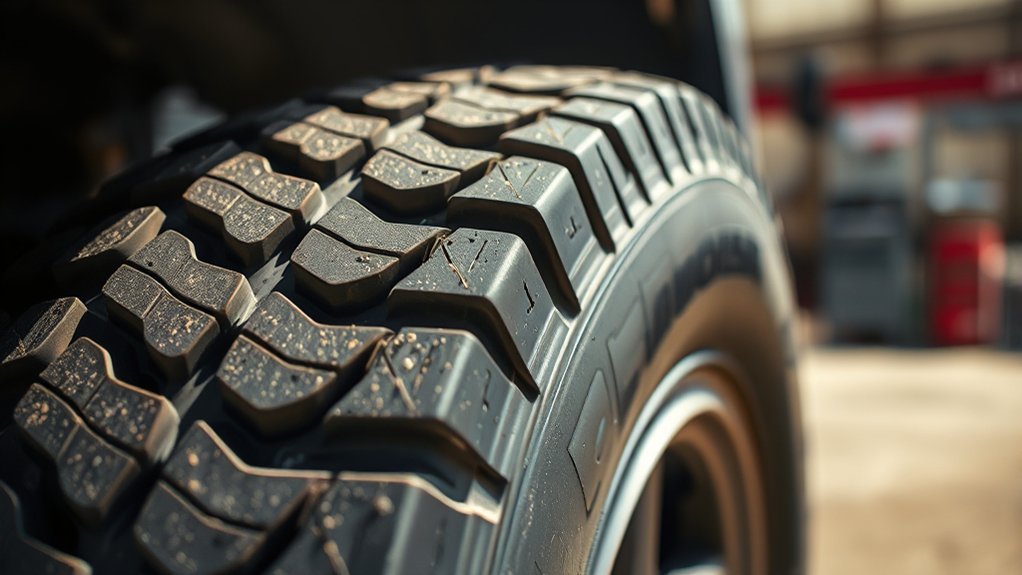
Understanding tire temperature ratings helps you choose safer, more suitable tires for your Toyota Hilux, especially if you drive in hot weather, carry heavy loads, tow, or spend long hours on highways. The key is knowing what the A, B, and C grades mean—and what they do not mean—before you buy replacement tires.
Quick Answer
A Toyota Hilux tire temperature rating is usually part of the UTQG marking on the tire sidewall. Temperature grades run from A to C, with A being the highest heat-resistance grade. It does not replace the tire’s load index, speed rating, size, or the pressure listed on your Hilux’s placard.
Key Takeaways
- A is the highest UTQG temperature grade; B and C are lower heat-resistance grades under controlled testing.
- AA is not a temperature grade. AA belongs to the traction rating, while temperature uses only A, B, and C.
- Do not choose a Hilux tire by temperature grade alone. Match tire size, load index, load range, speed symbol, terrain type, and inflation pressure.
- Some Hilux tires may not show UTQG. LT, commercial, winter, temporary spare, and some non-U.S. market tires may use different markings.
At a Glance
| Time Required | 2–5 minutes per tire |
| Difficulty | Easy |
| Tools Needed | Flashlight, phone camera, tire pressure gauge, and your Hilux owner’s manual or tire placard |
| Cost | $0 to check; replacement tire cost varies by size, brand, and tire type |
Understanding Tire Temperature Ratings for Your Toyota Hilux
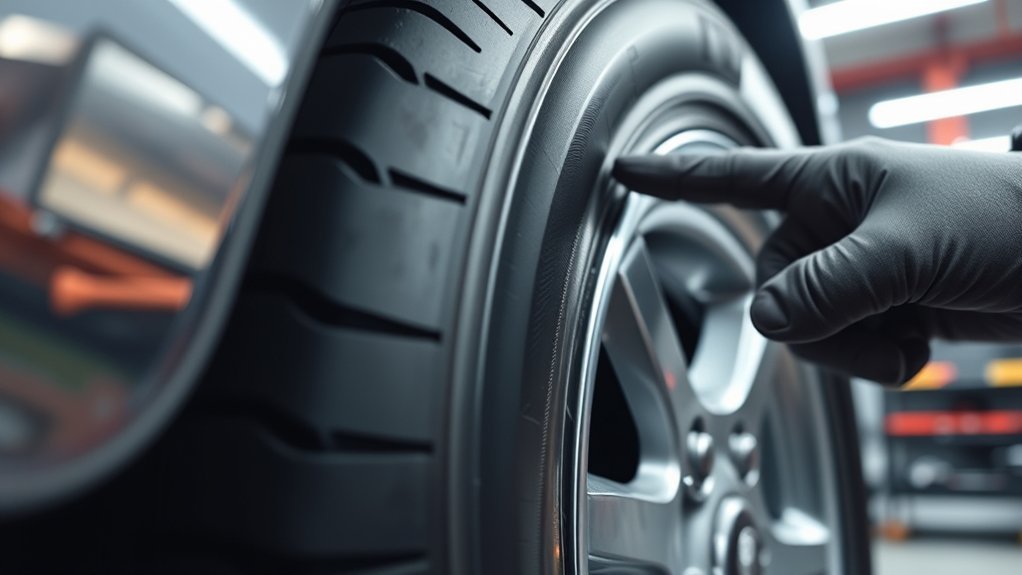
The temperature rating is part of the Uniform Tire Quality Grading system, often shortened to UTQG. UTQG compares passenger-car tires in three areas: treadwear, traction, and temperature resistance.
For temperature, the grade shows how well a tire resists heat buildup and dissipates heat when tested under controlled conditions on an indoor laboratory test wheel. The grades are:
- A — highest temperature-resistance grade
- B — middle temperature-resistance grade
- C — minimum level for applicable passenger-car tires
This matters for a Toyota Hilux because tire heat rises when you drive fast, carry payload, tow, run low pressure, drive on hot roads, or use a tire that is not suited to the vehicle. Heat can weaken tire materials over time and can increase the risk of tread separation or sudden tire failure.
NHTSA reports 511 deaths in tire-related crashes in 2024, which is why tire pressure, load limits, tread condition, and proper tire selection should be treated as safety checks—not just maintenance chores.
Where to Find Your Toyota Hilux Tire Temperature Rating
Look on the tire sidewall for a UTQG line that may look similar to this:
TREADWEAR 500 TRACTION A TEMPERATURE A
The temperature grade is the final letter after the word TEMPERATURE. You may need to check both sidewalls because some tire information can be easier to read on the outer side, while other markings may face inward.
Use this simple checking process:
- Park the Hilux safely and turn the front wheels slightly if you need a better view.
- Use a flashlight to scan the tire sidewall near the shoulder area.
- Find the UTQG line: Treadwear, Traction, and Temperature.
- Record the temperature letter for each tire.
- Check that all four tires are the correct size and load rating for your Hilux.
- Compare tire size and cold inflation pressure with the tire placard or owner’s manual.
Note: Not every Hilux tire will show a UTQG temperature grade. Some LT, commercial, winter, temporary spare, and non-U.S. market tires may use different markings. When UTQG is missing, rely on the tire’s load index, load range, speed symbol, service description, and the vehicle manufacturer’s tire information.
Temperature Grades: A, B, and C Explained
Temperature grades compare a tire’s ability to resist and release heat under a controlled lab test. They are not a guarantee that the tire is safe at any speed, any load, or any pressure.
| Grade | What It Means | Best Use Case |
| A | Highest UTQG temperature-resistance grade | Highway driving, hot climates, frequent payload, towing, and long trips when all other tire specs also match |
| B | Higher than the minimum legal level for applicable passenger-car tires | Normal road use when the tire matches Hilux size, load, and speed requirements |
| C | Minimum temperature grade for applicable passenger-car tires | Light-duty use only if the tire is otherwise correct for the vehicle and driving conditions |
According to NHTSA TireWise, among current tires in its tire-rating information, 62% are temperature grade A, 34% are grade B, and 4% are grade C. That does not mean your Hilux already has A-rated tires; it means A-rated tires are common in the rated tire population.
Warning: The temperature grade assumes the tire is properly inflated and not overloaded. Excessive speed, low pressure, and excessive loading can build heat quickly and may cause tire failure even on a tire with an A temperature grade.
[Products Worth Considering]

These aluminum alloy tire valve stem caps with an O-ring seal help protect valve stems from corrosion while adding a clean, stylish look to your vehicle. The universal fit works across cars, trucks, motorcycles, bicycles, and more, making them an easy upgrade for everyday driving and off-road use. Installation is quick, and the included four-pack keeps all your tires dressed and protected.
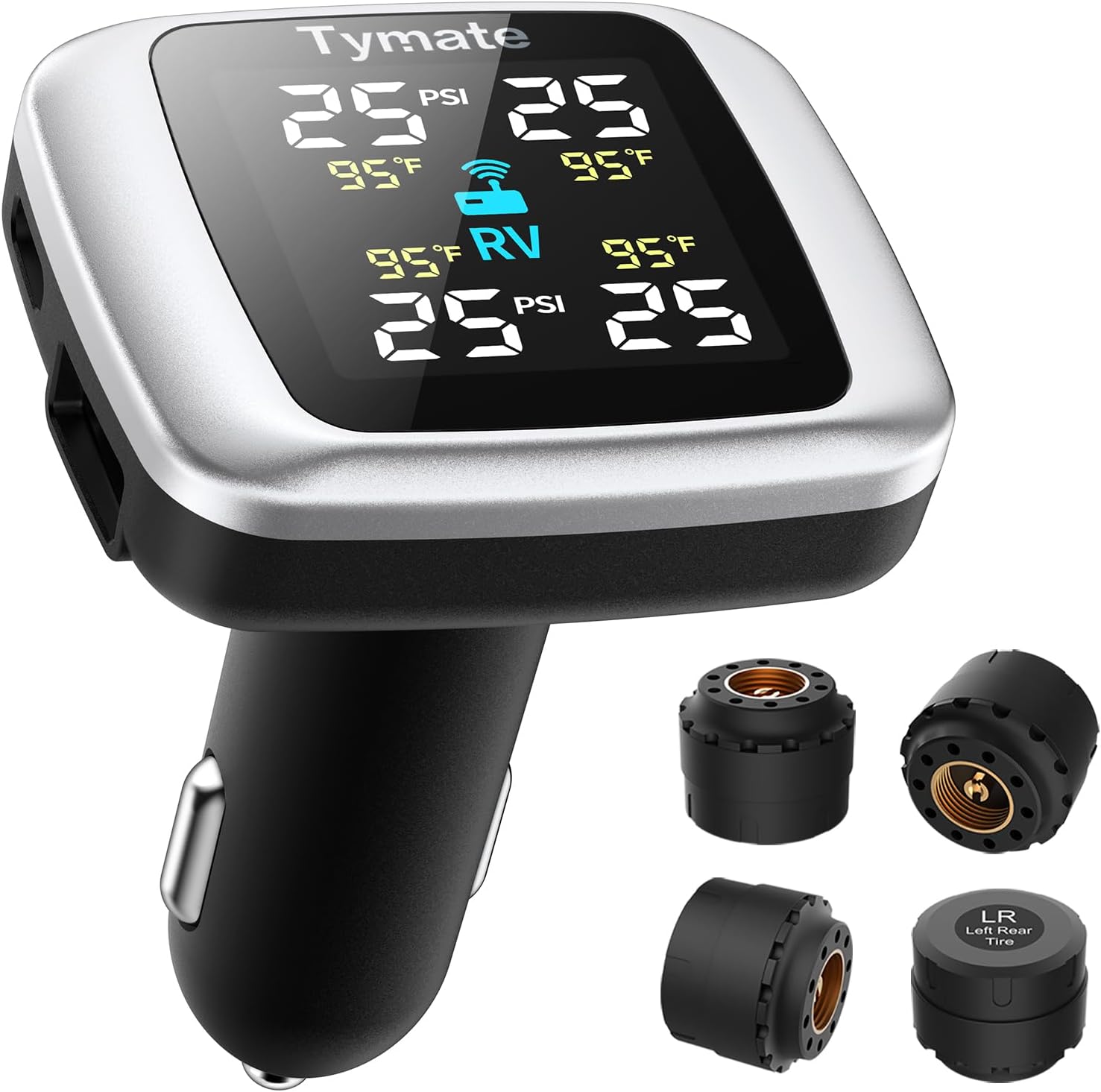
Tymate TM7 is a wireless tire pressure monitoring system that delivers real-time pressure and temperature readings for safer driving. It includes four external sensors, a bright color LCD display with adjustable backlight, and six alarm modes for high/low pressure, fast leakage, high temperature, and sensor signal or battery issues. The system covers a wide 0–144 PSI range and plugs into your vehicle’s cigarette lighter socket for quick DIY setup.

The SAFELIFE dial tire tread depth gauge measures tread depth in 1/32 inch increments with clear, easy-to-read 2-inch dial face. Color zones using a traffic light system help you quickly judge whether tread is low, marginal, or ample for safer driving. Built with a durable zinc cast body and a metal detect probe for precise, comfortable use across cars, motorcycles, trucks, and buses.
Choosing Tires Based on Temperature Ratings for Your Hilux
For a Toyota Hilux, the best tire is not simply the one with the highest temperature grade. You need a tire that fits the truck, the load, the road surface, and the climate.
Use this order when comparing tires:
- Start with the correct tire size. Check the tire placard, owner’s manual, or official Toyota owner’s manual portal for your model and market.
- Match or exceed the required load index. A Hilux often carries payload or towing tongue weight, so load capacity matters more than the UTQG letter alone.
- Match the correct speed symbol. Speed rating is separate from UTQG temperature grade.
- Choose the right tire type. Highway, all-terrain, mud-terrain, commercial, and winter tires behave differently in heat, rain, gravel, mud, and snow.
- Prefer A or B temperature grades when UTQG is shown. A is ideal for heat-heavy use, but a B-rated tire can still be suitable if every other specification is correct.
- Check the date code and condition. Avoid cracked, bulged, unevenly worn, or aged tires even if the rating looks good.
Pro Tip: If you use your Hilux for towing, tools, overlanding gear, or frequent highway trips in hot weather, prioritize correct load capacity, cold tire pressure, and tire condition first. Then use the temperature grade as an extra comparison point.
[Products Worth Considering]

Monitor tire tread wear with a smart, color-coded depth gauge that shows clear condition ranges at a glance. The bar is range marked for fast, easy readings, helping you maintain safer traction and performance. Each gauge is portable with a pocket clip, and the set includes 20 units for daily use and sharing.

Measure tire tread depth quickly and accurately with this LUMITECO dial gauge that reads in 1/32" increments up to 14/32". The color-coded green/yellow/red zones make it easy to judge tire wear and know when replacement is needed. A rugged, compact design with a protective pouch helps keep the gauge ready for use on cars, trucks, motorcycles, and more.

Measure tyre tread depth precisely with a digital gauge that reads in both MM and inches, helping you monitor safe driving conditions. The large LCD screen is easy to operate, and the compact tool fits for cars, trucks, and motorcycles. It provides high accuracy with a 0-25.4mm range and includes a 1-year warranty for added peace of mind.
Temperature Rating vs. Speed Rating, Load Index, and Traction
A common mistake is reading every sidewall letter as the same kind of rating. They are different:
- Temperature grade: UTQG heat-resistance grade. It uses A, B, or C.
- Traction grade: UTQG wet straight-line braking grade. It uses AA, A, B, or C.
- Speed rating: The speed symbol in the tire service description. NHTSA explains speed ratings separately from UTQG, with common letters such as Q, R, S, T, H, V, W, and Y.
- Load index: A number showing how much weight the tire can carry.
- Load range: Often seen on LT or commercial tires; it relates to load-carrying capability and inflation limits.
So, if you see TRACTION AA and TEMPERATURE A, the AA is not a better temperature rating. It means the tire has the highest UTQG traction grade, while A is the highest UTQG temperature grade.
[Products Worth Considering]

Accurately measure tire tread depth with a calibrated gauge marked from 0 to 1 inch in 1/32 inch increments. The color-coded bar helps you quickly identify tread condition ranges, supporting safe driving for trucks, motorcycles, automobiles, and passenger vehicles.
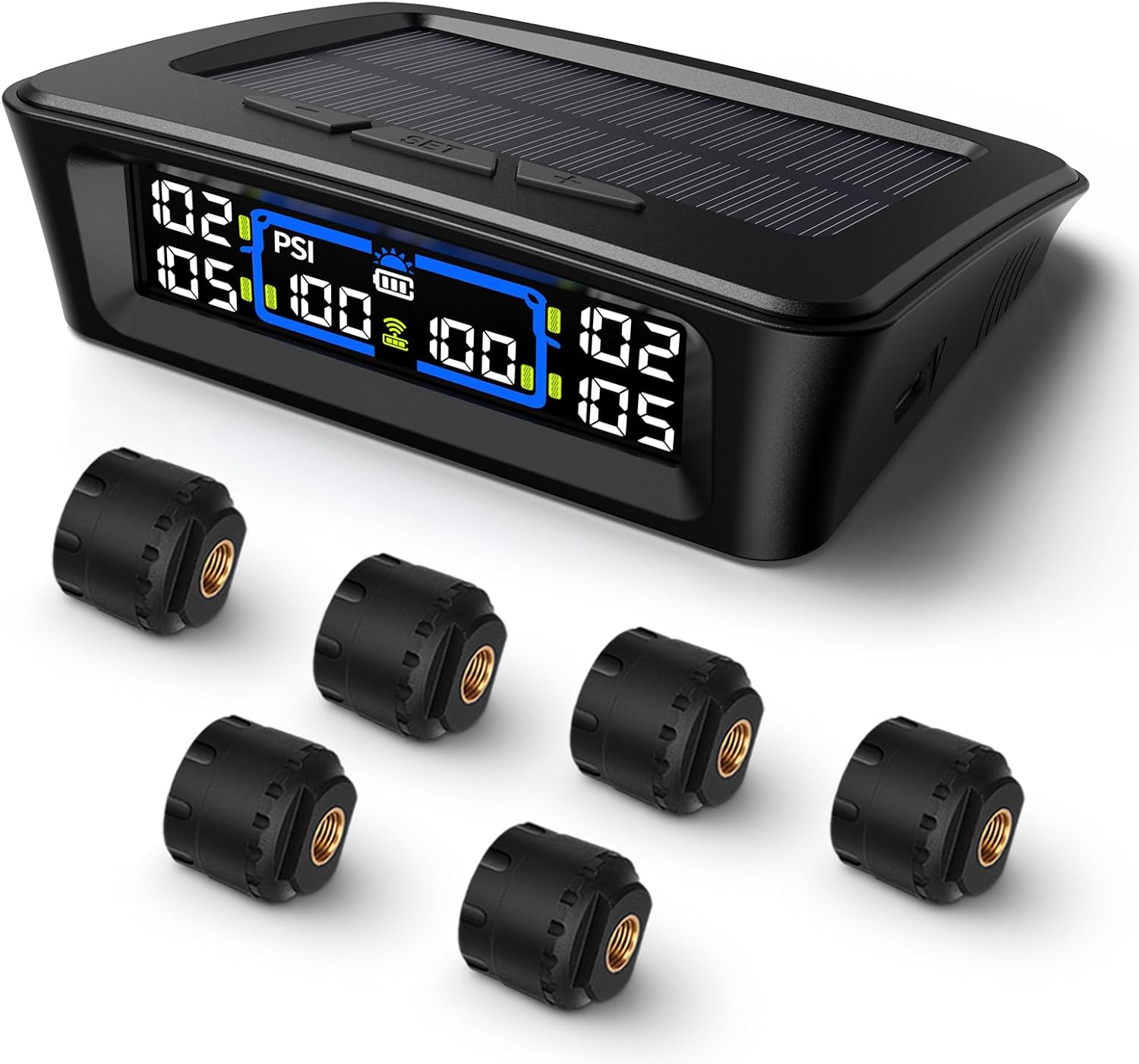
The Tymate TM12 RV TPMS delivers real-time tire pressure and temperature monitoring with a stable 433Hz display for safer long-distance driving. It supports simultaneous monitoring across vehicle and trailer zones, includes six alarm modes for pressure, temperature, leakage, battery, and signal loss, and features easy DIY installation with auto calibration. Power is supplied via USB-C charging or solar recharging, with a wide 0–144 PSI range and up to 50 ft signal coverage for RVs and towable trailers.

ETENWOLF’s tire pressure gauge helps you quickly and accurately check tire PSI across cars, trucks, motorcycles, bikes, and more. It’s manually calibrated to ANSI B40.1 Grade A for reliable readings, includes a large glow dial for easy nighttime viewing, and features a 360-degree swivel chuck for use at any valve angle. The gauge also works consistently in extreme hot or cold weather.
Maintenance Checks That Reduce Tire Heat
Even a high-rated tire can overheat if it is underinflated, overloaded, damaged, or driven beyond its design limits. NHTSA tire safety guidance emphasizes proper tire pressure, vehicle load limits, road-hazard avoidance, and regular inspection as key ways to reduce tire failure risk.
Build these checks into your Hilux routine:
- Check cold tire pressure monthly. Cold means the vehicle has not been driven for at least three hours.
- Use the Hilux placard pressure, not the sidewall maximum. The sidewall maximum is not the normal recommended pressure.
- Check pressure before towing or long trips. Heat builds faster when the tire is carrying more load.
- Inspect tread and sidewalls. Look for cuts, cracks, bulges, exposed cords, nails, uneven wear, or repeated pressure loss.
- Rotate and align as recommended. Uneven wear can reduce grip and increase stress on the tire.
- Do not exceed load limits. Count passengers, cargo, tools, accessories, and trailer tongue weight.
Note: Many modern vehicles have TPMS, but TPMS is not a substitute for a gauge. NHTSA recommends checking tire pressure regularly because warning lights often activate only after a tire is significantly underinflated.
Debunking Myths About Tire Ratings and Safety
Myth 1: “A temperature grade means the tire is safe at any speed.”
False. The temperature grade is not the same as the speed symbol. Always follow the tire’s service description and drive within legal and safe limits.
Myth 2: “AA is better than A for tire temperature.”
False. AA is a traction grade. Temperature grades only run A, B, and C.
Myth 3: “The highest temperature grade fixes underinflation.”
False. Underinflation makes the sidewall flex more, which builds heat. Correct cold pressure is essential.
Myth 4: “All Hilux tires must show UTQG.”
False. Some LT, commercial, winter, temporary spare, and non-U.S. market tires may not carry UTQG. In that case, compare load index, load range, speed symbol, size, and tire type.
Myth 5: “Tread design is all that matters.”
False. Tread design matters, but so do rubber compound, construction, load rating, speed rating, pressure, temperature grade, tread depth, and vehicle use.
Frequently Asked Questions
Is AA better than A for tire temperature?
No. AA is not a tire temperature grade. AA belongs to the UTQG traction rating, which measures wet straight-line braking performance. Temperature grades are only A, B, and C, with A being the highest.
Is a 5/32 tread good for winter?
A 5/32-inch tread depth may still be above the common 2/32-inch legal minimum, but it is not ideal for snow and slush. Tire Rack recommends replacing tires around 5/32 inch for snow-covered roads because winter traction and mobility drop as tread grooves become shallow.
Where is the Toyota Hilux tire temperature rating located?
When present, it is molded into the tire sidewall as part of the UTQG marking. Look for a line such as “TREADWEAR 500 TRACTION A TEMPERATURE A.” The final letter after “TEMPERATURE” is the temperature grade.
Do all Toyota Hilux tires have UTQG temperature grades?
No. UTQG is mainly for applicable passenger-car tires and may not appear on some LT, commercial, winter, temporary spare, limited-production, or non-U.S. market tires. If there is no UTQG line, use the tire’s size, load index, load range, speed symbol, and the Hilux owner’s manual or placard.
Should I only buy A-rated temperature tires for a Hilux?
An A temperature grade is a strong choice when UTQG is available, especially for hot weather, heavy loads, and highway use. But do not buy by temperature grade alone. The tire must also match the correct size, load index, load range, speed rating, terrain use, and inflation requirements.
Does the temperature rating replace tire pressure checks?
No. The temperature grade assumes the tire is properly inflated and not overloaded. Check cold pressure at least monthly and before long trips, towing, or carrying heavy cargo.
Conclusion
For your Toyota Hilux, tire temperature ratings are useful, but they are only one part of safe tire selection. Choose an A or B temperature grade when UTQG is shown, especially for hot climates, towing, highway use, or heavy loads. Then confirm the tire also matches your Hilux’s size, load index, load range, speed symbol, terrain needs, and recommended cold pressure. The safest tire is not just highly rated—it is correctly matched, correctly inflated, and regularly inspected.
Sources
- eCFR 49 CFR §575.104 — Uniform Tire Quality Grading Standards — backs UTQG scope, A/B/C temperature grades, and official temperature-grade wording.
- NHTSA TireWise — backs tire-rating overview, pressure guidance, current temperature-grade distribution, tread guidance, TPMS limits, and 2024 tire-related crash fatality data.
- NHTSA Tire Safety Brochure — backs tire pressure, load limits, sidewall markings, speed rating, load index, and tire maintenance guidance.
- Toyota UK Owner’s Manual Portal — backs checking the owner’s manual for model-specific tire information.
- Tire Rack — How Much Tread Depth Is Enough? — backs the winter tread-depth guidance around 5/32 inch for snow-covered roads.