

A tire temperature rating tells you how well a passenger tire resists heat generation and releases heat during a standardized laboratory test. The UTQG system uses three temperature grades: A, B, and C, with A representing the highest tested level. The grade is useful when comparing tires, but it does not replace the tire’s speed rating, load index, correct inflation pressure, or vehicle fitment requirements.
Quick Answer
A tire temperature rating is the UTQG grade that shows how well a passenger tire resists heat generation and dissipates heat in a controlled laboratory test. A is the highest grade, B is lower, and C is the minimum grade. It is not the tire’s speed rating, load index, or maximum operating temperature.
Key Takeaways
- Temperature A is the highest UTQG heat-resistance grade, followed by B and C.
- The grade comes from a controlled indoor-wheel test, not from measuring the maximum temperature a tire can safely reach on the road.
- Underinflation, excessive loading, and high speed can increase tire heat regardless of the letter grade.
- Temperature grade is separate from traction, treadwear, load index, and speed rating.
- When replacing tires, vehicle size, load, speed, and manufacturer requirements come before choosing a higher UTQG temperature grade.
What Is a Tire Temperature Rating?

A tire temperature rating is one part of the U.S. Uniform Tire Quality Grading system, usually shortened to UTQG. It describes the tire’s resistance to heat generation and its ability to dissipate heat during a standardized test.
The three grades are A, B, and C. A is the highest temperature grade, while C is the lowest grade in the system. NHTSA explains that sustained high temperature can deteriorate tire materials and contribute to tire failure.
Where UTQG applies, the treadwear, traction, and temperature grades are molded on the sidewall. The temperature marking may appear in a sequence such as TREADWEAR 500 TRACTION A TEMPERATURE A.
UTQG does not apply to every tire sold in the United States. Federal rules cover new pneumatic passenger-car tires but exempt several categories, including winter-type snow tires, temporary-use spares, certain deep-tread tires, tires with nominal rim diameters of 12 inches or less, and qualifying limited-production tires. Bridgestone’s tire sidewall guide also explains that dedicated winter, LT-metric, commercial, flotation, and motorcycle tires fall outside the normal passenger-car UTQG requirement.
How Tire Temperature Ratings Are Tested
UTQG temperature grades come from a controlled indoor test rather than normal road driving. The federal procedure fixes the tire’s conditioning temperature, test-wheel size, load, inflation conditions, and progressively increasing wheel speed.
Under 49 CFR §575.104, the tire is conditioned at 95°F for at least three hours. It is then pressed against a flat-faced steel wheel measuring 67.23 inches in diameter with a load equal to 88% of the tire’s maximum load rating.
- The tire first runs on the test wheel at 250 rpm for two hours.
- It is unloaded, cooled back to 95°F or for at least two hours, and its inflation pressure is reset.
- The loaded tire then runs at 375 rpm for 30 minutes.
- The test speed increases by 25 rpm every 30 minutes.
- Testing continues through the required grade threshold or until the tire fails.
A stage counts as completed only if the tire finishes without specified failures such as separation, chunking, broken cords, cracking, or open splices and retains the required pressure.
| Temperature Grade | UTQG Test Requirement | What It Means |
|---|---|---|
| A | Qualifies by successfully completing the 575 rpm stage | Highest UTQG temperature grade |
| B | Qualifies by successfully completing the 500 rpm stage | Higher laboratory performance than the minimum grade |
| C | Assigned when the tire does not complete the 500 rpm UTQG stage | Lowest UTQG temperature grade and the minimum federal performance level described by the grading rule |
These test-wheel thresholds should not be treated as road-speed limits. A tire’s speed rating is a separate specification.
How Heat Buildup Affects Tires
Heat builds inside a tire whenever its rubber and internal structure flex as the tire rolls. Higher speed, underinflation, excessive load, and demanding operating conditions can increase that heat.
According to NHTSA TireWise, sustained high temperature can deteriorate tire materials and contribute to blowouts or tread separation. Proper inflation is especially important because an underinflated tire flexes more as it rolls.
- Underinflation increases sidewall and carcass flexing.
- More flexing creates additional internal heat.
- Excessive vehicle or tire load adds stress and heat.
- Sustained high speed increases how often the tire flexes each minute.
- Repeated overheating can shorten tire life and reduce its safety margin.
The temperature grade tells you how the tire performed during the UTQG heat-resistance test. It does not make the tire immune to damage caused by incorrect pressure, overloading, impact damage, or excessive speed.
What an A Tire Temperature Rating Means
An A tire temperature rating is the highest grade available under UTQG. It indicates that the tire met the highest temperature-resistance test threshold used by the federal grading procedure.
That gives an A-rated tire more demonstrated laboratory heat resistance than the minimum required for B or C grades. It does not mean the tire can be run at any speed or load.
[Products Worth Considering]

Replace worn or malfunctioning GM TPMS sensors with this 433MHz pre-programmed sensor set designed for compatibility with many Chevrolet, Buick, GMC, and Cadillac models. It includes guidance for proper OBDII relearning/pairing after installation and supports reliable long-term operation with a high-performance CR2032 battery. Quality tested for durability and performance to help restore accurate tire pressure monitoring.
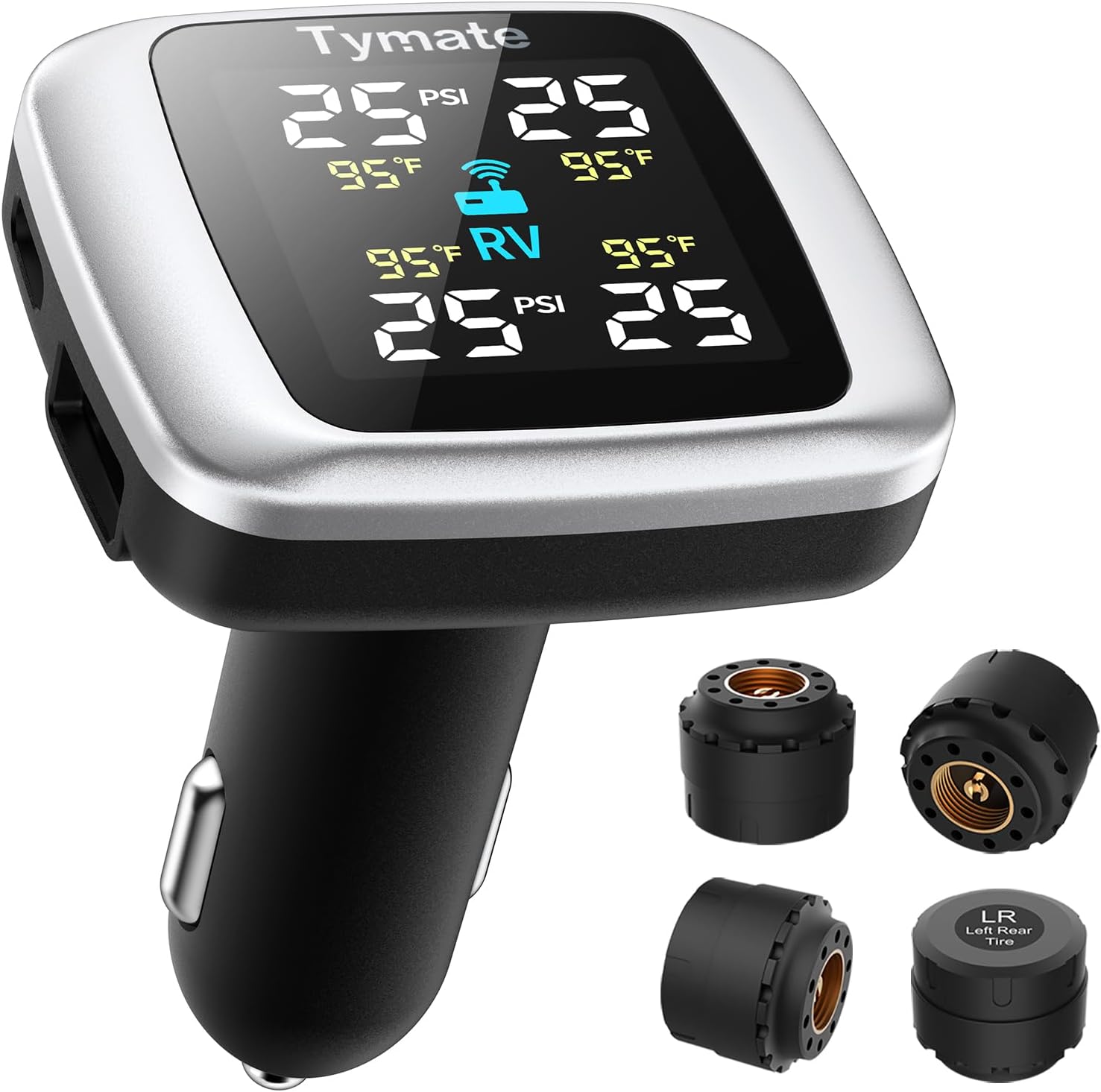
Tymate TM7 is a wireless tire pressure monitoring system that delivers real-time pressure and temperature readings for safer driving. It includes four external sensors, a bright color LCD display with adjustable backlight, and six alarm modes for high/low pressure, fast leakage, high temperature, and sensor signal or battery issues. The system covers a wide 0–144 PSI range and plugs into your vehicle’s cigarette lighter socket for quick DIY setup.

Replace worn Schrader valve cores with durable, nickel-plated replacements designed to resist rust and corrosion for a longer service life. Each core is 100% leakage tested and rated for up to 300 PSI, helping maintain a safe, reliable tire pressure system. Universal fit makes them suitable for cars, RVs, ATVs, motorcycles, bicycles, and many refrigeration/air conditioning applications.
A Rating Meaning
An A grade tells you that the tire qualifies at the 575 rpm stage of the UTQG temperature test. It is best understood as a heat-resistance grade rather than a general quality score.
- It is the highest of the three UTQG temperature grades.
- It demonstrates stronger heat resistance under the specified laboratory conditions.
- It does not tell you the tire’s wet traction grade or expected tread life.
- It does not override the tire’s load index, speed rating, or inflation requirements.
Heat Resistance Standards
The A grade reflects how the entire tire performs while subjected to controlled load, inflation, ambient temperature, and increasing test-wheel speed. Construction, rubber compounds, belts, and other components all influence whether the tire completes the test.
The rating therefore applies to the tire as a finished product. It is not simply a measurement of the tread compound or the surface temperature of the tire.
High-Speed Performance
An A grade is relevant to heat produced during sustained operation, but it is not a high-speed driving permission. The UTQG temperature test and the tire’s speed rating are separate systems.
A tire can carry Temperature A while still having a speed rating that limits its approved operating capability. Always follow the speed rating specified for the vehicle and obey road speed limits.
What a B Tire Temperature Rating Means
A B tire temperature rating is the middle UTQG temperature grade. It demonstrates more heat resistance than the C grade but does not meet the test threshold required for an A designation.
A B-rated tire is not automatically unsafe or unsuitable for ordinary use. Its size, load index, speed rating, condition, pressure, and compatibility with the vehicle remain more important than comparing one letter in isolation.
B Rating Basics
To qualify for a B grade under the UTQG procedure, the tire must successfully complete the 500 rpm test stage. This represents a higher laboratory heat-resistance level than the C grade.
- B sits between A and C in the temperature grading system.
- The grade concerns heat generation and heat dissipation.
- It does not measure wet braking or cornering grip.
- Correct inflation and load control are still required.
Heat Resistance Limits
A B-rated tire has less demonstrated UTQG thermal margin than an A-rated tire. That difference becomes more relevant as operating conditions increase tire heat, but the grade alone cannot tell you how hot the tire will become on a specific vehicle or road.
| Condition | B Rating Behavior |
|---|---|
| Normal use within vehicle specifications | Operates within its intended rating when properly maintained |
| Sustained higher thermal demand | Provides less UTQG heat-resistance margin than an A grade |
| Underinflation or overload | Heat risk rises regardless of the B grade |
For replacement tires, do not choose between A and B without also checking the manufacturer-required tire size, load capacity, and speed rating.
What a C Tire Temperature Rating Means
A C tire temperature rating is the lowest grade in the UTQG temperature system. The federal grading language describes C as the minimum temperature-performance level for applicable passenger-car tires.
- It provides less demonstrated UTQG heat resistance than an A or B grade.
- It is not the same as a failing federal tire-safety certification.
- It does not tell you the tire’s traction, treadwear, load capacity, or speed rating.
- Proper inflation and loading remain essential.
You should not interpret C as meaning that a tire is automatically unsafe. Instead, treat it as one specification among the full set of requirements needed for your vehicle.
Why Temperature Ratings Matter for Safety
Temperature ratings matter because excessive tire heat can damage materials and reduce tire life. The grade gives you a standardized way to compare the heat resistance of applicable passenger tires under the UTQG test.
However, safe operation still depends on correct pressure, load, tire condition, speed, and vehicle fitment. A high letter grade cannot compensate for poor maintenance.
Heat Resistance Basics
A rolling tire repeatedly deforms where it meets the road. That flexing generates heat within the rubber and supporting structure.
- Higher speed increases the number of flexing cycles over time.
- Underinflation allows greater deformation.
- Heavy loading increases stress in the tire structure.
- Hot road and air temperatures can reduce the tire’s cooling margin.
The UTQG temperature grade measures the tire’s ability to cope with heat under one standardized set of conditions. Real-world temperatures will vary with the vehicle, tire pressure, weather, speed, pavement, and load.
Blowout Risk Reduction
Reducing tire heat is one part of reducing tire-failure risk. Correct inflation and loading are especially important because the UTQG grade assumes the tire is properly inflated and not overloaded.
| Grade | UTQG Threshold | Relative Thermal Margin |
|---|---|---|
| A | Qualifies at 575 rpm stage | Highest |
| B | Qualifies at 500 rpm stage | Middle |
| C | Does not complete 500 rpm UTQG stage | Lowest UTQG grade |
Warning: A higher temperature grade does not make it safe to drive on an underinflated, overloaded, visibly damaged, or otherwise unfit tire. Correct the problem before continued driving.
Safe Driving Performance
The temperature grade does not directly measure cornering grip, steering response, or braking distance. Those claims should not be inferred from an A, B, or C temperature letter alone.
UTQG uses a separate traction grade for controlled wet straight-line braking performance. Likewise, treadwear and temperature performance are graded separately.
For safe driving, use the temperature grade as supporting information rather than a stand-alone measure of the tire’s overall performance.
How Speed Changes Tire Temperature
As vehicle speed rises, a tire completes more rotations and flexing cycles each minute. That can increase internal heat generation, especially when combined with high load or low inflation pressure.
At a steady speed, heat generation and cooling may eventually reach a balance. Increase the speed or load, and that balance can shift to a higher operating temperature.
This is why the federal temperature test progressively increases the test-wheel speed. It evaluates whether the tire can withstand greater thermal demand without the specified signs of structural failure.
Do not convert the A, B, or C grade into a personal road-speed limit. Your tire’s actual speed capability is determined by its speed rating, and safe driving is also limited by the vehicle, road, weather, load, and legal speed limit.
How to Choose the Right Rating
Choose a replacement tire by matching the vehicle’s required specifications first. Temperature grade is useful for comparing compatible tires, but it should not override size, load capacity, speed rating, or the vehicle manufacturer’s instructions.
- Confirm the correct tire size on the vehicle placard or in the owner’s manual.
- Match the required load index or load-carrying capacity.
- Meet the vehicle manufacturer’s required speed rating.
- Compare UTQG temperature grades among tires that already meet those requirements.
- Consider your normal conditions, including highway use, heavy loading, and hot weather.
A higher grade provides a higher demonstrated UTQG heat-resistance level. However, selecting Temperature A does not increase the vehicle’s approved payload or let you ignore inflation pressure.
The Michelin load and speed rating guide explains that load index and speed rating define separate operating limits and should meet the vehicle manufacturer’s requirements.
Note: If you are unsure whether a replacement tire’s size, load index, speed rating, or temperature grade is suitable, check the owner’s manual and tire placard or confirm the fitment with a qualified tire professional before installation.
[Products Worth Considering]

The Continental Grand Prix 5000 is an allround road bike tire engineered for faster rolling, improved ride comfort, and enhanced puncture protection. It features a Vectran Breaker cut-protection layer, Lazer Grip micro-profile tread for confident cornering control, and Active Comfort Technology to damp vibration for smoother rides. BlackChili compound optimizes grip and speed for everyday performance and long-lasting confidence.

This tire inflator with pressure gauge delivers long-lasting performance with a durable rubber-protected gauge and sturdy build. The longer hose and 360 swivel air chuck help you seal the valve securely and keep your hands free while measuring, inflating, or deflating. It’s battery-free for reliable use and provides ±2 PSI accuracy in the mid-range for most typical tires, with universal compatibility for 1/4 NPT compressor outputs.

This 2-pack closed-flow locking air chuck set delivers controlled airflow only when the valve stem is held in place, helping prevent leaks during inflation. Made for heavy-duty use with a 300 PSI maximum rating, it features a brass body for corrosion resistance and long service life. The 1/4" FNPT connection and quick-plug compatibility make it convenient for use with Schrader valve systems and common truck, RV, and auto air compressors.
Temperature Rating vs. Treadwear Rating
Tire temperature rating and treadwear rating measure different characteristics. Temperature grades compare heat resistance, while treadwear grades compare relative wear under the UTQG treadwear procedure.
Neither one replaces the tire’s traction grade, load index, or speed rating. Reading all of them together gives you a more complete picture of the tire.
| Rating | What It Measures | Typical Marking | What It Does Not Tell You |
|---|---|---|---|
| Temperature | Resistance to heat generation and ability to dissipate heat | A, B, or C | Maximum road speed or tread life |
| Treadwear | Comparative tread wear under the UTQG procedure | A number such as 300 or 500 | Exact mileage the tire will last |
| Traction | Controlled straight-line wet braking traction | AA, A, B, or C | Cornering, acceleration, or complete all-weather grip |
| Speed rating | Maximum speed capability under specified conditions | Letters such as H, V, W, or Y | UTQG heat grade or load capacity |
[Products Worth Considering]

This solid brass tire inflation hose adapter screws into your inflator and uses a locking press clip to securely clamp onto the tire valve stem. It helps reduce air leakage for fast, efficient pumping and is designed for reliable performance with a wide range of vehicles and inflator setups.

Milton S-921 pencil tire pressure gauge helps you maintain optimal tire pressure for passenger cars with accurate readings in PSI and kPa. It features a built-in deflator valve for convenient pressure adjustments, plus a single chuck head and nylon indicator bar for easy use on the go. Built from durable plated brass and designed for reliable performance, it’s a practical road trip and cold-weather maintenance tool.

Black Magic Tire Wet delivers a deep wet-look shine that makes tires appear dark, rich, and freshly detailed. Its long-lasting formula helps resist rain, dust, and road grime for weeks of glossy protection, not days. Apply by spraying onto clean, dry tires—no buffing or wiping required—with a low-sling design to reduce splatter on paint and wheels.
Temperature Rating vs. Speed Rating
A tire’s temperature grade and speed rating both relate to stresses that can occur at speed, but they answer different questions. Temperature A, B, or C is a UTQG heat-resistance grade, while the speed-rating letter represents the tire’s rated speed capability under specified conditions.
For example, seeing Temperature A on a sidewall does not tell you whether the tire has an H, V, W, or another speed rating. Check both markings independently.
Frequently Asked Questions
Can Tire Temperature Ratings Change Over Time?
No. The UTQG temperature grade molded on a particular tire does not change simply because that tire gets older or wears down. The tire’s physical condition and ability to tolerate stress can deteriorate with age, damage, poor maintenance, or wear, but its original A, B, or C marking remains the assigned grade.
Do All-Season Tires Have the Same Temperature Ratings?
No. All-season tires can carry different UTQG temperature grades because their construction, compounds, and test performance vary. Check the specific tire’s sidewall or manufacturer specifications instead of assuming every all-season model has the same grade.
Does Tire Pressure Affect Temperature Rating Performance?
Yes. Underinflation can increase tire flexing and heat buildup even though it does not change the A, B, or C grade printed on the tire. Use the vehicle manufacturer’s recommended cold inflation pressure rather than treating the temperature grade as protection against incorrect pressure.
Are Temperature Ratings Printed on Every Tire Sidewall?
No. UTQG temperature grading applies to covered passenger-car tires, but federal rules exempt categories such as winter-type snow tires, temporary-use spares, certain deep-tread tires, small-rim tires, and qualifying limited-production tires. Light-truck and other non-passenger tire categories can also fall outside the normal UTQG requirement.
Can I Mix Different Temperature Ratings on One Vehicle?
The temperature grade alone is not the main rule for matching replacement tires. Follow the vehicle manufacturer’s requirements for size, type, load capacity, speed rating, and axle placement, and use closely matched tires whenever possible. If the tires differ, confirm the complete fitment rather than judging compatibility only by the temperature letter.
Conclusion
A tire temperature rating gives you a standardized comparison of heat resistance: A is the highest UTQG grade, followed by B and C. Use it alongside the correct tire size, load index, speed rating, pressure, and vehicle requirements rather than treating the temperature letter as a complete safety rating.
When comparing replacement tires that already meet your vehicle’s specifications, the temperature grade can help you understand how much heat-resistance performance each tire demonstrated in the UTQG laboratory test.
Sources
- 49 CFR §575.104, Uniform Tire Quality Grading Standards: UTQG applicability, sidewall grading, temperature-grade thresholds, and laboratory test procedure.
- National Highway Traffic Safety Administration TireWise: temperature-grade meaning, tire heat risks, inflation guidance, and tire selection information.
- Bridgestone Tire Size and Sidewall Guide: UTQG markings and tire categories outside the normal passenger-car UTQG requirement.
- Michelin Load and Speed Rating Guide: load-index and speed-rating meanings and replacement-tire guidance.

