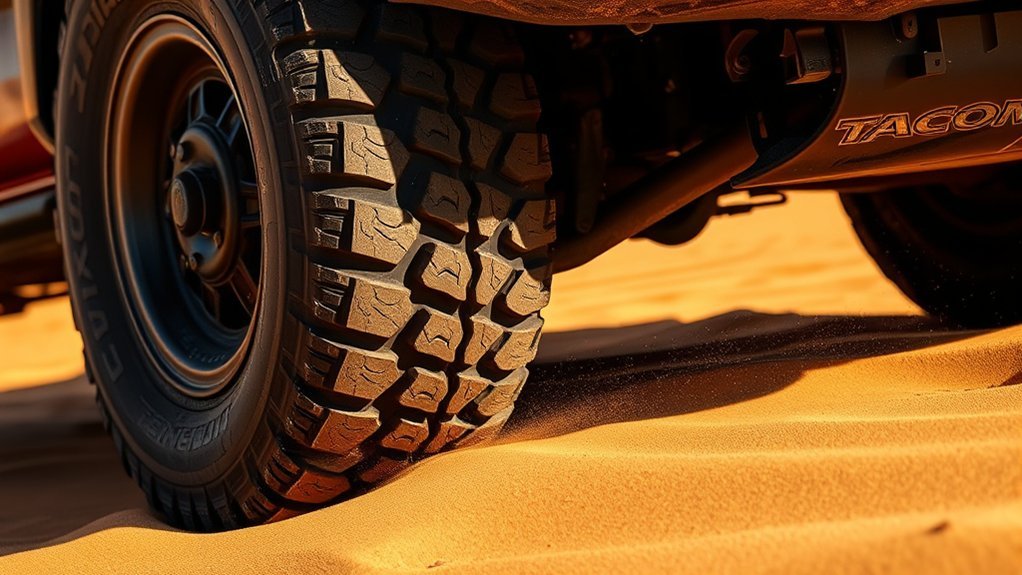
Choosing tires for a Toyota Tacoma on desert trails is not as simple as buying the most aggressive mud-terrain tire you can find. Sand, sharp rock, washboard roads, heat, long highway drives, and payload all pull tire choice in different directions. For most Tacoma owners, the best desert tire is a durable all-terrain or hybrid-terrain tire; mud-terrain tires make sense when your trips include slow, rocky, technical trails and you accept more road noise and weight.
Quick Answer
For most Toyota Tacoma desert trails, choose a strong all-terrain or hybrid-terrain tire in a size that fits your suspension without rubbing. Air down only for slow off-road driving, carry a compressor, and reinflate to your Tacoma’s door-placard pressure before returning to pavement.
Key Takeaways
- All-terrain tires are usually the best first choice for Tacoma desert driving because they balance sand, gravel, highway comfort, wet-road safety, and tread life.
- Hybrid-terrain tires, such as the Nitto Ridge Grappler style of tire, suit drivers who want a more aggressive look and stronger trail bite without going full mud-terrain.
- Mud-terrain tires such as the BFGoodrich Mud-Terrain T/A KM3, Falken WILDPEAK M/T, Yokohama GEOLANDAR M/T G003, and Nitto Mud Grappler are better for rocky, technical trails than for quiet daily driving.
- Load range does not tell the whole story. Match the tire’s load index, size, inflation guidance, and payload rating to your Tacoma’s actual use.
- Airing down can improve traction and ride comfort off-road, but it is a trail-only practice. Drive slowly, avoid sharp steering, and reinflate before highway speeds.
At a Glance
| Time Required | 15–30 minutes to choose a tire category and size; longer if you need to confirm lift, wheel offset, rubbing, speedometer change, or payload needs. |
| Difficulty | Moderate. The tire type is simple; the hard part is matching size, load rating, wheel offset, and real trail use. |
| Tools Needed | Tire-pressure gauge, portable compressor, tire deflators, full-size spare, plug kit, lug wrench, jack, jack base, and your Tacoma’s tire placard or owner’s manual. |
| Cost | Varies by brand, size, load range, wheel size, installation, balancing, TPMS service, alignment, and whether suspension or trimming is needed. |
Understanding Desert Terrain and Tire Needs
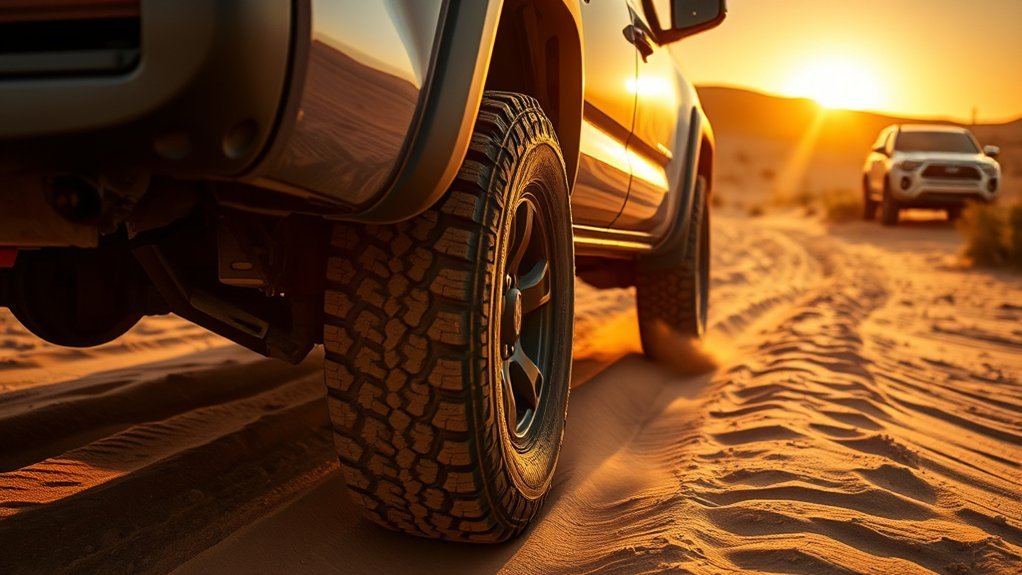
Desert trails put tires through several different challenges in the same trip. A Tacoma may start on hot pavement, cross washboard gravel, crawl over sharp rock, then hit soft sand where flotation matters more than deep lugs. That mix is why the “best” tire depends on how you drive, not just how aggressive the tread looks.
For loose sand, a wider contact patch and controlled tire pressure often matter more than a huge mud-terrain void pattern. For rocky desert trails, sidewall strength, puncture resistance, and tread durability become more important. For long highway drives to the trail, road noise, wet braking, weight, and fuel economy matter too.
Warning: Never use the tire’s sidewall maximum PSI as your normal road pressure. Use the tire placard on your Tacoma and the owner’s manual for normal cold inflation, then treat any aired-down pressure as temporary off-road-only pressure.
All-Terrain vs. Hybrid vs. Mud-Terrain for Desert Trails
Before choosing a specific tire, choose the right tire category. Many Tacoma owners buy more tire than they need, then deal with extra noise, weight, reduced wet-road confidence, and faster wear. Others buy highway tires and struggle with punctures or traction once the trail turns rocky.
| Tire Type | Best For | Main Tradeoff |
| All-terrain (A/T) | Daily-driven Tacomas, desert roads, gravel, hardpack, light sand, overlanding, and mixed weather. | Less bite in deep mud and very technical rock than an M/T. |
| Hybrid / rugged-terrain | Drivers who want stronger side lugs, a tougher look, and better trail grip while keeping better road manners than many mud-terrains. | Usually heavier and louder than a mild A/T. |
| Mud-terrain (M/T) | Rocky washes, slow technical trails, sharp desert rock, mud, and dedicated off-road builds. | More road noise, more weight, rougher ride, and often weaker wet-road manners than an A/T. |
If your Tacoma is a daily driver that sees weekend desert trails, start with an all-terrain tire. If you regularly run rocky trails and want more shoulder bite, consider a hybrid-terrain tire. If the truck is built for serious off-road use and pavement comfort is secondary, then a mud-terrain tire makes sense.
[Products Worth Considering]

Keep your tires properly inflated with this analog VONDIOR tire pressure gauge, designed for fast, easy readings without batteries. The swiveling, two-axis hose and large glow dial help you measure at any tire angle with instant visibility. Built with a protective rubber shield, it supports durable, low-maintenance use for cars and trucks.
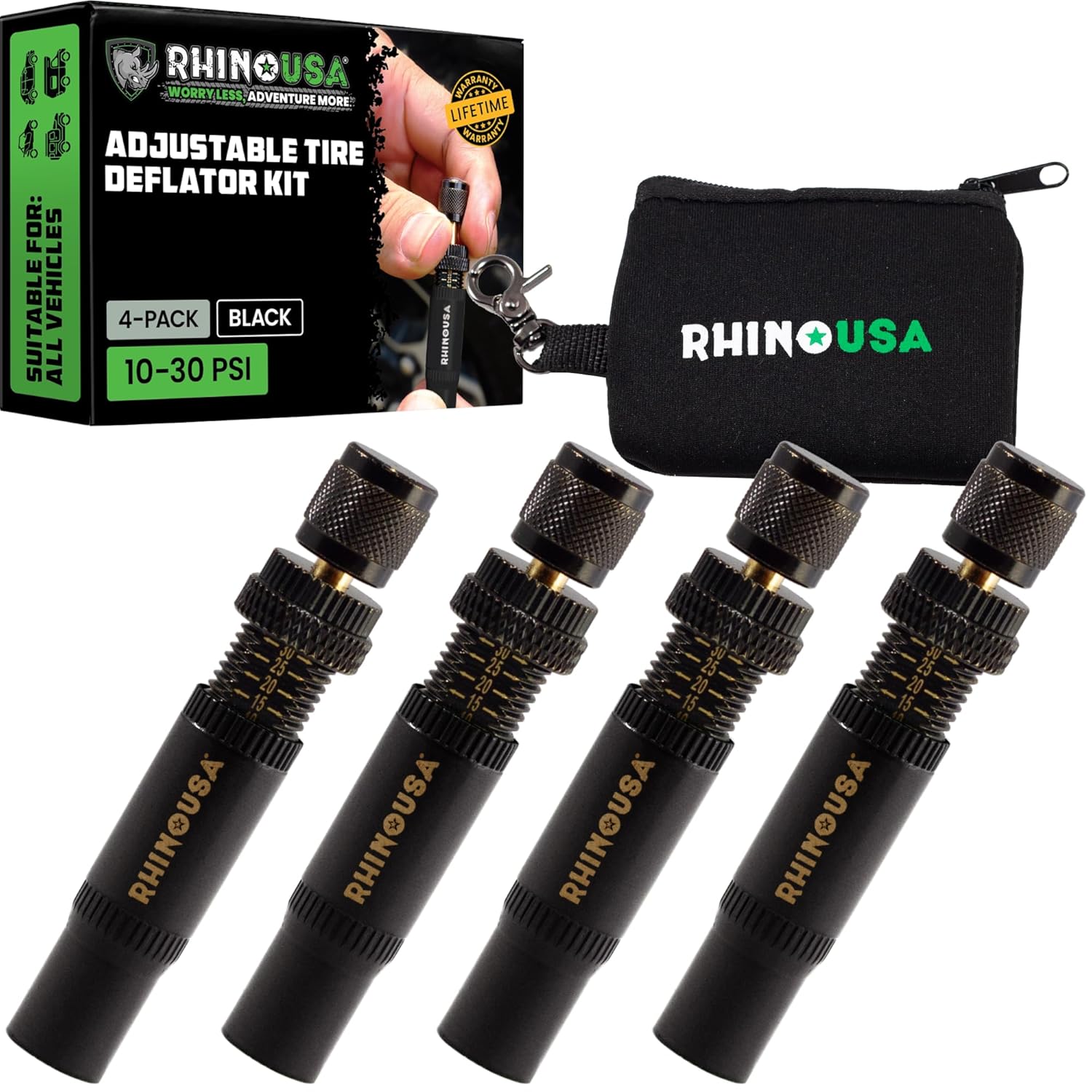
Use the Rhino USA adjustable tire deflators to air down all four tires at once by screwing one deflator onto each valve stem, letting you step away while the tires reach your preset pressure. Each deflator independently adjusts across a 10–30 PSI range with laser-etched indicators for quick setup and verification, making it ideal for beach, sand, and rocky off-road trails.

These aluminum alloy tire valve stem caps with an O-ring seal help protect valve stems from corrosion while adding a clean, stylish look to your vehicle. The universal fit works across cars, trucks, motorcycles, bicycles, and more, making them an easy upgrade for everyday driving and off-road use. Installation is quick, and the included four-pack keeps all your tires dressed and protected.
How to Choose Tires for Desert Trails
Use these steps before choosing a tire brand or size:
- Define your real terrain. Sand needs flotation and controlled pressure. Rock needs sidewall protection. Highway miles need wet traction, balance, and quiet tread.
- Confirm your Tacoma’s fitment. Check current tire size, wheel diameter, wheel offset, suspension height, and rubbing points before jumping to a larger tire.
- Match load capacity to the truck. Use the tire’s load index and manufacturer data, not just the load-range letter. Consider armor, camper shells, rooftop tents, tools, water, fuel, and towing.
- Choose the right casing. LT tires and stronger sidewalls are useful for rocky desert trails, but heavier E-load tires can ride stiff on a midsize truck if you do not need the extra capacity.
- Plan for air management. A desert-ready Tacoma should carry a reliable pressure gauge, deflators, and a compressor so you can air down and safely air back up.
Pro Tip: If you are choosing between a slightly smaller tire that fits cleanly and a larger tire that rubs, choose the tire that fits cleanly. Clearance, steering angle, and reliability matter more than a tire-size bragging point in the desert.
Top Toyota Tacoma Desert Tire Recommendations
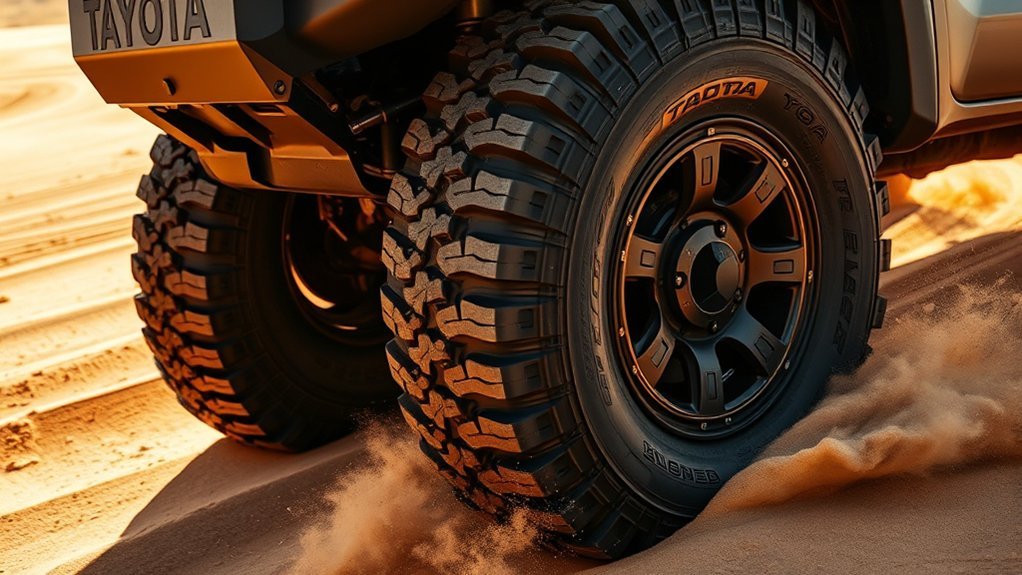
The best tire for your Tacoma depends on whether you want a balanced trail tire, a hybrid road/trail tire, or a maximum-traction mud-terrain tire. These are strong options to compare.
[Products Worth Considering]

The SAFELIFE dial tire tread depth gauge measures tread depth in 1/32 inch increments with clear, easy-to-read 2-inch dial face. Color zones using a traffic light system help you quickly judge whether tread is low, marginal, or ample for safer driving. Built with a durable zinc cast body and a metal detect probe for precise, comfortable use across cars, motorcycles, trucks, and buses.

This tire inflator with pressure gauge delivers long-lasting performance with a durable rubber-protected gauge and sturdy build. The longer hose and 360 swivel air chuck help you seal the valve securely and keep your hands free while measuring, inflating, or deflating. It’s battery-free for reliable use and provides ±2 PSI accuracy in the mid-range for most typical tires, with universal compatibility for 1/4 NPT compressor outputs.

This 12-inch LUMITECO dual head tire pressure gauge features an integrated straight-on chuck and a 30° reverse chuck to reach hard-to-access dual wheel valves. Its 10–150 PSI / 1–10 BAR range with a clear, two-sided scale helps you quickly check tire pressure for safer, smoother driving. Heavy-duty construction and a simple no-battery design make it a reliable tool for trucks, cars, RVs, and motorcycles.
Best Balanced All-Terrain: BFGoodrich All-Terrain T/A KO3
The BFGoodrich All-Terrain T/A KO3 is a strong choice for Tacoma owners who want off-road toughness without giving up daily-driver manners. It is a better starting point than a full mud-terrain tire for most desert drivers who split time between pavement, gravel, hardpack, sand, and rocky access roads.
Best Road/Trail Comfort Pick: Toyo Open Country A/T III
The Toyo Open Country A/T III is aimed at drivers who want off-road traction with predictable on-road handling. It is a good match for Tacomas that see long highway drives to desert trailheads and need a quieter, more stable tire than a mud-terrain.
Best Hybrid-Terrain Pick: Nitto Ridge Grappler
The Nitto Ridge Grappler is a hybrid-terrain tire with an aggressive tread look and more road comfort than many full mud-terrain tires. It is a smart middle ground if you want stronger shoulder lugs for trail use but still drive your Tacoma around town or on the highway.
Best Mud-Terrain for Technical Trails: BFGoodrich Mud-Terrain T/A KM3
The BFGoodrich Mud-Terrain T/A KM3 is built for maximum off-road traction. It makes sense if your desert trips include sharp rock, ledges, ruts, mud, and slow technical sections. It is not the quietest or lightest choice for a daily-driven Tacoma, so choose it for trail need rather than appearance alone.
Best Rugged M/T Alternative: Falken WILDPEAK M/T
The Falken WILDPEAK M/T is another aggressive mud-terrain option. Pay close attention to the exact size and load range. In some sizes, Falken offers different load-range versions, and a lighter-duty option may ride better on a midsize truck than a heavy-duty tire meant for larger rigs.
Best Sidewall-Focused M/T Option: Yokohama GEOLANDAR M/T G003
The Yokohama GEOLANDAR M/T G003 is worth considering when sidewall durability, rock traction, and an aggressive tread pattern are priorities. It is a better fit for drivers who spend serious time on rocky trails than for those who mostly commute and occasionally drive easy desert roads.
Most Aggressive Trail Pick: Nitto Mud Grappler
The Nitto Mud Grappler is an extreme mud-terrain tire with large side lugs and a very aggressive personality. It can work for dedicated off-road builds, but it is usually more tire than most daily-driven Tacomas need for desert trails.
Comparing Performance: Popular Brands and Models
Desert tire performance comes down to more than brand reputation. Compare the tire’s category, weight, casing, sidewall, tread voids, tread compound, and road manners before deciding.
[Products Worth Considering]

This heavy-duty tire pressure gauge combines measurement, inflation, and deflation in one compact tool for quick roadside and garage use. Its dual-head chuck helps reach inner and outer dual-wheel positions, while the clear indicator bar makes readings easy to see. Built for durability, it supports a wide pressure range and works across cars, trucks, RVs, SUVs, and motorcycles.

Monitor tire tread wear with a smart, color-coded depth gauge that shows clear condition ranges at a glance. The bar is range marked for fast, easy readings, helping you maintain safer traction and performance. Each gauge is portable with a pocket clip, and the set includes 20 units for daily use and sharing.

This ALL-TOP auto-stop tire deflator valve kit lets you air down off-road tires quickly without watching pressure, automatically stopping when your preset PSI is reached. Each valve is individually calibrated for reliable performance with an acceptable +/- 2 PSI tolerance. The adjustable deflator range covers 10 to 30 PSI and includes four valves plus valve caps and a zipper pouch for easy setup on trucks, SUVs, RVs, UTVs, and powersports.
Tire Durability Factors
For desert use, durability usually means three things: resistance to punctures, resistance to chunking on rock, and heat control during long drives. Look for tires with strong sidewall construction, a tread compound designed for off-road abuse, and enough load capacity for your actual truck weight.
- Sidewall strength: Helpful for sharp rocks, ruts, and low-pressure trail driving.
- Cut and chip resistance: Important when desert rock tears at tread blocks.
- Heat management: Important for highway miles in hot weather and for heavy trucks carrying gear.
- Tread depth and void design: More aggressive tires grip better in some loose and rocky terrain, but they can be louder and heavier.
Traction on Desert Terrain
On hardpack and gravel, a high-quality all-terrain tire often gives the best balance of grip and control. In soft sand, airing down and maintaining momentum matter as much as tread design. On rocky terrain, mud-terrain and hybrid-terrain tires can provide more shoulder bite and stronger protection, especially when used at lower trail speeds.
Road Manners and Daily Driving
If your Tacoma spends most of its life on pavement, do not ignore wet braking, steering response, road noise, and tire weight. A heavier tire can reduce acceleration, fuel economy, ride quality, and braking feel. A more aggressive tread can also get louder as it wears.
How Tire Size Affects Desert Driving Performance
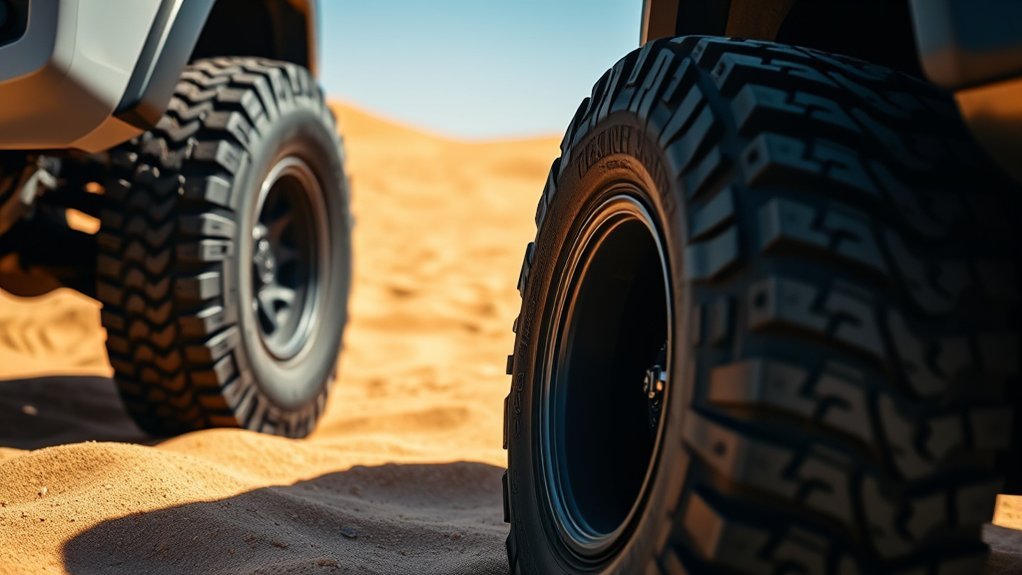
Tire size affects ground clearance, sidewall height, gearing, speedometer accuracy, steering clearance, braking feel, and suspension travel. Larger tires can help a Tacoma roll over rocks and ruts, but they also add weight and can create rubbing if the truck is not set up correctly.
| Size Range | Typical Use | Fitment Notes |
| Stock-size or near-stock | Daily driving, easy desert roads, light trails, best reliability. | Usually the least likely to rub and easiest to match with factory gearing and spare storage. |
| 285/75R16 or similar 33-inch range | Common Tacoma upgrade for more clearance and sidewall. | May require lift, trimming, correct wheel offset, alignment, and rubbing checks depending on generation and setup. |
| 35-inch and 37-inch tires | Serious off-road builds and higher-clearance desert setups. | Usually require major supporting mods such as suspension, trimming, offset changes, gearing consideration, and spare-tire planning. |
A taller tire can help ground clearance, but a tire that is too tall or too wide can hurt steering, suspension travel, and reliability. For desert trips, a clean-fitting tire with enough sidewall often beats an oversized tire that rubs at full turn or full compression.
Why Load Ratings Matter for Off-Roading
Load range matters, but it is not the only number to check. Load range describes construction and pressure capability, while the load index tells you how much weight the tire can carry at its rated pressure. Two tires with the same load-range letter can have different capacities if the size and load index differ.
For a Tacoma, the right choice depends on how the truck is used. A lightly loaded daily driver may ride better on a less-stiff tire. A Tacoma with steel bumpers, skid plates, camper shell, drawers, fridge, water, tools, and towing weight may need a stronger LT tire with a higher load index.
Note: Always compare the tire’s load index, manufacturer specs, and your Tacoma’s payload needs. If you change tire size or move from passenger-rated tires to LT tires, ask a qualified tire shop to confirm the correct inflation plan for your setup.
| Term | What It Means | Why It Matters |
| Load Index | The tire’s actual load-carrying rating for that size. | Most important number for matching tire capacity to truck weight. |
| Load Range | A construction/pressure category such as C, D, E, or F. | Useful for understanding stiffness and duty level, but not enough by itself. |
| Door Placard PSI | Toyota’s normal cold pressure guidance for the factory setup. | The starting point for safe on-road inflation. |
How to Pick Tread Patterns for Better Grip
Tread pattern should match the terrain. A desert tire needs enough open tread to bite into loose surfaces, enough shoulder protection for rocks, and enough center tread stability for highway miles.
Tread Design Considerations
Look at tread depth, tread-block stability, void spacing, sidewall lugs, and siping. Larger voids help in mud and loose terrain, but too much void can reduce on-road contact and create more noise. More siping can help wet and winter traction, but a very soft tread may wear faster on hot pavement.
Traction in Loose Sand
In loose sand, avoid digging holes with throttle. A wider footprint, smooth momentum, and sensible tire pressure are usually more important than the most aggressive tread. All-terrain tires often do well here because they can float and maintain a consistent contact patch when aired down correctly.
Patterns for Off-Road Stability
For rocky desert trails, choose a tire with strong shoulders and sidewall protection. Aggressive side lugs can help when the tire is pressed against rocks or ruts. Self-cleaning tread patterns also help keep gravel, sand, and mud from packing into the voids.
Safe Tire Pressure and Airing Down in the Desert
Airing down can improve traction, ride comfort, and control on sand, washboard, and rocky trails. However, it also increases sidewall flex and heat, and it can raise the risk of debeading if pressure is too low or steering inputs are too sharp.
Many Tacoma drivers use the 18–25 psi range as a conservative starting point for slow off-road driving, but that is not a universal rule. Tire size, wheel width, load, bead design, terrain, and speed all matter. Start conservatively, drive slowly, and adjust only if you understand the risk.
- Check cold road pressure first. Use your Tacoma’s placard or owner’s manual for normal driving pressure.
- Air down only at the trail. Do not drive highway speeds on aired-down tires.
- Use a reliable gauge. Tire-pressure guesses are not good enough in the desert.
- Drive smoothly. Avoid hard cornering, high speeds, and sudden steering when aired down.
- Reinflate before pavement. Use a compressor and return to safe road pressure before highway driving.
Warning: Heat is hard on tires. Underinflated tires at highway speed can overheat and fail. After airing down for a trail, reinflate before driving fast or carrying heavy loads on pavement.
Maintenance Tips for Desert Trail Tires
Desert tire maintenance starts before the trip and continues after the trail. Heat, rocks, and low-pressure driving can expose weak spots quickly.
| Task | When to Do It | Why It Matters |
| Check tire pressure | Before long drives, before trails, after airing up, and at least monthly. | Protects handling, tire life, heat control, and safety. |
| Inspect sidewalls | Before and after each desert trip. | Finds cuts, bulges, bruises, and rock damage early. |
| Check tread depth and uneven wear | Monthly and before long trips. | Reveals alignment, inflation, or rotation problems. |
| Rotate tires | Follow your tire and vehicle guidance; many off-road drivers rotate around 5,000–7,500 miles. | Helps reduce cupping and uneven tread wear. |
| Clean and inspect after trips | After dusty, rocky, or muddy trails. | Removes stones, thorns, and debris that can hide damage. |
Budgeting for Off-Road Tires: What to Consider
When budgeting for Tacoma desert tires, do not look at tire price alone. Bigger and heavier LT tires can require more than just mounting and balancing.
Tire Price Range
Prices vary by size, brand, load rating, wheel diameter, and retailer. A stock-size all-terrain tire is usually more affordable than a large LT mud-terrain tire. If you move to 33-inch, 35-inch, or 37-inch tires, also budget for fitment work, alignment, possible trimming, spare-tire solutions, and speedometer correction.
Long-Term Investment Value
A cheaper tire is not a good value if it wears quickly, punctures easily, rides poorly, or performs badly on wet pavement. For most Tacoma owners, the best value comes from choosing the mildest tire that confidently handles the hardest trail you actually drive.
- Daily driver: prioritize all-terrain comfort, wet traction, tread life, and lower weight.
- Weekend desert truck: consider a stronger A/T or hybrid-terrain tire with reinforced sidewalls.
- Dedicated trail build: consider M/T tires, but budget for extra noise, weight, fuel use, and wear.
User Feedback on Tire Performance
Owner feedback is useful, but compare reviews from drivers with similar trucks, terrain, and mileage. A tire that works well on a heavily modified rock-crawling Tacoma may be frustrating on a mostly stock daily driver.
- Road noise: M/T tires often start louder and can get louder as they wear.
- Tread life: Rotation, alignment, load, pavement mileage, and driving style matter as much as tire model.
- Sand traction: Pressure management and smooth throttle often matter more than tread aggression.
- Rock durability: Sidewall strength and tread-chip resistance become more important than quiet ride.
- Wet pavement: A/T tires generally make more sense for daily-driven Tacomas in mixed weather.
Frequently Asked Questions
What is the ideal tire pressure for desert driving?
There is no single ideal PSI for every Tacoma. Many drivers start around 18–25 psi for slow off-road sand or rocky trails, but the right pressure depends on tire size, wheel width, vehicle weight, load, terrain, and speed. Use your Toyota tire placard for normal road pressure and reinflate before pavement driving.
Can I use highway tires for occasional desert trails?
You can use highway tires on easy graded desert roads, but they are not ideal for sharp rock, soft sand, or remote trails. If you regularly leave pavement, a quality all-terrain tire gives better puncture resistance, traction, and confidence.
Are mud-terrain tires better than all-terrain tires in desert sand?
Not always. Mud-terrain tires can help in rocky, rutted, and muddy terrain, but desert sand often rewards flotation, smooth driving, and proper air pressure. For most Tacoma owners, an all-terrain or hybrid-terrain tire is the better desert choice.
How often should I rotate my off-road tires?
Follow your tire manufacturer and vehicle guidance. Many Tacoma owners rotate off-road tires around every 5,000–7,500 miles, but aggressive tread, heavy loads, poor alignment, and frequent rocky trails may require closer inspection.
Are there tire brands known for better durability?
BFGoodrich, Falken, Toyo, Nitto, Yokohama, Goodyear, and other major tire makers offer durable off-road tires. The better question is which model fits your terrain: A/T for balanced use, hybrid-terrain for aggressive mixed use, and M/T for technical off-road trails.
What tools are essential for tire changes in the desert?
Carry a full-size spare, lug wrench, jack, wide jack base, tire-pressure gauge, portable compressor, tire deflators, plug kit, valve cores, valve tool, gloves, and a flashlight. A factory jack can sink into sand, so a stable base is important.
Can I run 37-inch tires on a Toyota Tacoma?
A 37-inch tire is usually a serious-build size for a Tacoma. It can require suspension work, trimming, wheel-offset changes, gearing consideration, braking awareness, and spare-tire planning. For many drivers, a clean-fitting 33-inch range tire is more practical.
Conclusion
The best Toyota Tacoma tire for desert trails is the one that matches your actual terrain, truck weight, fitment, and road use. Start with a quality all-terrain tire if your Tacoma is a daily driver. Move to a hybrid-terrain tire if you want more trail bite without going full M/T. Choose a mud-terrain tire only when rocky, technical off-road traction matters more than quiet road manners. Whatever tire you choose, pair it with correct pressure, a full-size spare, air tools, and regular inspections before every desert trip.
Sources
- Toyota Owners — 2026 Tacoma Tire Inflation Pressure — supports using Toyota’s model-specific tire-pressure guidance.
- NHTSA TireWise — supports tire safety, pressure checks, recalls, tread, and maintenance guidance.
- BFGoodrich All-Terrain T/A KO3 — supports all-terrain recommendation details.
- BFGoodrich Mud-Terrain T/A KM3 — supports mud-terrain recommendation details.
- Toyo Open Country A/T III — supports balanced all-terrain road/trail positioning.
- Nitto Ridge Grappler — supports hybrid-terrain recommendation details.