
4Runner Tire Tips for Desert and High-Heat Driving
Desert driving asks more from your 4Runner tires than normal commuting does. Hot pavement, soft sand, sharp rocks, heavy cargo, UV exposure, and long distances between services all punish weak tire choices and sloppy pressure habits. The right setup is not just “bigger tires” or “lower PSI.” It is a system: correct fitment, correct load rating, cold-pressure checks, careful airing down, regular inspection, and enough recovery gear to get back to pavement safely.
Quick Answer
For desert driving, run tires that match your 4Runner’s approved size, load rating, and wheel clearance. Start from the cold PSI on the driver-side tire placard, air down only for low-speed sand or trail use, re-inflate before pavement, inspect for heat and rock damage, and replace tires with cracks, bulges, vibration, or unsafe tread depth.
Key Takeaways
- Use your 4Runner’s tire placard and owner’s manual as the baseline for tire size, load rating, and cold inflation pressure.
- Airing down can help in soft sand, but it is for low-speed off-road use only; re-inflate before highway or higher-speed driving.
- Wider tires can improve flotation, but only if they fit correctly and do not reduce load capacity or create rubbing.
- Desert heat and sunlight speed up aging, so inspect tread, sidewalls, valves, and the spare before every major trip.
- Carry a compressor, accurate gauge, plug kit, valve parts, jack base, full-size spare, and enough tools to repair or replace a tire in the field.
At a Glance
| Time Required | 15–30 minutes before the trail, plus 15–30 minutes to re-inflate and inspect before pavement |
| Difficulty | Easy to moderate, depending on tire size, wheel type, heat, terrain, and recovery conditions |
| Tools Needed | Accurate tire gauge, deflator, portable compressor, plug kit, valve cores, valve caps, jack, jack base, lug wrench, torque wrench, gloves, and full-size spare |
| Cost | About $40–$300+ for basic pressure and repair gear; more for premium compressors, full-size spares, or tire upgrades |
Choose Desert Tires That Fit Your 4Runner

Soft sand rewards flotation, but tire width is only one part of the formula. Before you chase a wider tire, confirm the tire size, load index, speed rating, and wheel fitment are appropriate for your 4Runner. The safest starting point is the tire and loading information label on the driver-side door area and the current Toyota owner’s manual for your model year and trim. You can look up official manuals through Toyota Owners.
A wider approved tire can spread the vehicle’s weight over a larger contact patch, helping the tire ride on top of soft sand instead of digging. But too much width, the wrong offset, or an oversized tire can rub the fender liner, body mount, sway bar, or upper control arm. It can also add rotating weight, reduce fuel economy, and stress steering or suspension parts.
Note: Never choose a replacement tire with a lower load-carrying capacity than the original equipment tire. For 4WD vehicles, keep all four tires matched in size, construction, and tread pattern unless Toyota or the tire manufacturer gives a specific exception.
For desert work, most 4Runner owners are best served by a quality all-terrain tire if the route mixes pavement, gravel, hardpack, and sand. A mud-terrain tire can add stronger lugs and sidewall protection for rocks and ruts, but it may be louder, heavier, and less refined on pavement. Choose for the worst surface you will actually drive, not the most aggressive look in the parking lot.
Set Your Baseline PSI Before You Air Down
Your baseline pressure is the cold inflation pressure listed for your vehicle, not the maximum PSI printed on the tire sidewall. The National Highway Traffic Safety Administration explains that the correct pressure is found on the Tire and Loading Information Label on the driver-side door edge or B-pillar, or in the owner’s manual.
Check pressure when the tires are cold. A practical rule is to check before driving, or after the 4Runner has been parked for at least three hours. Heat from driving, desert pavement, direct sun, and heavy loads can raise pressure readings and hide an underinflation problem.
Warning: Do not bleed air from a hot tire just because the reading is above the cold placard pressure. Hot pressure normally rises after driving. If a hot tire reads at or below the recommended cold pressure, stop and inspect for a leak, puncture, or tire damage.
Use this table as a starting framework, not a replacement for your placard, tire manufacturer guidance, or trail judgment:
| Surface | Pressure Approach | Action |
|---|---|---|
| Highway / hot asphalt | Use the cold PSI on the 4Runner placard | Check cold before departure and recheck before long highway stretches |
| Gravel / washboard | Small reduction only if needed for comfort and control | Keep speed conservative and inspect for cuts afterward |
| Soft sand / dunes | Often 12–18 PSI on many setups, adjusted cautiously | Use low speed, avoid sharp steering, and re-inflate before pavement |
| Rocky desert trails | Moderate reduction only if sidewalls and wheels can handle it | Watch for pinch damage, sidewall cuts, and rim impacts |
| Return to hard surface | Return to placard cold-pressure target | Re-inflate before highway speed or long-distance travel |
Air Down Safely for Soft Sand
Airing down helps because it lengthens the tire’s footprint and lets the tread float over sand instead of cutting into it. It can also soften the ride over washboard roads. The tradeoff is heat, sidewall flex, slower steering response, and a higher chance of debeading if pressure gets too low for your wheel and tire setup.
- Stop on level, stable ground before the soft section.
- Record your starting PSI with a quality gauge.
- Deflate all four tires evenly in small steps.
- Drive a short distance slowly and feel for steering control, tire roll, and traction.
- Drop another 1–2 PSI only if the 4Runner is still digging and your wheel setup can safely handle it.
- Avoid hard cornering, sudden steering, and high speed while aired down.
- Re-inflate before returning to pavement, highway speeds, or long hardpack sections.
Pro Tip: Write down the PSI that works for your exact tire size, wheel width, cargo load, and sand conditions. Your best desert pressure is learned by controlled testing, not copied blindly from another build.
The U.S. Tire Manufacturers Association Tire Care and Safety Guide notes that if lower inflation pressure is used for off-road flotation or traction at low speeds, tires must be re-inflated before resuming highway or higher-speed driving. That is the rule that keeps an off-road trick from becoming a highway failure.
Match Tread Pattern to Your Terrain Mix
Your 4Runner’s tire tread should match the terrain mix you actually drive. Desert routes are rarely pure sand. You may hit highway heat, graded roads, sharp volcanic rock, dry washes, hardpack, and occasional mud after storms in the same weekend.
For most desert trips, an all-terrain tire with strong shoulders, good void spacing, and a durable sidewall is the best balance. It gives better road manners than many mud-terrains while still clearing loose dirt and gripping rough trails. Mud-terrain tires make sense when rocks, ruts, and deep loose surfaces dominate, but they often bring more road noise, weight, and tread squirm.
The best desert tire is not the most aggressive tire. It is the tire that matches your load, wheel, speed, heat, terrain, and distance from help.
Check tread depth before every major desert trip. Tires worn to 2/32 inch are no longer safe for continued service, but desert drivers should be more conservative. If you are near 4/32 inch, planning a remote trip, or expecting rocks and sudden rain, replace early rather than gamble with weak traction and thin tread blocks.
Protect Desert Tires From UV Rays and Extreme Heat
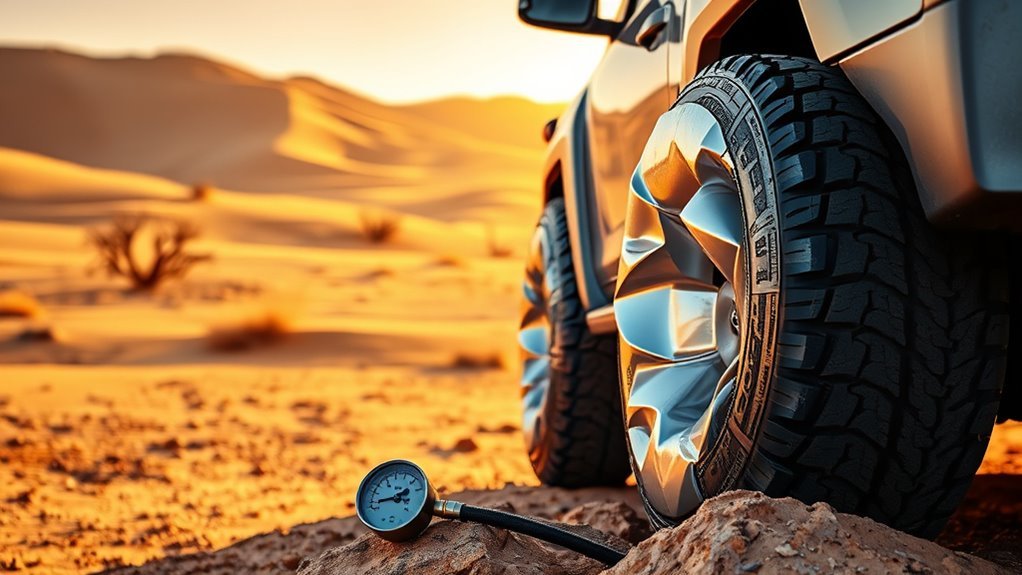
Sunlight, high heat, ozone, underinflation, and long-term parking all contribute to tire aging. NHTSA’s tire-aging guidance warns that exposure to sunlight and warmer climates can increase aging risk, especially for vehicles that are not driven regularly. Desert parking makes that warning real.
UV Damage Prevention
Park in shade when you can. If the 4Runner sits at a desert trailhead, campsite, or driveway for days, use opaque tire covers instead of leaving the sidewalls exposed to direct sun. If tires are stored off the vehicle, keep them in a clean, dry, dark, temperate location away from electric motors, battery chargers, welding equipment, petroleum products, and other ozone or chemical sources.
Heat Exposure Risks
Heat magnifies weak maintenance. Underinflation builds heat. Overloading builds heat. High speed on hot pavement builds heat. A tire that looks fine in the driveway can become a problem once it is carrying camping gear, water, recovery boards, a roof rack, and passengers across 110-degree pavement.
- Sidewall cracking or weather checking
- Tread separation or belt damage
- Pressure loss from punctures, valves, beads, or wheel damage
- Uneven wear from alignment, imbalance, or incorrect pressure
- Blowout risk when heat, speed, load, and age stack together
Cleaning and Tire Dressings
Clean tires with mild soap, water, and a soft brush or cloth. Be careful with shiny tire dressings. The USTMA guide warns that incompatible dressings and harsh cleaners can speed oxidation and premature cracking, and it specifically warns against petroleum-based tire products. If you use a protectant, choose one that is compatible with tire rubber and follow the tire manufacturer’s guidance.
Handle Temperature Swings and Desert Storms
Deserts can swing from intense daytime heat to cool nights, and tire pressure follows temperature. A useful rule of thumb is that passenger and light truck tires may change about 1–2 PSI for every 10°F temperature change. That means a cool morning reading can look low, while an afternoon reading after highway driving can look high.
Before a storm or a cold desert night, check pressure with a gauge rather than trusting the tire’s appearance. After rain, desert roads can turn slick with dust, oil, clay, and wash debris. If you are aired down for sand, slow down even more, avoid abrupt steering, and do not return to speed until tires are properly inflated.
Note: TPMS is helpful, but it is not a substitute for a gauge. Tire pressure monitoring systems may not warn until a tire is already significantly underinflated, and they may not catch every rapid loss or equal pressure drop across all tires.
Read Warning Signs Before the Desert Claims a Tire
Do a full tire walkaround before you leave, again at the trailhead, and once more before highway driving home. The goal is to catch small damage while you can still control where and how you repair it.
Visual Damage Indicators
- Cracks, cuts, chunks, or exposed cord on the tread or sidewall
- Bulges, bubbles, or sidewall swelling
- Embedded nails, screws, cactus spines, wire, stones, or glass
- Uneven shoulder wear, cupping, feathering, or one-sided wear
- Valve-stem cracks, missing valve caps, or slow leaks
- Spare tire damage, low pressure, or old DOT date code
Replace tires worn to 2/32 inch tread depth. For remote desert travel, treat 4/32 inch as a practical planning line: not always legally worn out, but often too close for comfort when the route includes sharp rock, wet pavement, or long isolated stretches.
Performance Warning Signs
Some tire problems show up through the steering wheel before they are obvious to the eye. Pay attention to new vibration, rhythmic thumping, pulling, repeated pressure loss, steering drift, or a sudden change in ride feel. These signs can point to belt separation, tire imbalance, alignment problems, punctures, or internal damage.
Warning: A tire with a bulge, exposed cord, deep sidewall cut, repeated pressure loss, or vibration that suddenly appears should be inspected by a tire professional. Do not treat a serious structural warning as a normal trail scar.
Tire Age and DOT Date Code
Tread depth is not the only replacement trigger. Tires age from time, heat, storage, sunlight, and use. NHTSA explains that some vehicle and tire manufacturers recommend replacing tires that are six to 10 years old regardless of treadwear. Find the DOT Tire Identification Number on the sidewall; the last four digits show the week and year of manufacture. For example, “3522” means the tire was made in the 35th week of 2022.
In harsh desert use, inspect older tires more often. Replace sooner if you see cracking, bulges, repeated leaks, vibration, or tread separation. Do not forget the spare; it can age out even if it has barely touched the ground.
Build a Desert Tire Kit for Emergencies
A desert tire kit is not a luxury. It is the difference between a controlled repair and a long wait in heat. Pack the kit before your next trip, test every tool at home, and make sure the compressor can bring your actual tire size from trail PSI back to road pressure without overheating.
- Portable air compressor: sized for your tires, with battery clamps or a reliable power connection.
- Accurate tire gauge: preferably one you trust more than a gas-station gauge.
- Deflator: manual, preset, or multi-tire system for even pressure drops.
- Tire plug kit: plugs, reamer, insertion tool, rubber cement if required, and pliers.
- Valve parts: valve cores, valve caps, valve-core tool, and spare stems if you know how to use them.
- Full-size spare: same overall diameter and load capacity as the running tires whenever possible.
- Jack and base: a stable base plate for sand, plus the correct lug wrench.
- Torque wrench: for proper lug-nut torque after a wheel change.
- Trail safety gear: gloves, headlamp, reflective marker, water, shade, and communication device.
Before every trip, confirm the spare is inflated, the compressor works, and the plug kit is complete. A perfect spare with no air is just cargo.
Frequently Asked Questions
Do white-letter tires reduce heat absorption?
Not enough to matter for desert tire safety. White lettering may reflect a small amount of light on part of the sidewall, but tire compound, inflation pressure, load, speed, age, and shade matter far more. Do not choose a tire based on lettering color for heat control.
Can I mix tire brands on my 4Runner?
It is best to run four matching tires on a 4WD 4Runner. If you must replace fewer than four, match size, load index, speed rating, construction, and tread pattern as closely as possible, and follow Toyota and tire-manufacturer guidance. Avoid mixing all-terrain with highway or mud-terrain tread patterns on a 4WD system unless a qualified tire professional confirms it is acceptable.
How often should I rotate 4Runner tires in desert heat?
Follow Toyota’s maintenance schedule first. If no tire-specific interval is listed, many tire-safety guides use 5,000 to 8,000 miles as a common rotation range, or sooner if uneven wear appears. Desert heat, loaded travel, and rough roads make inspection at every oil change and before long trips a smart habit.
Are nitrogen fills beneficial for desert driving?
Nitrogen is optional, not required. It may slightly reduce normal pressure loss, but it does not remove the need for regular gauge checks. Air and nitrogen can be mixed, and you should add air whenever needed to maintain the correct pressure.
Does tire age matter more than tread depth?
Both matter. A tire can be unsafe because it is worn, damaged, or old. Replace tires at 2/32 inch tread depth, replace earlier if there is cracking or structural damage, and check the DOT date code. Many manufacturers recommend replacement around six to 10 years regardless of tread depth.
How low can I air down a 4Runner for sand?
Many 4Runner setups work in the 12–18 PSI range for soft sand, but the safe number depends on tire size, wheel width, sidewall stiffness, load, speed, and whether the wheels are beadlock or standard. Start higher, test slowly, and lower in small steps. Re-inflate before pavement.
Should I trust TPMS during desert trips?
Use TPMS as a warning system, not as your only pressure check. TPMS may not alert you until pressure is already significantly low, and it may not replace a manual gauge check before long trips, after airing down, or before returning to highway speed.
What is the most important desert tire tool?
A reliable compressor and accurate gauge are the core tools because they let you air down for traction and air back up for pavement. Add a plug kit, valve tools, and a full-size spare so one puncture does not end the trip.
Conclusion
Your tires are the only contact points carrying your 4Runner across hot pavement, sand, rock, and remote desert miles. Treat them like safety equipment, not just accessories. Choose tires that fit correctly, start with the placard PSI, air down only when the terrain calls for it, re-inflate before speed, and inspect for damage before the desert turns a small mistake into a recovery problem.
Sources
- Toyota Owners Manuals and Warranties — official 4Runner owner manual lookup and model-specific reference point.
- NHTSA TireWise — tire pressure label, tread depth, tire aging, TPMS, and tire-safety guidance.
- U.S. Tire Manufacturers Association Tire Care and Safety Guide — inflation, off-road pressure, nitrogen, storage, inspection, tire mixing, and load guidance.
- Michelin: How to Inflate Tires — tire-pressure checking, pressure loss, and inflation basics.
- Tire Rack: How Do I Set My Tire Air Pressure? — pressure adjustment context and temperature-related PSI guidance.

Related Articles

When to Switch From All-Season to Winter Tires on a 4Runner
Ineffective all-season tires in cold weather can jeopardize your safety—discover when to make the crucial switch for better traction and handling.
Read More
4Runner Tire Mileage: How Many Miles Should They Last
Curious about how long your 4Runner tires should last? Discover essential tips and factors that influence tire longevity.
Read More
How Long Do Toyota 4Runner Tires Typically Last
How long do Toyota 4Runner tires typically last? Discover the factors that influence tire longevity and essential tips for maintenance.
Read More