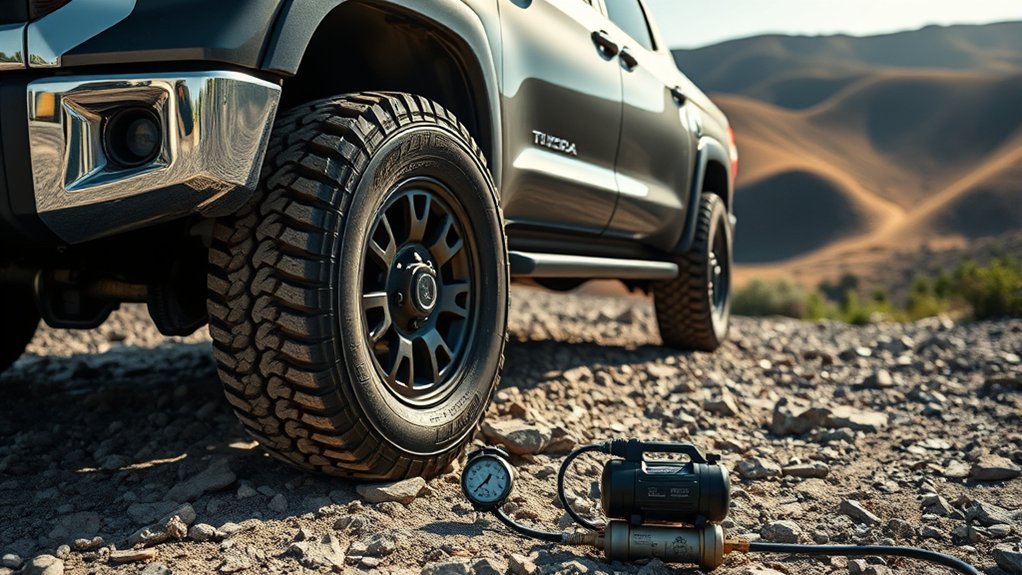
Airing down your Toyota Tundra can make sand, rocks, mud, snow, and washboard trails easier to handle, but the right PSI is not one fixed number. Start with your Tundra’s normal road pressure from the driver-side door placard, then lower pressure only for low-speed off-road driving and reinflate before returning to pavement.
Quick Answer
For most Toyota Tundra off-road driving on standard non-beadlock wheels, use about 12–16 PSI for deep sand or soft snow, 16–20 PSI for mud, 18–22 PSI for rocks, and 22–28 PSI for mild dirt or washboard roads. Reinflate to the door-jamb placard pressure before driving at road speed.
Key Takeaways
- Airing down increases the tire footprint, which can improve traction and ride comfort on loose or uneven terrain.
- Use terrain PSI ranges as starting points, not fixed rules. Tire size, load range, vehicle weight, wheel size, speed, and payload all matter.
- Avoid very low PSI on standard non-beadlock wheels unless you understand the risk of unseating the tire bead.
- Always carry a tire pressure gauge and a way to air back up before leaving the trail.
- For pavement, use the cold tire pressure listed on your Tundra’s door placard or the correct pressure calculated for your aftermarket tire setup.
At a Glance
| Time Required | 10–20 minutes to air down; 15–30 minutes to reinflate depending on compressor size |
| Difficulty | Beginner, as long as you use a gauge and reinflate before pavement |
| Tools Needed | Tire pressure gauge, tire deflator, valve caps, portable air compressor or installed onboard-air system, and full-size spare |
| Cost | About $15–$60 for a gauge/deflator; $80–$400+ for a portable compressor or onboard-air setup |
Understanding the Benefits of Airing Down for Off-Roading
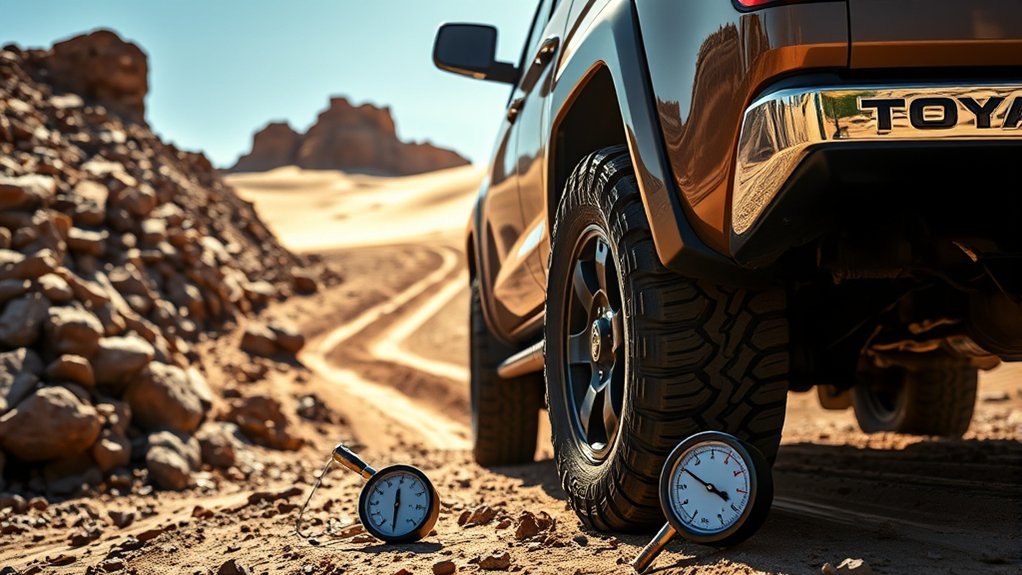
When you lower tire pressure for off-road driving, the tire can flex more and create a larger contact patch. That helps your Toyota Tundra float better on sand, conform to rocks, smooth out washboard roads, and reduce wheelspin on loose surfaces.
That does not mean lower is always better. A Tundra is a full-size truck, and heavy trucks need enough pressure to protect the wheel, sidewall, and tire bead. The safest off-road PSI is the lowest pressure that gives you traction without making the tire feel unstable, folding the sidewall too much, or risking bead separation.
There is no universal off-road PSI. Terrain, tire construction, vehicle weight, wheel size, speed, and payload all change the right setting.
Toyota Tundra Off-Road PSI by Terrain
The PSI ranges below are practical starting points for low-speed trail use on a Toyota Tundra with standard non-beadlock wheels. Adjust upward for heavy payloads, towing, sharp rocks, low-profile tires, larger wheels, or stiff load-range E/F tires. Adjust downward only when traction demands it and you understand the risk.
| Terrain | Starting PSI | Why It Helps |
| Deep sand | 12–16 PSI | Creates flotation so the truck rides on top instead of digging in. |
| Rocks | 18–22 PSI | Improves grip while keeping more sidewall support for rim and puncture protection. |
| Mud | 16–20 PSI | Adds footprint and grip without letting the tire fold too much in ruts. |
| Soft snow | 12–18 PSI | Helps the tire float in soft snow. Use more pressure on hardpack, ice, or faster roads. |
| Gravel, dirt, washboard | 22–28 PSI | Improves comfort and traction while keeping better heat and sidewall control. |
Warning: Do not drive highway speeds while aired down. Low tire pressure creates heat, poor handling, faster wear, and a higher chance of tire failure. Air back up before paved-road driving.
How to Determine the Right PSI for Various Terrain Types
Start with your Toyota Tundra’s normal cold tire pressure. For original equipment tires, that number is on the Tire and Loading Information placard on the driver-side door jamb and in the owner’s manual. For upgraded LT-metric, high-flotation, or larger tires, ask the tire maker or a tire professional to calculate the correct on-road pressure for your actual load.
Once you know your road-pressure baseline, choose a trail PSI based on the terrain. For mild dirt roads, you may only need to drop 5–10 PSI. For rough rocks, deep sand, mud, or soft snow, you may need a larger drop. Make small adjustments, test the truck at low speed, and stop if the sidewall looks too folded or the steering feels vague.
Note: The PSI on the tire sidewall is not the normal recommended driving pressure. It is a tire limit/rating reference. Use the vehicle placard or a tire-load calculation for normal road pressure.
Tire Pressure Recommendations
For a stock or lightly modified Tundra on standard wheels, a safe approach is to start conservative and lower pressure only if the terrain requires it. For example, if your road pressure is in the mid-30s, dropping to the mid-20s can already improve washboard comfort. Sand and snow need more flotation, so 12–16 PSI may work better, but that range should be used slowly and carefully.
Rocky terrain usually needs more pressure than sand because the tire has to protect the wheel from sharp impacts. A range of 18–22 PSI is often a better starting point for a full-size truck than going straight to very low pressure.
Terrain-Specific Adjustments
For sand, lower pressure helps the Tundra stay on top of the surface instead of digging. For rocks, keep enough pressure to avoid pinching the sidewall or striking the rim. For mud, use enough footprint for grip but enough pressure to keep the tire stable in ruts. For snow, adjust based on depth: soft snow may reward lower pressure, while hardpack and ice may need more pressure and slower, smoother driving.
Pro Tip: Drop pressure in small steps. Try 22 PSI first on mixed trails, then move down by 2 PSI at a time if you need more grip. This is safer than jumping straight to the lowest number.
Step-by-Step Guide to Airing Down Your Tires Effectively
Airing down is simple, but accuracy matters. Do it before the trail gets difficult, park on level ground if possible, and check all four tires so the truck remains balanced.
- Check your starting pressure. Use a reliable gauge and note the pressure in each tire.
- Choose your target PSI. Use the terrain table as a starting point, then adjust for load, tire type, and trail difficulty.
- Attach the deflator. Secure the deflator to the valve stem and release air slowly.
- Measure often. Recheck with a gauge instead of guessing by sidewall bulge.
- Match all four tires. Keep the tires close to the same pressure unless your specific setup requires otherwise.
- Drive slowly at first. Listen for tire roll, rubbing, or steering changes.
- Recheck after a few minutes. Stop and inspect the tires before the trail gets harder.
[Products Worth Considering]

Secure your vehicle during transport with this 4-pack of heavy-duty tire tie down straps designed for trailers and hauling. The ratchet system with flat hooks and D-rings helps you tension the straps quickly, while the wheel-friendly design protects tires. With high break strength and corrosion-resistant hardware, these straps provide reliable, confidence-inspiring tie-down security for cars, trucks, and UTVs.

This ALL-TOP auto-stop tire deflator valve kit lets you air down off-road tires quickly without watching pressure, automatically stopping when your preset PSI is reached. Each valve is individually calibrated for reliable performance with an acceptable +/- 2 PSI tolerance. The adjustable deflator range covers 10 to 30 PSI and includes four valves plus valve caps and a zipper pouch for easy setup on trucks, SUVs, RVs, UTVs, and powersports.
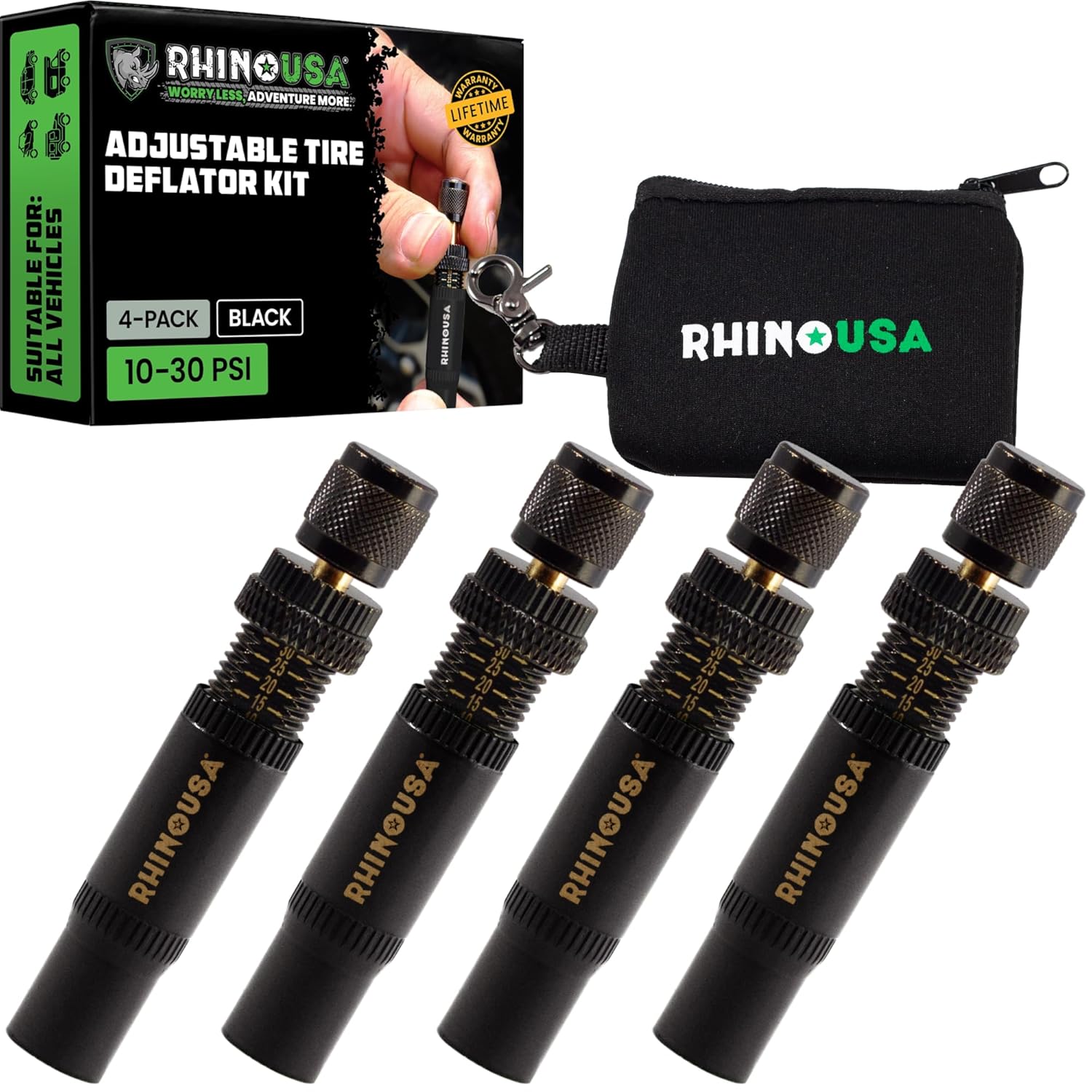
Use the Rhino USA adjustable tire deflators to air down all four tires at once by screwing one deflator onto each valve stem, letting you step away while the tires reach your preset pressure. Each deflator independently adjusts across a 10–30 PSI range with laser-etched indicators for quick setup and verification, making it ideal for beach, sand, and rocky off-road trails.
Essential Tools Required
The most important tools are a tire pressure gauge, a tire deflator, and a way to air back up. Automatic deflators can save time because they can be preset to a target PSI, but you should still verify the final pressure with a separate gauge.
A portable air compressor is essential if you air down away from services. Some Tundra owners install onboard-air systems, and Toyota also sells onboard-air accessories for some applications, but do not assume your truck has a built-in tire compressor unless you have verified that exact equipment on your vehicle.
Recommended PSI Levels
Use 22–28 PSI for dirt roads, 18–22 PSI for rocky trails, 16–20 PSI for mud, and 12–16 PSI for deep sand or very soft snow. These are trail-use starting points, not pavement pressures.
If your Tundra is loaded with camping gear, tools, water, passengers, a bed rack, rooftop tent, or trailer tongue weight, stay toward the higher end of the range. More weight compresses the tire and increases heat and sidewall stress.
Reinflation After Off-Roading
Before you return to pavement, reinflate every tire to the correct road pressure. For original equipment tires, use the cold tire pressure listed on your Tundra’s driver-side door placard. If you have aftermarket tires or a major tire-size change, use the pressure recommended by the tire manufacturer or a qualified tire professional for your load.
- Use a compressor that can handle truck tires without overheating.
- Inflate each tire gradually and check pressure with a gauge.
- Replace valve caps to keep dirt and moisture out of the valve stems.
- Recheck pressure later when the tires are cold.
Common Challenges and Safety Tips When Airing Down
The biggest risk of airing down too far is unseating the tire bead from the wheel. This is more likely with low pressure, sharp steering, side-hilling, sudden impacts, heavy loads, or standard non-beadlock wheels. If you do not have beadlocks, be cautious below about 15 PSI and avoid aggressive side loads.
Another challenge is heat. Aired-down tires flex more, and that creates heat at speed. Keep your speed low on the trail and reinflate before long pavement sections. If the truck starts to wander, the steering feels delayed, or the sidewall looks folded, stop and add air.
Warning: Never air down while towing on pavement, hauling near payload limits, or driving at highway speed. For towing and heavy payloads, use the correct load-based road pressure and lower pressure only for slow off-road sections when conditions require it.
Your Tundra’s tire pressure monitoring system may warn when you air down. That does not mean the system is broken. It means the truck is detecting pressure below its normal road threshold. After reinflating to the correct road pressure, confirm that the warning clears according to your owner’s manual.
[Products Worth Considering]

These universal tire valve stem caps help protect valve cores from dust, debris, and moisture while helping maintain stable tire pressure. The corrosion-resistant metal construction and sealed design provide reliable protection in road grime, mud, and winter conditions. Twist-on installation makes them quick to fit on cars, SUVs, trucks, and motorcycles.

Vigorder rubber cement glue delivers superior adhesion and cures quickly within about 30 seconds for seamless rubber bonding. Once cured, it helps provide a strong, durable, waterproof seal that holds up to vehicle weight, pressure, and heat. Suitable for cars, motorcycles, trucks, bicycles, and off-road tires, it’s designed for emergency patch and maintenance repairs.

These aluminum alloy tire valve stem caps with an O-ring seal help protect valve stems from corrosion while adding a clean, stylish look to your vehicle. The universal fit works across cars, trucks, motorcycles, bicycles, and more, making them an easy upgrade for everyday driving and off-road use. Installation is quick, and the included four-pack keeps all your tires dressed and protected.
Essential Tools for Airing Down Your Tires
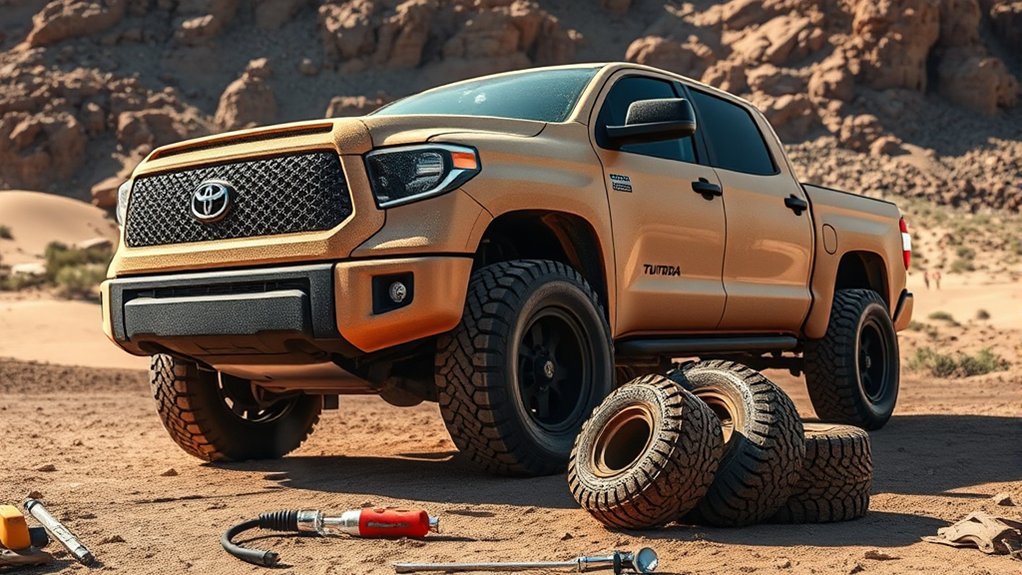
Good tools make tire pressure changes faster and safer. At minimum, carry a pressure gauge, a deflator, and a compressor. A full-size spare, tire plug kit, valve cores, valve caps, gloves, and a flashlight are also smart additions for trail use.
- Tire pressure gauge: Use this before, during, and after airing down.
- Tire deflator: A simple valve tool works, but an adjustable deflator is faster and cleaner.
- Portable compressor: Choose one rated for light trucks and larger tires.
- Full-size spare: A compact spare is not ideal for off-road recovery or long trail exits.
- Tire plug kit: Useful for tread-area punctures, but not sidewall damage.
- Valve caps and cores: Cheap spares can save a trail day.
[Products Worth Considering]
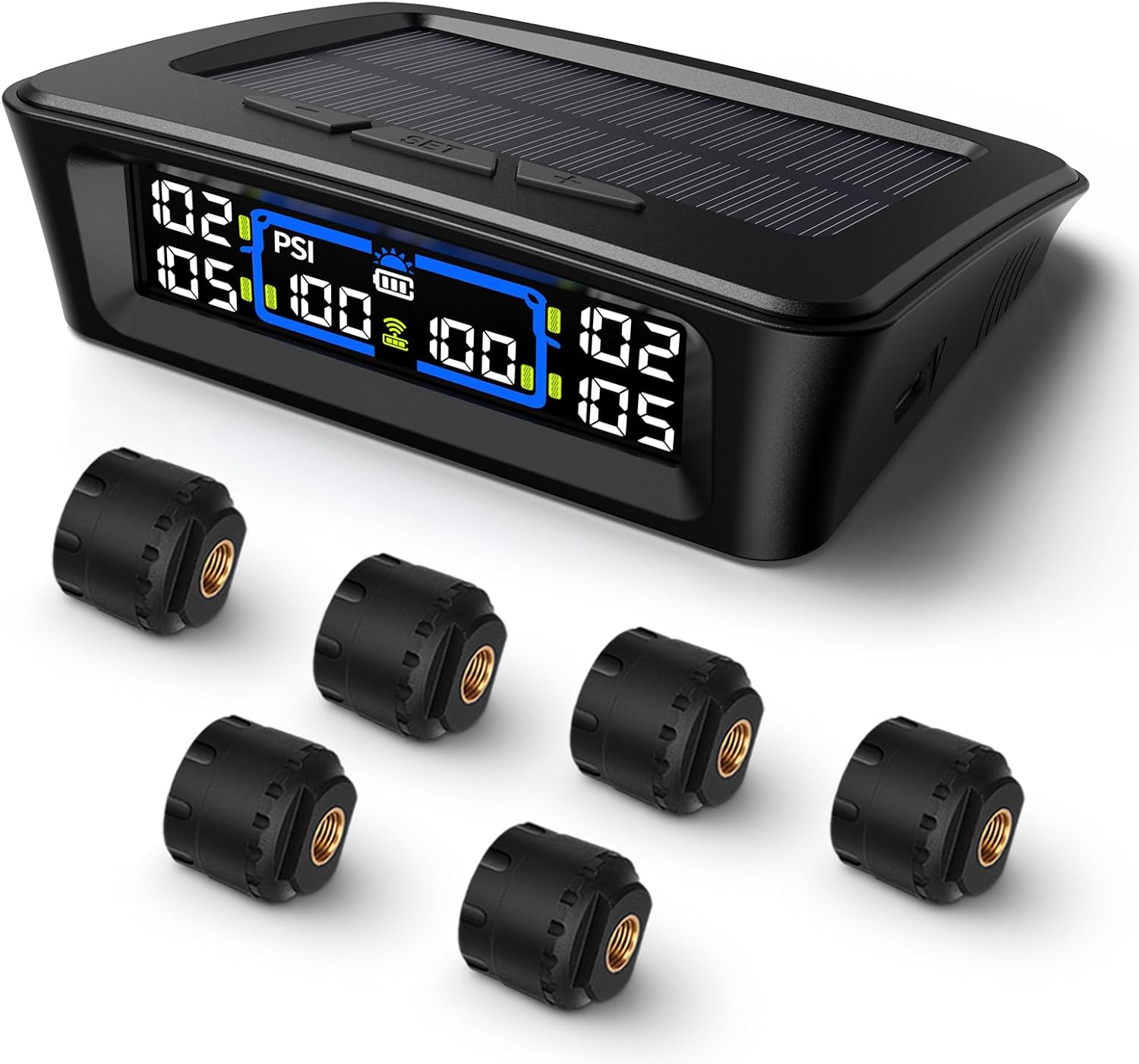
The Tymate TM12 RV TPMS delivers real-time tire pressure and temperature monitoring with a stable 433Hz display for safer long-distance driving. It supports simultaneous monitoring across vehicle and trailer zones, includes six alarm modes for pressure, temperature, leakage, battery, and signal loss, and features easy DIY installation with auto calibration. Power is supplied via USB-C charging or solar recharging, with a wide 0–144 PSI range and up to 50 ft signal coverage for RVs and towable trailers.

This tire inflator with pressure gauge delivers long-lasting performance with a durable rubber-protected gauge and sturdy build. The longer hose and 360 swivel air chuck help you seal the valve securely and keep your hands free while measuring, inflating, or deflating. It’s battery-free for reliable use and provides ±2 PSI accuracy in the mid-range for most typical tires, with universal compatibility for 1/4 NPT compressor outputs.

The Tymate TM2 RV tire pressure monitoring system keeps you informed with a color LCD display, automatic backlight, and solar charging for dependable operation. It supports up to 10 tire positions with four pre-paired sensors, while offering multiple alarm modes for fast leak detection, pressure extremes, temperature alerts, and low-signal warnings. Built-in monitoring uses accurate readings and reliable 433.92MHz communication to help protect your RV, trailer, truck, or SUV.
Re-Inflating for Road Readiness
Reinflating is not optional. Aired-down tires may feel comfortable on the trail, but they are not ready for road speed. Before driving on pavement for any meaningful distance, inflate to the correct road pressure and inspect each tire for cuts, bulges, missing chunks, sidewall scrapes, or debris stuck in the tread.
For stock tires, the correct road PSI is the cold inflation pressure on the Tire and Loading Information label. For modified setups, especially larger LT tires, the original placard may no longer be the exact pressure needed. In that case, use a tire-load chart or ask a qualified tire professional to calculate the correct pressure for your Tundra’s weight and tire size.
Note: “Cold” tire pressure means the tires have not been driven on for several hours. If you air up while the tires are hot, recheck and adjust later when they are cold.
Frequently Asked Questions
What PSI should I air down to when off-roading a Toyota Tundra?
For most low-speed off-road driving, start around 22–28 PSI on dirt and washboard roads, 18–22 PSI on rocks, 16–20 PSI in mud, and 12–16 PSI in deep sand or soft snow. Use the higher end if your Tundra is heavily loaded, has stiff LT tires, or runs standard non-beadlock wheels.
Is 40 PSI too high for 4WD?
For low-speed off-road traction, 40 PSI is usually too high because the tire stays stiff and has a smaller footprint. For pavement, towing, or heavy loads, 40 PSI may be correct for some tire setups. Always use the door placard, owner’s manual, or tire-load guidance for road pressure.
Can I drive on pavement after airing down?
Only at very low speed and for a short distance if needed to reach a safe air-up spot. Do not drive highway speeds while aired down. Reinflating before pavement protects handling, tire life, and safety.
How low can I go without beadlock wheels?
Many drivers avoid going below about 15 PSI on standard non-beadlock wheels unless they have experience with that tire and wheel setup. Below that, the risk of unseating the bead increases, especially with sharp turns, heavy loads, side-hilling, or sudden impacts.
Will airing down trigger the Tundra TPMS light?
Yes, it can. TPMS is designed to warn when pressure is below normal road levels. After you reinflate to the correct road pressure, verify that the warning clears according to your owner’s manual.
Conclusion
Airing down your Toyota Tundra is one of the simplest ways to improve off-road traction and comfort, but it works best when you treat PSI as a tool instead of a guess. Start with conservative pressure, adjust for terrain, keep speeds low, watch the sidewalls, and always reinflate before returning to pavement. With a good gauge, deflator, and compressor, your Tundra will be better prepared for sand, rocks, mud, snow, and the road home.
Sources
- Toyota Owners — 2025 Tundra tire inflation pressure — supports using a gauge and adjusting tire pressure to the recommended level.
- NHTSA TireWise — supports using the vehicle placard/owner’s manual pressure, checking cold tires, and maintaining proper inflation.
- 49 CFR 571.110 — supports the requirement for vehicle placard tire-size and cold inflation-pressure information.
- BFGoodrich Off-Road Tire Selection Guide — supports airing down benefits, tire-pressure variables, and bead-unseating caution.
- Discount Tire — How to Air Down Tires — supports terrain-based off-road PSI starting ranges and airing-up safety reminders.