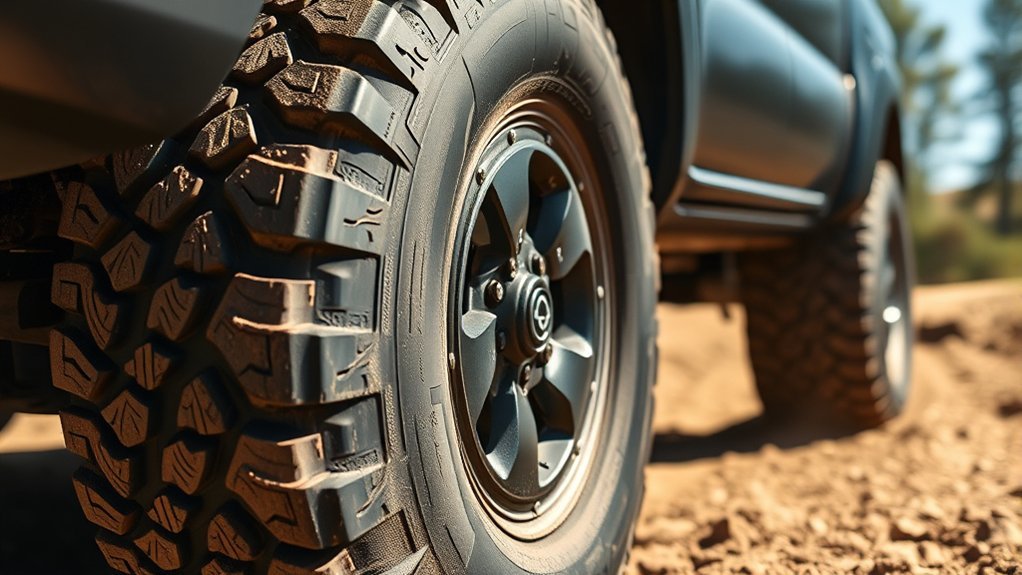
For most Toyota Tacoma owners running common 285/70R17 tires, the best wheel width is usually 17×8.5 inches. It gives the tire enough sidewall support without pushing the tread too far outward. A 17×8 or 17×9 can also work, but the right choice depends on your exact tire model, Tacoma generation, suspension, offset, alignment, and how much trimming you are willing to do.
Quick Answer
The safest all-around wheel width for 285 tires on a Toyota Tacoma is usually 8.5 inches wide, especially for 285/70R17 tires. Many LT285/70R17 all-terrain tires approve a rim-width range around 7.5–9.0 inches, but always check your exact tire’s spec sheet before buying wheels.
Key Takeaways
- Best all-around width: 17×8.5 is the sweet spot for many Tacoma 285/70R17 setups.
- Acceptable range: Many 285/70R17 tires allow about 7.5–9.0 inches, but the exact range depends on the tire model.
- Offset matters as much as width: A wheel that is too negative can poke, rub the fender liner, and require trimming.
- Do not guess tire pressure: Start with the Tacoma door placard or owner’s manual, then adjust only with proper load guidance.
- Verify before buying: Confirm bolt pattern, center bore, lug specs, brake clearance, load rating, and tire-approved rim width.
At a Glance
| Time Required | 15–30 minutes to compare specs before ordering; longer if test-fitting in person |
| Difficulty | Moderate; the wheel width is simple, but offset and clearance need careful checking |
| Tools Needed | Tire spec sheet, wheel specs, tape measure, offset/backspacing calculator, and a qualified tire installer |
| Cost | No cost to research; wheel, tire, alignment, trimming, and lift costs vary by setup |
What 285 Tires Mean for Wheel Width
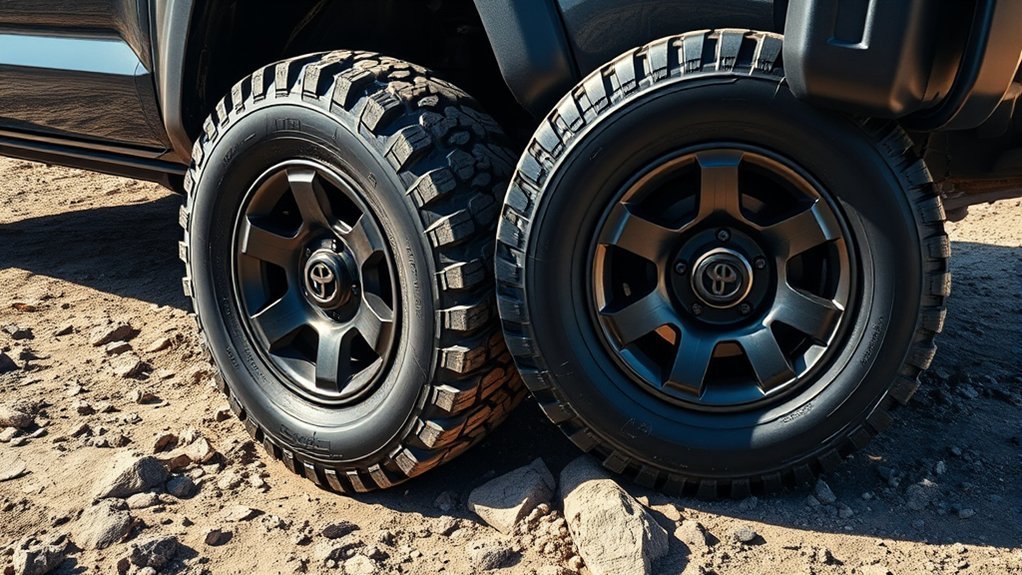
The “285” in a tire size is the section width in millimeters. It is not the full tire size. A 285/70R17, 285/75R16, and 285/65R18 can all have different approved wheel-width ranges, even though they all begin with 285.
That is why the tire manufacturer’s spec sheet matters. For example, the General Tire Grabber A/TX LT285/70R17 lists an approved rim width of 7.5–9.0 inches and uses 8.5 inches as the measuring rim width. That supports the common Tacoma recommendation: 17×8.5 is the safest middle-ground choice for many 285/70R17 tires.
Note: Do not buy wheels based only on “285.” Match the wheel to the complete tire size and the tire maker’s approved rim-width range.
Ideal Wheel Width for 285 Tires on a Tacoma
For a Tacoma with 285/70R17 tires, the practical wheel-width range is usually 8 to 9 inches, with 8.5 inches being the best all-around pick. It supports the sidewall well, keeps the tire profile natural, and usually creates fewer fitment problems than a wider 9-inch wheel.
| Wheel Width | Best For | Watch For |
| 17×8 | More sidewall bulge, trail use, and a slightly tucked look | May feel less crisp on-road than 8.5 or 9 inches |
| 17×8.5 | Best balance for most Tacoma 285/70R17 setups | Still needs the right offset, alignment, and clearance check |
| 17×9 | Wider stance and sharper sidewall support | More poke and a higher chance of rubbing if offset is aggressive |
If you want the simplest answer, choose a 17×8.5 wheel for 285/70R17 tires unless your tire’s spec sheet says otherwise. It is wide enough for stability but not so wide that it creates unnecessary clearance problems.
[Products Worth Considering]

Upgrade your 2024-2026 Tesla Model 3 Highland with REEVAA all-weather mud flaps designed for seamless fit along the original body lines. The set of four delivers strong splash protection against mud, gravel, and road debris while using OEM-grade durable materials. Installation is non-destructive with original hole positions and snap-in clips, and the aerodynamic design helps minimize impact on efficiency.

Upgrade your wheels with MIKKUPPA M12x1.5 mag seat lug nuts built for secure, corrosion-resistant performance. These closed-end chrome lug nuts are a direct replacement for select Toyota models, including Camry, Corolla, RAV4, Sienna, Avalon, Highlander, Matrix, Venza, and Prius. Triple-chromium plating and cold-forged, heat-treated steel help deliver strength for daily driving and replacement needs.

These M14x1.5 closed-end chrome lug nuts are a one-piece replacement designed for secure fitment on compatible GM, Ford, and select Chrysler/Dodge models. Featuring a 60-degree conical seat and anti-rust chrome plating, they help resist corrosion and maintain a bright look for everyday driving. Built for long-term durability, they include OEM-style part references and are backed by 12 months of support.
Offset and Backspacing Matter as Much as Width
Wheel width only tells part of the story. Offset and backspacing decide where the tire sits inside the wheel well. That placement affects rubbing at the fender liner, cab mount area, sway bar, upper control arm, and body mount.
- Stock or mild setups: A more conservative offset is usually easier to live with because it keeps the tire closer to the factory position.
- Lifted setups: Many Tacoma owners use lower or slightly negative offsets for clearance and stance, but too much negative offset can increase fender and liner rubbing.
- 17×9 wheels: These often need more careful offset selection because the extra width can push the tire farther outward.
Warning: Do not assume a “0 offset” or “-12 offset” wheel automatically fits every Tacoma with 285 tires. Tire tread width, lift height, caster, upper control arms, mud flaps, and fender-liner shape can all change the result.
Common Fitment Issues With 285 Tire Widths
Fitting 285 tires on a Tacoma can create rubbing if the wheel offset, suspension, and alignment are not matched carefully. The most common contact points are the front fender liner, mud flap area, body mount, sway bar, and upper control arm.
- Fender liner rub: Often happens at full steering lock or in reverse.
- Cab mount or body mount rub: More likely with aggressive offsets, wider tread patterns, or less caster.
- Upper control arm clearance: Can become tight with certain wheel widths and higher positive offsets.
- Compression rub: A tire may clear while parked but rub when the suspension compresses off-road.
A lift can help, but a lift does not automatically fix every rubbing point. Alignment settings, especially caster, can be just as important as lift height.
How Wheel Width Affects Performance and Safety
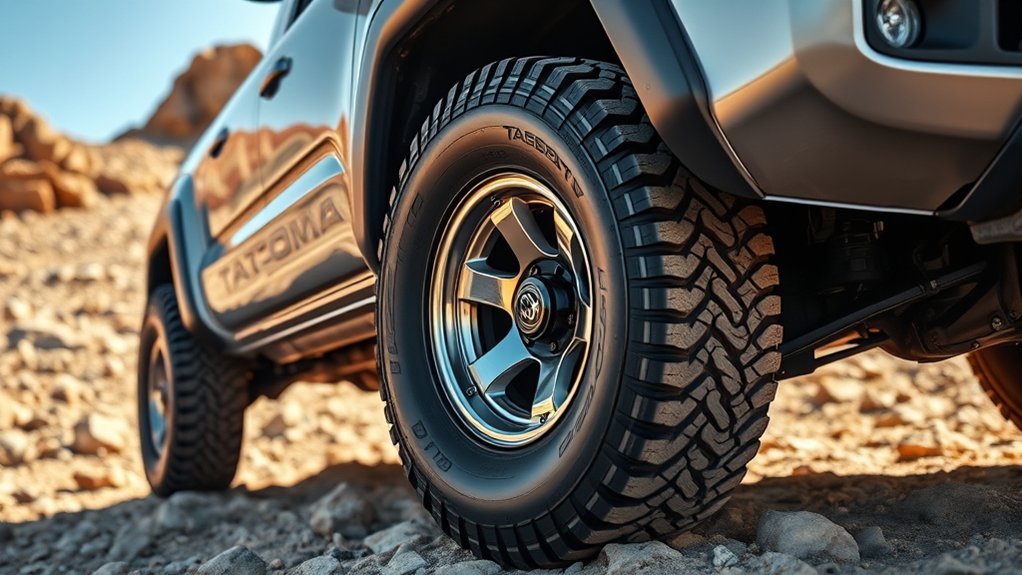
The right wheel width helps the tire keep its intended shape. Too narrow can make the sidewall bulge more. Too wide can flatten the tread profile and expose the wheel lip to trail damage. BFGoodrich notes that tire section width changes as rim width changes, so a wheel that is wider or narrower than the measuring rim can slightly change the tire’s real mounted width.
Sidewall Support
An 8.5-inch wheel gives many 285/70R17 tires a balanced sidewall shape. That helps the tire feel stable on the road while still leaving enough sidewall for off-road flex and impact absorption.
Traction and Contact Patch
Correct wheel width helps the tread sit evenly. That can improve steering feel, braking stability, and tread wear. It will not magically create more traction by itself, but it helps the tire work the way the manufacturer designed it.
Reduced Rubbing Risk
A 17×8.5 wheel is often easier to fit than a 17×9 when both use similar offsets. The wider 17×9 can increase tire poke and may require more trimming, especially with aggressive all-terrain or mud-terrain tread designs.
For most Tacoma 285/70R17 builds, wheel offset decides rubbing risk more than the difference between an 8.5-inch and 9-inch wheel.
How to Select the Best Wheel for Your Tacoma’s 285 Tires
Use this checklist before ordering wheels:
- Confirm the full tire size. Do not shop by “285” alone. A 285/70R17 and 285/75R16 are not the same fitment.
- Check the tire maker’s approved rim-width range. The wheel must fall inside that range.
- Choose the practical width. For many 285/70R17 Tacoma setups, 17×8.5 is the best starting point.
- Verify the wheel specs. Confirm bolt pattern, center bore, lug type, load rating, brake clearance, and TPMS compatibility for your Tacoma model year.
- Match offset to your suspension. A lifted truck, stock truck, and long-travel setup may all need different offsets.
- Plan for alignment. Caster can affect front clearance with 285 tires.
- Test fit before trail use. Turn lock-to-lock, check reverse, and inspect clearance under compression.
Pro Tip: If you want fewer surprises, choose the tire first, read its spec sheet, then choose the wheel. Shopping wheels first is how many Tacoma owners end up with rubbing, wrong load ratings, or poor stance.
[Products Worth Considering]

Keep your tires properly inflated with this analog VONDIOR tire pressure gauge, designed for fast, easy readings without batteries. The swiveling, two-axis hose and large glow dial help you measure at any tire angle with instant visibility. Built with a protective rubber shield, it supports durable, low-maintenance use for cars and trucks.

These aluminum alloy tire valve stem caps with an O-ring seal help protect valve stems from corrosion while adding a clean, stylish look to your vehicle. The universal fit works across cars, trucks, motorcycles, bicycles, and more, making them an easy upgrade for everyday driving and off-road use. Installation is quick, and the included four-pack keeps all your tires dressed and protected.

This professional wheel and rim brush kit makes it easy to lift brake dust, grime, and dirt from wheels and tires without scratching finishes. The brushes feature soft, metal-free wool heads and a flexible 360-degree rim brush design for reaching hard-to-clean areas. Includes multiple brush types plus accessories for thorough car, motorcycle, and general vehicle detailing.
Tire Pressure for 285/70R17 Tacoma Tires
Do not use one universal PSI number for every 285/70R17 Tacoma. The correct starting point is the Toyota tire and loading information label or owner’s manual. The NHTSA tire-safety guide also explains that the correct pressure is the vehicle manufacturer’s recommended cold inflation pressure, not the maximum PSI molded on the tire sidewall.
If you switch from a P-metric tire to an LT-metric tire, ask a qualified tire professional to confirm the pressure needed to carry the Tacoma’s actual axle load. LT tires often need different pressure than the original equipment tire to carry the same load safely.
Upgrading From Stock to Aftermarket Wheels for 285 Tires
Aftermarket wheels can improve stance, clearance, and appearance, but only if the specs are right. For many Tacoma owners, a 17×8.5 wheel with a moderate offset is the cleanest way to run 285/70R17 tires without going too aggressive.
Before buying, check:
- Approved rim width: Confirm your exact 285 tire allows the wheel width.
- Load rating: The wheel must be rated for the truck and how you use it.
- Bolt pattern and center bore: Verify by Tacoma model year, not by guesswork.
- Lug hardware: Some aftermarket wheels need different lug nuts.
- Brake clearance: Especially important with newer trucks or upgraded brakes.
- Spare fitment: Make sure the spare tire location can handle the larger tire.
- Speedometer change: Taller tires can make the speedometer read differently.
Note: Aftermarket wheels do not automatically void your entire warranty. Under the Magnuson-Moss Warranty Act, warranty coverage is generally tied to whether the modification caused the failure. Keep receipts, specs, and alignment records.
[Products Worth Considering]

Upgrade your wheels with MIKKUPPA closed-end lug nuts designed for reliable fit and corrosion resistance. The one-piece, cold-forged and heat-treated steel construction helps resist rust and stripping, while the integrated finish delivers a durable black appearance. Built to OEM standards with a conical 60-degree seat, these nuts provide a secure solution for compatible Ford, Honda, Jeep, and Chevrolet models.

Monitor tire tread wear with a smart, color-coded depth gauge that shows clear condition ranges at a glance. The bar is range marked for fast, easy readings, helping you maintain safer traction and performance. Each gauge is portable with a pocket clip, and the set includes 20 units for daily use and sharing.

This 1/2-inch drive breaker bar delivers powerful leverage for loosening and tightening stubborn lug nuts and automotive fasteners. The 180-degree flex head helps you reach tight spaces at the angle you need, making tire and brake jobs easier. A spring-loaded ball detent design holds 1/2-inch sockets securely while the chrome-moly head provides durable strength for everyday use.
Safety Checks Before Mounting 285 Tires
Tire mounting is not a DIY guessing game. BFGoodrich warns that improper tire/rim assembly can cause serious injury and says tire professionals should mount tires. Use a qualified installer, especially when mounting LT tires or changing wheel width.
After the wheels and tires are installed, check these items:
- Torque the lug nuts to the correct spec for your Tacoma and wheel hardware.
- Recheck lug torque after the installer’s recommended break-in distance.
- Check tire pressure cold.
- Inspect for rubbing at full steering lock in both directions.
- Check clearance while reversing.
- Drive slowly over a bump or driveway entrance and listen for contact.
- Get an alignment and ask for caster settings that help 285 tire clearance.
Frequently Asked Questions
Can I use wider wheels for 285 tires on my Tacoma?
Yes, a 9-inch-wide wheel can work with many 285/70R17 tires, but it is not always the easiest fit. A wider wheel can increase poke and rubbing risk, especially with lower offsets. For most Tacoma owners, 17×8.5 is the safer all-around choice.
What tire pressure should I maintain for 285/70R17 tires?
Start with the cold tire pressure listed on your Tacoma’s tire placard or owner’s manual. Do not use the tire’s maximum sidewall PSI as your normal driving pressure. If your 285/70R17 is an LT tire, ask a tire professional to confirm the right pressure for your vehicle load.
Do aftermarket wheels affect my Tacoma’s warranty?
Aftermarket wheels do not automatically void the whole warranty. However, if a wheel, tire, lift, spacer, or installation issue causes damage, a related warranty claim may be denied. Keep documentation for wheel specs, tire specs, installation, torque checks, and alignment.
How do I measure wheel width correctly?
Wheel width is measured between the inside bead seats, not from the outside lip to outside lip. A wheel that measures about 9.5 inches across the outer lips may be sold as an 8.5-inch wheel because the official width is bead-seat to bead-seat.
Will changing wheel width impact fuel efficiency?
Wheel width itself can have a small effect, but tire weight, tread design, tire diameter, and offset usually matter more. Heavier LT tires and aggressive all-terrain tread can reduce fuel economy more than the difference between an 8.5-inch and 9-inch wheel.
Is 17×8.5 better than 17×9 for 285 tires?
For most Tacoma 285/70R17 setups, yes. A 17×8.5 wheel gives a balanced tire shape, good sidewall support, and fewer clearance problems. A 17×9 can still be a good choice if you want a wider stance and are prepared to manage offset and possible trimming.
Can I run 285 tires on stock Tacoma wheels?
Sometimes, but it depends on the factory wheel width, tire model, suspension, and clearance. Some stock wheels may be narrower than ideal for certain 285 tires, and higher positive offset can create upper-control-arm clearance concerns. Check the tire’s approved rim width before mounting.
Conclusion
The best wheel width for 285 tires on a Toyota Tacoma is usually 8.5 inches, especially with common 285/70R17 all-terrain tires. A 17×8 can work for a slightly more tucked, sidewall-heavy setup, and a 17×9 can work for a wider stance, but 17×8.5 is the cleanest middle ground for most owners.
Before ordering, confirm the tire’s approved rim-width range, then verify offset, bolt pattern, center bore, lug hardware, load rating, brake clearance, and alignment needs. That extra checking is what separates a clean 285 setup from one that rubs every time you turn into a driveway.
Sources
- General Tire Grabber A/TX Specifications — backs up LT285/70R17 approved rim-width range and measuring rim width.
- BFGoodrich All-Terrain T/A KO2 — backs up tire-size variation, mounting safety, and LT replacement pressure caution.
- Toyota Tacoma Tire Inflation Pressure — backs up using Toyota tire placard/manual pressure guidance.
- NHTSA TireWise Tire Safety — backs up cold tire pressure, tire-size, alignment, and tire-maintenance safety guidance.
- Federal Trade Commission: Magnuson-Moss Warranty Act — backs up warranty context for aftermarket parts and written warranties.