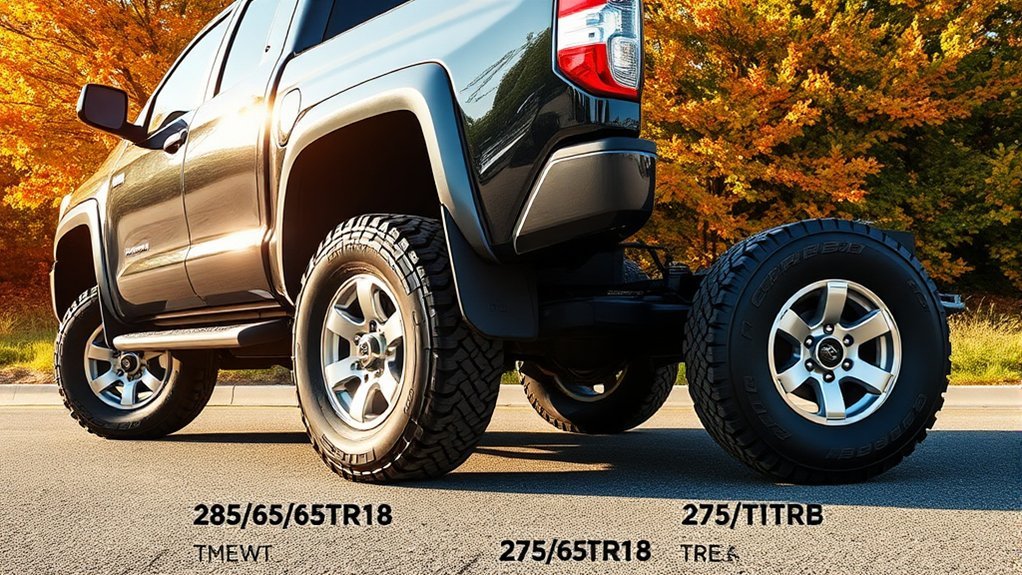
Choosing between 285/65R18 and 275/65R18 tires for a Toyota Tundra comes down to more than looks. The 285/65R18 is slightly wider and taller, while the 275/65R18 usually keeps fitment simpler and closer to stock behavior. The best choice depends on your Tundra’s year, trim, wheel offset, suspension height, load rating needs, and how much clearance you have at full steering lock.
Quick Answer
For most stock Toyota Tundras, 275/65R18 is the safer, easier fit. A 285/65R18 is about 10 mm wider and roughly 0.51 inches taller overall, giving a slightly fuller stance and about 0.26 inches more ground clearance, but it can increase rubbing risk depending on wheel offset, alignment, mud flaps, and suspension setup.
Key Takeaways
- 285/65R18 is not a full inch taller than 275/65R18; the actual overall-diameter difference is about 0.51 inches.
- The width difference is 10 mm, or about 0.39 inches, before brand/model variation.
- If your speedometer is calibrated for 275/65R18, switching to 285/65R18 can make it read about 1.6% low.
- Never choose a tire with a lower load index or speed rating than the tire listed on your Tundra’s placard or owner’s manual.
- Fitment depends heavily on wheel offset, suspension height, alignment, and the exact tire model.
At a Glance
| Best Simple Fit | 275/65R18, especially on stock suspension and factory-style wheel offset. |
| Best Fuller Look | 285/65R18, if clearance checks pass and the load/speed rating is correct. |
| Main Tradeoff | 285/65R18 adds stance and slight clearance but can create rubbing or speedometer error. |
| Must Check Before Buying | Door-jamb tire placard, load index, speed rating, wheel width, offset, suspension height, and full-lock clearance. |
Choosing Between 285/65R18 and 275/65R18: Key Factors to Consider
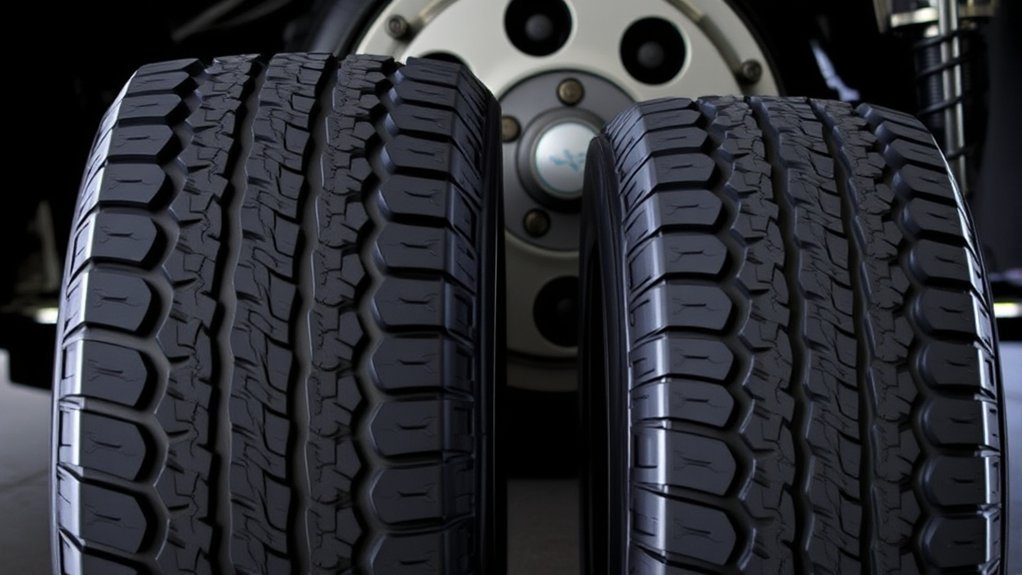
The first number in a tire size is the nominal section width in millimeters, the second number is the sidewall aspect ratio, and the final number is the wheel diameter in inches. That means a 285/65R18 is nominally 10 mm wider than a 275/65R18, while both use an 18-inch wheel and a 65-series sidewall. You can verify how these markings work in Michelin’s tire marking guide.
Here is the practical size difference:
| Size | Nominal Width | Sidewall Height | Overall Diameter |
| 275/65R18 | 275 mm / 10.83 in. | 178.75 mm / 7.04 in. | About 32.07 in. |
| 285/65R18 | 285 mm / 11.22 in. | 185.25 mm / 7.29 in. | About 32.59 in. |
| Difference | +10 mm / +0.39 in. | +6.5 mm / +0.26 in. | +0.51 in. |
Actual mounted dimensions can vary slightly by tire brand, tread design, load range, and measuring rim width. Use the table as a planning guide, then confirm the exact tire’s published specs before buying.
Note: Before changing sizes, check your Tundra’s driver-door tire placard and owner’s manual. Toyota’s manual portal is the best starting point for model-year-specific information, and NHTSA recommends using the original size or another size recommended by the vehicle manufacturer.
[Products Worth Considering]

Adam’s Pro Tire Hex Grip applicators are molded foam sponges designed for precise, even tire dressing application. The ergonomic grip helps you spread product without overapplying, reducing sling that can splash onto paint and helping keep your hands clean during wheel and trim detailing. They’re durable, washable, and reusable for repeated detailing sessions.

These universal tire valve stem caps help protect valve cores from dust, debris, and moisture while helping maintain stable tire pressure. The corrosion-resistant metal construction and sealed design provide reliable protection in road grime, mud, and winter conditions. Twist-on installation makes them quick to fit on cars, SUVs, trucks, and motorcycles.

These aluminum alloy tire valve stem caps with an O-ring seal help protect valve stems from corrosion while adding a clean, stylish look to your vehicle. The universal fit works across cars, trucks, motorcycles, bicycles, and more, making them an easy upgrade for everyday driving and off-road use. Installation is quick, and the included four-pack keeps all your tires dressed and protected.
Speedometer Accuracy: How Tire Size Affects Readings
Because 285/65R18 has a larger overall diameter than 275/65R18, it travels farther per rotation. If your Tundra is calibrated for 275/65R18 and you install 285/65R18, the speedometer will read about 1.6% low. At an indicated 60 mph, your actual speed would be about 61 mph.
The odometer can also undercount distance by roughly the same percentage. This is a small change, but it matters if you care about exact mileage, towing calculations, fuel-economy tracking, or staying precise near speed limits. Tire Rack also notes that large overall-diameter changes can affect speedometer accuracy and vehicle systems such as ABS, traction control, and stability control.
Pro Tip: After installing a different tire diameter, verify speed with a GPS-based speed app or scan tool. If the reading is meaningfully off, ask a qualified shop whether your Tundra can be recalibrated.
Fitment and Its Impact on Ride Quality
On paper, the 285/65R18 adds only about a quarter inch of ride height compared with 275/65R18. In real life, the wider tread and shoulder shape can matter more than the height increase. A squared-off all-terrain tire in 285/65R18 may rub where a rounded highway tire in the same size does not.
The 275/65R18 is usually the more comfortable and predictable choice for daily driving because it is closer to many factory-style fitments. The 285/65R18 can look fuller and may provide a little more sidewall and ground clearance, but it can also add weight, slightly reduce fuel economy, and increase steering effort depending on the tire model.
Do not judge safety by size alone. Match or exceed the load index and speed rating listed on your Tundra’s placard or owner’s manual. Michelin explains that load and speed ratings are part of the tire’s service description, and the Tire Industry Association warns against installing tires with a lower load index than the original equipment tire.
Clearance Considerations for 285/65R18 vs 275/65R18
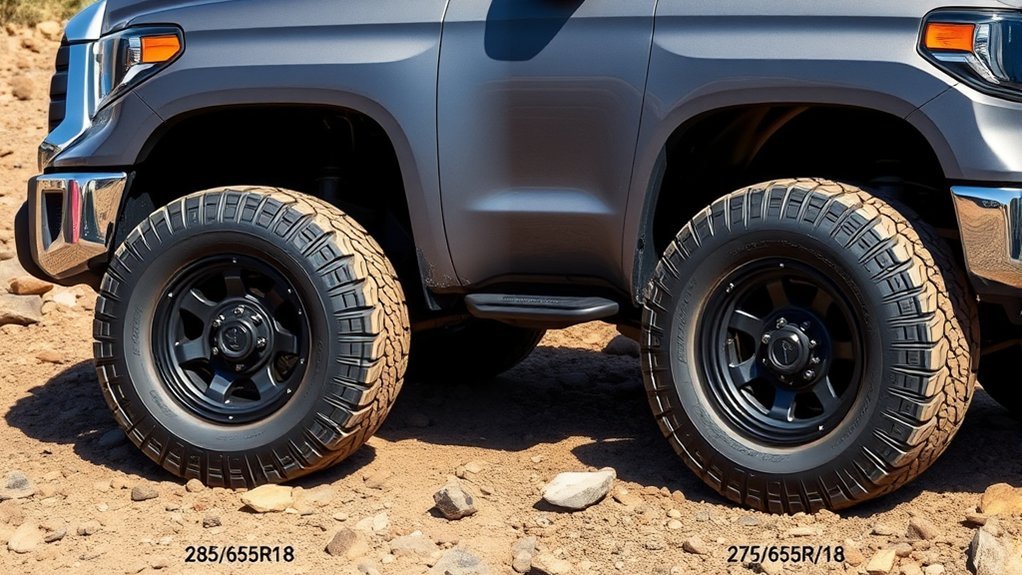
The 285/65R18 is wider and taller than the 275/65R18, so it needs a little more room inside the wheel well. That extra space must be available at full steering lock, over bumps, while reversing, and when the suspension compresses.
[Products Worth Considering]

Upgrade your 2024-2026 Tesla Model 3 Highland with REEVAA all-weather mud flaps designed for seamless fit along the original body lines. The set of four delivers strong splash protection against mud, gravel, and road debris while using OEM-grade durable materials. Installation is non-destructive with original hole positions and snap-in clips, and the aerodynamic design helps minimize impact on efficiency.

Steelman white tire marking crayons provide high-contrast, semi-permanent marks for repairing and inspecting tires and equipment. They write on wet or dry, smooth or coarse surfaces including rubber, metal, glass, and wood, making them ideal for puncture location and damage outlining. The lead- and zinc-free crayons resist weather and fading yet wipe away when you no longer need the marks.

Keep your tires properly inflated with this analog VONDIOR tire pressure gauge, designed for fast, easy readings without batteries. The swiveling, two-axis hose and large glow dial help you measure at any tire angle with instant visibility. Built with a protective rubber shield, it supports durable, low-maintenance use for cars and trucks.
Clearance Under Suspension Components
Check the inner sidewall clearance near the upper control arm, sway bar, brake lines, fender liner, mud flap, and rear of the wheel well. Wheel offset has a major effect here. A wheel with more negative offset may push the tire outward and improve inner clearance, but it can also increase rubbing at the fender liner or mud flap.
A leveling kit or lift can help some setups, but it is not a universal requirement and it does not solve every clearance issue. Alignment settings, caster, wheel width, and tire shoulder shape can still cause rubbing even with extra ride height.
Tire Rubbing Potential
Before committing to 285/65R18, run this fitment checklist:
- Confirm wheel specs: Check wheel width, offset, and load rating.
- Check the tire’s published specs: Compare section width, overall diameter, tread width, and approved rim-width range.
- Test full steering lock: Turn left and right while parked and while slowly reversing.
- Inspect compression clearance: Look for contact points after driving over bumps or uneven surfaces.
- Watch the mud flaps and liner: These are common first-contact areas on mild upsizes.
- Get an alignment: A proper alignment can improve tracking and reduce uneven wear after tire changes.
Warning: Do not install a tire with a lower load index than the tire specified on your Tundra’s placard or owner’s manual. Also use the manufacturer’s recommended cold tire pressure from the placard, not the maximum pressure molded on the tire sidewall.
Which Size Enhances Your Tundra’s Look?
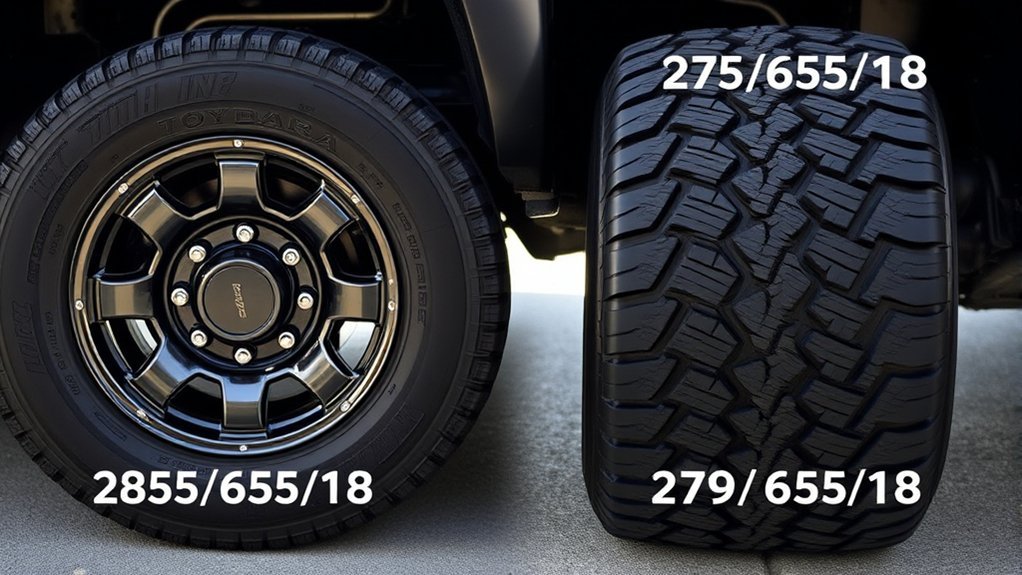
If appearance is your main goal, the 285/65R18 usually gives the Tundra a slightly fuller, more planted look. The difference is not dramatic, but the extra width and sidewall height can help fill the wheel opening better, especially with all-terrain tread.
Visual Impact Comparison
The 275/65R18 keeps the truck looking clean and proportional, especially on factory wheels. The 285/65R18 adds a more muscular stance without jumping to a much larger tire size. If your Tundra is stock and you want fewer fitment headaches, 275/65R18 is the safer visual upgrade. If your truck is leveled or already has favorable wheel offset, 285/65R18 can look more aggressive while staying relatively moderate.
Aesthetic Preferences Explored
Choose 275/65R18 if you want a factory-like look, easier fitment, and fewer changes to ride feel. Choose 285/65R18 if you want a slightly wider stance, a fuller sidewall, and are willing to verify clearance carefully. For either size, the tire model matters: a highway all-season will look and drive very differently from a heavy all-terrain or mud-terrain tire in the same size.
Real-World Performance: 285/65R18 vs 275/65R18
In daily driving, most Tundra owners will notice the tire model more than the 10 mm size difference. Tread pattern, compound, casing weight, and inflation pressure have a major impact on noise, wet grip, steering feel, and fuel economy.
In general, 275/65R18 is better for:
- Stock suspension setups
- Daily commuting and highway comfort
- Minimizing speedometer change
- Reducing rubbing risk
- Keeping tire weight lower, depending on the model
In general, 285/65R18 is better for:
- A slightly wider, fuller stance
- Mild additional ground clearance
- Drivers who want a tougher all-terrain look
- Setups with confirmed wheel-well clearance
- Owners willing to check alignment, offset, and rubbing points
The size change from 275/65R18 to 285/65R18 is modest: about 0.39 inches wider, 0.51 inches taller overall, and about 1.6% different in speedometer reading.
[Products Worth Considering]

Replace your worn or missing TPMS sensors with pre-programmed, direct-fit sensors for compatible Ford, Lincoln, and select Mazda models. Each sensor comes ready to activate with a scan tool, helping restore accurate tire pressure monitoring and trouble-free installation. Built with a long-life CR2032 battery and tested before factory release, this set provides dependable performance with a one-year warranty.

Monitor tire tread wear with a smart, color-coded depth gauge that shows clear condition ranges at a glance. The bar is range marked for fast, easy readings, helping you maintain safer traction and performance. Each gauge is portable with a pocket clip, and the set includes 20 units for daily use and sharing.

The 22800 wheel stud installer makes replacing wheel studs quick and secure, saving time and effort during tire service. It uses a ratchet or impact wrench to pull new studs firmly into place, helping when existing studs are too long. Compatible with most automotive wheels and light-duty truck wheel studs, it’s designed for easy, tool-assisted installation.
Installation Tips for Upgrading Tires on Your Tundra
Before installing 285/65R18 tires, inspect your current clearance and confirm that your wheels are approved for the tire’s width. Also check that the tire’s load index and speed rating meet or exceed your original equipment requirement.
After installation, complete these checks before normal driving:
- Set cold tire pressure: Use the Tundra’s tire placard or owner’s manual as the starting point.
- Check full-lock steering: Turn left and right while stationary and during slow parking-lot maneuvers.
- Inspect after the first drive: Look for shiny rub marks on liners, mud flaps, control arms, and sway bar areas.
- Schedule alignment: New tire size, new wheels, or suspension changes can affect tracking and tire wear.
- Recheck torque: Follow your wheel manufacturer or shop’s retorque recommendation after the first short driving interval.
- Verify speedometer accuracy: Compare indicated speed with GPS speed.
If you tow, haul, or drive off-road, be more conservative. Extra load and suspension compression reduce clearance, and tire rubbing that does not appear in a driveway can show up on rough roads or while turning into steep entrances.
Frequently Asked Questions
Is 275 considered a wide tire?
A 275 mm tire is wide compared with many passenger-car tires, but it is a common width for full-size trucks and SUVs. On a Toyota Tundra, 275/65R18 is usually a practical, moderate size rather than an extreme wide-tire setup.
Is a 275/65R18 a 33-inch tire?
Not quite. A 275/65R18 calculates to about 32.1 inches tall. A 285/65R18 calculates to about 32.6 inches tall, so it is closer to 33 inches but still slightly under a true 33-inch tire.
Will 285/65R18 tires rub on a stock Toyota Tundra?
They can, depending on model year, trim, wheel offset, alignment, tire model, mud flaps, and suspension height. Some setups fit with little trouble, while others need minor trimming, different offset, or a leveling kit. Always test full-lock and compression clearance.
How much will 285/65R18 affect the speedometer compared with 275/65R18?
If your truck is calibrated for 275/65R18, switching to 285/65R18 makes the speedometer read about 1.6% low. When the speedometer shows 60 mph, actual speed is about 61 mph.
Do I need to recalibrate after switching tire sizes?
For a small change from 275/65R18 to 285/65R18, recalibration may not be essential for every driver, but it is worth checking. If you tow, track mileage closely, or want accurate speed readings, ask a qualified shop whether recalibration is available for your Tundra.
Conclusion
For a Toyota Tundra, 275/65R18 is the easier and more conservative choice, especially on stock wheels and suspension. The 285/65R18 gives a slightly wider, taller, more aggressive look, but the change is modest: about 0.39 inches wider and 0.51 inches taller overall. If you choose 285/65R18, confirm load rating, wheel specs, offset, full-lock clearance, tire pressure, and speedometer accuracy before calling the upgrade complete.
Sources
- Michelin — Tire Markings Explained — tire width, aspect ratio, wheel diameter, load rating, and speed rating definitions.
- NHTSA TireWise — tire size, placard, owner’s manual, and cold inflation pressure guidance.
- Toyota Owners Manuals and Warranties — Tundra — official model-year manual access for Toyota Tundra owners.
- Tire Rack — Plus Size Wheels & Tires — overall diameter, speedometer, ABS, traction control, and stability control considerations.
- Tire Industry Association — Tire Replacement — tire placard, load index, speed rating, and professional consultation guidance.