
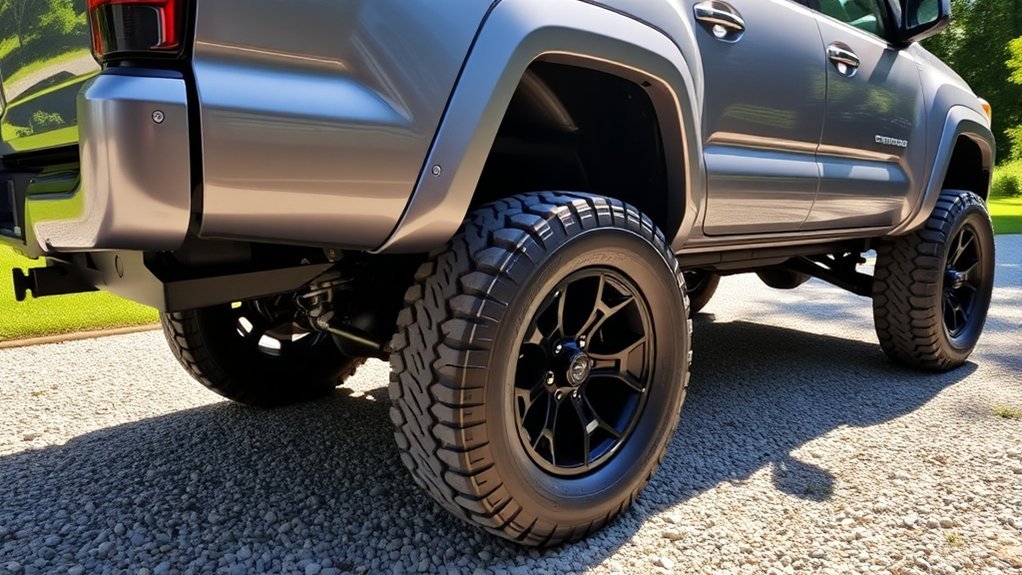
Fitting 285/70R17 tires on a stock Toyota Tacoma can work, but it is not a one-size-fits-all upgrade. A 285/70R17 is roughly a 33-inch tire, so fitment depends on your Tacoma’s generation, trim, wheel width, wheel offset, tire model, alignment, and how hard you use the truck off-road.
Quick Answer
Yes, many 2024+ Toyota Tacoma TRD Off-Road-style setups can fit 285/70R17 tires on stock suspension with little or no trimming. Older 2016–2023 Tacomas and lower trims are less forgiving. Always test full-lock steering, reverse, compression, and clearance before assuming the setup is rub-free.
Key Takeaways
- 285/70R17 is about 32.7 inches tall, but real mounted height varies by tire brand and load range.
- 2024+ Tacomas usually have the best chance of clearing this size at stock height, especially with conservative wheel offset.
- 2016–2023 Tacomas often need more help, such as caster adjustment, liner trimming, mud-flap removal, a small lift, or cab-mount clearance work.
- Wheel offset can fix one rub point and create another; too much poke may hit the bumper or fender liner, while too much positive offset may hit the upper control arm.
- Do not ignore tire safety: confirm load index, speed rating, cold inflation pressure, alignment, and spare-tire fitment.
At a Glance
| Time Required | 30–60 minutes for a careful clearance check; longer if trimming or alignment is needed |
| Difficulty | Moderate; simple test-fitting is easy, but trimming, spacers, and alignment should be handled carefully |
| Tools Needed | Flashlight, tire-pressure gauge, torque wrench, jack or ramps, painter’s tape or chalk, and access to an alignment shop if adjustments are made |
| Cost | $0–$150 for inspection, minor liner work, or alignment; more if you add wheels, spacers, lift components, or professional trimming |
Can You Fit 285/70R17 Tires on a Stock Toyota Tacoma?
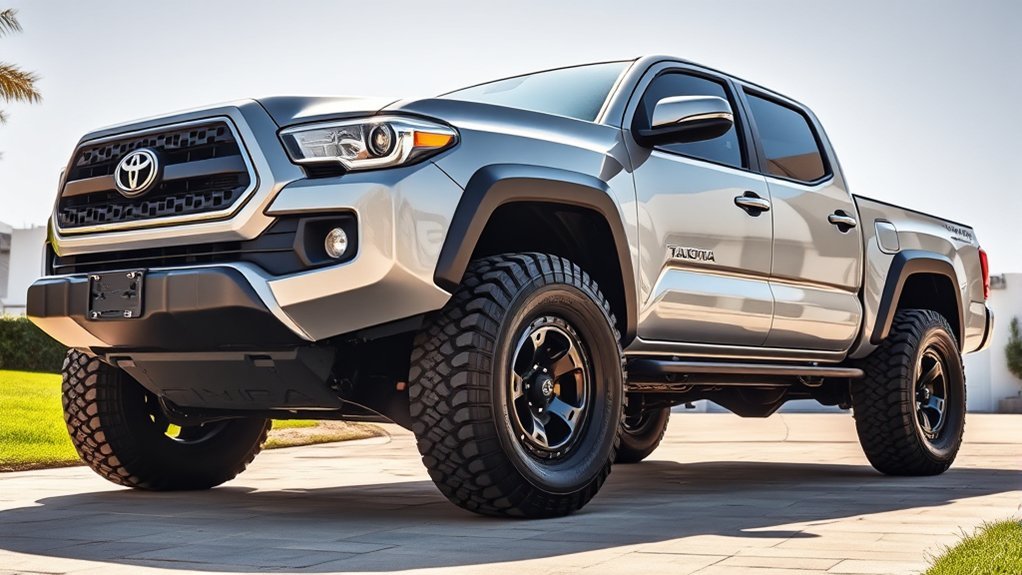
You can fit 285/70R17 tires on some stock Toyota Tacomas, but the correct answer is “it depends.” The biggest divider is the Tacoma generation. Many 2024 and newer Tacomas have more wheel-well room than older trucks, so a 285/70R17 can be a realistic stock-height upgrade on the right wheel. On many 2016–2023 Tacomas, the same size is more likely to rub unless you add lift, alignment caster, trimming, or cab-mount clearance work.
A 285/70R17 tire is wider and taller than several factory Tacoma sizes. For example, current Tacoma trims can come with sizes such as 245/70R17, 265/70R17, 265/65R18, or 265/70R18 depending on model and trim, according to Toyota’s Tacoma tire specifications. Moving from 265/70R17 to 285/70R17 adds about 1.1 inches of tire diameter. Moving from 245/70R17 adds roughly 2.2 inches, which is a much bigger jump.
Warning: A tire that clears while parked can still rub when the suspension compresses, when you reverse at full lock, or when the truck is loaded. Check clearance before daily driving or going off-road.
What 285/70R17 Means in Real Fitment
The size 285/70R17 breaks down like this: 285 mm section width, 70% sidewall aspect ratio, and a 17-inch wheel diameter. Most 285/70R17 tires measure about 32.7 inches tall, but specific models can vary. For example, a Falken WildPeak A/T4W and a Nitto Trail Grappler M/T in this size may not measure exactly the same once mounted and aired up.
That small difference matters. A square-shouldered mud-terrain tire can rub sooner than a rounder all-terrain tire, even when both say 285/70R17 on the sidewall.
The tire size on the sidewall tells you the nominal size, not the exact mounted shape. Tread width, sidewall bulge, load range, wheel width, and offset all affect real Tacoma clearance.
Which Tacoma Generations Fit 285/70R17 Best?
Use this as a practical fitment baseline before buying tires:
| Tacoma Generation | Stock-Height 285/70R17 Fitment | Likely Needs |
|---|---|---|
| 2024+ Tacoma | Best chance of clearing, especially TRD Off-Road-style setups with conservative offset | Careful test-fit, possible liner tuck, small bracket/crash-plate adjustment, or minor trimming depending on wheel offset |
| 2016–2023 Tacoma | Possible, but rubbing is more common | Caster adjustment, mud-flap removal, fender-liner trimming, small lift, aftermarket upper control arms, or cab-mount clearance work |
| 2005–2015 Tacoma | Usually not a simple stock-height fit | Lift, trimming, alignment changes, and possible cab-mount work are commonly needed |
How to Achieve Proper Clearance With 285/70R17 Tires
Before you commit to the setup, check the clearance in the same conditions where rubbing usually happens. Here is the safest process:
- Confirm your current wheel specs. Look for wheel width and offset stamped on the wheel or listed by the manufacturer. Do not assume every stock Tacoma wheel has the same offset.
- Confirm the tire’s approved rim width. Many LT285/70R17 tires are approved for 17×7.5 to 17×9 wheels, but always check the tire model’s spec sheet.
- Mount and torque correctly. Use the proper lug-nut torque for your Tacoma and recheck torque after the first short drive if the wheels were removed.
- Check full-lock steering both ways. Turn the wheel fully left and fully right while parked, then look behind the tire, in front of the tire, and near the upper control arm.
- Test reverse at full lock. Many trucks rub more in reverse than forward because the suspension and tire load shift differently.
- Check compression. Drive slowly up a driveway angle, ramp, or uneven surface to load one front corner at a time. Recheck the fender liner, mud flap, bumper edge, and body mount area.
- Inspect after driving. Look for shiny plastic, rubbed paint, polished metal, torn liner clips, or fresh tire marks.
Pro Tip: Put painter’s tape or chalk on suspected rub points before a test drive. If the tape is scuffed or the chalk is gone, you found the contact area.
[Products Worth Considering]

Secure a full-size spare on your trailer with this powder-coated steel spare tire mount bracket. It fits most 4-, 5-, and 6-lug wheel bolt patterns and mounts to trailer tongues up to 4 in wide and 5 in tall. Built for reliable carry with a max 150 lb load rating and includes zinc-plated hardware for straightforward installation.

These aluminum alloy tire valve stem caps with an O-ring seal help protect valve stems from corrosion while adding a clean, stylish look to your vehicle. The universal fit works across cars, trucks, motorcycles, bicycles, and more, making them an easy upgrade for everyday driving and off-road use. Installation is quick, and the included four-pack keeps all your tires dressed and protected.

Keep your tires properly inflated with this analog VONDIOR tire pressure gauge, designed for fast, easy readings without batteries. The swiveling, two-axis hose and large glow dial help you measure at any tire angle with instant visibility. Built with a protective rubber shield, it supports durable, low-maintenance use for cars and trucks.
What Modifications Are Needed for Installation?
Some Tacomas need no modification for 285/70R17 tires, while others need small changes. Start with the least invasive fix and only move up if the tire actually rubs.
| Modification | Purpose | Additional Notes |
|---|---|---|
| Fender-liner tuck or trimming | Stops light plastic rubbing | Common first fix; keep cuts clean and avoid wiring or washer lines |
| Mud-flap removal or trimming | Improves rear-front wheel-well clearance | Often enough for mild rubbing during turns |
| Caster adjustment | Moves the front tire slightly forward in the wheel well | Requires alignment; do not exceed safe alignment specs just to clear a tire |
| Aftermarket wheels | Changes inner and outer tire position | Moderate positive offsets often work well; very low or negative offset can create bumper and fender rub |
| Small lift or leveling kit | Adds ride-height clearance | Helps static clearance but does not fix every rub point during compression |
| Cab-mount or body-mount clearance work | Creates space behind the front tire on older Tacomas | Permanent work; use a qualified shop if cutting or welding is required |
After any wheel, tire, lift, or alignment change, schedule an alignment check. The NHTSA tire safety guide notes that wheel alignment helps maximize tire life and should be performed with proper equipment by a qualified technician.
[Products Worth Considering]

The Ziopetru adjustable magnetic wheel alignment tool helps you check and restore camber and caster positioning after removing and reinstalling undercarriage components. With a clear leveling/bubble measurement system and an easy zeroing adjustment knob, it supports precise horizontal angle checking. The strong magnetic base mounts to metal surfaces for convenient use at home on cars, motorcycles, trucks, vans, and SUVs.

This ALL-TOP auto-stop tire deflator valve kit lets you air down off-road tires quickly without watching pressure, automatically stopping when your preset PSI is reached. Each valve is individually calibrated for reliable performance with an acceptable +/- 2 PSI tolerance. The adjustable deflator range covers 10 to 30 PSI and includes four valves plus valve caps and a zipper pouch for easy setup on trucks, SUVs, RVs, UTVs, and powersports.

The Tymate TM2 RV tire pressure monitoring system keeps you informed with a color LCD display, automatic backlight, and solar charging for dependable operation. It supports up to 10 tire positions with four pre-paired sensors, while offering multiple alarm modes for fast leak detection, pressure extremes, temperature alerts, and low-signal warnings. Built-in monitoring uses accurate readings and reliable 433.92MHz communication to help protect your RV, trailer, truck, or SUV.
Benefits of Installing 285/70R17 Tires on Your Tacoma
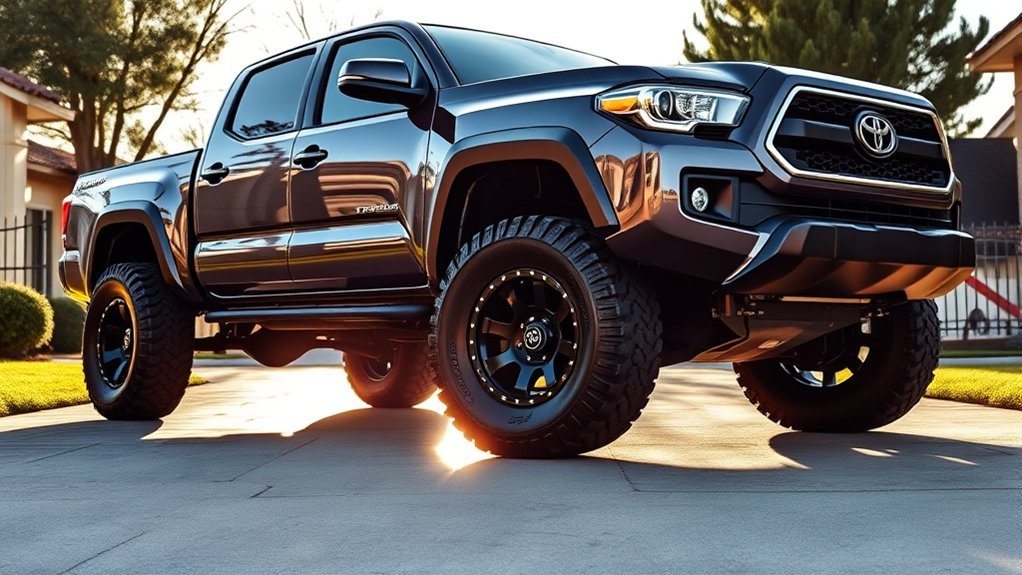
Installing 285/70R17 tires on your Toyota Tacoma can improve both looks and capability when the setup is matched correctly. The biggest benefits are:
- More ground clearance: A taller tire raises the axle and differential slightly, which can help off-road.
- Better trail traction: Many 285/70R17 all-terrain and mud-terrain tires have stronger sidewalls and more aggressive tread than factory highway tires.
- Stronger stance: The wider tire fills the wheel well and gives the Tacoma a more planted look.
- More tire options: 285/70R17 is a popular truck tire size, so there are many all-terrain, rugged-terrain, mud-terrain, and highway-terrain choices.
Note: Bigger tires can also add weight, reduce fuel economy, slow acceleration, affect braking feel, and change speedometer accuracy. The upgrade is worth it only if the benefits match how you use your Tacoma.
How Do Wheel Offsets and Spacers Affect Tire Fitment?
Wheel offset is the distance between the wheel’s mounting surface and the wheel centerline. A higher positive offset tucks the tire inward. A lower offset or negative offset pushes the tire outward.
For Tacoma tire fitment, offset is a trade-off:
- More positive offset: Keeps the tire tucked in, but can bring the inner sidewall closer to the upper control arm, frame, or sway bar.
- Less positive or negative offset: Moves the tire away from inner suspension parts, but can increase fender, bumper, mud-flap, and liner rubbing.
- Wheel spacers: Reduce effective offset. For example, a +35 mm wheel with a 10 mm spacer acts like about +25 mm effective offset.
Spacers can solve inner clearance, but they add another bolted joint and must be hub-centric, torqued correctly, and inspected regularly. If you use spacers, buy quality parts and follow the manufacturer’s torque and recheck instructions.
[Products Worth Considering]

The SAFELIFE dial tire tread depth gauge measures tread depth in 1/32 inch increments with clear, easy-to-read 2-inch dial face. Color zones using a traffic light system help you quickly judge whether tread is low, marginal, or ample for safer driving. Built with a durable zinc cast body and a metal detect probe for precise, comfortable use across cars, motorcycles, trucks, and buses.

These DECURCAR tire valve stem caps help prevent corrosion with a metal shell and plastic liner insert, making them ideal for wet or cold conditions. They feature a built-in leak-proof sealing ring to help reduce air loss and protect your vehicle from tire leak issues. Easy to hand-tighten and designed for Schrader valve stems, they add both function and a stylish American flag emblem look.

This spare tire tool kit is designed for the 2004 to 2018 Ford F-150 to help you loosen and tighten wheel lug nuts and manage the spare tire and provided jack functions from underneath the vehicle. It includes the lug nut wrench and extension pieces plus a convenient storage carrying case for organized transport. The jack itself is not included.
Tire Pressure, Load Rating, and Speedometer Checks
Physical clearance is only part of the job. A safe 285/70R17 setup also needs the right load index, speed rating, and cold inflation pressure.
- Load index: Choose a tire with a load capacity that meets or exceeds the Tacoma’s required rating. The U.S. Tire Manufacturers Association recommends matching the size, load index, and speed rating specified by the vehicle or tire manufacturer.
- Tire pressure: Start with the Tacoma’s tire placard and owner’s manual guidance, then confirm pressure with the tire installer if you change load range. The NHTSA TireWise guide recommends using the owner’s manual or driver-side tire label for the correct size and pressure information.
- Speedometer: Moving from 265/70R17 to 285/70R17 is roughly a 3.5% diameter increase. Moving from 245/70R17 to 285/70R17 is roughly a 7% increase. Your actual road speed may be higher than the speedometer shows.
- Spare tire: Confirm the 285/70R17 spare fits under the bed and does not hit the hitch, exhaust, panhard bar, or bed supports.
- TPMS: If you buy new wheels, transfer or replace the tire-pressure sensors so the warning system still works correctly.
Common Rub Points to Inspect
When a Tacoma rubs with 285/70R17 tires, the contact point is usually one of these areas:
- Front bumper edge or lower valance
- Front fender liner
- Mud flap area
- Rear of the front wheel well
- Cab mount or body-mount area on older Tacomas
- Upper control arm
- Sway bar or frame at full steering lock
- Crash plate or small bracket on some 2024+ setups
If you see fresh rub marks on the tire sidewall, stop driving until the problem is fixed. Sidewall contact is more serious than a light plastic liner scuff.
Frequently Asked Questions
What size wheel do I need for 285/70R17 tires?
Most LT285/70R17 tires are approved for 17×7.5 to 17×9 wheels, but check the exact tire model’s spec sheet before buying. A 17×8 or 17×8.5 wheel is a common choice because it supports the tire well without excessive sidewall bulge.
Will 285/70R17 tires rub on a stock Tacoma?
They may rub, especially on older Tacomas, aggressive low-offset wheels, square-shouldered mud-terrain tires, or trucks used off-road at full suspension compression. Many 2024+ stock-height Tacomas have a better chance of clearing this size, but test-fitting is still required.
Do I need a lift for 285/70R17 tires on a Tacoma?
Not always. Some 2024+ Tacomas can run 285/70R17 tires at stock height. Many 2016–2023 Tacomas benefit from a small lift, more caster, trimming, or aftermarket upper control arms. A lift helps height clearance, but wheel offset and front-to-back clearance still matter.
Is a negative offset wheel best for 285/70R17 Tacoma fitment?
Not always. A lower or negative offset can move the tire away from the upper control arm, but it can also push the tire into the bumper, fender liner, and mud flap. For many Tacoma builds, a moderate positive offset is easier to live with than an aggressive negative offset.
Will 285/70R17 tires affect my Tacoma’s speedometer?
Yes, they can. If your Tacoma came with 265/70R17 tires, switching to 285/70R17 is roughly a 3.5% increase in diameter. If it came with 245/70R17 tires, the increase is roughly 7%. That means the truck may travel faster than the speedometer indicates unless recalibrated.
What tire pressure should I run with 285/70R17 tires?
Use the door placard and owner’s manual as your starting point, then confirm the correct cold pressure with your tire installer if you change tire size or load range. A Load Range E tire may need a different pressure than a lighter factory tire to carry the same load safely.
Conclusion
Fitting 285/70R17 tires on a stock Toyota Tacoma is realistic for some trucks, especially many 2024+ TRD Off-Road-style setups, but it is not guaranteed for every Tacoma. The smart approach is to match the tire to the correct 17-inch wheel, choose a sensible offset, confirm load rating and pressure, then test for rubbing at full lock and under compression.
If the tire clears safely, 285/70R17 can give your Tacoma a stronger stance, more ground clearance, and better off-road tire choices. If it rubs, fix the exact contact point instead of guessing. A small liner tuck, caster adjustment, or wheel-offset change can make the difference between a clean upgrade and an annoying daily-driving problem.
Sources
- Toyota Tacoma specifications — current Tacoma factory tire-size context by trim
- NHTSA TireWise — tire size, tire-pressure, and tire-safety guidance
- NHTSA Tire Safety Brochure — cold tire pressure, alignment, tread, and tire-maintenance guidance
- U.S. Tire Manufacturers Association: Replacing Tires — load index, speed rating, and replacement tire safety guidance
- Tire Rack Falken WildPeak A/T4W specifications — size-specific diameter, rim-width, pressure, and load data
- Tire Rack Nitto Trail Grappler M/T specifications — size-specific diameter, rim-width, pressure, and load data

