Choosing tires for a first-generation Toyota Tundra is not just a matter of picking the biggest size that looks good. The right tire must match your truck’s original wheel size, load rating, driving conditions, and available clearance. For most 2000–2006 Tundra owners, the best starting point is the tire size printed on the driver-door Tire and Loading Information Label, then comparing it with the common factory sizes and safe upgrade options below.
Quick Answer
The most common stock tire sizes for the 1st Gen Toyota Tundra are 245/70R16, 265/70R16, and 265/65R17, depending on year, trim, drivetrain, and wheel package. Use the tire placard on your driver-door jamb as the final authority for your truck’s original size, cold pressure, and minimum load rating.
Key Takeaways
- Factory sizes are not just two sizes: include 245/70R16, 265/70R16, and 265/65R17 when researching 2000–2006 Tundra fitment.
- Do not guess tire pressure: use the cold tire pressure on the driver-door placard or in the owner’s manual, not the maximum PSI printed on the tire sidewall.
- Match or exceed the OE load rating: common OE ratings include 106, 110, and 111, depending on size and tire package.
- Upsizing needs a clearance check: wheel offset, backspacing, alignment, mud flaps, and suspension sag can cause rubbing even when another owner reports that a size fits.
At a Glance
| Time Required | 10–15 minutes to check the door placard and current sidewall; longer if comparing upgrade sizes. |
| Difficulty | Easy for stock replacement; moderate for upsizing or changing wheel offset. |
| Tools Needed | Tire pressure gauge, tread-depth gauge or penny, flashlight, and a tape measure for clearance checks. |
| Cost | Varies by tire type and size; plan for mounting, balancing, valve stems or TPMS service where equipped, and alignment if wear is uneven. |
Understanding Tire Specifications for the Tundra 1st Gen
For the Toyota Tundra 1st Gen, sold in the U.S. from 2000 through 2006, the common original tire sizes are 245/70R16, 265/70R16, and 265/65R17. The exact size depends on model year, trim, drivetrain, and package. Toyota’s 2006 brochure, for example, lists P245/70R16 tires on 16-inch steel or styled steel wheels, P265/65R17 tires on 17-inch alloy wheels, and P265/70R16 tires in alloy-wheel and TRD Off-Road packages.
Before buying tires, check three places: the driver-door tire placard, the sidewall of the tires currently installed, and the owner’s manual. The placard is the most important because it tells you the original tire size and cold inflation pressure for your specific truck.
Note: If your Tundra has aftermarket wheels, a lift, a leveling kit, or tires from a previous owner, the current tire size may not be the factory size. Always compare it with the door placard before replacing tires.
Stock Tire Sizes for 2000–2006 Toyota Tundra
The table below summarizes the core factory-style sizes most buyers will see when shopping for first-generation Tundra tires. Not every size was used on every trim or model year, so use this as a guide rather than a substitute for your truck’s placard.
| Stock Tire Size | Approx. Diameter | Common Use | Typical OE Load/Speed Rating |
|---|---|---|---|
| 245/70R16 | About 29.5 in. | Base, SR5, 2WD, regular-cab, and some steel-wheel packages | Often 106S |
| 265/70R16 | About 30.6 in. | TRD Off-Road, 16-inch alloy-wheel packages, some SR5 4WD and Limited applications | Often 111S |
| 265/65R17 | About 30.6 in. | 17-inch alloy wheels, Limited, later SR5, and sport-style packages | Often 110S |
The key takeaway is that 265/70R16 should not be left out when discussing stock first-gen Tundra tire sizes. It is especially important for owners with TRD Off-Road packages or 16-inch alloy-wheel packages.
Decoding Tire Size Numbers for Your Tundra
A tire size such as 265/70R16 tells you the tire’s width, sidewall height, construction type, and wheel diameter. Understanding these numbers helps you compare stock and upgrade sizes without guessing.
| Part of Size | Example | What It Means |
|---|---|---|
| Width | 265 | The tire is about 265 mm wide from sidewall to sidewall. |
| Aspect ratio | 70 | The sidewall height is 70% of the tire width. |
| Construction | R | Radial construction, the standard design for modern passenger and light-truck tires. |
| Wheel diameter | 16 | The tire fits a 16-inch wheel. |
| Load/speed rating | 111S | The load index and speed symbol. Replacement tires should meet or exceed the original rating. |
Two tires can have different wheel diameters but nearly the same overall height. For example, 265/70R16 and 265/65R17 are both about 30.6 inches tall, which is why Toyota could use them on different wheel packages without drastically changing ride height or gearing.
Load Index, Speed Rating, and Tire Pressure
Do not choose a Tundra tire by size alone. The tire also needs the right load index, speed rating, and cold inflation pressure. A tire with the correct dimensions but too low a load rating is not a safe substitute.
| Load Index | Approx. Max Load Per Tire | Where You May See It |
|---|---|---|
| 106 | 2,094 lb | Common on 245/70R16 tires |
| 110 | 2,337 lb | Common on 265/65R17 tires |
| 111 | 2,403 lb | Common on 265/70R16 tires |
Warning: Never use the maximum PSI printed on the tire sidewall as your normal inflation pressure. The correct cold tire pressure is the vehicle manufacturer’s recommendation on the driver-door placard or in the owner’s manual.
According to NHTSA TireWise, tire pressure should be checked when tires are cold, including the spare, and the correct pressure is the pressure specified by the vehicle manufacturer. If your 2006 Tundra has a tire pressure monitoring system, treat it as a warning system, not a replacement for regular pressure checks with a gauge.
Choosing the Best Tire for Your Tundra’s Driving Conditions
The best tire for a 1st Gen Tundra depends on how the truck is used. A daily commuter, a hunting truck, a towing setup, and a trail truck should not all run the same tread pattern.
[Products Worth Considering]

Keep your tires properly inflated with this analog VONDIOR tire pressure gauge, designed for fast, easy readings without batteries. The swiveling, two-axis hose and large glow dial help you measure at any tire angle with instant visibility. Built with a protective rubber shield, it supports durable, low-maintenance use for cars and trucks.

These universal tire valve stem caps help protect valve cores from dust, debris, and moisture while helping maintain stable tire pressure. The corrosion-resistant metal construction and sealed design provide reliable protection in road grime, mud, and winter conditions. Twist-on installation makes them quick to fit on cars, SUVs, trucks, and motorcycles.
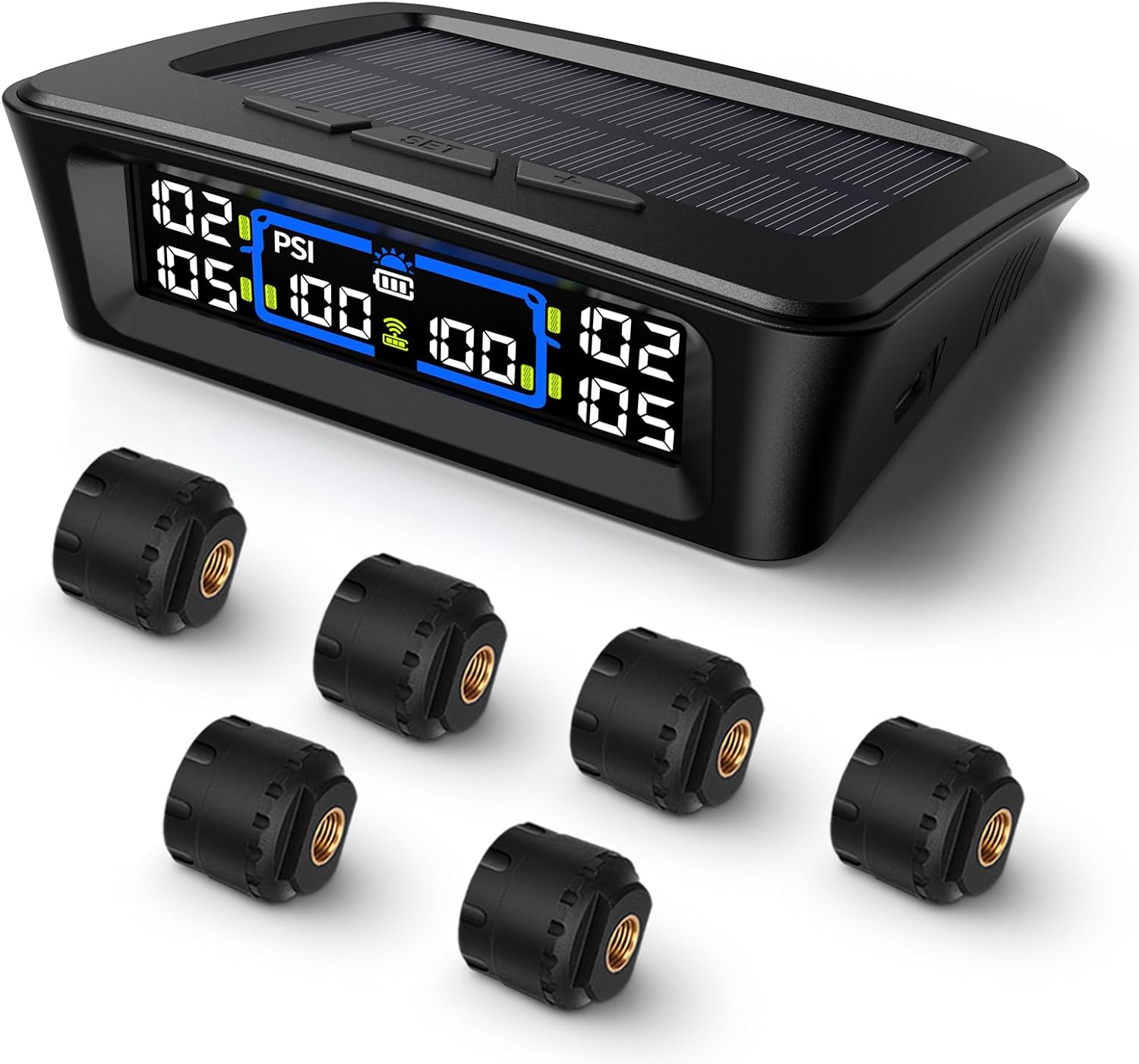
The Tymate TM12 RV TPMS delivers real-time tire pressure and temperature monitoring with a stable 433Hz display for safer long-distance driving. It supports simultaneous monitoring across vehicle and trailer zones, includes six alarm modes for pressure, temperature, leakage, battery, and signal loss, and features easy DIY installation with auto calibration. Power is supplied via USB-C charging or solar recharging, with a wide 0–144 PSI range and up to 50 ft signal coverage for RVs and towable trailers.
Highway and All-Season Tires
Highway-terrain and all-season tires are the best choice for mostly paved-road driving. They usually offer quieter ride quality, better tread life, and lower rolling resistance than aggressive off-road tires. Choose this type if your Tundra spends most of its time commuting, towing on pavement, or hauling light loads around town.
All-Terrain Tires
All-terrain tires are a strong middle ground for Tundra owners who drive pavement during the week and gravel roads, job sites, campsites, or mild trails on weekends. Look for a load rating that meets or exceeds your original tire and a tread design that balances wet braking, road noise, and off-road grip.
Mud-Terrain Tires
Mud-terrain tires are designed for soft dirt, mud, rocks, and rutted trails. They can improve off-road bite, but they often add road noise, weight, and stopping-distance tradeoffs on wet pavement. They are not the best choice for most daily-driven Tundras unless off-road traction is the priority.
Winter Tires
If you drive in regular snow, ice, or freezing temperatures, dedicated winter tires are better than relying on all-terrain tires alone. Keep all four tires the same type and similar diameter, and choose a winter tire with a load rating that meets or exceeds the original requirement.
Guidelines for Upgrading Your Tires
Upsizing can improve stance and ground clearance, but it can also create rubbing, slower acceleration, speedometer error, heavier steering, and extra strain on brakes and suspension. Use the stock size as your baseline before moving larger.
Pro Tip: When comparing sizes, focus on overall diameter first. A tire that is only slightly wider but much taller can affect clearance and gearing more than expected.
| Size | Approx. Diameter | Compared with 265/70R16 | Fitment Notes |
|---|---|---|---|
| 245/70R16 | 29.5 in. | Smaller | Factory-style base size; safest replacement for trucks originally equipped with it. |
| 265/70R16 | 30.6 in. | Baseline | Factory-style size on many 16-inch alloy and TRD/off-road setups. |
| 265/65R17 | 30.6 in. | Nearly same | Factory-style 17-inch size; good for owners keeping OEM 17-inch wheels. |
| 275/70R16 | 31.2 in. | About 2% taller | Common mild upsize, but check full-lock clearance and mud-flap/fender-liner contact. |
| 265/75R16 | 31.6 in. | About 3% taller | May need careful clearance checks; leveling kit, trimming, or offset changes may be needed on some trucks. |
| 285/75R16 | 32.8 in. | About 7% taller | Aggressive upsize; usually requires more clearance work and may affect gearing and speedometer accuracy. |
If your truck originally came with 245/70R16 tires, jumping straight to a larger tire changes diameter more than it would on a truck that came with 265/70R16 tires. That is why two owners can report different results with the same upgrade size.
[Products Worth Considering]
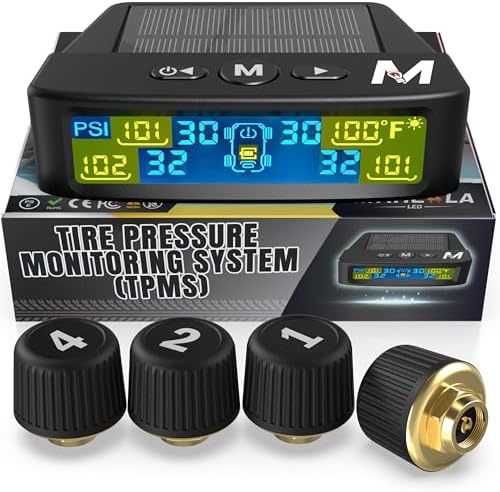
Marcala’s TPMS set of four sensors helps you monitor tire pressure and temperature in real time while driving, with updates every second. The bright color LCD uses auto-dimming for easy viewing, powered by dual solar and USB charging, and offers six alarm modes. Built for trailers, RVs, campers, trucks, and towing setups, the sensors support monitoring 1-4 wheels up to 98 PSI with IP67 waterproof protection.

These M14x1.5 closed-end chrome lug nuts are a one-piece replacement designed for secure fitment on compatible GM, Ford, and select Chrysler/Dodge models. Featuring a 60-degree conical seat and anti-rust chrome plating, they help resist corrosion and maintain a bright look for everyday driving. Built for long-term durability, they include OEM-style part references and are backed by 12 months of support.

The Tymate TM2 RV tire pressure monitoring system keeps you informed with a color LCD display, automatic backlight, and solar charging for dependable operation. It supports up to 10 tire positions with four pre-paired sensors, while offering multiple alarm modes for fast leak detection, pressure extremes, temperature alerts, and low-signal warnings. Built-in monitoring uses accurate readings and reliable 433.92MHz communication to help protect your RV, trailer, truck, or SUV.
Avoiding Rubbing Issues With Larger Tires
Rubbing usually happens at full steering lock, during suspension compression, or when reversing with the wheels turned. It can occur at the frame, upper control arm, mud flap, fender liner, bumper edge, or body mount area.
Before committing to a larger tire, check these fitment points:
- Wheel offset and backspacing: Aftermarket wheels can move the tire inward or outward, changing where it rubs.
- Actual tire dimensions: Two tires with the same printed size can differ slightly by brand and tread design.
- Suspension height: Old springs, worn shocks, or added front-end weight can reduce clearance.
- Alignment and caster: Alignment settings can move the tire closer to the fender liner or body mount.
- Full-lock test: Turn the steering wheel fully left and right, then inspect for contact.
- Loaded test: Check clearance with passengers, cargo, or trailer tongue weight if that is how the truck is normally used.
Warning: Rubbing is not just annoying. A tire that contacts metal, sharp plastic, or suspension parts can be damaged over time. Fix rubbing before daily driving or towing.
Recommended Tire Brands for the Tundra 1st Gen
For a 1st Gen Tundra, start with brands that offer the correct size, load rating, and tread type for your driving. Popular brands to compare include Michelin, Bridgestone, Goodyear, BFGoodrich, Falken, Toyo, and Nitto. The right choice depends more on the tire’s size, load rating, tread design, and real-world use than on brand name alone.
[Products Worth Considering]

The TYAMATE TM8 solar-powered wireless TPMS delivers real-time tire pressure and temperature monitoring with six alarm modes for safer driving. A vibrant color LCD display shows readings clearly while windshield mounting keeps it hands-free and easy to read. With a wide 0–87 PSI range, strong 433.92 MHz signal transmission, and quick sensor pairing, it’s ideal for RV, sedan, SUV, MPV, and truck use.

The SAFELIFE dial tire tread depth gauge measures tread depth in 1/32 inch increments with clear, easy-to-read 2-inch dial face. Color zones using a traffic light system help you quickly judge whether tread is low, marginal, or ample for safer driving. Built with a durable zinc cast body and a metal detect probe for precise, comfortable use across cars, motorcycles, trucks, and buses.

Measure tire tread depth quickly and accurately with this LUMITECO dial gauge that reads in 1/32" increments up to 14/32". The color-coded green/yellow/red zones make it easy to judge tire wear and know when replacement is needed. A rugged, compact design with a protective pouch helps keep the gauge ready for use on cars, trucks, motorcycles, and more.
Best for Daily Driving
Choose a highway-terrain or all-season light-truck tire if your Tundra spends most of its life on pavement. Prioritize wet braking, treadwear warranty, ride comfort, and noise level.
Best for Mixed Use
Choose an all-terrain tire if you split time between pavement, gravel, dirt roads, mild trails, and winter weather. Look for a tread that is aggressive enough for loose surfaces but still quiet enough for highway driving.
Best for Off-Road Use
Choose mud-terrain or more aggressive all-terrain tires only if you need the extra traction. These tires can be heavier and louder, and the extra weight may affect acceleration, braking, and fuel economy.
Keeping Your New Tires in Top Shape
Good tire maintenance helps your Tundra ride better, stop better, and avoid premature tire failure. Follow the maintenance schedule in your owner’s manual, and use these basic tire-care checks:
- Check tire pressure monthly: Measure pressure when tires are cold, including the spare.
- Rotate regularly: If recommended for your setup, rotate about every 5,000 to 8,000 miles or sooner if uneven wear appears.
- Watch tread depth: Tires should be replaced when tread is worn to 2/32 inch; for wet, snowy, or towing use, many owners replace earlier for better grip.
- Inspect for age and damage: Look for cracks, bulges, punctures, cupping, and exposed cords.
- Balance and align: Balance new tires and check alignment if the truck pulls, vibrates, or wears tires unevenly.
- Check lug torque after service: After wheels are removed, have lug nuts torqued to the proper specification and rechecked as recommended by the shop.
A tire pressure monitoring system is helpful, but it is not a replacement for monthly pressure checks with a gauge.
Frequently Asked Questions
What are the stock tire sizes for a 1st Gen Toyota Tundra?
The common stock sizes are 245/70R16, 265/70R16, and 265/65R17. The exact size depends on year, trim, drivetrain, and wheel package, so the driver-door tire placard is the best source for your specific truck.
What tire pressure is recommended for the Tundra?
Use the cold tire pressure listed on the driver-door Tire and Loading Information Label or in the owner’s manual. Do not use the maximum PSI printed on the tire sidewall as the normal driving pressure.
What load rating should I use?
Choose tires that meet or exceed the original load index on your tire placard or current OE-equivalent tire. Common examples include 106, 110, and 111, but your truck’s placard and usage should guide the final choice.
Can I use winter tires on my Tundra?
Yes. Use four matching winter tires in an approved size with an adequate load rating. Winter tires are especially helpful in regular snow, ice, and freezing temperatures.
How often should I rotate my tires?
Follow the owner’s manual and tire manufacturer guidance. A common interval is about every 5,000 to 8,000 miles when rotation is recommended, or sooner if you notice uneven wear.
What is the biggest tire I can fit without rubbing?
There is no single guaranteed answer because clearance depends on wheel offset, backspacing, alignment, suspension height, tire brand, and trim pieces. Mild upsizes such as 275/70R16 are common starting points, but every truck should be checked at full steering lock and under suspension compression.
Will larger tires affect my speedometer?
Yes. A taller tire travels farther per wheel rotation, so the speedometer and odometer can read lower than actual speed and distance. The larger the diameter change, the more noticeable the error.
Are tire warranty options available?
Yes. Many tire brands and retailers offer treadwear warranties, road-hazard coverage, or workmanship warranties. Read the terms carefully because coverage often depends on proper inflation, rotation records, alignment, and even treadwear.
Conclusion
The safest way to choose tires for a 1st Gen Toyota Tundra is to start with the driver-door placard, then compare the correct factory-style sizes: 245/70R16, 265/70R16, and 265/65R17. If you stay stock, match the original size, load rating, and cold pressure guidance. If you upgrade, check diameter, load index, wheel offset, and rubbing clearance before buying. A good tire should fit the truck, match how you drive, and keep the Tundra safe under braking, towing, hauling, and rough-road use.
Sources
- Toyota Owners Manuals and Warranties — official Toyota manual access for 2006 Tundra owner information.
- 2006 Toyota Tundra eBrochure — Toyota-published tire and wheel package references for 2006 Tundra trims and options.
- NHTSA TireWise — tire pressure, tread depth, rotation, TPMS, and tire safety guidance.
- Bridgestone Speed and Load Rating Charts — explanation of tire speed symbols and load index ratings.
- Discount Tire Load Range vs. Load Index — load-index carrying-capacity reference.
- Tire Rack Toyota Tundra Tire Guide — first-generation Tundra factory tire size reference and tire category guidance.