
Tacoma Tire Size Guide for 1st Gen: Stock & Upgrades
By [VERIFY: add real author/byline] · Last updated: July 7, 2026
The right 1st Gen Tacoma tire size depends on your exact 1995–2004 truck, not the generation alone. Start with the driver-door tire placard, then confirm the current tire sidewall, wheel diameter, lug count, and load rating before you buy. Many 2WD 5-lug trucks use smaller 14- or 15-inch sizes, while many 4WD and PreRunner-style 6-lug trucks use 15- or 16-inch sizes such as P225/75R15, 31×10.50R15, or P265/70R16. For most stock or lightly modified trucks, a near-stock all-terrain or a 31-inch tire is the safest upgrade path.
Quick Answer
Most 1st Gen Tacoma stock tire sizes fall around P195/75R14, P205/75R14, P215/70R14, P215/65R15, P205/75R15, P225/75R15, 31×10.50R15, P235/55R16, and P265/70R16, depending on year, trim, drivetrain, and wheel package. The safest upgrade for many stock 6-lug trucks is usually 31×10.50R15 or a factory-style P265/70R16, but you still need to check rubbing, load rating, wheel offset, spare-tire match, and speedometer error.
Key Takeaways
- Do not buy tires from a generic chart alone; confirm the size on your driver-door placard and current tire sidewall.
- First-gen Tacoma wheel bolt patterns are not all the same: many 2WD trucks are 5×114.3, while many 4WD and PreRunner-style trucks are 6×139.7.
- Use the vehicle placard pressure, not the maximum PSI printed on the tire sidewall.
- For off-road use, match or exceed the original load rating and check full-lock steering clearance before driving at speed.
At a Glance
| Time Required | 10–20 minutes to identify your current setup; longer if test-fitting larger tires |
| Difficulty | Easy for stock replacement; moderate for upsizing |
| Tools Needed | Tire pressure gauge, flashlight, tape measure, wheel-spec information, and a torque wrench for wheel installation |
| Cost | Stock-size replacement tires are usually the lowest-cost route; larger off-road tires may also require wheels, trimming, alignment, or suspension work |
How to Confirm Your Exact 1st Gen Tacoma Tire Size
Use a three-check process before ordering tires. First, read the Tire and Loading Information label on the driver-side door edge or B-pillar. NHTSA tells drivers to use that label or the owner’s manual for the correct tire size and cold pressure, not a generic chart.
- Read the placard. Write down the tire size, load rating, and recommended cold PSI.
- Read the current sidewall. Confirm whether the truck still wears the factory size or a previous owner changed it.
- Check the wheels. Count the lugs, measure wheel diameter, and confirm the wheel width before upsizing.
If those three checks disagree, treat the placard as your safety baseline and ask a qualified tire shop to verify fitment. This matters most on lifted trucks, lowered trucks, trucks with aftermarket wheels, and 4WD trucks with a mismatched spare.
What Stock Tire Sizes Fit a 1st Gen Tacoma?
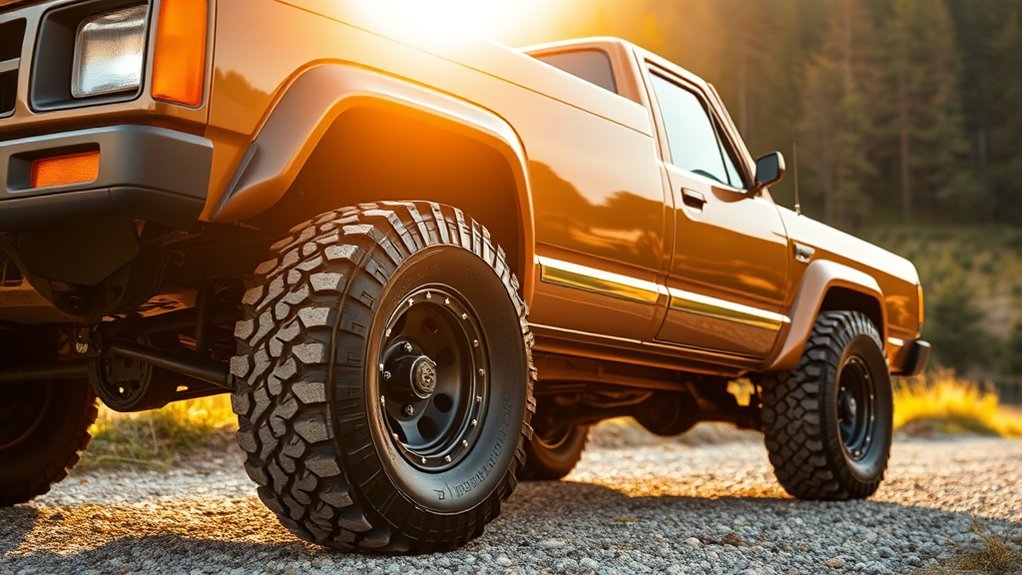
The first-generation Toyota Tacoma ran from model year 1995 through 2004. Factory tire size changed by year, trim, cab, drivetrain, and wheel package. A base 2WD truck with 14-inch wheels does not use the same tires as a 4WD or PreRunner-style truck with 15- or 16-inch wheels.
Common original-equipment sizes across the generation include the sizes below. Use this as a sorting guide, then confirm the exact size on your own Tacoma before purchase.
| Common Setup | Common Stock Tire Sizes | Notes |
|---|---|---|
| Early 2WD 14-inch wheel trucks | P195/75R14, P205/75R14, P215/70R14 | Usually smaller 5-lug trucks; verify wheel size before buying. |
| 2WD/SR5 15- or 16-inch packages | P215/65R15, P205/75R15, P235/55R16 | More street-focused sizes; not the same as 4WD off-road packages. |
| 4WD and some SR5/off-road packages | P225/75R15, 31×10.50R15 | Popular starting point for mild off-road use. |
| Later 2001–2004 16-inch packages | P265/70R16 | Common on 4WD and Double Cab-style setups. |
Note: The most reliable tire size for your truck is the one shown on your driver-door tire placard. Federal tire-label rules require the vehicle placard to show tire and loading information, and NHTSA tells drivers to use that placard or owner’s manual for tire size and cold pressure. If the truck has been lifted, lowered, converted, or fitted with non-original wheels, the placard remains useful for load and pressure reference, but you must also inspect actual clearance.
How Do You Read a 1st Gen Tacoma Tire Size?
A size like P225/75R15 102S tells you the tire type, width, sidewall ratio, construction, wheel diameter, load index, and speed rating. Michelin explains that the load and speed rating together form the tire’s service description, so two tires with the same size can still carry different ratings.
Here is what each part means:
- P means passenger tire. Some off-road replacements may use LT, which means light truck.
- 225 is the section width in millimeters.
- 75 is the aspect ratio, meaning the sidewall height is 75% of the tire width.
- R means radial construction.
- 15 is the wheel diameter in inches.
- 102 is the load index.
- S is the speed rating.
A flotation size like 31×10.50R15 works differently: it means the tire is about 31 inches tall, about 10.5 inches wide, and fits a 15-inch wheel.
Warning: Never choose a replacement tire with a lower load index or load range than the original tire requirement. A tire can be the “same size” but still have the wrong load rating for the truck.
What Tire Pressure Should a 1st Gen Tacoma Use?
Use the cold tire pressure on your Tacoma’s tire placard or owner’s manual. Do not inflate tires to the maximum PSI printed on the tire sidewall unless that maximum also matches a properly calculated load requirement from a tire professional. NHTSA states that the correct pressure is the vehicle manufacturer’s recommended cold pressure, not the number printed on the tire itself.
The NHTSA TireWise guide recommends checking pressure when tires are cold, meaning the vehicle has been parked for at least three hours. Toyota’s 2004 Tacoma manual also defines cold tire pressure as pressure measured after the vehicle has been parked for at least three hours or driven no more than about 1 mile.
For example, the 2004 Tacoma manual lists these stock cold inflation pressures for several factory tire sizes. Treat them as examples for 2004 models only, because your own placard may differ by cab, drivetrain, and tire package:
| Factory Tire Size | Front Cold PSI | Rear Cold PSI | Notes |
|---|---|---|---|
| P205/75R15 97S | 29 psi | 29 psi | Listed in the 2004 Tacoma manual. |
| P225/75R15 102S | 26 psi | 29 psi | Listed in the 2004 Tacoma manual. |
| P235/55R16 96T | 29 psi | 32 psi | Street-oriented 16-inch package. |
| P265/70R16 111S / 111T | 26–29 psi | 26–29 psi | Pressure varies by cab/model in the manual. |
Off-roaders often air down temporarily for trail traction, but that is not a highway pressure. Reinflate before returning to pavement, especially before high-speed driving or carrying cargo.
How Should You Choose Off-Road Tires for a 1st Gen Tacoma?
The right off-road tire for a 1st Gen Tacoma depends on how the truck is used. A daily-driven 2WD Tacoma needs a different tire than a lifted 4WD trail truck. Before choosing a size, decide whether your priority is highway comfort, mud traction, rock protection, snow performance, or all-around trail use.
[Products Worth Considering]

EVOULTES heavy duty tire inflator with an integrated gauge delivers accurate pressure readings from 10–120 PSI, helping you inflate, deflate, and check tires in one tool. The 16.5-inch extended dual-head air chuck with swivel base reaches hard-to-access dual wheel valves on trucks and RVs. A brass trigger core and side-mounted air release valve make operation smooth, with standard 1/4" NPT threading and quick-connect compatibility for easy setup.

This portable cordless tire inflator delivers up to 160 PSI with fast 17 L/min airflow to help you quickly top up tires and get back on the road. It features dual power mode, running on a 21V rechargeable battery or a 12V DC adapter for convenient roadside use. An automatic shut-off with digital pressure gauge helps prevent overinflation, and a built-in LED light improves visibility in low-light conditions.

The JACO FlowPro Tire Inflator measures, inflates, and airs down tires up to 100 PSI with battery-free operation and ±2% accuracy after calibration. It features a glowing pressure dial for night visibility, a heavy-duty steel build with a hybrid hose, and a precision push-to-inflate thumb trigger. The patented Lightning Air Chuck locks on for a secure seal, and the kit includes quick-connect hardware for easy inline use with your air compressor.
Tire Size Compatibility
For a mostly stock truck, stay close to the original tire diameter. Increasing diameter too much can affect speedometer accuracy, braking feel, gearing, acceleration, and clearance. Plus-sizing guidance from Discount Tire explains that overall tire diameter should stay close to the original size when changing wheel diameter to preserve gearing and speedometer accuracy.
Common upgrade paths include:
- P225/75R15: Good stock-style size for many 4WD trucks that originally used this size.
- 31×10.50R15: Popular off-road size for 15-inch 6-lug setups; often the safest “bigger tire” target on many first-gen 4WD trucks.
- P265/70R16: Common factory-style size for later 16-inch packages.
- 265/75R16: Taller than P265/70R16; may rub without lift, trimming, or the correct wheel offset.
- 32×11.50R15: More aggressive; expect clearance checks and possible trimming or lift.
- 265/70R17: Requires 17-inch wheels and careful clearance checks; not a direct swap for a 15- or 16-inch stock wheel.
Use-Case Fitment Framework
- Mostly commuting: choose a stock-size highway-terrain or mild all-terrain to keep ride quality and braking feel predictable.
- Camping roads and gravel: choose an all-terrain near stock diameter with equal or higher load rating.
- Rocky trails: consider stronger sidewalls, but watch added weight and the pressure change needed for LT tires.
- Mud-focused builds: expect more road noise, heavier steering, slower acceleration, and more careful clearance checks.
Tread Patterns Explained
Tread design changes how the Tacoma behaves on pavement and dirt:
- Highway-terrain tires: Quietest and best for commuting, but limited in mud and loose dirt.
- All-terrain tires: Best all-around choice for daily driving, gravel, camping roads, and light trails.
- Mud-terrain tires: Stronger grip in mud and loose terrain, but usually louder, heavier, and worse in wet-road braking.
- Rock-focused tires: Better sidewall protection and grip on rough trails, but often heavier and less refined on the highway.
Load Rating Importance
The load index tells you how much weight a tire can carry when properly inflated. Michelin’s load and speed rating guide explains that these markings are part of the tire’s service description and matter when replacing tires.
For a Tacoma, this matters even more if you carry tools, camping gear, a shell, a rooftop tent, recovery gear, or towing tongue weight. Choose a tire that matches or exceeds the original load rating, and make sure the wheel is also rated for the load.
What Bolt Pattern and Wheel Specs Does a 1st Gen Tacoma Use?
Wheel fitment is where many first-gen Tacoma owners get tripped up. The article’s topic is tire size, but tire choice and wheel choice are connected.
First-gen Tacoma models can use different bolt patterns, and this is one of the easiest fitment mistakes to make:
- 5×114.3 mm / 5×4.5 inches: Common on many 2WD 5-lug trucks.
- 6×139.7 mm / 6×5.5 inches: Common on many 4WD and PreRunner-style 6-lug trucks.
Do not assume every 1995–2004 Tacoma is 6-lug. Count your lugs and confirm the pitch circle diameter before buying wheels.
Also check:
- Wheel diameter: A 265/70R17 tire needs a 17-inch wheel. It cannot mount on a 15- or 16-inch wheel.
- Wheel width: Wider tires need a wheel width that the tire manufacturer approves.
- Offset and backspacing: Too much positive offset can rub suspension parts; too little offset can push the tire into the fender or mud flap.
- Hub bore: Many 6-lug Tacoma wheels use a larger hub bore than 5-lug wheels. Hub-centric rings may be needed with some aftermarket wheels.
- Lug nuts: Use the correct seat type and thread pitch for your wheel and studs.
Steel vs. Alloy Wheels: Which Is Better for a 1st Gen Tacoma?
[Products Worth Considering]

Blackline Blackout is a water-based trim and tire dressing that restores rubber, vinyl, and plastic with a rich satin, blackout look. Its no-sling formula dries quickly and helps prevent messy transfer onto paint. The coating repels water and offers UV protection to help prevent fading, cracking, and discoloration for a clean, long-lasting finish.

Universal magnetic jack pad with aluminum grooved design to protect vehicle pinch welds during lifting. Durable nylon pad inserts are upgraded and secured with screws to resist damage and keep in place. Designed to fit most single vehicle pinpoint welds for safer, stable jacking when changing tires, repairs, or performing oil changes.
Durability and Strength
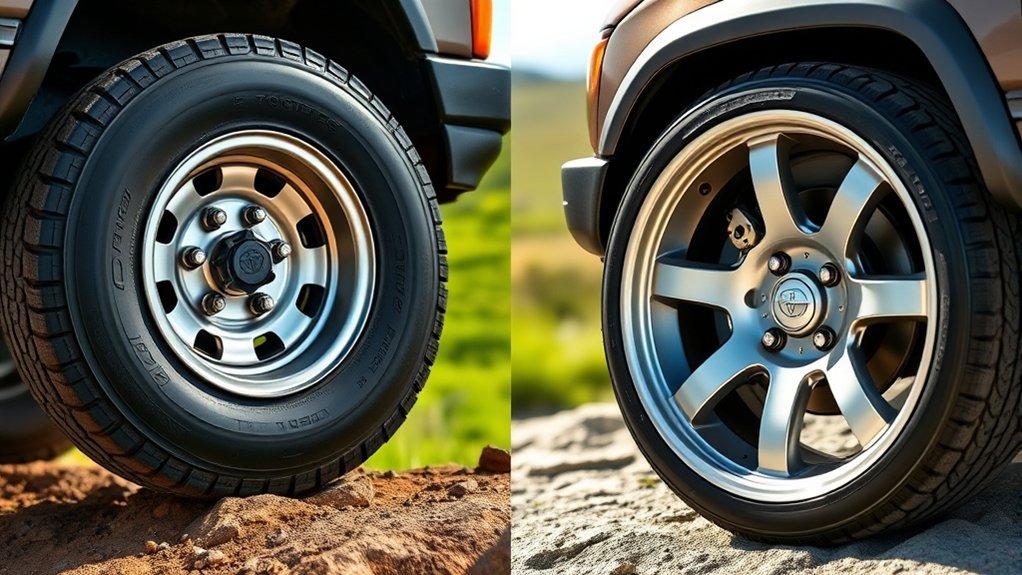
Steel wheels are simple, tough, and usually cheaper. They are a good choice for trail trucks because a bent steel wheel may sometimes be repaired enough to get home. The downside is weight. Heavier wheels and tires can make the truck feel slower, reduce fuel economy, and put more stress on brakes and suspension parts.
Alloy wheels are lighter and usually run truer at highway speeds. They also offer more designs and can help handling feel sharper. The downside is cost and impact damage: a hard hit that bends steel may crack some alloy wheels.
Weight and Performance
Every pound added to a tire-and-wheel package is rotating weight. Bigger tires often weigh more, and that can affect acceleration, braking, ride quality, and steering response. Before jumping to the largest size that fits, consider how often the Tacoma sees highway miles versus trail miles.
Pro Tip: If your Tacoma is a daily driver, a moderate all-terrain in a near-stock size often feels better than a heavy mud-terrain that looks aggressive but hurts braking, ride comfort, and fuel economy.
What Are the Best Tire Size Upgrades for a 1st Gen Tacoma?
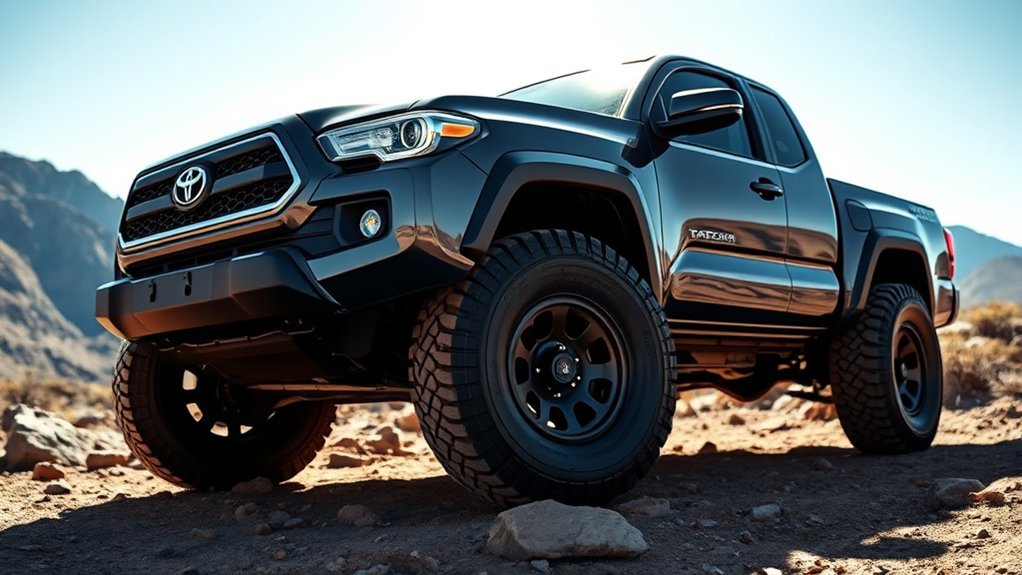
If you want better off-road performance, the goal is not simply “biggest tire possible.” The best upgrade is the largest size that clears safely, keeps a useful load rating, works with your gearing, and does not make the truck miserable on pavement.
| Upgrade Size | Best For | Fitment Notes |
|---|---|---|
| 31×10.50R15 | Mild trail use on 15-inch 6-lug setups | Often the easiest off-road upgrade when the truck already has compatible wheels. |
| P265/70R16 | Factory-style 16-inch replacement | Good balance of height, load rating, and daily drivability. |
| 265/75R16 | More clearance than P265/70R16 | Can rub depending on wheel offset, mud flaps, alignment, and suspension height. |
| 32×11.50R15 | More aggressive trail stance | Expect possible trimming, lift, or wheel backspacing changes. |
| 265/70R17 | Owners moving to 17-inch wheels | Not a stock-wheel fit for 15- or 16-inch wheels; test clearance carefully. |
When comparing sizes, remember that a small increase in diameter can change the truck more than expected. Larger tires effectively raise the gearing, which can make the Tacoma feel slower on hills or with cargo. They can also make the speedometer read low, so check actual speed with GPS after a major size change.
How Do You Prevent Tacoma Tire Fitment Problems?
Before buying oversized tires, run through this checklist:
- Confirm your lug pattern. Count the lugs and confirm 5×114.3 or 6×139.7.
- Check your current wheel diameter and width. Tire diameter must match wheel diameter.
- Compare overall tire diameter. Larger diameter affects speedometer and gearing.
- Check wheel offset and backspacing. These decide whether the tire moves toward the frame or fender.
- Inspect full-lock steering clearance. Turn the wheel fully left and right and check the frame, mud flaps, fender liner, and upper control arm area.
- Compress the suspension if possible. A tire that clears in the driveway can still rub on bumps or trails.
- Check spare tire compatibility. A much smaller spare can be a problem, especially on 4WD trucks.
- Check brake and caliper clearance. Aftermarket wheels may clear the tire but still interfere with brake hardware.
- Verify load rating. Do not go below the original tire’s service description.
Warning: Rubbing is not just annoying. A tire that contacts a sharp fender edge, mud-flap bracket, or suspension part can be damaged while driving. Test fitment before long trips or trail runs.
How Do You Maintain Tire Pressure Safely?
Maintaining the correct tire pressure helps braking, steering, tire life, fuel economy, and load carrying. Underinflation can overheat a tire and damage the sidewall. Overinflation can reduce ride comfort and change the contact patch.
Follow these tire-pressure habits:
- Check pressure at least monthly and before long trips.
- Measure pressure when the tires are cold.
- Use the driver-door placard or owner’s manual as the starting point.
- Recheck pressure after changing tire size or load range.
- Inspect tread wear: edge wear can suggest underinflation or alignment issues, while center wear can suggest overinflation.
- Do not forget the spare tire.
If you install LT tires in place of P-metric tires, do not assume the old PSI is automatically correct. LT tires often need a different pressure to carry the same load, so ask a qualified tire shop to calculate the proper inflation based on your axle loads and tire load table.
Troubleshooting Common Tacoma Tire Fitment Problems
Use the symptoms below to narrow down the likely issue after changing tire size, wheel offset, or tire type.
Tire Rubs at Full Lock
Check mud flaps, inner fender liner, frame clearance, and upper control arm clearance. A small trim or different wheel offset may solve it, but do not grind or cut structural parts without expert help.
Speedometer Reads Wrong
A taller tire travels farther per rotation, so the speedometer may read slower than actual road speed. Use a GPS speed check or tire-size calculator after major tire changes.
Truck Feels Slower After Bigger Tires
This is normal when tire diameter and weight increase. Larger tires change effective gearing and add rotating mass. Regearing is sometimes used on dedicated trail builds, but it is usually not worth it for a mild daily-driver tire change.
New Tires Wander or Feel Vague
Check pressure, alignment, tire load range, tread type, and wheel offset. Heavy LT tires can feel stiffer than P-metric tires, while aggressive tread can track road grooves more than a highway tire.
Frequently Asked Questions
Will a 265/70R17 fit on a Toyota Tacoma?
A 265/70R17 tire requires a 17-inch wheel, so it will not fit a stock 15- or 16-inch wheel. On a 1st Gen Tacoma, it may also rub depending on suspension height, wheel width, offset, mud flaps, and alignment. Treat it as a test-fit size, not a guaranteed direct-fit stock replacement.
What is the biggest tire size for a stock 1st Gen Tacoma?
For many 4WD or 6-lug trucks, 31×10.50R15 or P265/70R16 is a common practical ceiling for a mostly stock setup. Some trucks clear slightly larger tires, but rubbing depends on wheel offset, suspension condition, cab style, mud flaps, and alignment.
Are all 1995–2004 Tacoma wheels 6-lug?
No. Many 2WD first-gen Tacomas use a 5×114.3 bolt pattern, while many 4WD and PreRunner-style trucks use a 6×139.7 bolt pattern. Always count your lugs and confirm the bolt pattern before buying wheels.
Should I use the PSI printed on the tire sidewall?
No. The sidewall shows the tire’s maximum cold inflation pressure, not the Tacoma’s recommended operating pressure. Start with the driver-door placard or owner’s manual, then adjust only with proper load-rating guidance.
Are LT tires better than P-metric tires on a Tacoma?
LT tires can be better for heavy loads, rocky trails, and sidewall strength, but they are usually heavier and may ride firmer. For a daily-driven Tacoma, a quality P-metric or C-load all-terrain may feel better than an overly heavy tire.
What size tires came on a 1st Gen Tacoma?
Common 1st Gen Tacoma tire sizes include P195/75R14, P205/75R14, P215/70R14, P215/65R15, P205/75R15, P225/75R15, 31×10.50R15, P235/55R16, and P265/70R16, depending on year and trim. Your driver-door placard is the deciding source for your truck.
Can I run 33-inch tires on a stock 1st Gen Tacoma?
A 33-inch tire is not a safe assumed stock fit. Some trucks can be modified to clear 33s, but a stock 1st Gen Tacoma usually needs careful checks for lift height, wheel backspacing, mud-flap clearance, body mount area, fender liner clearance, gearing, and braking feel.
Conclusion
The best tire size for a 1st Gen Tacoma starts with your exact truck, not a generic chart. Check the door placard, read the current tire sidewall, confirm whether your Tacoma is 5-lug or 6-lug, and choose a tire that matches or exceeds the original load rating. For most owners, a stock-size replacement or moderate all-terrain upgrade gives the best mix of safety, clearance, comfort, and trail capability. Before a long highway drive, test full-lock steering, recheck cold PSI, confirm the spare, and schedule an alignment if the truck wanders or wears tread unevenly.
Sources
- Toyota Owners Manuals and Warranties — official Toyota owner-manual access point.
- 2004 Toyota Tacoma Owner’s Manual copy — factory tire-size, wheel-size, cold tire pressure, and wheel-nut torque reference.
- NHTSA TireWise — cold tire pressure and tire safety guidance.
- 49 CFR 571.110 — federal tire selection, rim, placard, and load-capacity requirements.
- Michelin Load Rating and Speed Rating Guide — tire service description, load index, and speed rating explanation.
- Discount Tire Plus Sizing Guide — tire upsizing and diameter-change considerations.

Related Articles
Best Toyota Tacoma Tire Set Deals
You rely on your Tacoma for daily driving, work runs, and weekend adventures, so picking the right tire set matters more than you might…
Read More
Best Winter Tire Deals for Toyota Tacoma
Choosing the right winter tires for your Toyota Tacoma matters because it directly affects your safety, traction, and confidence when roads turn icy or…
Read More
Best Highway Tire Deals for Toyota Tacoma
You rely on your Tacoma for long drives, towing, and everyday hauling, so picking the right highway tire matters more than you might think.…
Read More