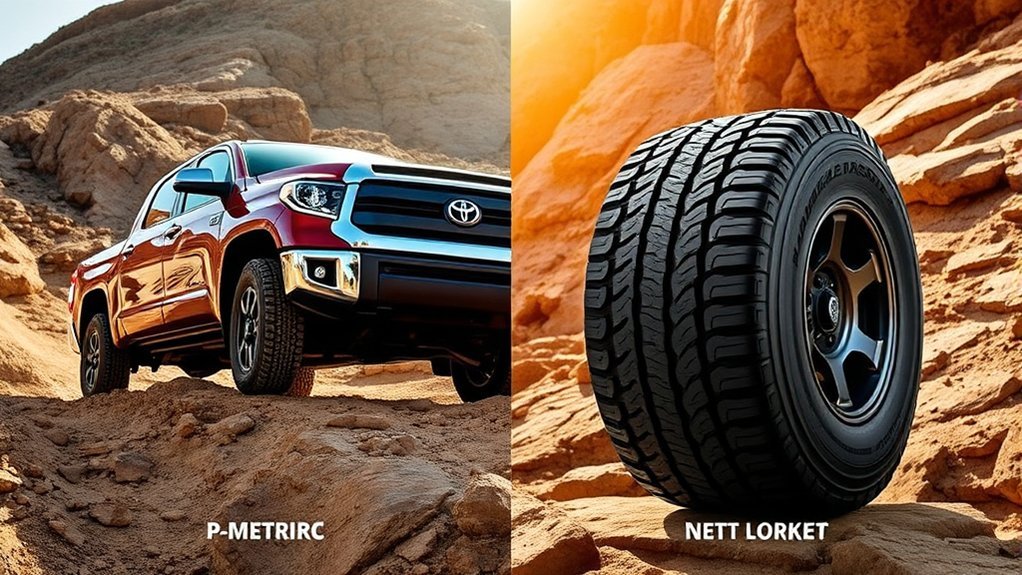
Choosing between P-metric and LT tires for your Toyota Tundra depends on how you actually use the truck. P-metric tires usually suit commuting, highway travel, and moderate loads, while LT tires can provide added load reserve and tougher construction for frequent towing, heavy payloads, or rough trails. The correct choice must also match your Tundra’s year, trim, wheel size, axle limits, and required inflation pressure.
Quick Answer
Choose P-metric tires for a smoother, lighter, and often quieter daily-driving setup. Choose LT tires when you regularly carry heavy payloads, tow near your truck’s limits, or drive on damaging terrain. In either case, the tire must meet the size, load capacity, speed rating, wheel limits, and pressure requirements for your exact Tundra.
Key Takeaways
- LT tires are not automatically safer or better for every Toyota Tundra.
- Start with the tire size, load capacity, speed rating, and cold pressure listed for your exact truck.
- Changing from P-metric to LT tires may require a different inflation pressure based on a load-and-inflation table.
- A higher load range does not increase Toyota’s GVWR, GAWR, payload, or towing rating.
- Tread pattern, tire size, weight, compound, and pressure can affect comfort and fuel use as much as the P or LT designation.
P-Metric vs. LT Tires at a Glance
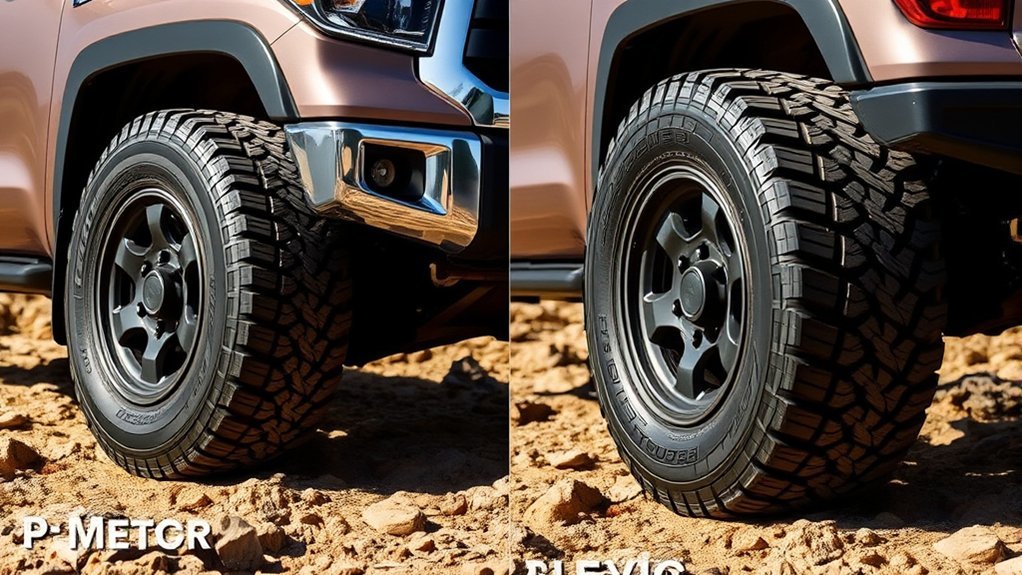
| Factor | P-Metric Tires | LT Tires |
|---|---|---|
| Typical priority | Comfort, lower weight, road manners, and efficiency | Load support, casing strength, and demanding truck use |
| Best suited to | Commuting, highway driving, light hauling, and occasional towing within the tire’s rating | Frequent towing, heavy bed loads, work use, gravel, rocks, and rough trails |
| Ride | Usually softer and more compliant | Often firmer, especially when the casing is heavy or pressure is high |
| Weight | Usually lighter in a comparable size | Usually heavier because of the stronger casing and tread package |
| Inflation | Use the vehicle placard for the original size | May require a different calculated pressure after conversion |
| Main drawback | Less casing protection or load reserve in demanding applications | More weight, firmer ride, and possible efficiency or braking trade-offs |
These are general tendencies, not guarantees. A quiet highway-focused LT tire can ride better than an aggressive P-metric mud tire. Likewise, a properly rated P-metric tire can carry more than an unsuitable LT tire at the pressure being used. Compare the complete specification rather than relying on the letters before the tire size.
Start With Your Tundra’s Tire Placard
Before comparing tire models, open the driver’s door and read the Tire and Loading Information Label. It identifies the original tire size and Toyota’s recommended cold inflation pressure for that vehicle configuration. Your owner’s manual also contains tire, loading, towing, and maintenance guidance.
The correct specification can vary by model year, trim, wheel package, drivetrain, and factory equipment. Do not assume that a pressure or tire size used on another Tundra is correct for yours. Toyota’s Tundra owner’s manual portal lets you select the appropriate manual for the vehicle.
According to USTMA replacement-tire guidance, replacements should meet the size, load index, speed rating, and load-carrying requirements specified by the vehicle or tire manufacturer. A tire with less capacity than the original specification may be unsafe even if it physically fits the wheel.
Warning: Never use the maximum pressure molded on the tire sidewall as an automatic inflation target. For the original tire size, use Toyota’s specified cold pressure. When changing tire construction or size, have the required pressure calculated from the tire manufacturer’s load-and-inflation data. The pressure must also remain within the wheel’s limit.
Load Index, Load Range, and Ply Rating Explained
Load Index
The load index is the number beside the tire’s speed symbol, such as 116T or 123S. That number corresponds to a maximum load in a standardized table. However, the load index alone does not tell you whether the tire is suitable for your Tundra. You must also consider the tire type, size, operating pressure, axle load, and any applicable light-truck service adjustment.
Load Range
LT tires commonly carry a load-range letter such as C, D, E, or F. The load range identifies an inflation and load-capacity category for that particular tire size. It does not mean every Load Range E tire carries the same weight. Two Load Range E tires in different sizes can have different maximum loads.
What “10-Ply” and “12-Ply” Really Mean
Terms such as “10-ply rated” and “12-ply rated” refer to an older strength-rating system. They do not necessarily describe the actual number of fabric or steel plies inside a modern radial tire. NHTSA explains that load-range letters replaced the older ply-rating system for identifying load-carrying capability.
A higher load range is not automatically the better choice. It may add weight and stiffness without providing a useful benefit if your truck never approaches the lower-rated tire’s safe capacity.
How Load Capacity Should Be Checked
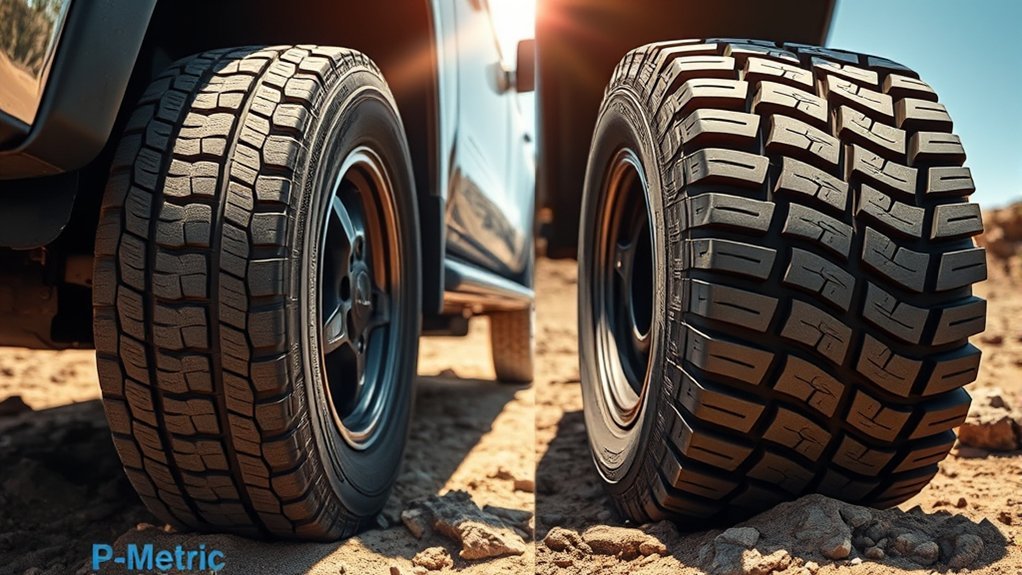
Start with the truck’s GVWR and front and rear GAWR labels. Then account for passengers, cargo, accessories, trailer tongue weight, and anything permanently installed on the truck. The tires must support the load carried by each axle without exceeding the tire, wheel, or vehicle limits.
For a working or towing truck, the most reliable approach is to weigh the loaded vehicle by axle. Compare the measured axle weights with the GAWR values and the tires’ supported capacity at the intended cold pressure. Leave a reasonable reserve rather than selecting a tire that operates at its limit during every trip.
Passenger-type tires used on pickups require special attention. Toyo’s light-truck replacement guidance applies a 1.10 divisor when evaluating the capacity of a P-metric tire for light-truck service. It also warns that an LT tire does not automatically provide adequate replacement capacity merely because it has an LT prefix.
A stronger tire can provide additional load reserve, but it cannot increase the Tundra’s factory GVWR, GAWR, payload rating, hitch rating, or towing limit.
When P-Metric Tires Make More Sense
P-metric tires are often the practical choice when your Tundra spends most of its time commuting, traveling on paved roads, or carrying moderate loads. Their lighter casing and more compliant construction can improve everyday comfort without sacrificing safety when the tire is correctly rated.
Consider staying with a suitable P-metric tire when:
- You rarely carry a heavy bed load.
- Your trailer and tongue weight remain comfortably within the tire and vehicle limits.
- You prioritize a smoother ride and lower road noise.
- You want to minimize added rotating and unsprung weight.
- You drive mainly on pavement or maintained gravel roads.
- The original P-metric specification already provides adequate load reserve.
Do not interpret “passenger tire” as meaning weak or unsuitable for a pickup. Toyota may select passenger-type tires for particular configurations because they meet the required load, handling, braking, durability, and efficiency targets.
When LT Tires Are Worth Considering
LT tires become more attractive when the truck regularly performs demanding work. Their casing, sidewall, bead, and tread construction are designed for light-truck applications, although the exact design still varies by product.
An LT tire may be appropriate when:
- You tow frequently with substantial tongue weight.
- You regularly carry tools, campers, equipment, or heavy cargo.
- Your loaded axle weights leave little reserve with the current tires.
- You travel on sharp rocks, construction debris, rutted roads, or other damaging surfaces.
- You need a tire size or tread pattern offered primarily in LT construction.
- Your Tundra originally came with LT tires.
LT construction can improve stability under load because the casing generally flexes less. That same stiffness can make an unloaded truck feel harsher over expansion joints, potholes, and broken pavement.
Tire Pressure After Switching From P-Metric to LT
Do not assume that an LT tire should use the same pressure as the original P-metric tire. Do not assume it needs 45, 50, 65, or 80 psi either. An LT tire often requires a different pressure to support the same load because its load-and-inflation relationship differs from that of a passenger tire.
The correct conversion process is:
- Record the exact original tire size and Toyota’s placard pressure.
- Determine the load supported by the original tire at that pressure.
- Select the exact replacement tire size and construction.
- Use that tire manufacturer’s load-and-inflation table to find the pressure that provides equal or greater supported capacity.
- Confirm that the required pressure does not exceed the tire or wheel limit.
- Check clearance, speed rating, TPMS compatibility, and spare-tire suitability.
BFGoodrich’s tire-selection guidance notes that pressures may need to be recalculated when changing from original P-metric tires to LT-metric or high-flotation tires. A qualified tire professional should perform or verify this calculation.
Pro Tip: Ask the installer to write the calculated cold front and rear pressures on your invoice. That gives you a documented baseline instead of relying on an informal pressure recommendation from a forum or another truck owner.
Ride Quality, Noise, and Handling
P-metric tires generally provide a softer unloaded ride because their casings tend to be lighter and more flexible. They may also respond more quickly to small steering inputs because the tire and wheel assembly has less mass.
LT tires often feel more planted when the truck is heavily loaded or towing. However, their added casing stiffness can transmit more impact into the cabin when the bed is empty. Aggressive all-terrain or mud-terrain tread can also create more vibration and noise than a highway tread, regardless of whether the tire is P-metric or LT.
Handling changes can also come from tire width, overall diameter, tread-block design, rubber compound, wheel offset, and pressure. Therefore, a change blamed on “LT tires” may actually come from installing a larger and more aggressive tire at the same time.
Fuel Economy and Performance Trade-Offs
Heavier tires require more energy to accelerate and decelerate. A more aggressive tread or higher rolling resistance can also reduce efficiency. Larger-diameter tires may change effective gearing, indicated speed, shift behavior, and braking feel.
However, there is no reliable universal rule that LT tires reduce fuel economy by a fixed number of miles per gallon. Two LT tires can differ greatly in weight and rolling resistance, while some P-metric all-terrain tires are heavier than highway-focused LT options.
NHTSA’s tire guidance explains that rolling resistance affects fuel consumption and estimates that a 10% reduction in tire rolling resistance can improve fuel economy by approximately 1% to 2%. Your real result will depend on the complete tire setup, pressure, load, alignment, speed, and driving conditions.
Towing and Hauling Checklist
Use this checklist before buying tires for a Tundra that tows or hauls:
- Vehicle limits: Confirm GVWR, front GAWR, rear GAWR, payload, hitch limits, and Toyota’s towing requirements.
- Actual load: Include passengers, bed cargo, accessories, trailer tongue weight, and weight-distributing equipment.
- Tire capacity: Check supported load at the planned cold pressure, not only the maximum sidewall number.
- Wheel limits: Confirm wheel load and inflation-pressure ratings.
- Speed rating: Do not install a lower rating without understanding the resulting operating limit and handling change.
- Clearance: Check full steering lock, suspension compression, brake clearance, and proximity to bodywork.
- TPMS: Confirm that sensors remain functional and that the system is registered or initialized when required.
- Spare: Make sure the spare is compatible enough for safe emergency use with the new setup.
Note: A TPMS warning light usually appears only after pressure has fallen significantly. Check every tire, including the spare, with an accurate gauge at least monthly and before towing or carrying a heavy load.
[Products Worth Considering]
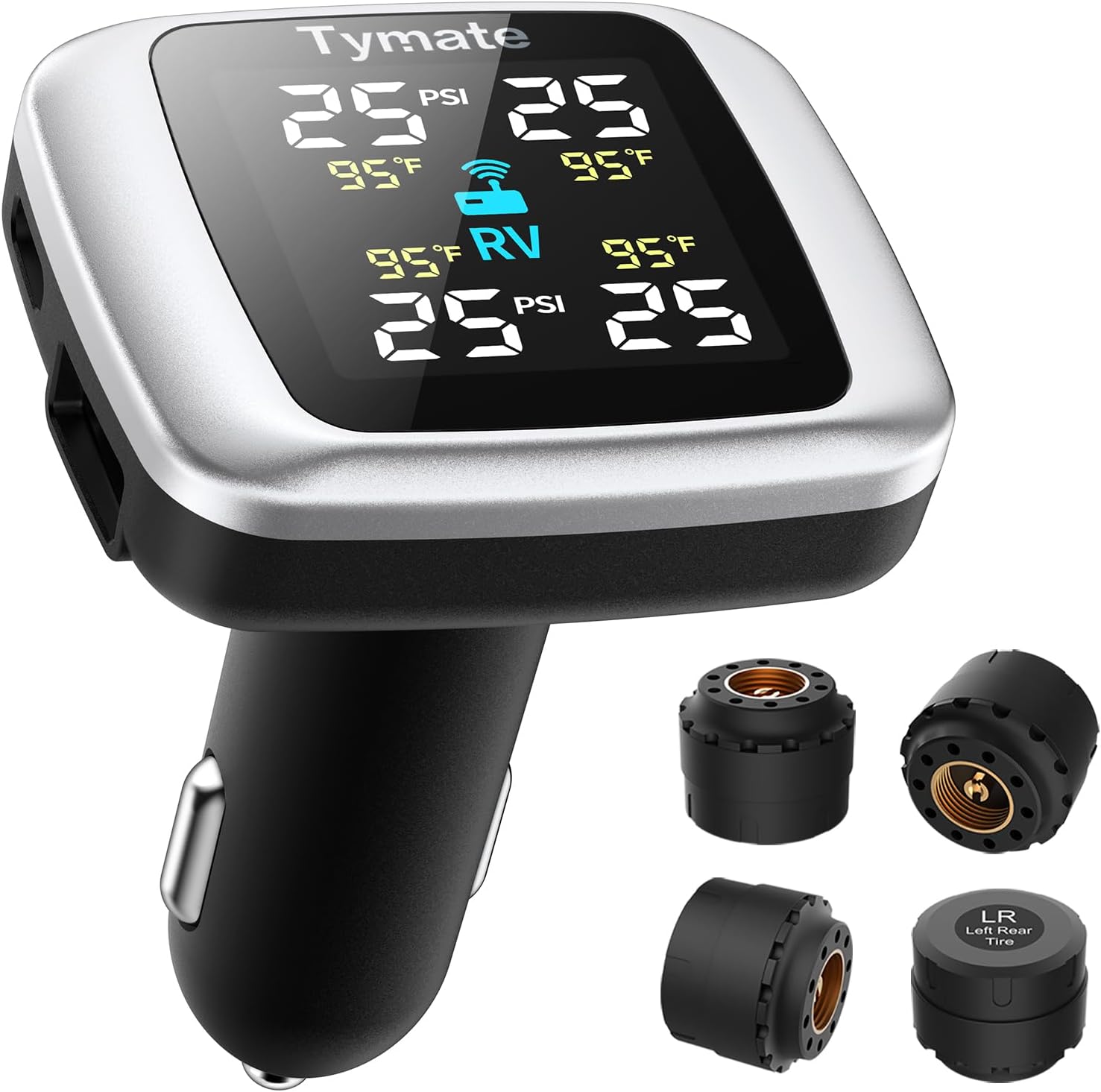
Tymate TM7 is a wireless tire pressure monitoring system that delivers real-time pressure and temperature readings for safer driving. It includes four external sensors, a bright color LCD display with adjustable backlight, and six alarm modes for high/low pressure, fast leakage, high temperature, and sensor signal or battery issues. The system covers a wide 0–144 PSI range and plugs into your vehicle’s cigarette lighter socket for quick DIY setup.

These universal tire valve stem caps help protect valve cores from dust, debris, and moisture while helping maintain stable tire pressure. The corrosion-resistant metal construction and sealed design provide reliable protection in road grime, mud, and winter conditions. Twist-on installation makes them quick to fit on cars, SUVs, trucks, and motorcycles.
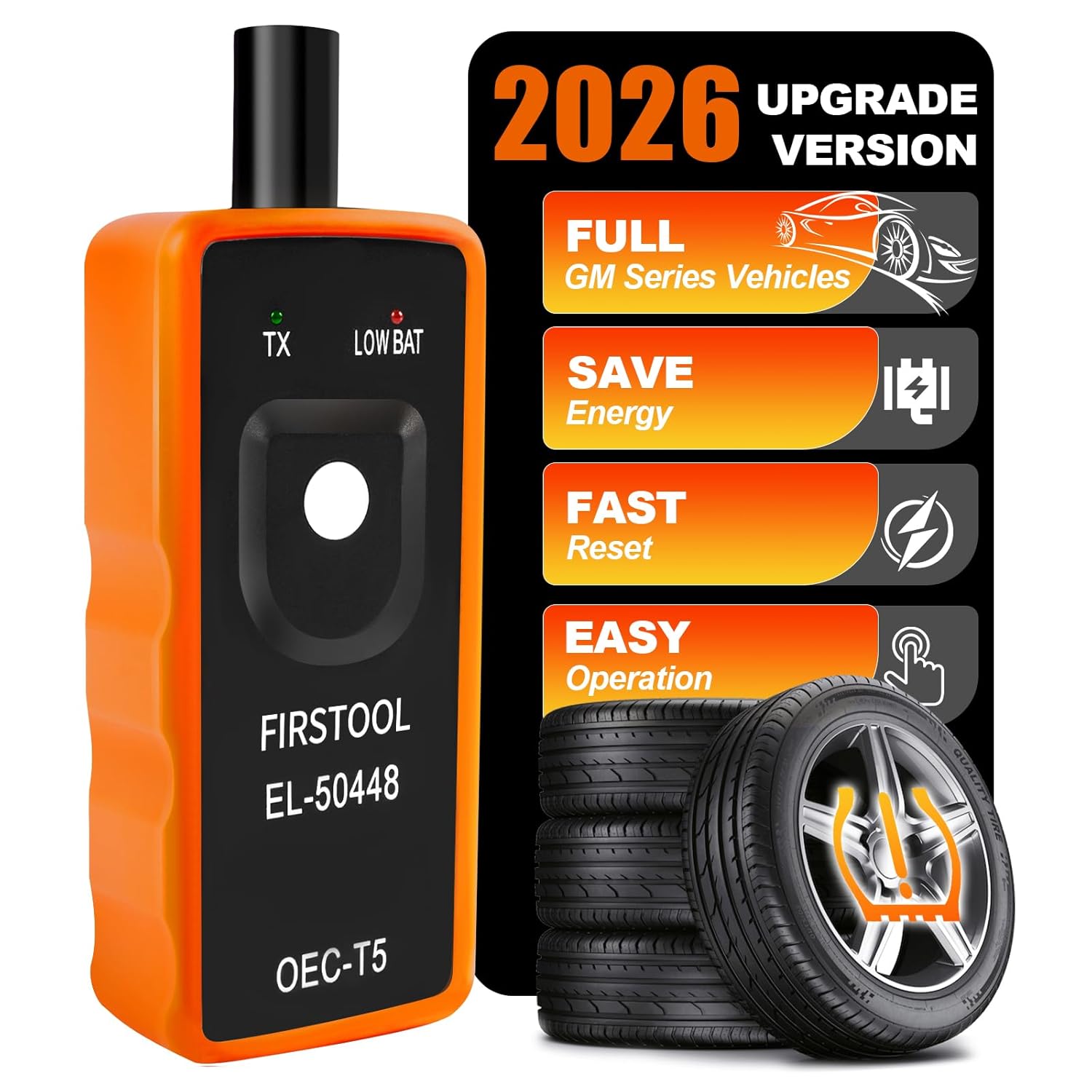
This TPMS relearn tool helps you quickly activate, match, and reset GM tire pressure sensors to keep the vehicle monitoring system working properly. It clears tire pressure alarms and dashboard warning lights after sensor replacement or tire rotation, and supports learning for common 315/433 MHz TPMS sensors. Designed for simple one-button operation, it can help you avoid unnecessary trips to repair shops.
Off-Road, Rain, and Winter Performance
LT construction can offer useful protection on rocks, ruts, and work sites, but construction is only part of off-road performance. Tread pattern, rubber compound, shoulder design, tread depth, and the ability to air down and reinflate safely also matter.
For wet roads, prioritize strong water evacuation and braking performance rather than an aggressive appearance. For snow, look for a tire specifically designed and rated for winter conditions. An LT all-terrain tire is not automatically better on packed snow or ice than a well-designed passenger-type all-weather or winter tire.
If you reduce pressure for off-road traction, reinflate the tires before sustained road driving. Never exceed the tire or wheel limit, and remember that low pressure under heavy load can build heat and damage the casing.
Is It Worth Spending More on LT Tires?
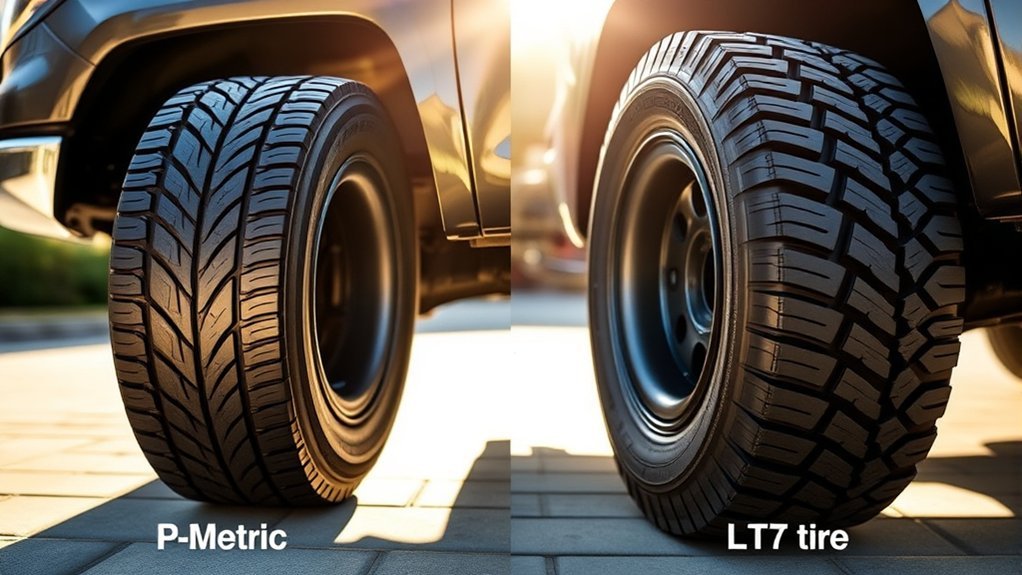
LT tires are worth the additional cost when their construction or load capability solves a real problem. A contractor carrying equipment every day, an owner with a slide-in camper, or a driver who regularly crosses sharp rocky terrain may benefit from the extra casing strength and available load reserve.
They may offer little value when the truck remains lightly loaded and spends nearly all its time on paved roads. In that situation, the owner may pay more for a heavier tire while accepting a firmer ride without gaining a capability that is actually used.
Compare the following before deciding:
- The exact supported load at your intended pressure
- Tire weight and overall diameter
- Highway, all-terrain, or mud-terrain tread design
- Wet and winter performance
- Ride and noise priorities
- Treadwear warranty and service conditions
- Wheel pressure and load ratings
- Total installed cost
[Products Worth Considering]
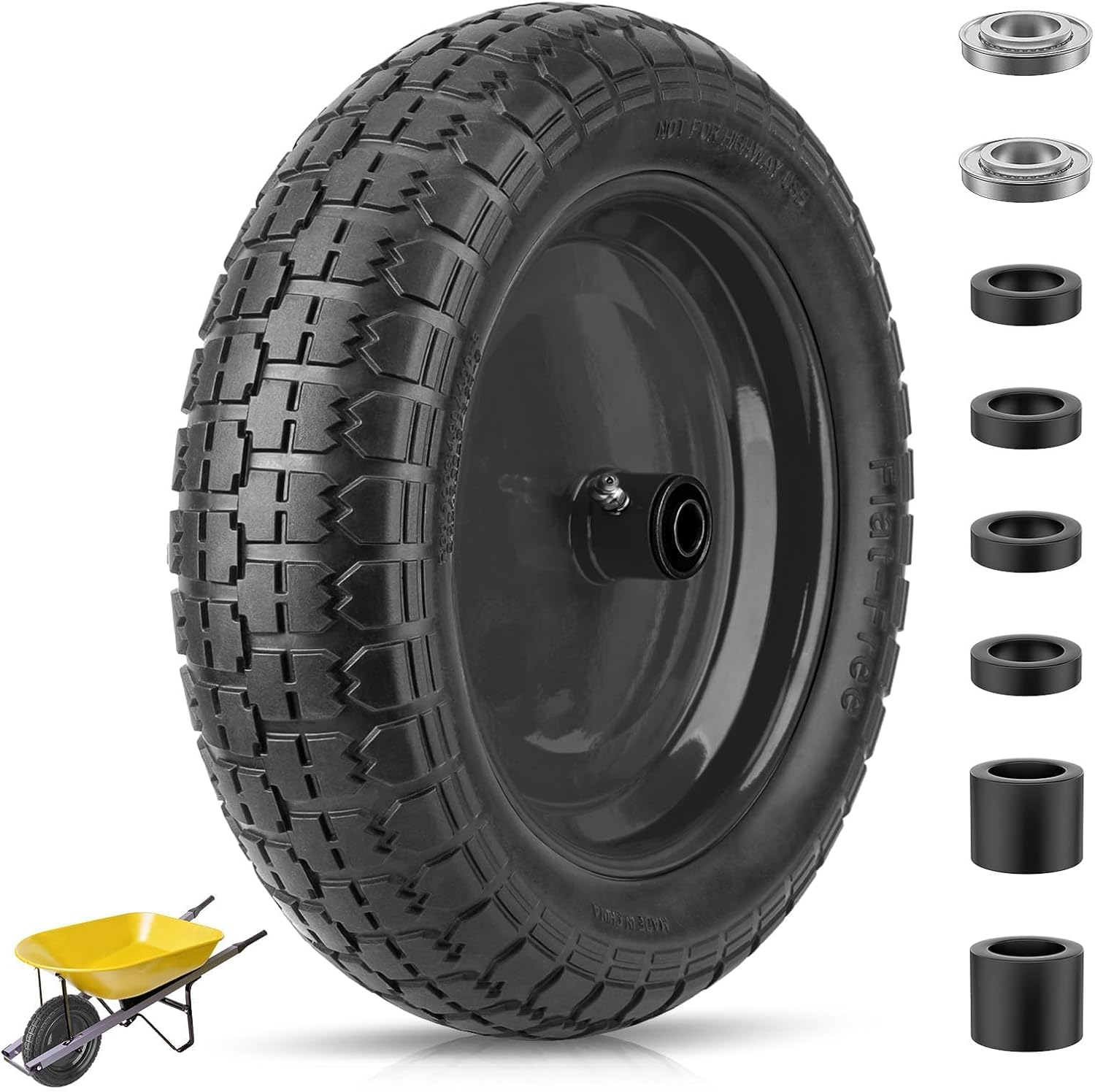
This flat-free TICONN wheelbarrow tire features durable polyurethane foam construction that never needs inflation, helping prevent punctures and reducing maintenance on rough outdoor terrain. With a 300 lb max load capacity and stable steel rim design, it supports safer transport for yard work and hauling tasks. An adapter kit with ball bearings and nylon spacers is included for easier fit and customization across common wheelbarrow and cart axle setups.

Replace or upgrade your zero-turn lawn mower tires with a universal fit flat-free tire and wheel assembly in a convenient 2-pack. Smooth tread front-caster style helps turning with reduced turf damage, while flat-free design eliminates the maintenance and downtime of air-filled flats. The included adapter kit supports 5/8-inch axles and hub lengths from 3.4 to 5 inches for compatibility across most ZTR mowers.

This tire inflator extension hose helps your air chuck quickly connect and disconnect from the tire nozzle with minimal leakage, supporting more accurate tire pressure. It uses a high-pressure resistant inflatable tube and durable brass chuck adapter for long-lasting performance. The quick-connect 90-degree thumb press chuck converts to a locking style and is easy to operate for car, motorcycle, and bicycle inflations.
How to Choose the Right Tires for Your Tundra
- Identify the exact truck. Record the model year, trim, drivetrain, wheel size, and factory tire specification.
- Define your real use. Estimate how much time you spend commuting, towing, hauling, or driving off-road.
- Confirm your loaded weights. Weigh heavily used or towing setups by axle when possible.
- Set the minimum specification. Match or exceed the required size, capacity, and speed rating without exceeding vehicle or wheel limits.
- Choose the construction. Select P-metric for road comfort when capacity is sufficient, or LT when the workload justifies it.
- Choose the tread category. Highway, all-terrain, mud-terrain, all-weather, and winter tires serve different conditions.
- Calculate inflation pressure. Use Toyota’s placard for the original specification or a manufacturer load table for a changed specification.
- Verify the complete installation. Check clearance, wheel compatibility, TPMS operation, alignment, and spare-tire use.
[Products Worth Considering]

Keep your tires properly inflated with this analog VONDIOR tire pressure gauge, designed for fast, easy readings without batteries. The swiveling, two-axis hose and large glow dial help you measure at any tire angle with instant visibility. Built with a protective rubber shield, it supports durable, low-maintenance use for cars and trucks.
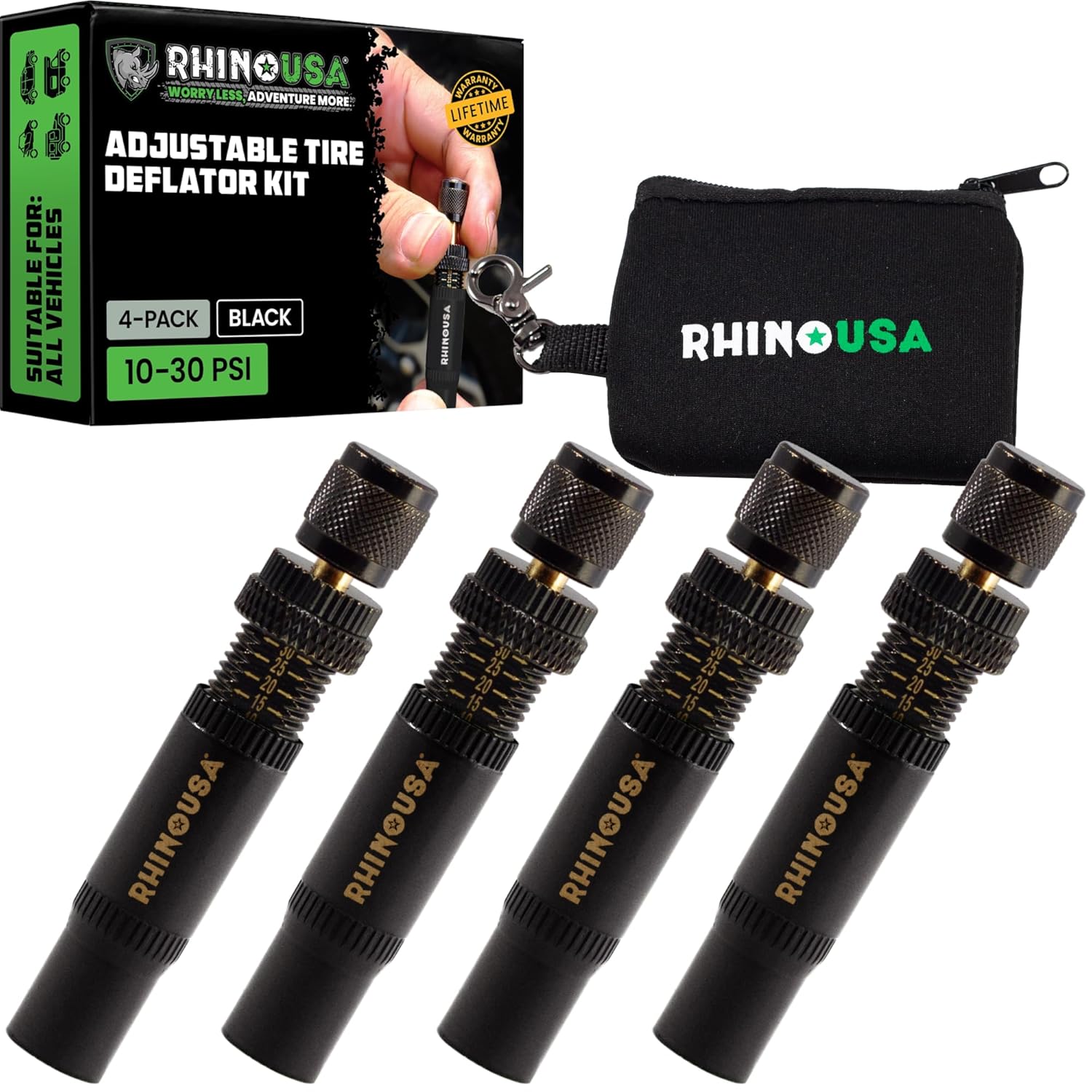
Use the Rhino USA adjustable tire deflators to air down all four tires at once by screwing one deflator onto each valve stem, letting you step away while the tires reach your preset pressure. Each deflator independently adjusts across a 10–30 PSI range with laser-etched indicators for quick setup and verification, making it ideal for beach, sand, and rocky off-road trails.

This ALL-TOP auto-stop tire deflator valve kit lets you air down off-road tires quickly without watching pressure, automatically stopping when your preset PSI is reached. Each valve is individually calibrated for reliable performance with an acceptable +/- 2 PSI tolerance. The adjustable deflator range covers 10 to 30 PSI and includes four valves plus valve caps and a zipper pouch for easy setup on trucks, SUVs, RVs, UTVs, and powersports.
Frequently Asked Questions
Are P-metric tires safe for towing with a Toyota Tundra?
They can be safe when the exact tire provides enough capacity at the correct cold pressure and the truck remains within Toyota’s axle, payload, hitch, and towing limits. Do not judge towing suitability from the P prefix alone.
Do LT tires increase a Tundra’s towing or payload rating?
No. LT tires may provide more tire capacity or stability, but they do not change Toyota’s GVWR, GAWR, payload rating, hitch rating, or maximum trailer rating.
What pressure should I use after switching to LT tires?
Use a pressure calculated from the replacement tire manufacturer’s load-and-inflation table. It must support at least the original required load and remain within the tire and wheel limits. Do not automatically use the placard pressure or the maximum sidewall pressure after changing construction or size.
Is Load Range F better than Load Range E for towing?
Not automatically. Load Range F may offer more capacity in some sizes, but it can also add weight and stiffness. Choose the lowest suitable specification that provides adequate capacity and reserve at an approved pressure.
Can I mix P-metric and LT tires on my Tundra?
Avoid mixing different sizes, constructions, load specifications, or tread types unless Toyota and the tire manufacturer specifically approve the configuration. Mixed tires can change handling, braking, four-wheel-drive operation, and TPMS behavior.
Are LT tires always better for snow and off-road driving?
No. LT construction can improve casing strength, but traction depends heavily on tread design, compound, temperature, surface, and pressure. Select a tire designed for the conditions you actually encounter.
Conclusion
P-metric tires are usually the better match for a lightly loaded Toyota Tundra used mainly for commuting and highway travel. LT tires become worthwhile when frequent towing, heavy payloads, work sites, or rough trails demand more load reserve or casing strength.
The safest decision begins with your exact Tundra’s placard, axle limits, wheel limits, and real loaded weight. Match the required capacity and speed rating, calculate the correct pressure for any changed tire specification, and remember that a stronger tire cannot increase the truck’s factory weight or towing ratings.
Sources
- National Highway Traffic Safety Administration: TireWise — tire pressure, load, maintenance, TPMS, and rolling-resistance guidance
- Toyota Tundra Owner’s Manual Portal — vehicle-specific tire, loading, towing, and TPMS instructions
- U.S. Tire Manufacturers Association: Replacing Tires — replacement size, load index, speed rating, and capacity requirements
- Toyo Tires Safety Information — P-metric and LT-metric replacement capacity and inflation guidance
- BFGoodrich Tire Selection Guide — LT construction, changed tire sizes, pressure calculations, and off-road considerations
- NHTSA Load Range and Ply Rating Interpretation — explanation of load-range letters and historical ply ratings