Disclosure: As an Amazon Associate, we earn from qualifying purchases. If you click a link on this page and make a purchase, we may receive a small commission at no extra cost to you.
Preparing a tire correctly is one of the most important parts of an internal repair, but a general-purpose grinder can remove too much rubber or make the repair area uneven. The Racewill Air Tire Repair Polish Patch Tools kit gives you a low-speed pneumatic buffer, an inner-liner scraper, a patch roller, and several tungsten-steel heads in one package. This review explains what the kit includes, where its 0 to 2500 RPM control helps, and why it is better suited to trained users than casual roadside repairs. Its main strength is the complete prep-tool bundle, while its main limitation is that you still need a compatible air supply, repair materials, tire-demounting equipment, and proper training.
Quick Verdict
Rating: 8.2/10, recommended with caveats
Best For: Trained home mechanics, mobile tire technicians, and small shops that already have proper pneumatic and tire-service equipment
Bottom Line: The Racewill kit combines the main tools used to scrape, buff, and stitch an inner-liner repair area. It is a useful value-oriented prep set, but it is not a complete repair system and should not replace professional tire-repair procedures.
Before You Buy: This package contains surface-preparation tools, not the patch, plug/stem, repair cement, tire spreader, bead equipment, or training required for a complete repair. A proper passenger or light-truck tire repair requires the tire to be removed from the wheel and inspected inside and out.
At a Glance
| Specification | Detail |
|---|---|
| Brand | Racewill |
| Product type | Pneumatic tire-repair surface-preparation tool kit |
| Speed range | Adjustable from 0 to 2500 RPM |
| Power source | Compressed air |
| Chuck size | 11 mm precision chuck |
| Grinding-head material | Tungsten alloy |
| Included tools | Grinder, air pipe, two air-intake connectors, three grinding heads, three precision chucks, tire roller, and inner-liner scraper |
| Noise feature | Silencer tube intended to reduce exhaust noise |
| Best use | Controlled scraping, buffing, and stitching during an approved internal tire-repair process |
| Not included | Patch or combination repair unit, plug/stem, repair cement, compressor, tire-changing equipment, and personal protective equipment |
What Is the Racewill Air Tire Repair Polish Patch Tools Kit?

The Racewill kit is an air-powered set for preparing and finishing an internal tire-repair area. Its central tool is a compact pneumatic grinder that runs from 0 to 2500 RPM. That lower speed range is useful because inner-liner preparation calls for controlled removal of rubber rather than the aggressive cutting action of a high-speed general-purpose grinder.
The package also covers the manual steps around buffing. You get an inner-liner scraper for removing surface contamination, a roller for stitching a patch or repair unit into place, three tungsten-steel grinding heads, three precision chucks, an air pipe, and two intake connectors. The listing also describes a platen-style start and stop switch and a silencer tube that reduces exhaust noise.
This is not a complete puncture-repair kit. You must supply the approved repair unit, plug/stem, chemicals, tire spreader, demounting equipment, and other shop supplies required by the repair-material manufacturer and tire-industry procedures.
What Buyers Say
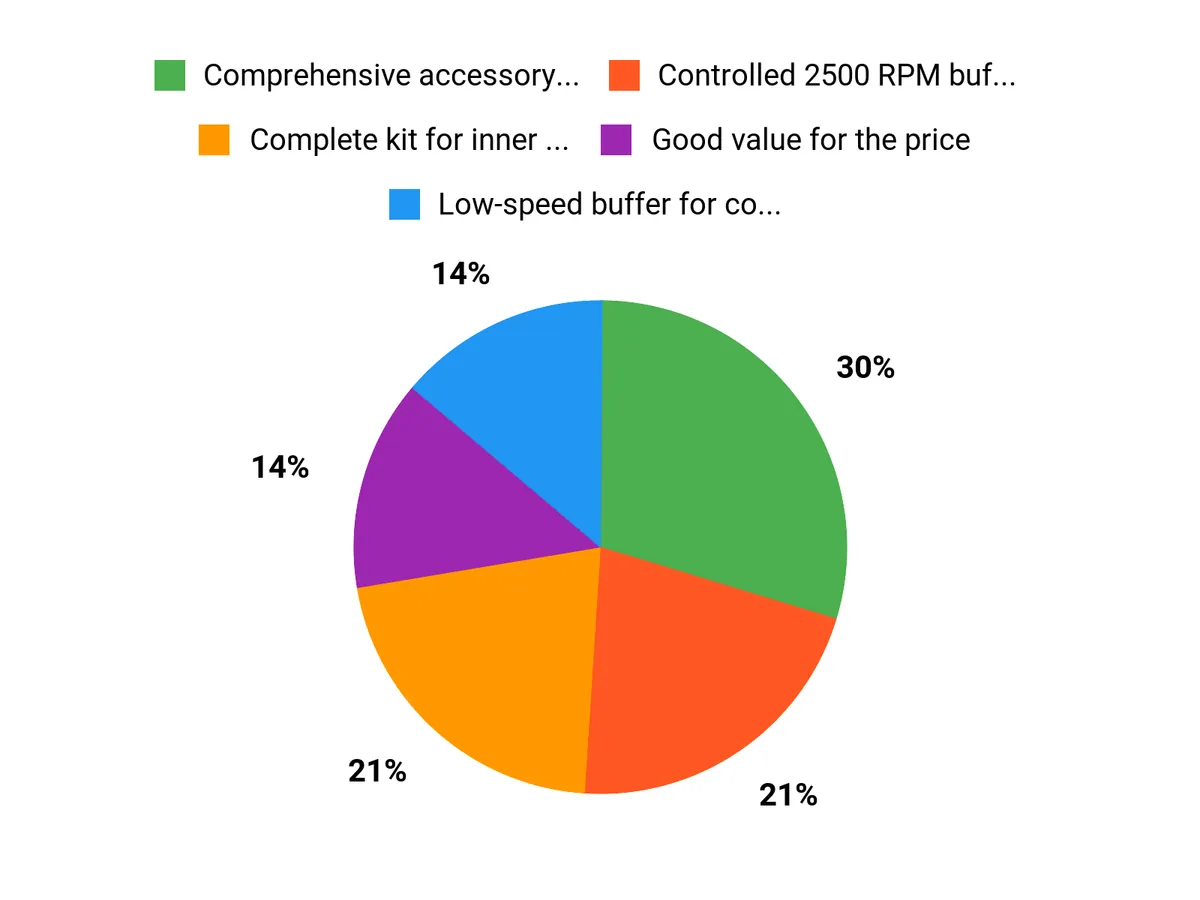
Available buyer comments are generally positive about the kit’s completeness and the controlled feel of the low-speed buffer. The extra grinding heads, chucks, connectors, scraper, and roller are commonly viewed as useful additions. The main recurring limitation is also clear: you need a compatible compressed-air setup and enough experience to prepare the inner liner without removing too much material.
Overall Sentiment: Positive, with setup and skill caveats

Pros and Cons
Pros
- Adjustable 0 to 2500 RPM speed range supports controlled inner-liner preparation.
- Includes scraper and roller instead of supplying only the pneumatic buffer.
- Three tungsten grinding heads and three chucks provide useful spares.
- Air pipe, intake connectors, and silencer tube make the package more complete.
- Compact setup can work as a secondary or occasional-use shop tool.
Cons
- Requires a compatible compressor, regulator, hose, and fittings.
- Does not include the repair unit, plug/stem, cement, or tire-changing equipment.
- Correct results depend on training, careful pressure, and proper repair-area selection.
[Products Worth Considering]

Malco tire mounting and demounting lubricant is a ready-to-use tire lube formulated to reduce friction during tire installation for passenger cars, light trucks, farm tires, and heavy-duty equipment. It provides rust-inhibiting protection to help reduce corrosion on rims and wheels, and helps support proper tire bead seating during inflation to reduce air leakage. The silicone-free, soap-free formula is whitewall safe to help prevent discoloration on whitewall tires and sensitive sidewall markings.

TP-M13W combination repair unit kit includes wrapped stems with matching patches for fast, reliable tire repairs. It’s suitable for both radial and bias ply tires and is designed for chemical or heat vulcanization. Gray vulcanizing gum with blue backing helps create a strong bond, with the stem portion wrapped for added effectiveness.

This tire repair patch tool kit helps you quickly seal small punctures using upgraded mushroom plugs and a built-in roller system that presses for even penetration. The tungsten buffing wheel and HSS twist drill bits prepare the damaged surface for stronger adhesion, while the crown-angle friendly plugs are designed to keep water and debris out. Ideal for puncture repairs on many vehicle types, from cars and trucks to bikes and scooters.
Who Should Buy It?
Best For
- You already have a suitable compressor, tire-changing equipment, and approved repair materials.
- You understand internal tire inspection and manufacturer-approved repair procedures.
- You need an affordable secondary buffer and hand-tool set for occasional or moderate shop use.
Skip If
- You want a roadside plug kit that works while the tire remains on the wheel.
- You do not have tire-service training or equipment to demount and inspect the tire safely.
- You need a proven continuous-duty tool for a high-volume commercial repair station.
Feature-by-Feature Review
0 to 2500 RPM Speed Control
The adjustable low-speed range is the kit’s most useful feature. You can begin slowly, check the texture of the prepared area, and increase speed only as needed. This helps reduce the risk of digging grooves, exposing cords, or creating an uneven surface, although the tool cannot prevent damage caused by poor technique.
Tungsten-Steel Grinding Heads and 11 mm Chucks
The three tungsten-alloy heads give you replaceable contact surfaces for different parts of the preparation area. Tungsten material is suited to repeated grinding and polishing, while the included 11 mm precision chucks hold the heads in the pneumatic tool.
Three heads improve the kit’s usefulness, but they are not unlimited consumables. Inspect each head for clogging, uneven wear, or damage before use. A worn or contaminated head can create heat, smear rubber, or leave an inconsistent finish.
Inner-Liner Scraper and Patch Roller
The scraper helps remove surface material before buffing, and the roller helps press a patch or combination repair unit into the prepared inner liner. These tools make the package more complete than a buffer sold by itself.
The roller is useful only when you apply it with the pressure and direction specified by the repair-material manufacturer. It does not compensate for an incorrectly sized repair unit, poor chemical preparation, trapped contamination, or a puncture outside the repairable tread area.
Air Pipe, Connectors, and Silencer Tube
The air pipe and two intake connectors reduce the number of fittings you may need to source separately. Compatibility still depends on your compressor hose, coupler style, regulator, and the tool’s operating requirements, so check the listing and instructions before connecting it.
The silencer tube is designed to reduce exhaust noise, which may make the tool more comfortable to use in a small workshop. It does not remove the need for hearing and eye protection, ventilation, and safe control of rubber dust.
How It Performs in Real Use
For a Trained Home Workshop
If you already demount tires safely and use approved repair materials, the Racewill kit can consolidate several prep tools into one case. The variable speed helps you work in small increments, and the scraper and roller reduce the need to buy those hand tools separately.
As a Backup in a Small Tire Shop
The compact air buffer can serve as a backup when your primary station is occupied or being serviced. The package is better suited to occasional or moderate use than to nonstop production because the listing does not state a continuous-duty rating.
For Repeated Inner-Liner Preparation
The spare heads and chucks are useful when one head becomes worn or contaminated. You can keep a clean head available for finishing work, but you still need to inspect the tool and accessories before every repair.
For Roadside Emergencies
This is not the right tool for a roadside repair while the tire remains mounted. Proper internal repair requires demounting and inspection, and a patch by itself is not considered a complete puncture repair for passenger and light-truck tires. For an emergency loss of pressure, follow your vehicle manual and arrange professional inspection as soon as possible.
How to Use It Correctly
The exact process depends on the tire, injury, and repair-material system, so the instructions supplied by the tire and repair-material manufacturers take priority. A general workflow is:
- Remove the tire from the wheel using approved equipment and inspect it inside and out.
- Confirm that the puncture is in the repairable tread area and within the permitted size limits.
- Mark the injury, remove contamination, and use the scraper only as directed.
- Select the correct grinding head and begin at low speed with light, controlled pressure.
- Prepare only the area required for the approved repair unit. Do not expose cords or over-buff the liner.
- Remove rubber dust and complete the chemical and plug/stem steps specified by the repair system.
- Use the roller to stitch the repair unit from the center outward, following the maker’s procedure.
- Reassemble, inflate, inspect, and leak-test the tire using professional procedures.
Pro Tip: Practice tool control on a scrap tire before working on a serviceable tire. Start at the lowest practical speed and let the grinding head do the work instead of forcing it into the inner liner.
Compatibility and Safety
The Racewill tool is designed for tire and rubber surface preparation, but that does not mean every puncture can be repaired. Industry guidance commonly limits repairable passenger and light-truck punctures to the tread area and to injuries no larger than 1/4 inch (6 mm). The tire must be removed from the wheel so hidden internal damage can be inspected.
A proper repair uses both an internal patch and a suitable plug/stem that fills the injury channel. A patch alone or an external plug alone is not a complete repair. Damage in the shoulder or sidewall, exposed cords, low tread depth, previous improper repairs, and other structural problems may require replacement instead.
Wear eye protection and suitable hearing and respiratory protection, control rubber dust, secure the tire, and keep hands and loose clothing away from rotating parts. Tire mounting, demounting, inflation, and repair can cause serious injury when done with improper tools or procedures. Review the tire maker’s requirements, your vehicle owner’s manual, and the tire-repair safety guidance hosted by NHTSA, and use a qualified tire-service professional when you are not trained and equipped for the work.
Maintenance and Storage
Disconnect the tool before changing a head or chuck. Clean rubber dust from the tools after use, inspect the air pipe and connectors, and follow the supplied lubrication and air-preparation instructions.
Store the kit in a dry area away from repair cement, solvents, heat, and moisture. Keep grinding heads separated from dirty tools so contamination does not transfer to a prepared repair surface.
Is It Worth the Price?
The Racewill kit offers strong value when you need several inner-liner preparation tools and already own the rest of the tire-service setup. Buying a pneumatic buffer, roller, scraper, heads, chucks, pipe, and connectors separately can cost more and requires extra compatibility checks.
The value drops if you are starting from scratch. A compressor, regulator, tire changer, spreader, approved repair units, chemicals, inspection tools, and safety equipment can cost far more than this kit. It is also not the best choice for a high-volume shop that needs a documented continuous-duty tool, established service support, and readily available replacement parts.
[Products Worth Considering]

AUTOWN’s 68-piece tire repair kit helps you fix punctures and plug flats quickly and effectively. It includes a T-handle and spiral probe tool for easy insertion, while the steel patch and plug materials are designed for strong adhesion and long-lasting airtight performance. The compact case makes it convenient for roadside repairs across a wide range of vehicles.

This tire repair kit provides fast emergency puncture repair without removing the tire from the rim, helping you get back on the road quickly. Its screw plug system is designed for punctures in both tread and sidewall and includes a complete patch plug tool set with essential accessories. A portable storage bag makes it easy to carry for cars, trucks, SUVs, motorcycles, and heavy-duty applications.

KEVWR self-service tire repair nails are made to firmly fix punctures with strong bite and reliable sealing, helping prevent water from entering the wound. The spiral rubber screws are easy to insert without removing the tire, providing a simple DIY repair for many vehicle and tire types. Suitable for cars, motorcycles, trucks, bikes, buses, and agricultural tires with two size options for different puncture nails.
How It Compares to Alternatives
A manual scraper-and-stitcher set costs less and needs no compressor, but it cannot provide the same controlled powered buffing. A professional tire-shop buffer from an established pneumatic-tool brand may offer stronger service support and clearer duty ratings, but it usually costs more and may not include the scraper, roller, and spare heads.
A roadside plug kit serves a different purpose and does not replace internal inspection or a combined patch-and-plug/stem repair. The Racewill kit makes the most sense in a properly equipped workshop.
[Products Worth Considering]

This chemical vulcanizing cement promotes rubber vulcanization at room temperature, helping create durable tire repairs without heat. The included brush makes application easy, and the quick-drying formula with accelerators helps the repair cure faster for reliable patch or plug sealing. It’s suitable for cars, motorcycles, and bikes, supporting repairs for both inner tubes and outer tires.

The Calvana Ultra-Durable Angled Tire Lube Bucket Kit provides reliable lubrication for faster, smoother tire changes. It includes an angled universal lube bottle and premium cotton swabs to help lubricate tire beads during removal and mounting. Built for rugged use with a reinforced handle and durable fiber design, it’s a direct replacement for Coats 8106259 to reduce downtime and compatibility concerns.
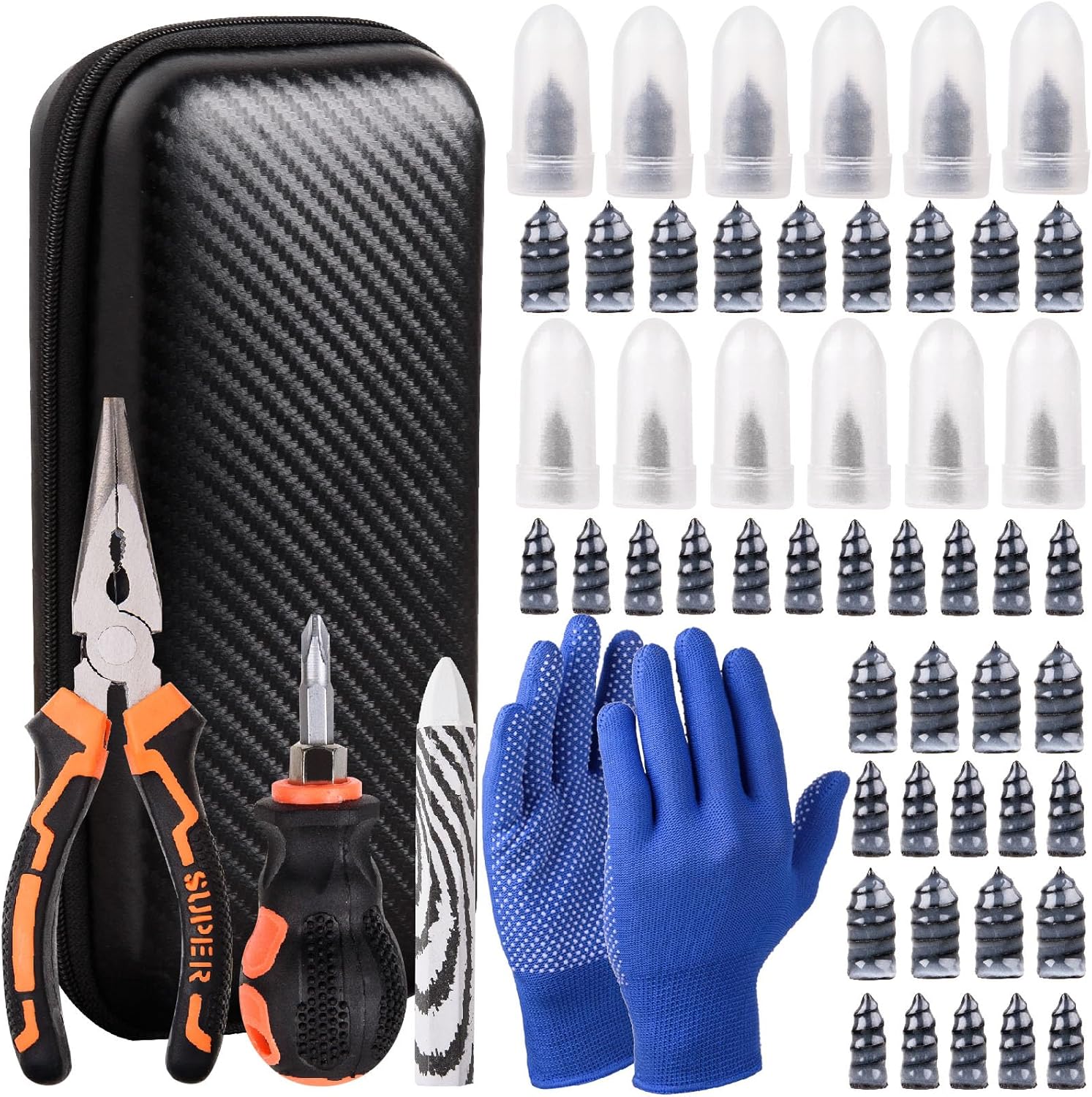
This tire sidewall puncture repair kit fixes flats fast without removing the tire, helping you get back on the road in minutes. It includes self-tapping repair nails, essential tools, gloves, and a portable storage bag for convenient roadside use. Designed for tubeless tires, it helps create a tight, leak-resistant seal for cars, motorcycles, trucks, SUVs, and ATVs.
Why Customers Choose It
Buyers choose this Racewill set because it combines a 0 to 2500 RPM pneumatic buffer with the hand tools and replaceable heads needed around the preparation stage. The bundle is more convenient than sourcing every accessory separately, and the low-speed control is better suited to careful rubber work than a fast general-purpose grinder. The tradeoff is that you must provide all repair materials, air equipment, tire-service tools, and technical knowledge.
Frequently Asked Questions
Do you need an air compressor?
Yes. The buffer is pneumatic and will not operate without a compatible compressed-air supply. Check the listing and tool instructions for connection and operating requirements before choosing a compressor, regulator, hose, or coupler.
Does the kit include patches and repair cement?
No. The stated package contents cover the buffer, air parts, grinding heads, chucks, scraper, and roller. You must purchase an approved repair unit, plug/stem, cement, cleaner, and any other materials required by the repair system.
Can you use it without removing the tire from the wheel?
You should not use it as a shortcut for an on-wheel repair. A proper internal puncture repair requires the tire to be demounted and inspected for hidden damage before the inner liner is prepared.
Is the 2500 RPM speed too fast for an inner liner?
The listed range is 0 to 2500 RPM, so you can begin below the maximum. Correct speed, pressure, head selection, and buffed texture depend on the repair-material instructions and your training.
Can it repair sidewall or shoulder damage?
The tool can grind rubber, but tool capability does not make an injury repairable. Passenger and light-truck puncture repairs are generally limited to the approved tread repair area, while shoulder, sidewall, and structural damage usually require professional evaluation and replacement.
Is it durable enough for daily shop use?
The tungsten heads and replaceable chucks support repeated work, but the listing does not provide a continuous-duty rating. It is easier to recommend for occasional or moderate workloads than for a production shop that runs a buffer throughout the day.
What is the most common mistake to avoid?
Do not over-buff the inner liner or assume every puncture is repairable. Use light pressure, stay within the marked preparation area, and stop if you expose cords, create excessive heat, or find damage outside the approved repair zone.
Who should skip this kit?
Skip it if you need a simple emergency inflator or external plug tool, or if you lack tire-demounting equipment and repair training. In those cases, a qualified tire-service shop is the safer option.
The Bottom Line
The Racewill Air Tire Repair Polish Patch Tools kit is a practical choice for trained users who want a compact 0 to 2500 RPM air buffer, scraper, roller, and spare tungsten heads in one package. You should skip it if you expect a complete repair kit or plan to repair a mounted tire without professional inspection. Its strongest feature is controlled, all-in-one surface preparation, while its biggest limitation is the amount of additional equipment and knowledge required for a safe repair.
Ready to Buy?
Check the latest price, package contents, and compressor requirements before you decide.