Reading a Toyota Tacoma tire size is easier once you know what each number and letter on the sidewall means. The code tells you the tire type, width, sidewall height, construction, wheel diameter, load capacity, and speed rating. For a Tacoma, those details matter because the wrong tire can affect clearance, towing stability, braking, fuel economy, speedometer accuracy, and tire life.
Quick Answer
To read a Toyota Tacoma tire size, break the sidewall code into tire type, width, aspect ratio, construction, wheel diameter, load index, and speed rating. In P265/70R17 115T, 265 is width in millimeters, 70 is sidewall height percentage, R is radial, 17 is wheel diameter, 115 is load capacity, and T is speed capability.
Key Takeaways
- Your Tacoma’s correct tire size is listed on the driver-side Tire and Loading Information Label and in the owner’s manual.
- The tire code shows size, construction, load capacity, and speed rating, not just the wheel size.
- Never choose a tire with a lower load index or speed rating than Toyota specifies for your truck.
- Bigger tires can improve ground clearance, but they may cause rubbing, speedometer error, lower fuel economy, and extra strain without the right setup.
At a Glance
| Time Required | 5–10 minutes |
| Difficulty | Easy |
| Tools Needed | Driver-side tire placard, owner’s manual, tire sidewall, and a tire-pressure gauge |
| Cost | $0 to read the size; tire replacement or professional fitment checks vary by shop and tire type |
What Does the Tire Size Number Indicate?
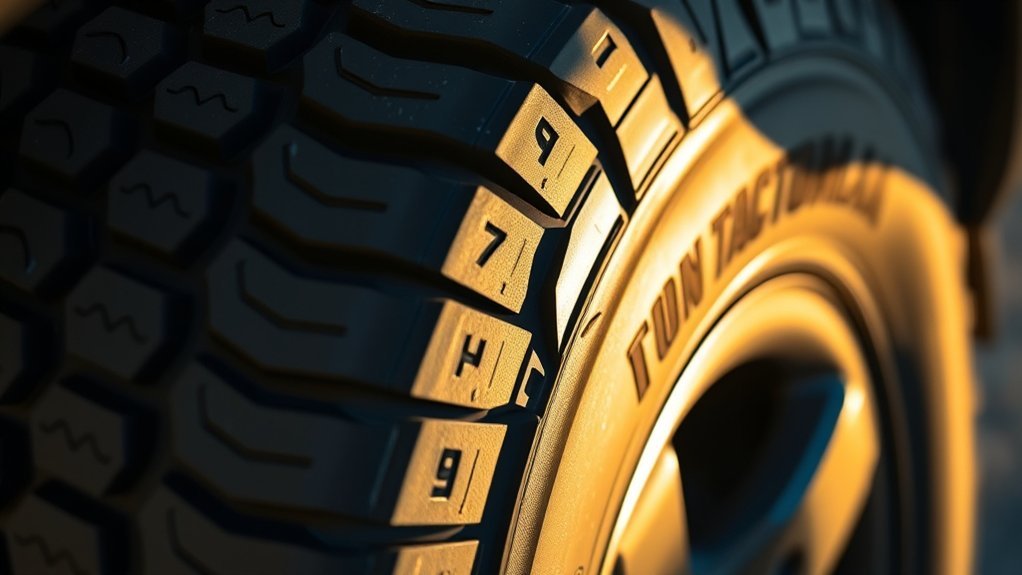
A tire size looks like a code because every part of it has a job. According to the Tire Industry Association, the letters and numbers on a tire sidewall identify the tire type, width, aspect ratio, construction, rim diameter, service description, DOT code, and other safety information.
Here is how to decode a common Tacoma-style example: P265/70R17 115T.
| Code Part | What It Means | Tacoma Example |
|---|---|---|
| P | Passenger-metric tire. You may also see LT for light truck or no first letter on some metric tires. | P-metric tire |
| 265 | Approximate section width from sidewall to sidewall, in millimeters. | About 265 mm wide |
| 70 | Aspect ratio. The sidewall height is 70% of the tire width. | 265 × 0.70 = 185.5 mm sidewall height |
| R | Radial construction, the standard construction style for modern passenger and light-truck tires. | Radial tire |
| 17 | Wheel or rim diameter, in inches. | Fits a 17-inch wheel |
| 115 | Load index, or how much weight one tire can support when properly inflated. | 115 = 2,679 lb per tire |
| T | Speed rating, or the tire’s tested speed capability under controlled conditions. | T = 118 mph rating |
Note: The tire size code is not the same as the recommended tire pressure. Your recommended cold PSI is on the Tacoma’s Tire and Loading Information Label, not guessed from the sidewall maximum pressure.
Where to Find the Correct Tacoma Tire Size
The safest starting point is not a forum post, a tire-size calculator, or the size on another Tacoma. Check your own truck first. The Toyota Tacoma owner’s manual tire information explains the tire markings, and NHTSA TireWise says to use the owner’s manual or the Tire and Loading Information Label on the driver-side door edge or post when choosing the correct tire size.
On your Tacoma, look for:
- Tire size: for example, 245/70R17, 265/70R17, 265/65R18, or 265/70R18 depending on year, trim, and package.
- Cold tire pressure: the PSI Toyota specifies for your exact truck and tire setup.
- Load information: how much combined passenger and cargo weight your truck can safely carry.
- Original wheel size: important when replacing tires or changing wheel diameter.
For current-generation Tacoma shoppers, common factory tire sizes include the following. Treat this as a reference, not a replacement for your door placard, because factory options can change by trim, drivetrain, market, and model year.
| Common Tacoma Tire Size | Where You May See It | What to Check |
|---|---|---|
| 245/70R17 | Base and lower-trim current-generation Tacoma setups | Load index, speed rating, and wheel width |
| 265/70R17 | Many off-road-oriented 17-inch wheel setups | Clearance, spare size, and placard pressure |
| 265/65R18 | Many 18-inch street-oriented Tacoma setups | Wheel diameter and replacement tire load rating |
| 265/70R18 | Some high-clearance or off-road-focused factory packages | Overall diameter, fender clearance, and spare fit |
Warning: Do not install a tire with a lower load index or lower speed rating than Toyota specifies for your Tacoma. A tire that looks like it fits may still be wrong for towing, payload, heat buildup, braking, or long highway driving.
Differentiating Tire Types: Passenger vs. Light Truck vs. Special Trailer
When choosing tires for your Toyota Tacoma, the first letter matters. Tire type affects ride comfort, load capacity, sidewall strength, inflation requirements, and how the tire behaves on pavement, gravel, mud, or rocks.
[Products Worth Considering]

Vigorder rubber cement glue delivers superior adhesion and cures quickly within about 30 seconds for seamless rubber bonding. Once cured, it helps provide a strong, durable, waterproof seal that holds up to vehicle weight, pressure, and heat. Suitable for cars, motorcycles, trucks, bicycles, and off-road tires, it’s designed for emergency patch and maintenance repairs.

These aluminum alloy tire valve stem caps with an O-ring seal help protect valve stems from corrosion while adding a clean, stylish look to your vehicle. The universal fit works across cars, trucks, motorcycles, bicycles, and more, making them an easy upgrade for everyday driving and off-road use. Installation is quick, and the included four-pack keeps all your tires dressed and protected.

Secure your vehicle during transport with this 4-pack of heavy-duty tire tie down straps designed for trailers and hauling. The ratchet system with flat hooks and D-rings helps you tension the straps quickly, while the wheel-friendly design protects tires. With high break strength and corrosion-resistant hardware, these straps provide reliable, confidence-inspiring tie-down security for cars, trucks, and UTVs.
Passenger or P-Metric Tires
Passenger-metric tires often start with P, such as P265/70R17. They are commonly chosen for daily driving because they usually ride smoother and can be lighter than heavier-duty LT tires. They are a good fit when your Tacoma is used mostly for commuting, light hauling, and normal road use—as long as the size, load index, and speed rating match your truck’s placard.
Light Truck Tires
Light truck tires start with LT, such as LT265/70R17. They are built for heavier-duty use, towing, payload, and rougher terrain. Many LT tires have stronger sidewalls and higher load ranges, but they can ride firmer, weigh more, reduce fuel economy, and require different inflation pressure than a P-metric tire.
Pro Tip: If you switch from P-metric to LT tires, do not simply copy your old PSI. Ask the tire manufacturer or a qualified tire shop to confirm the right pressure for your Tacoma’s axle loads and tire size.
Special Trailer Tires
Special trailer tires start with ST. They are designed for trailers, not for your Tacoma’s drive axles. ST tires are built around trailer stability and load behavior, so they should not be used as replacement tires on the truck itself.
How Tire Width Impacts Performance
Tire width is the first major number in the tire size. In 265/70R17, the tire is about 265 millimeters wide. Width changes the size of the contact patch, steering feel, road noise, wet-road behavior, off-road flotation, and rolling resistance.
Handling and Stability
A wider tire can add grip and stability, especially on dry pavement, sand, and loose terrain. It can also make the truck feel more planted in corners. However, wider is not always better. Too much width can make steering heavier, increase road noise, reduce fuel economy, and create rubbing at the fender liner, cab mount, or suspension components.
Ride Comfort Factors
Width works together with sidewall height. A wider tire with enough sidewall can feel stable and comfortable, while a wide tire with a short sidewall can feel firmer over broken pavement. If your Tacoma spends most of its time on highways, ride comfort and noise may matter more than maximum off-road traction.
Tread Wear Considerations
Changing tire width can also change tread wear. Wider tires may wear unevenly if the alignment, wheel offset, pressure, or suspension geometry is not right. After changing sizes, check alignment and inspect the tread regularly for feathering, cupping, or heavier wear on one shoulder.
Decoding Aspect Ratio for Enhanced Handling
The aspect ratio is the second number in the tire size. In 265/70R17, the 70 means the sidewall height is 70% of the tire’s width. That sidewall height affects ride comfort, steering response, off-road cushioning, and wheel protection.
| Aspect Ratio | What It Usually Means | Tacoma Impact |
|---|---|---|
| 70-series | Taller sidewall relative to width | More cushioning, better wheel protection, and useful flex for off-road driving |
| 65-series | Slightly shorter sidewall than a 70-series tire of the same width | Often sharper road feel, but less sidewall cushion than a comparable 70-series tire |
| Lower-profile sizes | Shorter sidewall and larger wheel look | May improve steering response, but can reduce comfort and off-road wheel protection |
To estimate sidewall height, multiply the width by the aspect ratio. For example, a 265/70R17 tire has a sidewall height of about 185.5 mm because 265 × 0.70 = 185.5.
Why Tire Size and Wheel Diameter Matter for Your Tacoma
Tire size and wheel diameter affect far more than appearance. Your Tacoma’s tire diameter changes the truck’s effective gearing, speedometer reading, odometer reading, braking feel, acceleration, and clearance. Wheel diameter also affects sidewall height: a larger wheel with the same overall tire diameter leaves less rubber sidewall to absorb bumps.
- Correct fitment: The tire must fit the wheel width, brake clearance, suspension travel, and fender opening.
- Speedometer accuracy: A taller tire travels farther per revolution, so the speedometer may read lower than your actual speed.
- Off-road clearance: A taller tire can improve ground clearance, but only if it clears the body and suspension.
- Ride comfort: More sidewall usually helps absorb rough roads and trail impacts.
- Towing and payload: Load index, pressure, and tire construction must match the job your Tacoma is doing.
Note: If your Tacoma has aftermarket wheels, a lift, a leveling kit, wheel spacers, or trimmed bodywork, the factory tire-size chart may not tell the whole story. Offset, backspacing, alignment, and suspension travel all affect whether a tire truly fits.
[Products Worth Considering]

Keep your tires properly inflated with this analog VONDIOR tire pressure gauge, designed for fast, easy readings without batteries. The swiveling, two-axis hose and large glow dial help you measure at any tire angle with instant visibility. Built with a protective rubber shield, it supports durable, low-maintenance use for cars and trucks.

The 22800 wheel stud installer makes replacing wheel studs quick and secure, saving time and effort during tire service. It uses a ratchet or impact wrench to pull new studs firmly into place, helping when existing studs are too long. Compatible with most automotive wheels and light-duty truck wheel studs, it’s designed for easy, tool-assisted installation.

This digital tire pressure gauge with built-in inflator helps you accurately check and adjust tire pressure for safer driving and better fuel efficiency. It supports multiple units (PSI, KPA, BAR, KG/CM²) and reads within 1% for reliable results. The 3-in-1 design inflates, deflates, and measures, with a quick-connect air chuck and compatible hose setup for cars, trucks, SUVs, RVs, and motorcycles.
Understanding Load Index and Speed Rating
The load index and speed rating are the service description at the end of the tire size. They are easy to overlook, but they are critical for safety. A tire with the correct width and diameter can still be wrong if the load index or speed rating is too low.
A tire load index is a number that translates to maximum weight capacity per tire. Common Tacoma-related load indexes include:
| Load Index | Maximum Load Per Tire | Why It Matters |
|---|---|---|
| 110 | 2,337 lb | Common on some current 17-inch Tacoma tire listings |
| 114 | 2,601 lb | Often seen on larger 18-inch Tacoma sizes |
| 115 | 2,679 lb | A higher-capacity rating used on some truck and SUV tires |
The speed rating is the final letter, such as T. Bridgestone explains that a speed rating is based on controlled testing and does not mean you should drive at that speed. A T rating corresponds to a maximum tested speed of 118 mph under rating conditions, but your real-world safe speed depends on inflation, load, tire condition, weather, road surface, and legal speed limits.
Warning: Never treat a tire’s speed rating as permission to drive faster. It is a tire capability rating under controlled conditions, not a recommendation for road speed.
How Tire Specifications Affect Your Tacoma’s Performance
Tire specifications affect how your Tacoma feels every day. Width changes grip and rolling resistance. Aspect ratio changes comfort and sidewall protection. Wheel diameter changes sidewall height. Load index affects how safely the tire carries weight. Speed rating reflects heat and speed capability under controlled test conditions.
NHTSA reported 511 deaths in tire-related crashes in 2024 and warns that poor tire maintenance, including underinflation and failure to rotate tires, can lead to flats, blowouts, or tread separation.
For your Tacoma, the biggest real-world effects are:
- Handling: Wider or more aggressive tires can improve grip in some conditions but may feel heavier on-road.
- Fuel economy: Heavier, wider, or more aggressive all-terrain and mud-terrain tires can increase rolling resistance.
- Braking: Bigger and heavier tire-and-wheel packages can increase rotating mass and affect stopping feel.
- Off-road traction: More sidewall and tougher construction can help on trails, rocks, and washboard roads.
- Comfort and noise: Tread pattern, sidewall, and load range can make a tire feel quiet and smooth or firm and loud.
Tire Age, Tread Depth, and Pressure Checks
Choosing the correct Tacoma tire size is only part of the job. You also need to know whether the tires are safe to keep using.
- Check pressure monthly: NHTSA recommends checking all tires, including the spare, at least once a month when the tires are cold.
- Use the placard PSI: Use Toyota’s recommended cold pressure from the driver-side label, not the maximum pressure molded on the tire.
- Watch tread depth: Tires should be replaced when tread is worn to 2/32 inch. Built-in treadwear indicators and the penny test can help you spot worn tires.
- Read the DOT date code: The final four numbers in the DOT/TIN code show the week and year of manufacture. For example, 2910 means the tire was made in the 29th week of 2010.
- Inspect damage: Look for cracking, bulges, cuts, exposed cords, embedded objects, uneven wear, and vibration after impacts.
Tips for Choosing the Right Tire Size for Your Tacoma
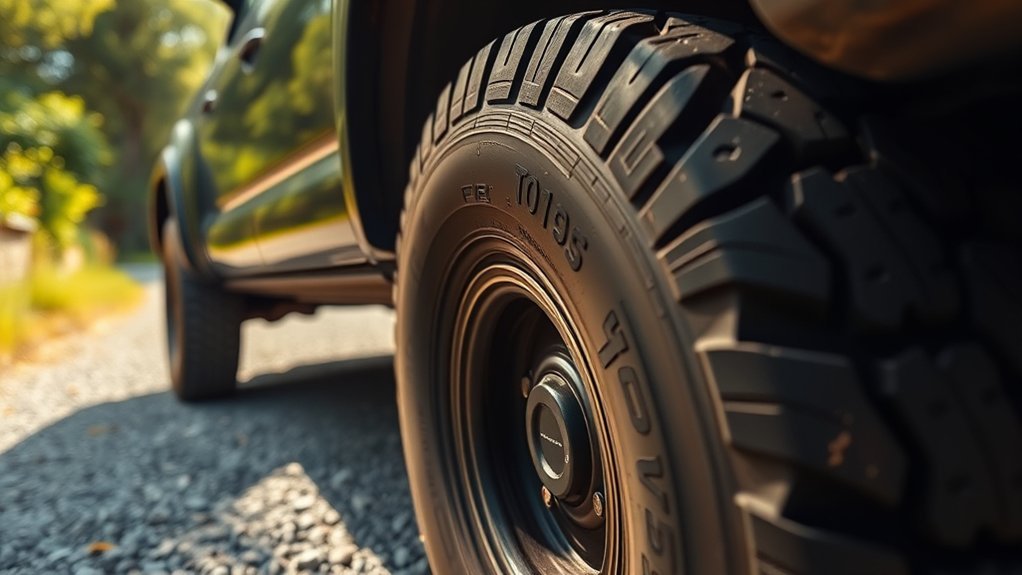
Use this simple process before buying replacement or upgraded tires:
- Start with the door placard. Write down the original tire size, cold PSI, and load information for your exact Tacoma.
- Match or exceed the OE load index. Do not choose a tire with a lower load capacity than Toyota specified.
- Match or exceed the OE speed rating. A higher rating may be acceptable, but a lower one is not a safe shortcut.
- Choose the tire type for your use. All-season or highway-terrain tires are better for quiet road use; all-terrain tires balance road and trail use; mud-terrain tires prioritize off-road bite but can be louder and heavier.
- Check overall diameter. A big change can affect speedometer accuracy, gearing, braking feel, and driver-assistance calibration.
- Confirm clearance. Turn lock-to-lock, check compression clearance, and inspect fender liners, mud flaps, body mounts, and suspension parts.
- Plan for the spare. A larger tire may not fit the spare location, and using a smaller spare with larger tires can create driveline problems.
- Recheck pressure and alignment. After installation, set pressure correctly and get an alignment if wear or steering feel changes.
[Products Worth Considering]

AZUNO’s digital tire inflator delivers stable, accurate pressure readings with a bright LCD and a 0.1 resolution display for confident inflation. It supports one-handed operation for inflating and quick deflating, and it’s built with rugged steel and brass components for reliable shop or garage use. With multi-unit pressure display and compatibility across cars, SUVs, motorcycles, and trucks, it’s a convenient accessory for everyday tire maintenance.

Protect your spare wheel with a waterproof, dustproof tire cover made to resist sun and harsh weather. The elastic band design makes it easy to install and remove without tools, while reinforced stitching helps it keep its shape. Available in multiple sizes, it fits common RV, trailer, Jeep, SUV, and truck spare tires.

ETENWOLF T300 is a calibrated digital tire pressure gauge for accurate readings from 3 to 200 PSI across light and heavy-duty vehicles. It includes thermal compensation for reliable performance in extreme cold or heat, with an auto shut-off to extend battery life and an LED for easier reading. The sturdy design supports rugged everyday use, making it ideal for pickups, RVs, and industrial applications.
When 33-Inch or 35-Inch Tires Make Sense
Many Tacoma owners compare 33-inch and 35-inch tires for a more aggressive stance and better trail clearance. A 33-inch tire is usually the more practical upgrade because it often requires fewer supporting changes. A 35-inch tire can add more ground clearance, but it is more likely to require a lift, trimming, careful wheel offset, recalibration, and attention to gearing, braking, spare fitment, and rubbing.
If your Tacoma is a daily driver, a mild all-terrain tire close to factory diameter is usually the easiest choice. If it is a trail-focused build, larger tires can make sense, but the tire should be matched to the suspension, wheel specs, payload, and the terrain you actually drive.
Frequently Asked Questions
How do you read a Toyota Tacoma tire size?
Use the sidewall code. In P265/70R17 115T, P is the tire type, 265 is width in millimeters, 70 is the aspect ratio, R means radial construction, 17 is wheel diameter in inches, 115 is the load index, and T is the speed rating.
What is better for a Tacoma, 33-inch or 35-inch tires?
For most daily-driven Tacomas, 33-inch tires are the easier and more practical upgrade. They can improve stance and clearance with fewer fitment problems. 35-inch tires are better for dedicated off-road builds, but they usually need more supporting changes, such as lift, trimming, wheel-offset planning, recalibration, and careful clearance checks.
Can I put LT tires on my Toyota Tacoma?
Yes, many Tacoma owners use LT tires for towing, payload, and off-road durability. However, LT tires can be heavier and firmer, and they may need different inflation pressure than P-metric tires. Match the correct size, load rating, speed rating, and pressure guidance before switching.
Where is the correct tire size listed on a Tacoma?
The correct tire size is listed on the Tire and Loading Information Label on the driver-side door edge or doorjamb. You can also check the Toyota owner’s manual for your model year. Use that information before buying replacement or upgraded tires.
What happens if my Tacoma tire load index is too low?
A tire with too low of a load index may not safely carry the truck, passengers, cargo, or trailer tongue weight. That can increase heat buildup, wear, handling problems, and the risk of tire failure. Always match or exceed Toyota’s specified load rating.
How do I know how old my Tacoma tires are?
Look for the DOT/TIN code on the tire sidewall. The final four digits show the manufacture week and year. For example, 2910 means the tire was made during the 29th week of 2010.
Conclusion
Choosing the right tire size for your Toyota Tacoma is not just about appearance. The sidewall code tells you whether the tire fits your wheel, how tall and wide it is, how much weight it can carry, and what speed rating it has. Start with the driver-side placard and owner’s manual, then match the tire to how you actually use your truck—daily commuting, towing, hauling, overlanding, or off-road driving. The right tire size keeps your Tacoma safer, more comfortable, and better prepared for the road or trail ahead.
Sources
- Toyota Owners — 2026 Tacoma Tire Information — tire symbols, tire-size markings, and Tacoma owner-manual tire information
- Toyota — 2026 Tacoma Tire Specifications — current Tacoma tire specification reference
- NHTSA TireWise — tire-size selection, tire maintenance, pressure checks, tread depth, and tire-safety guidance
- Tire Industry Association — Reading a Tire Sidewall — tire type, width, aspect ratio, construction, DOT/TIN, and UTQG explanation
- Tire Rack — What Is Load Index? — load-index values and light-truck load-index explanation
- Bridgestone — Tire Speed Rating — speed-rating meaning, testing caveats, and common speed-rating chart