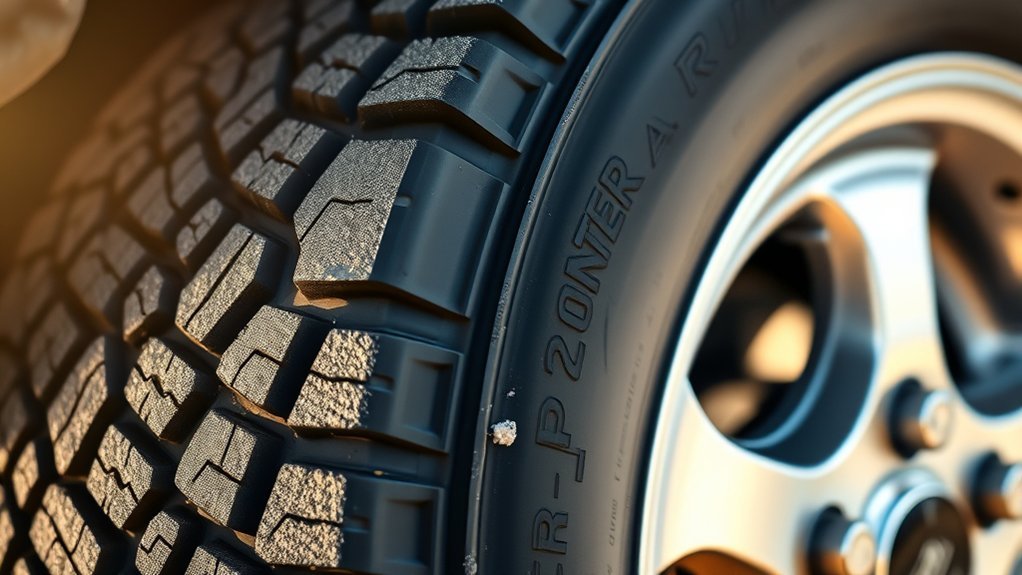
The P265/70R17 size is one of the most common tire sizes on fifth-generation Toyota 4Runner trims with 17-inch wheels. It means the tire is about 265 mm wide, has a sidewall height equal to 70% of that width, uses radial construction, and fits a 17-inch wheel. For a 4Runner, this size gives a useful mix of road comfort, sidewall cushion, and light-to-moderate trail capability.
Quick Answer
P265/70R17 is a roughly 31.6-inch tire size commonly used on many 2010–2024 Toyota 4Runner trims with 17-inch wheels. It is a strong everyday size for comfort, ground clearance, and light off-road driving, but you should always match the tire load rating, speed rating, and pressure listed on your door-jamb placard.
Key Takeaways
- P265/70R17 means passenger-service metric tire, 265 mm section width, 70% aspect ratio, radial construction, and 17-inch wheel diameter.
- The size is about 31.6 inches tall, with a sidewall height of about 7.3 inches.
- It fits many fifth-generation 4Runner trims, but 2025+ 4Runner trims use different factory tire packages, so the door placard is the final authority.
- Changing from a smaller tire to P265/70R17 can make your actual speed slightly higher than your indicated speed.
- Choose H/T, A/T, R/T, M/T, or winter tires based on where you drive most, not just on looks.
What P265/70R17 Means on a 4Runner Tire
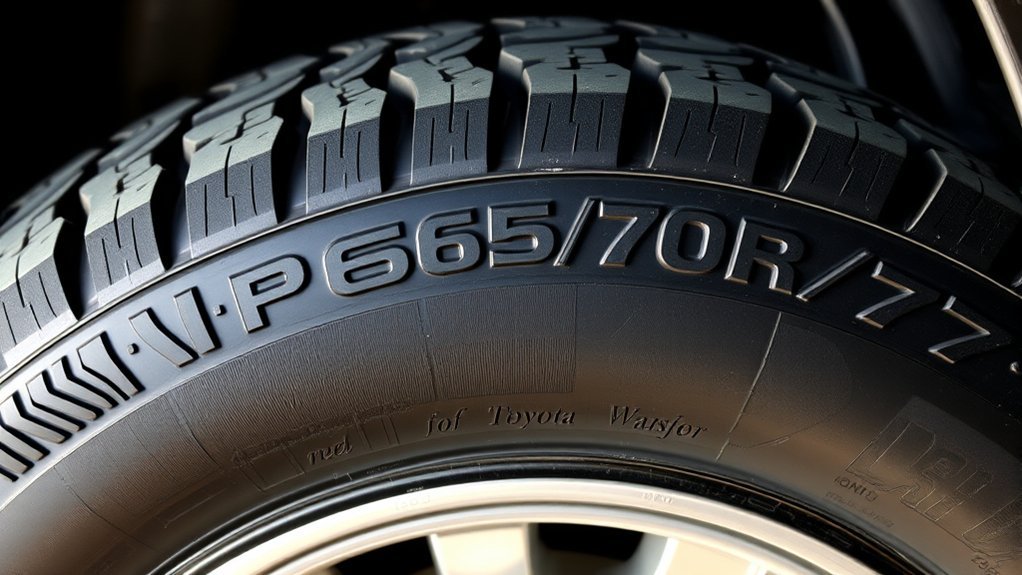
The Tire Industry Association explains that tire size markings show the tire width, aspect ratio, construction type, and rim diameter. For P265/70R17, each part tells you something important before you buy replacement tires.
| P | Passenger-service metric tire. This does not mean it only fits cars; many SUVs and light trucks use P-metric tires from the factory. |
| 265 | Approximate section width in millimeters, measured from sidewall to sidewall. That equals about 10.4 inches. |
| 70 | Aspect ratio. The sidewall height is 70% of 265 mm, or about 185.5 mm / 7.3 inches. |
| R | Radial construction, the standard construction type for modern passenger and light-truck tires. |
| 17 | Wheel diameter in inches. A P265/70R17 tire must be mounted on a 17-inch wheel. |
P265/70R17 Size Specs at a Glance
A P265/70R17 tire is often described as a “32-inch” tire, but its calculated diameter is closer to 31.6 inches. Real-world dimensions can vary slightly by tire model, tread depth, and measuring rim width.
| Section Width | 265 mm / about 10.4 in. |
| Sidewall Height | 185.5 mm / about 7.3 in. |
| Overall Diameter | About 31.6 in. |
| Circumference | About 99.3 in. |
| Approx. Revolutions Per Mile | About 638 revs/mile |
Note: Tire size calculators give a useful estimate, but the tire manufacturer’s spec sheet is more accurate for a specific model because tread depth, casing design, and measuring rim width can change the real mounted diameter.
Does P265/70R17 Fit a Toyota 4Runner?
Yes, P265/70R17 is a factory-style size for many fifth-generation Toyota 4Runner trims with 17-inch wheels. Toyota’s 2023 4Runner brochure lists P265/70R17 tires on multiple trims, including SR5, TRD Off-Road, TRD Pro, and 40th Anniversary-related 17-inch wheel packages.
That said, do not assume every 4Runner uses this size. Limited and Sport-style trims may use 20-inch wheels, and the sixth-generation 2025+ 4Runner introduced different factory tire packages, including 18-inch wheels and 33-inch tires on off-road-focused trims. Always check the Tire and Loading Information Label on the driver-side doorjamb before buying tires.
Warning: Never choose a tire by size alone. Match the correct wheel diameter, load index, speed rating, and cold tire pressure for your exact 4Runner. If you are changing tire size or switching from P-metric to LT-metric, confirm fitment with a qualified tire shop.
P-Metric vs LT-Metric 265/70R17 Tires
When shopping, you may see P265/70R17, 265/70R17, and LT265/70R17. They look similar, but they are not always interchangeable.
- P265/70R17: Passenger-service metric sizing. This is common on SUVs and light trucks when comfort, weight, and daily driving are priorities.
- 265/70R17: Metric sizing without the “P.” The dimensions are similar, but the load index and tire construction still need to be checked.
- LT265/70R17: Light-truck sizing. LT tires usually have stronger construction and higher load-range options, but they are often heavier, firmer, and may reduce ride comfort or fuel economy.
If you tow, carry heavy gear, run rocky trails, or drive remote routes, an LT tire can make sense. For commuting, road trips, and mild trails, a P-metric or standard metric all-terrain tire may ride better and weigh less.
[Products Worth Considering]

Keep your tires properly inflated with this analog VONDIOR tire pressure gauge, designed for fast, easy readings without batteries. The swiveling, two-axis hose and large glow dial help you measure at any tire angle with instant visibility. Built with a protective rubber shield, it supports durable, low-maintenance use for cars and trucks.

Measure tire tread depth quickly and accurately with this LUMITECO dial gauge that reads in 1/32" increments up to 14/32". The color-coded green/yellow/red zones make it easy to judge tire wear and know when replacement is needed. A rugged, compact design with a protective pouch helps keep the gauge ready for use on cars, trucks, motorcycles, and more.

Monitor tire tread wear with a smart, color-coded depth gauge that shows clear condition ranges at a glance. The bar is range marked for fast, easy readings, helping you maintain safer traction and performance. Each gauge is portable with a pocket clip, and the set includes 20 units for daily use and sharing.
Off-Road Capabilities of P265/70R17 Tires
The P265/70R17 size works well for light-to-moderate 4Runner trail use because the 70-series sidewall gives more cushion than a lower-profile tire. That sidewall helps absorb impacts from washboard roads, gravel, potholes, and mild rocky terrain.
Size alone does not create off-road traction, though. The tread pattern, compound, sidewall strength, air pressure, and driver technique matter more than the size printed on the sidewall. NHTSA describes all-terrain tires as a compromise between on-road driving and off-road capability, which is exactly why they are popular on 4WD SUVs.
Off-Road Performance Traits
A good P265/70R17 all-terrain tire can improve traction on dirt, gravel, snow, and loose surfaces compared with a highway-oriented tire. Look for these traits if you plan to leave pavement often:
- Open shoulder blocks for loose dirt and gravel evacuation.
- Full-depth sipes for wet pavement and light snow grip.
- Stronger sidewalls if you drive rocky or rutted trails.
- 3PMSF severe-snow rating if winter traction matters in your region.
- Reasonable weight if daily comfort and fuel economy are priorities.
Tread Design Importance
Tread design changes how a tire behaves more than many 4Runner owners expect. A highway-terrain tire is quiet and efficient, an all-terrain tire is more versatile, and a mud-terrain tire is more aggressive but usually louder and less refined on pavement.
| Highway Terrain (H/T) | Best for commuting, road trips, quiet ride, and fuel economy. Limited off-road grip. |
| All-Terrain (A/T) | Best all-around choice for most 4Runner owners who split time between pavement, gravel, dirt, and light trails. |
| Rugged Terrain (R/T) | More aggressive than A/T, usually stronger looking and better on rough trails, but often louder. |
| Mud Terrain (M/T) | Best for mud, rocks, and serious off-road use. Usually louder, heavier, and less efficient on pavement. |
| Winter Tire | Best for regular snow, ice, and freezing temperatures. A dedicated winter tire beats an all-season tire in deep snow. |
Light Off-Road Suitability
For forest roads, gravel, beach access, campsites, and mild trails, P265/70R17 is a practical 4Runner size. It keeps the vehicle close to factory geometry, usually avoids major clearance issues when replacing the same size, and leaves enough sidewall for rough surfaces.
For rocky trails, aired-down driving, or heavy overlanding loads, consider the tire’s construction and load rating carefully. An LT all-terrain may be tougher, but it can also ride firmer and add unsprung weight.
How P265/70R17 Affects Your 4Runner’s Performance
If your 4Runner already came with P265/70R17 tires, replacing them with the same size should not meaningfully change acceleration, speedometer accuracy, or clearance. Most changes come from switching to a heavier tire, a more aggressive tread, or a different overall diameter.
Speedometer and Size Changes
A taller tire travels farther with each wheel rotation. If your 4Runner was calibrated for a smaller tire, installing a taller tire can make your actual road speed higher than the speedometer shows.
| Tire Size | Approx. Diameter | Compared With 265/70R17 | What to Expect |
| 265/65R17 | 30.6 in. | About 3.4% smaller | Switching from 265/65R17 to 265/70R17 makes actual speed about 62 mph when the speedometer shows 60 mph. |
| 265/70R17 | 31.6 in. | Baseline | Factory-style size for many 17-inch-wheel 4Runner trims. |
| 275/70R17 | 32.2 in. | About 1.7% larger | Slightly wider and taller. Check for rubbing at full steering lock and compression. |
| 285/70R17 | 32.7 in. | About 3.5% larger | Often needs careful wheel-offset choice, trimming, lift, or alignment changes depending on the 4Runner setup. |
Clearance and Rubbing
P265/70R17 usually fits cleanly when it is the factory size. Rubbing becomes more likely when you go wider, taller, change wheel offset, add wheel spacers, or use a tire with large shoulder lugs. Check the front fender liner, mud flap area, body mount area, and upper control arm clearance.
Pro Tip: Test fitment with the steering turned fully left and right, then check clearance again with the suspension compressed. A tire that clears in the driveway may rub on a trail or steep driveway entrance.
Fuel Economy and P265/70R17 Tires
Switching to the same P265/70R17 size does not automatically reduce fuel economy. The bigger factors are tire weight, tread aggressiveness, rolling resistance, inflation pressure, and driving style. A heavy LT all-terrain or mud-terrain tire can make the 4Runner feel slower and may reduce MPG, especially in stop-and-go driving.
On the highway, a slightly taller tire can lower engine RPM a little, but that does not guarantee better MPG. Extra weight and tread resistance can cancel out that benefit. For the best balance, choose a tire that matches how you actually drive and keep it inflated to the cold pressure listed on the door placard.
Best P265/70R17 Tires for Performance and Off-Road Use
The best P265/70R17 tire for a 4Runner depends on your use case. A daily driver does not need the same tire as a rock-crawling or overlanding build.
[Products Worth Considering]

Upgrade your ride with a 2-pack set of 26x1.95 folding mountain bike tires built for dependable traction on mud, rocks, and trail surfaces. A reinforced puncture-resistant layer helps protect against sharp debris, while included butyl inner tubes provide strong sealing and shock absorption. Ready for fast swaps with included tire levers and universal sizing for most bikes.

Accurately measure tire tread depth with a calibrated gauge marked from 0 to 1 inch in 1/32 inch increments. The color-coded bar helps you quickly identify tread condition ranges, supporting safe driving for trucks, motorcycles, automobiles, and passenger vehicles.

The SAFELIFE dial tire tread depth gauge measures tread depth in 1/32 inch increments with clear, easy-to-read 2-inch dial face. Color zones using a traffic light system help you quickly judge whether tread is low, marginal, or ample for safer driving. Built with a durable zinc cast body and a metal detect probe for precise, comfortable use across cars, motorcycles, trucks, and buses.
Best for Balanced All-Terrain Use
The Falken Wildpeak A/T4W is a strong modern all-terrain choice for drivers who want trail traction, wet-road confidence, winter capability, and daily usability. Falken lists the A/T4W as severe-snow-rated and offers up to a 65,000-mile limited tread life warranty for non-LT sizes.
Best for Rugged Trail Use
The BFGoodrich All-Terrain T/A KO3 is a better fit if you prioritize off-road durability, gravel, rocks, mud, and snow. BFGoodrich says the KO3 builds on the KO2 with improved wet and snow traction, stronger sidewalls, and enhanced durability.
Best for Highway Comfort
If your 4Runner spends most of its time on pavement, choose a highway-terrain or mild all-terrain tire with good wet traction, low noise, and reasonable weight. This is the better route for commuting, long road trips, and fuel economy.
Best for Snow and Ice
If you regularly drive in deep snow, ice, or long stretches of freezing weather, a dedicated winter tire is safer than relying on an all-season tire. All-terrain tires can help in light snow, especially with a 3PMSF rating, but winter tires are the better tool for serious winter roads.
Top Tire Recommendations for Your 4Runner: Key Features to Consider
Before choosing a tire, compare the features that actually affect your 4Runner’s behavior. Do not buy based only on tread appearance.
- Load index: Match or exceed the original tire’s load rating.
- Speed rating: Use a rating appropriate for your vehicle and driving conditions.
- Weight: Heavier tires can reduce acceleration, braking feel, and fuel economy.
- Tread depth: Deeper tread can help off-road but may add noise and squirm on pavement.
- 3PMSF rating: Useful if you need verified snow traction.
- Sidewall construction: Important for rocks, aired-down driving, and overlanding loads.
- Road noise: Aggressive tires often get louder as they wear.
- Spare fitment: Make sure the spare tire location can handle the size you choose.
The best 4Runner tire is not always the largest or most aggressive one. It is the tire that matches your load, weather, trail difficulty, and daily driving needs.
[Products Worth Considering]

The Airmoto portable tire inflator quickly and accurately fills car, truck, SUV, motorcycle, and bicycle tires up to 120 PSI with auto shut-off when your target pressure is reached. Its large LCD, multi-unit pressure display, and digital gauge make it easy to dial in settings and verify readings, while the built-in LED flashlight helps in low light. The included polyurethane hard carrying case and storage mesh pocket keep the inflator and accessories protected and organized.

This professional wheel and rim brush kit makes it easy to lift brake dust, grime, and dirt from wheels and tires without scratching finishes. The brushes feature soft, metal-free wool heads and a flexible 360-degree rim brush design for reaching hard-to-clean areas. Includes multiple brush types plus accessories for thorough car, motorcycle, and general vehicle detailing.

This spare tire tool kit is designed for the 2004 to 2018 Ford F-150 to help you loosen and tighten wheel lug nuts and manage the spare tire and provided jack functions from underneath the vehicle. It includes the lug nut wrench and extension pieces plus a convenient storage carrying case for organized transport. The jack itself is not included.
Maintenance Tips for P265/70R17 4Runner Tires
Good tire care matters as much as tire choice. Use this checklist to get longer life and safer performance from your P265/70R17 tires:
- Check cold tire pressure monthly. Use the driver-side door placard, not the maximum pressure molded on the tire sidewall.
- Rotate tires regularly. Follow the Toyota owner’s manual or your tire manufacturer’s rotation schedule.
- Inspect tread depth. Replace tires before they become unsafe for your weather and terrain.
- Check alignment after impacts or suspension changes. Uneven wear can ruin a good tire quickly.
- Rebalance if vibration appears. Larger all-terrain tires can become noticeable when out of balance.
- Inspect sidewalls after trail use. Look for cuts, bulges, missing chunks, or exposed cords.
Frequently Asked Questions
What does P265/70R17 mean for tires?
P265/70R17 means the tire is a passenger-service metric tire with a 265 mm section width, 70% aspect ratio, radial construction, and a 17-inch wheel diameter. On a 4Runner, that works out to about a 31.6-inch overall tire diameter.
Is P265/70R17 a stock Toyota 4Runner tire size?
Yes, P265/70R17 is a stock-style size on many fifth-generation Toyota 4Runner trims with 17-inch wheels. However, some trims use 20-inch wheels, and 2025+ models use different factory sizes, so always check the Tire and Loading Information Label on your driver-side doorjamb.
Is 265 or 275 better for a 4Runner?
A 265 tire is usually the safer factory-style choice for fitment, comfort, and minimal rubbing. A 275 tire is slightly wider and taller, which can add traction and stance, but it also increases the chance of rubbing depending on wheel offset, alignment, tire model, and suspension setup.
Will P265/70R17 tires hurt fuel economy?
Replacing factory P265/70R17 tires with the same size does not automatically hurt fuel economy. MPG changes are more likely when you choose a heavier tire, an LT tire, a more aggressive tread pattern, or run incorrect tire pressure.
Do I need LT265/70R17 tires on a 4Runner?
Not always. LT265/70R17 tires can be useful for towing, heavy cargo, rocky trails, and overlanding, but they are often heavier and firmer than P-metric tires. For normal commuting and mild trails, a quality P-metric or standard metric all-terrain tire may be a better fit.
Can I fit 285/70R17 tires instead of P265/70R17?
Many 4Runner owners run 285/70R17 tires, but that size is taller and wider than P265/70R17. Depending on wheel offset, alignment, suspension, and tire design, you may need trimming, a lift, body-mount clearance work, or other fitment adjustments.
Sources
- Tire Industry Association — Reading a Tire Sidewall — supports tire width, aspect ratio, radial construction, and rim-diameter explanations.
- NHTSA TireWise Tire Safety — supports tire pressure, tire-size label, all-terrain, winter tire, tread, and maintenance guidance.
- Toyota 2023 4Runner Brochure — supports factory P265/70R17 fitment on several fifth-generation trims.
- Toyota 2025 4Runner Pressroom Release — supports the 2025+ model-year caveat and updated off-road tire packages.
- BFGoodrich All-Terrain T/A KO3 — supports KO3 off-road, wet, snow, and durability positioning.
- Falken Wildpeak A/T4W — supports A/T4W severe-snow rating and warranty information.
Conclusion
P265/70R17 is a practical, proven tire size for many Toyota 4Runner owners. It gives you a comfortable sidewall, solid ground clearance, and enough tire volume for daily driving, road trips, and light-to-moderate off-road use. The smartest move is to treat size as only the starting point: confirm your door-jamb placard, match the correct load and speed ratings, choose the right tread type for your driving, and check clearance before going wider or taller.