If your Toyota 4Runner still pulls right after an alignment, do not pay for another adjustment until you separate the easy causes from the expensive ones. A bad tire, uneven tire pressure, road crown, brake drag, worn bushings, or uneven caster can all feel like the same right-hand drift.
The goal is simple: test one variable at a time, write down what changes, then bring clear evidence to the alignment shop. That makes it much easier to tell whether you need a tire replaced, a caster correction, a suspension repair, or a better alignment setup for a lifted 4Runner.
Quick Answer
A 4Runner that pulls right after an alignment is often dealing with tire pull, road crown, uneven tire pressure, brake drag, worn suspension parts, or a caster/camber split. Check pressure and tread first, test on a flat road, then swap the front tires side-to-side only if the tires allow it. If the pull changes, suspect the tire; if it stays, recheck alignment and suspension.
Key Takeaways
- Do not assume a fresh alignment means the tires, brakes, and bushings are fine.
- A right pull that follows a front tire after a safe side-to-side swap usually points to tire conicity or radial tire pull.
- A pull that does not change after the tire test usually points back to caster, camber, toe, thrust angle, brake drag, or suspension wear.
- Lifted 4Runners often need careful caster setup, and some need aftermarket upper control arms to reach the desired range.
- Ask for a before-and-after alignment printout, not just a “green” screen.
At a Glance
| Time Required | 20 to 45 minutes for pressure, tread, road-crown, and tire-swap checks |
| Difficulty | Easy to moderate if you are comfortable removing wheels safely |
| Tools Needed | Tire pressure gauge, tread depth gauge or penny, jack, jack stands, lug wrench, torque wrench, notepad, and alignment printout |
| Cost | Usually $0 if you inspect and swap tires yourself; shop diagnosis or alignment correction may cost more |
Warning: Stop driving and inspect the vehicle right away if the pull is sudden, severe, paired with brake smell, paired with steering looseness, or paired with a bulge, exposed cord, or vibration from a tire. Use proper jack points, jack stands, and the Toyota lug nut torque specification any time you remove a wheel.
Start With Road, Pressure, and Tread Before Blaming Alignment
Before you blame the alignment shop, do three quick checks. First, test the 4Runner on the same straight road in both directions. Many roads slope toward the shoulder for drainage. That crown can make a vehicle drift right in one direction and feel better when you drive the opposite way.
Second, check all four tires cold. Use the pressure on your driver-side door label or the owner’s manual, not the number printed on the tire sidewall. The National Highway Traffic Safety Administration recommends checking tire pressure when the tires are cold and still checking manually even if your vehicle has TPMS.
Third, inspect tread depth and wear. Look for feathering, cupping, one-shoulder wear, bulges, cuts, or one tire that is much more worn than the others. If one front tire has a different wear pattern, different age, or different model, it can pull even when the alignment numbers look fine.
Note: TPMS may not warn you until a tire is significantly underinflated. A small left-to-right pressure difference can still affect how a 4Runner tracks.
[Products Worth Considering]

The SAFELIFE dial tire tread depth gauge measures tread depth in 1/32 inch increments with clear, easy-to-read 2-inch dial face. Color zones using a traffic light system help you quickly judge whether tread is low, marginal, or ample for safer driving. Built with a durable zinc cast body and a metal detect probe for precise, comfortable use across cars, motorcycles, trucks, and buses.

Monitor tire tread wear with a smart, color-coded depth gauge that shows clear condition ranges at a glance. The bar is range marked for fast, easy readings, helping you maintain safer traction and performance. Each gauge is portable with a pocket clip, and the set includes 20 units for daily use and sharing.

Measure tire tread depth quickly and accurately with this LUMITECO dial gauge that reads in 1/32" increments up to 14/32". The color-coded green/yellow/red zones make it easy to judge tire wear and know when replacement is needed. A rugged, compact design with a protective pouch helps keep the gauge ready for use on cars, trucks, motorcycles, and more.
Still Pulling Right After Your 4Runner Alignment? Check Your Caster Angle First
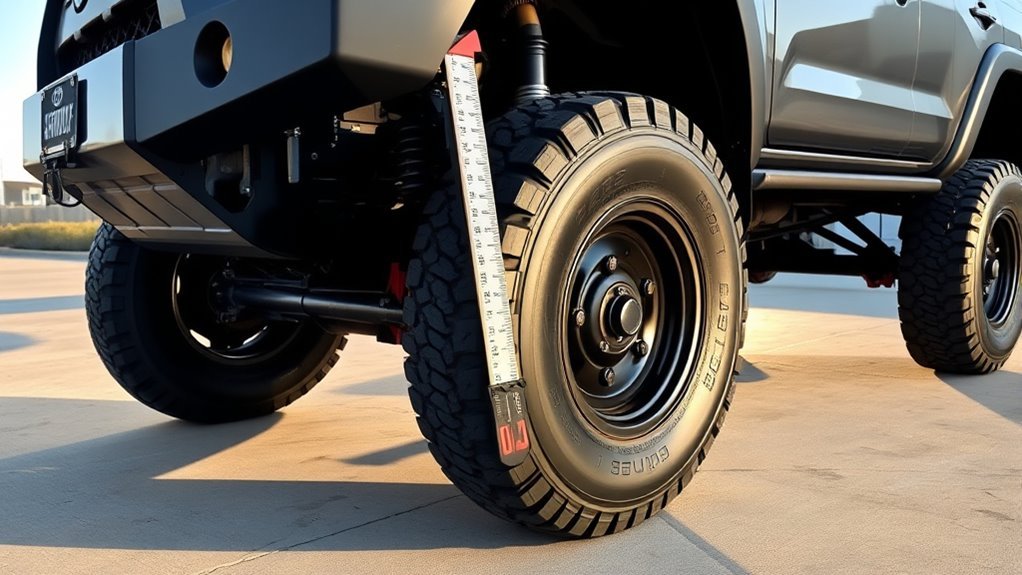
If your 4Runner still needs constant steering correction on a straight, level road, look at caster next. Caster is the forward or rearward tilt of the steering axis when viewed from the side. More positive caster generally improves straight-line tracking and high-speed stability, but the left and right sides still need to be set with the correct relationship for your vehicle and road conditions.
Do not rely on a universal “4.0° is ideal” rule. Toyota alignment specs vary by model year, trim, tires, suspension height, and shop database. A lifted 4Runner may also have less available caster with the factory upper control arms. The right answer is to compare your before-and-after printout with the correct Toyota spec and the parts installed on your vehicle.
On roads where traffic drives on the right, many street alignments use a small amount of cross-caster and cross-camber to resist road crown. That is why “equal numbers on both sides” are not always the best target. What matters is whether the caster, camber, toe, and thrust angle work together so the 4Runner tracks straight without chewing up tires.
A good alignment printout should show more than “green.” Ask for the before and after values for caster, camber, toe, and thrust angle so you can see what actually changed.
Lifted 4Runner? How to Test If It’s Your Tires or Alignment Causing the Pull
A lift changes suspension angles. Larger tires, wheel offset, worn bushings, or aftermarket upper control arms can add more variables. Use this order so you do not chase the wrong problem:
- Set tire pressure cold. Match the door label or your tire professional’s load-based recommendation if your tire size has changed.
- Inspect tread and sidewalls. Do not test-drive on a tire with a bulge, exposed cord, deep crack, or separated tread.
- Test both directions on the same road. If the pull changes with road direction, road crown is part of the symptom.
- Notice when the pull happens. A steady cruise pull is different from a braking pull or an acceleration pull.
- Swap the front tires side-to-side only if safe. Do this only when the front tires are the same size and not directional. If the tires are directional, ask a tire shop before swapping sides.
- Retest on the same road. Use the same speed, lane, tire pressure, and load.
If the pull reverses or changes after the front-tire swap, the tire is the main suspect. If the pull stays the same, look harder at alignment geometry, brakes, and suspension parts.
Pro Tip: Mark each tire position with painter’s tape before you move anything. Write LF, RF, LR, and RR on the tape so your test notes match the exact tire location.
[Products Worth Considering]

The Trivd Frol 1/2" air impact wrench delivers high performance torque up to 1500 ft-lbs with a twin hammer impact mechanism for strong, balanced blows. It features an ergonomic grip, compact lightweight design, and quick-stop control with 3 forward speeds up to 8000 RPM plus a reverse speed. Built for demanding automotive repair and tire shop work, the rear exhaust helps keep debris away from the surface.

The Ziopetru adjustable magnetic wheel alignment tool helps you check and restore camber and caster positioning after removing and reinstalling undercarriage components. With a clear leveling/bubble measurement system and an easy zeroing adjustment knob, it supports precise horizontal angle checking. The strong magnetic base mounts to metal surfaces for convenient use at home on cars, motorcycles, trucks, vans, and SUVs.

Upgrade your wheels with MIKKUPPA closed-end lug nuts designed for reliable fit and corrosion resistance. The one-piece, cold-forged and heat-treated steel construction helps resist rust and stripping, while the integrated finish delivers a durable black appearance. Built to OEM standards with a conical 60-degree seat, these nuts provide a secure solution for compatible Ford, Honda, Jeep, and Chevrolet models.
How to Read Your Caster Specs: What 0.5° Difference Looks Like on Paper
Your alignment printout should show individual values for left caster and right caster. The side-to-side difference is called cross-caster. A small split can be normal or even intentional, but a larger split can make the 4Runner drift, especially if camber or tire pull is also working in the same direction.
Here is a simple way to read the printout:
- Left caster lower than right caster: The vehicle may be more likely to drift left on a flat road, but road crown and camber can change the feel.
- Right caster lower than left caster: The vehicle may be more likely to drift right, especially if the right camber or a right-side tire also encourages that direction.
- Both caster numbers low after a lift: The 4Runner may wander or feel light on center, even if toe is “green.”
- Toe corrected but caster ignored: Tire wear may improve, but the steering pull may remain.
The Tire Rack alignment guide explains that caster, camber, toe, and thrust angle all affect vehicle tracking and tire wear. That is why a shop should not stop at toe if your 4Runner still pulls.
When Pulling Changes Under Braking or Acceleration
A pull that appears only while braking is not usually a caster-only problem. It can point to a sticking caliper, uneven pad friction, a restricted brake hose, contaminated pad material, or rotor issues. After a drive, a hot smell or one front wheel that feels much hotter than the other is a warning sign. Let a technician inspect the brakes before you keep test-driving.
A pull that appears mainly under acceleration can point to worn control-arm bushings, loose steering parts, drivetrain load changes, or tire grip differences. On a lifted 4Runner, worn lower control-arm bushings can let the alignment move under load even if the static printout looks fine.
Warning: If the 4Runner pulls sharply when braking, do not keep repeating hard road tests. Brake pull is a safety issue and should be inspected before further diagnosis.
What to Bring to Your 4Runner Alignment Shop (Checklist)
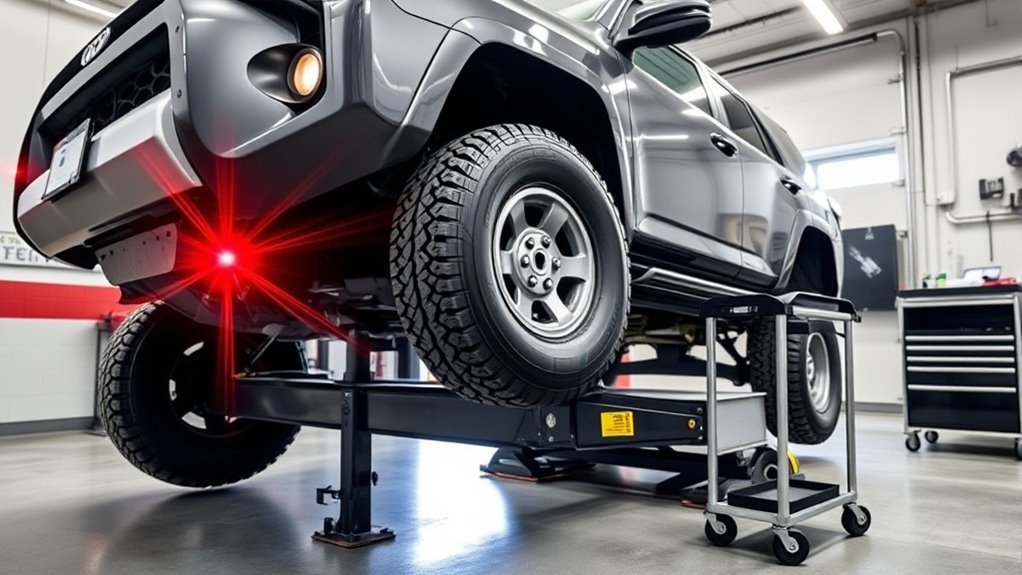
A prepared visit saves money because the technician does not have to guess. Bring these items or details:
- Your latest alignment printout. Bring the before-and-after sheet, not just the receipt.
- Tire details. Note brand, size, load range, tire age, and whether all four tires match.
- Cold tire pressures. Record all four before the appointment.
- Lift details. Bring the lift height, spring or spacer brand, upper control arm brand, and any recent suspension work.
- Driving notes. Write when it pulls: steady cruise, braking, acceleration, crowned road, highway speed, or after bumps.
- Load details. Tell the shop if you normally carry tools, recovery gear, drawers, a roof rack, or a bumper and winch.
- Recent repairs. Include tires, brakes, tie rods, ball joints, control arms, shocks, wheel bearings, or steering work.
Ask the shop to check for loose or worn parts before setting alignment. If a bushing, tie rod, ball joint, or wheel bearing moves, the alignment numbers can change as soon as you drive away.
Fix the Pull: Try This Tire Swap Before Paying for Realignment
A controlled front-tire swap is one of the best ways to separate tire pull from alignment pull. The test is simple, but the setup matters.
- Confirm both front tires are the same size and safe to move side-to-side.
- Do not swap directional tires side-to-side unless a tire shop remounts them correctly.
- Raise the vehicle safely, support it with jack stands, and move the left front tire to the right front position and the right front tire to the left front position.
- Torque the lug nuts to the correct Toyota specification for your wheel and model year.
- Drive the same road, in the same lane, at the same speed as your first test.
Read the result this way:
- The pull reverses: Tire pull is likely. Have the tire inspected for conicity, belt shift, uneven wear, or road-force variation.
- The pull improves but does not disappear: The tire is part of the problem, but alignment or road crown may also be involved.
- The pull stays exactly the same: Tires are less likely to be the main cause. Recheck caster, camber, toe, thrust angle, brakes, and suspension wear.
If a tire is the problem, another alignment will not fix it. If the tire is not the problem, bring your test notes to the shop and ask for a deeper alignment and suspension inspection.
[Products Worth Considering]

These M14x1.5 closed-end chrome lug nuts are a one-piece replacement designed for secure fitment on compatible GM, Ford, and select Chrysler/Dodge models. Featuring a 60-degree conical seat and anti-rust chrome plating, they help resist corrosion and maintain a bright look for everyday driving. Built for long-term durability, they include OEM-style part references and are backed by 12 months of support.

Accurately measure tire tread depth with a calibrated gauge marked from 0 to 1 inch in 1/32 inch increments. The color-coded bar helps you quickly identify tread condition ranges, supporting safe driving for trucks, motorcycles, automobiles, and passenger vehicles.

The Big Rig Defense Tire Thumper is a truck tire pressure checker that lets you quickly check multiple tires by giving them a firm whack. Listen for a reassuring thump and feel the stick bounce when a tire is fully inflated, helping you get back on the road safely. It features a comfortable, glove-friendly handle and a secure wrist strap for confident use on busy routes.
What to Ask the Alignment Shop to Do
When you return to the shop, be specific. Ask for these checks:
- Print the before and after alignment values. You need actual numbers for caster, camber, toe, and thrust angle.
- Use the correct model-year specs. A 5th-gen and a newer 4Runner may not share the same targets.
- Do not settle for “green” only. Ask whether the vehicle is close to preferred settings, not just inside the acceptable range.
- Check cross-caster and cross-camber together. A small intentional split can help road crown, but the wrong split can worsen a pull.
- Inspect lower control-arm cams. Frozen, slipped, or damaged adjusters can keep the shop from setting caster correctly.
- Inspect bushings and steering parts under load. Worn parts can pass a quick visual check but still move on the road.
- Discuss upper control arms if lifted. If the shop cannot reach enough positive caster, aftermarket arms may be needed.
For owner documents and model-specific maintenance information, use Toyota’s official manuals and warranties portal. For tire pressure, tread, rotation, and general tire safety guidance, use the NHTSA TireWise resource.
Frequently Asked Questions
Does tire pressure affect my 4Runner’s pulling?
Yes. Uneven tire pressure can make a 4Runner drift or pull, especially if one front tire is lower than the other. Check all four tires cold and use the pressure listed on the driver-side label or in the owner’s manual. Do not rely only on TPMS.
Can worn suspension bushings cause pulling issues?
Yes. Worn control-arm bushings, ball joints, tie rods, or steering parts can let the alignment move while driving. This is common on higher-mileage 4Runners and on lifted setups that put more load on suspension parts.
Is pulling worse when braking or accelerating?
That clue matters. A pull mainly under braking can point to brake drag, a sticking caliper, uneven pads, a hose issue, or rotor problems. A pull mainly under acceleration can point to worn bushings, steering movement, or tire grip differences. Do not treat either one as a simple toe adjustment.
How long should new tires settle before realigning?
There is no universal 500 to 1,000 mile waiting period. If your 4Runner pulls, wears tires unevenly, gets new suspension parts, or gets a lift, the alignment should be checked right away. New tires should also be balanced when installed.
Will rotating tires fix a persistent pull?
A rotation may move the symptom, but it does not fix the cause. If the pull follows one tire, the tire needs inspection or replacement. If the pull stays the same, focus on alignment geometry, brakes, and suspension parts.
Can road crown make my 4Runner pull right?
Yes. Many roads slope toward the shoulder, so a light right drift can appear even when the vehicle is healthy. Test on the same road in both directions. If the pull changes with direction, road crown is part of what you feel.
What alignment numbers should I ask for on a lifted 4Runner?
Ask the shop to use the correct Toyota specs for your model year, then explain your lift height, tire size, and control arms. Many lifted 4Runners track better with as much balanced positive caster as the setup can safely provide within the correct range, but the exact target depends on your parts and vehicle.
Conclusion
A 4Runner that pulls right after an alignment needs a process, not guesswork. Start with cold tire pressure, tread condition, and a road-crown test. Then use a safe front-tire swap to see whether the pull follows the tire. If it does, do not buy another alignment until the tire is inspected. If it does not, bring your notes and printout back to a shop that understands caster, cross-caster, thrust angle, brakes, and lifted Toyota suspension geometry.
The best fix is the one proven by the test. Keep your alignment printout, record your tire positions, and ask for preferred settings whenever possible.
Sources
- NHTSA TireWise – tire pressure, tread, TPMS, alignment, rotation, and tire safety guidance.
- Tire Rack: What Are the Different Alignment Settings? – caster, camber, toe, cross-caster, road crown, thrust angle, and alignment printout guidance.
- Toyota Manuals and Warranties – official Toyota owner manual and warranty document lookup by vehicle.