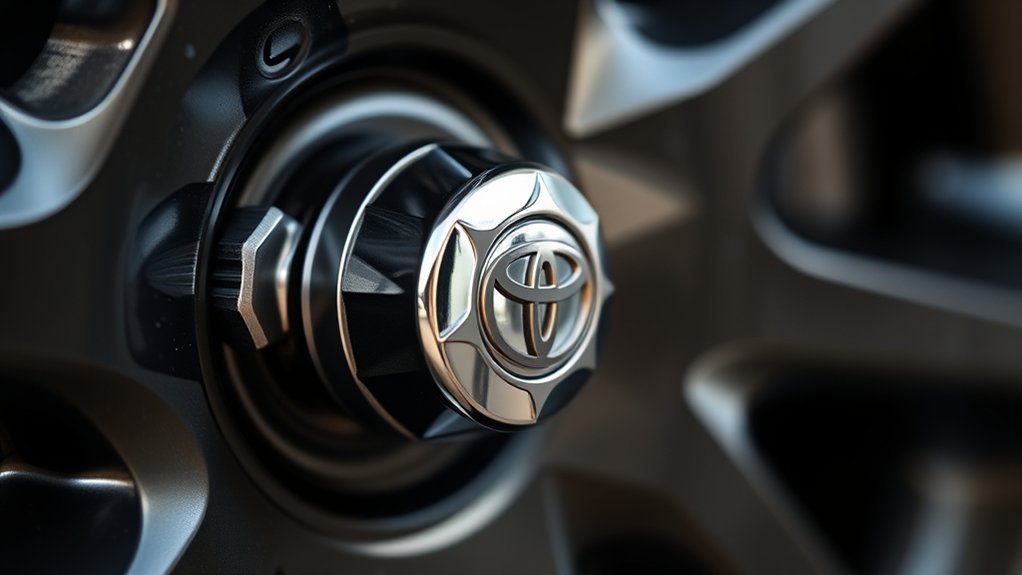
Getting your Toyota Camry lug nut torque right is a small job with a big safety payoff. For many U.S.-market Camry models with original Toyota wheels, the commonly used wheel lug nut torque is 76 ft-lb or 103 N·m. Still, the safest answer is always the one in your exact owner’s manual or wheel manufacturer’s paperwork, especially if your Camry has aftermarket wheels or non-OE lug nuts.
Quick Answer
For most Toyota Camry models with original Toyota wheels, torque the lug nuts to 76 ft-lb (103 N·m). Tighten them by hand first, use a five-lug star pattern, finish with a calibrated torque wrench, and recheck them after the first 50 to 100 miles or the interval your installer recommends.
Key Takeaways
- Most Camry OE wheel setups use 76 ft-lb (103 N·m), but your owner’s manual is the final source.
- Use a calibrated torque wrench, not an impact gun, for final tightening.
- Start each lug nut by hand and tighten in a star or crisscross pattern for even clamping force.
- Recheck the lug nuts after the first drive period because wheels can settle after installation.
- Aftermarket wheels, damaged studs, rusty threads, or unusual lug nuts may need a different procedure or professional service.
At a Glance
| Time Required | 10 to 20 minutes for all four wheels once the car is safely parked |
| Difficulty | Easy, as long as the wheel hardware is clean and undamaged |
| Tools Needed | 1/2-inch drive torque wrench, matching lug nut socket, wheel chocks, and your owner’s manual or wheel torque documentation |
| Cost | Free if you already own a torque wrench; about $30 to $150+ if you need to buy one |
Toyota Camry Lug Nut Torque Spec
The best working spec for most Toyota Camry models with original Toyota wheels is 76 ft-lb (103 N·m). This applies to many common Camry wheel setups, but do not treat it as a universal promise for every wheel, trim, country, or aftermarket setup.
Before you tighten the wheels, check your exact manual through Toyota Owners Manuals and Warranties. If you have aftermarket wheels, use the wheel maker’s documentation or the installer’s torque card. Continental also notes that the correct torque can vary by model, wheel size, wheel type, and lug count.
| Camry Setup | Torque Guidance |
| Original Toyota wheels | Use 76 ft-lb (103 N·m) for most Camry models, then confirm against your exact owner’s manual. |
| Aftermarket wheels | Use the wheel manufacturer’s torque value, lug nut type, and seating instructions. Do not guess. |
| Recently rotated or replaced tires | Torque at installation, then recheck after the first 50 to 100 miles or the shorter interval your installer gives. |
| Damaged studs, rust, or wrong lug nuts | Stop and have the wheel hardware inspected. Torque cannot fix stretched studs, stripped threads, or mismatched lug seats. |
Warning: Never rely on “tight enough by feel” for wheel lug nuts. Too little torque can let the wheel loosen, while too much torque can stretch studs, damage threads, distort brake parts, or make roadside removal difficult.
How to Properly Torque Your Camry’s Lug Nuts

Use a calm, repeatable process instead of one hard pull on each lug nut. This helps the wheel seat flat against the hub and spreads clamping force evenly.
- Park safely. Park on level ground, shift to Park, set the parking brake, and chock the wheels that will stay on the ground.
- Confirm the torque spec. For most OE Camry wheels, set the torque wrench to 76 ft-lb (103 N·m). If your manual or wheel maker gives a different value, use that value.
- Check the hardware. Make sure the studs, lug nuts, and wheel seating surfaces are clean and dry. Do not grease or oil the threads unless the manual or wheel maker specifically says to.
- Start by hand. Thread each lug nut by hand for several turns. If one does not spin on smoothly, stop before you cross-thread it.
- Snug in a star pattern. For a five-lug Camry wheel, use a crisscross pattern such as 1-3-5-2-4. Do not go around the circle in order.
- Tighten in stages. First snug the lug nuts, then torque them to about half the final value, then finish at the full spec.
- Listen or feel for the click. With a click-type torque wrench, stop when it clicks once. Do not keep pulling after the click.
- Repeat once. Go around the same star pattern again at the final torque to confirm each lug nut is seated.
Pro Tip: Use the impact wrench only for removal or light snugging if needed. Final tightening should be done by hand with a torque wrench so you know the wheel is at the correct torque.
[Products Worth Considering]

These M14x1.5 closed-end chrome lug nuts are a one-piece replacement designed for secure fitment on compatible GM, Ford, and select Chrysler/Dodge models. Featuring a 60-degree conical seat and anti-rust chrome plating, they help resist corrosion and maintain a bright look for everyday driving. Built for long-term durability, they include OEM-style part references and are backed by 12 months of support.

This 1/2-inch drive breaker bar delivers powerful leverage for loosening and tightening stubborn lug nuts and automotive fasteners. The 180-degree flex head helps you reach tight spaces at the angle you need, making tire and brake jobs easier. A spring-loaded ball detent design holds 1/2-inch sockets securely while the chrome-moly head provides durable strength for everyday use.

Upgrade your wheels with MIKKUPPA M12x1.5 mag seat lug nuts built for secure, corrosion-resistant performance. These closed-end chrome lug nuts are a direct replacement for select Toyota models, including Camry, Corolla, RAV4, Sienna, Avalon, Highlander, Matrix, Venza, and Prius. Triple-chromium plating and cold-forged, heat-treated steel help deliver strength for daily driving and replacement needs.
When to Re-Torque Camry Lug Nuts
Recheck your Camry’s lug nut torque after a tire rotation, wheel replacement, brake job, flat-tire repair, seasonal tire swap, or any time a wheel has been removed. A good rule is to recheck after the first 50 to 100 miles, unless your installer or wheel manufacturer gives a shorter interval.
Retorquing matters because the wheel can settle slightly after installation. Normal driving loads, heat cycles, bumps, and small bits of dirt or rust can change the clamping force. Continental’s retorque guidance explains that lug nuts should be checked again after the vehicle has been driven and tightened to the manufacturer’s recommended value.
Note: If a tire shop asks you to return for a free retorque check, do it. It is quick, and it can catch a wheel that did not fully seat during installation.
Common Mistakes When Tightening Lug Nuts
Tightening lug nuts seems simple, but small mistakes can create uneven clamping force or damage the hardware. Avoid these common problems:
- Using an impact gun for final torque: Impact tools can easily overtighten lug nuts or leave them uneven.
- Skipping the star pattern: Tightening in a circle can pull the wheel unevenly against the hub.
- Lubricating the threads: Oil or anti-seize can change the clamping force at the same torque reading unless the manufacturer calls for it.
- Torquing dirty or rusty hardware: Dirt, grit, and corrosion can create a false torque reading.
- Ignoring damaged studs: A stretched, cracked, or stripped stud must be replaced, not simply tightened harder.
- Guessing with a lug wrench: A lug wrench removes and installs lug nuts, but it does not measure torque.
[Products Worth Considering]

The Trivd Frol 1/2" air impact wrench delivers high performance torque up to 1500 ft-lbs with a twin hammer impact mechanism for strong, balanced blows. It features an ergonomic grip, compact lightweight design, and quick-stop control with 3 forward speeds up to 8000 RPM plus a reverse speed. Built for demanding automotive repair and tire shop work, the rear exhaust helps keep debris away from the surface.

Upgrade your wheels with MIKKUPPA closed-end lug nuts designed for reliable fit and corrosion resistance. The one-piece, cold-forged and heat-treated steel construction helps resist rust and stripping, while the integrated finish delivers a durable black appearance. Built to OEM standards with a conical 60-degree seat, these nuts provide a secure solution for compatible Ford, Honda, Jeep, and Chevrolet models.

The 22800 wheel stud installer makes replacing wheel studs quick and secure, saving time and effort during tire service. It uses a ratchet or impact wrench to pull new studs firmly into place, helping when existing studs are too long. Compatible with most automotive wheels and light-duty truck wheel studs, it’s designed for easy, tool-assisted installation.
Best Practices for Maintaining Lug Nut Torque

Good lug nut maintenance is mostly about consistency. Use the right torque value, the right tool, clean hardware, and a repeatable pattern every time a wheel comes off.
- Use the manual first. Toyota’s official owner manual page is the best place to confirm vehicle-specific guidance for your Camry.
- Use matching hardware. Original Toyota wheels should use the correct Toyota-style lug nuts. Aftermarket wheels may need a different seat style or torque value.
- Store your torque wrench correctly. If it is a click-type wrench, return it to its lowest setting after use unless your tool instructions say otherwise.
- Keep records. After a tire rotation or wheel repair, note the mileage and retorque check date.
- Do not keep driving if something feels wrong. A new vibration, wobble, clicking, or visible wheel movement needs immediate inspection.
Correct lug nut torque is not about making the nut as tight as possible. It is about applying the right clamping force so the wheel stays seated without damaging the studs, nuts, wheel, hub, or brakes.
Tools You’ll Need for Accurate Torque Measurement
The main tool is a calibrated torque wrench that covers 76 ft-lb comfortably. A 1/2-inch drive click-type torque wrench works well for most home tire maintenance because it has enough range and uses common wheel sockets.
[Products Worth Considering]

This spare tire tool kit is designed for the 2004 to 2018 Ford F-150 to help you loosen and tighten wheel lug nuts and manage the spare tire and provided jack functions from underneath the vehicle. It includes the lug nut wrench and extension pieces plus a convenient storage carrying case for organized transport. The jack itself is not included.

This car D-wheel lock nut key provides an anti-theft solution for D-shaped wheel lock bolts, helping keep your wheels secure. It features a flower-shaped internal pattern that resists micro-adjustment theft while allowing removal and mounting of compatible locking nuts. Made for reliable performance under high torque, it’s easy to use with standard socket wrench turning for quick tire maintenance and emergency repairs.

Malco tire mounting and demounting lubricant is a ready-to-use tire lube formulated to reduce friction during tire installation for passenger cars, light trucks, farm tires, and heavy-duty equipment. It provides rust-inhibiting protection to help reduce corrosion on rims and wheels, and helps support proper tire bead seating during inflation to reduce air leakage. The silicone-free, soap-free formula is whitewall safe to help prevent discoloration on whitewall tires and sensitive sidewall markings.
Essential Torque Wrench Types
- Click-type torque wrench: The most common home-garage choice. It clicks when you reach the set torque.
- Beam torque wrench: Simple and durable, but you must read the scale carefully while pulling.
- Digital torque wrench: Easy to read and accurate when calibrated, but usually more expensive.
Additional Torque Measurement Tools
You may also need a matching socket, short extension, breaker bar for removal, gloves, wheel chocks, and your owner’s manual. Use extensions carefully and avoid adapters that change the effective length of the torque wrench unless you know how to correct the reading.
Why Proper Lug Nut Torque Matters
Proper lug nut torque keeps the wheel clamped evenly against the hub. That clamping force helps the wheel stay centered, reduces wobble, and protects the studs and brake parts from uneven stress.
Wheel Security Assurance
Under-torqued lug nuts can loosen as the wheel moves against the hub. You may notice vibration, clicking, steering shake, or a wheel that does not look seated correctly. In a severe case, a loose wheel can damage the hub, studs, brakes, or suspension.
Safety and Performance Preservation
Over-torqued lug nuts can be just as harmful. Too much force can stretch wheel studs, damage threads, distort the wheel seat, or make the lug nuts very hard to remove during a roadside tire change. Staying close to the correct spec helps protect the wheel assembly and keeps future service easier.
Signs Your Camry Lug Nuts May Be Loose
Stop driving and inspect the wheels if you notice any of these signs after recent wheel service:
- New vibration through the steering wheel, seat, or floor
- Clicking, clunking, or rhythmic noise from one wheel
- A wheel that appears to wobble
- Missing, backed-off, or visibly uneven lug nuts
- Rust dust or shiny movement marks around the lug nut seats
If any lug nut will not hold torque, or if a stud looks stretched, cracked, or stripped, have the car serviced before driving farther.
Frequently Asked Questions
How many ft-lbs should Toyota Camry lug nuts be tightened to?
For most Toyota Camry models with original Toyota wheels, tighten the lug nuts to 76 ft-lb (103 N·m). Always confirm your exact model year and wheel setup in the owner’s manual or wheel manufacturer documentation.
Is 80 ft-lb okay for Camry lug nuts?
Do not round up just because 80 ft-lb sounds close. If your Camry’s manual or wheel maker says 76 ft-lb, use 76 ft-lb. Use a different value only when your exact documentation calls for it.
Do I need to re-torque lug nuts after a tire rotation?
Yes, it is a smart safety check. Recheck the lug nuts after the first 50 to 100 miles, or follow the shorter interval your tire shop or wheel manufacturer recommends.
Can I use an impact wrench to tighten Camry lug nuts?
You can use an impact wrench carefully for removal or light snugging, but do not use it for final torque. Finish with a calibrated torque wrench so each lug nut reaches the correct value.
Should Camry lug nut threads be lubricated?
In normal service, keep the threads clean and dry unless Toyota, the wheel maker, or a qualified technician specifically tells you otherwise. Lubricant can change the clamping force created at the same torque reading.
What if a lug nut will not tighten to torque?
Stop tightening. The nut, stud, or wheel seat may be damaged. Do not drive the car until the hardware has been inspected and repaired.
Conclusion
For most Toyota Camry models with original wheels, use 76 ft-lb (103 N·m) as the lug nut torque spec, then confirm it against your exact owner’s manual. The safest method is simple: hand-start the nuts, tighten in a star pattern, use a calibrated torque wrench for final torque, and recheck after the first 50 to 100 miles. If your Camry has aftermarket wheels, damaged hardware, or lug nuts that will not hold torque, get the setup inspected instead of guessing.
Sources
- Toyota Owners Manuals and Warranties — official place to access Toyota owner manuals and vehicle documentation.
- Toyota Genuine Parts — supports the OE fitment and exact-specification guidance for Toyota parts.
- Continental Tires: Retorquing Wheels — explains why lug nuts need retorquing, why torque values vary, and why crisscross tightening matters.