
Toyota Camry lug nuts are usually listed as M12 x 1.5 thread with a 21 mm hex on stock-style hardware. Torque is the part you should verify by model year before you tighten anything. Many Camry references use a value around 76 ft-lb / 103 N·m, but your owner’s manual, wheel manufacturer, or Toyota dealer should be the final source for your exact car and wheel setup.
Quick Answer
Most Toyota Camry lug nuts use M12 x 1.5 threads and a 21 mm socket. For torque, confirm your model-year manual first. If your Camry specifies 76 ft-lb / 103 N·m, tighten with a torque wrench in a star pattern and recheck after the first short drive.
Key Takeaways
- Most stock Toyota Camry lug nuts use M12 x 1.5 threads and a 21 mm hex.
- Use your owner’s manual or Toyota dealer to confirm the exact torque for your model year and wheel type.
- Tighten lug nuts by hand first, then use a torque wrench in a star or crisscross pattern.
- Retorque after a short break-in drive, especially after tire rotation, new tires, or wheel replacement.
- Aftermarket wheels may need different lug nuts because seat style, shank length, and socket clearance can change.
At a Glance
| Time Required | 10 to 20 minutes per wheel once the vehicle is safely positioned |
| Difficulty | Easy to moderate, but safety-critical |
| Tools Needed | Torque wrench, 21 mm socket, breaker bar or lug wrench, wheel chocks, jack and jack stands if lifting the car |
| Cost | Usually no cost if you already own the tools; replacement lug nuts vary by brand and finish |
What Size Are Toyota Camry Lug Nuts?
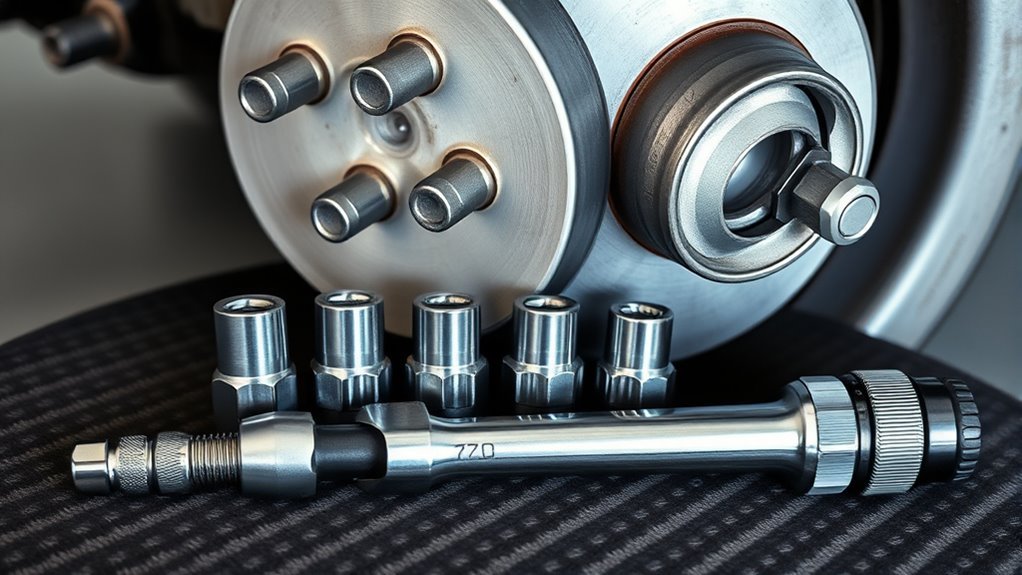
Most Toyota Camry lug nuts use an M12 x 1.5 metric thread. The common hex size is 21 mm, and some 13/16-inch sockets may fit older capped lug nuts if the cap is not swollen or damaged. Use the metric 21 mm socket when possible because it matches the intended hex size more directly.
You should also match the lug nut seat style, not just the thread size. Factory Toyota wheels commonly use mag-style or washer-style lug nuts, while many aftermarket wheels use cone-seat lug nuts. If the seat does not match the wheel, the nut may tighten but fail to clamp the wheel correctly.
Note: Thread size, hex size, seat type, shank length, and wheel design all matter. If you changed wheels, verify the lug nut requirements with the wheel manufacturer before driving.
Toyota Camry Lug Nut Specs Table
The table below gives a practical starting point for common stock-style Camry hardware. Treat it as a fitment guide, not a replacement for your model-year owner’s manual or wheel manufacturer instructions.
| Spec | Common Camry Reference | What to Verify |
|---|---|---|
| Thread size | M12 x 1.5 | Confirm before buying replacement nuts or aftermarket wheels |
| Socket / hex size | 21 mm | Check for swollen, rounded, or damaged capped lug nuts |
| Common torque reference | Around 76 ft-lb / 103 N·m on many Toyota passenger-car applications | Use your exact Camry owner’s manual, wheel label, or Toyota dealer guidance |
| Tightening pattern | Star / crisscross pattern | Use staged tightening so the wheel seats evenly |
| Retorque timing | After the first short drive, often around 50 km / 30 miles | Follow your tire shop, wheel maker, or vehicle documentation |
[Products Worth Considering]

This 1/2-inch drive breaker bar delivers powerful leverage for loosening and tightening stubborn lug nuts and automotive fasteners. The 180-degree flex head helps you reach tight spaces at the angle you need, making tire and brake jobs easier. A spring-loaded ball detent design holds 1/2-inch sockets securely while the chrome-moly head provides durable strength for everyday use.

Upgrade your wheels with MIKKUPPA M12x1.5 mag seat lug nuts built for secure, corrosion-resistant performance. These closed-end chrome lug nuts are a direct replacement for select Toyota models, including Camry, Corolla, RAV4, Sienna, Avalon, Highlander, Matrix, Venza, and Prius. Triple-chromium plating and cold-forged, heat-treated steel help deliver strength for daily driving and replacement needs.

Upgrade your wheels with MIKKUPPA closed-end lug nuts designed for reliable fit and corrosion resistance. The one-piece, cold-forged and heat-treated steel construction helps resist rust and stripping, while the integrated finish delivers a durable black appearance. Built to OEM standards with a conical 60-degree seat, these nuts provide a secure solution for compatible Ford, Honda, Jeep, and Chevrolet models.
What Is the Camry Lug Nut Torque?
The safest answer is: use the torque value listed for your exact Camry model year and wheel setup. Toyota’s owner manual resources are the best starting point because wheel torque is a vehicle-specific maintenance detail. If your manual lists 76 ft-lb / 103 N·m, set your torque wrench to that value and tighten each nut evenly.
Avoid treating “tight enough” as a torque spec. Too little torque can allow the wheel to loosen. Too much torque can stretch studs, damage threads, distort the wheel, or make the nuts difficult to remove later.
Camry Torque Spec
For many stock Camry wheel setups, you will see torque references near 76 ft-lb. Some older charts or shops may round this into a small range, but you should still use the exact number from your manual or service information whenever you can.
| Item | Practical Guidance |
|---|---|
| Common thread | M12 x 1.5 |
| Common socket | 21 mm |
| Torque source | Owner’s manual, wheel documentation, Toyota dealer, or qualified tire shop |
| Common stock-wheel reference | About 76 ft-lb / 103 N·m where specified for that Camry |
Proper Tightening Pattern
Use a star pattern, also called a crisscross pattern, so the wheel seats evenly against the hub. Moving around the wheel in a circle can pull one side down first and leave uneven clamping force.
- Start each lug nut by hand to avoid cross-threading.
- Snug the nuts lightly in a star pattern.
- Set the torque wrench to about half the final value and tighten in the same pattern.
- Set the wrench to the final torque value and repeat the star pattern.
- Stop when the torque wrench clicks or signals. Do not add extra force after the click.
Recheck After Driving
After a wheel installation, tire rotation, or new tire fitting, recheck the lug nut torque after the first short drive. Continental’s retorquing guidance recommends checking after about 50 km because normal driving can let the wheel settle slightly against the hub.
If any lug nut moves before the torque wrench clicks during the recheck, continue checking the full wheel set. If one nut repeatedly loosens, stop driving and have the wheel, stud, nut, and hub inspected.
How to Torque Camry Lug Nuts Correctly
Torque Camry lug nuts only when the wheel is seated flat, the studs are clean, and each nut turns smoothly by hand. Dirt, rust, damaged threads, or lubrication can change the way torque turns into clamping force.
Warning: Do not drive on a wheel if a lug nut will not tighten smoothly, a stud is stripped, the wheel wobbles, or you hear clicking or knocking after service. Have the car inspected before driving farther.
- Park safely. Use a level surface, apply the parking brake, and chock the opposite wheels.
- Inspect the hardware. Look for cracked nuts, rounded hexes, damaged caps, rusty seats, or stretched studs.
- Clean the contact points. Remove loose dirt or corrosion from the wheel seat, nut seat, and stud threads.
- Start by hand. Thread every lug nut several turns before using any tool.
- Snug in a star pattern. Bring the wheel evenly against the hub without fully torquing it yet.
- Use staged torque. Tighten once at a lower setting, then again at the final setting listed for your vehicle.
- Recheck after driving. Retorque after the first short drive or at the interval your shop recommends.
Pro Tip: Keep a small note in your glove box with your Camry’s verified torque spec, socket size, and wheel type. It helps you avoid guessing during a roadside tire change or tire rotation.
Why Camry Lug Nut Torque Matters

Correct lug nut torque keeps the wheel clamped securely to the hub. If the nuts are under-torqued, they can loosen as the wheel settles and the car vibrates. If they are over-torqued, the studs and threads can be damaged, and the wheel or brake components can suffer unnecessary stress.
Proper Wheel Security
Wheel security depends on even clamping force. The torque wrench controls the amount of force, while the star pattern spreads that force across the wheel face.
- Use the torque value from your manual or wheel documentation.
- Tighten in a star pattern, not in a circle.
- Use clean, undamaged hardware.
- Retorque after the wheel has been driven and seated.
Prevent Stud Damage
Studs can stretch, fatigue, or break when they are repeatedly over-tightened. Lug nuts can also strip or bind if they are cross-threaded. Replace questionable hardware instead of forcing it back on the car.
| Checkpoint | What to Look For | What to Do |
|---|---|---|
| Threads | Flattened, shiny, rusty, or crossed threads | Replace the nut or stud before driving |
| Hex | Rounded edges or swollen cap | Use a proper 21 mm socket and replace damaged nuts |
| Seat | Wrong cone, washer, or shank shape | Match the lug nut to the wheel design |
| Torque feel | Nut binds, skips, or will not hold torque | Stop and inspect the hardware |
Camry Lug Nut Sizes by Model Year

Toyota Camry lug nut sizing has stayed fairly consistent across many generations, but you should still verify your exact year before buying hardware. This matters most if the car has aftermarket wheels, wheel spacers, replacement studs, or damaged capped lug nuts.
| Camry Setup | Common Lug Nut Thread | Common Socket | Important Check |
|---|---|---|---|
| Many stock Camry wheels | M12 x 1.5 | 21 mm | Verify torque by model year |
| Older capped lug nuts | Usually M12 x 1.5 | 21 mm or sometimes 13/16 inch if the cap is intact | Replace swollen or rounded nuts |
| Aftermarket wheels | Often still M12 x 1.5 on Camry studs | Depends on lug hole clearance | Confirm seat style and wheel maker torque instructions |
Stock vs. Aftermarket Camry Lug Nuts
Stock Toyota wheels and aftermarket wheels may not use the same lug nut shape. The thread can match perfectly while the seat style is still wrong. That is why you should compare the old lug nut, the new lug nut, and the wheel’s lug seat before installation.
- Factory-style wheels: usually need the same seat type Toyota designed for that wheel.
- Aftermarket wheels: may need cone-seat, tuner-style, spline-drive, or other specialty nuts.
- Wheel spacers: may require longer studs or specific hardware. Do not guess on thread engagement.
- Damaged capped nuts: can swell and make the socket fit poorly. Replace them before they round off.
When you want direct-fit replacement hardware, start with Toyota Genuine Parts or a reputable parts catalog that lets you filter by exact year, trim, and wheel type.
[Products Worth Considering]

These M14x1.5 closed-end chrome lug nuts are a one-piece replacement designed for secure fitment on compatible GM, Ford, and select Chrysler/Dodge models. Featuring a 60-degree conical seat and anti-rust chrome plating, they help resist corrosion and maintain a bright look for everyday driving. Built for long-term durability, they include OEM-style part references and are backed by 12 months of support.

The 22800 wheel stud installer makes replacing wheel studs quick and secure, saving time and effort during tire service. It uses a ratchet or impact wrench to pull new studs firmly into place, helping when existing studs are too long. Compatible with most automotive wheels and light-duty truck wheel studs, it’s designed for easy, tool-assisted installation.

The Trivd Frol 1/2" air impact wrench delivers high performance torque up to 1500 ft-lbs with a twin hammer impact mechanism for strong, balanced blows. It features an ergonomic grip, compact lightweight design, and quick-stop control with 3 forward speeds up to 8000 RPM plus a reverse speed. Built for demanding automotive repair and tire shop work, the rear exhaust helps keep debris away from the surface.
Where to Buy Toyota Camry Lug Nuts
You can buy Toyota Camry lug nuts from Toyota dealers, tire shops, local auto parts stores, and major online retailers. Before you order, confirm the thread size, seat type, finish, overall length, and socket size. A cheap lug nut that does not match the wheel can create a bigger problem than the worn hardware you are replacing.
A Toyota dealer or qualified tire shop can also confirm fitment if your Camry has aftermarket wheels or previous owner modifications. Toyota’s tire center notes that dealer service includes factory-trained technicians, which can help when you are unsure about wheel hardware or installation.
[Products Worth Considering]

This spare tire tool kit is designed for the 2004 to 2018 Ford F-150 to help you loosen and tighten wheel lug nuts and manage the spare tire and provided jack functions from underneath the vehicle. It includes the lug nut wrench and extension pieces plus a convenient storage carrying case for organized transport. The jack itself is not included.

The Dr.Roc spare tire tool kit helps you release, lower, or raise your spare tire with reliable extension tools and a lug nut wrench. It is made from rustproof automotive-grade steel and includes an organized carry case for convenient storage. Designed for compatibility with select GM models from the late 1990s through 2019, it uses upgraded extension components to install and remove spare tires with less hassle.

This car D-wheel lock nut key provides an anti-theft solution for D-shaped wheel lock bolts, helping keep your wheels secure. It features a flower-shaped internal pattern that resists micro-adjustment theft while allowing removal and mounting of compatible locking nuts. Made for reliable performance under high torque, it’s easy to use with standard socket wrench turning for quick tire maintenance and emergency repairs.
Frequently Asked Questions
How do I know if my Camry lug nuts are stretched?
Look for flattened threads, shiny pulled threads, cracks, uneven seating, or a nut that will not torque smoothly. If the lug nut binds, skips, or keeps turning without reaching torque, replace the nut and inspect the stud.
Can I reuse old Camry lug nuts after a tire rotation?
Yes, you can reuse them if they are clean, undamaged, and match the wheel. Do not reuse lug nuts with rounded hexes, swollen caps, cracked seats, rusty threads, or signs of cross-threading.
Do aftermarket wheels need different Camry lug nuts?
Often, yes. Aftermarket wheels may use a different seat style or require a narrower socket. Match the lug nut to the wheel maker’s instructions, not just the Camry’s thread size.
How often should I retorque Camry lug nuts?
Retorque after the first short drive following a wheel installation, tire rotation, or new tire fitting. Many tire-service guides use about 50 km / 30 miles as a practical retorque point, but follow your shop, wheel maker, or vehicle documentation.
What signs show a Camry lug nut is damaged?
Common signs include rounded edges, cracked metal, swollen chrome caps, damaged threads, rust buildup, wrong seat shape, or torque that feels inconsistent. Replace damaged hardware before driving.
Should Camry lug nuts be lubricated before torquing?
Do not lubricate lug nut threads unless Toyota or the wheel manufacturer specifically tells you to. Oil or anti-seize can change clamping force and may cause the nut to tighten differently than the torque wrench reading suggests.
Conclusion
Most Toyota Camry lug nuts use M12 x 1.5 threads and a 21 mm socket, but torque deserves extra care. Use your model-year manual, wheel documentation, or Toyota dealer to confirm the exact value before tightening. Then start each nut by hand, tighten in a star pattern, use a torque wrench, and retorque after the first short drive.
If the hardware is damaged, the wheel is aftermarket, or the lug nut seat does not match, stop and verify the parts before driving. Correct lug nuts do more than hold the wheel on. They protect the studs, wheel, hub, brakes, and everyone riding in the car.
Sources
- Toyota Manuals and Warranties — supports checking official Toyota owner documentation for vehicle-specific maintenance details.
- Toyota Genuine Parts — supports using parts made to fit Toyota specifications.
- Toyota Tire Center — supports dealer tire and wheel service guidance from factory-trained technicians.
- Continental Tires: Retorquing Wheels — supports retorque timing, torque wrench use, crisscross tightening, and over-torque/under-torque risks.