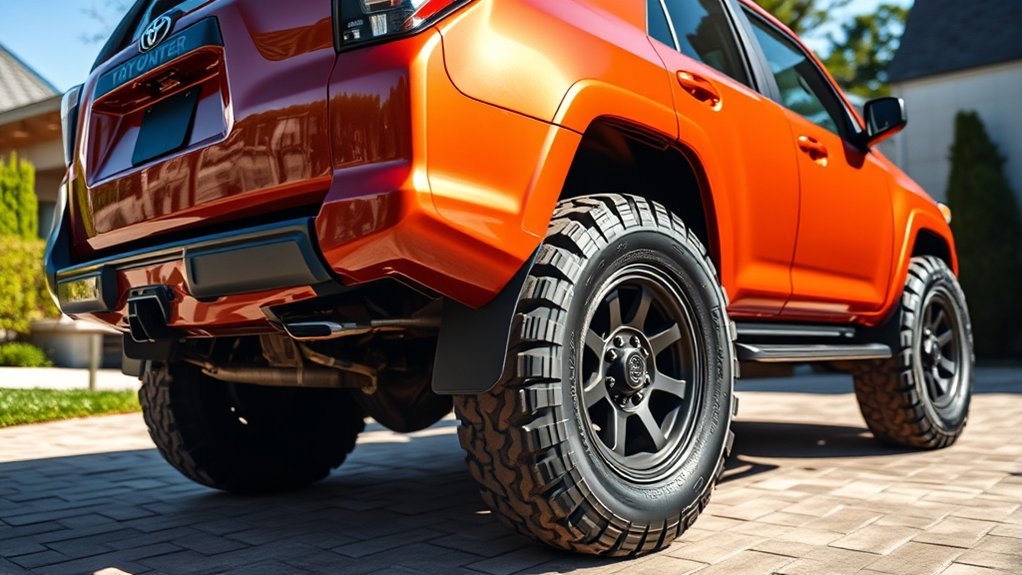
Choosing the right spare tire for your Toyota 4Runner matters more once you change wheel size, add heavier all-terrain tires, or move up to a larger off-road setup. A spare that looks “close enough” can still change wheel speed, affect traction control, and create extra driveline stress if you drive on it for more than a short emergency trip.
The safest choice is a full-size spare that matches your mounted tires as closely as possible in size, load rating, tread type, and tread depth. Before you travel off-road or take a long highway trip, confirm your spare fits the carrier, clears the brakes, matches your wheel hardware, and holds the correct cold pressure.
Quick Answer
Your 4Runner spare tire should ideally be a full-size tire that matches your four road tires. If you run 285/70R17 tires, the best spare is also a 285/70R17 on a compatible wheel. Matching size, load rating, tread type, and tread depth helps protect handling, traction control, ABS, and driveline components.
Key Takeaways
- A matching full-size spare is the safest setup for upgraded 4Runner tires.
- Do not rely on a broad “3% rule” for long-distance 4WD or AWD driving. Match tire size, type, and tread depth as closely as possible.
- A temporary spare is for short emergency use only. Follow the speed and distance limits printed on the spare and listed in your owner’s manual.
- A larger spare may not fit cleanly in the underbody carrier, especially with oversized tires, different wheel offset, or a hitch-mounted accessory.
- Check spare pressure, tread, age, valve condition, jack, lug wrench, and lock key before road trips.
At a Glance
| Time Required | 15 to 30 minutes for inspection; longer if test-fitting an oversized spare |
| Difficulty | Easy for inspection; moderate for wheel and carrier fitment checks |
| Tools Needed | Tire pressure gauge, tread depth gauge, jack, lug wrench, torque wrench, flashlight, and wheel-lock key if equipped |
| Cost | No cost for inspection; varies if you add a matching wheel, tire, TPMS sensor, mounting, balancing, or carrier upgrade |
Why a Full-Size Spare Matters for Your 4Runner
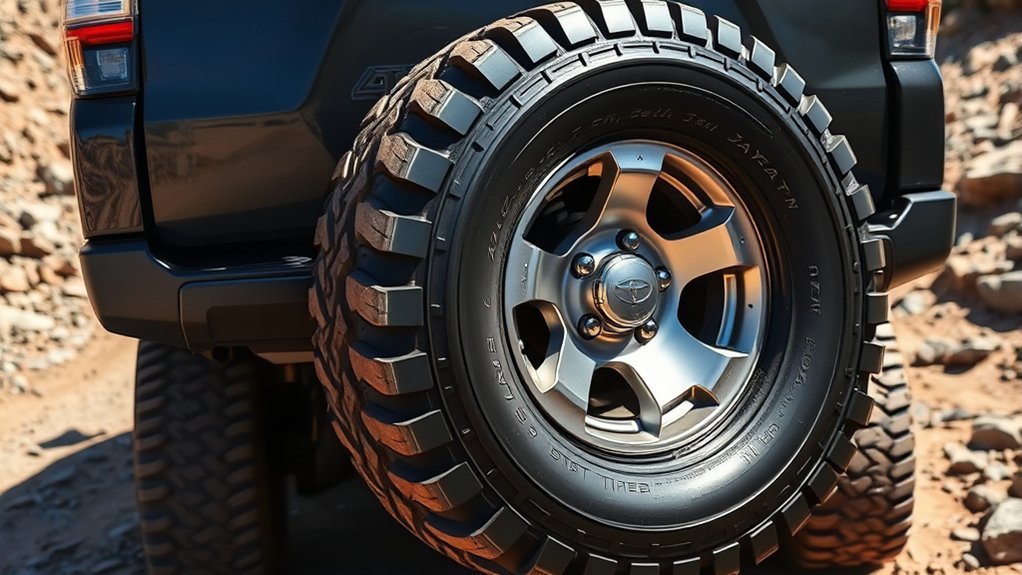
A full-size matching spare helps your 4Runner maintain consistent ride height, wheel speed, braking behavior, and traction control response after a flat. That matters on pavement, but it matters even more off-road where one failed tire can leave you far from a repair shop.
For a 4Runner with four-wheel drive or a full-time 4WD system, tire matching is not only about appearance. Tire Rack explains that the least stressful setup for AWD and 4WD vehicles is using tires with the same brand, tread design, and equivalent tread depth on all wheel positions. It also recommends adding a matching full-size spare into the rotation pattern early so all five tires wear at a similar rate. Tire Rack
Warning: Do not use a smaller or worn spare for extended driving on a 4WD or full-time 4WD 4Runner. If you must use a mismatched spare in an emergency, drive slowly, avoid hard acceleration, avoid off-road obstacles, and go directly to a tire shop.
[Products Worth Considering]

The SAFELIFE dial tire tread depth gauge measures tread depth in 1/32 inch increments with clear, easy-to-read 2-inch dial face. Color zones using a traffic light system help you quickly judge whether tread is low, marginal, or ample for safer driving. Built with a durable zinc cast body and a metal detect probe for precise, comfortable use across cars, motorcycles, trucks, and buses.

Monitor tire tread wear with a smart, color-coded depth gauge that shows clear condition ranges at a glance. The bar is range marked for fast, easy readings, helping you maintain safer traction and performance. Each gauge is portable with a pocket clip, and the set includes 20 units for daily use and sharing.

Measure tire tread depth quickly and accurately with this LUMITECO dial gauge that reads in 1/32" increments up to 14/32". The color-coded green/yellow/red zones make it easy to judge tire wear and know when replacement is needed. A rugged, compact design with a protective pouch helps keep the gauge ready for use on cars, trucks, motorcycles, and more.
Know Your 4Runner Tire and Spare Setup
Many 5th-generation Toyota 4Runner trims use 265/70R17 tires from the factory, while some trims and newer model years use different sizes. Current 2026 4Runner specifications also vary by trim, so you should confirm your exact tire size on the driver-side tire information placard, your owner’s manual, or Toyota’s official specs page before buying a spare. Toyota
The sidewall tells you the tire size. For example, 285/70R17 means the tire is 285 mm wide, has a sidewall height equal to 70% of its width, and fits a 17-inch wheel. A tire size calculator can help compare diameter, circumference, and revolutions per mile, but it should not replace the owner’s manual or professional fitment advice. Discount Tire
| Tire Size | Approx. Diameter | Common Use |
| 265/70R17 | About 31.6 inches | Common stock size on many 5th-gen 4Runner trims |
| 275/70R17 | About 32.2 inches | Mild upgrade that still needs fitment checks |
| 285/70R17 | About 32.7 inches | Popular off-road upgrade; matching spare is strongly recommended |
| 265/70R18 | About 32.6 inches | Common on some newer or upgraded 4Runner setups |
| 245/70R17 | About 30.5 inches | Factory size on some newer trims; too small to use as a long-term spare for a 285/70R17 setup |
Choosing the Right Spare Tire Size
The best spare tire size is the exact size you already run on the ground. If your main tires are 285/70R17, choose a 285/70R17 spare. If your main tires are 265/70R17, choose a 265/70R17 spare. Matching the label size is only the starting point. The tire should also have a similar tread pattern, similar remaining tread depth, and a load rating that meets or exceeds your vehicle and trip needs.
A general diameter difference rule can help you compare tire sizes, but it is not a safe long-term rule for 4WD or full-time 4WD use. Tire Rack notes that some manufacturers call for very tight circumference or tread-depth tolerances on AWD and 4WD vehicles. When in doubt, use the exact same tire model or ask a Toyota dealer or qualified tire shop before you depend on a mismatched spare.
Note: A spare can have the same printed size and still differ in real-world diameter because of tread wear, tire model, inflation pressure, and load. That is why matching tread depth matters, especially on full-time 4WD systems.
[Products Worth Considering]

Accurately measure tire tread depth with a calibrated gauge marked from 0 to 1 inch in 1/32 inch increments. The color-coded bar helps you quickly identify tread condition ranges, supporting safe driving for trucks, motorcycles, automobiles, and passenger vehicles.

Measure tyre tread depth precisely with a digital gauge that reads in both MM and inches, helping you monitor safe driving conditions. The large LCD screen is easy to operate, and the compact tool fits for cars, trucks, and motorcycles. It provides high accuracy with a 0-25.4mm range and includes a 1-year warranty for added peace of mind.

These M14x1.5 closed-end chrome lug nuts are a one-piece replacement designed for secure fitment on compatible GM, Ford, and select Chrysler/Dodge models. Featuring a 60-degree conical seat and anti-rust chrome plating, they help resist corrosion and maintain a bright look for everyday driving. Built for long-term durability, they include OEM-style part references and are backed by 12 months of support.
How to Ensure Spare Tire Compatibility
- Match the tire size first. Use the same size as your road tires whenever possible, such as 265/70R17 or 285/70R17.
- Match load capacity. Check the load index and load range. A heavier overland setup may need a stronger tire than a lightly loaded daily driver.
- Match wheel fitment. Confirm bolt pattern, wheel diameter, wheel width, center bore, brake clearance, and lug-nut seat type before mounting the spare.
- Check wheel offset. A different offset may work on the hub but may not fit cleanly in the underbody spare carrier.
- Test the spare carrier. Raise the spare fully into place and check clearance around the exhaust, hitch, panhard bar area, bumper, and rear accessories.
- Check TPMS behavior. A spare with a sensor may need registration or relearn. Some systems may not read the spare until it is installed and driven.
- Confirm cold pressure. Use the tire information placard or owner’s manual, not the maximum PSI printed on the tire sidewall.
Pro Tip: Test-fit your spare at home before a trail trip. Lower it from the carrier, install it on the front and rear once, torque the lug nuts correctly, and confirm that your jack, lug wrench, and lock key work with your current wheels.
[Products Worth Considering]

This spare tire tool kit is designed for the 2004 to 2018 Ford F-150 to help you loosen and tighten wheel lug nuts and manage the spare tire and provided jack functions from underneath the vehicle. It includes the lug nut wrench and extension pieces plus a convenient storage carrying case for organized transport. The jack itself is not included.

The Dr.Roc spare tire tool kit helps you release, lower, or raise your spare tire with reliable extension tools and a lug nut wrench. It is made from rustproof automotive-grade steel and includes an organized carry case for convenient storage. Designed for compatibility with select GM models from the late 1990s through 2019, it uses upgraded extension components to install and remove spare tires with less hassle.

Upgrade your wheels with MIKKUPPA M12x1.5 mag seat lug nuts built for secure, corrosion-resistant performance. These closed-end chrome lug nuts are a direct replacement for select Toyota models, including Camry, Corolla, RAV4, Sienna, Avalon, Highlander, Matrix, Venza, and Prius. Triple-chromium plating and cold-forged, heat-treated steel help deliver strength for daily driving and replacement needs.
Drivetrain and Safety Considerations
Modern 4Runners use ABS, traction control, stability control, and 4WD hardware that all depend on predictable wheel-speed behavior. A tire with a different circumference rotates at a different speed. Over time, that difference can add continuous stress to driveline parts and may trigger handling or traction-control issues.
Even a small tire-circumference difference repeats every mile. On AWD and 4WD vehicles, the safest spare is the one that closely matches the four tires already doing the work.
If your 4Runner has part-time 4WD and you must use a mismatched spare in an emergency, stay in 2H on dry pavement when your vehicle allows it. Avoid 4H or 4L on high-traction surfaces with mismatched tire sizes. If your 4Runner has a full-time 4WD system, treat any mismatch more cautiously because the driveline may be more sensitive to tire circumference differences.
What If Your Spare Is Smaller or Non-Matching?
A smaller spare can still help you escape an emergency, but it should not become a normal-use tire. Drive only far enough to reach a safe repair location, keep speed low, avoid sudden steering or braking, and avoid towing or trail driving if possible.
If the spare is a compact temporary tire, follow the vehicle owner’s manual and the warning label on the spare. Many temporary spares are limited to short-distance, low-speed emergency use. Bridgestone also warns that temporary-use spares should not be rotated into regular service, while a same-size, same-load, same-type full-size spare can be included in rotation. Bridgestone
How to Keep Your Spare Tire in Optimal Condition
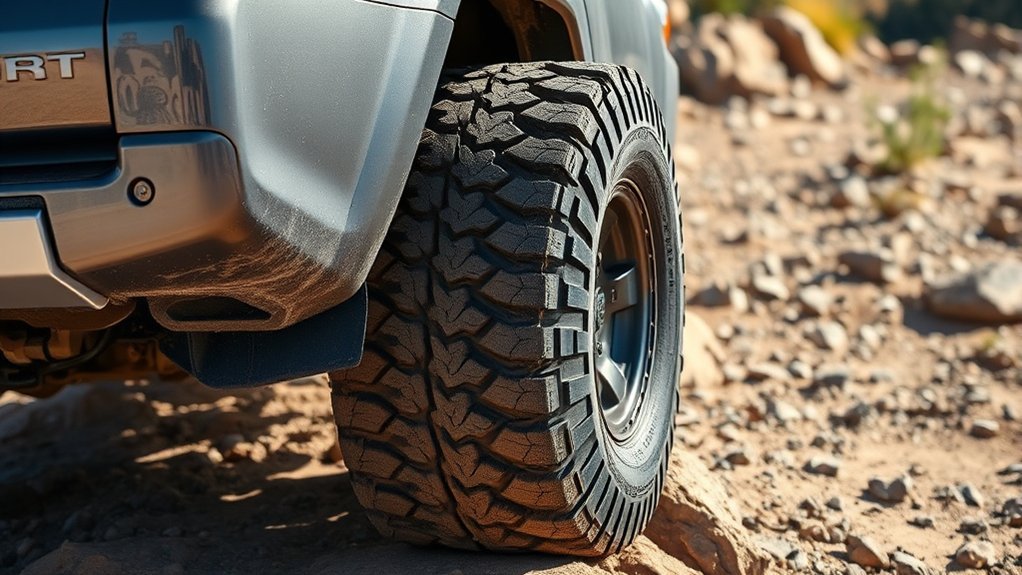
A perfectly matched spare does not help if it is flat, cracked, too old, or stuck in the carrier. NHTSA recommends checking pressure on all tires, including the spare, at least once a month when the tires are cold. NHTSA also says tires should be replaced when tread reaches 2/32 inch. NHTSA
Michelin gives similar pressure advice and notes that you should use the pressure listed by the vehicle manufacturer, not the number molded on the tire sidewall. Check the spare before long trips, because a tire can lose pressure even when it has no visible damage. Michelin
- Check cold pressure monthly. Include the spare during every tire pressure check.
- Inspect sidewalls and tread. Look for cracks, cuts, bulges, plugs, uneven wear, or exposed tread bars.
- Check the DOT date code. A spare can age out even if it has never touched the road.
- Clean and test the carrier. Make sure the hoist lowers and raises smoothly before you need it roadside.
- Inspect the valve stem. Replace damaged or leaking stems when servicing the tire.
- Confirm your tools. Keep the jack, lug wrench, wheel-lock key, gloves, flashlight, and torque wrench accessible.
Use a Five-Tire Rotation If Your Spare Truly Matches
A five-tire rotation can help your 4Runner spare stay close in tread depth to the four road tires. This works only when the spare has the same size, load rating, wheel compatibility, and tire type. Directional tires, different wheels, or different tread patterns can limit rotation options.
Do not include a temporary-use spare in rotation. If you buy five matching tires for an off-road setup, start the five-tire rotation at the first service interval instead of waiting until the four road tires are already worn. That gives the spare a better chance of matching the set when you need it.
What to Do About Mismatched Spare Tires
- Find the mismatch. Compare the spare’s size, diameter, tread depth, load rating, wheel offset, and pressure against your road tires.
- Decide whether it is emergency-only. If it is smaller, older, heavily worn, or a different tire type, use it only to reach service.
- Drive gently. Avoid highway speeds, hard braking, hard acceleration, towing, and off-road obstacles.
- Use the safest drivetrain mode. Use 2H on dry pavement if your part-time 4WD 4Runner allows it. Avoid 4H and 4L on high-traction surfaces with mismatched tires.
- Repair or replace the failed tire quickly. Do not let a mismatched spare become part of your regular tire set.
- Upgrade to a matching fifth tire. This is the best long-term solution for larger off-road setups.
Frequently Asked Questions
Should my 4Runner spare tire match my main tires?
Yes. Your safest option is a full-size spare that matches your main tires in size, load rating, tread type, and similar tread depth. This matters most if your 4Runner has 4WD, full-time 4WD, larger tires, or regular off-road use.
Can I use a 265/70R17 spare with 285/70R17 tires?
Use it only as a short emergency spare if you have no better option. A 265/70R17 is smaller than a 285/70R17, so it can rotate at a different speed and may add driveline stress. A matching 285/70R17 spare is the better choice.
Is 265 or 275 better for a 4Runner spare?
The better spare is whichever size matches your four road tires. If your 4Runner runs 265/70R17 tires, use a 265/70R17 spare. If it runs 275/70R17 tires, use a 275/70R17 spare. Do not choose a spare size only because it fits the carrier more easily.
What is the 50/50 rule on spare tires?
The 50/50 rule is a common rule of thumb for temporary or donut spares: no more than about 50 mph and no more than about 50 miles. Always follow the lower limit printed on the spare tire or listed in your owner’s manual.
What is the 3% tire rule?
The 3% rule is a general tire-size comparison shortcut, not a guarantee that a spare is safe for extended 4WD or full-time 4WD driving. For a 4Runner spare, exact matching is better. Use the owner’s manual, tire placard, and professional fitment advice when sizes differ.
Should I rotate the spare tire on my 4Runner?
Yes, if it is a true matching full-size spare with the same tire size, load rating, wheel compatibility, and tire type. Do not rotate a temporary-use spare into regular service. If your tires are directional or your wheels differ, ask a tire shop for the correct pattern.
Conclusion
Your 4Runner spare tire is not just a backup. It is part of your safety plan, especially when you drive off-road, tow, travel far from shops, or run larger tires than stock. The best setup is simple: use a full-size spare that matches your main tires as closely as possible.
Before your next trip, check the spare’s size, load rating, pressure, tread depth, age, wheel fitment, TPMS setup, and carrier clearance. If your spare does not match, treat it as an emergency-only tire and upgrade to a proper fifth wheel and tire when you can.
Sources
- NHTSA TireWise Tire Safety — tire pressure, tread depth, tire size, TPMS, and spare tire maintenance guidance
- Toyota 4Runner Official Specifications — current 4Runner specifications and trim-dependent tire information
- Tire Rack AWD and 4WD Tire Matching Guide — matched tire size, tread design, tread depth, and full-size spare rotation guidance
- Discount Tire Tire Size Calculator — tire diameter, circumference, and revolutions-per-mile comparison guidance
- Michelin Routine Tire Care Tips — monthly pressure checks, cold-pressure checks, and spare tire maintenance
- Bridgestone Firestone Tire Maintenance and Safety Manual — spare tire inspection, temporary spare warnings, TPMS notes, and full-size spare rotation guidance