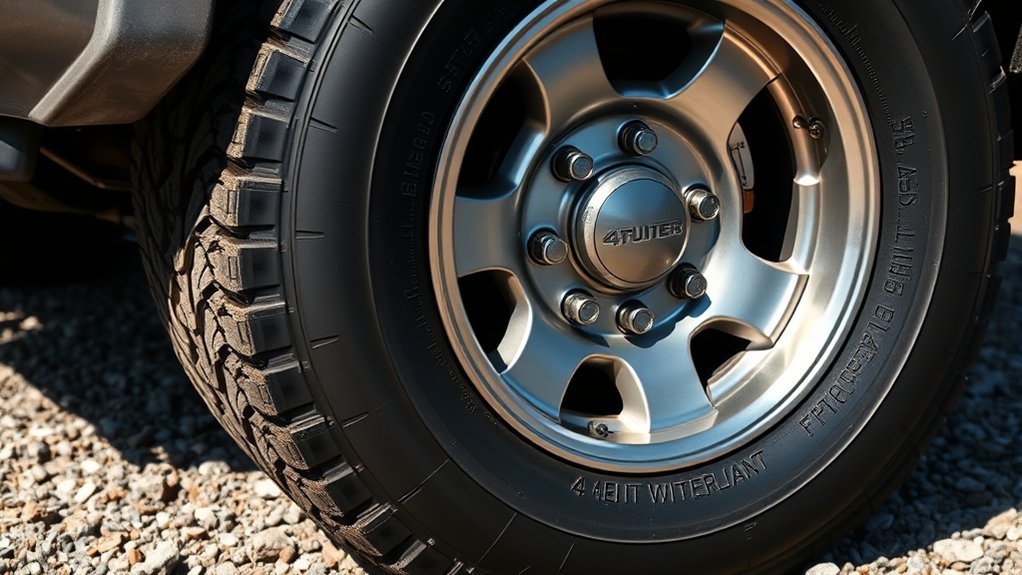
Choosing the right wheel width for your Toyota 4Runner depends on your model year, tire size, suspension height, and how much trimming you are willing to do. For many 2010–2024 4Runner builds, a 17×8.5 wheel is a popular aftermarket choice for 265, 275, and 285 mm tires. For 2025 and newer 4Runners, start with the factory 18-inch fitment and confirm brake clearance before moving to a different wheel diameter.
Quick Answer
For most 2010–2024 4Runner owners, 17×8.5 inches is the most useful aftermarket wheel width because it supports common 265/70R17, 275/70R17, and 285/70R17 tire setups. Stock-height trucks usually work best with 265s, while 275s or 285s often need lift, offset planning, and trimming.
Key Takeaways
- 17×8.5 is a common sweet spot for many 2010–2024 4Runner aftermarket setups.
- A 265 tire is the easiest stock-friendly size; 275 and 285 tires need more clearance planning.
- Offset matters as much as width. More negative offset can improve inner clearance but increase fender poke and rubbing.
- For 2025+ 4Runners, verify brake clearance before assuming a 17-inch wheel will fit.
- Always match the tire and wheel to the correct load rating, approved rim-width range, lug seat, and TPMS requirements.
At a Glance
| Time Required | 20–40 minutes to compare tire size, wheel width, offset, load rating, and clearance needs |
| Difficulty | Moderate, because offset and tire diameter affect rubbing and handling |
| Tools Needed | Owner’s manual, tire spec sheet, tape measure, offset calculator, and a professional test fit when possible |
| Cost | Research is free; wheels, tires, alignment, trimming, and TPMS service can add significant cost |
Before You Choose: Identify Your 4Runner Generation
Start by checking your model year. A 2010–2024 4Runner is a fifth-generation truck, and most common aftermarket fitment advice is based on that platform. A 2025 or newer 4Runner is a sixth-generation truck with a newer body, suspension package options, and factory 18-inch tire setups on many trims.
That difference matters because a wheel that clears brakes and suspension on an older 4Runner may not automatically fit a newer one. If you own a 2025+ model, confirm wheel diameter, caliper clearance, offset, hub bore, and lug-seat compatibility before buying wheels.
Warning: Do not choose wheels by looks alone. The tire load rating, wheel load rating, approved rim-width range, lug-seat type, brake clearance, TPMS fit, and final clearance at full steering lock all matter for safety.
Why Wheel Width Matters for Your 4Runner
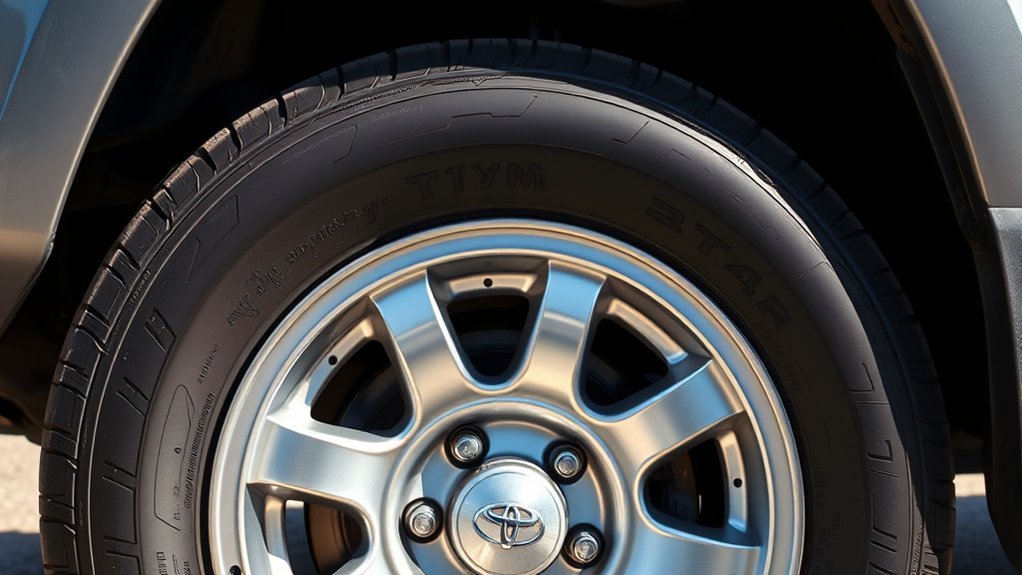
Wheel width affects how the tire sidewall sits on the rim. A good match gives the tire enough bead support without stretching the sidewall too far or pinching it inward. This helps steering response, tread contact, bead stability, and tire wear.
For many 2010–2024 4Runner builds, 17×8.5 inches works well because it pairs cleanly with many 265, 275, and 285 mm all-terrain tires. It is wide enough to support larger tires, but not so wide that the tire usually becomes difficult to package under the fender.
That said, wheel width is only one part of fitment. The final result also depends on offset, backspacing, tire construction, tread width, suspension height, alignment, and whether the truck still has factory mud flaps, fender liners, and body mounts.
What You Need to Know About Tire Sizes
Tire sizes use a code such as 265/70R17. The first number is the tire’s nominal section width in millimeters, the second number is the sidewall height as a percentage of the width, and the final number is the wheel diameter in inches. The tire must match the wheel diameter exactly.
| Component | What It Means | Example: 265/70R17 |
|---|---|---|
| Tire Width | Nominal width in millimeters | 265 mm |
| Aspect Ratio | Sidewall height as a percentage of width | 70% of 265 mm |
| Construction | Radial tire construction | R |
| Wheel Diameter | Rim diameter the tire must mount on | 17 inches |
A larger tire can add ground clearance, but it can also change speedometer accuracy, braking feel, acceleration, spare-tire storage, and rubbing points. Before buying, compare the tire manufacturer’s published specs for outside diameter, tread width, load rating, and approved rim-width range.
The Ideal Rim Width for Off-Road Performance
For a 2010–2024 4Runner, a 17×8.5 wheel is usually the best all-around aftermarket width for mixed daily driving and off-road use. It gives you room for common all-terrain sizes without going extremely wide. It also leaves more sidewall than a larger-diameter wheel, which can help ride comfort and off-road compliance.
For a 2025+ 4Runner, do not assume 17-inch wheels fit until you verify brake clearance. Many owners will be better served by staying close to the factory 18-inch diameter unless a wheel manufacturer confirms a specific 17-inch wheel clears that trim.
Optimal Width Range
The best width depends on tire size. Use this table as a practical starting point, not as a replacement for the tire maker’s spec sheet.
| Tire Size | Common 4Runner Use | Practical Wheel Width | Clearance Notes |
|---|---|---|---|
| 265/70R17 | Stock-like 2010–2024 fit | 17×7.5 to 17×8.5, depending on tire specs | Usually the easiest size for stock suspension |
| 275/70R17 | Mild upgrade | 17×8 to 17×8.5 is common | May need liner or mud-flap adjustment |
| 285/70R17 | Popular lifted setup | 17×8.5 is a common choice | Often needs lift, alignment, and trimming |
| 265/70R18 | Common 2025+ stock-style off-road fit | 18-inch wheel matched to factory specs | Best verified against the door placard and owner’s manual |
| 33-inch tire | Factory 2025 Trailhunter-style off-road package or modified builds | Depends on exact tire and trim | Requires careful clearance and spare-fit checks |
Tire Compatibility Considerations
When selecting a tire and wheel combination, check these items before ordering:
- Approved rim-width range: Confirm the exact tire model is approved for your wheel width.
- Load rating: Use a tire and wheel that meet or exceed the 4Runner’s required load capacity.
- Offset and backspacing: Make sure the tire clears the upper control arm, fender liner, bumper, and body mount.
- Brake clearance: This is especially important if you are changing wheel diameter on a 2025+ 4Runner.
- TPMS compatibility: Plan for sensors, relearn steps, and valve-stem style.
- Spare tire: A larger tire may not fit cleanly in the factory spare location.
Essential Tire Sizes for Optimal 4Runner Fitment
For a stock-height 2010–2024 4Runner, 265/70R17 is the safest and simplest size to keep ride quality, clearance, and speedometer behavior close to stock. If you want a slightly larger look, 275/70R17 can work on some setups, but it may need small adjustments. If you want the common 285/70R17 look, plan for more work.
A lifted 2010–2024 4Runner can often run 275 or 285 tires more easily, but lift height alone does not guarantee clearance. Wider tires can still rub at the body mount, fender liner, mud flap, bumper edge, or upper control arm.
For 2025+ 4Runners, use the factory tire placard and owner’s manual as your baseline. Toyota’s current-generation off-road trims include factory off-road tire packages, and the Trailhunter was announced with 33-inch Toyo Open Country A/T tires. That does not mean every 33-inch tire and wheel combo will clear every trim without rubbing.
The safest fitment path is simple: pick the tire size first, confirm its approved rim-width range, then choose wheel width and offset around clearance.
[Products Worth Considering]

Vigorder rubber cement glue delivers superior adhesion and cures quickly within about 30 seconds for seamless rubber bonding. Once cured, it helps provide a strong, durable, waterproof seal that holds up to vehicle weight, pressure, and heat. Suitable for cars, motorcycles, trucks, bicycles, and off-road tires, it’s designed for emergency patch and maintenance repairs.

Monitor tire tread wear with a smart, color-coded depth gauge that shows clear condition ranges at a glance. The bar is range marked for fast, easy readings, helping you maintain safer traction and performance. Each gauge is portable with a pocket clip, and the set includes 20 units for daily use and sharing.

Secure a full-size spare on your trailer with this powder-coated steel spare tire mount bracket. It fits most 4-, 5-, and 6-lug wheel bolt patterns and mounts to trailer tongues up to 4 in wide and 5 in tall. Built for reliable carry with a max 150 lb load rating and includes zinc-plated hardware for straightforward installation.
How to Adjust for Lifted vs. Stock Suspension?
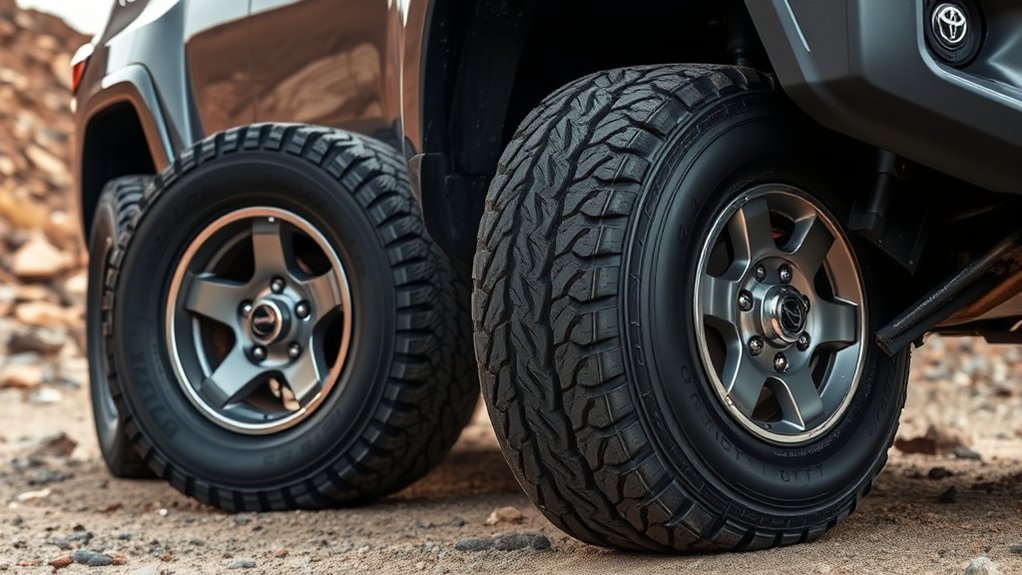
Stock and lifted 4Runners need different wheel and tire choices. A stock-height truck has less room at the fender liner and bumper, so a conservative tire and offset are easier to live with. A lifted truck creates more vertical clearance, but it does not remove every rubbing point.
Use these rules as a starting point:
- Stock suspension: Stay near stock tire diameter if you want the least rubbing and best daily comfort.
- Mild lift: A 275 tire is often a good middle ground when paired with the right offset.
- 2–3 inch lift: A 285 tire becomes more realistic, but trimming and alignment are still common.
- Zero to mild negative offset: Often helps inner clearance, but increases outer poke.
- Aggressive negative offset: Looks wider, but can increase fender rubbing and road spray.
Note: Alignment settings can change tire position in the wheel well. More caster can help move the tire away from the rear of the front fender opening, but it must be set correctly by an alignment shop.
Tips for Selecting the Right 4Runner Wheel and Tire Combination
Choose your setup in this order: tire size, tire load rating, approved rim-width range, wheel diameter, wheel width, offset, then clearance. This order keeps you from buying a wheel that looks good but does not match the tire or truck.
- Check your factory tire placard. This gives your original tire size and pressure baseline.
- Choose your tire size. Decide whether you want stock-like, mild upgrade, or lifted off-road fitment.
- Read the tire spec sheet. Confirm approved rim width, diameter, tread width, load index, and overall diameter.
- Select wheel width. For many 2010–2024 builds, 17×8.5 is a strong all-around choice.
- Choose offset carefully. Do not pick negative offset only for looks. It affects rubbing and steering feel.
- Test full clearance. Check at full steering lock, in reverse, and with suspension compressed.
- Finish with alignment and retorque. Recheck lug torque after installation and schedule an alignment if tire size or suspension changed.
Pro Tip: If you are unsure between two setups, choose the smaller tire or less aggressive offset for a daily-driven 4Runner. It usually saves money on trimming, alignment problems, road noise, and premature tire wear.
[Products Worth Considering]

The Big Rig Defense Tire Thumper is a truck tire pressure checker that lets you quickly check multiple tires by giving them a firm whack. Listen for a reassuring thump and feel the stick bounce when a tire is fully inflated, helping you get back on the road safely. It features a comfortable, glove-friendly handle and a secure wrist strap for confident use on busy routes.

Upgrade your wheelbarrow, garden wagon, hand truck, or trolley with solid flat-free 13 inch replacement tires designed to avoid punctures and eliminate inflation time. Built with durable polyurethane and thickened steel for impact resistance and smooth rotation, the serrated tread improves traction on wet or slippery surfaces. Includes spacers and pins for easier installation and a universal 5/8 inch axle bore hole for a stable fit.

This manual duck head tire changer kit makes tire installation and removal simpler by letting you embed the duck head into the tire with applied pressure. The integrated design and durable steel construction help reduce friction and improve efficiency and safety during use. Suitable for 16–21 inch wheels, it’s convenient for cars, trucks, SUVs, and ATV tires, with 24-hour after-sales support.
Wheel Offset and Backspacing Explained
Offset is the distance between the wheel’s mounting surface and centerline. A positive offset pulls the wheel inward. A zero offset places the mounting pad near the wheel centerline. A negative offset pushes the wheel outward.
Backspacing is the distance from the mounting surface to the inner lip of the wheel. More backspacing usually moves the tire closer to suspension parts. Less backspacing usually pushes the tire outward.
On a 4Runner, offset affects these areas:
- Upper control arm clearance: Too much inward position can rub the inner sidewall.
- Fender and bumper clearance: Too much outward poke can rub the outer fender line.
- Road manners: Aggressive offset can change steering feel and increase kickback.
- Appearance: More negative offset gives a wider stance, but that stance is not always easier to fit.
Common 4Runner Fitment Paths
Here are the most practical paths for many owners:
- Daily driver, no lift: Stay near the factory tire size and use a conservative wheel width and offset.
- Balanced trail and street build: Consider 17×8.5 with a 275 or 285 tire on 2010–2024 models, but plan for alignment and possible trimming.
- Lifted off-road build: Use 285 tires only after checking body mount, fender liner, bumper, and spare-tire clearance.
- 2025+ 4Runner build: Start with the factory 18-inch setup and confirm brake clearance before changing diameter.
[Products Worth Considering]

Upgrade your 2024-2026 Tesla Model 3 Highland with REEVAA all-weather mud flaps designed for seamless fit along the original body lines. The set of four delivers strong splash protection against mud, gravel, and road debris while using OEM-grade durable materials. Installation is non-destructive with original hole positions and snap-in clips, and the aerodynamic design helps minimize impact on efficiency.

Replace worn or missing TPMS sensors with a pre-programmed 4-pack designed for compatible GM vehicles. These 315MHz sensors provide real-time tire pressure monitoring and alert you if pressure is too high, too low, or if a rapid air leak occurs. Most installations are ready with minimal relearn effort after mounting, helping improve safety and driving confidence.

Measure tire tread depth quickly and accurately with this LUMITECO dial gauge that reads in 1/32" increments up to 14/32". The color-coded green/yellow/red zones make it easy to judge tire wear and know when replacement is needed. A rugged, compact design with a protective pouch helps keep the gauge ready for use on cars, trucks, motorcycles, and more.
Frequently Asked Questions
Does tire width need to match rim width?
Yes. The tire must be mounted on a rim width approved by the tire manufacturer. If the rim is too narrow or too wide, the sidewall shape, bead support, tread wear, and handling can suffer.
How do you match tire size to rim size?
Match the wheel diameter first, then check the tire’s approved rim-width range. For example, a 17-inch tire must go on a 17-inch wheel. After that, confirm the wheel width, load rating, offset, and clearance.
What is the best wheel width for a 4Runner?
For many 2010–2024 4Runner aftermarket builds, 17×8.5 inches is the best all-around width. It works well with common 265, 275, and 285 mm tires when the tire manufacturer approves that rim width. For 2025+ models, verify brake clearance before changing wheel diameter.
Can I fit 285 tires on a stock 4Runner?
Sometimes, but it is not the easiest fit. A 285 tire often needs careful offset selection, alignment, fender-liner adjustment, mud-flap removal, or trimming. A lift helps, but it does not guarantee zero rubbing.
Is negative offset better for off-road 4Runner wheels?
Not always. Mild negative offset can help inner clearance and widen the stance, but too much negative offset can cause fender rubbing, extra poke, more road spray, and heavier steering feel.
Conclusion
The best 4Runner wheel width is the one that matches your tire, model year, suspension, and real driving needs. For many 2010–2024 4Runner owners, 17×8.5 inches is a strong aftermarket choice for 265 to 285 mm tire setups. For 2025+ owners, start with the factory 18-inch baseline and verify clearance before changing wheel diameter.
If you want the easiest fit, stay close to stock. If you want bigger tires, plan for offset, trimming, alignment, spare-tire fit, TPMS service, and load-rating checks. A clean fitment is not just about stance. It should steer well, clear properly, wear evenly, and stay safe on pavement and trails.
Sources
- Toyota USA Newsroom: 2025 Toyota 4Runner Refines Adventure Ready Heritage — current-generation 4Runner platform, trims, off-road features, and Trailhunter tire package.
- Toyota Owners Manuals and Warranty Lookup — model-specific owner’s manual and tire placard guidance.
- NHTSA Tire Safety — tire pressure, tire maintenance, and safety guidance.
- Tire Rack: Rim Width Range for a Tire — why tire-specific approved rim-width ranges matter.
- Falken Wildpeak A/T4W — all-terrain tire specifications and sizing reference.
- Toyo Open Country A/T III — all-terrain tire product and size reference.