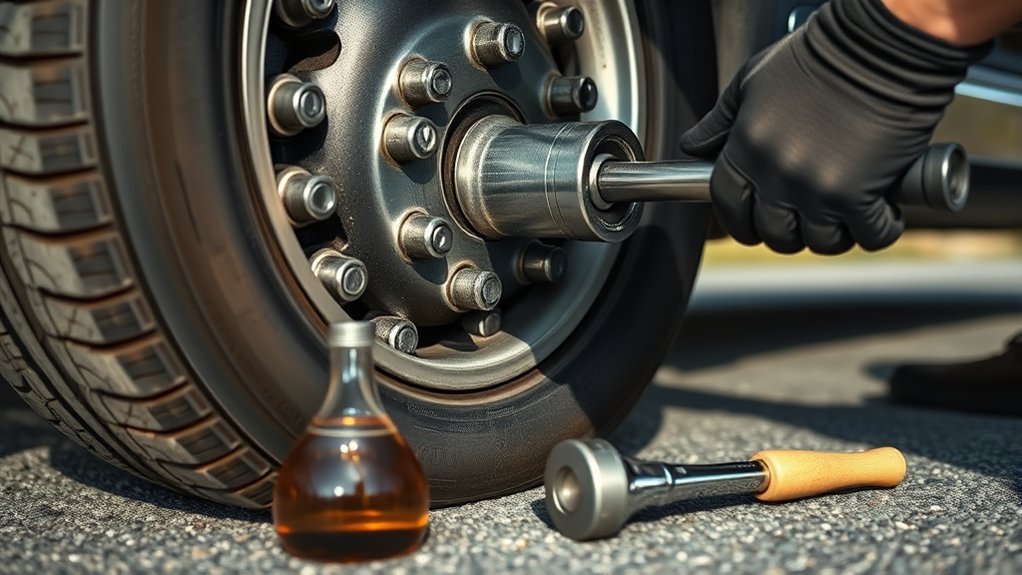
If your lug nuts won’t come off, don’t start by forcing harder. Rust, road salt, dirt, over-tightening, swollen lug nut caps, the wrong socket, or a seized wheel can all make removal difficult. Start with a safe setup, use the correct 6-point socket, soak the threads with penetrating oil, and apply steady leverage with a breaker bar. If the nut rounds, the stud bends, or the wheel still will not release, stop before the repair becomes more expensive.
Quick Answer
For stuck lug nuts, park on level ground, chock the wheels, use the correct 6-point socket, and soak the nut with penetrating oil for at least 15 minutes. Then pull a breaker bar with smooth, steady pressure. Avoid jumping on the wrench, overheating the wheel, or lubricating studs during reassembly unless your vehicle maker allows it.
Key Takeaways
- Use a snug 6-point socket before adding force. A loose or wrong-size socket can round the lug nut.
- Spray penetrating oil around the lug nut seat and stud area, then let it soak before trying again.
- Use a breaker bar for controlled leverage. Pull smoothly instead of jerking, bouncing, or jumping on the wrench.
- Use heat only as a last resort, away from fresh solvent, rubber, brake hoses, ABS wiring, and fuel sources.
- After removal, replace damaged lug nuts or studs and tighten the wheel with a torque wrench to the vehicle manufacturer’s specification.
At a Glance
| Time Required | 15 minutes to 1 hour, longer if heavy corrosion needs repeated soaking |
| Difficulty | Easy to moderate; difficult if the lug nut is rounded, cross-threaded, or seized |
| Tools Needed | Wheel chocks, gloves, eye protection, wire brush, penetrating oil, correct 6-point socket, breaker bar, torque wrench, and an extractor socket if the nut is rounded |
| Cost | Usually $10–$80 for DIY supplies; more if a shop must extract a damaged lug nut or replace a wheel stud |
Why Lug Nuts Get Stuck
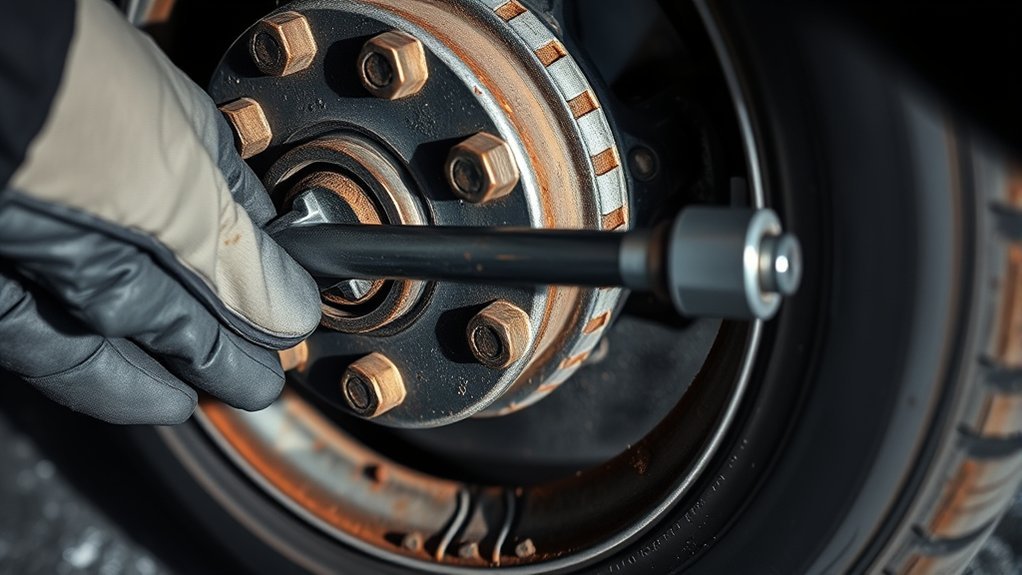
Lug nuts usually get stuck because rust, corrosion, and road debris build up around the wheel, hub, and stud threads. This is common in areas that use road salt in winter. As corrosion grows, it can bond the lug nut to the stud or the wheel seat, so normal hand force is not enough.
Previous over-tightening is another common cause. If an impact wrench was used carelessly, the nut may be stretched, the threads may be damaged, or the wheel may be clamped unevenly. A worn or wrong-size socket can also round the flats, which makes the nut harder to grip.
Some vehicles also use capped lug nuts. When the outer cap swells from rust underneath, a normal socket may no longer fit fully. In that case, the issue is not always the threads. The problem may be that the socket is riding on the damaged cap instead of gripping the nut.
Warning: Do not keep adding force if the socket slips, the nut rounds, or the stud starts to twist. More force can break the wheel stud and turn a simple tire job into a hub or stud replacement.
Check These Things Before You Force a Lug Nut
Before you reach for a longer bar, make sure the simple checks are done. A stuck lug nut is often made worse by using the wrong tool first.
- Confirm the socket size. Use the exact metric or SAE size that fits snugly. Most passenger vehicles use metric lug nuts, but sizes vary.
- Use a 6-point socket. A 6-point socket grips the flats better than a 12-point socket and lowers the chance of rounding the nut.
- Look for locking lug nuts. If one nut has a special pattern, find the wheel-lock key before you damage it.
- Check for swollen caps. If the socket does not seat fully, try the correct half-size socket or a dedicated swollen-lug-nut removal socket.
- Make sure the vehicle is stable. Park on level ground, set the parking brake, and chock the wheels that stay on the ground.
- Loosen before lifting. Break the lug nuts loose while the tire is still touching the ground. This keeps the wheel from spinning and helps keep the vehicle stable.
Soak Stuck Lug Nuts With Penetrating Oil
Once you’ve identified rust or corrosion as the likely cause, soak the stuck lug nuts with penetrating oil. Clean the visible area with a wire brush first so the oil can reach the gap around the nut instead of sitting on dirt. Spray around the base of the lug nut and, if accessible, near the stud opening.
Let the oil sit for at least 15 minutes. For heavy corrosion, wait 30–60 minutes and reapply. Severe rust may need several soak cycles. A dedicated penetrating oil is better than a general water-displacing spray when the nut is badly seized.
| Action | Why it matters | Result |
|---|---|---|
| Brush debris away | Opens a path for the oil | Better penetration |
| Apply around the nut seat | Targets the rust bond | Less breakaway force |
| Wait before turning | Gives the oil time to work | Lower risk of rounding |
If the lug nut still will not move, do not immediately bounce on the wrench. Reapply penetrating oil, tap the nut lightly to vibrate the corrosion, and try steady force again.
Use a Breaker Bar for More Torque
A breaker bar gives you controlled leverage without using a torque wrench as a removal tool. A torque wrench is for final tightening, not for breaking stuck fasteners loose. Choose a breaker bar with a strong, properly sized 6-point socket and seat the socket all the way onto the lug nut.
Keep your feet stable and pull the handle smoothly. Pulling is usually safer than pushing because you have better balance if the nut suddenly breaks loose. Avoid jerking the bar. A sharp jerk can slip the socket off the nut or knock the vehicle off balance.
Pro Tip: Set the breaker bar so the handle is near horizontal and pull upward when possible. This uses your legs and body position without jumping on the tool.
[Products Worth Considering]

The Trivd Frol 1/2" air impact wrench delivers high performance torque up to 1500 ft-lbs with a twin hammer impact mechanism for strong, balanced blows. It features an ergonomic grip, compact lightweight design, and quick-stop control with 3 forward speeds up to 8000 RPM plus a reverse speed. Built for demanding automotive repair and tire shop work, the rear exhaust helps keep debris away from the surface.

The 22800 wheel stud installer makes replacing wheel studs quick and secure, saving time and effort during tire service. It uses a ratchet or impact wrench to pull new studs firmly into place, helping when existing studs are too long. Compatible with most automotive wheels and light-duty truck wheel studs, it’s designed for easy, tool-assisted installation.

This 1/2-inch drive breaker bar delivers powerful leverage for loosening and tightening stubborn lug nuts and automotive fasteners. The 180-degree flex head helps you reach tight spaces at the angle you need, making tire and brake jobs easier. A spring-loaded ball detent design holds 1/2-inch sockets securely while the chrome-moly head provides durable strength for everyday use.
Add Leverage Without Damaging Tools
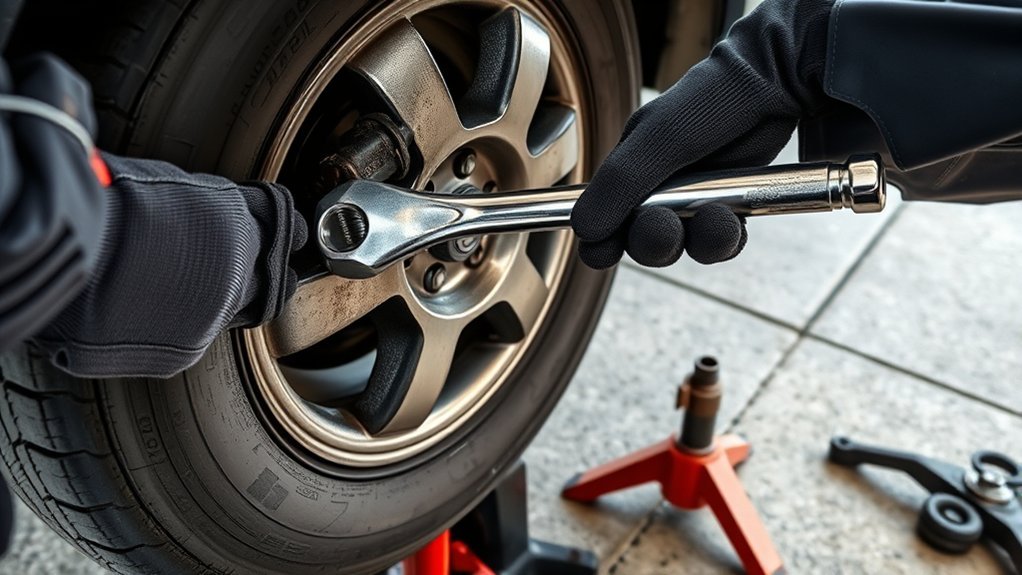
You can add leverage by sliding a snug pipe over the breaker bar handle, but use this carefully. More length multiplies torque, which can help a rusted lug nut break free. It can also break a cheap socket, bend a tool, or snap a weakened wheel stud.
Use only a solid breaker bar and a strong socket. Do not use a ratchet with a pipe unless the ratchet is rated for that load. Do not use a torque wrench for this step.
Breaker Bar Extension
Fit the socket fully over the lug nut, then attach the breaker bar. If you need more reach, use a pipe that fits tightly over the handle. A loose pipe can slide off and cause injury. Apply force slowly until the nut moves or you feel the setup becoming unsafe.
Pipe Over Handle
A pipe over the handle can double the effective length of the bar. That means you need less body force, but the fastener and tool see much more load. Stop if the socket twists, the nut deforms, or the stud begins to flex. At that point, an extractor socket or professional removal is safer.
Steady Pull Technique
Use steady pressure instead of short violent motions. The goal is to break the rust bond while keeping the socket seated squarely.
- Pull rather than push when your body position allows it.
- Keep the socket straight on the nut.
- Do not stand or jump on the bar.
- Stop if the nut starts to round or the tool slips.
Tap and Rock the Lug Nut Loose
Light tapping can help break the corrosion bond. Use a hammer to tap the side of the socket or the lug wrench handle gently. You are trying to send vibration into the fastener, not smash the nut or wheel.
After tapping, apply pressure in the loosening direction. If the nut moves slightly, reverse direction a small amount, then loosen again. This back-and-forth motion can clear rust from the threads. Add more penetrating oil between attempts and give it time to work.
Keep the wheel on the ground while breaking the lug nuts loose. If the vehicle is already raised and the wheel spins, lower it until the tire touches the ground again before applying heavy force.
Apply Heat to Rusted Lug Nuts
Heat can help in severe rust cases because metal expands and contracts as temperature changes. That movement can weaken the rust bond. However, heat is a last-resort method, not the first fix.
Use heat only in a controlled garage setting with a fire extinguisher nearby. Keep flame away from the tire, valve stem, brake hose, ABS wiring, wheel finish, fresh penetrating oil, fuel vapors, and plastic trim. Do not heat the metal until it glows. If you are stuck on the roadside, skip heat and call roadside assistance or a tire shop.
- Wipe away excess penetrating oil before using heat.
- Heat the lug nut, not the tire or brake components.
- Use short heat cycles and let the area cool before touching it.
- Do not spray oil onto hot metal or near an open flame.
Warning: Penetrating oils and solvents can be flammable. Never spray them while a torch is lit, and never use heat close to a tire sidewall or rubber brake hose.
[Products Worth Considering]

These M14x1.5 closed-end chrome lug nuts are a one-piece replacement designed for secure fitment on compatible GM, Ford, and select Chrysler/Dodge models. Featuring a 60-degree conical seat and anti-rust chrome plating, they help resist corrosion and maintain a bright look for everyday driving. Built for long-term durability, they include OEM-style part references and are backed by 12 months of support.

Upgrade your wheels with MIKKUPPA closed-end lug nuts designed for reliable fit and corrosion resistance. The one-piece, cold-forged and heat-treated steel construction helps resist rust and stripping, while the integrated finish delivers a durable black appearance. Built to OEM standards with a conical 60-degree seat, these nuts provide a secure solution for compatible Ford, Honda, Jeep, and Chevrolet models.

The SEESII cordless impact wrench delivers high tightening and loosening power for fast wheel bolt and industrial bolt work. Its brushless motor and variable-speed 3 forward/2 reverse modes help you control precision installs and stubborn nut removal. A dual-battery system with rapid charging and an included storage case make it ready for home, car, and jobsite use.
Remove Rounded or Deformed Lug Nuts
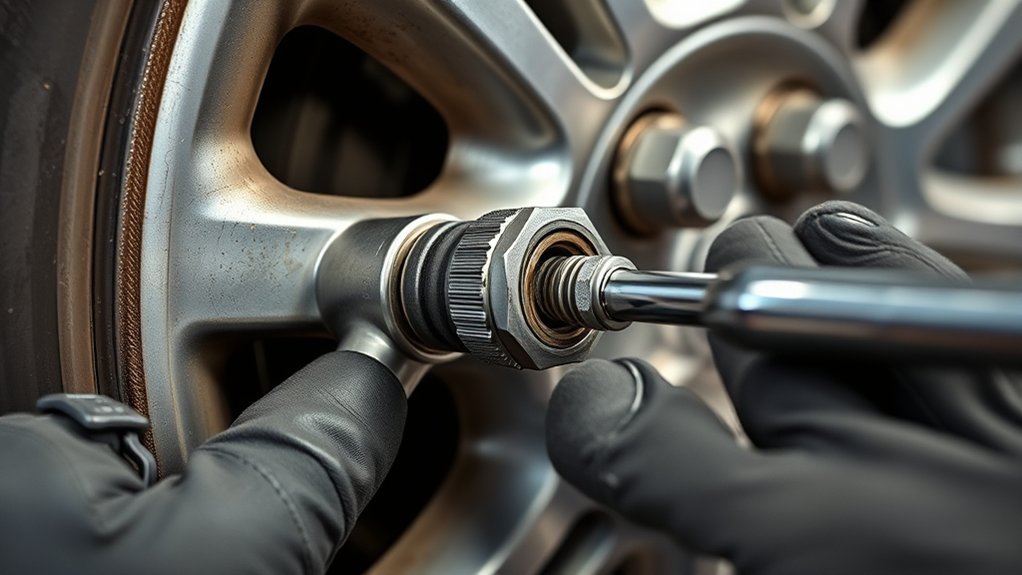
If the lug nut is rounded, swollen, or deformed, stop using a loose socket. Each slip makes the nut harder to remove. Start with a tight 6-point socket if the flats are still usable. If the nut is too damaged, use a twist-style lug nut extractor socket designed to bite into the outside of the nut.
[Products Worth Considering]

Upgrade your wheels with MIKKUPPA M12x1.5 mag seat lug nuts built for secure, corrosion-resistant performance. These closed-end chrome lug nuts are a direct replacement for select Toyota models, including Camry, Corolla, RAV4, Sienna, Avalon, Highlander, Matrix, Venza, and Prius. Triple-chromium plating and cold-forged, heat-treated steel help deliver strength for daily driving and replacement needs.

This ecocstm ratchet wrench is designed to make emergency and routine tire changes faster with a 360° rotating head and quick forward/reverse switching. The extended handle provides extra leverage to reduce effort and hand fatigue, while the adapter helps fit many scissor jacks on cars, SUVs, trucks, and vans. Built for reliable performance with durable construction, it’s a practical travel essential for on-the-road preparedness.

This spare tire tool kit is designed for the 2004 to 2018 Ford F-150 to help you loosen and tighten wheel lug nuts and manage the spare tire and provided jack functions from underneath the vehicle. It includes the lug nut wrench and extension pieces plus a convenient storage carrying case for organized transport. The jack itself is not included.
Deformed Nut Solutions
Match the tool to the damage. A swollen capped nut may need a half-size socket or a special removal socket. A rounded solid nut may need an extractor. A locking lug nut with a missing key may need a professional wheel-lock removal tool.
- Use a 6-point socket before the nut is fully rounded.
- Use an extractor socket once the flats are damaged.
- Replace the lug nut after removal. Do not reinstall a damaged nut.
- Inspect the stud threads before putting the wheel back on.
Socket Hammering Technique
For a badly rounded nut, you may need to tap an extractor socket onto the nut so it bites firmly. Use controlled hammer taps and keep the socket straight. Once seated, attach the breaker bar and apply steady pressure. If the extractor slips or the stud feels like it is twisting, stop and take the vehicle to a shop.
Shop Help Options
A tire shop or repair shop can remove damaged lug nuts faster and with less risk than most roadside setups. Shops have extractor sets, impact tools, induction heaters, replacement studs, and the experience to know when a nut should be cut off instead of forced.
- Call a shop if two or more lug nuts are stuck on the same wheel.
- Get help if the wheel stud spins, bends, or breaks.
- Use professional help for missing locking-lug keys.
- Ask the shop to replace damaged lug nuts and verify torque after repair.
Free a Tire That Won’t Come Off
Sometimes the lug nuts come off, but the wheel stays stuck to the hub. This usually happens when rust bonds the wheel center bore to the hub. Before you try to knock the wheel loose, thread one lug nut back on a few turns. This keeps the wheel from falling suddenly when it breaks free.
Spray rust penetrant around the center hub area and let it soak. Then kick the tire sidewall with controlled force or strike the tire from behind with a rubber mallet if you can do so safely. Rotate the wheel and repeat from different positions so the force is even.
If needed, place a block of wood against the tire sidewall and strike the wood with a hammer. Do not hit the rim directly with a steel hammer. Do not crawl under a vehicle supported only by a jack. If the wheel still will not move, reinstall the lug nuts loosely and get professional help.
What Not to Do When Lug Nuts Are Stuck
Stuck lug nuts tempt people into unsafe shortcuts. Avoid these common mistakes:
- Do not jump on the wrench. You can slip, break a stud, or move the vehicle.
- Do not use a torque wrench to loosen stuck nuts. It can damage the wrench calibration.
- Do not use an open-end wrench. It can round the nut quickly.
- Do not heat near fresh penetrating oil. Let solvent evaporate and keep flame away from rubber and brake parts.
- Do not reinstall damaged hardware. A rounded lug nut or stretched stud should be replaced.
- Do not guess final tightness. Use a torque wrench during reassembly.
Reinstall the Wheel Safely After Removal
Once the stuck lug nut is off, inspect the nut, stud, wheel seat, and hub face. If the threads are flattened, torn, rusty, or stretched, replace the damaged part before driving. Hand-start each lug nut to avoid cross-threading.
Tighten the lug nuts in a star or crisscross pattern so the wheel seats evenly. Use a torque wrench for final tightening and follow the torque value in your owner’s manual or wheel documentation. Continental Tires notes that lug nuts should be tightened to the manufacturer’s recommended torque and checked again after about 50 km when new or replacement wheels are mounted.
Note: Do not apply grease or anti-seize to wheel studs unless your vehicle or wheel manufacturer specifically allows it. Lubricated threads can create more clamping force at the same torque reading than dry threads.
Prevent Stuck Lug Nuts Next Time
To keep lug nuts from seizing again, start with clean parts and correct torque. Brush rust and grit from the hub face and wheel mounting surface during tire service. A very thin film of corrosion-preventive compound on the hub face can help prevent the wheel from sticking to the hub, but keep it off the wheel studs and lug nut seats unless the manufacturer says otherwise.
If a product is approved for your application, use only a light coating and wipe away excess. Permatex describes anti-seize lubricant as a compound that helps prevent galling, corrosion, and seizing, but wheel fasteners must still follow the vehicle or wheel maker’s instructions.
Clean the hub, hand-start every lug nut, tighten in a crisscross pattern, and finish with the correct torque value. That routine prevents most future stuck-lug problems.
- Clean the hub face and wheel mounting surface during tire changes.
- Replace swollen, rounded, rusty, or cracked lug nuts.
- Use the correct socket size every time.
- Never rely on an impact wrench alone for final tightening.
- Recheck lug nut torque after wheel service as recommended by your vehicle, wheel, or tire service guidance.
- Check tire pressure and the spare regularly. NHTSA TireWise recommends monthly tire pressure checks, including the spare, when tires are cold.
Frequently Asked Questions
What should I do if I can’t get the lug nuts off my tire?
Use the correct 6-point socket, spray penetrating oil around the lug nut, and let it soak for at least 15 minutes. Then use a breaker bar with smooth, steady pressure. If the socket slips, the nut rounds, or the stud twists, stop and call a tire shop or mechanic.
Can I use WD-40 on a stuck tire lug nut?
You can use a water-displacing spray for light rust, but a dedicated penetrating oil usually works better on a badly seized lug nut. Spray around the nut and stud area, wait, then try steady force. Keep sprays away from open flame and wipe residue before using heat.
Why won’t my tire come off after I remove the lug nuts?
The wheel is probably rusted to the hub. Thread one lug nut back on a few turns for safety, spray penetrant around the hub center, and strike the tire sidewall with controlled force or a rubber mallet. Do not hit the rim directly or crawl under a vehicle supported only by a jack.
How do I get a severely stripped lug nut off?
Use a lug nut extractor socket made for rounded fasteners. Tap it on straight, attach a breaker bar, and apply steady pressure. Replace the nut after removal. If the extractor slips or the wheel stud starts to twist, stop and have a shop remove it.
Should I put anti-seize on lug nut threads?
Only if your vehicle maker or wheel maker specifically allows it. Many wheel fasteners are designed to be torqued dry. Lubricating the threads can change the clamping force at the same torque setting, so follow the manual and use the specified torque procedure.
Conclusion
When lug nuts won’t come off, the safest fix is a controlled sequence: stabilize the vehicle, use the right socket, soak the fastener, apply steady breaker-bar leverage, and move to extractor tools or professional help before damage spreads. Heat and extra leverage can work, but they also raise the risk if used carelessly. Once the wheel is off, replace damaged hardware and reinstall it with a torque wrench. That final step is what keeps the repair safe after the stuck nut is gone.
Sources
- NHTSA TireWise — tire maintenance, tire pressure checks, and tire-related safety context.
- Continental Tires: Retorquing Wheels — lug nut torque, crisscross tightening, and retorque guidance after wheel installation.
- Permatex Anti-Seize Lubricant — anti-seize use for corrosion and seizing prevention.