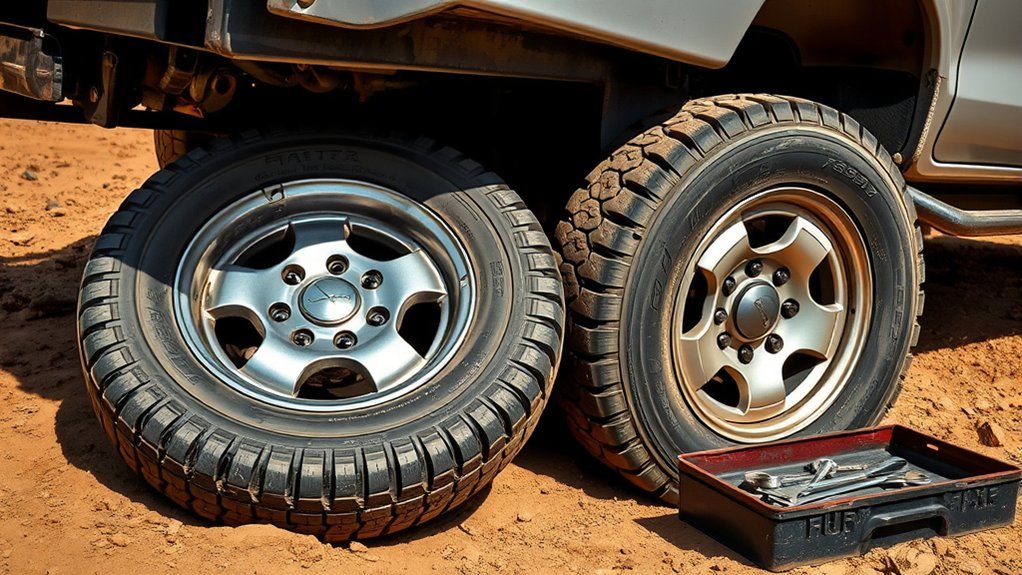
Your Toyota Hilux spare tire may not fit because the tire, wheel, or carrier no longer matches the truck’s exact setup. The most common causes are a larger replacement tire, a wheel with the wrong center bore or offset, brake-caliper clearance problems, or an underbody spare carrier that no longer has enough space after modifications.
Quick Answer
A Toyota Hilux spare tire may not fit if its overall diameter, width, wheel center bore, bolt pattern, offset, or load rating differs from the wheels on the truck. Start by checking the tire placard, owner’s manual, installed tire size, and underbody carrier clearance before modifying anything.
Key Takeaways
- Do not assume every Hilux uses the same stock tire size. Tire sizes vary by year, market, trim, drivetrain, and wheel package.
- A spare must match more than rim diameter. Check overall tire diameter, bolt pattern, center bore, offset, brake clearance, load rating, and inflation pressure.
- A larger tire may fit the hub but still fail to fit the underbody carrier because of width, tread shape, or sidewall height.
- Avoid cutting or grinding the spare carrier unless a qualified mechanic confirms the change will not weaken the hanger.
- If your spare is a different size, use it only as a short emergency solution and return to a matching full-size tire as soon as possible.
At a Glance
| Time Required | 20 to 45 minutes for basic measuring and carrier checks |
| Difficulty | Easy for inspection, moderate if carrier adjustment is needed |
| Tools Needed | Tape measure, tire-pressure gauge, flashlight, lug wrench, owner’s manual, and wheel-spec information |
| Cost | Usually free for inspection; more if you need a matching wheel, tire, spacer, carrier repair, or professional modification |
How Common Tire Sizes Impact Spare Tire Fit
Tire size affects spare fit because a small change in sidewall height can add real diameter under the bed. Many Hilux setups use sizes near 265/70R16, 265/65R17, or 265/60R18 depending on market and trim. Older or modified trucks may run larger sizes such as 265/75R16 or 285/70R17.
Before you buy or mount a spare, check the size printed on your installed tire sidewall and compare it with the vehicle tire placard or owner’s manual. The tire placard is the safest first reference because it lists the manufacturer’s tire and inflation information for that vehicle configuration. You can also review tire-pressure and tire-information guidance from NHTSA tire safety guidance and the FMVSS tire placard standard.
| Tire Size | Approx. Overall Diameter | Fitment Note |
|---|---|---|
| 265/70R16 | About 30.6 inches | Common reference size on some Hilux setups, but not universal |
| 265/75R16 | About 31.6 inches | Roughly 1 inch taller, so carrier clearance may become tighter |
| 285/70R17 | About 32.7 inches | Often needs careful underbody, width, and hanger checks |
Note: Tire diameter calculations are estimates. Real mounted diameter can vary by tire brand, tread design, rim width, pressure, and load.
Understanding Hilux Wheel Specs for Better Spare Tire Fit
A spare tire can have the right rubber size and still fail to bolt on if the wheel specs are wrong. That is why you should check the wheel as carefully as the tire. Focus on these measurements first:
- Bolt pattern: The lug holes must match your Hilux hub exactly.
- Center bore: The wheel must sit correctly over the hub. A center bore that is too small will not mount.
- Offset: A different offset can move the tire inward or outward, causing suspension, brake, or body clearance issues.
- Rim diameter and width: The wheel must fit the tire and clear the brake components.
- Load rating: The spare tire and wheel must support the truck, cargo, and towing load you may carry.
Aftermarket wheels often create problems because they may use a different center bore, offset, or hub-centric ring. Factory accessory wheels can also vary by model year or region. Do not rely on appearance alone. Confirm the stamped wheel size and the supplier’s fitment data before treating a wheel as a safe spare.
How Aftermarket Mods Affect Your Spare Tire
Aftermarket modifications can change the space around your Toyota Hilux spare tire. A lift kit, larger exhaust, tow bar, rear bumper, long-range tank, suspension change, or larger tire can all affect how the spare sits under the tray or bed.
| Modification Type | Possible Fitment Problem | What to Check |
|---|---|---|
| Larger tires | Spare may touch the crossmember, exhaust, bumper, or hitch | Diameter, width, and carrier lift height |
| Aftermarket wheels | Wheel may not sit flat on the carrier or hub | Center bore, offset, bolt pattern, and hub rings |
| Rear bumper or tow bar | Spare may not raise fully into position | Clearance around the hitch, brackets, and rear frame area |
| Long-range tank or underbody accessory | The spare location may be reduced or blocked | Accessory instructions and available underbody space |
[Products Worth Considering]

This spare tire tool kit is designed for the 2004 to 2018 Ford F-150 to help you loosen and tighten wheel lug nuts and manage the spare tire and provided jack functions from underneath the vehicle. It includes the lug nut wrench and extension pieces plus a convenient storage carrying case for organized transport. The jack itself is not included.

Secure a full-size spare on your trailer with this powder-coated steel spare tire mount bracket. It fits most 4-, 5-, and 6-lug wheel bolt patterns and mounts to trailer tongues up to 4 in wide and 5 in tall. Built for reliable carry with a max 150 lb load rating and includes zinc-plated hardware for straightforward installation.

This side-mounted U-bolt spare tire bracket helps keep a trailer spare wheel secure and protected while you travel. It supports trailer frames up to 2–3 inches wide and fits up to 15-inch tires for 4- or 5-lug wheels. The galvanized steel threaded carrier is built for long-lasting corrosion resistance and installs easily with included lug nuts and U-bolt.
Why OEM or Aftermarket Wheels May Not Fit Your Carrier
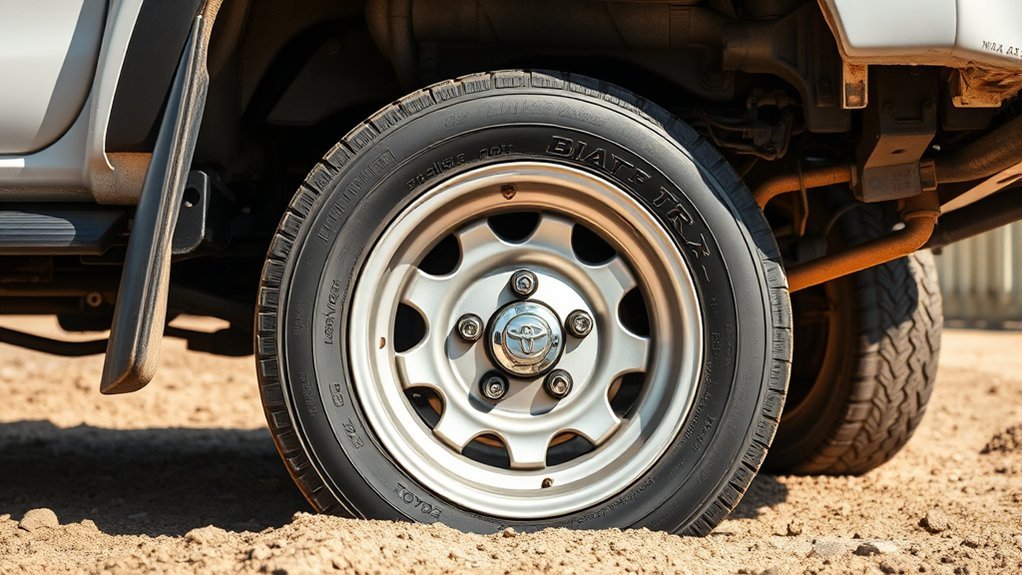
Even an original-looking wheel may not fit your spare carrier if it comes from a different model year, market, trim, or accessory package. Some wheels also have a different face shape, offset, or center opening. The result can be a spare that bolts to the truck but does not sit flat in the underbody carrier.
[Products Worth Considering]

Mount your spare tire off the floor and onto your wall using an e-track spare tire carrier that helps you stay organized in trailers, garages, and warehouses. The upgraded double-fittings design improves stability versus single-fittings and supports greater load bearing. Install by snapping into e-track anchor points and securing the tire with a lug-nut style bolt setup for quick, secure storage.

The TYAMATE TM8 solar-powered wireless TPMS delivers real-time tire pressure and temperature monitoring with six alarm modes for safer driving. A vibrant color LCD display shows readings clearly while windshield mounting keeps it hands-free and easy to read. With a wide 0–87 PSI range, strong 433.92 MHz signal transmission, and quick sensor pairing, it’s ideal for RV, sedan, SUV, MPV, and truck use.

Upgrade your wheels with MIKKUPPA M12x1.5 mag seat lug nuts built for secure, corrosion-resistant performance. These closed-end chrome lug nuts are a direct replacement for select Toyota models, including Camry, Corolla, RAV4, Sienna, Avalon, Highlander, Matrix, Venza, and Prius. Triple-chromium plating and cold-forged, heat-treated steel help deliver strength for daily driving and replacement needs.
Wheel Hub Bore Issues
The center bore is the hole in the middle of the wheel. If it is too small, the wheel will not fit over the hub. If it is larger than the hub, the wheel may require the correct hub-centric ring for normal road use. For a spare carrier, the center area also affects how the wheel sits against the hanger plate or lift bracket.
Check these three points before blaming the tire:
- Center bore: Confirm the wheel clears the hub and sits flat.
- Lug pattern: Make sure every lug hole lines up without forcing the wheel.
- Mounting face: Inspect whether the back of the wheel contacts the carrier evenly.
Brake and Offset Clearance
A spare wheel also needs brake clearance. This matters if your main wheels are 17 or 18 inches and you want to use a 16-inch spare. A 16-inch spare can work on some vehicles when the overall tire diameter and wheel specs match, but it will not work if the smaller rim hits the brake caliper.
Offset matters too. Too much inward offset can push the tire into suspension parts. Too much outward offset can affect fender clearance and handling. For a true spare, match the installed wheel specs as closely as possible.
Does Your Spare Tire Hanger Fit?
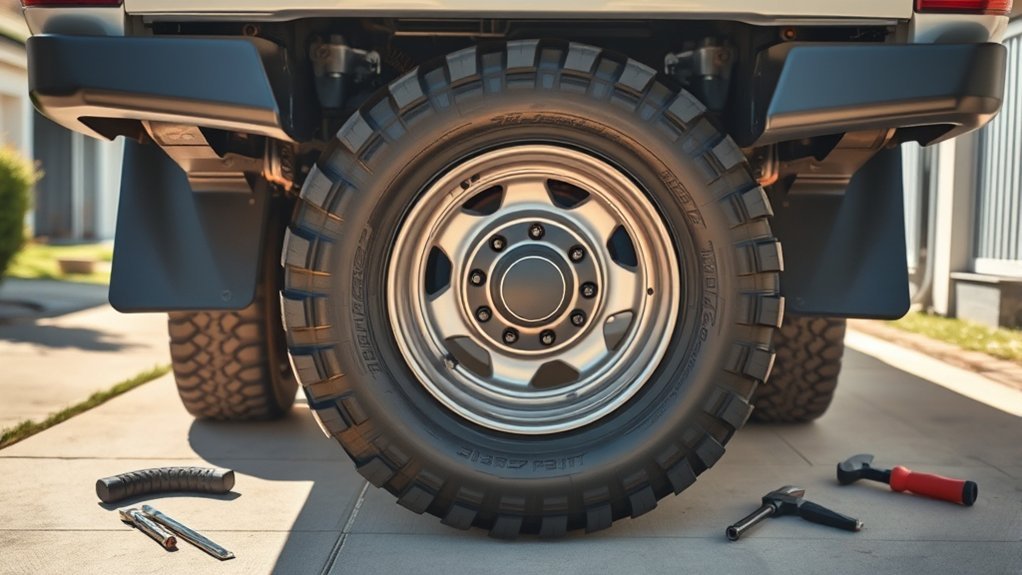
The spare tire hanger has to lift the wheel tight against the carrier without crushing, tilting, or rubbing. If the spare hangs at an angle, moves when pushed, or will not raise fully, it is not secure enough for regular driving.
Use this simple test:
- Lower the spare and inspect the cable, chain, hook, plate, and lift mechanism for rust or bending.
- Measure the tire’s overall diameter and width.
- Raise the spare slowly while watching for contact with the exhaust, frame, tow bar, bumper, and brackets.
- Stop if the tire binds, tilts, or presses hard into another part.
- Once raised, push the tire by hand. It should not swing, rattle, or sit crooked.
Warning: Do not cut, grind, or bend a structural spare tire carrier part just to force a larger tire into place. A weak carrier can drop the spare while driving. Use a proper relocation kit, matching spare size, or qualified fabricator if clearance is tight.
How to Identify Spare Tire Incompatibility
You can often spot a bad spare fit before you get stranded. Work through the checks below in order, because each one rules out a different problem.
- Read the tire placard: Confirm the original tire size and inflation pressure listed for your Hilux.
- Compare sidewalls: Match the spare’s size, load index, and speed rating against your installed tires.
- Check the wheel specs: Confirm bolt pattern, center bore, rim width, and offset.
- Test brake clearance: Make sure the spare wheel clears the brake caliper on the axle where you may need to install it.
- Test carrier clearance: Raise the spare into the carrier and check for rubbing, tilt, or movement.
- Check pressure: Inflate the spare to the pressure specified for your vehicle or spare type.
- Inspect tread depth: Avoid using a spare with much less tread than the other tires, especially on 4WD models.
If the spare fails any of these checks, do not treat it as a normal replacement tire. Use it only for emergency movement if it can be mounted safely, then repair or replace the correct tire as soon as possible.
Essential Modifications for Better Spare Tire Fit
The best fix is usually the least invasive one. Start with a matching spare tire and wheel before modifying the carrier. If the spare is only slightly too large for the carrier, you may have safe options, but each one needs careful inspection.
- Use a matching spare: The cleanest fix is a spare that matches your installed tire size and wheel specs.
- Reposition accessories: Check whether an aftermarket hitch, bumper, exhaust, or tank is blocking the spare location.
- Use a proper relocation kit: If the underbody location cannot hold the tire, a bed mount or rear carrier may be safer than cutting the stock carrier.
- Repair worn carrier parts: Replace a bent plate, damaged cable, or rusty hanger before carrying a heavy spare.
- Get structural changes inspected: Any cutting, welding, or bracket change should be handled by a qualified professional.
Pro Tip: Test-fit the spare in two places: under the truck and on the hub. A spare that fits the carrier but not the hub will not help during a roadside tire change.
[Products Worth Considering]

This 1/2-inch drive breaker bar delivers powerful leverage for loosening and tightening stubborn lug nuts and automotive fasteners. The 180-degree flex head helps you reach tight spaces at the angle you need, making tire and brake jobs easier. A spring-loaded ball detent design holds 1/2-inch sockets securely while the chrome-moly head provides durable strength for everyday use.

The Dr.Roc spare tire tool kit helps you release, lower, or raise your spare tire with reliable extension tools and a lug nut wrench. It is made from rustproof automotive-grade steel and includes an organized carry case for convenient storage. Designed for compatibility with select GM models from the late 1990s through 2019, it uses upgraded extension components to install and remove spare tires with less hassle.

Mount your spare tire directly to the inside wall of an enclosed trailer or garage to save space and keep your tire secure. This wall-mount spare tire carrier is designed for universal trailer tire fit and includes a fixed plate and chute for convenient screw replacement. Nylon insert hex lock nuts help prevent the tire from falling off, and wing hardware enables faster load and unload during maintenance.
The Importance of Matching Tires for Safety
A spare tire is not just a backup. It affects braking, steering, stability, traction control, and drivetrain load. The closer your spare matches the installed tires, the safer and more predictable your Hilux will feel after a tire change.
Tire Size Compatibility
Try to match the overall rolling diameter of your spare to the tires on the truck. A small emergency difference may get you to a repair shop, but a large difference can affect handling and may stress drivetrain components on 4WD models.
Pay attention to these details:
- Overall diameter: A taller or shorter spare changes wheel speed.
- Width: A wider spare may rub the frame, suspension, or carrier.
- Load index: The spare must be strong enough for the vehicle and cargo.
- Pressure: Underinflation can cause heat buildup and poor handling. Tire-pressure monitoring systems are designed to warn about significant underinflation on many vehicles under applicable standards such as FMVSS 138.
Performance Impact Considerations
A mismatched spare can make the truck pull to one side, reduce grip, trigger traction or stability warnings, or create extra drivetrain load. This risk rises when the spare is installed on a driven axle or used at higher speeds for longer distances.
If your Hilux has part-time 4WD, avoid using 4WD on high-traction pavement with mismatched tires. If you must use the spare off-road, drive slowly, avoid sharp steering inputs, and replace it with a matching tire as soon as possible.
What the Community Says About Spare Tire Matching
Hilux owner forums and local 4×4 groups can help you learn what has worked on similar builds. That said, community advice should be a starting point, not the final answer. A setup that fits one Hilux may not fit yours because of year, trim, tow bar, bumper, exhaust routing, suspension, wheel offset, or tire brand.
Use community feedback carefully:
- Match the exact model: Compare year, cab style, drivetrain, tray or bed type, and market.
- Ask for measurements: Overall tire diameter and section width matter more than a size label alone.
- Confirm the carrier type: Underbody carriers and rear swing-out carriers have different limits.
- Verify before travel: Do a full test-fit before a long road trip or off-road route.
Final Steps to Confirm Your Spare Tire Fit
Before you trust the spare, run one final fitment check at home. This takes less time than dealing with an unusable spare on the shoulder of the road.
Verify Wheel Compatibility
Mount the spare wheel on the hub and hand-thread the lug nuts. The wheel should sit flat against the hub without rocking. Do not force a wheel that binds on the center bore or does not line up with the studs.
Confirm these items:
- Correct bolt pattern
- Correct center bore or hub-centric setup
- Safe brake-caliper clearance
- Suitable offset
- Correct lug nut seat style
Check Carrier Fitment
Raise the spare into the carrier and watch how it moves. The tire should lift smoothly, sit flat, and stay tight. If it wedges against the tow bar, exhaust, frame, or bumper, lower it and solve the clearance issue before driving.
Also inspect the carrier cable or chain. A larger spare is heavier, so a rusty or damaged lift mechanism becomes a bigger safety risk.
Measure Tire Dimensions
Measure the spare’s diameter and width with a tape measure. Then compare those numbers to your installed tires and the available space under the truck. Do not rely only on the tire size printed on the sidewall, because two tires with the same label can measure slightly differently once mounted.
Finish by checking air pressure, tread depth, and visible damage. A spare with cracks, bulges, exposed cords, or very old rubber should be replaced before you depend on it.
Frequently Asked Questions
Can a spare tire not fit a Toyota Hilux?
Yes. A spare tire may not fit if the tire is too tall or wide, the wheel has the wrong bolt pattern, center bore, offset, or rim size, or the underbody carrier cannot hold the larger tire securely.
Can I use a 16-inch spare with 18-inch wheels?
Sometimes, but only if the 16-inch wheel clears the brakes and the tire’s overall diameter, load rating, bolt pattern, center bore, and offset match your Hilux closely enough. Rim diameter alone does not decide compatibility.
Is a full-size spare always safe to use?
A full-size spare is safest when it matches the tire size, wheel specs, load rating, pressure, and tread condition of the tires already on the truck. A full-size spare from another model may still be wrong for your Hilux.
Will a larger spare tire damage the carrier?
It can. A larger or heavier spare may strain the carrier cable, chain, plate, or brackets if the tire does not sit flat. If the carrier is rusty, bent, or forced into position, repair it before carrying the spare.
How close should my spare tire size be to my main tires?
For normal use, it should match as closely as possible. For emergency use, a small difference may be acceptable for a short, slow drive to repair, but large rolling-diameter differences can affect handling and drivetrain behavior.
Conclusion
If your Toyota Hilux spare tire does not fit, do not assume the carrier is the only problem. Check the tire size, wheel specs, brake clearance, load rating, pressure, and underbody space first. Many fitment issues come from larger tires, aftermarket wheels, tow bars, bumpers, or carrier wear.
The safest fix is a spare that matches your Hilux setup and sits securely in the carrier. If you need to carry a larger spare, use a proper relocation solution or have the carrier inspected before modifying it. A spare tire only helps when it fits the truck, mounts safely, and can be driven without creating a new risk.
Sources
- NHTSA Tire Safety Brochure — tire pressure, tire safety, and basic tire maintenance guidance
- 49 CFR § 571.110 — tire selection and rim information for motor vehicles
- 49 CFR § 571.138 — tire pressure monitoring system requirements
- Toyota Global: 50 Years of Hilux — Hilux model history and market context