If your Toyota Camry vibrates after a tire rotation, do not assume the rotation “caused” a new failure. Rotation often moves an already uneven, out-of-balance, or cupped tire to a position where you can finally feel it through the steering wheel or seat. Start with tire pressure, lug-nut torque, visible tire wear, and wheel balance, then move to alignment, brakes, suspension, bearings, and road-force balancing if the shake remains.
Quick Answer
A Toyota Camry usually vibrates after tire rotation because a rear tire with imbalance, cupping, uneven wear, a bent wheel, incorrect pressure, or a missing wheel weight has moved to the front. Check tire pressure and lug torque first, then have the wheel assemblies balanced or road-force balanced if the vibration continues.
Key Takeaways
- A new shake after rotation is most often a tire or wheel issue that became noticeable after the tire changed position.
- Check cold tire pressure using the driver-door Tire and Loading Information label, not a generic PSI number.
- Loose or unevenly tightened lug nuts are a safety issue; verify torque with the correct Camry specification for your model year.
- Vibration at highway speed points toward balance, tire wear, road-force variation, or a bent wheel; vibration only while braking points toward rotors or brake hardware.
- If normal balancing does not fix the shake, road-force balancing can reveal tire stiffness variation or wheel/tire runout.
At a Glance
| Time Required | 10–20 minutes for basic driveway checks; longer if a shop performs balancing, alignment, brake inspection, or road-force testing. |
| Difficulty | Beginner for tire pressure and visual checks; professional for wheel balancing, alignment, brakes, bearings, and suspension diagnosis. |
| Tools Needed | Tire pressure gauge, flashlight, tread-depth gauge or penny, torque wrench, owner’s manual or Toyota digital manual, and service paperwork. |
| Cost | DIY checks are usually free if you own the tools. Shop costs vary by location and whether you need balancing, road-force balancing, alignment, tires, brakes, or suspension parts. |
Warning: If the vibration is severe, the steering wheel shakes violently, you hear clunking, or you suspect a loose wheel, stop driving as soon as it is safe. Have the lug nuts, wheel seating, tire condition, and suspension inspected before highway driving.
Why Your Camry Vibrates After Rotation
If your Toyota Camry starts vibrating after a tire rotation, the most common reason is that a tire or wheel problem moved to a more noticeable position. A rear wheel can be slightly out of balance without bothering you much, then shake the steering wheel once it moves to the front axle.
Rotation can also reveal cupping, feathered tread, a bent wheel, uneven inflation, or a tire with internal variation. The tire did not always become defective during the service; it may simply be easier to feel now. That is why the first checks should be simple: cold tire pressure, lug-nut torque, wheel weights, tire condition, and whether the vibration changes with speed.
Toyota says the recommended cold tire inflation pressure is shown on the Tire and Loading Information label, so use the label on your Camry rather than a generic number. Toyota also lists a 76 ft-lbf wheel-nut torque specification for the 2025 Camry after tire replacement, but you should confirm the specification for your exact model year, trim, wheels, and manual before tightening anything.
Note: Tire pressure should be checked when the tires are cold. Toyota’s tire-pressure guidance says to use a gauge and follow the vehicle’s tire/loading label, and NHTSA recommends checking tire pressure at least monthly.
Start With a Safe Basic Check
Before paying for deeper diagnosis, do a quick inspection. These checks catch many problems that appear immediately after a tire rotation.
| Check | What to Look For | Why It Matters |
|---|---|---|
| Cold tire pressure | Compare each tire to the door placard, not the sidewall maximum. | Uneven pressure can create pull, harshness, and uneven contact with the road. |
| Lug-nut torque | Use a torque wrench and your exact Camry spec. | Loose, over-tightened, or unevenly tightened lug nuts can cause vibration and safety risks. |
| Wheel weights | Look for missing clip-on weights or clean marks where adhesive weights fell off. | A missing weight can create a new highway-speed shake. |
| Tread pattern | Check for cupping, scalloping, feathering, bulges, or low spots. | Uneven wear can vibrate once the tire moves to a new position. |
| Rotation direction | Confirm directional tires still rotate in the arrow direction. | Incorrect placement can cause noise, poor wet grip, and abnormal feel. |
Pro Tip: If the vibration started immediately after a shop rotated the tires, return to that shop first. Ask them to verify pressure, torque, tire direction, wheel seating, and balance before you authorize unrelated repairs.
Read the Vibration by Speed and Feel
The way the Camry shakes can point you toward the right system. A short road test on a safe road can help, but do not continue driving if the shake feels severe.
| Symptom | Most Likely Area | Next Step |
|---|---|---|
| Steering wheel shakes at 50–70 mph | Front tire/wheel balance, bent wheel, road-force variation, cupping | Rebalance front assemblies and inspect tread/wheel runout. |
| Seat or floor vibration | Rear tire/wheel issue or rear tire wear | Inspect rear tires and balance all four wheels. |
| Shake only while braking | Brake rotor thickness variation, runout, pad deposits, caliper issue | Inspect brakes and measure rotor runout/thickness variation. |
| Rhythmic hum or thump after rotation | Cupped or uneven tire wear | Check tread by hand and inspect alignment/suspension. |
| Vibration mainly during acceleration | Tire/wheel issue, axle/CV joint, engine/transmission mount, drivetrain concern | Start with tires, then have drivetrain components checked if tire service does not help. |
Check Wheel Balance First
Wheel balance should be near the top of the list because rotation often moves the most sensitive tire/wheel assembly to the front. A small imbalance, a missing adhesive weight, or uneven tire wear can create steering-wheel vibration at highway speed.
[Products Worth Considering]

Steelman white tire marking crayons provide high-contrast, semi-permanent marks for repairing and inspecting tires and equipment. They write on wet or dry, smooth or coarse surfaces including rubber, metal, glass, and wood, making them ideal for puncture location and damage outlining. The lead- and zinc-free crayons resist weather and fading yet wipe away when you no longer need the marks.

The VEHLIVE SU-50448 II TPMS relearn tool provides a fast activation reset to restore accurate tire pressure monitoring after sensor replacement or tire rotation. It supports 315 MHz and 433 MHz GM series sensors and helps clear dashboard pressure warnings. With simple two-button operation and horn-confirmed relearning order, you can reprogram sensors conveniently at home.

Upgrade your wheels with MIKKUPPA M12x1.5 mag seat lug nuts built for secure, corrosion-resistant performance. These closed-end chrome lug nuts are a direct replacement for select Toyota models, including Camry, Corolla, RAV4, Sienna, Avalon, Highlander, Matrix, Venza, and Prius. Triple-chromium plating and cold-forged, heat-treated steel help deliver strength for daily driving and replacement needs.
Wheel Balance Check
| Symptom | Likely Cause | Action |
|---|---|---|
| Wheel shake | Imbalance | Test each wheel |
| Highway vibration | Missing wheel weight | Rebalance assembly |
| Mild pull | Uneven tire pressure or alignment issue | Check pressure, then inspect alignment |
| Repeat shake after balancing | Runout, tire defect, bent wheel, or road-force variation | Request road-force balancing |
| Smooth ride after balance | Balance issue corrected | Monitor pressure and tread wear |
Ask the shop to balance all four wheels, not only the front pair, especially if the vibration can be felt through the seat. Also ask whether any wheel was difficult to balance or required a large amount of weight; that can indicate a tire or wheel that needs closer inspection.
Road Force Balancing
If standard balancing looks correct but the Camry still shakes, road-force balancing is the next tire-focused test. A road-force balancer applies a load roller against the tire while it spins, which helps identify stiffness variation, high spots, low spots, wheel runout, or a tire/wheel combination that behaves badly under vehicle load.
This matters because a tire can be “balanced” on a normal spin balancer and still create vibration on the road. Road-force testing can also tell the technician whether rotating the tire on the wheel, moving a tire to a different position, replacing a tire, or repairing/replacing a wheel is the better fix.
A wheel assembly can pass a normal balance test and still vibrate under load. That is when road-force balancing becomes useful.
Look for Tire Wear and Cupping
Inspect your tires for cupping signs such as scalloped tread blocks, feathered edges, or wavy high and low spots around the tread. Uneven tread wear can become louder and rougher after rotation because the tire is now rolling in a different position and may be carrying different forces.
Tire Cupping Signs
Tire cupping usually feels like a series of dips and rises in the tread. Run your palm lightly over the tread surface while the car is parked safely and the wheels are cool. If one direction feels sharp or rough, or if the tread looks like small scoops have been carved out, the tire may be cupped.
Cupping can come from imbalance, weak shocks/struts, worn suspension parts, poor alignment, or chronic underinflation. Once the pattern is established, rotation alone usually will not erase the vibration. The root cause needs to be corrected, and the tire may need replacement if the wear is severe.
Uneven Tread Wear
Uneven tread wear can show as feathering on one edge, one-sided shoulder wear, center wear, or low spots across the tread. Each pattern tells a different story. One-sided wear often points toward alignment. Center wear can suggest overinflation. Shoulder wear can suggest underinflation or aggressive cornering. Patchy wear can point to balance or suspension issues.
Follow your Camry’s maintenance guide for rotation intervals. NHTSA recommends checking the owner’s manual and notes that tires may be rotated every 5,000 to 8,000 miles if recommended by the manufacturer, or sooner if uneven wear appears.
Rear Tire Noise
If the rear of your Camry gets louder after tire rotation, check the rear tires for cupping or uneven wear. Cupped tires can create a rhythmic hum, growl, or thump that changes with speed. Compare both rear tires and look for one tire that sounds or feels different from the other.
- Verify rear tire pressure using the door placard.
- Check for missing wheel weights.
- Compare the tread blocks on both rear tires.
- Have the rear suspension and alignment checked if cupping is present.
If cupping is severe, balancing may reduce some vibration but may not make the tire quiet again. A shop can help decide whether the tire is still usable or should be replaced.
See If Alignment Is Causing Steering Shake
Alignment does not usually create a pure wheel-balance-style vibration by itself, but it can create uneven tire wear that later turns into vibration. It can also cause pulling, off-center steering, feathered tread, and faster tire wear after rotation.
Have the alignment checked if the Camry pulls to one side, the steering wheel is off-center, the tires show feathered or one-sided wear, or the vibration started after hitting a pothole or curb. A proper alignment check should include toe, camber, and caster readings, and you should ask for a before-and-after printout.
Note: If the car drove smoothly before rotation but now shakes at highway speed, balance and tire condition are still more likely than alignment. Alignment becomes more likely when you also see pull, uneven wear, or a crooked steering wheel.
Rule Out Brake Rotor Vibration
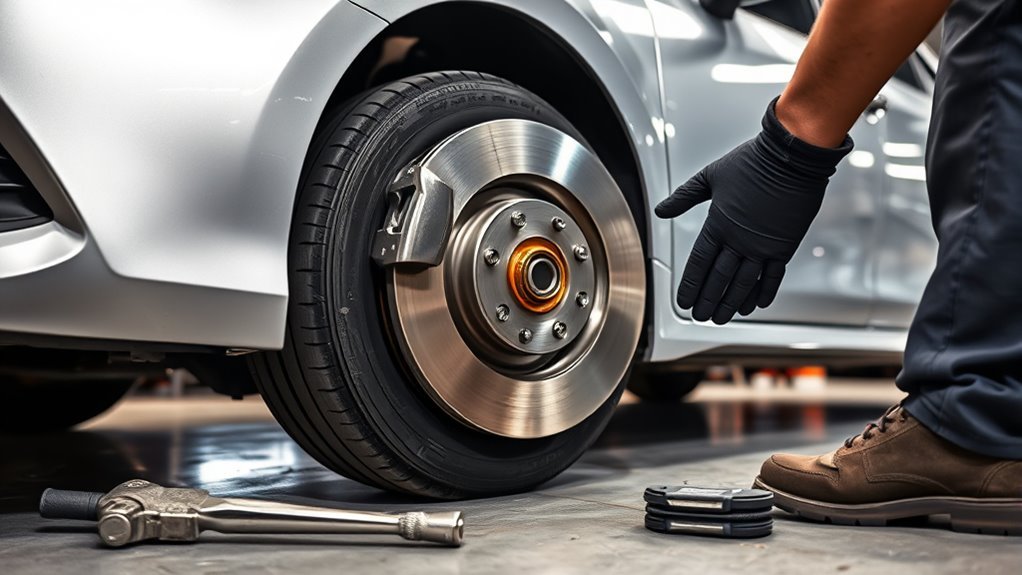
When the vibration shows up mainly while braking, rule out the tires first only if the shake began right after rotation. If the steering wheel pulses or the brake pedal throbs only as you slow down, the likely issue is brake-related rather than a simple tire balance problem.
A brake inspection should look for uneven pad wear, heat spots, rust ridges, grooves, caliper sticking, rotor runout, and rotor thickness variation. A visual check can find obvious damage, but measuring runout and thickness variation requires the right tools.
- Feel whether the shake appears only during braking.
- Note whether it gets worse from highway speed or downhill braking.
- Inspect front and rear brake pads for uneven wear.
- Have rotor runout and thickness variation measured if the symptom is braking-only.
If the rotors or pads are the source, tire balancing will not fix the problem. Repairing the brake issue restores smooth braking and prevents the shake from being misdiagnosed as a tire problem.
Inspect Suspension and Wheel Bearings
Next, inspect the suspension and wheel bearings, especially if the vibration is paired with clunks, wandering, uneven tire wear, humming, grinding, or looseness. Worn control-arm bushings, ball joints, tie-rod ends, struts, or wheel bearings can amplify vibration after a tire with uneven wear moves to a new position.
| Checkpoint | Diagnostic Action |
|---|---|
| Control arms | Verify straightness and mounting integrity |
| Bushings | Inspect for cracks, separation, or excess movement |
| Tie rods and ball joints | Check for looseness, torn boots, and play |
| Wheel bearings | Check for play, humming, grinding, or roughness |
| Tires | Match abnormal wear patterns to the worn component |
Do not crawl under a vehicle supported only by a jack. If you need the car lifted to check play at the wheel, use proper jack stands on the correct lift points or let a qualified shop inspect it.
Check for Bent Wheels, Tire Defects, and Mounting Issues
A bent rim or tire defect can become obvious after rotation. Look for a wheel that wobbles on the balancer, a tire with a bulge, a tread separation, a sidewall bubble, or a bead that is not seated evenly. Also check for dirt, rust, or debris trapped between the wheel and hub, because an uneven mounting surface can mimic wheel runout.
Directional and asymmetric tires need special attention. Directional tires must keep rolling in the arrow direction molded on the sidewall. Asymmetric tires usually have “outside” and “inside” markings. If a rotation placed a tire incorrectly, the car may become noisier, less stable, or rougher than before.
[Products Worth Considering]

Replace worn wheelchair rear tires with a universal 24x1 no-flat polyurethane foam option designed to mount tightly on 24-inch rims without the tire falling off. Installation is made easier with included tools and multiple methods, including using a pry bar or softening the tire in hot water to reduce resistance. The package includes two tires plus tie ropes for convenient fitting and handling.

The Trivd Frol 1/2" air impact wrench delivers high performance torque up to 1500 ft-lbs with a twin hammer impact mechanism for strong, balanced blows. It features an ergonomic grip, compact lightweight design, and quick-stop control with 3 forward speeds up to 8000 RPM plus a reverse speed. Built for demanding automotive repair and tire shop work, the rear exhaust helps keep debris away from the surface.

Replace or upgrade your zero-turn lawn mower tires with a universal fit flat-free tire and wheel assembly in a convenient 2-pack. Smooth tread front-caster style helps turning with reduced turf damage, while flat-free design eliminates the maintenance and downtime of air-filled flats. The included adapter kit supports 5/8-inch axles and hub lengths from 3.4 to 5 inches for compatibility across most ZTR mowers.
Try Road Force Balancing When Standard Balancing Fails
If pressure, torque, wear, brakes, suspension, and normal balancing do not explain the shake, request road-force balancing. This test is most helpful when the vibration is speed-related, repeatable, and still present after a standard balance.
- It can detect tire stiffness variation that basic balancing may miss.
- It can flag wheel or tire runout under load.
- It can help match-mount the tire to the wheel for a smoother assembly.
- It can identify when a tire or wheel should be replaced instead of rebalanced again.
Not every shop has this equipment, so ask before scheduling. If the first shop says the wheels are balanced but the Camry still shakes, a second shop with road-force equipment may save time.
[Products Worth Considering]

Malco tire mounting and demounting lubricant is a ready-to-use tire lube formulated to reduce friction during tire installation for passenger cars, light trucks, farm tires, and heavy-duty equipment. It provides rust-inhibiting protection to help reduce corrosion on rims and wheels, and helps support proper tire bead seating during inflation to reduce air leakage. The silicone-free, soap-free formula is whitewall safe to help prevent discoloration on whitewall tires and sensitive sidewall markings.

Monitor tire tread wear with a smart, color-coded depth gauge that shows clear condition ranges at a glance. The bar is range marked for fast, easy readings, helping you maintain safer traction and performance. Each gauge is portable with a pocket clip, and the set includes 20 units for daily use and sharing.

This universal wheel alignment tool helps you accurately restore tire tilt angles after tire or suspension repairs using an adjustable camber gauge. It features a powerful magnetic base that firmly attaches to brake rotors for stationary, slip-free readings, improving consistency during measurement. Built from durable PC plastic, it resists wear and corrosion and is compact enough for car, truck, RV, and motorcycle alignment tasks.
Fix the Vibration Before It Comes Back
To keep a Toyota Camry vibration from returning after tire rotation, fix the cause instead of only moving the tires again. A good post-rotation routine checks pressure, torque, balance, tread condition, and alignment symptoms before the tires build a new wear pattern.
| Diagnostic Step | Action |
|---|---|
| Tire pressure | Set all tires to the cold pressure on the driver-door placard |
| Wheel torque | Use a torque wrench and your exact Camry specification |
| Wheel balance | Rebalance any assembly that shakes or lost a wheel weight |
| Tire inspection | Look for cupping, bulges, separations, uneven wear, or belt shift symptoms |
| Alignment | Check alignment when there is pull, off-center steering, impact damage, or abnormal wear |
If the vibration began after a tire shop service, document the speed range, where you feel it, and whether it changes while braking. That information helps the technician avoid guessing and focus on the right wheel position or system.
Frequently Asked Questions
Why does my Toyota Camry vibrate after tire rotation?
The most likely cause is that an imbalanced, cupped, unevenly worn, bent, or internally uneven tire/wheel assembly moved to a position where you can feel it more clearly. Start with cold tire pressure, lug torque, wheel weights, and tire wear, then rebalance the wheels if the shake remains.
Can tire rotation cause vibration?
Rotation usually reveals a problem rather than creating one. A tire that felt acceptable on the rear may shake the steering wheel once moved to the front. However, service mistakes such as incorrect pressure, loose lug nuts, missing wheel weights, or incorrect directional tire placement can also create a new vibration.
Should I balance my Camry tires after rotation?
You do not always need balancing at every rotation, but you should balance the wheel assemblies if vibration appears, a wheel weight is missing, new tires were installed, a tire was repaired, or the shop finds uneven wear. If normal balancing fails, ask about road-force balancing.
What tire pressure should I use after rotating Camry tires?
Use the cold tire pressure on the Tire and Loading Information label on your Camry, usually found on the driver-side door jamb. Do not use the maximum pressure molded into the tire sidewall as your target. Check pressure with a gauge when the tires are cold.
What is the Toyota shudder recall?
Many owners use “Toyota shudder recall” to describe Camry torque-converter shudder campaigns or technical service bulletins, especially for certain older Camry vehicles. That is different from a tire-rotation vibration. If your Camry shudders under light throttle around city or midrange speeds, check your VIN through Toyota’s recall lookup and ask a Toyota dealer whether any safety recall, service campaign, warranty enhancement, or bulletin applies.
Conclusion
If your Camry starts shaking after a tire rotation, work through the simple checks first: cold tire pressure, correct lug torque, missing wheel weights, tire wear, and wheel balance. If the shake shows up at highway speed, focus on tire/wheel balance, cupping, bent wheels, and road-force variation. If it happens only while braking, inspect the brakes. If you also hear noise or feel looseness, check suspension and wheel bearings. A clear diagnostic order prevents guesswork and gets the Camry back to a smooth, stable ride.
Sources
- Toyota Owners — 2025 Camry Tire Inflation Pressure — supports cold tire-pressure and tire/loading label guidance.
- Toyota Owners — 2025 Camry Flat Tire / Wheel Nut Torque — supports wheel-nut torque and wheel-installation cautions for the 2025 Camry.
- NHTSA TireWise — supports tire safety, tire maintenance, tread, pressure, and recall awareness.
- Michelin — Symptom: Vibration — supports tire imbalance, suspension checks, and vibration troubleshooting.
- Hunter Engineering — Road Force Wheel Balancer — supports road-force balancing and diagnostic load-roller testing.
- Toyota Recall Lookup — supports VIN-specific safety recall and service campaign checking.