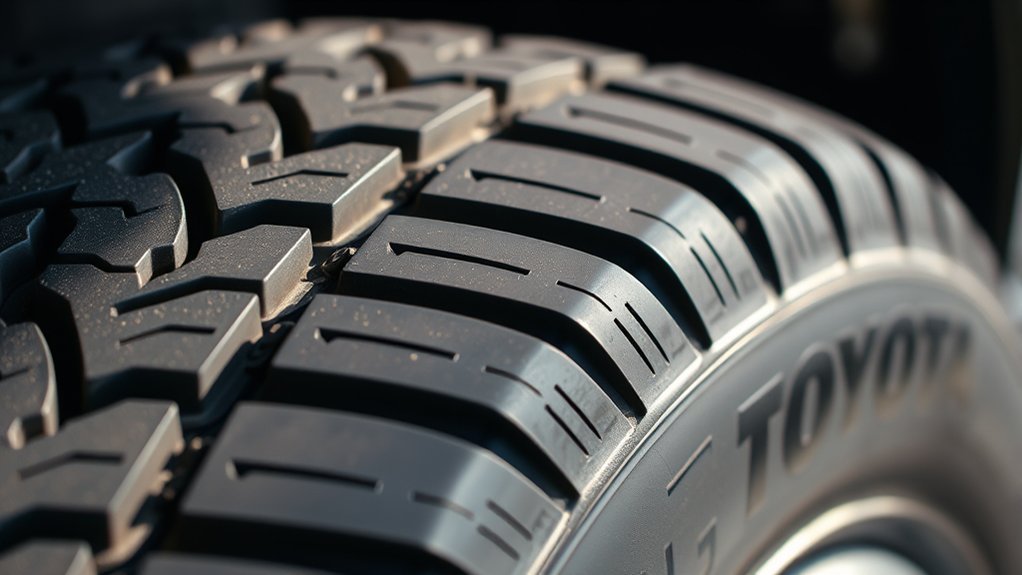
Understanding treadwear ratings can help you choose better tires for your Toyota Hilux, but the number is only one part of the decision. A higher treadwear grade usually points to longer wear in controlled testing, while your real tire life depends on tire type, load, pressure, alignment, terrain, driving style, and whether the tire even uses the UTQG system.
Quick Answer
For a Hilux used mostly on paved roads, a treadwear rating around 500 or higher is a useful starting point when the tire also matches the correct size, load rating, speed rating, and traction needs. For off-road, towing, or heavy-load use, do not shop by treadwear alone; prioritize the right tire construction and load capacity.
Key Takeaways
- A treadwear number is a comparative durability grade, not a guaranteed mileage promise.
- UTQG ratings apply where present and are mainly a U.S. passenger-tire grading system; some Hilux tires may not display them.
- For Hilux tire shopping, check treadwear, traction, temperature, size, load index, speed rating, and tire type together.
- For towing, payload, gravel, mud, or rough terrain, load rating and tread design matter more than chasing the highest treadwear number.
- Replace tires based on tread depth, age, damage, uneven wear, and performance—not only the number printed on the sidewall.
At a Glance
| Time Required | 5–10 minutes to read the sidewall and inspect basic tire condition |
| Difficulty | Easy for basic checks; ask a tire professional for unusual wear, towing upgrades, or off-road fitment changes |
| Tools Needed | Flashlight, tire pressure gauge, tread depth gauge or coin, and your Hilux owner’s manual or tire placard |
| Cost | Usually $0 if you already have a gauge; basic pressure and tread gauges are inexpensive |
What Treadwear Ratings Mean for Toyota Hilux Tires
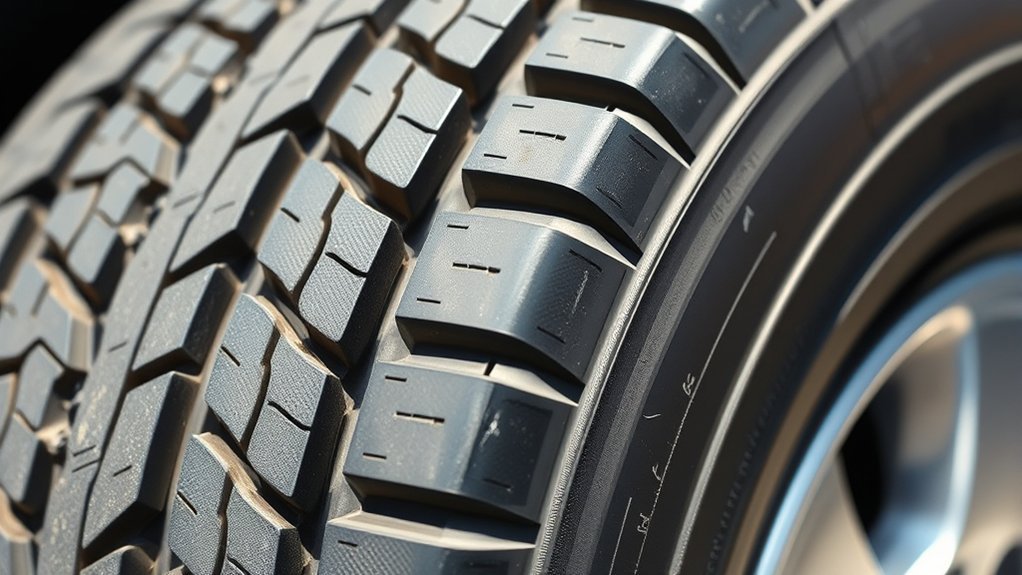
A treadwear rating is a comparative number used in the Uniform Tire Quality Grading system, often shortened to UTQG. In simple terms, the number helps compare how slowly or quickly one tire may wear compared with another tire tested under the same grading system.
For example, a tire marked Treadwear 500 is designed to wear longer in controlled comparison than a tire marked Treadwear 300. That does not mean the 500-rated tire will always last 50,000 miles, and it does not mean it is automatically the best tire for every Hilux.
Note: UTQG is most useful when comparing tires in the same general category. A highway-terrain tire, an all-terrain tire, and a mud-terrain tire may be built for very different jobs, even if their numbers look close.
What UTQG Can and Cannot Tell You
The UTQG label normally includes three parts:
- Treadwear: A number that compares expected wear under the UTQG test procedure.
- Traction: A wet-stopping grade such as AA, A, B, or C under the UTQG test.
- Temperature: A heat-resistance grade such as A, B, or C.
The treadwear number is useful, but it is not a replacement for the tire’s load index, speed rating, tire size, construction type, or manufacturer warranty. Those details are especially important on a Hilux because many owners tow, carry tools, drive on gravel, or run all-terrain tires.
Warning: Never choose a Hilux tire by treadwear rating alone. A high treadwear number is not helpful if the tire has the wrong size, wrong load rating, poor wet traction, or the wrong construction for your driving conditions.
How the UTQG Treadwear Test Works
UTQG treadwear testing is based on controlled comparison, not everyday driving. The federal procedure uses a government test route, course monitoring tires, a break-in period, repeated tire rotations, tread-depth measurements, and a projected wear calculation.
| UTQG Item | What It Means | Hilux Owner Takeaway |
|---|---|---|
| Test route | A controlled road course is used to compare wear. | Real roads, loads, heat, gravel, and driving style can change tire life. |
| Approximate distance | The procedure includes an 800-mile break-in and about 6,400 miles of test driving. | The rating is calculated from test wear, not from your personal mileage. |
| Number format | Treadwear grades are expressed as numerical grades. | Higher usually means longer wear within the same category. |
| Limitations | UTQG does not apply to every tire type. | Some winter, deep-tread, specialty, or non-U.S.-market tires may not show a UTQG grade. |
How to Find the Treadwear Rating on Your Hilux Tires
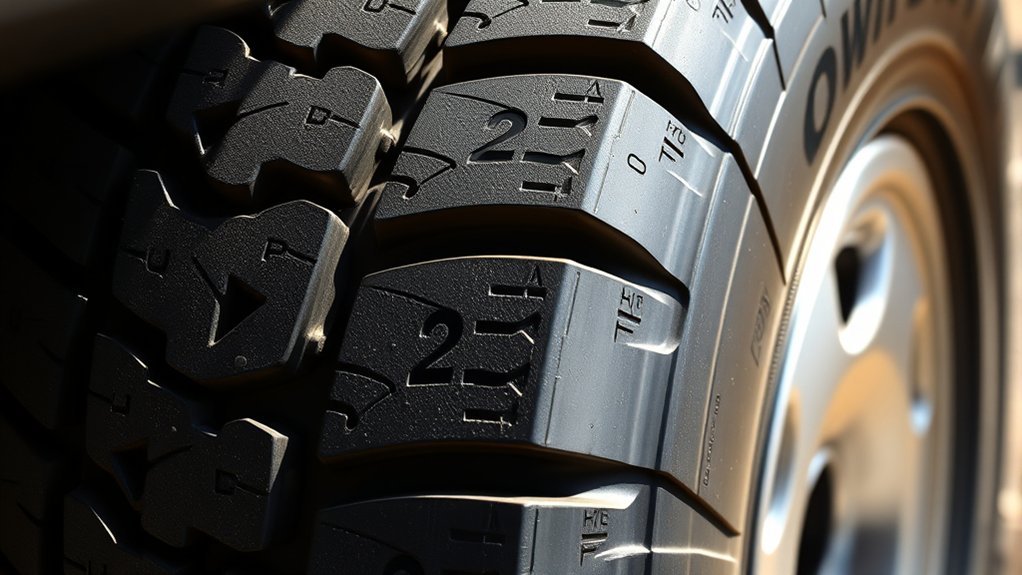
Look on the tire sidewall for a line similar to this:
Treadwear 500 Traction A Temperature A
If you see that line, the treadwear number is the first number after the word Treadwear. If you do not see it, check both sidewalls. Some tire information can be easier to find on one side than the other. If the rating is still missing, the tire may not be covered by UTQG labeling or may be a specialty tire.
Sidewall Details to Check Before Buying
- Tire size: Must match the Hilux placard, owner’s manual, or an approved alternative size.
- Load index: Must support the vehicle, passengers, cargo, accessories, and towing use.
- Speed rating: Must be suitable for the vehicle and driving conditions.
- Treadwear grade: Helps compare expected wear where UTQG applies.
- Traction and temperature grades: Help compare wet braking and heat resistance under UTQG.
- DOT date code or production date: Helps identify tire age.
Pro Tip: Take a clear photo of your Hilux tire sidewall and the tire placard before shopping. It makes it easier to compare size, load index, speed rating, and treadwear without guessing at the counter.
Choosing the Right Treadwear Rating for Your Hilux
The best treadwear rating depends on how you use your Hilux. A higher number often suits highway driving and daily commuting, while off-road tires may use softer compounds or deeper, more aggressive tread blocks that wear faster but grip better on loose surfaces.
| Hilux Use | What to Prioritize | Treadwear Guidance |
|---|---|---|
| Daily commuting | Comfort, wet traction, quiet ride, fuel economy | A higher rating, often around 500+, can be a good starting point. |
| Highway and long-distance travel | Heat resistance, even wear, low noise | Choose a durable highway-terrain tire with strong traction and temperature grades. |
| Towing or heavy payload | Load index, inflation pressure, heat control, sidewall strength | Do not chase treadwear first; choose the correct load-capable tire. |
| Gravel, farm, worksite, and mixed roads | Cut resistance, tread strength, puncture resistance | A moderate rating may be acceptable if the tire is built for rough surfaces. |
| Mud, rocks, and frequent off-road use | Tread pattern, sidewall protection, self-cleaning tread | Lower or missing UTQG ratings can be normal; judge the tire by off-road suitability. |
[Products Worth Considering]

Accurately measure tire tread depth with a calibrated gauge marked from 0 to 1 inch in 1/32 inch increments. The color-coded bar helps you quickly identify tread condition ranges, supporting safe driving for trucks, motorcycles, automobiles, and passenger vehicles.

These aluminum alloy tire valve stem caps with an O-ring seal help protect valve stems from corrosion while adding a clean, stylish look to your vehicle. The universal fit works across cars, trucks, motorcycles, bicycles, and more, making them an easy upgrade for everyday driving and off-road use. Installation is quick, and the included four-pack keeps all your tires dressed and protected.

Keep your tires properly inflated with this analog VONDIOR tire pressure gauge, designed for fast, easy readings without batteries. The swiveling, two-axis hose and large glow dial help you measure at any tire angle with instant visibility. Built with a protective rubber shield, it supports durable, low-maintenance use for cars and trucks.
Treadwear Ratings by Tire Type
Different tire types are designed for different compromises. A quiet highway tire may last longer on pavement, while a mud-terrain tire may sacrifice tread life for grip and toughness.
| Tire Type | Best For | Treadwear Expectation |
|---|---|---|
| Highway-terrain | Paved roads, commuting, towing on highways | Often higher than aggressive off-road tires. |
| All-season / touring | Comfort, wet grip, everyday use | Usually a good balance of wear and road manners. |
| All-terrain | Mixed pavement, gravel, light off-road use | May wear faster than highway tires but offers stronger rough-road performance. |
| Mud-terrain | Mud, rocks, loose surfaces, serious off-road driving | Often lower, absent, or less meaningful for everyday mileage comparison. |
| Winter / snow | Cold weather, snow, ice | UTQG may not apply; winter grip is the priority. |
[Products Worth Considering]

Measure tire tread depth quickly and accurately with this LUMITECO dial gauge that reads in 1/32" increments up to 14/32". The color-coded green/yellow/red zones make it easy to judge tire wear and know when replacement is needed. A rugged, compact design with a protective pouch helps keep the gauge ready for use on cars, trucks, motorcycles, and more.

Monitor tire tread wear with a smart, color-coded depth gauge that shows clear condition ranges at a glance. The bar is range marked for fast, easy readings, helping you maintain safer traction and performance. Each gauge is portable with a pocket clip, and the set includes 20 units for daily use and sharing.

The SAFELIFE dial tire tread depth gauge measures tread depth in 1/32 inch increments with clear, easy-to-read 2-inch dial face. Color zones using a traffic light system help you quickly judge whether tread is low, marginal, or ample for safer driving. Built with a durable zinc cast body and a metal detect probe for precise, comfortable use across cars, motorcycles, trucks, and buses.
Key Factors That Impact Tire Longevity for Your Hilux
Treadwear rating matters, but these factors often decide how long your Hilux tires actually last:
- Tire pressure: Underinflation can cause heat buildup, shoulder wear, and poor fuel economy.
- Wheel alignment: Bad alignment can destroy tread quickly, even on a high-rated tire.
- Rotation schedule: Regular rotation helps reduce irregular wear when rotation is recommended for your tire setup.
- Load and towing: Heavy loads add heat and stress. Use the correct load rating and pressure.
- Road surface: Gravel, rocks, potholes, and corrugations can wear or damage tread faster.
- Driving style: Hard braking, fast cornering, and aggressive acceleration shorten tire life.
- Climate: Heat, sunlight, and poor storage can contribute to tire aging.
How to Keep Your Tires in Top Shape
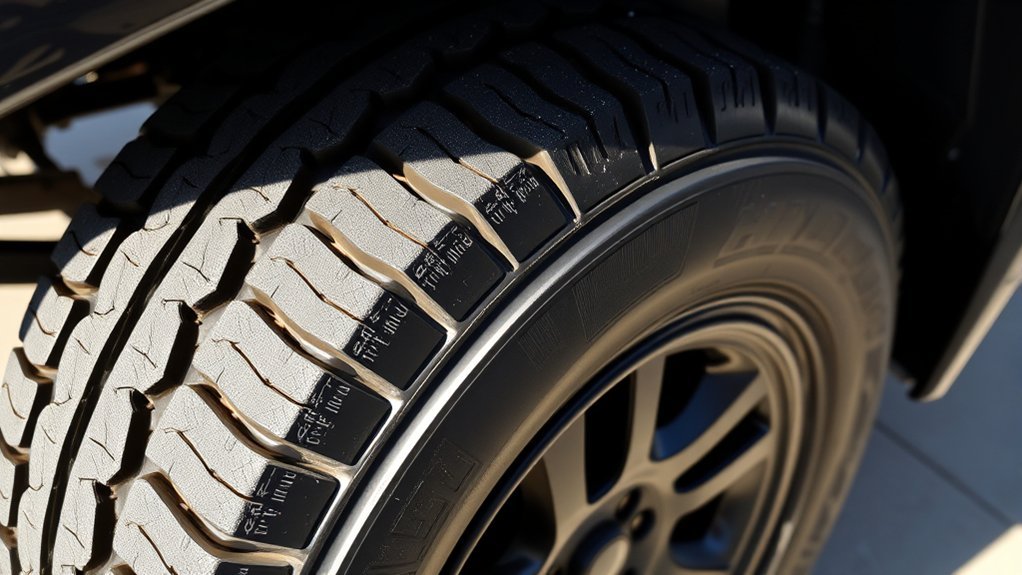
Good maintenance makes any treadwear rating more meaningful. Use this simple routine:
- Check pressure monthly when tires are cold. Use the pressure listed on the Hilux tire placard or in your owner’s manual, not the maximum pressure printed on the tire sidewall. The NHTSA tire safety guide recommends monthly pressure checks, including the spare.
- Inspect tread depth monthly. Replace tires when they reach the legal minimum in your area, and replace earlier if wet traction, off-road grip, or braking feels reduced.
- Rotate tires on schedule. Follow your model-year owner’s manual. If the vehicle manufacturer recommends rotation, NHTSA notes that many vehicles use a 5,000- to 8,000-mile interval.
- Balance and align when needed. Vibration, pulling, feathered tread, or uneven wear can signal a problem.
- Do not overload the vehicle. Payload, accessories, towing tongue weight, and passengers all count.
- Check tire age and damage. Look for cracks, bulges, cuts, exposed cords, repeated pressure loss, or old tires that need professional inspection.
Proper inflation can also help fuel economy. FuelEconomy.gov says keeping tires inflated to the correct pressure can improve gas mileage by 0.6% on average and up to 3% in some cases.
Common Wear Patterns and What They Mean
| Wear Pattern | Possible Cause | What to Do |
|---|---|---|
| Center tread wears faster | Overinflation or too much pressure for the load | Set cold pressure to the placard/manual value and recheck regularly. |
| Both shoulders wear faster | Underinflation or heavy loads | Check pressure, load, and towing setup. |
| One edge wears faster | Alignment problem or worn suspension component | Book an alignment and suspension inspection. |
| Cupping or scalloping | Imbalance, worn shocks, or suspension wear | Have the tire, wheel, and suspension checked. |
| Rapid wear after off-road use | Cuts, chunking, rock damage, or unsuitable tire type | Inspect for damage and consider a tougher all-terrain or mud-terrain tire. |
When to Replace Your Tires Based on Treadwear and Condition
Do not wait for a treadwear rating to “run out.” Replace Hilux tires when any of these conditions apply:
- Tread depth is at the minimum limit. In the U.S., NHTSA says tires are not safe and should be replaced at 2/32 inch. Many other markets use 1.6 mm as a legal minimum, but local rules vary.
- Wet braking or off-road grip feels poor. Replace earlier if you drive in heavy rain, mud, gravel, or steep terrain.
- Treadwear indicators are flush with the tread. This means the tire has reached its wear bars.
- There is damage. Bulges, cracks, exposed cords, deep cuts, puncture problems, or sidewall damage need professional attention.
- The tire is old. Age can matter even when tread looks acceptable. Check the tire date code and follow the tire maker’s and vehicle maker’s guidance.
- Wear is uneven. Uneven wear can reduce traction and may point to pressure, alignment, suspension, or load problems.
Warning: A Hilux used for towing, worksite driving, high-speed highway travel, or remote off-road trips should not run marginal tires. Replace questionable tires before a long trip, not after a problem appears.
[Products Worth Considering]

Milton S-921 pencil tire pressure gauge helps you maintain optimal tire pressure for passenger cars with accurate readings in PSI and kPa. It features a built-in deflator valve for convenient pressure adjustments, plus a single chuck head and nylon indicator bar for easy use on the go. Built from durable plated brass and designed for reliable performance, it’s a practical road trip and cold-weather maintenance tool.
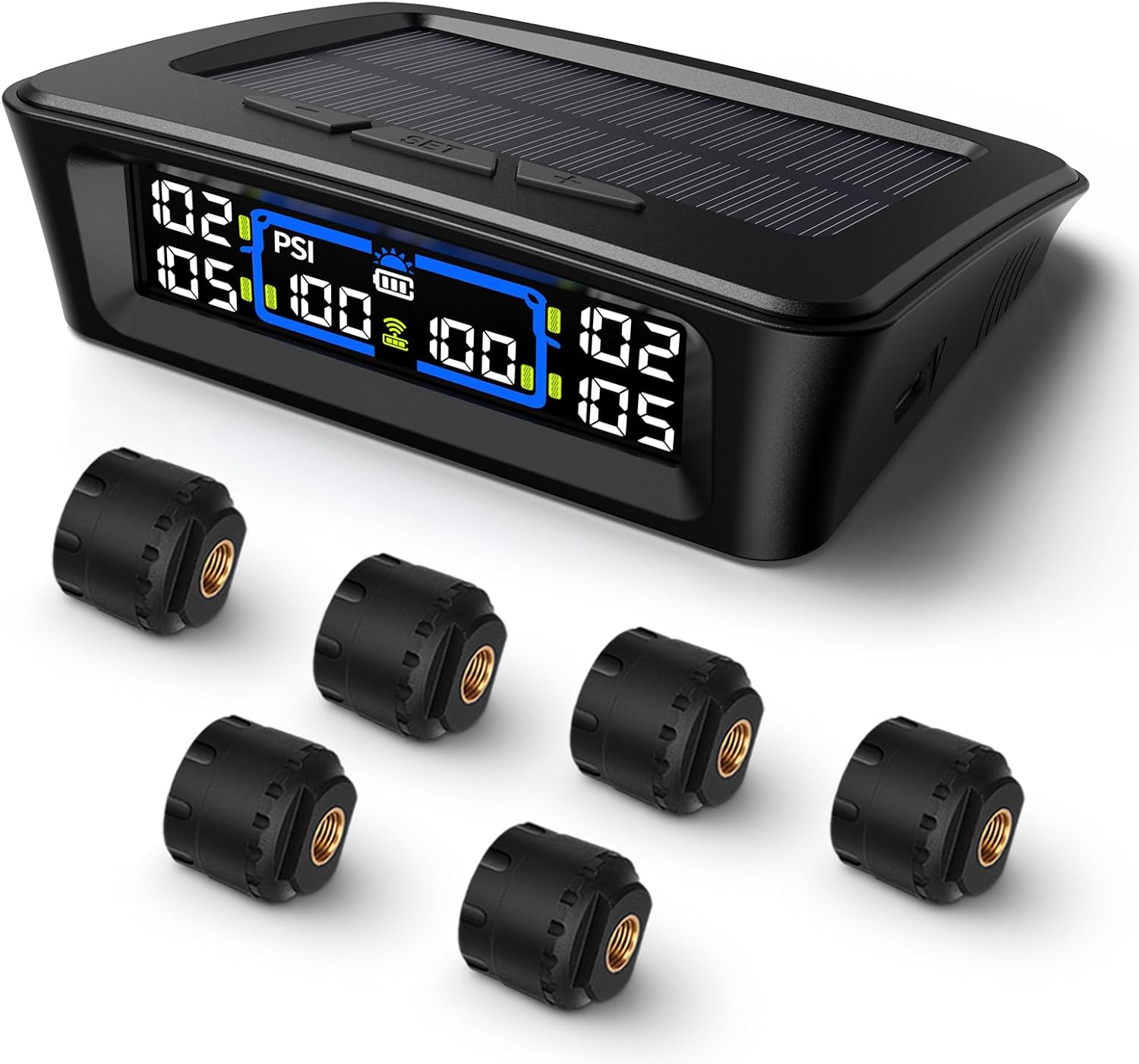
The Tymate TM12 RV TPMS delivers real-time tire pressure and temperature monitoring with a stable 433Hz display for safer long-distance driving. It supports simultaneous monitoring across vehicle and trailer zones, includes six alarm modes for pressure, temperature, leakage, battery, and signal loss, and features easy DIY installation with auto calibration. Power is supplied via USB-C charging or solar recharging, with a wide 0–144 PSI range and up to 50 ft signal coverage for RVs and towable trailers.

The Big Rig Defense Tire Thumper is a truck tire pressure checker that lets you quickly check multiple tires by giving them a firm whack. Listen for a reassuring thump and feel the stick bounce when a tire is fully inflated, helping you get back on the road safely. It features a comfortable, glove-friendly handle and a secure wrist strap for confident use on busy routes.
Frequently Asked Questions
How do you read tire treadwear numbers?
Look for the UTQG line on the tire sidewall, such as “Treadwear 500 Traction A Temperature A.” The treadwear number is a comparative wear grade. A higher number usually means longer expected wear in the same tire category, but it is not a guaranteed mileage figure.
Is a 700 treadwear rating good for a Toyota Hilux?
A 700 treadwear rating is generally a strong durability signal for a road-focused tire, but it is only “good” if the tire also has the correct size, load index, speed rating, traction grade, and construction for your Hilux. For heavy towing or off-road use, a lower-rated tire may still be the better choice.
How many miles is a 500 treadwear rating?
You cannot reliably convert a 500 treadwear rating into a fixed mileage number. It is a comparative rating from controlled testing, not a mileage warranty. Real tire life depends on pressure, load, alignment, road surface, tire type, rotation, climate, and driving style.
What is a 440 treadwear tire?
A 440 treadwear tire has a mid-range comparative wear grade under UTQG. It may offer a balance between grip and durability, depending on the tire model. Do not assume a fixed mileage; check the tire warranty, load rating, traction grade, and reviews for your driving conditions.
Why do some Hilux tires not show a treadwear rating?
Some tires are outside the UTQG labeling system or are sold in markets where that rating is not used. Winter tires, deep-tread tires, some specialty off-road tires, and certain commercial-style fitments may not display a UTQG treadwear number. In that case, compare tire type, load index, construction, warranty, and manufacturer specifications.
Should I choose the highest treadwear rating available?
Not always. The highest treadwear rating may last longer on pavement, but it may not give you the off-road grip, wet braking, ride comfort, or load strength you need. Choose the tire that fits your Hilux use first, then use treadwear to compare similar options.
Conclusion
Treadwear ratings are helpful when comparing Toyota Hilux tires, but they are not the whole story. Use the number as one guide, then confirm the tire’s size, load index, speed rating, traction grade, tire type, and suitability for your roads. For daily paved driving, a higher treadwear grade can be useful. For towing, payload, gravel, mud, or remote travel, strength and fitment matter just as much.
The safest approach is simple: buy tires that match your Hilux and your driving conditions, keep them properly inflated, rotate them as recommended, inspect tread depth regularly, and replace them when wear, age, damage, or performance says it is time.
Sources
- eCFR — 49 CFR § 575.104 Uniform Tire Quality Grading Standards — backs UTQG scope, treadwear grading, traction/temperature grades, and testing procedure.
- NHTSA TireWise: Tire Safety Ratings and Awareness — backs tire pressure, tread depth, rotation, TPMS, aging, and safety guidance.
- FuelEconomy.gov — Gas Mileage Tips: Keeping Your Vehicle in Shape — backs the fuel-economy effect of correct tire inflation.
- Toyota UK Owner’s Manual Page — supports checking the correct model-year Hilux manual for tire size, pressure, rotation, and maintenance guidance.