
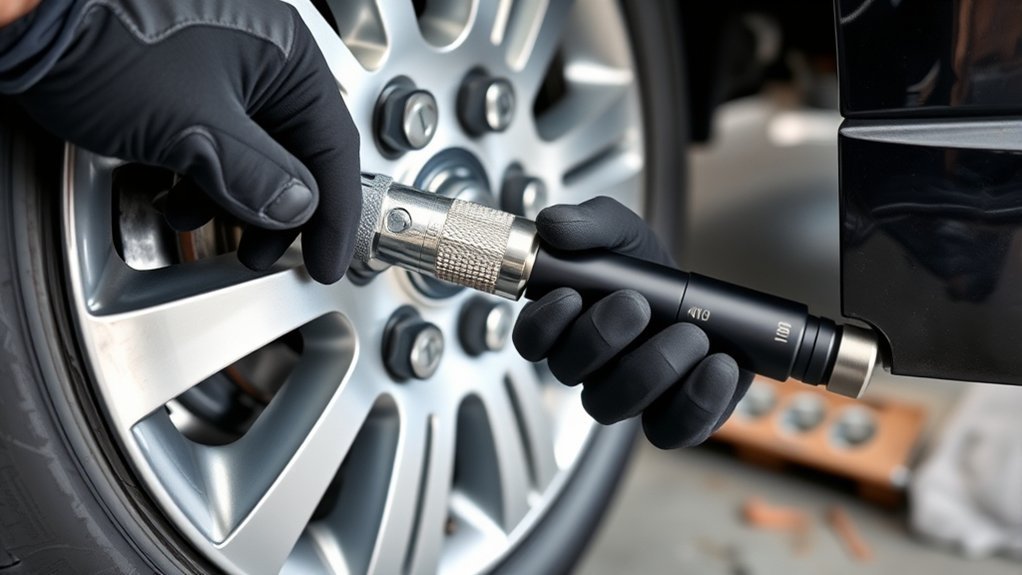
You should tighten tire nuts, more accurately called lug nuts or wheel nuts, to your vehicle’s exact torque specification. Many passenger vehicles fall somewhere around 80–120 ft-lbs, but that range is only a rough guide. The right number depends on the vehicle, wheel, stud size, and hardware. Use a torque wrench, tighten in a star or crisscross pattern, keep the threads clean and dry unless the manufacturer says otherwise, and recheck torque after wheel service.
Quick Answer
Tighten lug nuts to the exact torque spec listed in your owner’s manual or wheel manufacturer’s instructions. Many passenger cars are roughly 80–120 ft-lbs, but do not guess. Hand-start each nut, tighten in a star pattern, finish with a torque wrench, and recheck after 50–100 miles.
Key Takeaways
- Use the vehicle manufacturer’s lug nut torque spec, not a guessed range.
- A torque wrench is the correct tool for final tightening.
- Start every lug nut by hand to avoid cross-threading.
- Tighten in a star or crisscross pattern so the wheel seats evenly.
- Keep threads clean and dry unless your manufacturer specifically says otherwise.
- Re-torque after 50–100 miles after wheel installation, tire rotation, or wheel service.
At a Glance
| Time Required | 10–20 minutes per wheel after the vehicle is safely positioned |
| Difficulty | Beginner to moderate, as long as you use the correct tools and follow safety steps |
| Tools Needed | Owner’s manual, torque wrench, correct socket, breaker bar for loosening only, wheel chocks, jack, jack stands, and wire brush |
| Cost | Usually $0 if you already own the tools; a quality torque wrench commonly costs far less than repairing damaged studs, rotors, or wheels |
What Is Lug Nut Torque?
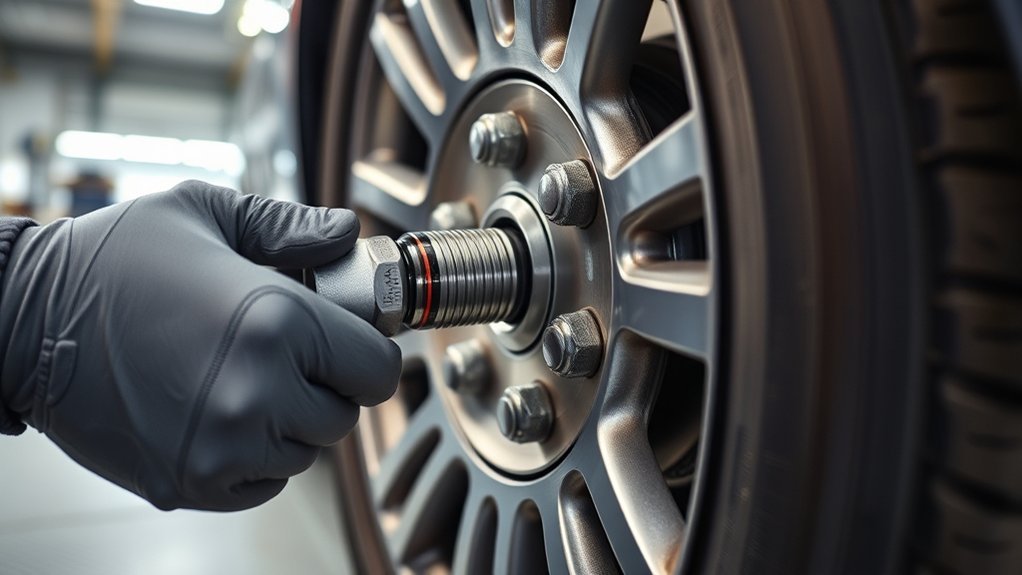
Lug nut torque is the twisting force applied to the wheel fastener. It is usually measured in foot-pounds (ft-lbs) or newton-meters (N·m). The goal is not simply to make the nut “very tight.” The goal is to create the correct clamping force so the wheel stays seated against the hub without stretching studs, damaging threads, or distorting the wheel.
The exact torque value should come from your vehicle owner’s manual, factory service information, or the wheel manufacturer’s instructions if you use aftermarket wheels. Toyota, for example, provides owner’s manuals through its official manuals and warranties page, and other automakers offer similar lookup tools.
Warning: Incorrect lug nut torque can be dangerous. Under-tightened nuts can loosen while driving. Over-tightened nuts can stretch studs, strip threads, warp components, or make emergency wheel removal difficult.
How Tight Should Tire Nuts Be?
Tire nuts should be tightened to the exact torque spec for your vehicle. Many passenger vehicles are roughly in the 80–120 ft-lbs range, but some are lower and some trucks, SUVs, vans, performance cars, and aftermarket wheel setups may be higher or different. Treat any general chart as a backup reference, not the final answer.
Tire Rack’s wheel torque guide explains that wheel-attaching hardware should be tightened to the recommended torque specification for the vehicle make, model, and year, and that those specifications are usually found in the owner’s manual.
- Use the exact ft-lbs or N·m value listed for your vehicle.
- Make sure the socket fully seats on the lug nut or bolt.
- Start each fastener by hand before using tools.
- Use a star or crisscross tightening pattern.
- Use a torque wrench for final tightening.
- Recheck torque after the first 50–100 miles after wheel service.
If you do not know the spec, do not guess. Look it up by year, make, model, trim, and wheel type, or have a tire shop or mechanic check it.
Before You Start: Basic Safety Checks
Before tightening lug nuts, make sure the vehicle is parked on level, solid ground. Set the parking brake, put the transmission in Park or in gear for a manual transmission, and chock the wheels that stay on the ground.
- Never work under a vehicle supported only by a jack.
- Use jack stands if the vehicle must be lifted.
- Do not torque a wheel while it is hanging loose and spinning freely.
- Do not drive normally if you are unsure whether the wheel is torqued correctly.
- Stop if a nut binds, spins without tightening, or appears cross-threaded.
Note: If a wheel was recently removed because of a flat tire, rotation, brake work, seasonal tire change, or new wheel installation, it needs a torque check after installation and again after the first short driving interval.
How to Find Your Torque Spec
The safest way to find your lug nut torque spec is to use the source that matches your exact vehicle and wheel setup. A single universal number does not work for every vehicle.
Check the Owner’s Manual
Your owner’s manual is usually the best first source. Look for sections called “changing a tire,” “wheel installation,” “if you have a flat tire,” “specifications,” or “maintenance.” The spec may be shown in ft-lbs, N·m, or both.
Use Vehicle Details
If you do not have the printed manual, use your year, make, model, trim, and wheel size in an automaker manual lookup or a trusted tire-shop torque tool. Discount Tire’s wheel torque page asks for vehicle details because each vehicle has its own torque requirement.
Confirm Aftermarket Wheel Specs
If you have aftermarket wheels, confirm the wheel manufacturer’s instructions. Aftermarket wheels may use different lug seats, lug nuts, washers, shank lengths, or minimum thread engagement requirements. The correct torque can also depend on whether the vehicle uses wheel studs with lug nuts or wheel bolts that thread into the hub.
Pro Tip: Save the torque spec in your phone or write it on a card in the glove box. That makes tire changes, rotations, and roadside checks faster and safer.
What Tools You Need to Tighten Lug Nuts
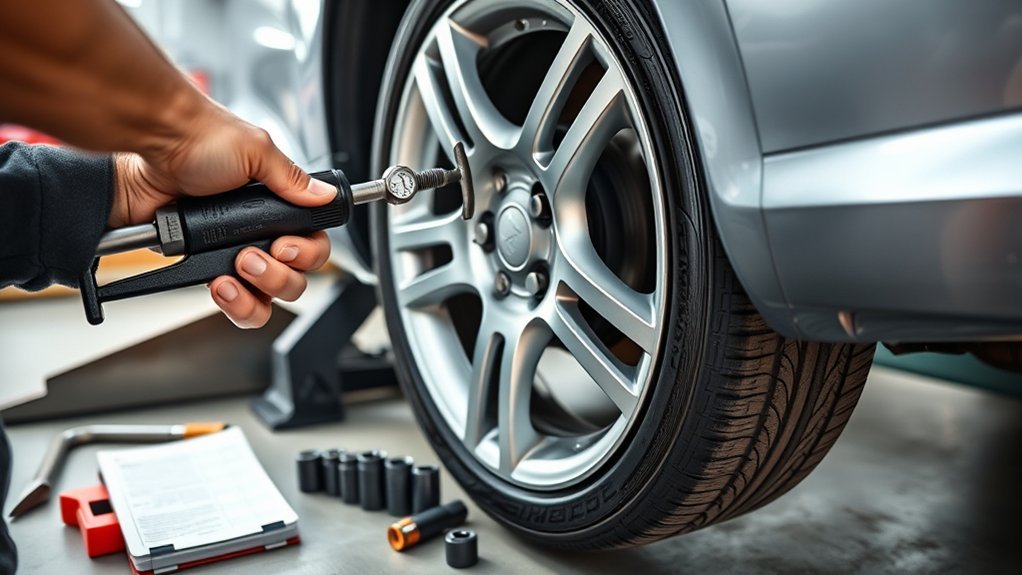
You need the right tools to tighten lug nuts safely. A lug wrench alone can remove or snug nuts, but it cannot measure final torque. For final tightening, use a torque wrench set to the manufacturer’s specified value.
- Torque wrench: Use this for final tightening only.
- Correct socket: It must fully fit the lug nut or bolt without slipping.
- Breaker bar: Use for loosening stubborn nuts, not final tightening.
- Wheel chocks: Keep the vehicle from rolling.
- Jack and jack stands: Use proper lift points and support the vehicle safely.
- Wire brush: Clean rust and debris from the hub face and threads.
- Owner’s manual: Confirms torque value, jack points, and tire-changing instructions.
[Products Worth Considering]

Upgrade your wheels with MIKKUPPA closed-end lug nuts designed for reliable fit and corrosion resistance. The one-piece, cold-forged and heat-treated steel construction helps resist rust and stripping, while the integrated finish delivers a durable black appearance. Built to OEM standards with a conical 60-degree seat, these nuts provide a secure solution for compatible Ford, Honda, Jeep, and Chevrolet models.

These M14x1.5 closed-end chrome lug nuts are a one-piece replacement designed for secure fitment on compatible GM, Ford, and select Chrysler/Dodge models. Featuring a 60-degree conical seat and anti-rust chrome plating, they help resist corrosion and maintain a bright look for everyday driving. Built for long-term durability, they include OEM-style part references and are backed by 12 months of support.

This 1/2-inch drive breaker bar delivers powerful leverage for loosening and tightening stubborn lug nuts and automotive fasteners. The 180-degree flex head helps you reach tight spaces at the angle you need, making tire and brake jobs easier. A spring-loaded ball detent design holds 1/2-inch sockets securely while the chrome-moly head provides durable strength for everyday use.
Why Dry Threads Matter
Most lug nut torque specs are based on clean, dry threads. Oil, grease, anti-seize, dirt, or corrosion changes friction. When friction changes, the same torque wrench setting can create the wrong clamping force.
| Thread Condition | Why It Matters |
|---|---|
| Clean and dry | Best match for most published torque specs |
| Oily or greased | Can create too much clamping force at the same torque setting |
| Dirty or gritty | Can give false resistance and an inaccurate reading |
| Corroded | Can bind, damage threads, or prevent proper seating |
Do not lubricate wheel studs, lug nuts, lug bolts, or lug seats unless your vehicle manufacturer or wheel manufacturer specifically instructs you to do so for that exact application. Tire Rack notes that torque specifications are for dry threads and that lubricating threads or seats can cause inaccurate readings or over-torqueing.
How to Tighten Lug Nuts in a Star Pattern
A star pattern, also called a crisscross pattern, spreads clamping force evenly across the wheel. This helps the wheel seat flat against the hub instead of being pulled tight on one side first.
Star Pattern Basics
Do not tighten around the wheel in a circle. Move across the wheel from one fastener to the opposite or near-opposite fastener. The exact sequence depends on how many lugs the wheel has.
- 4-lug wheel: Tighten top, bottom, left, right, then repeat to final torque.
- 5-lug wheel: Tighten one lug, skip to the farthest non-adjacent lug, and continue in a star shape.
- 6-lug wheel: Tighten opposite pairs in a crisscross sequence.
- 8-lug wheel: Tighten opposite pairs and work around the wheel in a balanced sequence.
Even Pressure Sequence
For best results, tighten in stages. For example, after hand-starting the nuts, snug them lightly in the star pattern, then use the torque wrench in the same pattern until each nut reaches the final spec. Some technicians use a half-torque pass before the final pass, especially on larger wheels.
When the torque wrench clicks or signals, stop pulling. Do not keep pushing “just to be safe.” Extra force can over-torque the hardware.
How to Tighten Lug Nuts Step by Step
Use this process after confirming the correct torque value for your vehicle.
- Park safely. Use level ground, set the parking brake, and chock the wheels.
- Inspect the hardware. Look for damaged studs, swollen lug nuts, cracked seats, corrosion, or mismatched hardware.
- Clean the mounting surfaces. Remove rust, grit, or dirt from the hub face and wheel mounting face.
- Install the wheel squarely. Make sure it sits flush against the hub.
- Start every nut by hand. If a nut will not spin on by hand, stop and inspect the threads.
- Snug the nuts lightly. Use the star pattern so the wheel seats evenly.
- Lower the vehicle enough to prevent spinning. The tire should touch the ground lightly, but the full vehicle weight does not need to be on it yet.
- Set the torque wrench. Use the exact ft-lbs or N·m value from the manual.
- Torque in a star pattern. Pull smoothly until the wrench clicks or signals. Stop at the signal.
- Make a final confirmation pass. Recheck each nut once in the same pattern at the same setting.
- Re-torque later. After 50–100 miles, check again with the wheels cool.
A lug nut is not “tight enough” because it feels tight. It is tight enough when it reaches the correct torque value with the wheel seated properly.
Common Torque Mistakes to Avoid
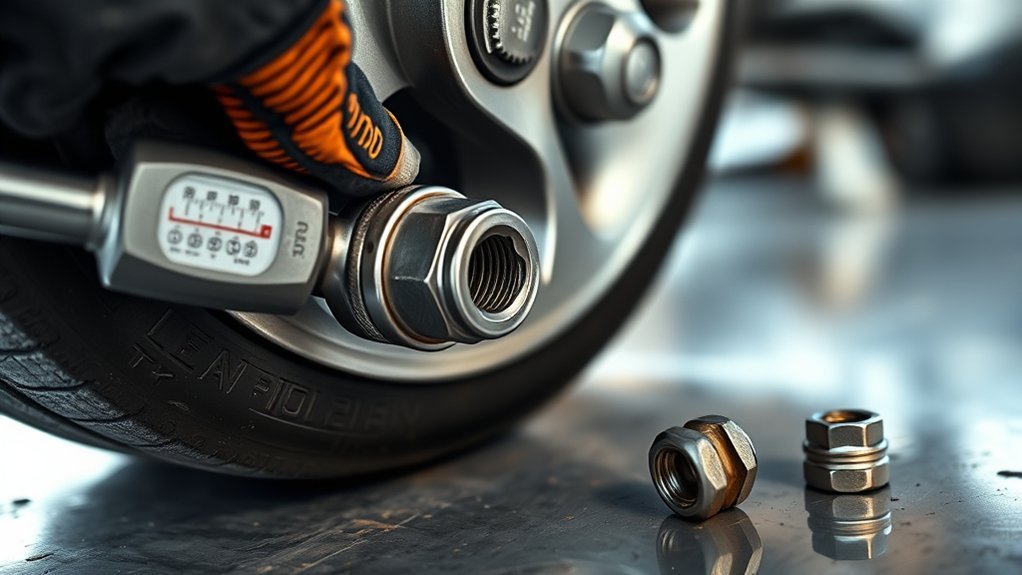
Most wheel-torque mistakes come from rushing, guessing, or using the wrong tool for final tightening. These mistakes can damage the wheel assembly or leave the wheel unsafe.
Skipping Torque Wrench Use
A lug wrench can make a nut feel tight, but it does not tell you the torque. A torque wrench gives a measured result. That is why it is the correct tool for final tightening.
Overtightening Lug Nuts
Overtightening can stretch wheel studs, strip threads, distort wheels, damage brake components, or make roadside removal difficult. Do not stand on the wrench, use a cheater pipe, or keep pulling after the torque wrench clicks.
Undertightening Lug Nuts
Under-tightened lug nuts can loosen as the wheel flexes and heat cycles during driving. Signs can include vibration, clicking, clunking, wheel wobble, or visible nut movement. If you suspect loose lug nuts, stop driving as soon as it is safe and inspect the wheel.
Using an Impact Gun for Final Tightening
Impact tools are useful for removal, but they are not a substitute for a torque wrench. Impact output can vary based on air pressure, battery charge, socket size, tool condition, and operator technique. If an impact tool is used to run nuts down, finish with a torque wrench.
Ignoring Damaged Hardware
Do not force a lug nut that binds, feels gritty, or starts crooked. Cross-threaded or damaged hardware may seem tight before it actually clamps the wheel correctly. Replace damaged studs, lug nuts, or lug bolts before driving.
When to Re-Torque Your Wheels
Re-torque your wheels after any service that removes or loosens them. That includes tire rotation, new tire installation, brake work, flat-tire repair, seasonal wheel swaps, and new wheel installation.
Tire Rack recommends that new wheels be re-torqued after the first 50–100 driving miles. Recheck with the wheels cool, using the same torque value and star pattern. If any nut moves noticeably before the wrench clicks, continue carefully through the full pattern and consider having the installation inspected.
- Re-torque after 50–100 miles after wheel service.
- Check sooner if you feel vibration, wobble, clicking, or looseness.
- Check after hard pothole impacts or rough-road driving.
- Check again if corrosion, new hardware, or aftermarket wheels are involved.
When and Where to Get a Torque Check
Get a torque check whenever you are unsure about the installation, do not have a torque wrench, or notice symptoms after wheel service. Some tire shops offer free torque checks after installation; Discount Tire, for example, says customers can stop by after installing wheels for a torque check.
You should also get professional help if:
- A lug nut will not start by hand.
- A stud is stripped, stretched, loose, or broken.
- The wheel does not sit flush against the hub.
- The torque wrench clicks immediately before the nut moves and you suspect it was over-tightened.
- The lug nut keeps turning and never reaches torque.
- You have aftermarket wheels and are unsure about lug seat type or hardware compatibility.
[Products Worth Considering]

The 22800 wheel stud installer makes replacing wheel studs quick and secure, saving time and effort during tire service. It uses a ratchet or impact wrench to pull new studs firmly into place, helping when existing studs are too long. Compatible with most automotive wheels and light-duty truck wheel studs, it’s designed for easy, tool-assisted installation.

The Trivd Frol 1/2" air impact wrench delivers high performance torque up to 1500 ft-lbs with a twin hammer impact mechanism for strong, balanced blows. It features an ergonomic grip, compact lightweight design, and quick-stop control with 3 forward speeds up to 8000 RPM plus a reverse speed. Built for demanding automotive repair and tire shop work, the rear exhaust helps keep debris away from the surface.

Upgrade your wheels with MIKKUPPA M12x1.5 mag seat lug nuts built for secure, corrosion-resistant performance. These closed-end chrome lug nuts are a direct replacement for select Toyota models, including Camry, Corolla, RAV4, Sienna, Avalon, Highlander, Matrix, Venza, and Prius. Triple-chromium plating and cold-forged, heat-treated steel help deliver strength for daily driving and replacement needs.
What If You Do Not Have a Torque Wrench?
Without a torque wrench, you cannot accurately confirm lug nut tightness. In an emergency, hand-start every nut, snug the nuts evenly in a star pattern, and tighten them firmly with the vehicle’s lug wrench. Do not jump on the wrench or use a pipe for extra leverage.
After that, drive only as needed to reach a safe place where the torque can be checked with a proper wrench. Avoid highway speeds, heavy braking, towing, or long-distance driving until the wheel is torqued correctly.
Warning: “Good and tight” is not a final torque method. It is an emergency-only temporary step until you can verify the correct spec with a torque wrench.
[Products Worth Considering]

This car D-wheel lock nut key provides an anti-theft solution for D-shaped wheel lock bolts, helping keep your wheels secure. It features a flower-shaped internal pattern that resists micro-adjustment theft while allowing removal and mounting of compatible locking nuts. Made for reliable performance under high torque, it’s easy to use with standard socket wrench turning for quick tire maintenance and emergency repairs.

This spare tire tool kit is designed for the 2004 to 2018 Ford F-150 to help you loosen and tighten wheel lug nuts and manage the spare tire and provided jack functions from underneath the vehicle. It includes the lug nut wrench and extension pieces plus a convenient storage carrying case for organized transport. The jack itself is not included.

The SEESII cordless impact wrench delivers high tightening and loosening power for fast wheel bolt and industrial bolt work. Its brushless motor and variable-speed 3 forward/2 reverse modes help you control precision installs and stubborn nut removal. A dual-battery system with rapid charging and an included storage case make it ready for home, car, and jobsite use.
Frequently Asked Questions
How do I know if my wheel nuts are tight enough?
They are tight enough when each lug nut or wheel bolt reaches the manufacturer’s specified torque with a torque wrench and the wheel is seated flat against the hub. Visual indicators and “feel” can help you spot problems, but they do not replace a torque wrench.
How tight should I put on tire nuts?
Tighten tire nuts to the exact torque spec for your vehicle and wheel setup. Many passenger vehicles are roughly 80–120 ft-lbs, but the correct number may be outside that range. Use the owner’s manual, automaker data, or wheel manufacturer instructions.
Is 450 ft-lbs enough torque for lug nuts?
For most passenger vehicles, 450 ft-lbs is far too much and can damage studs, threads, wheels, or hubs. Do not use 450 ft-lbs unless the service information for that specific heavy-duty or commercial application calls for it.
How tight should lug nuts be without a torque wrench?
Without a torque wrench, you can only make an emergency temporary tightening. Start the nuts by hand, snug them in a star pattern, tighten firmly with the lug wrench, and then get the torque checked as soon as possible before normal driving.
Should lug nuts be lubricated?
Usually, no. Most torque specs assume clean, dry threads. Oil, grease, or anti-seize can change friction and cause the wrong clamping force. Only lubricate lug hardware if the vehicle or wheel manufacturer specifically instructs you to.
Do I need to re-torque after a tire rotation?
Yes, it is smart to recheck torque after any service where the wheels were removed or loosened. Re-torque after 50–100 miles, and check sooner if you feel vibration, hear clicking, or hit a major pothole.
Conclusion
Lug nut torque is not something to guess. Use the exact spec for your vehicle, start every nut by hand, keep the threads clean and dry unless instructed otherwise, tighten in a star pattern, and finish with a torque wrench. Recheck after wheel service, especially after the first 50–100 miles. A few careful minutes can prevent damaged hardware, uneven clamping, vibration, or a loose wheel.
Sources
- Tire Rack — How Do I Properly Torque My Wheel Lug Nuts or Bolts? — supports torque wrench use, dry threads, crisscross patterns, impact-gun caution, and 50–100 mile re-torque guidance.
- Discount Tire — Wheel Torque Specifications — supports vehicle-specific torque lookup, torque wrench use, and tightening-pattern guidance.
- Toyota Owners — Manuals and Warranties — supports using official owner’s manuals for vehicle-specific information.
- NHTSA TireWise — supports the broader tire safety and maintenance context.
